Oxnard, California, Took Its Name From a Sugar Pioneer
Oxnard, California, is named for Henry T. Oxnard, the sugar manufacturer whose beet-sugar factory brought the town into being in 1898. A 1904 profile calls Oxnard a city "named after its distinguished founder," and a 1917 county history says the name "Bayard" was also discussed. The visitor bureau credits the Oxnard brothers.
A town named before it was built
Oxnard, California, is named for Henry T. Oxnard, whose company built a giant beet-sugar factory on Ventura County farmland in 1898 and 1899. The town grew up around that factory, and it carried his name almost from the first day.
You can see how early in the Los Angeles Times of March 13, 1898. Its Ventura correspondent reported that the Oxnards had signed deeds, dated February 25, to land for the new town:
“The attorneys for Henry T. Oxnard have filed on record four important legal documents bearing upon the title of the new townsite of Oxnard, and that of the land recently purchased by Henry T. Oxnard from Charles E. Etting.”
One deed passed a two-thirds interest in “the Oxnard townsite,” 300 acres “situated near the beet-sugar factory,” from Henry T., Benjamin G. and James G. Oxnard to the Pacific Beet-Sugar Company. Mrs. Aranetta Hill, the paper said, owned the other third.
Who Henry T. Oxnard was
A 1904 book of profiles published by the Los Angeles Times, Men of Achievement in the Great Southwest, gives his career in a few pages. He opened a beet-sugar factory at Grand Island, Nebraska, then another at Norfolk the next year. In 1891 he bought the Richard Gird ranch at Chino and built the first beet-sugar factory in the southern part of the state.
In 1897, the book says, the lands of Ventura County caught his eye, and he started “the most complete beet-sugar factory in the world.” It cost nearly two million dollars and could take 2,000 tons of beets a day. Before he built it, he had signed up farmers to keep 18,000 acres in beets. By 1904 he was president of the American Beet Sugar Company and owned a 5,700-acre ranch “within two miles of the city of Oxnard, named after its distinguished founder.” That’s about 3 km.
A 1917 county history puts it in bigger terms. In a profile of J. A. Driffill, who came from the Chino factory to build the new plant, it says the town was “named in honor of the father of the beet sugar industry in the United States, Henry T. Oxnard.”
The farmers who asked for a factory
The factory didn’t land on the plain by chance. The Oxnard Historic Farm Park says that in 1896 Ed Borchard, urged by his son Henry and a family friend, Albert F. Maulhardt, sent beet samples to the Chino factory, and that Maulhardt then ran a two-year planting experiment. In October 1897, the Farm Park says, the Chino owners, led by Henry Oxnard, agreed to build a $2 million plant. Visit Oxnard tells the same story with Maulhardt and Johannes Borchard inviting him.
The 1917 history adds the land deal. In December 1897, J. G. Hill sold the factory 200 acres for $4,600. A railroad survey from Montalvo started about the same time, and the cornerstone went down in 1898. The Farm Park says Driffill laid out the town in January 1898. The factory started running on August 16, 1899, according to the Driffill profile.
Oxnard, or Bayard?
If you dig into the 1917 county history, you’ll find a detail the city’s tourism page leaves out. Early in 1898 a townsite company was formed, with N. R. Cotman as president and Driffill as secretary, and another name came up. The history puts it this way:
“And Oxnard does not know how near she came to being something else, for the name ‘Bayard’ was discussed as a good name for the new town.”
The book doesn’t say who proposed Bayard or why it lost. The 1898 deeds already used “Oxnard,” so the debate, if it was one, ended early.
Visit Oxnard, the city’s tourism bureau, tells a different story. It says Henry T. Oxnard meant to name the city after a Greek word for “sugar,” but gave up, frustrated with state officials, and named it for his family. We didn’t find that story in any of the older sources we read, so treat it as a local tale, not a record.
The tourism bureau also says the city took its name from “the Oxnard brothers” when it incorporated in 1903. Other Oxnards were in the business, and Benjamin G. and James G. Oxnard signed the 1898 deeds with Henry. But both older books name Henry T. Oxnard alone. Residents voted on incorporation in June 1903, 283 to 13.
The new town drained life from its neighbors. The 1917 history calls Oxnard the “Magic City” and says even houses were moved there from Hueneme, El Rio and Springville.
Quick answers
Who is Oxnard, California, named after?
Henry T. Oxnard, the beet-sugar manufacturer. A 1904 profile calls Oxnard a city “named after its distinguished founder,” and a 1917 county history says it was named in his honor.
What name almost went to Oxnard?
Bayard. The 1917 History of Santa Barbara, San Luis Obispo and Ventura Counties says the name “Bayard” was discussed for the new town in 1898.
Is Oxnard named after a Greek word for sugar?
No. Visit Oxnard says Henry T. Oxnard wanted a Greek word for “sugar” and settled on his family name. No source we read from his time mentions that plan.
When was Oxnard founded?
The townsite was laid out in early 1898, beside the sugar factory. The Oxnard Historic Farm Park dates the town plan to January 1898, and Oxnard incorporated in 1903.
Key dates
- 1897December: J. G. Hill sells 200 acres to the sugar factory for $4,600, the 1917 county history says.
- 1898January: J. A. Driffill lays out the town, according to the Oxnard Historic Farm Park.
- 1898February 25: the Oxnards sign deeds to "the Oxnard townsite," filed in Ventura and reported in March.
- 1899August 16: the American Beet Sugar Company's factory at Oxnard starts operating.
- 1903June: Oxnard votes on incorporation, 283 for and 13 against.
Getting there
Open Oxnard in Google Maps
Opens in a new tab. The pin is the center of Oxnard in the USGS place-name record.
The closest airports, Amtrak stations and intercity bus stops, measured in a straight line from the center of Oxnard.
Airports
- Santa Barbara Municipal (SBA) 41 mi 66 km
- Hollywood Burbank (BUR) 47 mi 75 km
Amtrak trains
- Oxnard station (OXN) under 1 mi 0.2 km
- Camarillo station (CML) 8 mi 13 km
Intercity buses
- Limousine Express Oxnard under 1 mi 0 km
- Gold Runner Oxnard - Transit Center under 1 mi 0.2 km
- Alvand Transportation Amtrak Connecting Service · Oxnard under 1 mi 0.2 km
Distances are as the crow flies, not by road. We don't list schedules or fares because they change; check with the airline, Amtrak or the bus company before you go. Official data (FAA commercial service airports (2025), FAA airport locations, Amtrak stations and Intercity Bus Atlas) from the FAA and the U.S. Bureau of Transportation Statistics, checked Nov 13, 2026.
Sponsored
Staying in Oxnard?
Compare hotels in Oxnard, California, on Expedia.
See hotels in OxnardWe may earn a commission if you buy through this link. It never changes what we write. Read our affiliate disclosure
Historical Sources & References
- “Ventura County: Oxnard and Etting Property Acquired by Sugar Company,” Los Angeles Sunday Times, March 13, 1898, p. 14. The four deeds dated February 25, 1898, “the new townsite of Oxnard,” 300 acres near the factory and the Pacific Beet-Sugar Company.
- George Ward Burton, Men of Achievement in the Great Southwest (1904), pp. 42-43. Henry T. Oxnard’s career from Nebraska to Chino and Ventura County, and the city “named after its distinguished founder.”
- C. M. Gidney, Benjamin Brooks and Edwin M. Sheridan, History of Santa Barbara, San Luis Obispo and Ventura Counties, California (1917), vol. 1, pp. 441-442. The December 1897 land sale, the 1898 townsite company, the name “Bayard,” the 1903 incorporation vote and the “Magic City.”
- Same work, vol. 2, pp. 828-830. J. A. Driffill’s profile: the town “named in honor of” Henry T. Oxnard and the factory’s start on August 16, 1899.
- Visit Oxnard, “History of Oxnard, California”. The story of the Greek word for sugar, the Oxnard brothers, Maulhardt and Borchard, the 1903 incorporation and the 1907 Carnegie library.
- Oxnard Historic Farm Park, “The Story of Sugar Beets and the Birth of Oxnard”. The Borchard and Maulhardt beet trials, the October 1897 agreement and Driffill’s town plan of January 1898.
- GNIS feature 1652766 (U.S. Geological Survey). The national place-name record that puts Oxnard in Ventura County and gives the point used for this page.
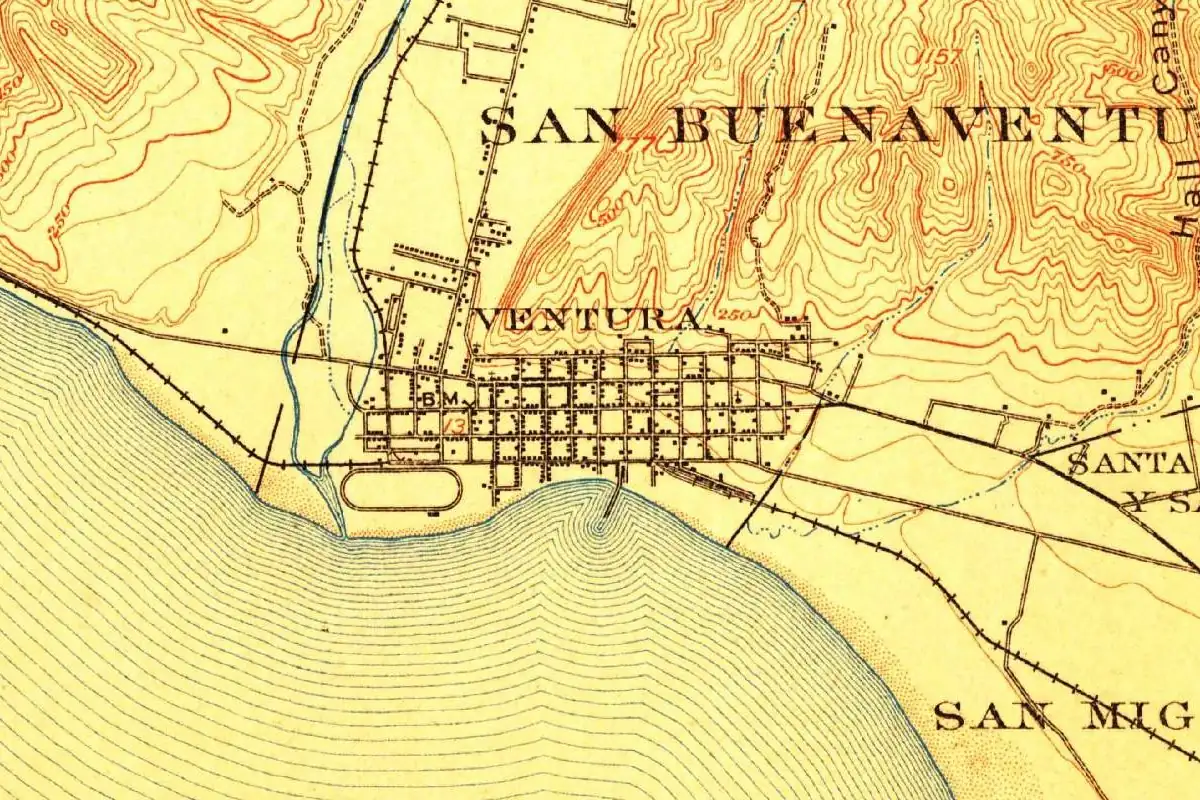
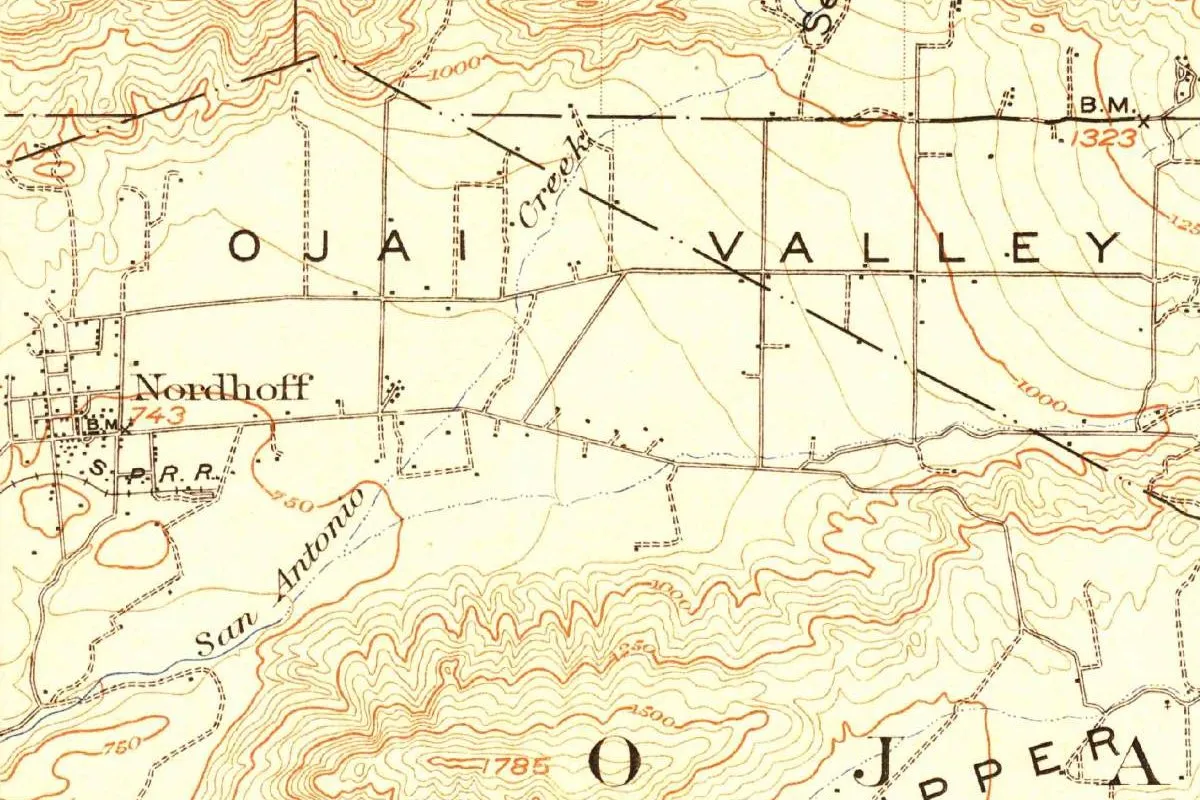
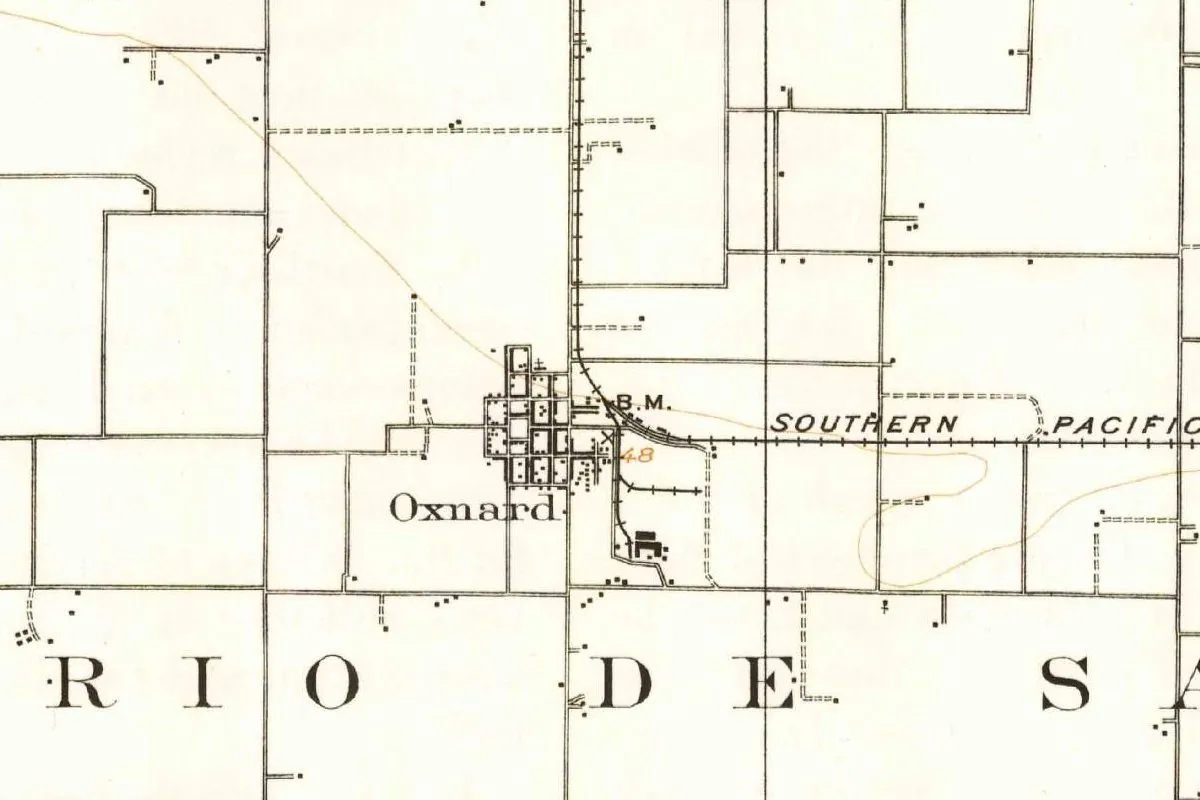
- U.S. Geological Survey, Hueneme sheet (1904). The source of the map at the top of this page.
Spot something wrong, or know more? Tell us here. You can also email us or use our contact page. Corrections are noted here with their date, never made silently.