How Simi Valley, California Got Its Chumash Name
Simi Valley is named for a Chumash village. A. L. Kroeber recorded it in 1916 as Shimiyi or Shimii in the Ventura dialect of Chumash. The name passed to a Spanish land grant in 1795, then to the valley and finally to the city incorporated in 1969. Its meaning has never been established.
A village name with no translation
The Simi in Simi Valley, California, is a Chumash village name, and when an anthropologist asked what it meant in 1916, nobody could tell him. A. L. Kroeber was going through the state’s Native place names for the University of California, and his entry for Simi is short and blunt:
“Simi, in Ventura County, is Ventura dialect Chumash Shimiyi or Shimii, a place or village. Indian informants can give no etymology, and Bailey’s signification of “source of water” appears unfounded.”
So the word is a place name, recorded in the Ventura dialect of Chumash, and the people Kroeber talked to didn’t know what it meant. He also threw out the translation that a writer named Bailey had offered. If you see Simi translated online, ask where the translation came from, because Kroeber couldn’t find one that held up.
Two villages, two names
The City of Simi Valley names two Chumash villages in the area, Shimiji (also written Shmiyi) and Ta’apu, and says the two of them “are the origins of the City’s name.” It adds that Tapo Street and Tapo Canyon are named for the second.
Kroeber had that one too. Tapo Canyon, near Simi, he wrote, comes from a Chumash original Ta’apu, “yucca,” an inhabited site. So the two accounts line up a little differently. The city counts both villages behind its name, while Kroeber traces the word Simi to Shimiyi alone and gives Ta’apu to Tapo Canyon. Either way, Ta’apu has a meaning on record and Simi doesn’t. The city adds that Chumash people lived in the valley for as long as 13,000 years, until the 1800s.
The Spanish grant that kept the name
The name reached the maps through a Spanish land grant. An 1891 history of Santa Barbara, San Luis Obispo and Ventura counties, written by Yda Addis Storke, says the Simi was “formerly called San José de Gracia” and was granted in 1795 by Governor Borica to Patricio Javier and Miguel Pico. In April 1842, the book says, Governor Alvarado “revived, or renewed, the claim to Noriega.” It doesn’t say anything more about who Noriega was.
The city’s own history tells the grant a little differently. It gives the full name as San José de Nuestra Señora de Altagracia y Simí, says Governor Diego de Borica granted it in 1795 to Santiago Pico, one of 240 colonists from Mexico, and puts it at about 113,000 acres. You’ll find both versions of who got the land, and both agree on the year and the governor.
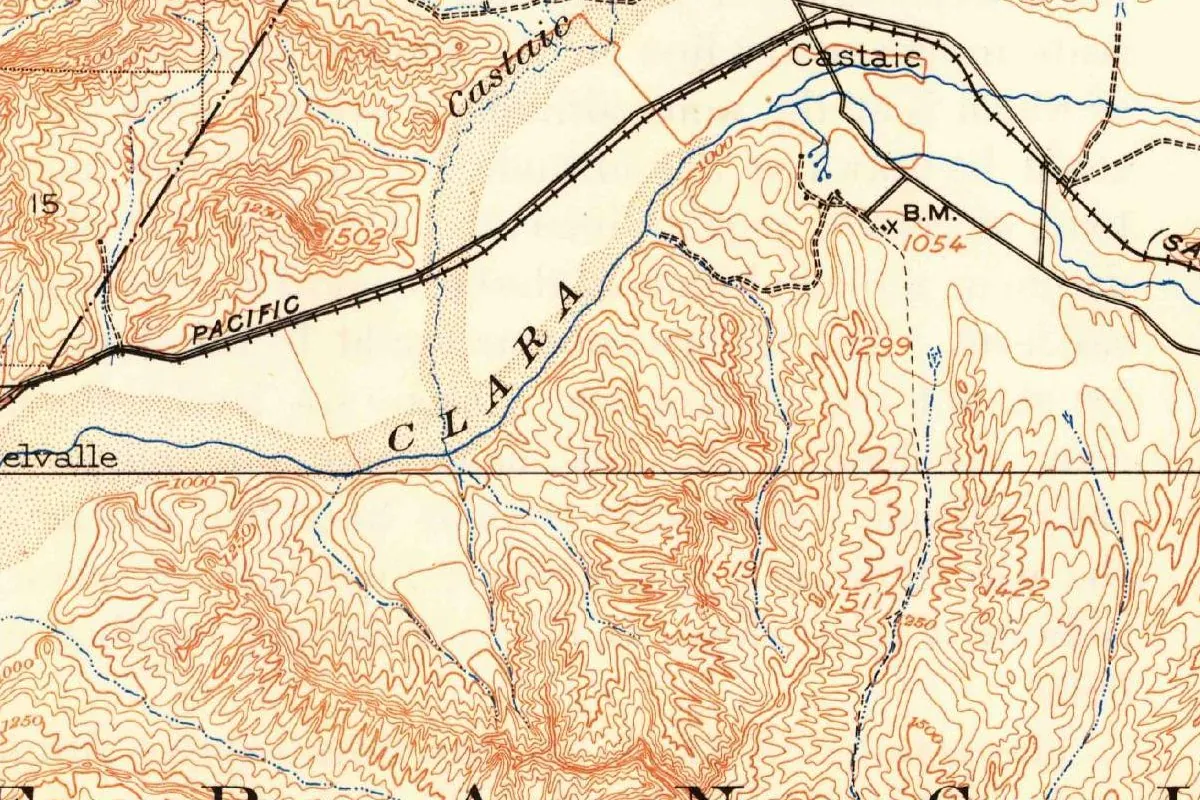
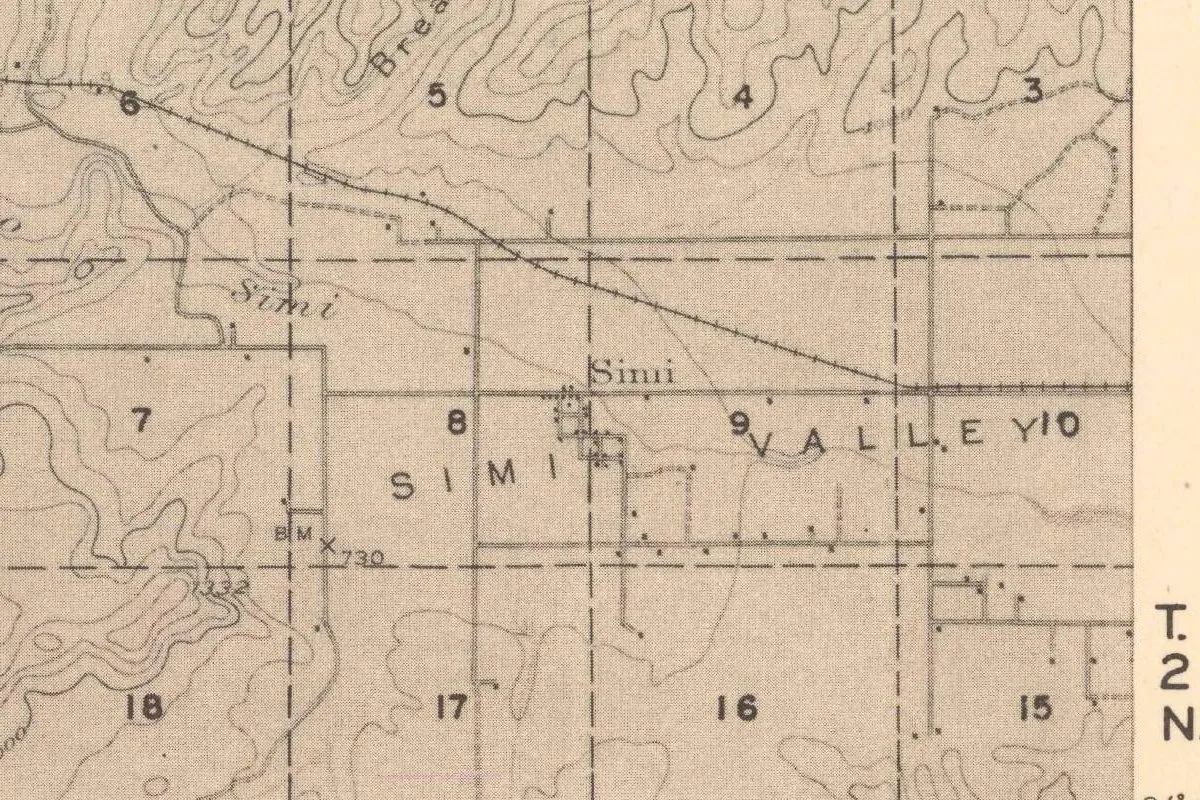
Storke’s description of the ranch also shows why people called it a valley. She wrote that the Simi Rancho was about 96,000 acres “completely walled in by continuous ranges of hills and mountains, on all sides save the west.” The de la Guerra homestead in the northeast corner was by then known as the Tapo Rancho. By 1900 the government’s mapmakers were printing SIMI VALLEY right across the floor of it, with a little settlement labeled Simi in the middle.
How Simi was first said
The city points out one more thing. In the records from the land grant days, the name was written Simí, with an accent on the second syllable. The city reads that as a sign that it first sounded like “suh-MEE,” not “SEE-me.” That’s the city’s interpretation of the old spelling, not a recording, but it’s a reminder that the name has already been through Chumash, Spanish and English mouths.
The City of Simi Valley was incorporated in 1969 under the general laws of the state of California. By then the grant and the ranch had used the name for well over a century. The city simply took the name of the valley it sits in. The word underneath is older than any of them, and still nobody can say what it means.
Quick answers
Is Simi a Chumash word?
Yes. Kroeber recorded it in 1916 as Shimiyi or Shimii, a place or village, in the Ventura dialect of Chumash. The city traces its name to two Chumash villages, Shimiji (or Shmiyi) and Ta’apu.
Does Simi mean “source of water”?
Probably not. Kroeber wrote that the people he asked could give no etymology and that the “source of water” translation “appears unfounded.”
How was Simi originally pronounced?
Possibly “suh-MEE.” The city says land grant records spell it Simí, with the stress on the second syllable, which suggests that older pronunciation.
When did Simi Valley become a city?
In 1969. The name is much older: the Simi land grant dates to 1795.
Key dates
- 1795Governor Diego de Borica makes the Simi land grant, also called San José de Gracia; sources differ on who received it.
- 1842In April, Governor Alvarado "revived, or renewed, the claim to Noriega," an 1891 county history says.
- 1891A county history describes the Simi Rancho as about 96,000 acres walled in by hills on every side but the west.
- 1916A. L. Kroeber records the Chumash name as Shimiyi or Shimii and finds no one who can give its meaning.
- 1969The City of Simi Valley is incorporated under the general laws of California.
Getting there
Open Simi Valley in Google Maps
Opens in a new tab. The pin is the center of Simi Valley in the USGS place-name record.
The closest airports, Amtrak stations and intercity bus stops, measured in a straight line from the center of Simi Valley.
Airports
- Hollywood Burbank (BUR) 25 mi 40 km
- Los Angeles International (LAX) 31 mi 50 km
Amtrak trains
- Simi Valley station (SIM) 5 mi 8 km
- Moorpark station (MPK) 6 mi 9 km
Intercity buses
- Gold Runner Fillmore - Int'l House of Pancakes 12 mi 19 km
- Alvand Transportation Amtrak Connecting Service · Fillmore Amtrak Bus Stop 12 mi 19 km
- Amtrak Chartered Vehicle Amtrak Connecting Service · Santa Clarita-Newhall Amtrak Station 16 mi 26 km
Distances are as the crow flies, not by road. We don't list schedules or fares because they change; check with the airline, Amtrak or the bus company before you go. Official data (FAA commercial service airports (2025), FAA airport locations, Amtrak stations and Intercity Bus Atlas) from the FAA and the U.S. Bureau of Transportation Statistics, checked Nov 13, 2026.
Sponsored
Staying in Simi Valley?
Compare hotels in Simi Valley, California, on Expedia.
See hotels in Simi ValleyWe may earn a commission if you buy through this link. It never changes what we write. Read our affiliate disclosure
Historical Sources & References
- A. L. Kroeber, California Place Names of Indian Origin (1916), pp. 58, 61. The quoted entry on Simi as Ventura dialect Chumash Shimiyi or Shimii, with no etymology and “source of water” rejected (p. 58); Tapo or Tapu Canyon from Ta’apu, “yucca” (p. 61).
- Yda Addis Storke, A Memorial and Biographical History of the Counties of Santa Barbara, San Luis Obispo and Ventura (1891), p. 207. The Simi Rancho “formerly called San José de Gracia,” granted in 1795 by Governor Borica to Patricio Javier and Miguel Pico, Alvarado’s renewal of the claim “to Noriega” in April 1842, the hills that wall it in, and the Tapo Rancho.
- City of Simi Valley, “At a Glance”. The villages Shimiji (or Shmiyi) and Ta’apu as “the origins of the City’s name,” Tapo Street and Tapo Canyon named for Ta’apu, the 1795 grant to Santiago Pico, the spelling Simí and the pronunciation “suh-MEE,” and incorporation in 1969.
- GNIS feature 1661450 (U.S. Geological Survey). Used to check that Simi Valley sits in Ventura County and to place the map.
- U.S. Geological Survey, Piru sheet (1900). The source of the map at the top of this page.
Spot something wrong, or know more? Tell us here. You can also email us or use our contact page. Corrections are noted here with their date, never made silently.