Ojai, California: The Moon Word That Replaced Nordhoff
Ojai comes from the Chumash place name 'awha'y, which the Ojai Valley Museum and the City of Ojai translate as moon; anthropologist A. L. Kroeber gave the same meaning in 1916. The town itself was laid out as Nordhoff, named in 1874 for author Charles Nordhoff, and took the name Ojai in 1917.
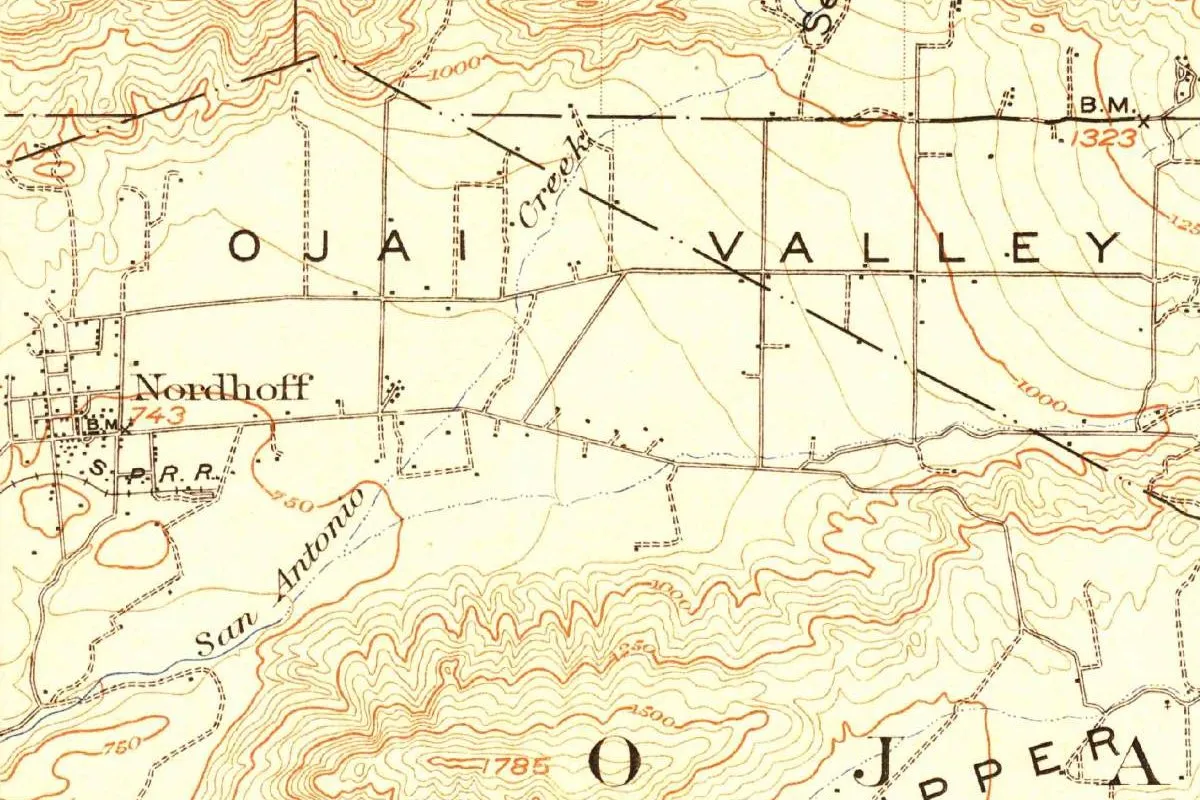
Ojai, California, takes its name from a Chumash word for moon, yet on the 1903 federal map of its valley the town is still labeled Nordhoff. You can see it in the map at the top of this page: the valley says “Ojai,” and the little grid of streets says “Nordhoff.” It took the town until 1917 to match the valley.
A Chumash word, and a guess about a nest
Long before there was a town, there was a Chumash village. The Ojai Valley Museum gives the word as ’awha’y, pronounced roughly “a-ha-ee,” and says it means “moon.” It names the village ’Awha’y, in the Upper Ojai Valley. The City of Ojai says the same thing on its community page: the name is “derived from the Chumash word ʼawha’y meaning ‘moon.’”
That wasn’t always the accepted answer. Henry Gannett, in his 1902 name-origins bulletin for the Geological Survey, gave the valley a single line: “Ojai; valley in California, inclosed by a rim of mountains. An Indian word, meaning ‘the nest.’”
The anthropologist A. L. Kroeber didn’t buy it. In 1916 he published a study of California place names of Indian origin for the University of California, and he went after the nest head-on:
“Ojai, in Ventura County, is given by Bailey and Gannett as meaning ‘nest.’ This signification would be characteristic of civilized fancy rather than of Indian geographical usage. The word is a Chumash place name, A’hwai, and means ‘moon.’”
In plain terms, Kroeber put “nest” down to “civilized fancy,” not the kind of name a Chumash village would carry. Nellie Van de Grift Sanchez, whose book on Spanish and Indian place names of California came out in 1914, had already set the popular versions aside. Ojai, she wrote, was “popularly translated as ‘nest’ or ‘big tree,’ neither of which can be looked upon as authentic,” and she credited Kroeber with the meaning “moon.”
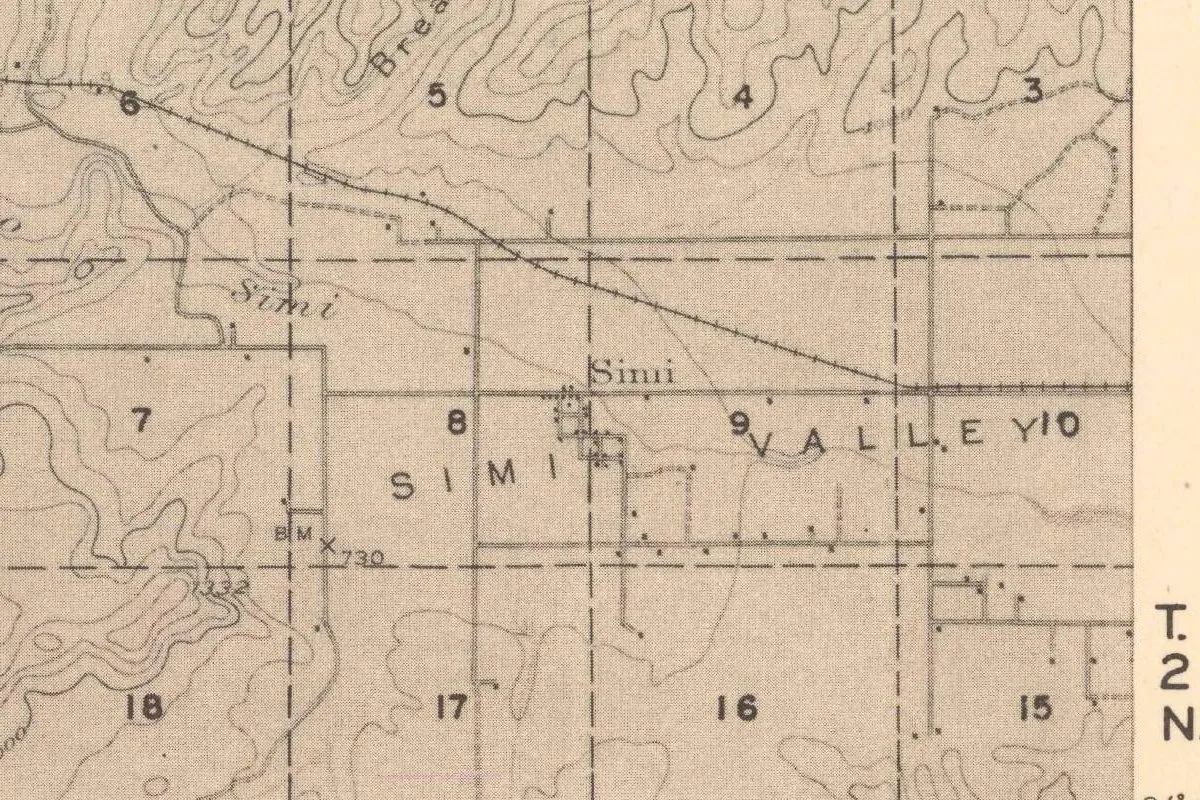
Kroeber did the same kind of work on other Chumash names. When he got to Simi Valley, elsewhere in Ventura County, he had to admit nobody could tell him what Simi meant. With Ojai, he had an answer.
The Rancho Ojay
The word reached the map through a land grant. According to the Ojai Valley Museum, Governor Juan Alvarado granted Fernando Tico 17,716.83 acres in 1837, and the property went by a Spanish spelling, Rancho Ojay. Tico sold the rancho in 1853.
The museum also tells the harder part of the story. European settlers, it says, made the Chumash leave the land they’d lived on for generations and forced them into servitude at Mission San Buenaventura.
In 1864 Thomas A. Scott bought the land. By late 1867, the museum says, his agent Thomas Bard was selling it to settlers. A town was coming, and it wasn’t going to be called Ojai, at least not yet.
The town called Nordhoff
R. G. Surdam laid out a townsite in the valley in 1873. In 1874, the museum says, he named it Nordhoff, after Charles Nordhoff, the author of California for Health, Pleasure, and Residence.
There’s a small irony here. Nordhoff hadn’t written about Ojai in the first edition of the book. According to the museum, he visited later, and the revised edition of 1882 had glowing things to say about the valley. The town got his name before it got his praise.
So for more than forty years the valley was Ojai and the town was Nordhoff. That’s what the Geological Survey’s topographers found when they surveyed the area in 1901-1902, and it’s what their map printed in 1903. In those years, the museum says, Nordhoff drew pioneer families and well-off Easterners after a quiet place with warm winters, and the Foothills Hotel, opened in 1903, turned it into one of Southern California’s leading resorts.
The change of 1917
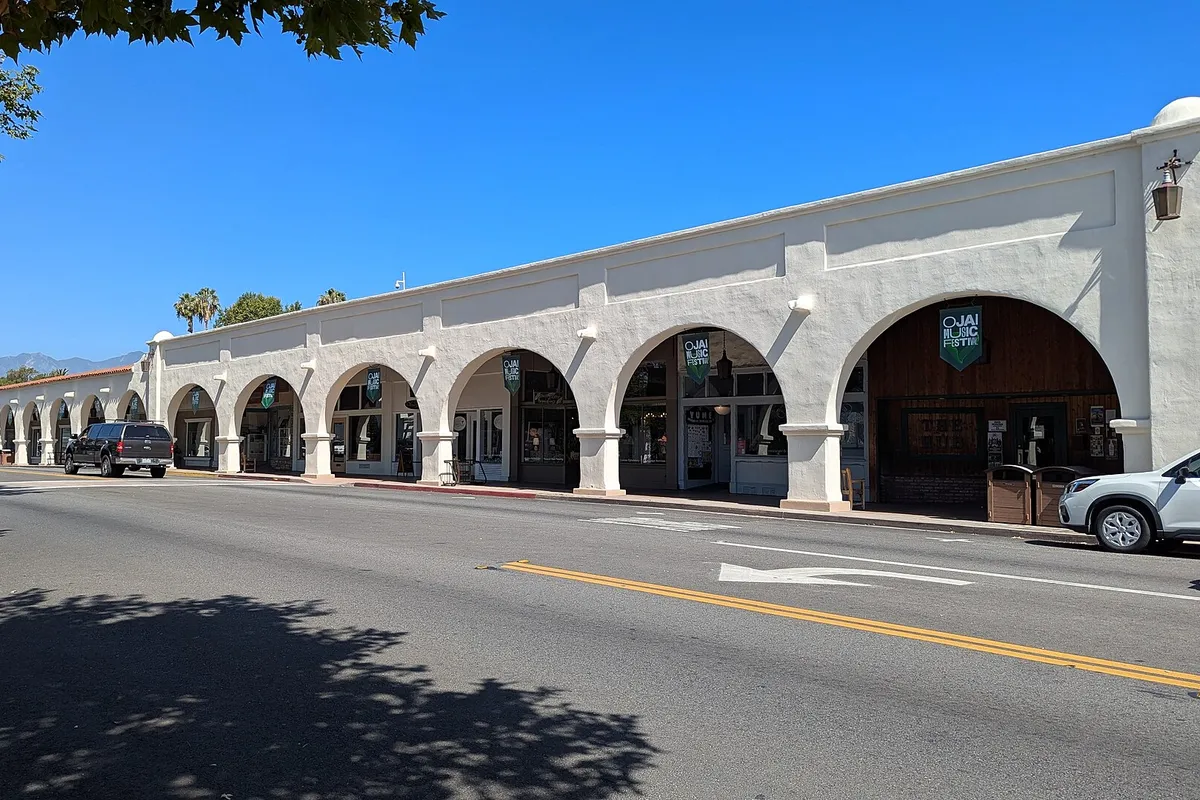
The man who remade downtown in those years was Edward Drummond Libbey, who settled in the valley with his wife, Florence, in 1907. The museum says Libbey hired the architects Frank Mead and Richard Requa in 1916, and they gave downtown its arcade, its pergola and the post office tower.
Then came the new name. “By 1917,” the museum writes, “the town bid farewell to its former name, Nordhoff.” It marked the occasion with the first Ojai Day that April, at the new Civic Center Park. The City of Ojai says Libbey gave that park to the Ojai Civic Association on April 7, 1917, and it’s been Libbey Park ever since. A city Mills Act agreement for a historic house puts the change plainly: “Nordhoff, which was renamed Ojai in 1917.”
Why did the town drop Nordhoff? None of the sources quoted here gives a reason, and this page won’t guess at one. What they agree on is the result: the town took the valley’s Chumash name. Ojai isn’t the only American town that traded a name for an older Indian one. Kenosha, Wisconsin, was Southport for years before it took the Indian name of its creek, while Hot Springs, South Dakota, went the other way: an 1899 history there wished the town had gone with Minnekahta, the Sioux name for its water.
Ojai on the 1903 map
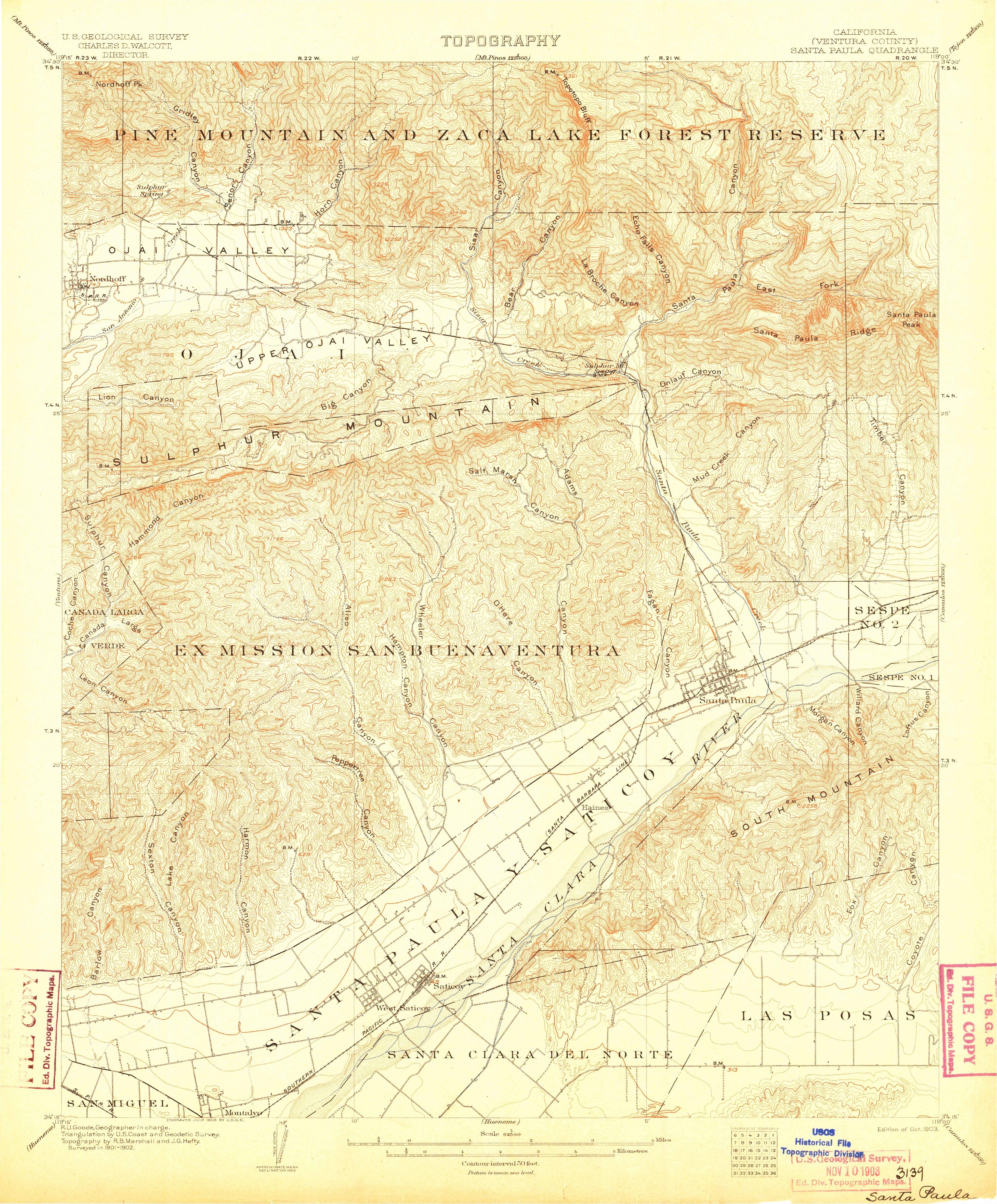
The map at the top comes from the Santa Paula sheet, surveyed in 1901-1902 and engraved by the Geological Survey in July 1903. The copy scanned here is the edition of October 1903, with no later printing on it. The town sits at the far west edge of the sheet, so the crop starts right at the border. You’ll find “Nordhoff” next to a bench mark of 743 feet (226 m), a railroad marked “S.P.R.R.” running in, and the words “Ojai Valley” spread across the flat land, with a creek marked “San Antonio” winding below and the brown contour lines climbing toward the hills.
The city puts Ojai about 12 miles (19 km) north of Ventura, on the coast. Kroeber’s 1916 study, the source of the “moon” reading, ranges over Indian place names from all over California, and Ojai is one of the entries where he could give a meaning.
Quick answers
What does Ojai mean?
The Ojai Valley Museum and the City of Ojai say it comes from the Chumash word ’awha’y, meaning “moon.” A. L. Kroeber gave the same meaning in 1916, writing the word A’hwai.
Doesn’t Ojai mean “nest”?
That’s an older idea. Henry Gannett wrote in 1902 that it meant “the nest,” but Kroeber called that “civilized fancy,” and Nellie Van de Grift Sanchez said neither “nest” nor “big tree” could be considered authentic.
What was Ojai called before?
The town was Nordhoff. R. G. Surdam named it in 1874 for Charles Nordhoff, author of California for Health, Pleasure, and Residence, and it was renamed Ojai in 1917.
Why did Nordhoff change its name to Ojai?
The sources quoted here don’t give a reason. The Ojai Valley Museum says the town “bid farewell to its former name” by 1917 and held its first Ojai Day that April.
Key dates
- 1837Governor Juan Alvarado grants Fernando Tico 17,716.83 acres in the valley, the Rancho Ojay.
- 1853Tico sells the Rancho Ojay.
- 1864Thomas A. Scott buys the land; by late 1867 his agent Thomas Bard is selling it to settlers.
- 1874R. G. Surdam, who laid out the townsite in 1873, names it Nordhoff for the writer Charles Nordhoff.
- 1902Henry Gannett's Geological Survey bulletin says Ojai means 'the nest.'
- 1903The Geological Survey's Santa Paula sheet, surveyed in 1901-1902, shows the town as Nordhoff.
- 1916A. L. Kroeber writes that Ojai is the Chumash place name A'hwai and means 'moon.'
- 1917Nordhoff becomes Ojai, with the first Ojai Day in April; Edward Libbey gives the park to the Ojai Civic Association.
Things to do in Ojai, California
Los Padres National Forest
A national forest of nearly two million acres (about 800,000 ha) in the Coast and Transverse Ranges, whose main division takes in lands in Ventura County, with day hikes and backpacking trails.
Ojai Community Demonstration Garden
A city garden next to Ojai City Hall on Ventura Street, one of the parks the City of Ojai lists along with Libbey Park.
Libbey Park and Libbey Bowl
The downtown park Edward Libbey gave to the Ojai Civic Association in April 1917, with the Libbey Bowl, home of the Ojai Music Festival, and the courts where the tennis tournament known as The Ojai is played.
Ojai Art Center
A community arts center with gallery shows of work by artists from Ojai, Santa Barbara and Ventura County.
Getting there
Open Ojai in Google Maps
Opens in a new tab. The pin is the center of Ojai in the USGS place-name record.
The closest airports, Amtrak stations and intercity bus stops, measured in a straight line from the center of Ojai.
Airports
- Santa Barbara Municipal (SBA) 34 mi 55 km
- Hollywood Burbank (BUR) 53 mi 86 km
Amtrak trains
- Ventura station (VEC) 12 mi 20 km
- Carpinteria station (CPN) 16 mi 26 km
Intercity buses
- Gold Runner Santa Paula - Carrows 12 mi 20 km
- Alvand Transportation Amtrak Connecting Service · Santa Paula Amtrak Bus Stop 12 mi 20 km
- Limousine Express Oxnard 18 mi 28 km
Distances are as the crow flies, not by road. We don't list schedules or fares because they change; check with the airline, Amtrak or the bus company before you go. Official data (FAA commercial service airports (2025), FAA airport locations, Amtrak stations and Intercity Bus Atlas) from the FAA and the U.S. Bureau of Transportation Statistics, checked Nov 18, 2026.
Sponsored
Staying in Ojai?
Compare hotels in Ojai, California, on Expedia.
See hotels in OjaiWe may earn a commission if you buy through this link. It never changes what we write. Read our affiliate disclosure
Historical Sources & References
- A. L. Kroeber, “California Place Names of Indian Origin” (1916), p. 51. The passage on Ojai, A’hwai and “moon,” and his answer to the “nest” reading. Checked against the page image.
- Henry Gannett, The Origin of Certain Place Names in the United States (1902), p. 195. “Ojai; valley in California, inclosed by a rim of mountains. An Indian word, meaning ‘the nest.’”
- Nellie Van de Grift Sanchez, Spanish and Indian Place Names of California (1914), p. 397. “Nest” and “big tree” as popular translations, and Kroeber’s “moon.”
- Ojai Valley Museum, “Ojai History”. ’Awha’y, the 1837 grant to Fernando Tico, the 1853 sale, Scott and Bard, Surdam’s townsite of 1873 and the name Nordhoff in 1874, the 1882 edition, Libbey, Mead and Requa, and the farewell to Nordhoff in 1917.
- City of Ojai, “Community”; Libbey Park; Mills Act agreement for 1105 N. Signal Street. The city’s statement of the Chumash meaning, the distance from Ventura, Libbey’s gift of April 7, 1917, and “Nordhoff, which was renamed Ojai in 1917.”
- Los Padres National Forest; City of Ojai, City Parks; Ojai Art Center. The details in the things-to-do list.
- U.S. Geological Survey, GNIS feature 1652763. The federal record of Ojai as a populated place in Ventura County, with its coordinates.
- Santa Paula sheet, surveyed 1901-1902, edition of October 1903. The sheet the map at the top was cropped from, engraved by the Survey in July 1903, with topography by R. B. Marshall and J. G. Hefty.
Sponsored
Put this 1903 map on your wall
The Geological Survey's 1903 Santa Paula sheet, which labels the town by its old name, Nordhoff, is in the public domain. Download the full-size scan for free, then have it printed on canvas with CanvasOnTheCheap.
Print a map on canvasDownload the full-size mapWe may earn a commission if you buy through this link. It never changes what we write. Read our affiliate disclosure
Spot something wrong, or know more? Tell us here. You can also email us or use our contact page. Corrections are noted here with their date, never made silently.