Fernandina Beach, Florida: A Spanish King or a Settler?
Fernandina was named for King Ferdinand VII of Spain, say the city and the Amelia Island Museum of History, which adds that Governor Enrique White chose the name in 1810. Henry Gannett wrote in 1905 that it honored a Spaniard named Fernandez. 'Beach' came with the incorporation of Fernandina Beach in 1951.
Fernandina Beach, Florida, has a Spanish name that local sources give to King Ferdinand VII, though Henry Gannett credited a Spaniard named Fernandez. Both stories start on Amelia Island in the last years of Spanish East Florida. The word “Beach” is much newer, tied to the town’s incorporation as Fernandina Beach in 1951.
A town for the king
The city’s own timeline is brief about it: “In 1811, surveyor George J. F. Clarke plats the town of Fernandina, named in honor of King Ferdinand VII of Spain.” The Florida Department of State says the same in a 2025 release, adding that the town “was the last platted under the 1573 Laws of the Indies and served as the northernmost settlement in Spanish East Florida.”
The Amelia Island Museum of History gives the most detail. In a 2021 article for the museum, Dr. Berta Isabel Arias writes that the governor of East Florida from 1796 to 1811 was Enrique White, an Irish-born soldier in Spanish service. “In 1810, Governor Enrique White named the town Fernandina in honor of King Ferdinand VII of Spain, and ordered surveyor-general George J. F. Clarke to develop a town plan which was completed in a classical Spanish grid form in 1811.” The governor got a street of his own: White Street in Fernandina, she says, is named after him.
Other American towns carry the names of kings. Williamsburg, Virginia, was named for King William III, the monarch on the throne, and Louisville, Kentucky, for a foreign king, Louis XVI of France.
Or for a Spaniard named Fernández
Henry Gannett had a different answer in 1905: “Fernandina; city in Nassau County, Florida, named for a Spaniard, Fernandez.” He doesn’t give a first name, so you can’t tell from his entry which Fernández he had in mind.
There was a Fernández on the island. The same museum article tells the story of Domingo Fernández, born in Vigo, Spain, in 1766, who came to St. Augustine around 1786. He worked for the Spanish government at Amelia Island “as a harbor pilot and captain of a gunboat,” received land grants on the island, married María Mattair in 1793 and became one of the district’s leading planters. He died on September 3, 1833. Arias doesn’t connect him to the town’s name, though. She credits the king.
The Encyclopaedia Britannica puts Don Domingo Fernandez forward as one of the possibilities.
Old Fernandina and the new town
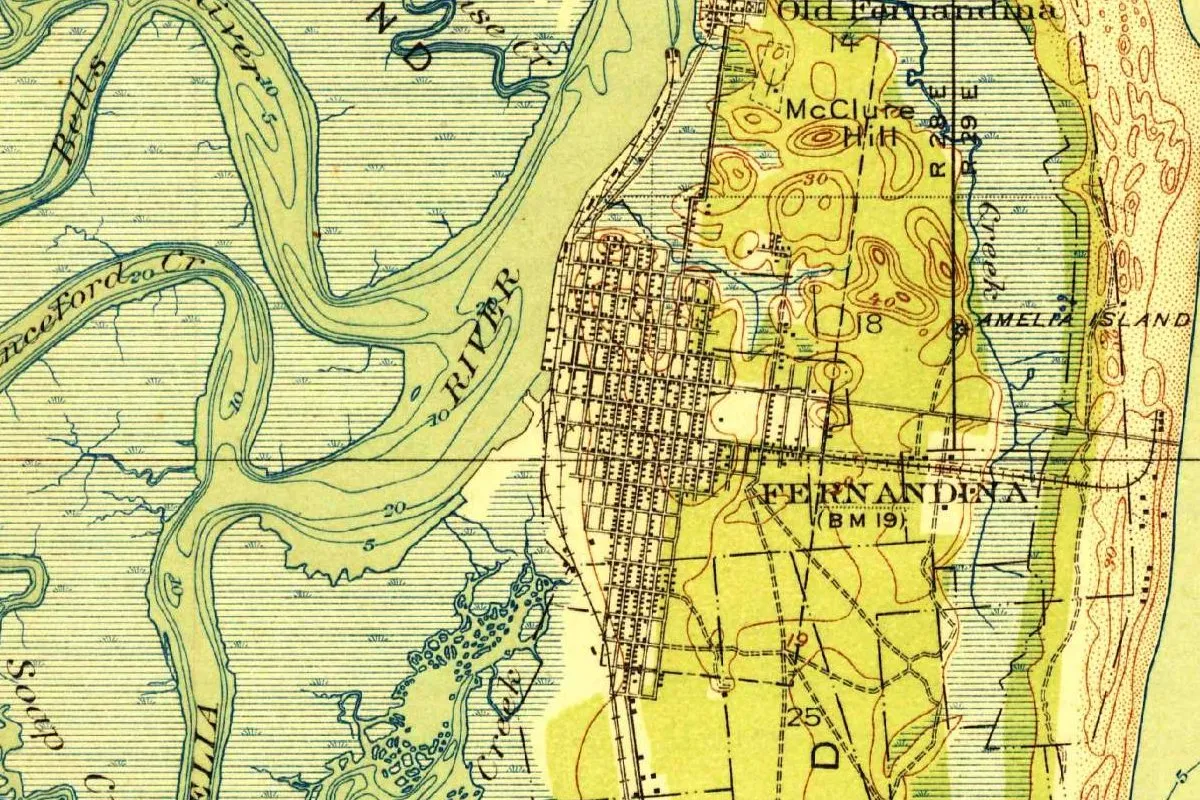
The 1811 town didn’t stay where it was laid out. The city says its Old Town district was “Originally the site of the town of Fernandina,” and it calls Old Town “the last Spanish city platted in the Western Hemisphere.” The town moved south when the railroad came. “When David Yulee established the railroad running from Fernandina to Cedar Key, the town shifted from Old Town to its present location.” That’s the same line, the Florida Railroad, that gave Gainesville its start in the 1850s.
The museum’s article calls 1824 the year Fernandina was founded.
How “Beach” got added
The Amelia Island Chamber of Commerce dates the incorporation of Fernandina Beach to 1951. Daytona Beach added its own “Beach” through a merger in 1926.
The island’s older names
Long before the town, Amelia Island, in northeast Florida, had other names. The city says the Timucua called it Napoyca. Jean Ribault, the French Huguenot explorer, named it Isle de Mai in 1562, and Spanish Franciscans later called it Isla de Santa Maria. Georgia’s founder, James Oglethorpe, renamed it Amelia Island for Princess Amelia, King George II’s daughter, while it was still Spanish. The city counts eight flags that have flown over the island and calls it the only place in the United States to have had so many.
The 1919 map
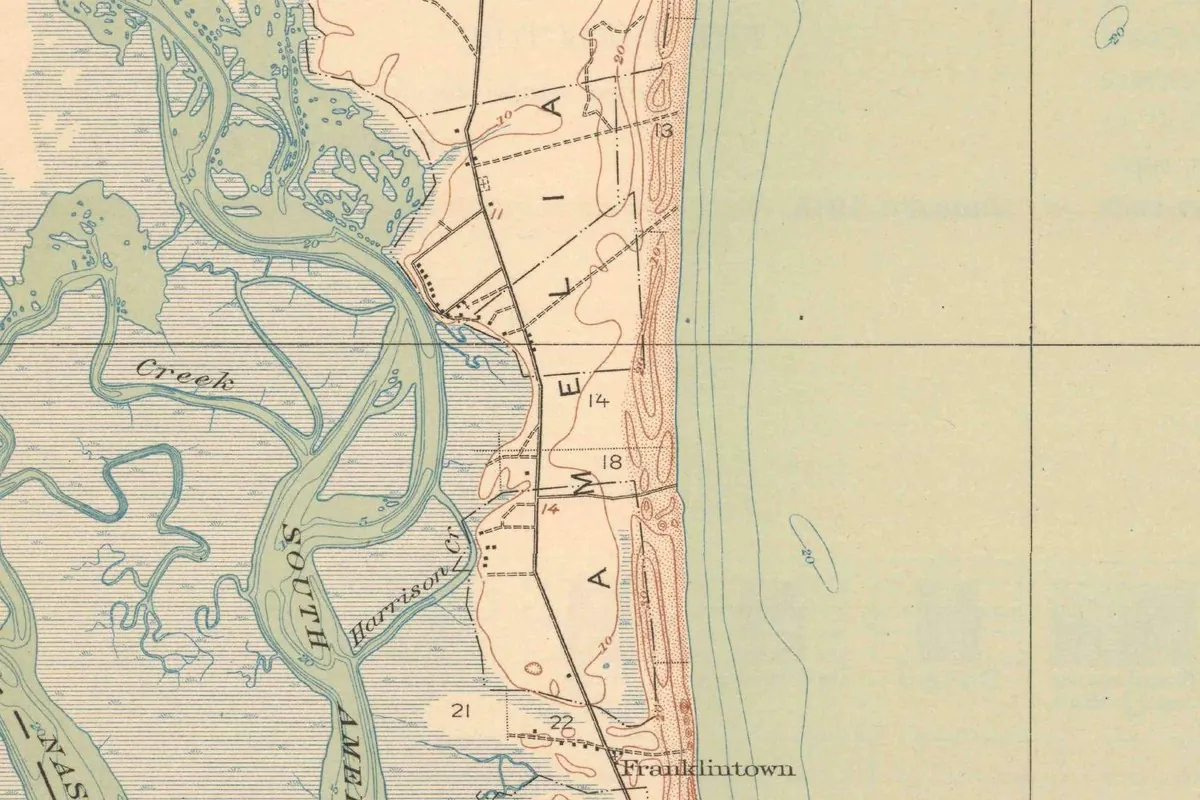
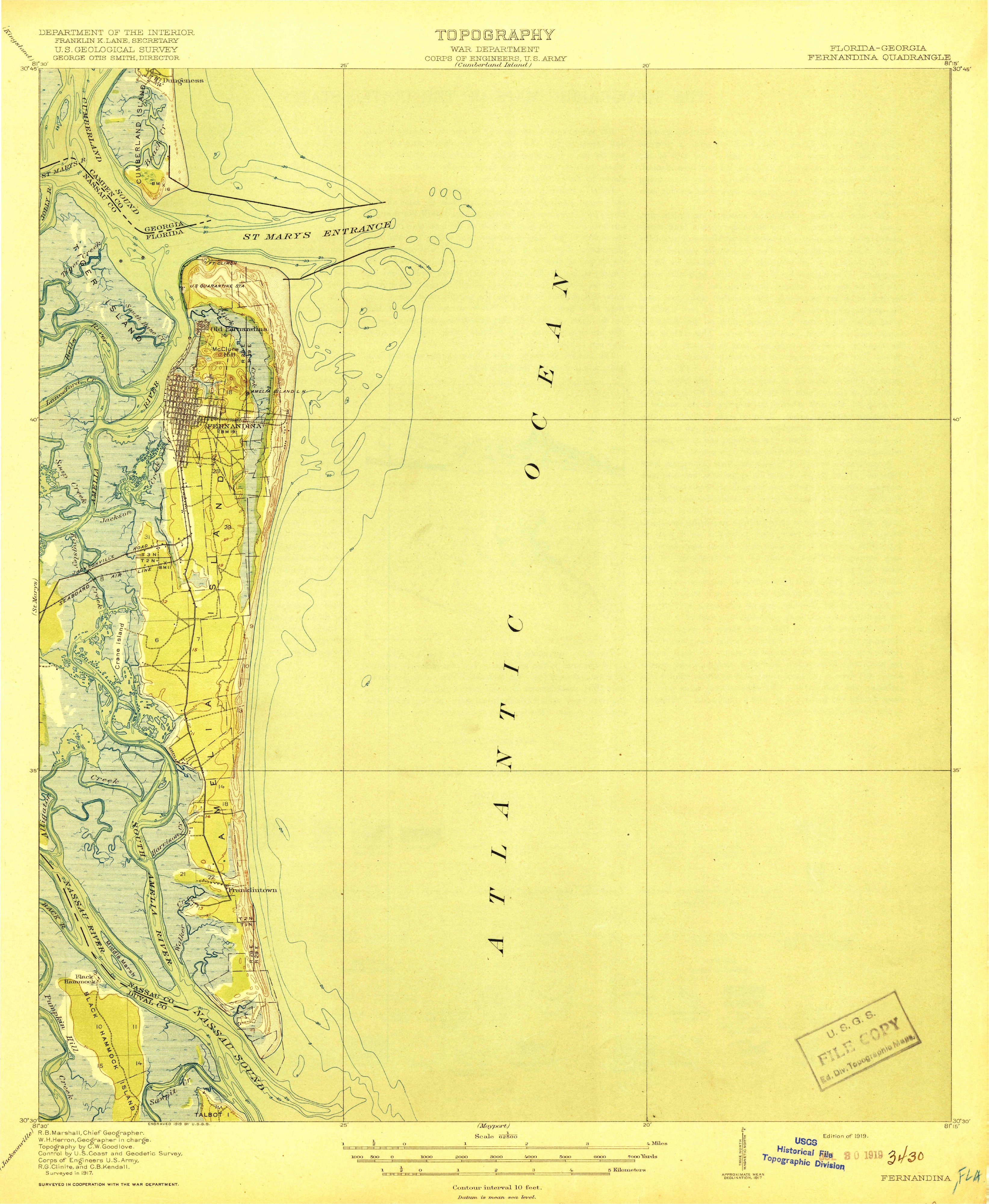
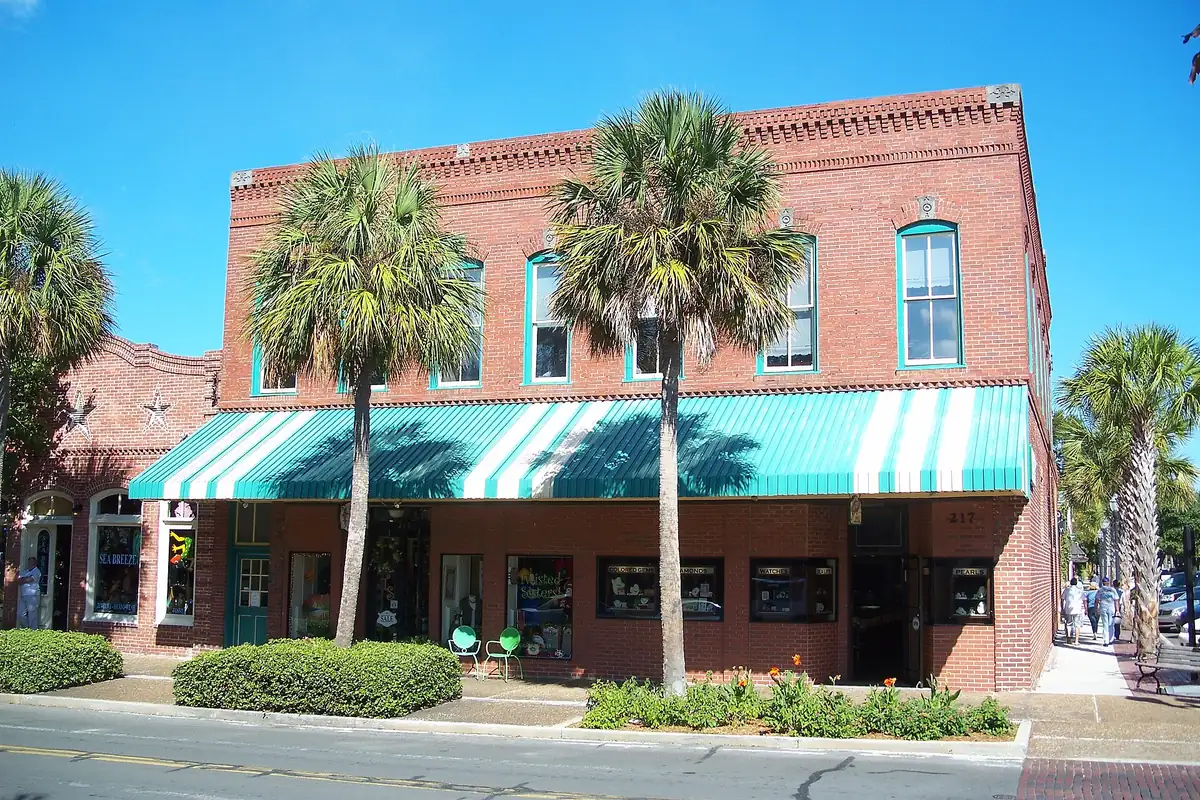
The map at the top of this page comes from the Geological Survey’s Fernandina sheet, surveyed in 1917 in cooperation with the War Department and issued in 1919. It shows the two towns the city describes. You can see Fernandina’s big grid on the river, and Old Fernandina, the site of the 1811 plat, at the top of the map. The photo below shows a storefront on Centre Street, in the downtown historic district that grew up after the move.
Quick answers
Who is Fernandina Beach named after?
King Ferdinand VII of Spain, according to the city, the Florida Department of State and the Amelia Island Museum of History. Gannett (1905) says a Spaniard named Fernandez, and Britannica names Domingo Fernandez as one possibility.
Who named Fernandina?
Governor Enrique White of Spanish East Florida, in 1810, according to the Amelia Island Museum of History. Surveyor George J. F. Clarke laid out the town in 1811.
When did Fernandina become Fernandina Beach?
In 1951. The Amelia Island Chamber of Commerce dates the incorporation of Fernandina Beach to that year.
What is Old Fernandina?
The first site of the town. The city says Old Town keeps the 1811 Spanish plat, and that the town moved south after David Yulee’s railroad arrived.
Key dates
- 1562Jean Ribault, the French Huguenot explorer, names the island Isle de Mai, the city says.
- 1786Domingo Fernández, born in Vigo, arrives in St. Augustine about this year.
- 1810Governor Enrique White names the town Fernandina, by the museum's account.
- 1811Surveyor George J. F. Clarke completes the plat of Fernandina in a Spanish grid.
- 1824Fernandina is founded, by the museum's account.
- 1833Domingo Fernández dies on September 3.
- 1905Henry Gannett writes that Fernandina was named for a Spaniard, Fernandez.
- 1951Fernandina Beach is incorporated, the Chamber of Commerce says.
Things to do in Fernandina Beach, Florida
Fort Clinch State Park
A 1,400-acre (567 ha) park around one of the most well-preserved 19th-century fortifications in the country, with a row of cannons pointing across the St. Mary's River into Georgia, and maritime hammocks of live oaks for hiking and biking.
Fernandina Plaza Historic State Park
A grassy bluff of about 0.8 acres (0.3 ha) above the Amelia River, once the parade field called Plaza San Carlos and the site of Fort San Carlos, a Spanish fort of the early 1800s. The state has managed it since 1941.
Amelia Island Museum of History
A museum in the former Nassau County Jail that calls itself the first spoken history museum in Florida, with docent-led tours through 4,000 years of island life, from the Timucua to the Victorian era, and walking tours of the historic district.
Downtown Historic District
Fernandina's downtown, whose buildings reflect its growth in the late 19th and early 20th centuries. The city also protects the Amelia Island Lighthouse, the Peck Center and the Oxley-Heard Funeral Home as individually designated historic sites.
Getting there
Open Fernandina Beach in Google Maps
Opens in a new tab. The pin is the center of Fernandina Beach in the USGS place-name record.
The closest airports, Amtrak stations and intercity bus stops, measured in a straight line from the center of Fernandina Beach.
Airports
- Jacksonville International (JAX) 18 mi 29 km
- Brunswick Golden Isles (BQK) 41 mi 66 km
Amtrak trains
- Jacksonville station (JAX) 26 mi 42 km
- Jesup station (JSP) 69 mi 111 km
Intercity buses
- Greyhound Kingsland Hospitality Ave 14 mi 22 km
- Amtrak Chartered Vehicle Amtrak Connecting Service · Jacksonville 26 mi 42 km
- FlixBus Jacksonville Greyhound Bus Station 27 mi 43 km
Distances are as the crow flies, not by road. We don't list schedules or fares because they change; check with the airline, Amtrak or the bus company before you go. Official data (FAA commercial service airports (2025), FAA airport locations, Amtrak stations and Intercity Bus Atlas) from the FAA and the U.S. Bureau of Transportation Statistics, checked Nov 17, 2026.
Sponsored
Staying in Fernandina Beach?
Compare hotels in Fernandina Beach, Florida, on Expedia.
See hotels in Fernandina BeachWe may earn a commission if you buy through this link. It never changes what we write. Read our affiliate disclosure
Historical Sources & References
- City of Fernandina Beach, “Isle of Eight Flags”. Clarke’s plat of 1811 “named in honor of King Ferdinand VII,” Napoyca, Ribault’s Isle de Mai, Isla de Santa Maria and Oglethorpe’s Amelia Island.
- City of Fernandina Beach, “Historic Districts”. Old Town as the first site of Fernandina and the move after Yulee’s railroad.
- Berta Isabel Arias, “Spanish Influence on Amelia Island through the Centuries” (Amelia Island Museum of History, 2021). Enrique White naming the town in 1810, Clarke’s plan of 1811, White Street, the 1824 founding and the life of Domingo Fernández.
- Florida Department of State, release of July 25, 2025. Ferdinand VII, the 1573 Laws of the Indies, the northernmost settlement in Spanish East Florida, and Amelia Island in northeast Florida.
- Henry Gannett, The Origin of Certain Place Names in the United States (1905), p. 125. “Named for a Spaniard, Fernandez.” Checked against the page image.
- Encyclopaedia Britannica, “Fernandina Beach”. Domingo Fernandez as one possible namesake.
- Amelia Island Chamber of Commerce, “Fernandina Beach”. Ferdinand VII and the incorporation of 1951.
- Fort Clinch State Park; Fernandina Plaza Historic State Park; Amelia Island Museum of History. The details in the things-to-do list.
- GNIS feature ID 294308 (U.S. Geological Survey). Fernandina Beach in the national gazetteer, in Nassau County, with its coordinates.
- U.S. Geological Survey, Fernandina sheet (1919). The 1:62,500 map that the image at the top of this page was cropped from.
Sponsored
Put this 1919 map on your wall
The 1919 USGS and War Department Fernandina sheet is in the public domain. Download the full-size scan for free, then have it printed on canvas with CanvasOnTheCheap.
Print a map on canvasDownload the full-size mapWe may earn a commission if you buy through this link. It never changes what we write. Read our affiliate disclosure
Spot something wrong, or know more? Tell us here. You can also email us or use our contact page. Corrections are noted here with their date, never made silently.