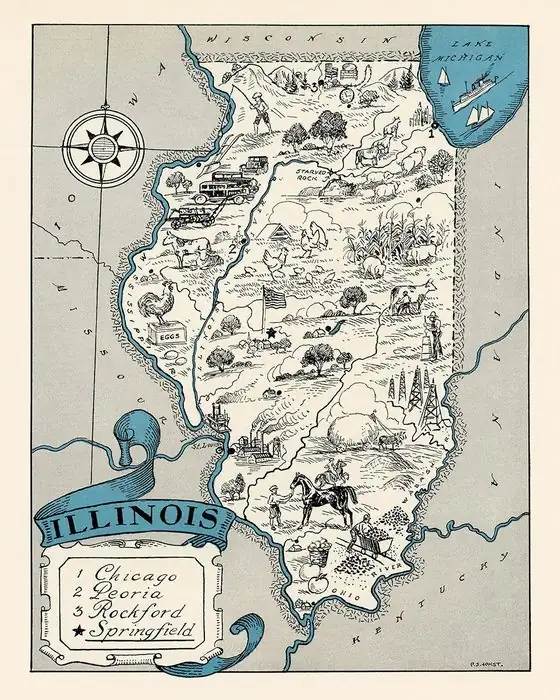
Rockford, Illinois, and the Ford That Replaced Midway
Rockford is named for a rock-bottomed ford where people crossed the Rock River. The settlement was first called Midway, since it lay about halfway between Chicago and Galena. John H. Thurston's 1891 memoir credits Dr. Josiah C. Goodhue with the new name in 1835, though an Illinois law of January 1836 still said Midway.
Midway on the Rock River
Rockford, Illinois, got its name from a shallow, rock-bottomed crossing on the Rock River, after its first settlers had called the place Midway. The new name was plain description. There was a rock, and there was a ford.
The old name was about distance. Germanicus Kent, one of the first settlers, called his colony Midway. Charles A. Church’s 1900 History of Rockford and Winnebago County says the name “is said to have been proposed by Mrs. Kent” and came from the fact that the settlement sat about halfway from Chicago to Galena, up in the far northwest corner of Illinois. Kent used it in writing. Church quotes a letter he headed “Midway, Rock River, JoDaviess county, Illinois, June 17, 1835.” (Winnebago County didn’t exist yet.)
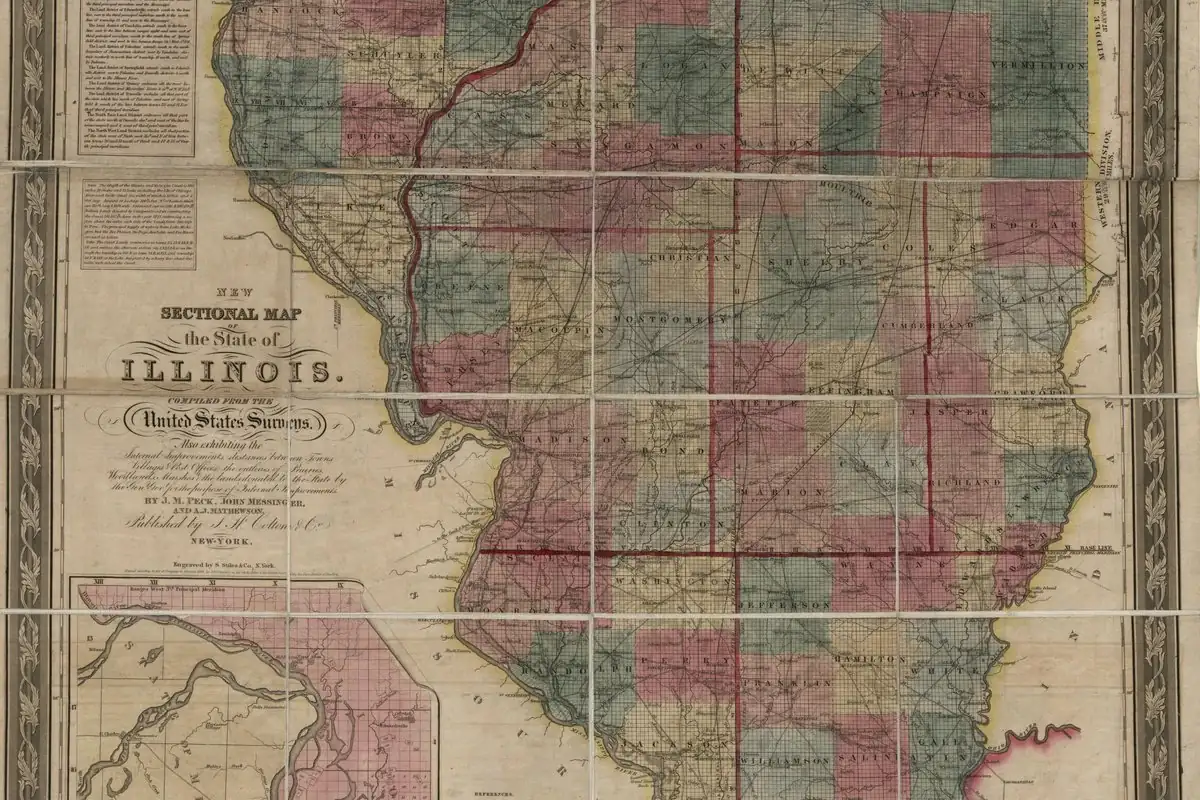
The state used it too. Church cites an Illinois act approved January 15, 1836, that laid out a road to Galena and named its stops: “Elgin on Fox river,” “Belvidere on Squaw Prairie,” and “Midway at the ford on Rock river.” The same act named Elgin as another stop on that road. If you look closely at the wording, though, you’ll see that even the law that still said Midway described the place by its ford.
A meeting in a Chicago doctor’s office
The fullest account of the renaming comes from John H. Thurston, who came to Rockford as a 13-year-old in 1837. In 1891 he published Reminiscences, Sporting and Otherwise, of Early Days in Rockford, Ill., and before the first chapter he printed a short sketch of Dr. Josiah C. Goodhue under the heading “ROCK FORD.” Goodhue’s daughter, Mrs. C. F. Holland, had heard her father tell the story and gave Thurston the facts.
According to that sketch, in the summer of 1835 a group of men with a stake in the claim met at Goodhue’s office on Lake Street in Chicago. Daniel S. Haight and Kent came from the Rock River, William H. Gilman from Belvidere, and John P. Chapin, Ebenezer Peck and Stephen Edgel were there too. Mrs. Kent had suggested Midway, Thurston writes, but none of the interested parties liked it. Then:
“Various names were suggested and rejected, until Doct. Goodhue said ‘Why not call it Rock Ford, from the splendid rock-bottom ford on the river there?’ It seemed an inspiration, and was adopted unanimously.”
Later in the book, on pages 84 and 85, Thurston repeats that Goodhue “was author of the name Rockford, and it was so called when I arrived.” He adds that he’d never heard the name Midway until recent years, when a local newspaper editor kept pushing it.
Summer 1835, or still Midway in 1836?
You can probably spot the problem. Thurston’s meeting happened in the summer of 1835, but the legislature still wrote Midway in January 1836. Church noticed it in 1900. He called the date of the christening “uncertain” and offered a polite explanation: news traveled slowly, and the lawmakers at Vandalia, then the state capital, may not have heard about the change. He also points to a letter Kent wrote from Rockford on October 17, 1837, and concludes that the settlement went by Midway for one to three years. The 1877 county history is more definite: it says Midway was dropped for Rockford “late in 1835.”
Thurston’s own memory of not hearing Midway also sits awkwardly beside Kent’s 1835 letter and the 1836 law. He arrived in 1837, though, and by then the new name may simply have taken over.
Whose idea was the ford?
There’s a second tradition, and it’s older in print than Thurston’s book. The 1877 History of Winnebago County says that “by the Indians the place was known as Rock ford.” Near the site of the dam then standing, it says, there was a solid rock bottom where the water was usually shallow enough to cross with ponies. Church repeated that version in 1900, credited only to “one writer,” and then gave Thurston’s. He called Thurston’s story “somewhat different, though not necessarily a conflicting, version.”
He had a point. Both stories turn on the same physical fact, the rock-floored crossing. What they disagree about is who first put the words together, Native people who used the ford or a Chicago doctor in a room full of investors. Neither the 1877 book nor Church names a source for the Indian name, and the 1877 book gives the name only in English.
Henry Gannett’s 1905 survey of American place names took yet another line. It says Rockford was “so named because of its situation on both sides of Rock River.” That explains the Rock but skips the ford, and the older local histories don’t support it.
Quick answers
Why is Rockford, Illinois, called Rockford?
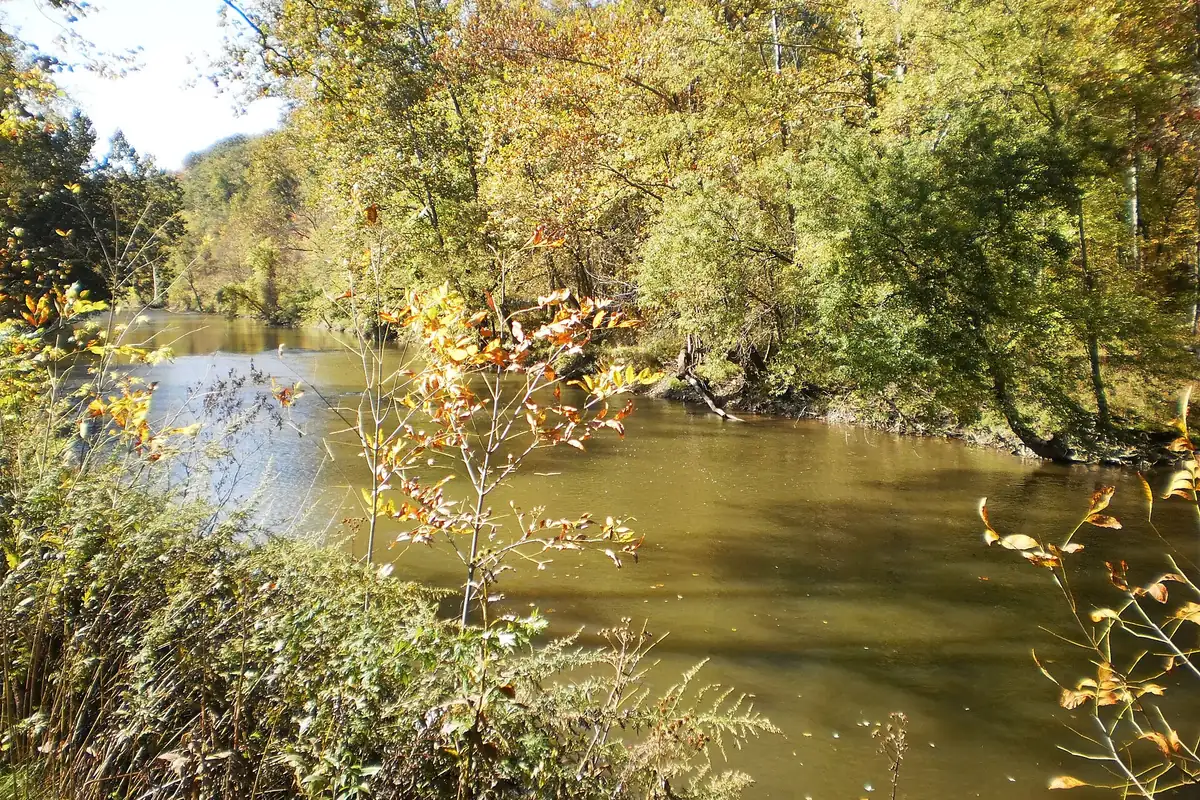
For a rock-bottomed ford on the Rock River. The 1877 and 1900 histories describe a solid rock bottom shallow enough to cross, and Thurston’s 1891 book calls it a “splendid rock-bottom ford.”
What was Rockford, Illinois, called before?
Midway. Germanicus Kent used it in a June 1835 letter, and an Illinois law of January 1836 still called the place “Midway at the ford on Rock river.”
Who named Rockford?
Thurston’s 1891 book credits Dr. Josiah C. Goodhue, citing Goodhue’s daughter. The 1877 county history says the name came from what Native people called the crossing.
Key dates
- 1835On June 17, Kent dates a letter "Midway, Rock River, JoDaviess county." Thurston puts the Rockford naming meeting in Chicago this summer.
- 1836An act approved January 15 lays out a road to Galena through "Midway at the ford on Rock river."
- 1837On October 17, Kent writes a letter from Rockford, which Charles A. Church uses to date the end of Midway.
- 1877The History of Winnebago County says the name Midway was abandoned for Rockford late in 1835.
- 1891John H. Thurston publishes the story of Dr. Josiah C. Goodhue naming the town, as told by Goodhue's daughter.
Getting there
Open Rockford in Google Maps
Opens in a new tab. The pin is the center of Rockford in the USGS place-name record.
The closest airports, Amtrak stations and intercity bus stops, measured in a straight line from the center of Rockford.
Airports
- Chicago/Rockford International (RFD) 5 mi 8 km
- Dane County Regional/Truax Field (MSN) Madison 61 mi 99 km
- Chicago O'Hare International (ORD) 64 mi 103 km
Amtrak trains
- Mendota station (MDT) 50 mi 80 km
- Plano station (PLO) 51 mi 82 km
Intercity buses
- Van Galder (Coach USA) 7559 Walton St - Van Galder Terminal 7 mi 11 km
- FlixBus Rockford Mass Transit 7 mi 11 km
- Greyhound Rochelle Petro Rochelle Travel 23 mi 38 km
Distances are as the crow flies, not by road. We don't list schedules or fares because they change; check with the airline, Amtrak or the bus company before you go. Official data (FAA commercial service airports (2025), FAA airport locations, Amtrak stations and Intercity Bus Atlas) from the FAA and the U.S. Bureau of Transportation Statistics, checked Nov 13, 2026.
Sponsored
Staying in Rockford?
Compare hotels in Rockford, Illinois, on Expedia.
See hotels in RockfordWe may earn a commission if you buy through this link. It never changes what we write. Read our affiliate disclosure
Historical Sources & References
- John H. Thurston, Reminiscences, Sporting and Otherwise, of Early Days in Rockford, Ill. (1891). The unnumbered sketch of Dr. Goodhue before Chapter I, with the 1835 meeting in Chicago, Mrs. Kent’s rejected Midway and the “Rock Ford” quotation; pp. 84-85 for Goodhue as “author of the name Rockford.”
- History of Winnebago County, Ill. (H. F. Kett & Co., 1877), p. 399. Kent’s colony at Midway, the halfway point between Chicago and Galena, the abandonment of Midway for Rockford “late in 1835,” and the statement that “by the Indians the place was known as Rock ford.”
- Charles A. Church, History of Rockford and Winnebago County (1900), pp. 63, 65-66. The act of January 15, 1836, Kent’s “Midway” letter of June 17, 1835, his Rockford letter of October 17, 1837, both naming traditions and the uncertain date of the change.
- Henry Gannett, The Origin of Certain Place Names in the United States (USGS, 1905), p. 265. Rockford “so named because of its situation on both sides of Rock River.”
- USGS Geographic Names Information System, record 416843. Entry 416843, the database record that ties the name Rockford to Winnebago County.
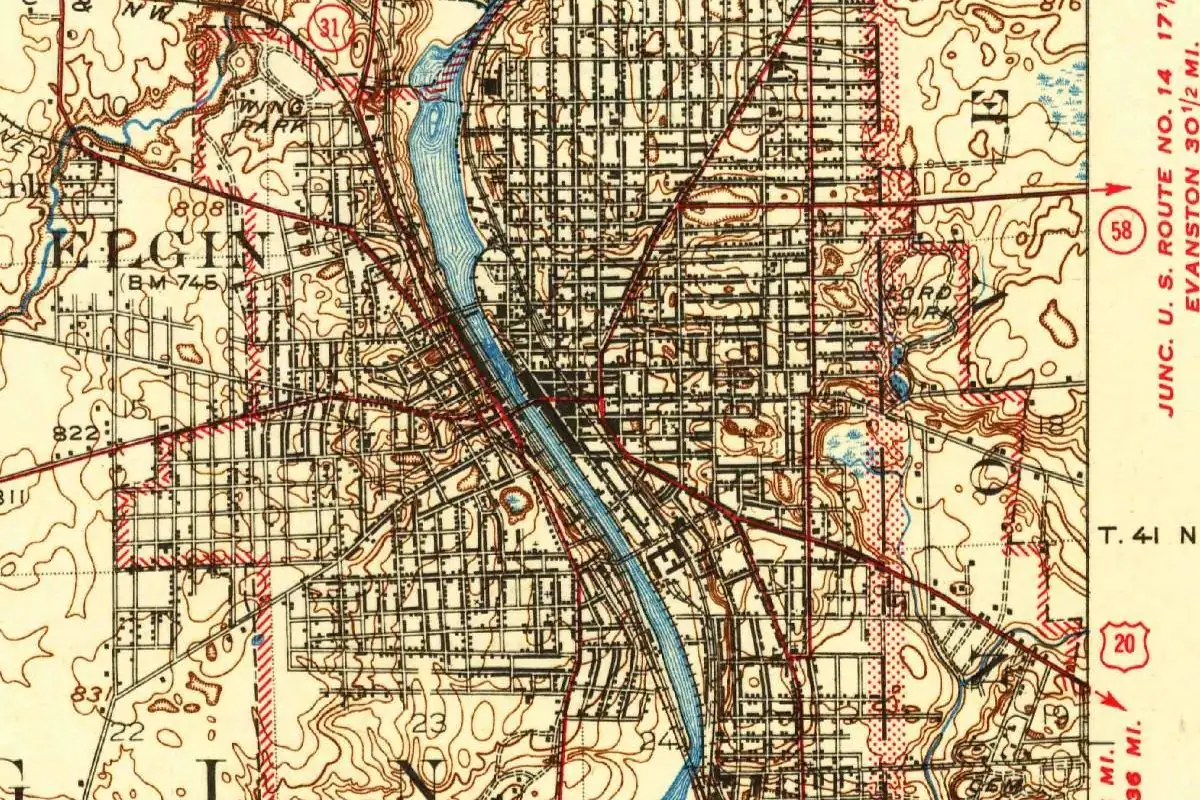
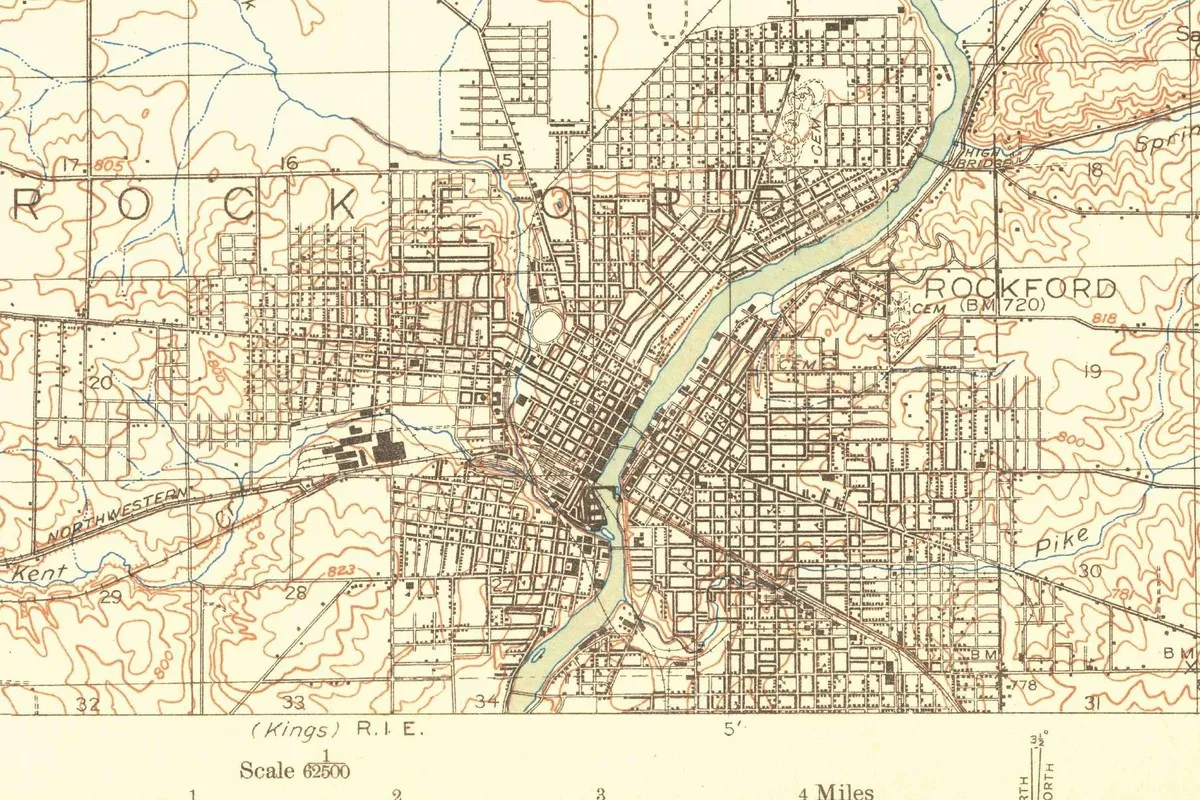
- U.S. Geological Survey, Rockford sheet (1918). A 1:62,500 survey of the city a century ago, with the Rock River cutting through the downtown grid and the city’s name in spaced capitals.
Spot something wrong, or know more? Tell us here. You can also email us or use our contact page. Corrections are noted here with their date, never made silently.