Overland Park, Kansas, Began as One Subdivision's Name
Overland Park, Kansas, is named for one of developer William B. Strang Jr.'s subdivisions. Strang platted it in 1905 along his interurban line, near the old Santa Fe Trail, in a town site known as Overland. A 1915 county history lists Overland Park next to Overland Hill and Overland Heights. Why Strang chose Overland isn't on record.
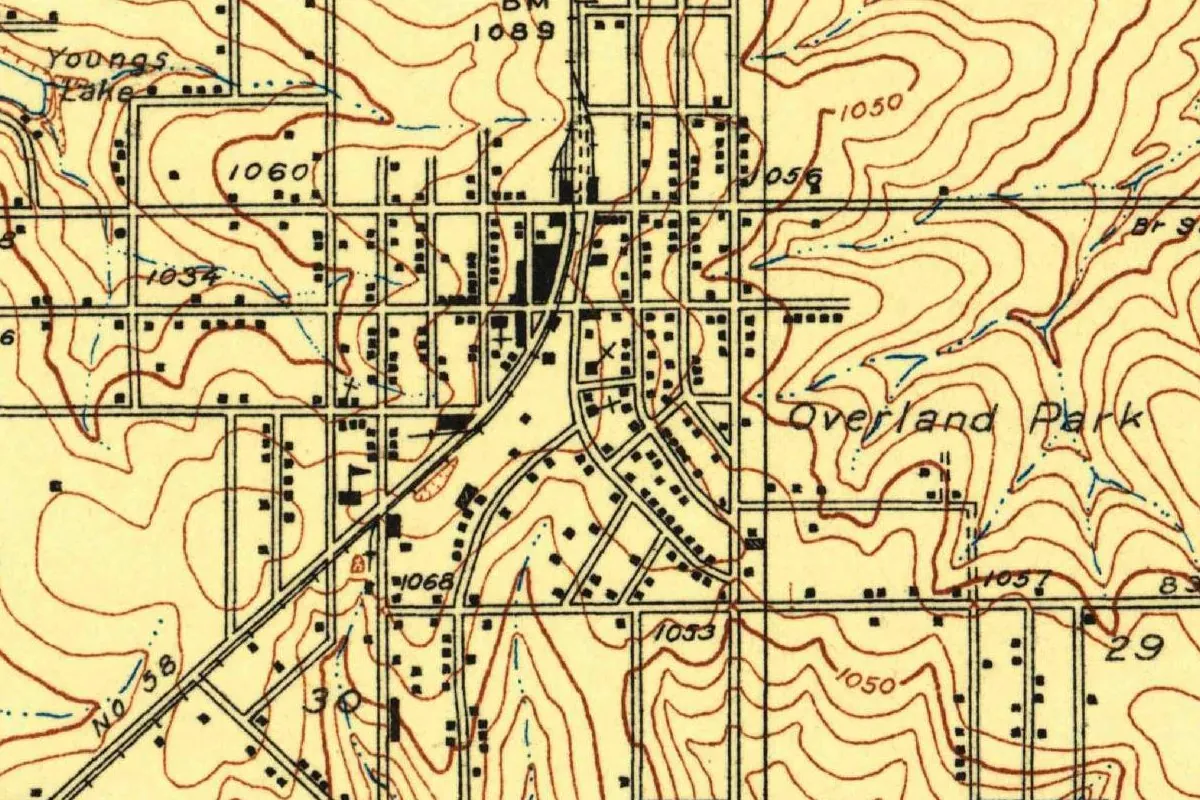
One subdivision among five
Overland Park, Kansas, started out as the name of one subdivision, 233 lots beside a trolley depot at a place called Overland, laid out by William Strang. The rest of the town site had names too, and nearly all of them started with the same word.
You can see it in Ed Blair’s History of Johnson County, Kansas, published in 1915, when the place was about ten years old. Blair walks through the whole town site, piece by piece:
“The entire town site of Overland comprises 500 acres, divided as follows: Overland Park is laid out in 233 choice building lots 50x140 feet, which lie just west of the depot at Overland on the Overland Park turnpike.”
Then come Overland Hill, with 90 bungalow sites north of the depot, Overland Heights to the east, Overland View and Overland Place. So in 1915 the depot was “at Overland,” the area was “the Overland district,” and Overland Park was one of five neighborhoods. It’s the one whose name ended up on the whole city.
William Strang and the Strang Line
The man behind all of it was William B. Strang Jr. The Overland Park Historical Society says he came to Kansas City in 1903 and saw “something others had overlooked” in the farm country on the Kansas side of the state line. He bought land, laid out subdivisions and planted thousands of trees, because he was selling a park-like place to live within reach of Kansas City. The society calls him the man “who gave Overland Park its name.”
The commute was the key. Strang built the Missouri and Kansas Interurban Railway, a trolley line that became known as the Strang Line, and built a depot for it in his new town. The historical society calls the depot the first commercial building in Overland Park and dates the founding to 1906. A historic trails marker put up with the National Park Service says Strang platted his development in 1905. Blair adds that by 1915 there was a bank, a post office, a lumber company, a barber shop and an airfield where early aviators flew.
So why “Overland”?
Here’s the part nobody wrote down. None of the sources we checked, from Blair in 1915 to the historical society today, has Strang explaining the word.
What the sources do show is where the town sat. Blair says the Strang Line ran along “the historic Santa Fe Trail, now a rock road that parallels the Strang in the Overland district,” and one of the additions fronted on Santa Fe Trail Boulevard. The trails marker says the trolley followed near the route of the Santa Fe, Oregon and California trails out of Westport, the roads that carried traders and freight wagons as early as the 1820s and emigrant wagons from the 1840s. The Downtown Overland Park Partnership describes the old downtown as “situated on the historic Santa Fe Trail.”
That’s why you’ll see it said that the name joins Strang’s park idea to the old overland trail. Legends of Kansas, for one, says the name “reputedly” blends the two. It’s a reasonable guess, and the geography fits. But it’s still a guess. There’s no letter or plat note from Strang that says so.
A suburb that waited 55 years to be a city
Strang died in 1921, and the historical society says growth after that was modest. The Strang Line kept running until 1940. Overland Park didn’t incorporate until May 20, 1960, when it became a city of 28,085 people, a long time after Strang’s little subdivision had given the whole area its name.
Quick answers
Who named Overland Park, Kansas?
William B. Strang Jr. The Overland Park Historical Society credits him with giving Overland Park its name, and the Downtown Overland Park Partnership says he named one of his subdivisions Overland Park.
Is Overland Park named after the Overland Trail?
Not that anyone can prove. The town sits on the old Santa Fe Trail, and some writers say the name blends the park idea with the trail, but no record from Strang explains the word.
Was Overland Park ever just called Overland?
Partly. Blair’s 1915 county history calls the town site and its depot Overland, with Overland Park as one of five additions, though he also uses Overland Park for the whole place.
When did Overland Park become a city?
On May 20, 1960, with 28,085 residents, more than half a century after Strang laid out his first lots.
Key dates
- 1903William B. Strang Jr. comes to Kansas City and starts buying land on the Kansas side of the state line.
- 1905Strang plats a residential development in the area, according to a historic trails marker.
- 1906The Overland Park Historical Society dates the founding of Overland Park by Strang to this year.
- 1915A Johnson County history lists the additions of the town site of Overland, Overland Park among them.
- 1921Strang dies.
- 1940The Strang Line stops running.
- 1960May 20: Overland Park becomes a city, with 28,085 residents.
Getting there
Open Overland Park in Google Maps
Opens in a new tab. The pin is the center of Overland Park in the USGS place-name record.
The closest airports, Amtrak stations and intercity bus stops, measured in a straight line from the center of Overland Park.
Airports
- Kansas City International (MCI) 22 mi 35 km
- Manhattan Regional (MHK) 108 mi 174 km
Amtrak trains
- Kansas City station (KCY) 8 mi 14 km
- Independence station (IDP) 15 mi 24 km
Intercity buses
- Greyhound Kansas City 47Th St Transit Center 9 mi 15 km
- Jefferson Lines Kansas City 10 mi 16 km
- FlixBus Kansas City Bus Station 10 mi 16 km
Distances are as the crow flies, not by road. We don't list schedules or fares because they change; check with the airline, Amtrak or the bus company before you go. Official data (FAA commercial service airports (2025), FAA airport locations, Amtrak stations and Intercity Bus Atlas) from the FAA and the U.S. Bureau of Transportation Statistics, checked Nov 13, 2026.
Sponsored
Staying in Overland Park?
Compare hotels in Overland Park, Kansas, on Expedia.
See hotels in Overland ParkWe may earn a commission if you buy through this link. It never changes what we write. Read our affiliate disclosure
Historical Sources & References
- Ed Blair, History of Johnson County, Kansas (1915), pp. 152-154. The Strang Line along “the historic Santa Fe Trail … in the Overland district” (p. 152); the “entire town site of Overland” and its additions, Overland Park, Overland Hill, Overland Heights, Overland View and Overland Place, the businesses, the postmistress and the aviation field (p. 153); the Overland Park State Bank of March 1910 (p. 154).
- Overland Park Historical Society, “Overland Park History Overview”. Strang’s arrival in 1903, the trees and subdivisions, the Strang Line, “the visionary who gave Overland Park its name,” his death in 1921, the end of the line in 1940, and the city of May 20, 1960, with 28,085 residents.
- Overland Park Historical Society, “The Strang Depot”. The depot as the first commercial building, the founding by Strang in 1906, and the 5,000 trees he planted.
- Historical marker “Overland Park,” transcribed by the Historical Marker Database. Erected by the Kansas City Area Historic Trails Association and the National Park Service: Strang platted a residential development in 1905, and his trolley followed near the Santa Fe, Oregon and California trails.
- Downtown Overland Park Partnership, “About Downtown”. Strang “named one of his subdivisions ‘Overland Park’”; the downtown on the historic Santa Fe Trail.
- Legends of Kansas, “Overland Park, Kansas”. An example of the trail explanation, which it presents as what the name “reputedly” means.
- GNIS feature 479210 (U.S. Geological Survey). Where the place-name database puts Overland Park: Johnson County, with the latitude and longitude used on this page.
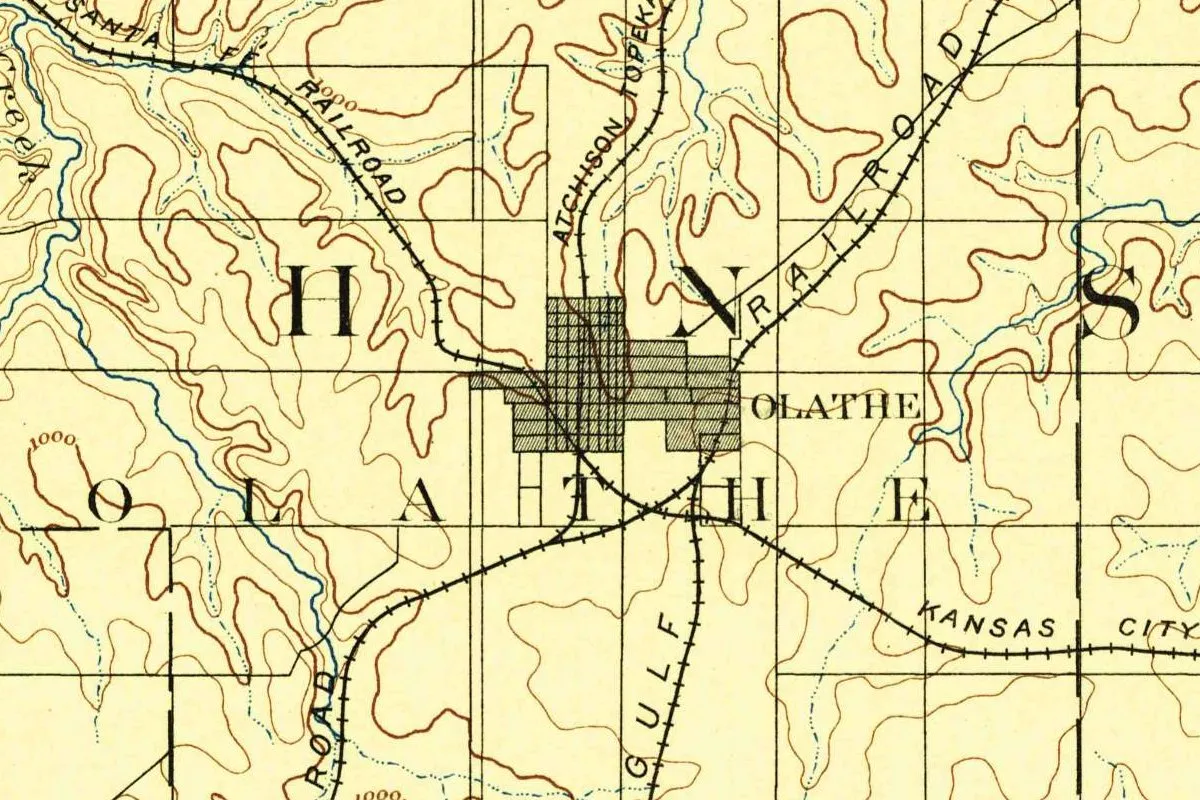
- U.S. Geological Survey, Lenexa sheet (1935). The source of the map at the top of this page.
Spot something wrong, or know more? Tell us here. You can also email us or use our contact page. Corrections are noted here with their date, never made silently.