Joshua Tree National Park: Name, History, Visiting
Joshua Tree National Park is named for its trees, a name the Park Service chief offered in 1936 over “Desert Plant” and a plan to honor Minerva Hoyt. The memo where he did it survives, so the park’s name is well documented. The tree’s name is another story, and the version you’ve probably heard, about Mormon pioneers, has almost nothing behind it.
Joshua Tree National Park Name Origin
In the spring of 1936 the monument didn’t have a name yet, and the one on the table was “Desert Plant National Monument.” Interior Secretary Harold Ickes didn’t like it. A memo to Ickes from the director of the National Park Service, dated April 1, 1936, agrees: “I feel that your criticism of the suggested name ‘Desert Plant National Monument’ is correct.”
The director then explains that he’d already headed off a second idea. Friends of Minerva Hoyt, the Pasadena woman who had campaigned for the monument, wanted it named after her. He answered that “Joshua Tree National Monument” would fit much better, “as that plant comprises the main exhibit of the area,” and told Ickes that since he liked the name, he might as well approve it and settle the matter. The page carries an “Approved” line for the secretary, stamped April 4, 1936. So Desert Plant was only ever a proposal, and Hoyt’s name went to a mountain instead, much later.
The name caused one more snag. On August 4, 1936, the Interior Department’s acting solicitor, Frederic L. Kirgis, wrote that the Justice Department had objected because the name suggested the monument existed mainly to save Joshua trees, and because trees might not count as “objects” under the 1906 law used to create monuments. Kirgis called the objection to the name “without validity,” and added that Justice would drop it if the monument’s justification rested on its desert character rather than on the trees.
People in the Park Service second-guessed the name in 1951. An acting regional director, Herbert Maier, wrote on August 22 that a visitor named Paul Franke thought the monument needed a better name, and that “Joshua Tree” did “seem unsatisfactory” because saving the local trees wasn’t the main reason for the monument. A note on the draft disagreed: “Everyone is used to the present name.” Superintendent Frank R. Givens answered on September 17 that he couldn’t come up with anything better, and “We doubt that Desert Plant National Monument would be any improvement over the present name.” It stayed.
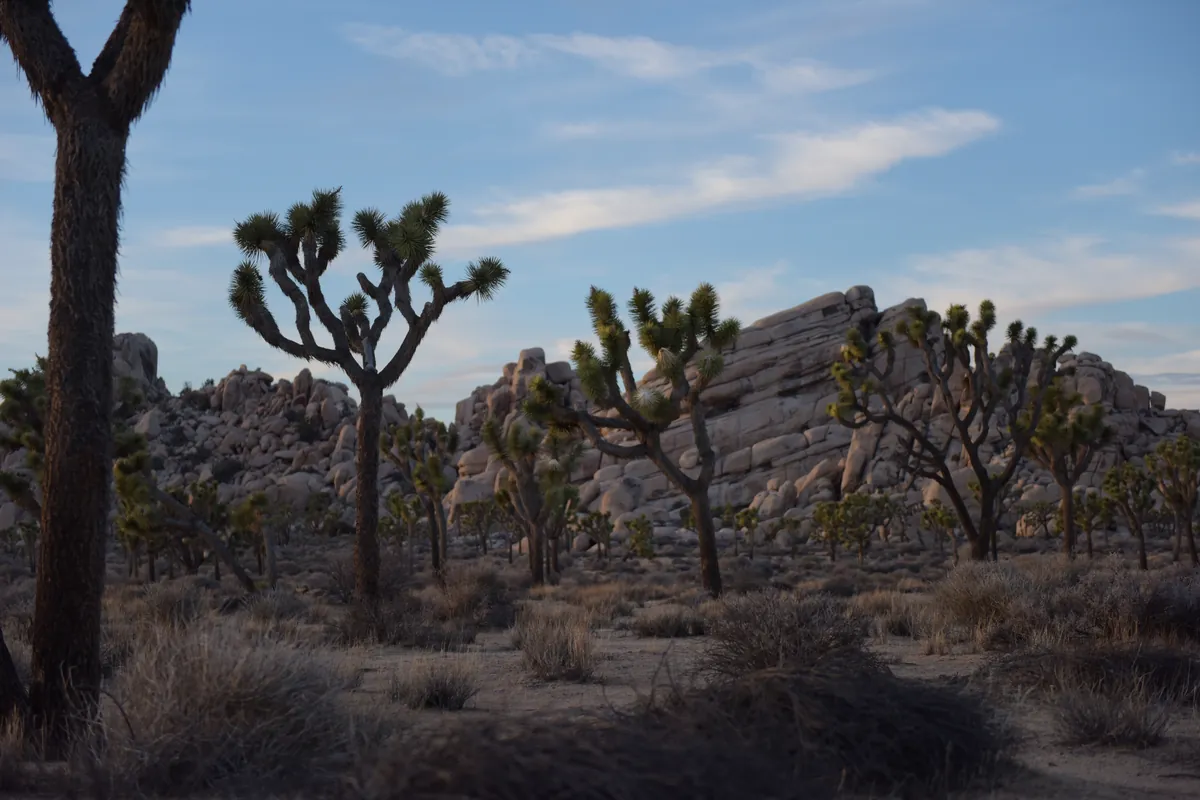
What about the tree? The Park Service says the Joshua tree is Yucca brevifolia, a member of the agave family, and that the Cahuilla called it hunuvat chiy’a or humwichawa. The usual story is that Mormon settlers in the mid-1800s thought its raised branches looked like the biblical Joshua waving them on toward the promised land. The park’s own Joshua tree page says “historical records offer little evidence” for that, and its FAQ says the tale “is not substantiated in record and might be more myth than history.” The tree has also been called a dirk pear tree, yucca tree and dragon yucca, and the Park Service says nobody knows why “Joshua tree” won out.
Joshua Tree National Park History
The monument came out of one woman’s campaign. The Park Service says Minerva Hoyt of Pasadena, who loved desert plants, worried about cactus and other plants being dug up for Los Angeles gardens. Her work paid off on August 10, 1936, when President Franklin D. Roosevelt signed the proclamation that set aside about 825,000 acres as Joshua Tree National Monument.
At first the monument didn’t even have its own boss. The Park Service says Yosemite’s superintendent ran it until James Cole became the first superintendent in 1940. In 1950 the monument shrank by 265,000 acres to leave out mining land.
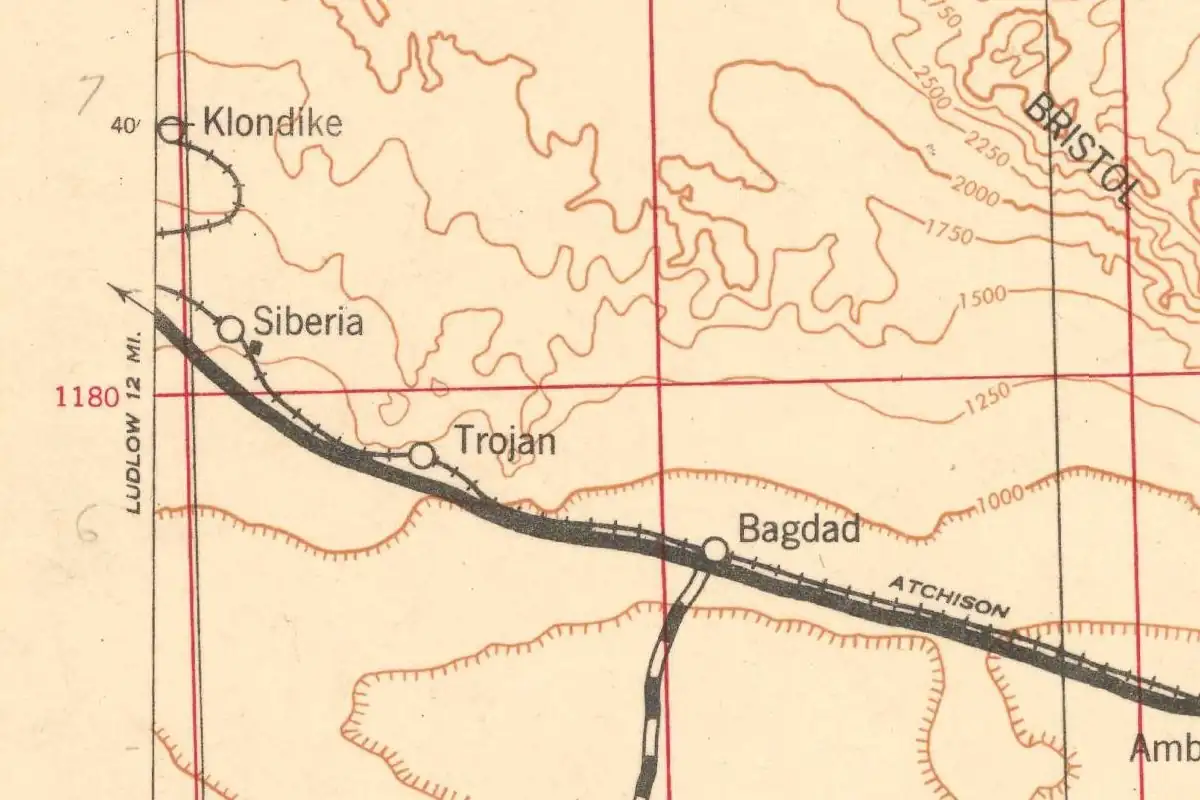
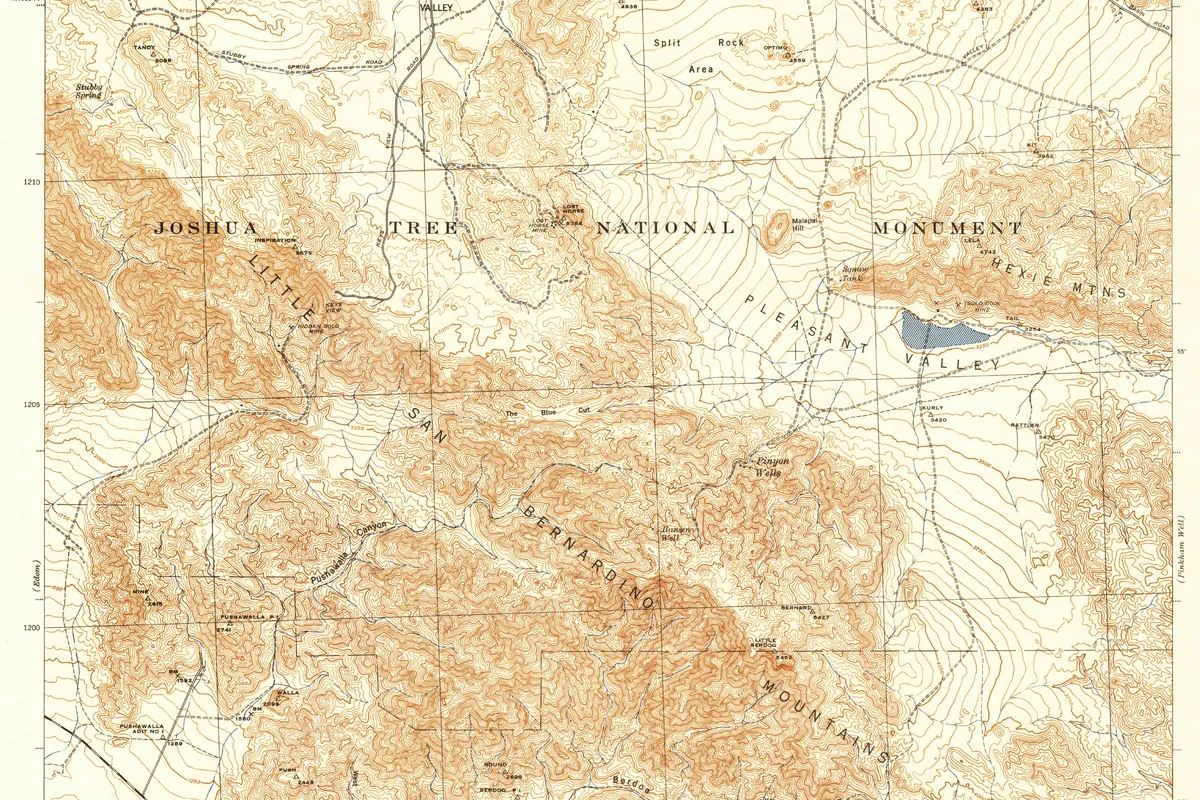
The 1944 map at the bottom of this page shows the monument in those early years. It was made by the Army’s Corps of Engineers from 1941 air photos and a 1943 survey.
The big change came on October 31, 1994. The Desert Protection Bill made Joshua Tree a national park and added 234,000 acres, with new lines that follow whole mountain ranges instead of survey grids. The U.S. Board on Geographic Names gave Hoyt’s name in August 2012 to a 5,405-foot (1,647 m) peak in the park, now Mount Minerva Hoyt.
Visiting Joshua Tree National Park
The trees themselves are the reason you came. The Park Service says the tallest ones in the park pass 40 feet (12 m) and that a typical Joshua tree may live around 150 years. If you want to see the biggest, the park points you to the Covington Flats area. You can thank a small insect for the forest: the yucca moth pollinates the flowers while laying its eggs in them.
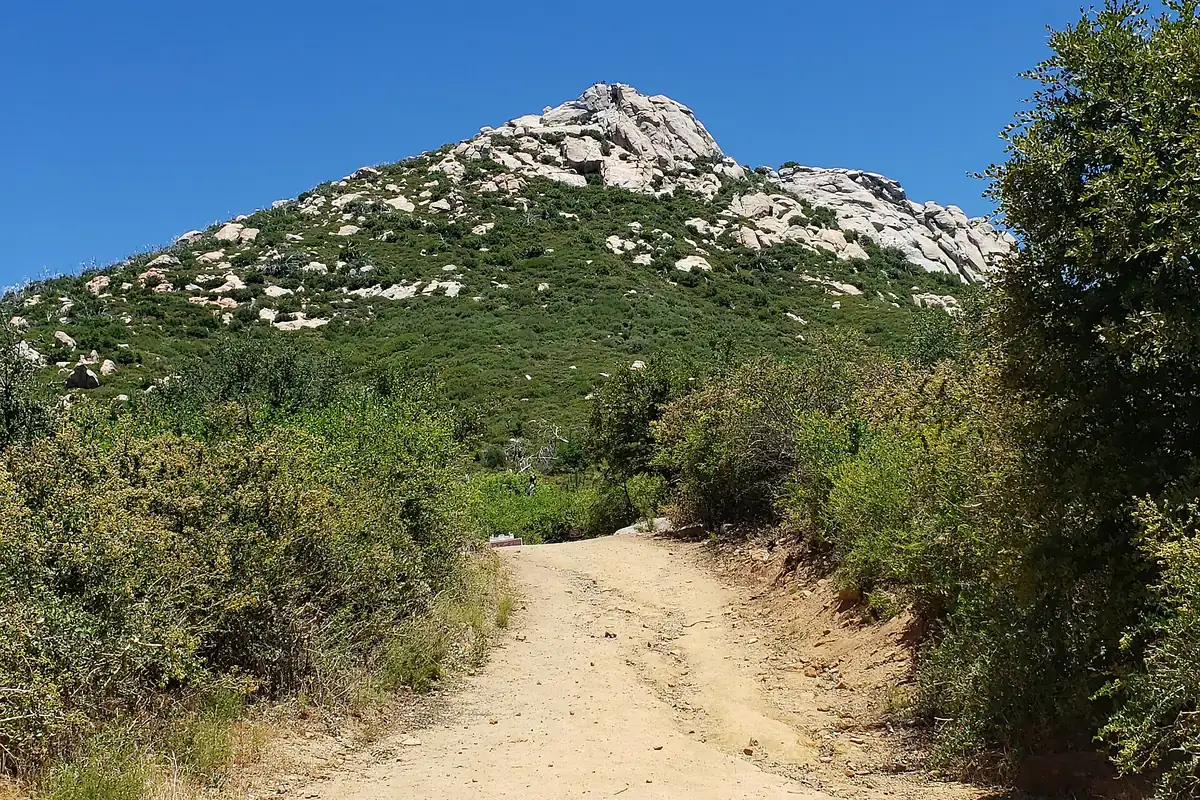
The park runs from 536 feet (163 m) above sea level to 5,814 feet (1,772 m) at the top of Quail Mountain. Mount Minerva Hoyt stands not far from Quail Mountain, in the west-central part of the park.
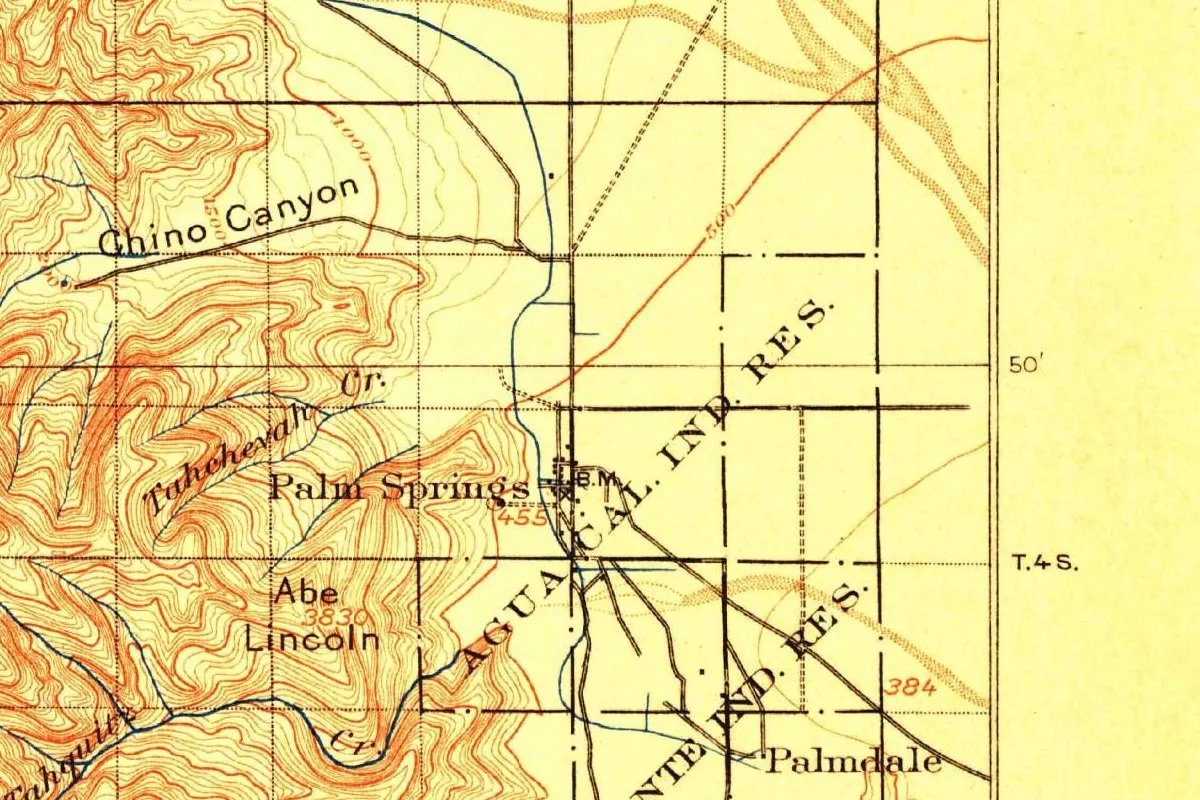
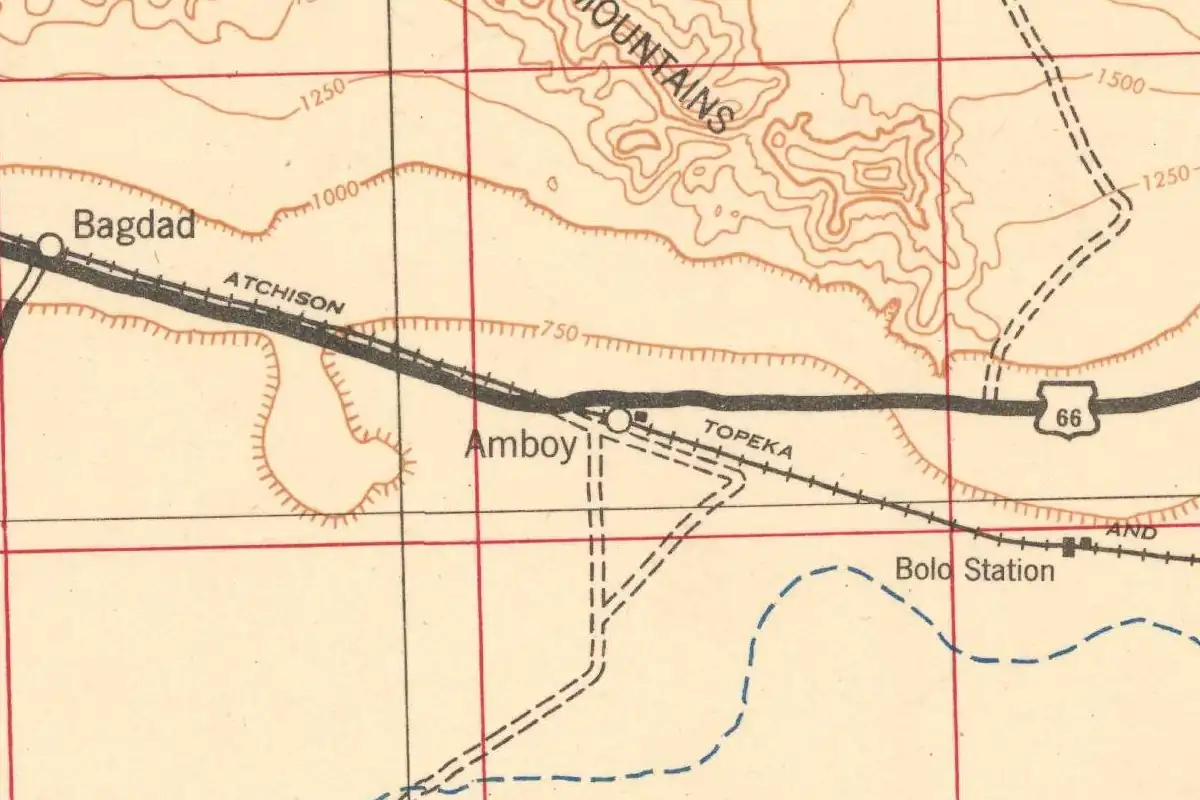
Down in the valley to the southwest is Palm Springs, whose Cahuilla name, Sec-he, means “boiling water,” for its hot spring. To the north, out on old Route 66, is Amboy, the A in a string of railroad stations the railroad named in alphabetical order in 1883.
Quick answers
Why Is It Called Joshua Tree National Park?
For the Joshua tree. In 1936 the Park Service director proposed “Joshua Tree National Monument” because that plant was “the main exhibit of the area,” and Interior Secretary Harold Ickes approved it.
Was Joshua Tree Almost Called Desert Plant?
Yes, but only on paper. “Desert Plant National Monument” was the name proposed in 1936. Ickes objected to it, and the Park Service director offered Joshua Tree instead.
Did Mormon Settlers Name the Joshua Tree?
There’s no record that proves it. The Park Service says the Mormon story is “not substantiated in record” and that nobody knows why that name won out over the others.
When Did It Become a National Park?
On October 31, 1994, under the Desert Protection Bill. It had been Joshua Tree National Monument since August 10, 1936.
Key dates
- 1936April: the Park Service director suggests "Joshua Tree National Monument" instead of "Desert Plant," and the Interior secretary approves it.
- 1936August 10: President Franklin D. Roosevelt proclaims Joshua Tree National Monument, about 825,000 acres.
- 1950The monument loses 265,000 acres to leave out mining land.
- 1951Park Service officials trade memos about renaming the monument, then drop the idea.
- 1994October 31: the Desert Protection Bill makes it a national park and adds 234,000 acres.
- 2012August: the Board on Geographic Names names Mount Minerva Hoyt inside the park.
Find it in Google Maps
Opens in a new tab. The pin is a point from the USGS place-name record, so it may not be the middle of the area.
Sponsored
Planning a visit?
Compare hotels in the area on Expedia.
See hotels nearbyWe may earn a commission if you buy through this link. It never changes what we write. Read our affiliate disclosure
Historical Sources & References
- National Park Service, memoranda on the monument’s name, 1936 and 1951. The director’s memo to Ickes of April 1, 1936 (criticism of “Desert Plant National Monument,” the friends of Mrs. Hoyt, “the main exhibit of the area”), approved April 4, 1936; acting solicitor Frederic L. Kirgis, August 4, 1936, on the Justice Department’s objection; Herbert Maier, August 22, 1951, with the draft note “Everyone is used to the present name”; Frank R. Givens, September 17, 1951.
- National Park Service, “Joshua Trees”. Yucca brevifolia, agave family; the Cahuilla names hunuvat chiy’a and humwichawa; the Mormon story and “historical records offer little evidence”; over 40 feet tall; about 150 years; the yucca moth.
- National Park Service, Joshua Tree FAQ. The legend “is not substantiated in record”; other names (huêlye, dirk pear tree, yucca tree, dragon yucca); unknown why “Joshua tree” stuck; Covington Flats for the tallest trees.
- National Park Service, “Park History”. Minerva Hoyt and 825,000 acres in 1936; James Cole, first superintendent, 1940; 265,000 acres removed in 1950; national park on October 31, 1994, with 234,000 acres added; elevations from 536 to 5,814 feet.
- National Park Service, “Minerva Hoyt”. Roosevelt’s proclamation of August 10, 1936; Mount Minerva Hoyt, a 5,405-foot peak named by the Board on Geographic Names in August 2012.
- Corps of Engineers, U.S. Army, Pinyon Well sheet, 1944. The map at the bottom of this page: topography by the 29th Engineers in 1943 from 1941 Air Corps photos, first edition of 1944; a federal work in the public domain.
- GNIS feature 277261, Joshua Tree National Park (U.S. Geological Survey). The park’s entry in the federal place-names database, the identifier Wikidata gives for it.
Spot something wrong, or know more? Tell us here. You can also email us or use our contact page. Corrections are noted here with their date, never made silently.