Lewiston, Maine: Which Lewis Gave Lewistown Its Name?
Lewiston began as Lewistown, the name given in a 1768 grant by the Pejepscot proprietors at Twenty-Mile Falls on the Androscoggin River. The city's history says it was apparently named for the late Job Lewis, a Boston merchant and former proprietor. Henry Gannett's 1905 bulletin says it was named for "the founders, the Lewis families."
Lewiston, Maine, began in 1768 as Lewistown, a name on a land grant at the falls of the Androscoggin, and which Lewis it honored depends on whom you ask. The city’s own history says it was apparently a Boston merchant named Job Lewis, while a federal place-name bulletin from 1905 credits “the Lewis families.”
A land company’s grant at Twenty-Mile Falls
The paper trail starts in Boston. The Pejepscot proprietors were, in the words of Lewiston’s local historian Douglas I. Hodgkin, “a Boston-based land company.” On January 28, 1768, they granted a tract to two men from Newbury, Massachusetts, Moses Little and Jonathan Bagley.
The county history of 1891, in a chapter on Lewiston by J. G. Elder, lays out the deal. The tract began “at Twenty-Mile Falls on the Androscoggin” and ran five miles (8 km) up the river and inland from there. Little and Bagley had to settle fifty families in fifty houses by June 1, 1774, each house “16x20 feet and 7 feet stud,” and clear a road to meet the proprietors’ road from Topsham. Then comes the line that matters here: “and the town was named Lewistown.”
That’s it. Elder gives the name and moves on. He doesn’t say who chose it or why, and the two men who got the land were a Little and a Bagley, not a Lewis.
Version one: Job Lewis, Boston merchant
The city’s history page, written by Hodgkin, fills in the gap with a careful word. “The place was named ‘Lewistown,’” he writes, “apparently in honor of the late Job Lewis, a Boston merchant and former Proprietor.”
So the idea is that the land company named its new township for one of its own, a man who’d held a share before he died. But you’ll notice the “apparently.” Hodgkin doesn’t cite a vote or a letter, and none of the other sources here mention Job Lewis at all.
Version two: the Lewis families
Henry Gannett saw it differently. In 1905 the U.S. Geological Survey printed his alphabetical run-through of where American place names came from, and his Lewiston entry is one line:
“Lewiston; city in Androscoggin County, Maine, named for the founders, the Lewis families.”
Gannett doesn’t name any of those Lewises, and he doesn’t say where he got the idea. His page is a good reminder that “Lewiston” isn’t one story, either. Right above the Maine entry, he says Lewiston, Idaho, was named for Meriwether Lewis of the Lewis and Clark expedition, and right below it, that Lewiston, New York, honors Morgan Lewis, a former governor. He even lists a Lewiston in Trinity County, California, “named from the city in Maine.” The 1891 county history names Paul Hildreth as the first settler. He moved into “the plantation of ‘Lewistown’” in the fall of 1770. Its founders, in the sense of the men who held the grant, were Little and Bagley.
So here’s where things stand. The oldest local history gives the name without a reason. The city’s historian leans, with a hedge, toward a Boston merchant. The federal bulletin points to founding families that none of the sources here identifies. That’s why this story is filed as disputed.
Twenty-Mile Falls, Uppermost Falls, Harris Falls
The name of the town was settled long before the name of its waterfall. Elder writes that the falls “were first called the Uppermost Falls of the Pejepscot, but for years after the first settlement were known as Harris Falls.” Both Elder and Hodgkin start the 1768 grant “at Twenty-Mile Falls,” and on the same page Elder also calls them “Lewiston Falls.” That’s three names for one drop in the river, and none of them has anything to do with a Lewis.
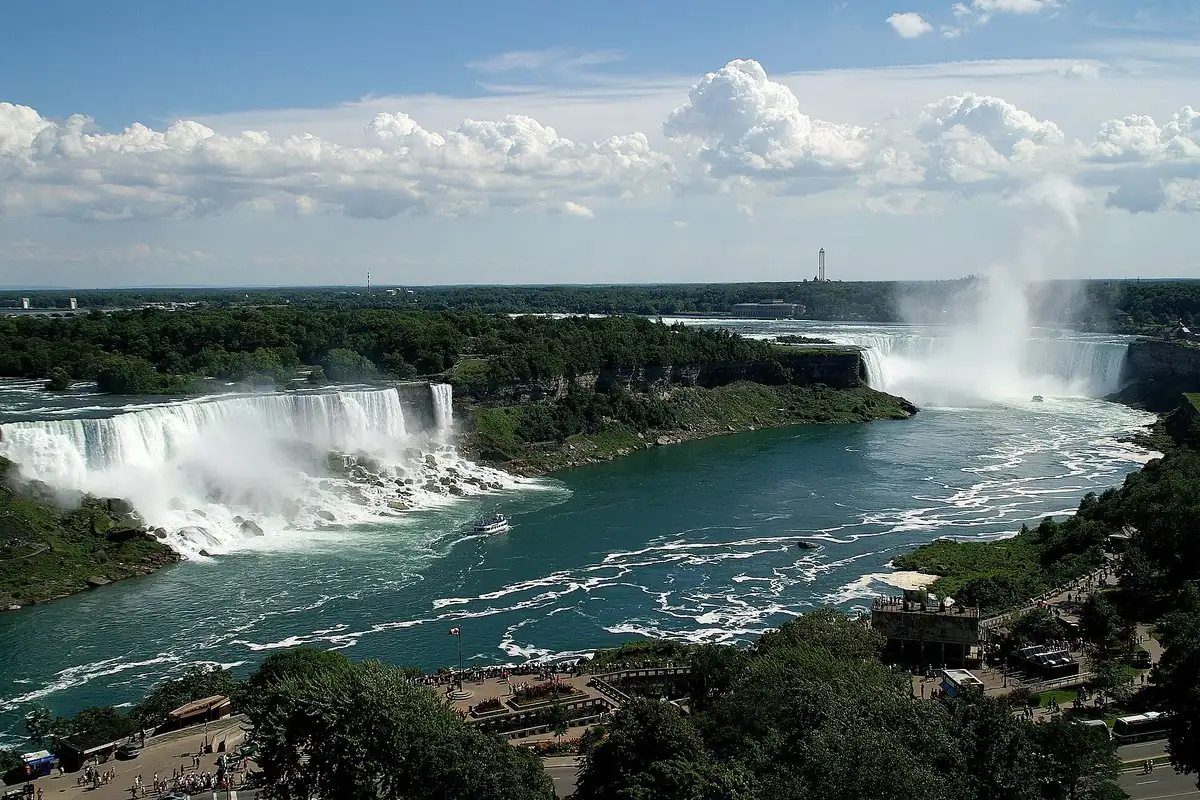
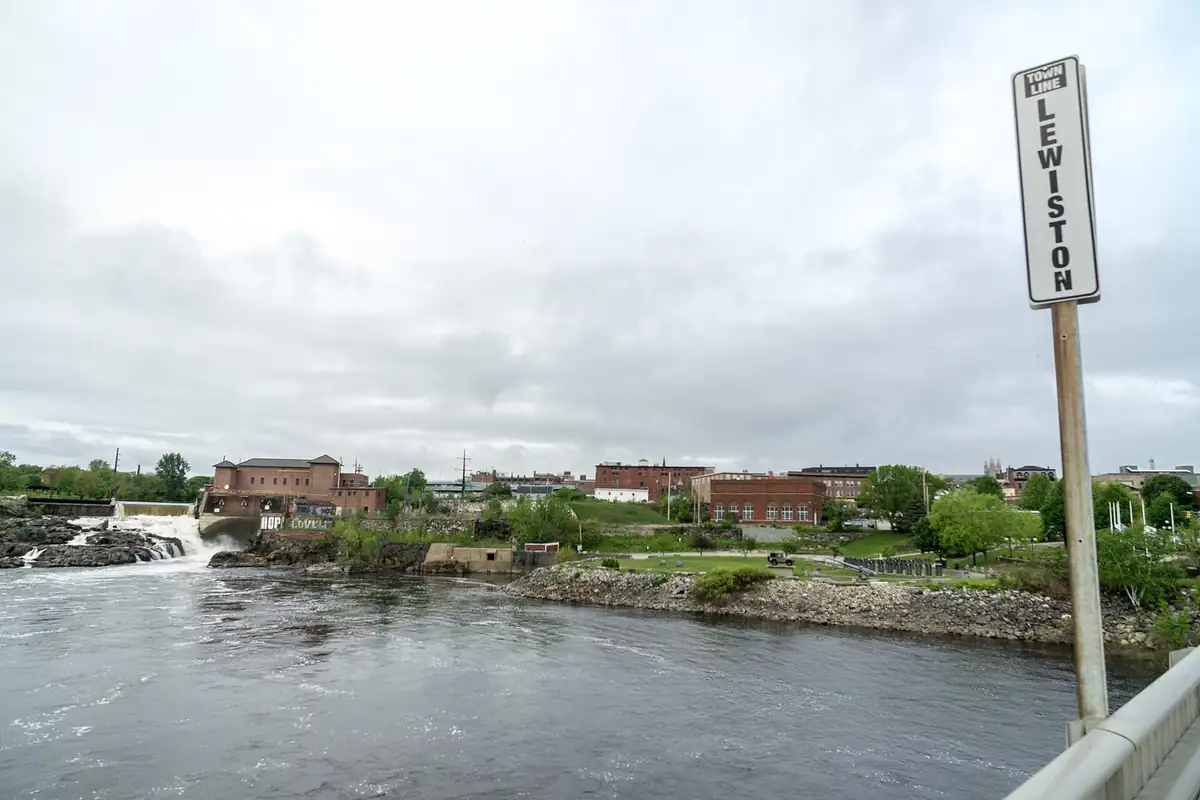
Those falls are the reason Lewiston grew into a city. Hodgkin’s history says a timber dam and a canal were in place by 1808-1809, and in 1809 Michael Little built a wooden mill with saw, grist and fulling mills next to the falls. Boston investors, among them Benjamin E. Bates, later paid for the canal system and the big textile mills. The falls in the photo at the bottom of this page are the ones the whole town grew up around.
From plantation to town
The grant didn’t go smoothly. Elder says the proprietors rescinded it in June 1771, even though Little and Bagley had been trying to meet its terms, and it wasn’t confirmed until 1790. Settlers came anyway. Hildreth’s first cabin burned in the fall of 1770, and his family spent the winter in New Gloucester before coming back in the spring. He later ran the first ferry, about half a mile (0.8 km) below the falls.
Elder passes along a local tradition, too: that the first land Little and Bagley ever handed out was a gift of fifty acres to Mrs. Hildreth, “the first female settler of Lewiston.” Then he adds, “This tradition may be true, but so far no documents substantiate the claim.” That’s the kind of care you want from a local history, and it’s worth keeping in mind when you read about the name, too.
By 1790 the place had 532 people, and on February 18, 1795, it was incorporated as a town. Elder calls it “the ninety-fifth town.” The sources here don’t say exactly when the “w” disappeared and Lewistown became Lewiston, but the city history uses the short form for everything after the grant.
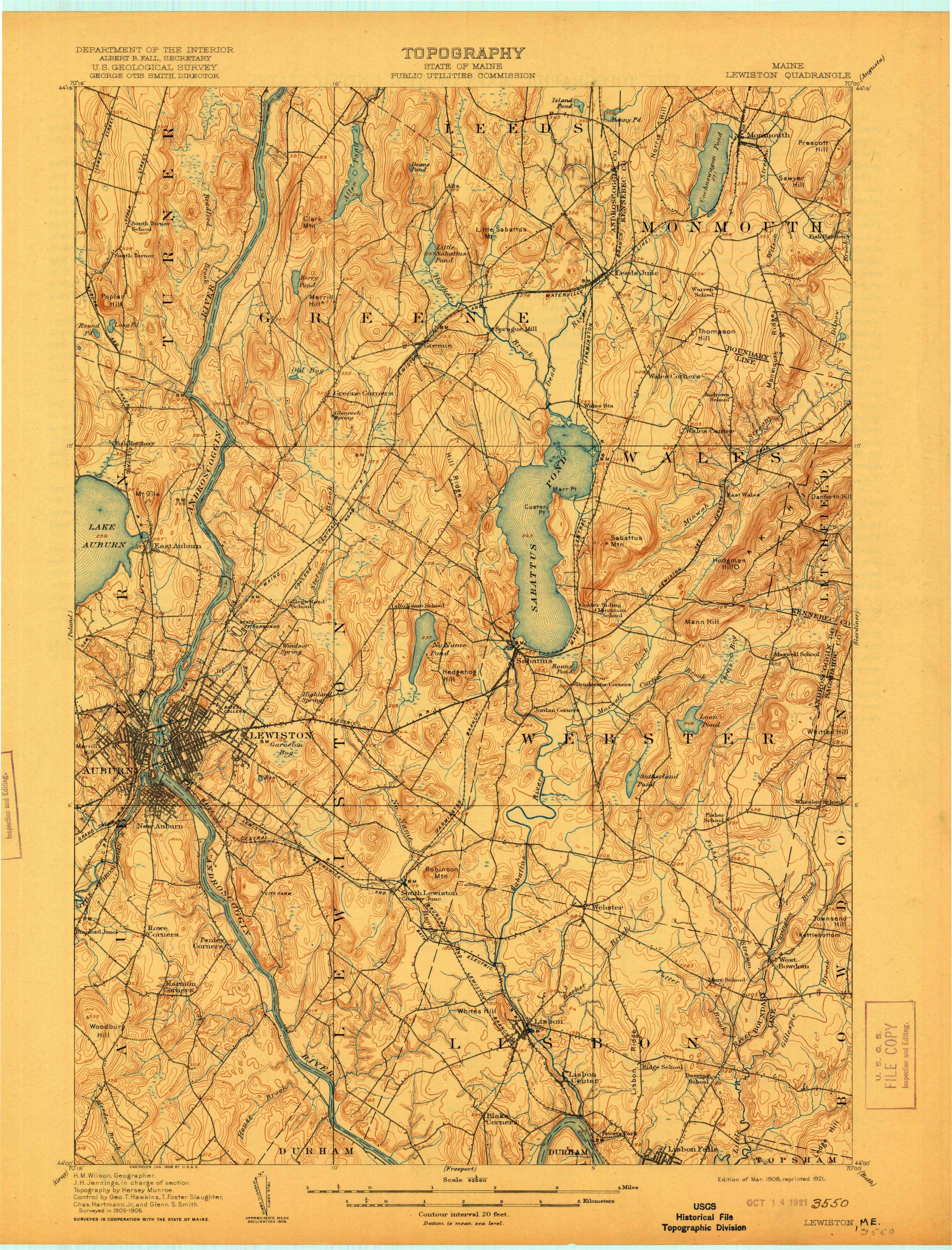
The town on the 1908 map
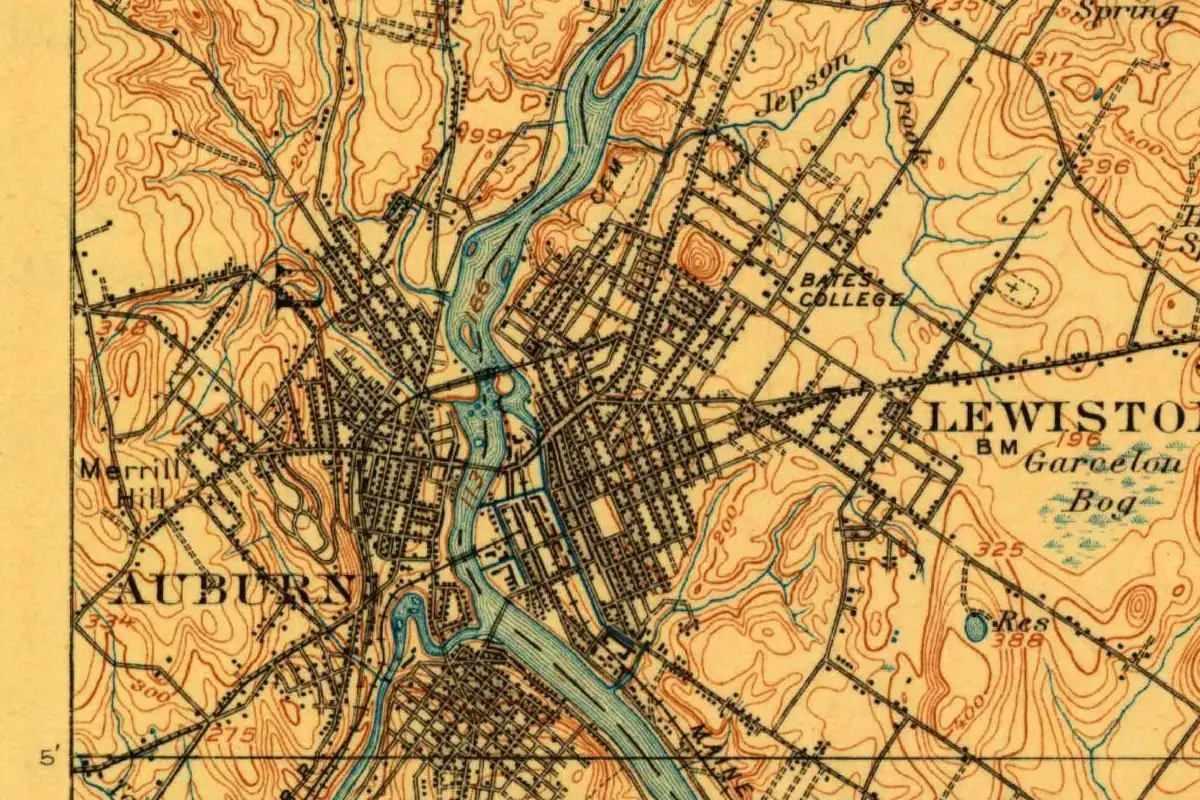
The map at the top of this page was surveyed in 1905 and 1906 and first printed in March 1908. By then the mill city on the east bank had filled in a dense grid of streets, with Bates College on the slope above it and Auburn across the river. Hodgkin says the college began in 1855 as the Maine State Seminary.
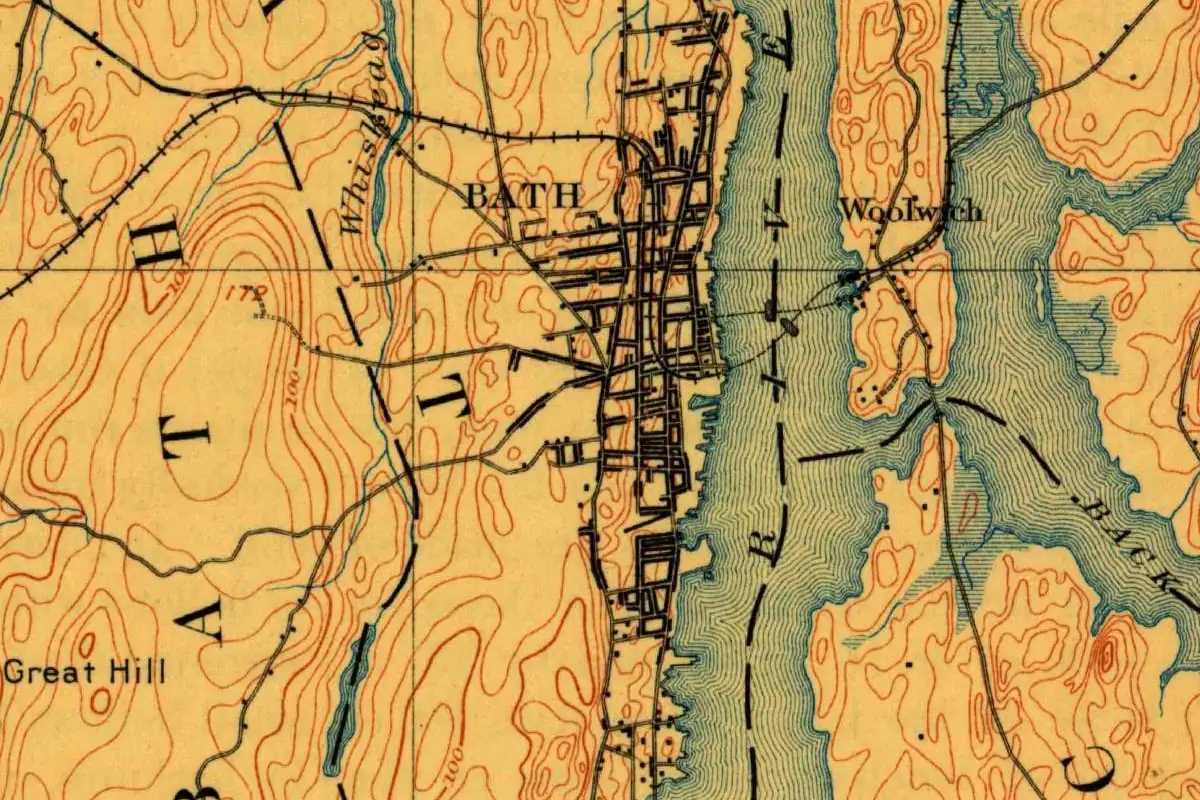
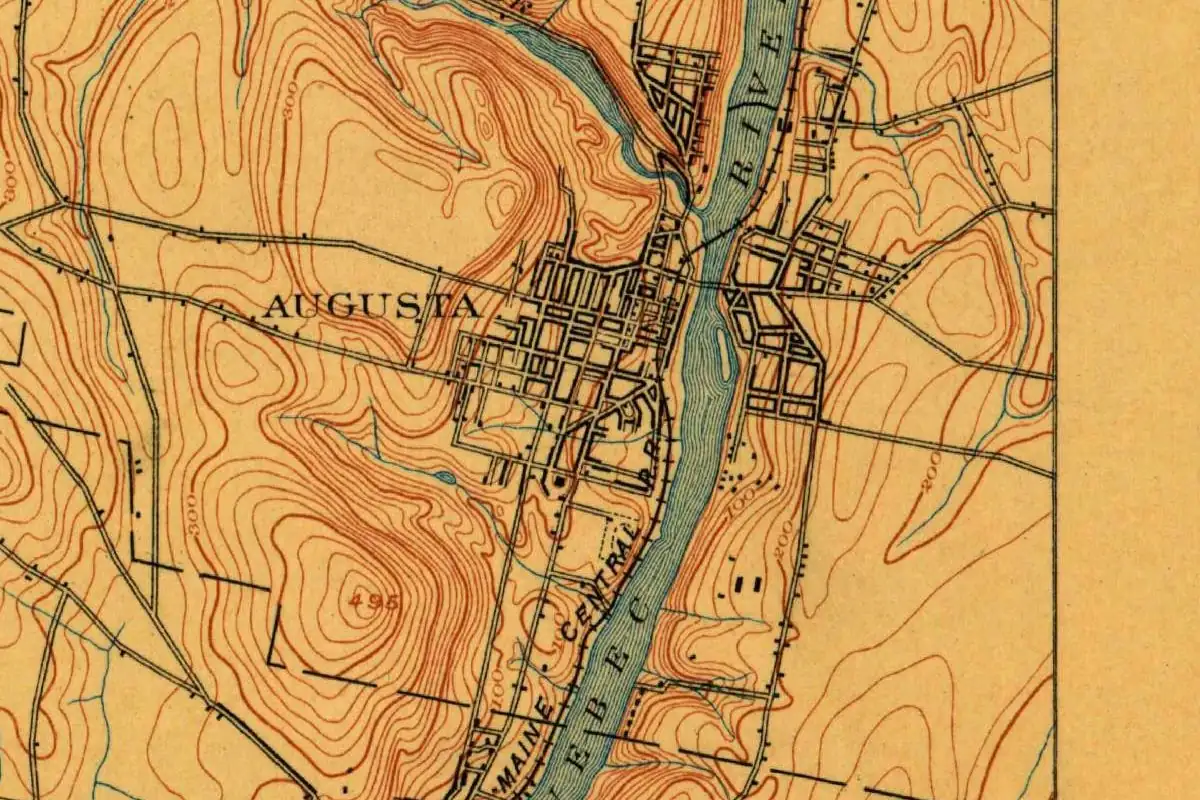
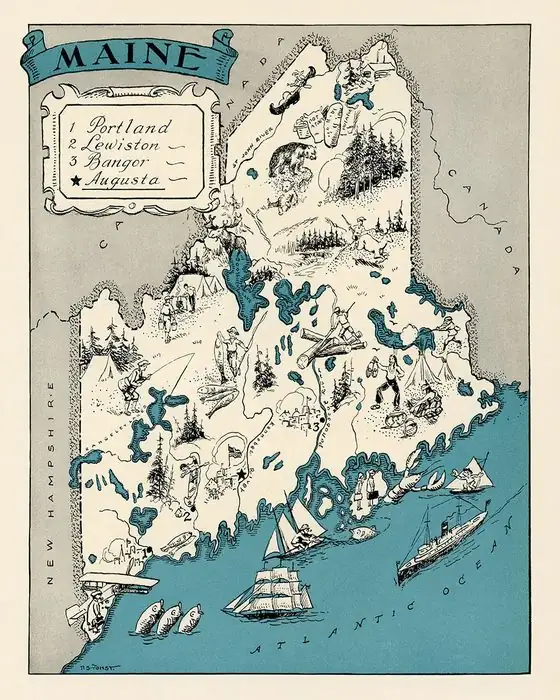
Down in the corner of that sheet, the name of the next map to the southeast is printed in parentheses: Bath. You can read how that town got its name in our story of Bath. For another Maine city whose name came out of the paperwork without a stated reason, see Augusta, and for the state itself, our Maine page.
Quick answers
Who is Lewiston, Maine, named after?
No one can say for sure. The city’s history says it was apparently named for Job Lewis, a Boston merchant and former Pejepscot proprietor. Henry Gannett’s 1905 bulletin says it was named for “the founders, the Lewis families.”
What was Lewiston, Maine, originally called?
Lewistown. That’s the name given in the Pejepscot proprietors’ grant of January 28, 1768, and the 1891 county history uses it for the early plantation.
Who were the first grantees of Lewiston?
Moses Little and Jonathan Bagley of Newbury, Massachusetts. They received the land at Twenty-Mile Falls in 1768 on condition that they settle fifty families there.
When did Lewiston become a town?
On February 18, 1795, when it was incorporated. The 1790 census had counted 532 people there.
Key dates
- 1768On January 28, the Pejepscot proprietors grant land at Twenty-Mile Falls to Moses Little and Jonathan Bagley, and the town is named Lewistown.
- 1770Paul Hildreth, the first settler named in the 1891 county history, moves into the plantation of Lewistown.
- 1795Lewiston is incorporated as a town on February 18.
Things to do in Lewiston, Maine
Maine MILL
The Maine Museum of Innovation, Learning and Labor, on Beech Street in Lewiston, preserves stories of work and the diverse heritage of Central Maine, with a collection on life, labor and culture.
Bates College Museum of Art
The teaching museum of Bates College, the school the city history says began in 1855 as the Maine State Seminary, with exhibitions drawn from its collections.
Thorncrag Sanctuary
A 450-acre nature preserve in the heart of Lewiston kept by the Stanton Bird Club, with miles of trails, two meadows, wildlife ponds and Lewiston's highest point, 510 feet (155 m).
Veterans Memorial Park
A park right on the Androscoggin River with unobstructed views of the falls, a paved walking path and memorials.
Getting there
Open Lewiston in Google Maps
Opens in a new tab. The pin is the center of Lewiston in the USGS place-name record.
The closest airports, Amtrak stations and intercity bus stops, measured in a straight line from the center of Lewiston.
Airports
- Portland International Jetport (PWM) 32 mi 51 km
- Portsmouth International at Pease (PSM) 77 mi 124 km
- General Edward Lawrence Logan International (BOS) Boston 126 mi 204 km
Amtrak trains
- Freeport station (FRE) 18 mi 29 km
- Brunswick station (BRK) 18 mi 29 km
Intercity buses
- Greyhound Lewiston Bus Stop under 1 mi 0.2 km
- Concord Coach Lines Brunswick 18 mi 29 km
- FlixBus Brunswick Brunswick 18 mi 29 km
Distances are as the crow flies, not by road. We don't list schedules or fares because they change; check with the airline, Amtrak or the bus company before you go. Official data (FAA commercial service airports (2025), FAA airport locations, Amtrak stations and Intercity Bus Atlas) from the FAA and the U.S. Bureau of Transportation Statistics, checked Nov 14, 2026.
Sponsored
Staying in Lewiston?
Compare hotels in Lewiston, Maine, on Expedia.
See hotels in LewistonWe may earn a commission if you buy through this link. It never changes what we write. Read our affiliate disclosure
Historical Sources & References
- Douglas I. Hodgkin, “A Brief History of Lewiston,” City of Lewiston. The 1768 grant by “a Boston-based land company” to Bagley and Little at Twenty-Mile Falls; “named ‘Lewistown,’ apparently in honor of the late Job Lewis, a Boston merchant and former Proprietor”; Hildreth’s 1770 cabin and ferry; 532 people in 1790; the 1795 charter; the dam, canal and Michael Little’s mill of 1809; Benjamin E. Bates; the Maine State Seminary of 1855.
- Henry Gannett, The Origin of Certain Place Names in the United States (1905), p. 186. The quoted entry: “named for the founders, the Lewis families.”
- J. G. Elder, “Lewiston,” in History of Androscoggin County, Maine (1891), p. 344. The grant of January 28, 1768, its terms, “and the town was named Lewistown”; the falls as Uppermost Falls of the Pejepscot and Harris Falls; the grant rescinded in June 1771.
- J. G. Elder, History of Androscoggin County (1891), p. 345. The grant confirmed in 1790; Paul Hildreth in “the plantation of ‘Lewistown’” in 1770, the burned cabin and the winter in New Gloucester.
- J. G. Elder, History of Androscoggin County (1891), p. 351. 532 inhabitants in 1790 and incorporation on February 18, 1795, “the ninety-fifth town.”
- GNIS feature 569502 (U.S. Geological Survey). The USGS name file entry for Lewiston, Androscoggin County, with its coordinates.
- U.S. Geological Survey, Lewiston quadrangle (1908). The 1:62,500 map, surveyed in 1905-1906, that the image at the top of this page was cropped from; Bath is the neighboring sheet in its corner.
Sponsored
Put this 1908 map on your wall
The 1908 USGS Lewiston sheet, in a 1921 reprint, is in the public domain. Download the full-size scan for free, then have it printed on canvas with CanvasOnTheCheap.
Print a map on canvasDownload the full-size mapWe may earn a commission if you buy through this link. It never changes what we write. Read our affiliate disclosure
Spot something wrong, or know more? Tell us here. You can also email us or use our contact page. Corrections are noted here with their date, never made silently.