Bath, Maine: How Long Reach Took an English City's Name
Bath is named for Bath, England, the fashionable spa town on the River Avon. The settlement on the Kennebec had been known as Long Reach and then as the Second Parish of Georgetown. When Massachusetts made it a separate town on February 17, 1781, it got the name Bath, which an 1881 gazetteer credits to Dummer Sewall.
Long Reach on the Kennebec
Bath, Maine, carries the name of England’s famous spa town, though the town’s own 1894 history says its people had asked to be called Reach. The English name won. Before either one, the place had a perfectly good name of its own, and it came from the river.
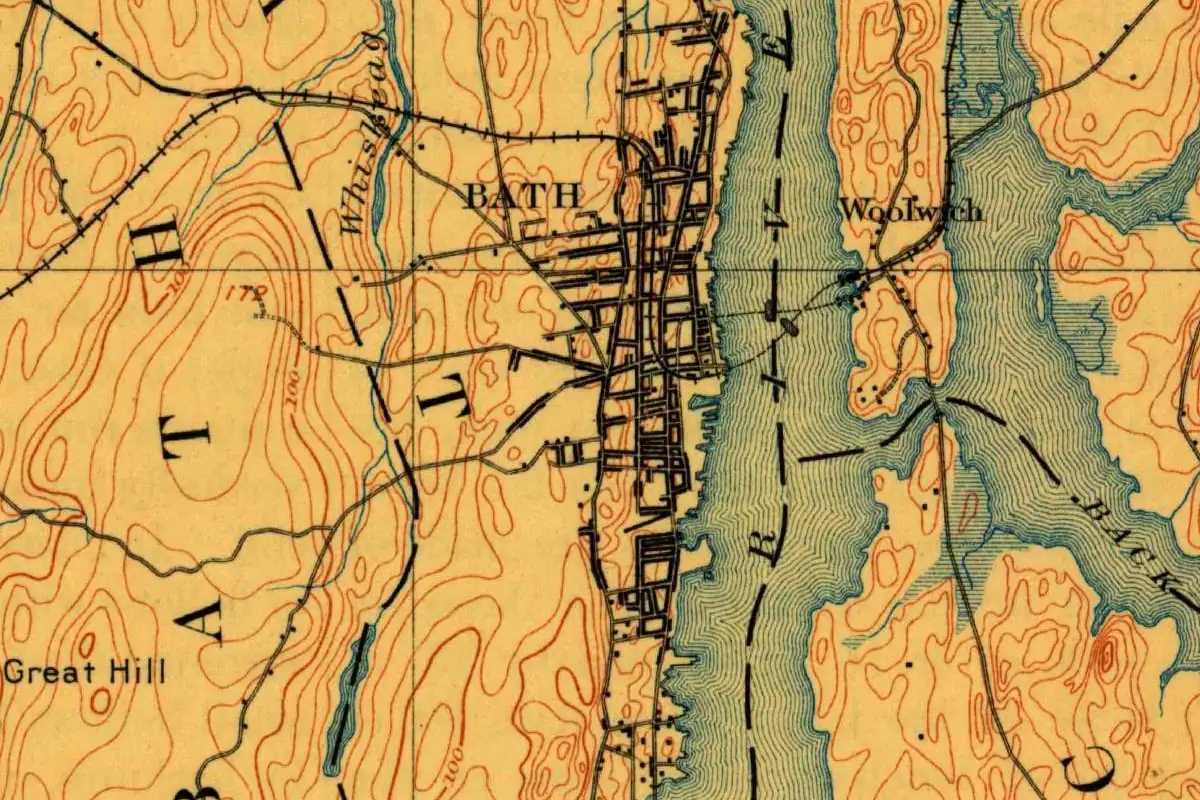
European explorers and fishermen, the Bath Historical Society says, knew this part of the Kennebec as Long Reach, “owing to the 4-mile straight stretch of river that provided good anchorage and landing.” That’s a stretch of about 4 miles (6 km), and if you look at the old map at the top of this page, you can see the town strung out along it. The society notes the land was home first to the Red Paint People and the People of the Dawn, the Abnaki, long before the sailors’ name.
Settlers started arriving in 1640, were driven out more than once in wars with Native people, and came back for good around 1724. In 1738 Long Reach became part of the newly incorporated town of Georgetown, and in 1753 the settlement on the west side of “the reach” became the Second Parish of Georgetown. George J. Varney’s 1881 Gazetteer of the State of Maine adds that opponents mocked it as the “Twenty-Cow Parish.”
Forty families and a petition
By 1780 the parish wanted out. Parker McCobb Reed’s History of Bath and Environs reprints the petition its committee sent to the Massachusetts General Court, since Maine was still part of Massachusetts. It describes the parish as “a place called Long Reach” and complains that the distance to Georgetown’s town meetings, plus “the badness of traveling,” kept people from ever having a say. Georgetown itself had already voted unanimously to let them go.
Then comes the request, in the petition’s own words:
“…grant that the said second parish may be set off into a separate town by the name of Bath, with all the powers, privileges, and immunities of incorporated towns…”
It’s dated Georgetown, October 29, 1780, and signed by Dummer Sewall, Benjamin Lemont and John Wood. Reed adds that at this date there were forty families in the parish. The same kind of request, by the way, gave Belfast its name back in 1773.
The General Court said yes. The act “for incorporating the second parish in Georgetown… into a separate town by the name of Bath” passed on February 17, 1781, the date the City of Bath still gives for its original charter. Samuel Harnden of Woolwich called the first town meeting on March 19, 1781.
That meeting is a reminder of when all this happened. Varney points out that the parish asked to become a town just as General Greene was campaigning against Cornwallis in the Carolinas. At the first meeting, Reed says, the new town raised ten thousand dollars to pay for enlisting soldiers for the Continental army, in paper money so depreciated it was worth about five hundred dollars in coin. John Wood became town clerk. Bath got its name in the middle of the Revolution, from people still sending men to fight it.
Reach or Bath?
Here’s the odd part. On the very page after the petition and the act, Reed writes: “The people petitioned to have the town named Reach; but it was finally decided to adopt the name of Bath.”
That doesn’t square with the petition he just printed, which asks for Bath in plain words. Reed doesn’t explain the difference, and none of the other sources here mention a Reach proposal at all. So treat it as one historian’s note, sitting right next to a document that seems to say otherwise.
What you can say is that the old river name had a real pull. It was Long Reach for generations before it was Bath.
Why an English spa town?
The newer name points across the Atlantic. Henry Gannett gave the city in Sagadahoc County a single line in 1905: “named from the city in England.” Varney is more specific. For this name, he wrote, “commemorating the famous watering-place of English Avon, the city is indebted to Dummer Sewall, Esq., at that time representing this region in the General Court.”
That fits neatly with the petition, since Sewall’s name is the first one signed under it. But it’s one gazetteer’s credit, written a century later, and it doesn’t come with a quote from Sewall himself.
The Bath Historical Society is careful here. It says the name was picked “because of a possible connection to Bath, England, a small but famous, fashionable town undergoing a building boom of fabulous architecture, and perhaps also due to family connections of some of the leading citizens with that Old World city.” In other words, the English link is the only explanation anyone offers, but the people who know the town best still say “possible.”
From parish to city of ships
The name held as the place grew. Bath was in York County until 1760 and Lincoln County until 1854, when Sagadahoc County was formed, and it got its city charter in 1847. Shipbuilding had been the mainstay since the mid-1700s, and the historical society calls it “the City of Ships.”
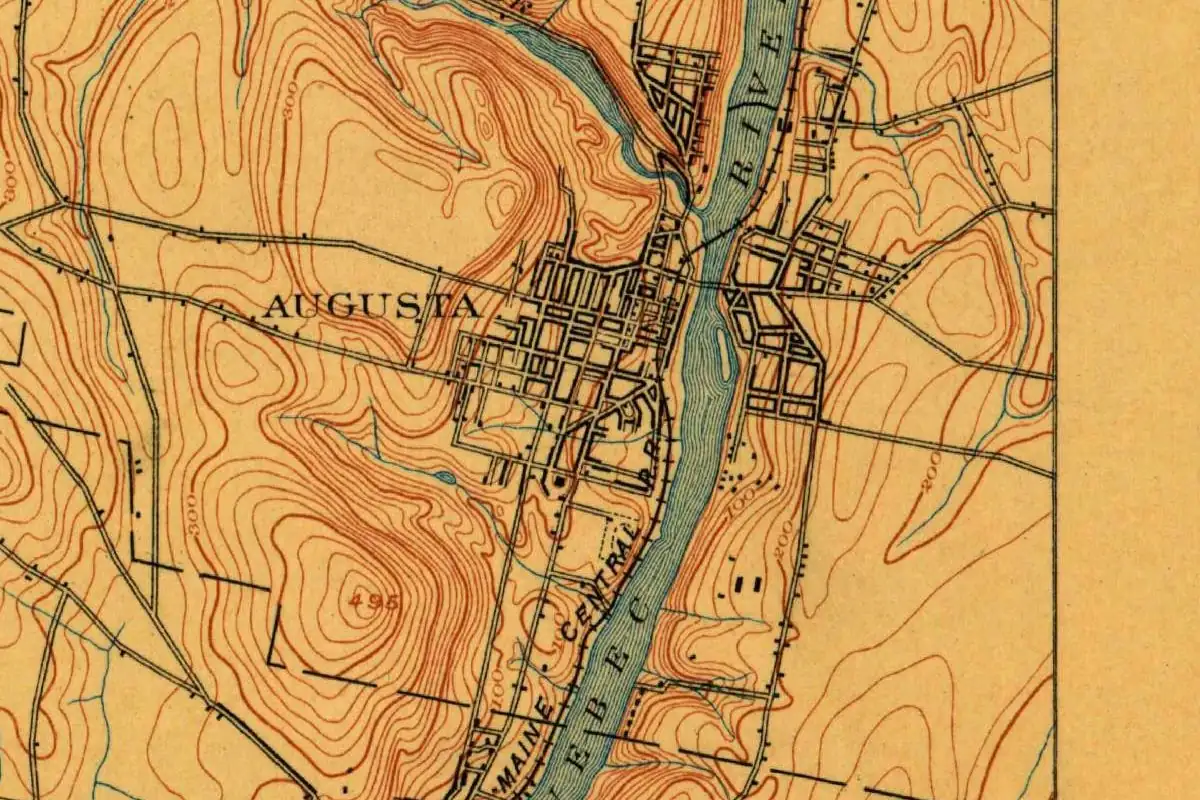
So a Kennebec River shipbuilding town wears the name of a fashionable English watering-place better known for its architecture than its ships. The river that gave Long Reach its first name is the same Kennebec that flows past the capital at Augusta, farther upstream. More name stories from the state are on our Maine page.
Quick answers
Is Bath, Maine, named after Bath, England?
Yes, according to Gannett’s 1905 list and Varney’s 1881 gazetteer. The Bath Historical Society is more cautious and speaks of “a possible connection to Bath, England.”
What was Bath, Maine, called before?
Long Reach, for the straight stretch of the Kennebec there. From 1753 it was officially the Second Parish of Georgetown, until it became the town of Bath in 1781.
Who named Bath, Maine?
Varney’s 1881 gazetteer credits Dummer Sewall, who represented the area in the General Court and signed the 1780 petition asking for the name Bath. Reed’s 1894 history says the people had wanted “Reach.”
Key dates
- 1738Long Reach is included in the incorporation of Georgetown.
- 1753The settlement on the west side of the reach becomes the Second Parish of Georgetown.
- 1780On October 29, the Second Parish petitions the General Court to be set off as a separate town by the name of Bath.
- 1781On February 17, Massachusetts incorporates the parish as the town of Bath.
- 1847Bath receives its city charter.
Things to do in Bath, Maine
Maine Maritime Museum
A 20-acre waterfront campus in the "City of Ships," where guided tours explain why the historic Percy & Small shipyard is so special and a demonstration shows how huge schooners like the six-masted Wyoming were launched.
Linwood E. Temple Waterfront Park
A city park on Commercial Street with benches, a pavilion and a public dock. The Bath Historical Society calls the wide, swift Kennebec a beautiful backdrop to the waterfront park.
Patten Free Library History Room
Bath's public library on Summer Street keeps a History Room with its own hours. The Bath Historical Society was incorporated in 1989 to keep the library's Sagadahoc History and Genealogy Room funded and open to the public.
Chocolate Church Arts Center
A home for live performance, visual art and community in Midcoast Maine, with concerts, theatre and dance on the Chocolate Church main stage and in its annex.
Getting there
Open Bath in Google Maps
Opens in a new tab. The pin is the center of Bath in the USGS place-name record.
The closest airports, Amtrak stations and intercity bus stops, measured in a straight line from the center of Bath.
Airports
- Portland International Jetport (PWM) 30 mi 49 km
- Portsmouth International at Pease (PSM) 76 mi 123 km
- General Edward Lawrence Logan International (BOS) Boston 123 mi 197 km
Amtrak trains
- Brunswick station (BRK) 7 mi 12 km
- Freeport station (FRE) 15 mi 23 km
Intercity buses
- Concord Coach Lines Bath ME under 1 mi 1 km
- FlixBus Brunswick Brunswick 7 mi 12 km
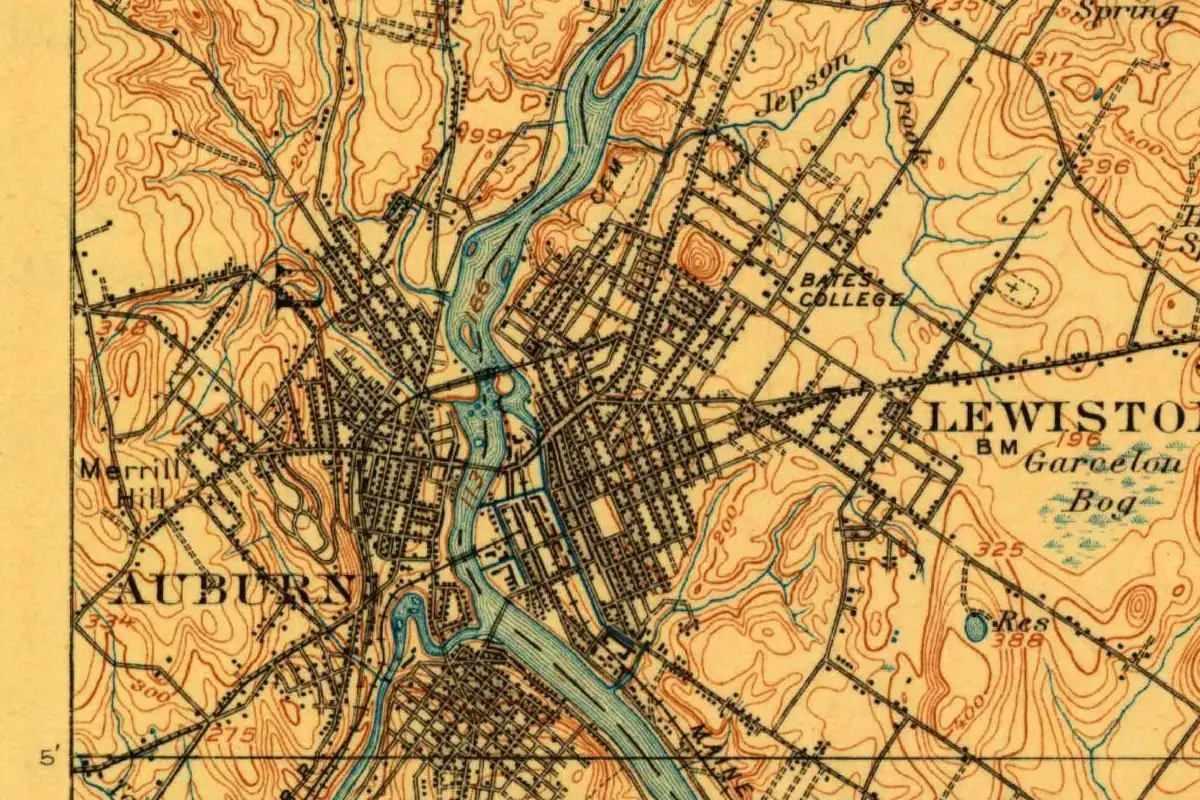
- Greyhound Lewiston Bates Coll 23 mi 37 km
Distances are as the crow flies, not by road. We don't list schedules or fares because they change; check with the airline, Amtrak or the bus company before you go. Official data (FAA commercial service airports (2025), FAA airport locations, Amtrak stations and Intercity Bus Atlas) from the FAA and the U.S. Bureau of Transportation Statistics, checked Nov 13, 2026.
Sponsored
Staying in Bath?
Compare hotels in Bath, Maine, on Expedia.
See hotels in BathWe may earn a commission if you buy through this link. It never changes what we write. Read our affiliate disclosure
Historical Sources & References
- Bath Historical Society, “Bath History”. The name Long Reach and its 4-mile straight stretch, the earliest peoples and settlers, Georgetown in 1738, the Second Parish in 1753, incorporation in 1781, the “possible connection to Bath, England,” the counties, the 1847 city charter and the “City of Ships.” Edited from Peter Goodwin and Robin A. S. Haynes.
- Bath Historical Society, “About”. The society’s incorporation in 1989 and its first goal of keeping the Sagadahoc History and Genealogy Room at the Patten Free Library funded, staffed and open to the public.
- City of Bath, “City Charter”. The town’s charter from the Massachusetts General Court on February 17, 1781, Georgetown and Long Reach in 1738, and its later charter as a city.
- Parker McCobb Reed, History of Bath and Environs (1894), pp. 69-72. The petition of October 29, 1780, asking for a town “by the name of Bath,” its signers and the forty families (pp. 69-70), the act of February 17, 1781 (pp. 70-71), and the note that the people petitioned for the name Reach, plus the first town meeting of March 19, 1781, its town clerk and the money raised for Continental soldiers (p. 72).
- George J. Varney, A Gazetteer of the State of Maine (1881), p. 103. The “Twenty-Cow Parish,” the petition coming as Greene campaigned against Cornwallis, and the name “commemorating the famous watering-place of English Avon,” credited to Dummer Sewall.
- Henry Gannett, The Origin of Certain Place Names in the United States (USGS, 1905), p. 38. Bath, Sagadahoc County, “named from the city in England.”
- GNIS feature 561723 (U.S. Geological Survey). Bath’s entry in the national names database, filed as a populated place in Sagadahoc County.
- U.S. Geological Survey, Bath sheet (1894). The 1:62,500 quadrangle the old map at the top of this page was cut from.
Spot something wrong, or know more? Tell us here. You can also email us or use our contact page. Corrections are noted here with their date, never made silently.