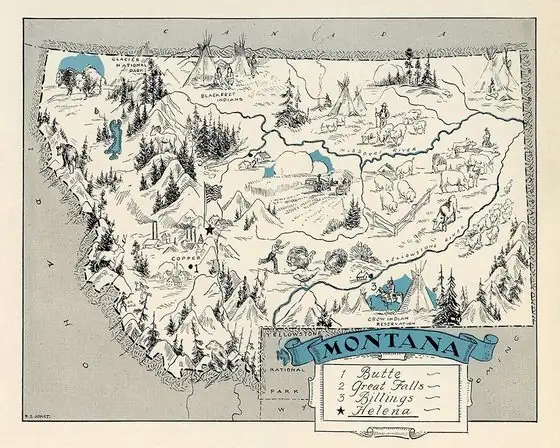
Dillon, Montana: A Rancher Said No, a Town Said Yes
Dillon, Montana, started in 1880 when a rancher refused to let the Utah and Northern cross his land and a group of merchants bought the ranch. The new town was named for Sidney Dillon, the president of the Union Pacific.
The ranch that stopped the tracks
The Federal Writers’ Project’s Montana guide of 1939 says the town’s spot “was determined by accident.” Construction of the Utah and Northern “was suddenly brought to a standstill in 1880, when a rancher on land here refused to give up land for the right-of-way.”
The fix came from local businessmen. “A few enterprising men engaged in business at or near the terminus banded together, bought the ranch, and gave the railroad company the right to go through.” They kept the partnership going with a trust deed, recorded on December 4, 1880, which the guide says “marked the birth of Dillon.” Lambert Eliel, trustee for the group, handed out title to lots sold at public auction.
So the town began as a workaround: the merchants bought their way past a holdout, and the lots they sold became Dillon.
Which Dillon, and how do you spell him?
The guide is plain about the name: Dillon “was named for Sidney Dillon, president of the Union Pacific R.R.” Henry Gannett’s 1905 survey of American place names agrees on the man but not the spelling. His entry reads “named for Sydney Dillon, railroad president,” with a y. The guide’s spelling, Sidney, is the one used here.
Neither book says who picked the name, or why a town founded by local merchants ended up honoring a railroad president. If you want that answer, you’ll have to look past these two sources.
From terminus to county seat
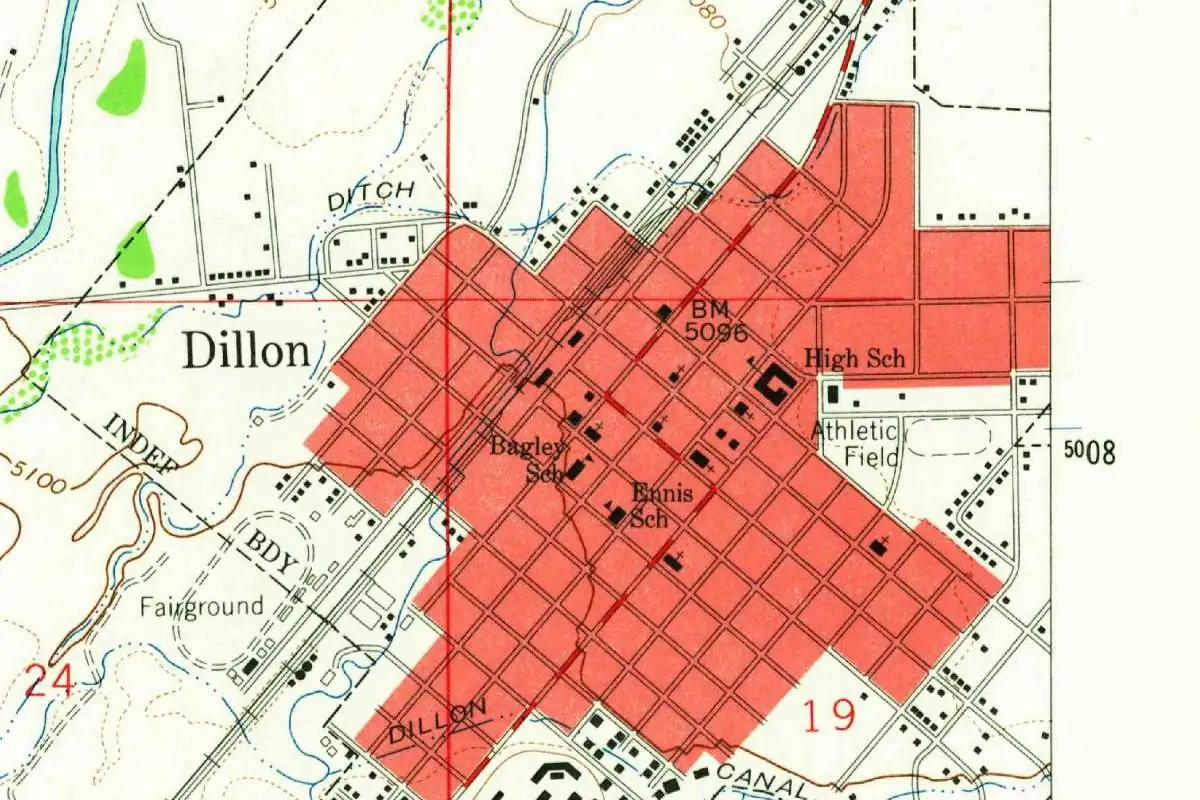
The new town also became the county seat, once voters decided that Bannack was “too far off the beaten track.” By 1939 the guide called Dillon “the largest wool-shipping point in Montana,” with a warehouse by the depot that could hold 3 million pounds of wool. You can see the railroad’s place in town on the 1963 map, where the tracks cut diagonally across the west side of the grid.
Quick answers
Who is Dillon, Montana, named for?
Sidney Dillon, president of the Union Pacific Railroad, according to the 1939 Montana guide. Gannett (1905) gives the same man as “Sydney Dillon, railroad president.”
How did Dillon, Montana, get started?
A rancher refused to give up the right-of-way in 1880, so local businessmen bought his ranch and let the Utah and Northern through. Their trust deed of December 4, 1880, is what the guide calls the town’s birth.
Was Dillon always the county seat?
No. Bannack was, until voters decided it was too far off the beaten track and moved the seat to Dillon, the guide says.
Key dates
- 1880A rancher halts the Utah and Northern; merchants buy his ranch, and their trust deed is recorded on December 4 (WPA guide).
Getting there
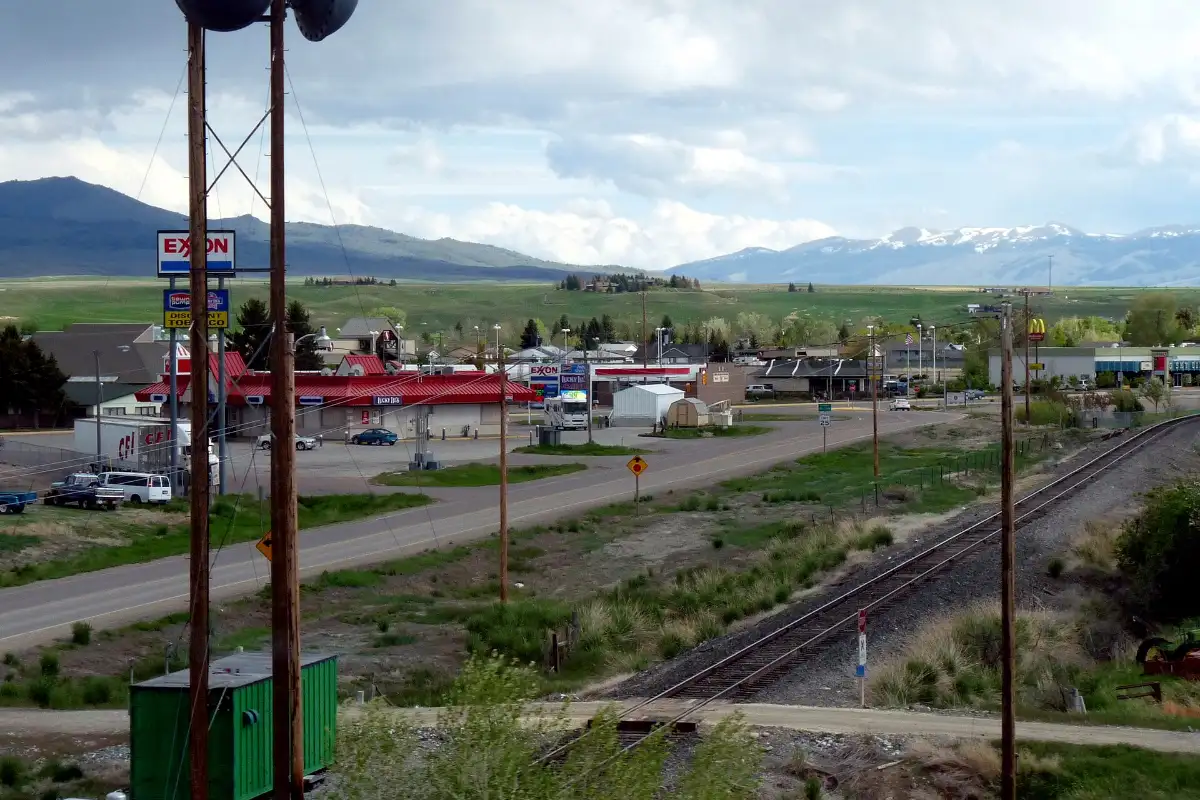
Open Dillon in Google Maps
Opens in a new tab. The pin is the center of Dillon in the USGS place-name record.
The closest airports, Amtrak stations and intercity bus stops, measured in a straight line from the center of Dillon.
Airports
- Bert Mooney (BTM) Butte 51 mi 83 km
- Bozeman Yellowstone International (BZN) 82 mi 132 km
Intercity buses
- Salt Lake Express Dillon under 1 mi 1 km
- Jefferson Lines Butte 55 mi 88 km
Distances are as the crow flies, not by road. We don't list schedules or fares because they change; check with the airline, Amtrak or the bus company before you go. Official data (FAA commercial service airports (2025), FAA airport locations, Amtrak stations and Intercity Bus Atlas) from the FAA and the U.S. Bureau of Transportation Statistics, checked Nov 6, 2026.
Sponsored
Staying in Dillon?
Compare hotels in Dillon, Montana, on Expedia.
See hotels in DillonWe may earn a commission if you buy through this link. It never changes what we write. Read our affiliate disclosure
Historical Sources & References
- Federal Writers’ Project, Montana: A State Guide Book (1939), pp. 290-291. The naming for Sidney Dillon, the rancher who stopped construction in 1880, the merchants’ purchase, the trust deed of December 4, 1880, Lambert Eliel, the county seat and the wool warehouse.
- Henry Gannett, The Origin of Certain Place Names in the United States (1905), p. 106. “Named for Sydney Dillon, railroad president.”
- GNIS feature 770653 (U.S. Geological Survey). The Geological Survey’s place-name record for Dillon, in Beaverhead County.
Spot something wrong, or know more? Tell us here. You can also email us or use our contact page. Corrections are noted here with their date, never made silently.