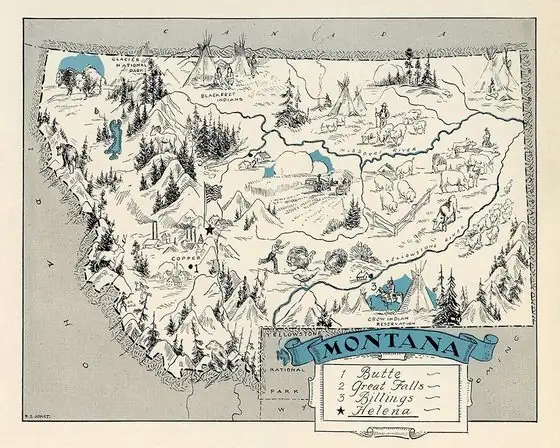
Butte, Montana: The Mining City Named for a Bare Hill
Butte is named for a butte, a French word Gannett defined as a small knoll or small hill. Henry Gannett wrote in 1905 that the city was named from a bare butte overlooking the place, and Montana place-name writer Roberta Carkeek Cheney identifies it as Big Butte. The 1860s camp was first called Butte City and dropped the "City" later.
One hill over a mining camp
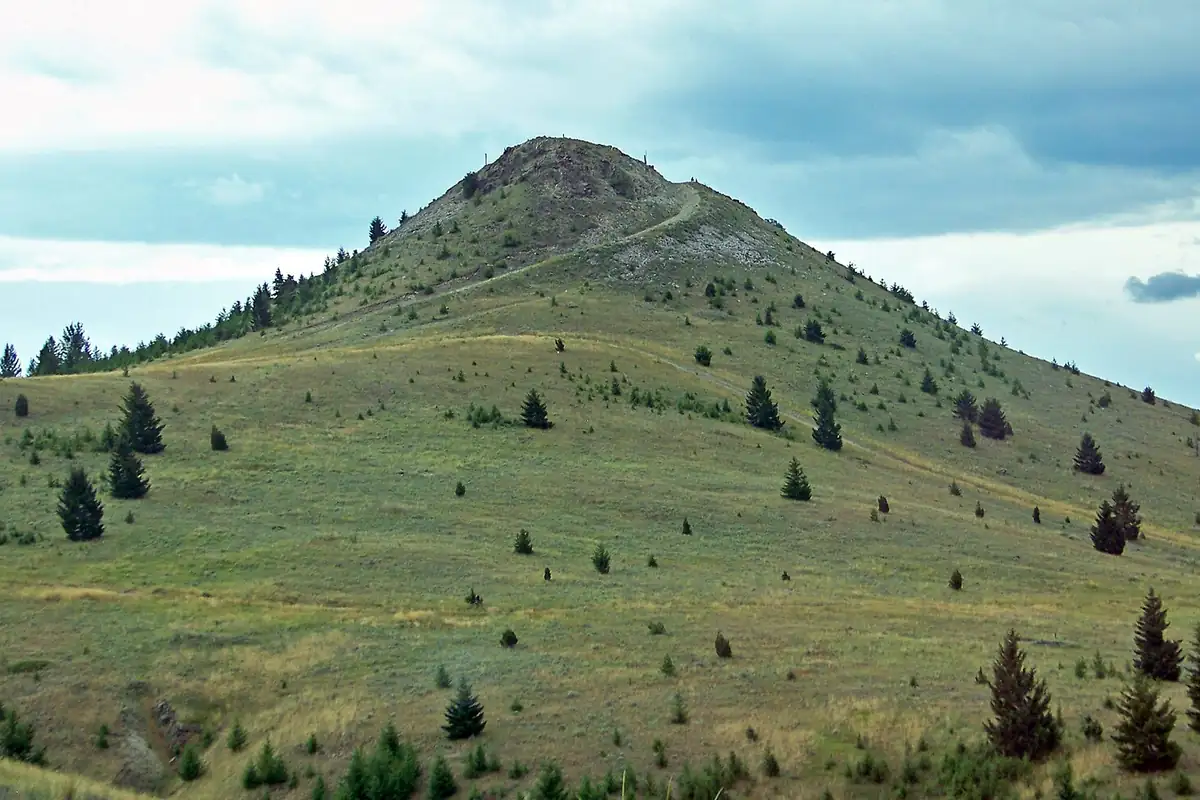
Butte, Montana, is named for a single hill, a bare butte overlooking the old mining camp that’s known today as Big Butte. It’s about as plain a name as a city can have. The miners looked up, saw a butte, and that was that.
If the word is new to you, it’s not complicated. Henry Gannett, who compiled the government’s 1905 book of place-name origins, called the word French and gave its meaning as “small knoll” or “small hill.” For the Montana city he wrote one line: “named from a bare butte overlooking the place.”
Gold in 1864, a camp called Butte City
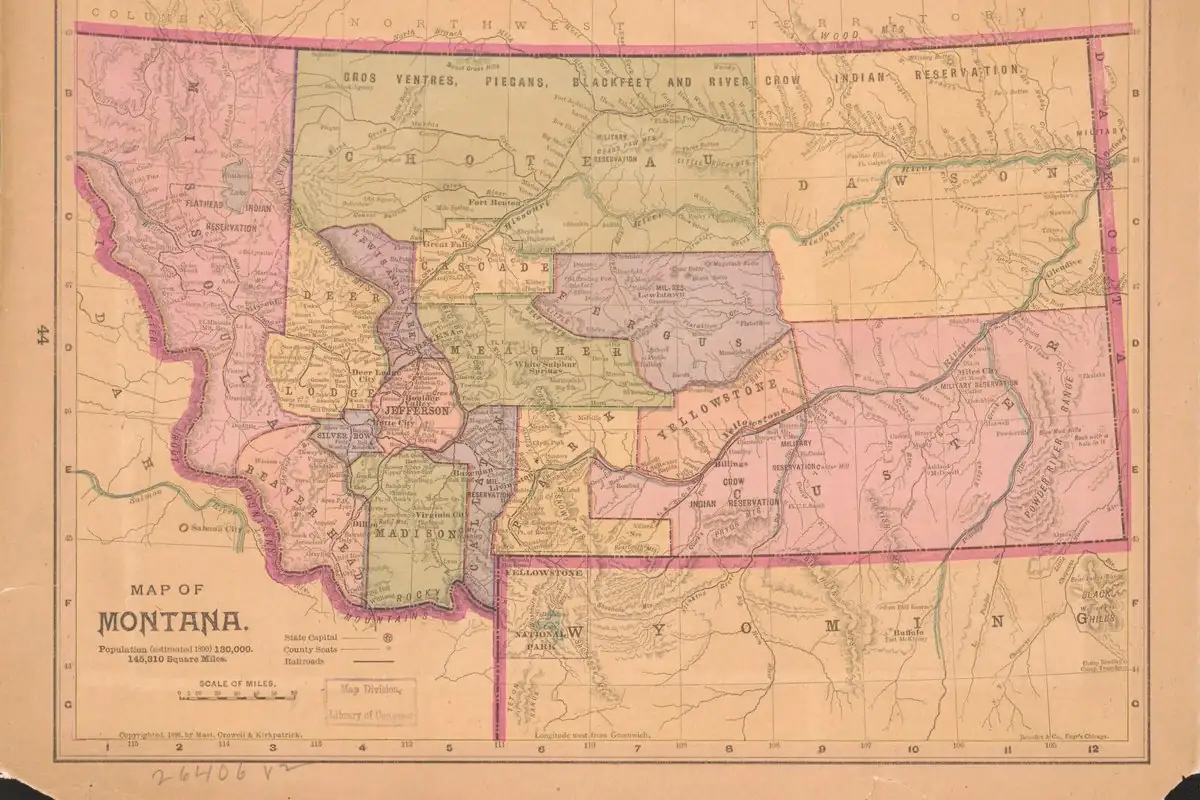
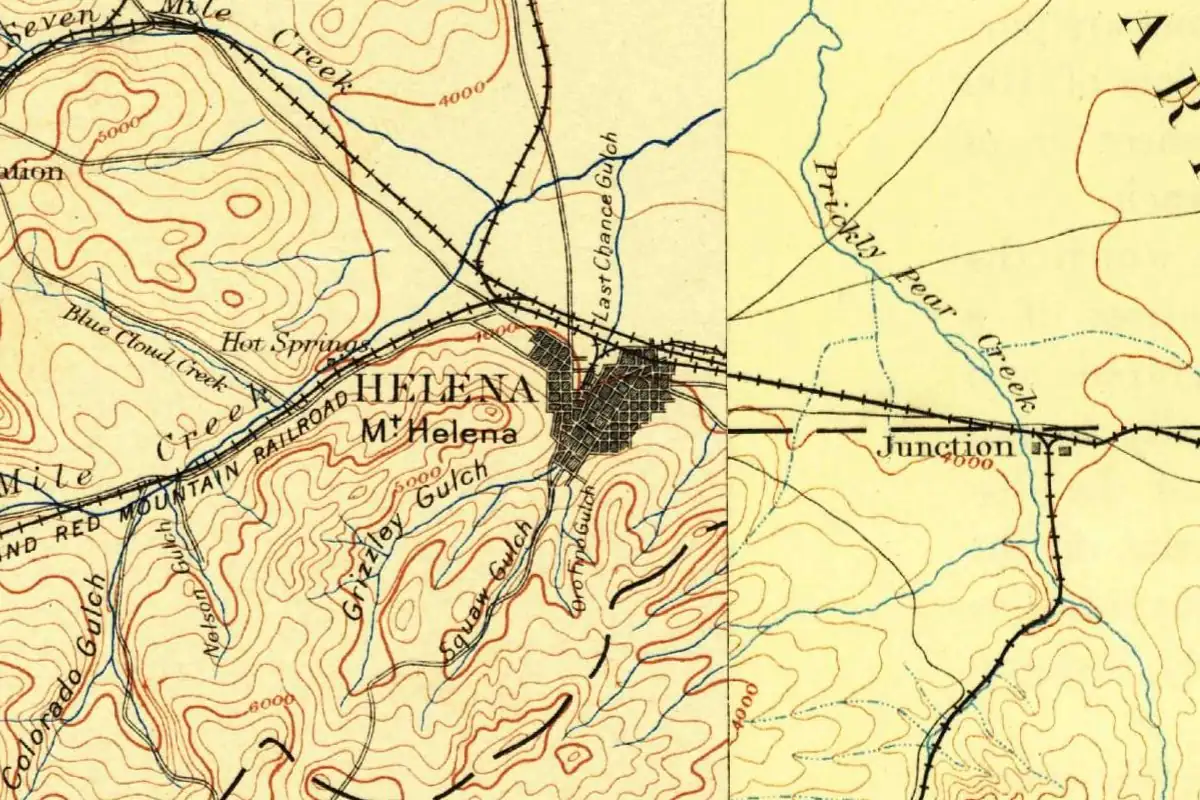
The hill was there long before the miners. What changed things was gold. Helen Fitzgerald Sanders, in her 1913 History of Montana, says prospectors fanned out across the Rockies after the big strikes at Alder Gulch and at Last Chance Gulch, the camp that grew into Helena. In May 1864, G. O. Humphreys and William Allison camped near the spot, in Baboon Gulch. They were, Sanders writes, “the sole inhabitants.”
They found an old prospect hole already dug four or five feet down, with elk antlers lying beside it that had been used as tools. Nobody knew who’d dug it. By August there was a mining district, and that autumn, Sanders says, “the town of Butte was located at Town Gulch,” close to the modern city.
The camp had company. Silver Bow City sprang up down the creek, and so did a string of other “cities” that were really a few shacks and log cabins. Sanders found that funny:
“It is a curious fact that those communities which survived and developed into real cities soon dropped the cumbersome tag; thus Butte City, the camp of ’64, is today merely Butte…”
So the town that ended up as the biggest in Montana, by her count in 1913, started out with a grander name and shrank it.
Which butte?
Gannett’s “a bare butte” doesn’t name the hill. Roberta Carkeek Cheney does. In her book of Montana place names, as quoted by Montana GenWeb, she says Butte “was first called Butte City,” that a post office opened under that name in July 1868 in Anson Ford’s drug store, and that “miners took the name from a nearby sentinel-like peak (now known as Big Butte).” She puts the switch to plain Butte at around 1875.
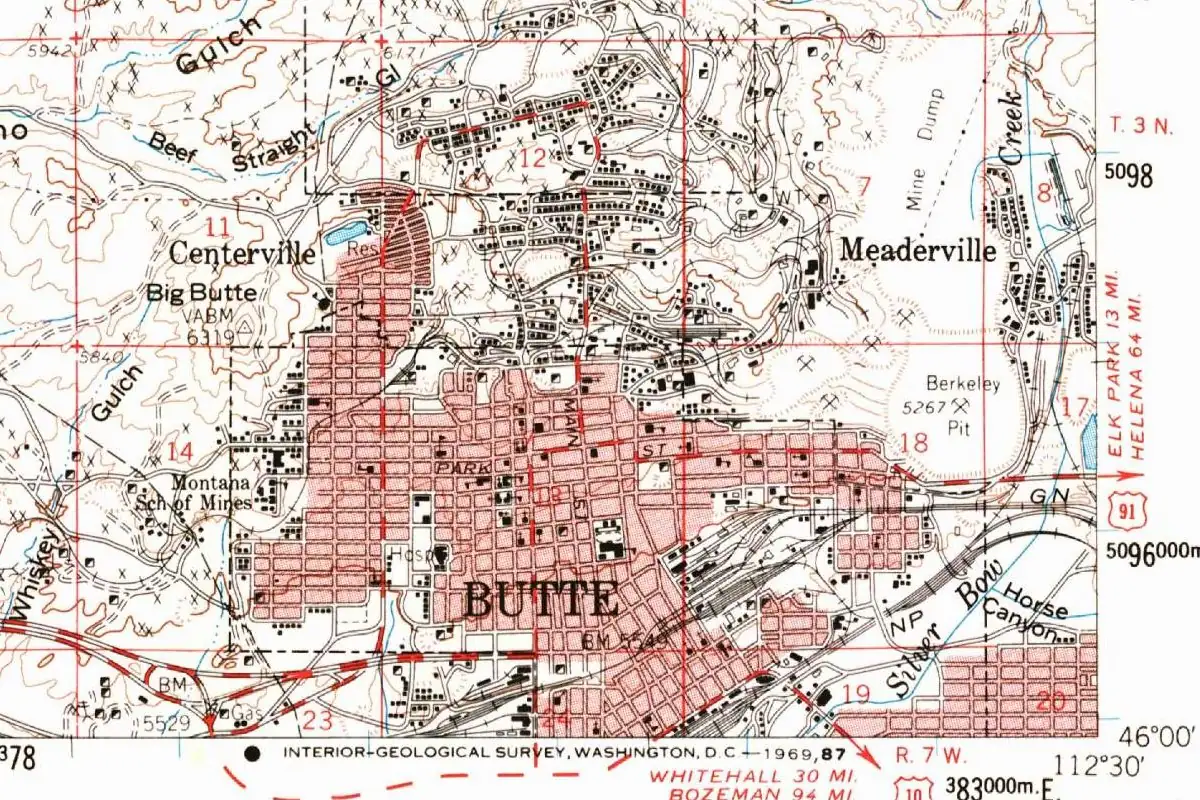
You can find that hill on the map at the top of this page. On the west side of town, next to the Montana School of Mines, the U.S. Geological Survey printed “Big Butte” with an elevation of 6319, meaning 6,319 feet (1,926 m). Cheney gives a slightly higher figure, 6,369 feet (1,941 m), so you’ll see both numbers around.
Sanders had her own way of describing the hill. In her chapter on Butte’s mines, she says the experts agreed the copper veins had been cut off to the west by an old upheaval, “where the cone of the Big Butte had once belched forth the anger of volcanic fires.” So the bare hill the miners named their camp for was, in her telling, an old volcanic cone sitting right at the edge of the treasure.
The University of Montana tells it a little more loosely. Its history of the city says the town became Butte City “referencing its dominating geographical features in the area, called buttes,” and later that “many buttes rising in all directions gave Butte its name.” Then it singles out Big Butte as “one of the most prominent of them all,” the community’s landmark and sentinel. Either way, you end up at the same hill.
The story behind Silver Bow
The county around Butte has a name with a better legend, and it’s worth hearing because people mix the two up. The University of Montana tells it this way: a prospector watching the creek at sunset said, “oh, look at the pretty silver bows,” and Peter “Seven-Up Pete” McMahon answered that Silver Bow would make a good name. The county became Silver Bow; the town took the plainer name from the hills.
That story comes from the university’s popular history, not from a document of the time, so take it as the kind of tale mining camps liked to tell about themselves. The butte, at least, you can still go and look at.
The richest hill under a bare one
The name stuck as the camp turned into a city. Cheney notes that a townsite patent was issued in 1876 and the city was incorporated in 1879. After that came copper. Butte-Silver Bow’s own history describes how Butte began as a gold and silver camp and then flourished in a massive copper boom around the turn of the century, drawing workers from all over the globe.
The University of Montana adds one more detail that ties the city back to its namesake. In 1910, students at Montana Tech put a large M on the southeast slope of Big Butte, and in 1962 lights were added so it shows up at night. So the hill that named the town now carries a letter of its own.
Butte isn’t the only place out West to take its name straight from the landscape. Crested Butte, Colorado, got its name from a peak too, one with a crested top. The rest of the state’s place-name stories are collected on our Montana page.
What makes Butte different is the scale. The camp of 1864 grew into a city sitting on what the university calls “the richest hill on earth,” and it’s still named for the plain, bare hill next door.
Quick answers
What butte is Butte, Montana, named after?
Big Butte, according to Roberta Carkeek Cheney’s Montana place-name book. Gannett’s 1905 list only says the city was “named from a bare butte overlooking the place,” and the University of Montana credits the area’s many buttes, with Big Butte the most prominent.
What does the word butte mean?
It’s French. Gannett defined it in 1905 as a “small knoll” or “small hill.”
Was Butte, Montana, ever called Butte City?
Yes. Cheney says the post office opened as Butte City in July 1868 and the name became plain Butte around 1875. Sanders wrote in 1913 that the camp of 1864 had dropped “the cumbersome tag.”
Key dates
- 1864G. O. Humphreys and William Allison camp near today's Butte in May; that autumn the town is located at Town Gulch.
- 1868A post office opens as Butte City in July, in Anson Ford's drug store.
- 1875Around this year, the name is changed to plain Butte.
- 1879The city is incorporated.
- 1910Montana Tech students put the big M on Big Butte.
Things to do in Butte, Montana
World Museum of Mining
One of the few museums in the world built directly on an authentic mine yard. Above ground, you can wander the brick-lined streets of Hell Roarin' Gulch, the museum's recreated 1890s mining camp.
Mineral Museum @ Montana Tech
A museum on the Montana Tech campus, overlooking the historic mining city, with about 1,300 of its more than 13,000 specimens on display, including a 27.5-ounce gold nugget found in the mountains nearby.
Mai Wah Museum
A museum in historic Uptown Butte run by the Mai Wah Society, which has been preserving and interpreting Butte's Asian heritage since 1991.
Copper King Mansion
A Butte mansion begun in 1884 and finished in 1888 that offers guided tours and also works as a bed and breakfast. Its owners say staying there is like staying in a museum.
Getting there
Open Butte in Google Maps
Opens in a new tab. The pin is the center of Butte in the USGS place-name record.
The closest airports, Amtrak stations and intercity bus stops, measured in a straight line from the center of Butte.
Airports
- Bert Mooney (BTM) Butte 4 mi 6 km
- Helena Regional (HLN) 49 mi 79 km
Intercity buses
- Jefferson Lines Butte under 1 mi 1 km
- Salt Lake Express Butte under 1 mi 1 km
Distances are as the crow flies, not by road. We don't list schedules or fares because they change; check with the airline, Amtrak or the bus company before you go. Official data (FAA commercial service airports (2025), FAA airport locations, Amtrak stations and Intercity Bus Atlas) from the FAA and the U.S. Bureau of Transportation Statistics, checked Nov 14, 2026.
Sponsored
Staying in Butte?
Compare hotels in Butte, Montana, on Expedia.
See hotels in ButteWe may earn a commission if you buy through this link. It never changes what we write. Read our affiliate disclosure
Historical Sources & References
- Henry Gannett, The Origin of Certain Place Names in the United States (USGS, 1905), p. 62. Butte, Silverbow County, “named from a bare butte overlooking the place,” and, in the entry for Butte County, California, the word as “A French word meaning ‘small knoll’ or ‘small hill.’”
- Helen Fitzgerald Sanders, A History of Montana, vol. 1 (1913), p. 437. Humphreys and Allison in May 1864, the old prospect hole and elk antlers, the first mining district, the town located at Town Gulch that autumn, Silver Bow City, and the quoted passage on Butte City dropping “the cumbersome tag.”
- Helen Fitzgerald Sanders, A History of Montana, vol. 1 (1913), p. 445. The copper veins thought to be cut off to the west, “where the cone of the Big Butte had once belched forth the anger of volcanic fires.”
- Montana GenWeb, “A Brief History of Butte”. Reprints Roberta Carkeek Cheney’s entry from Names on the Face of Montana: Butte City, the post office of July 1868 in Anson Ford’s drug store, the name taken from Big Butte, the change to Butte around 1875, the townsite patent of 1876 and incorporation in 1879.
- University of Montana, “Butte: The Richest Hill on Earth”. The Silver Bow story, Butte City “referencing” the area’s buttes, Big Butte as landmark and sentinel, and the M placed on it in 1910 and lit in 1962.
- City and County of Butte-Silver Bow, “History & Culture”. Butte’s start as a gold and silver camp and the copper boom that followed.
- GNIS feature 780689 (U.S. Geological Survey). Butte’s entry in the federal names database, a populated place in Silver Bow County.
- U.S. Geological Survey, Butte North sheet (1959; printing dated 1969 and 1987). The quadrangle, surveyed in 1959, that the map at the top of this page was cut from, in a later printing whose margin reads 1969 and 1987, with Big Butte marked at 6319 feet.
Spot something wrong, or know more? Tell us here. You can also email us or use our contact page. Corrections are noted here with their date, never made silently.