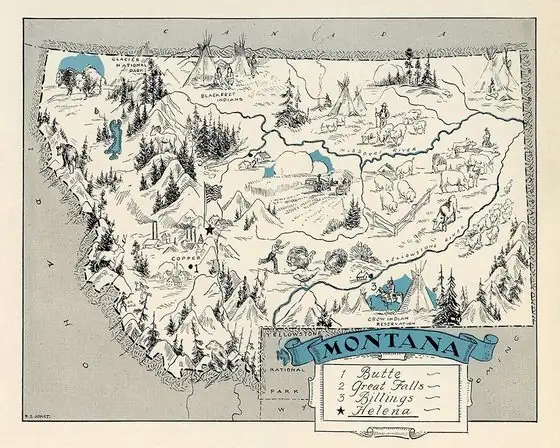
Whitefish, Montana: The Fish Came First, Not the Stumps
Whitefish, Montana, is named for Whitefish Lake and the fish caught at its outlet, and the local historical society says it was never Stumptown. The nickname is real, and the town’s history book even uses it in its title, but it was never the official name.
Weirs at the outlet
Jill Evans, administrator of the Stumptown Historical Society, starts the story before there was a town at all. Quoting Stump Town to Ski Town, a 1972 local history by Betty Schafer and Mable Engelter, she writes that in the 1880s bands of Indians came to the northwest end of the Flathead Valley to hunt and fish, and some of them “camped regularly at the outlet of Whitefish Lake into the Whitefish River.”
The water coming out of the lake was a fast creek, and the people fishing there built brush weirs across it to catch the native “whitefish,” which Evans says was “so named because of the color of its flesh.” Then she connects the dots: “That is where the name of the lake and subsequently the town came from.”
So you can trace the name in three steps: a fish, then a lake, then a railroad town. And she’s firm on the nickname: “Whitefish was never called ‘Stumptown’.”
A division point cut out of the woods
The town itself came later, and fast. A Forest Service history of the Flathead National Forest says that in 1904 the Great Northern moved its main line to the north end of the valley, “and the town of Whitefish was platted and carved out of the woods to serve as the new division point.” The earlier settlement had been at the foot of Whitefish Lake. By the spring of 1905, the same history says, Whitefish had 950 residents, many of them railroad workers. The historical society adds that the town was incorporated that year.
Montana’s 1939 guidebook found it “a neat lake-shore town” with business buildings of brick, a Great Northern division point “with railroad shops,” and the lake about 1 mile (1.6 km) wide and 7 miles (11 km) long stretching off to the north. The same railroad had another division point at Havre, out on the plains.
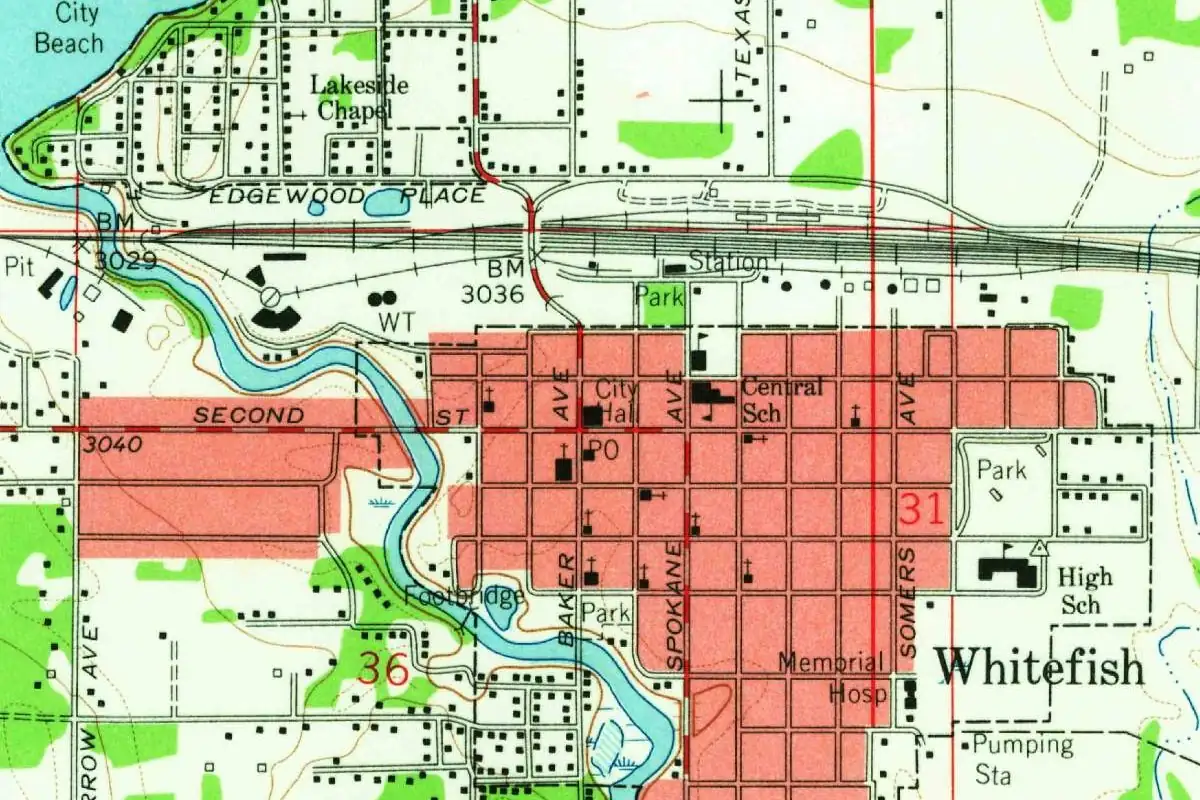
If you look at the 1962 map, the order of things is easy to read: the tracks and the station sit between downtown and the lake that gave the town its name.
Quick answers
What is Whitefish, Montana, named after?
It’s named for Whitefish Lake, and the lake for the native whitefish that people caught at its outlet, according to the Stumptown Historical Society.
Was Whitefish, Montana, ever called Stumptown?
Not officially. The historical society says “Whitefish was never called ‘Stumptown’”; that’s a nickname.
When did Whitefish become a railroad town?
In 1904, when the Great Northern moved its main line and platted Whitefish as a new division point, according to the Forest Service history.
Key dates
- 1904The Great Northern moves its main line to the north end of the Flathead Valley, and Whitefish is platted as the new division point (Forest Service history).
- 1905Whitefish is incorporated and has 950 residents by spring (Stumptown Historical Society; Forest Service history).
Getting there
Open Whitefish in Google Maps
Opens in a new tab. The pin is the center of Whitefish in the USGS place-name record.
The closest airports, Amtrak stations and intercity bus stops, measured in a straight line from the center of Whitefish.
Airports
- Glacier Park International (GPI) Kalispell 8 mi 13 km
- Missoula Montana (MSO) 104 mi 167 km
Amtrak trains
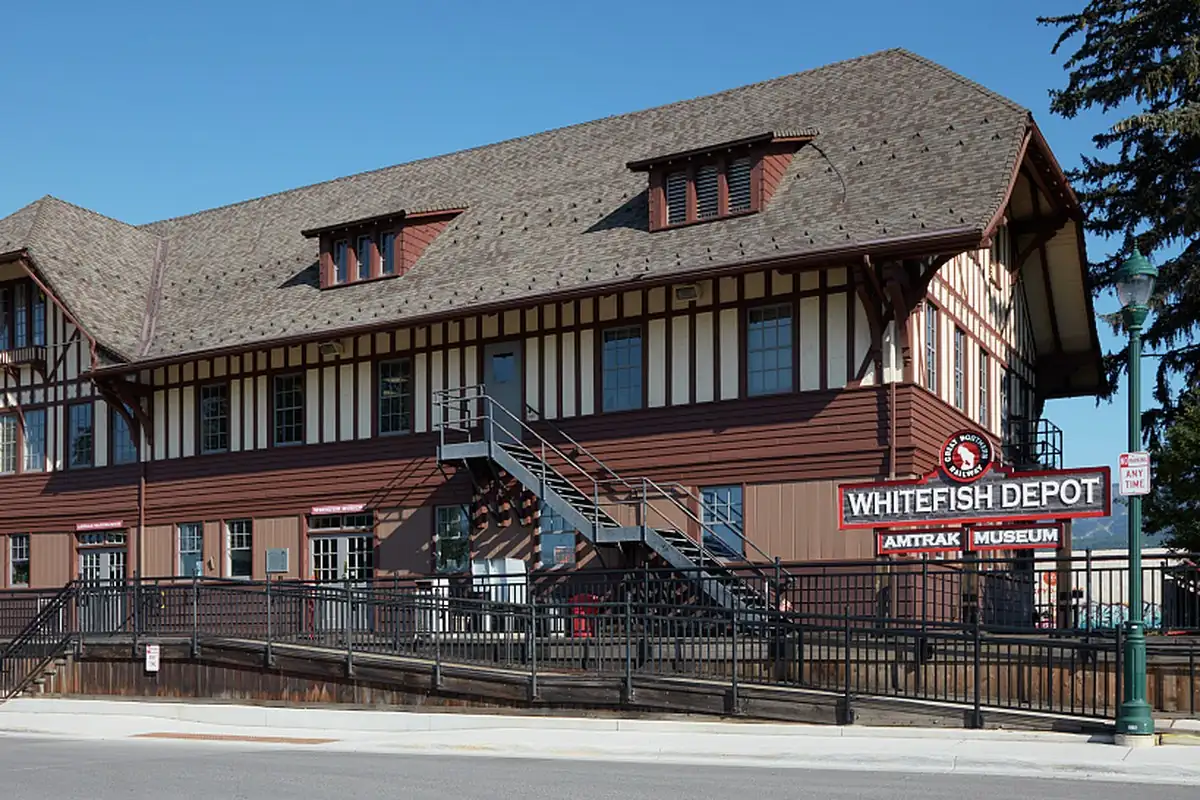
- Whitefish station (WFH) under 1 mi 0.3 km
- West Glacier station (WGL) 17 mi 28 km
Intercity buses
- Jefferson Lines Whitefish 2 mi 4 km
Distances are as the crow flies, not by road. We don't list schedules or fares because they change; check with the airline, Amtrak or the bus company before you go. Official data (FAA commercial service airports (2025), FAA airport locations, Amtrak stations and Intercity Bus Atlas) from the FAA and the U.S. Bureau of Transportation Statistics, checked Nov 6, 2026.
Sponsored
Staying in Whitefish?
Compare hotels in Whitefish, Montana, on Expedia.
See hotels in WhitefishWe may earn a commission if you buy through this link. It never changes what we write. Read our affiliate disclosure
Historical Sources & References
- Jill Evans, “Stumptown to Ski Town,” Stumptown Historical Society. The camps at the lake outlet, the brush weirs, the whitefish “so named because of the color of its flesh,” the lake and town named from it, the incorporation of 1905 and “never called ‘Stumptown’.” Quotes Schafer and Engelter, Stump Town to Ski Town (1972).
- Trails of the Past: Historical Overview of the Flathead National Forest, Montana, 1800-1960, ch. 4. The Great Northern’s move of 1904, Whitefish platted as the new division point, the earlier settlement at the foot of the lake and about 950 residents by spring 1905.
- Federal Writers’ Project, Montana: A State Guide Book (1939), pp. 294-295. “A neat lake-shore town,” the division point with railroad shops and the size of Whitefish Lake.
- GNIS feature 793219 (U.S. Geological Survey). GNIS’s own entry for Whitefish, in Flathead County.
Spot something wrong, or know more? Tell us here. You can also email us or use our contact page. Corrections are noted here with their date, never made silently.