Great Falls, Montana: The Falls Lewis Heard Before He Saw
Great Falls is named for the great falls of the Missouri River, the series of waterfalls and rapids beside the city. Meriwether Lewis reached them on June 13, 1805, and called them by that name in his journal. Paris Gibson, who read the expedition's journals, founded a town beside the falls in 1884.
A roar across the plain
Great Falls, Montana, is named for the Missouri River falls that Meriwether Lewis heard roaring from miles away before he saw them on June 13, 1805. The city’s own history starts there too: Great Falls, it says, gets its name from “the Missouri River and the waterfalls.” Lewis was crossing the plains on foot that day with a few men, Goodrich among them.
He wrote it all down in his journal. The Thwaites edition, printed in 1904 from the original manuscripts, keeps his spelling:
“I saw the spray arrise above the plain like a collumn of smoke which would frequently dispear again in an instant … I did not however loose my direction to this point which soon began to make a roaring too tremendious to be mistaken for any cause short of the great falls of the Missouri”
He got there about noon, he wrote, after walking by his estimate about 15 miles (24 km). The phrase he used, “the great falls of the Missouri,” is the name the city carries today.
Falls they’d been told about
Lewis knew what he was hearing because people had told him. In a 1913 history of Montana, engineer Max Hebgen wrote that on their way up the Missouri the explorers “had heard from the Indians about the great falls,” and were eager to reach them. The Indians had even told them to look for an eagle’s nest at one of the falls. They found it.
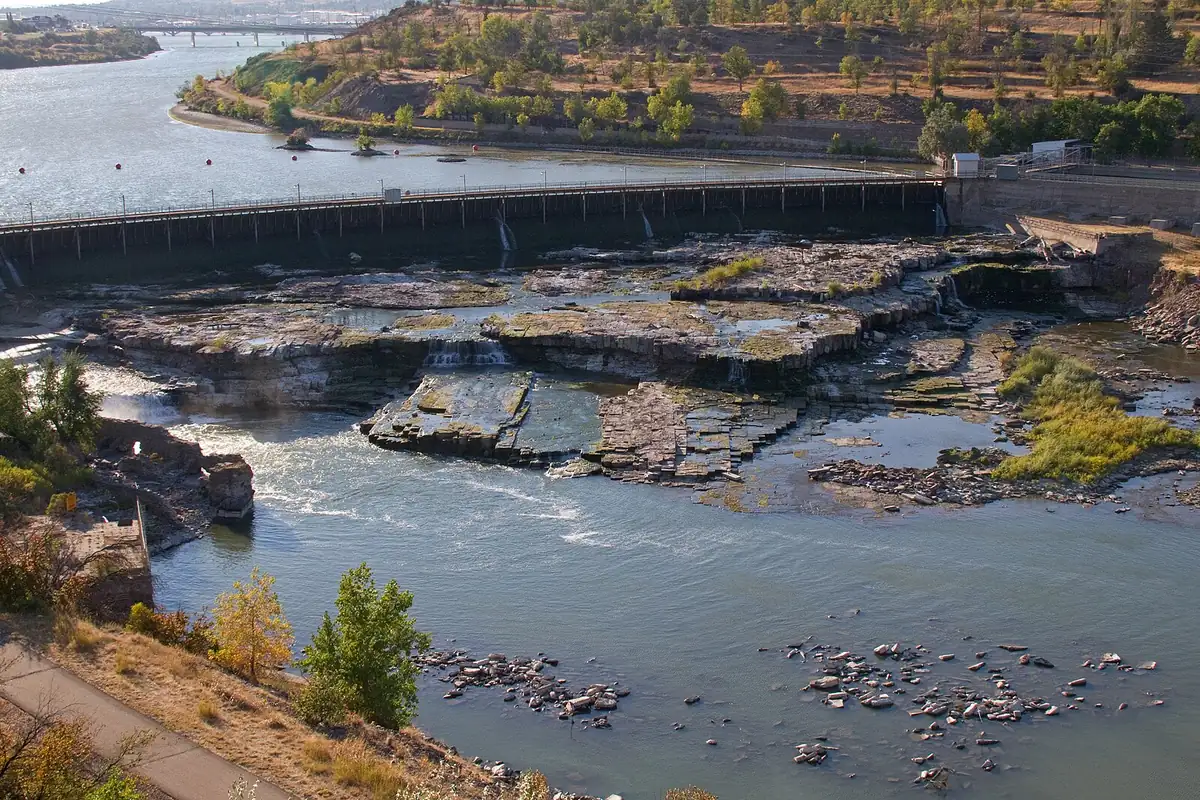
The next page of Lewis’s journal is where he gets carried away. Right at the cascade, he wrote, the river was about 300 yards (274 m) wide, pinched between a ledge of rock and a sheer cliff, and the whole body of water passed through “with incredible swiftness.” Part of the river fell “over a precipice of at least eighty feet,” about 24 m, and the rest, broken up by rocks below, “formes the grandest sight I ever beheld.”
The expedition named some of the separate drops too, Hebgen says. The cataract with the nest became Black Eagle Falls. Another got the name of “Coulter, one of their comrades.” Crooked Falls was named for the river’s course. Rainbow Falls, he adds, recalls the journal’s line about “the masses of white foam upon which the sun impresses the brightest colors of the rainbow.” The city counts five waterfalls in all, along with rapids, and says the river drops more than 500 feet (152 m) where Great Falls now sits. Hebgen put it a little differently in 1913: 400 feet (122 m) in eight miles (13 km).
People knew this country long before the expedition did. The city’s history says that before the Louisiana Purchase, the Piegan (Blackfeet) and other tribes hunted and lived in the area. On the foam below the big drop, Lewis wrote that it sometimes flew up “in jets of sparkling foam to the hight of fifteen or twenty feet,” about 5 to 6 m.
Getting around all that took work. The city says Lewis and Clark could hear the falls from seven miles (11 km) away, took nearly a month to carry everything around them by land, and celebrated the Fourth of July at White Bear Island before moving on. Hebgen wrote in 1913 that from the courthouse tower in Great Falls you could see that spot, hardly three miles (5 km) away.
A county and a city named for the falls
When Henry Gannett put together his nationwide catalog of name origins for the U.S. Geological Survey in 1905, Montana’s falls showed up twice. Cascade County, he wrote, was “so named because it contains the great falls of the Missouri River.” And Great Falls, the city, was “named from the falls in the Missouri River, near the city.” There’s no rival story in any source on this page. The name describes what’s there.
Paris Gibson reads the journals
The town came 79 years after Lewis. The city’s history says Paris Gibson, inspired by the Lewis and Clark journals, traveled from Fort Benton to see the falls for himself. He saw the falls, the rivers and the wide, productive plain between the mountain ranges, which the city calls “a perfect place for a City.”
Gibson shared his plans with railroad owner James Hill, the city says, and Hill put up money because his railroad stood to gain. With that backing, Gibson founded Great Falls in 1884, laid out arrow-straight streets (he was an engineer, the city notes), planted trees along them and set aside 886 acres for parks. Sanders’s 1913 history calls him “a pioneer and founder of the city of Great Falls,” and notes that the state legislature later sent him to the U.S. Senate.
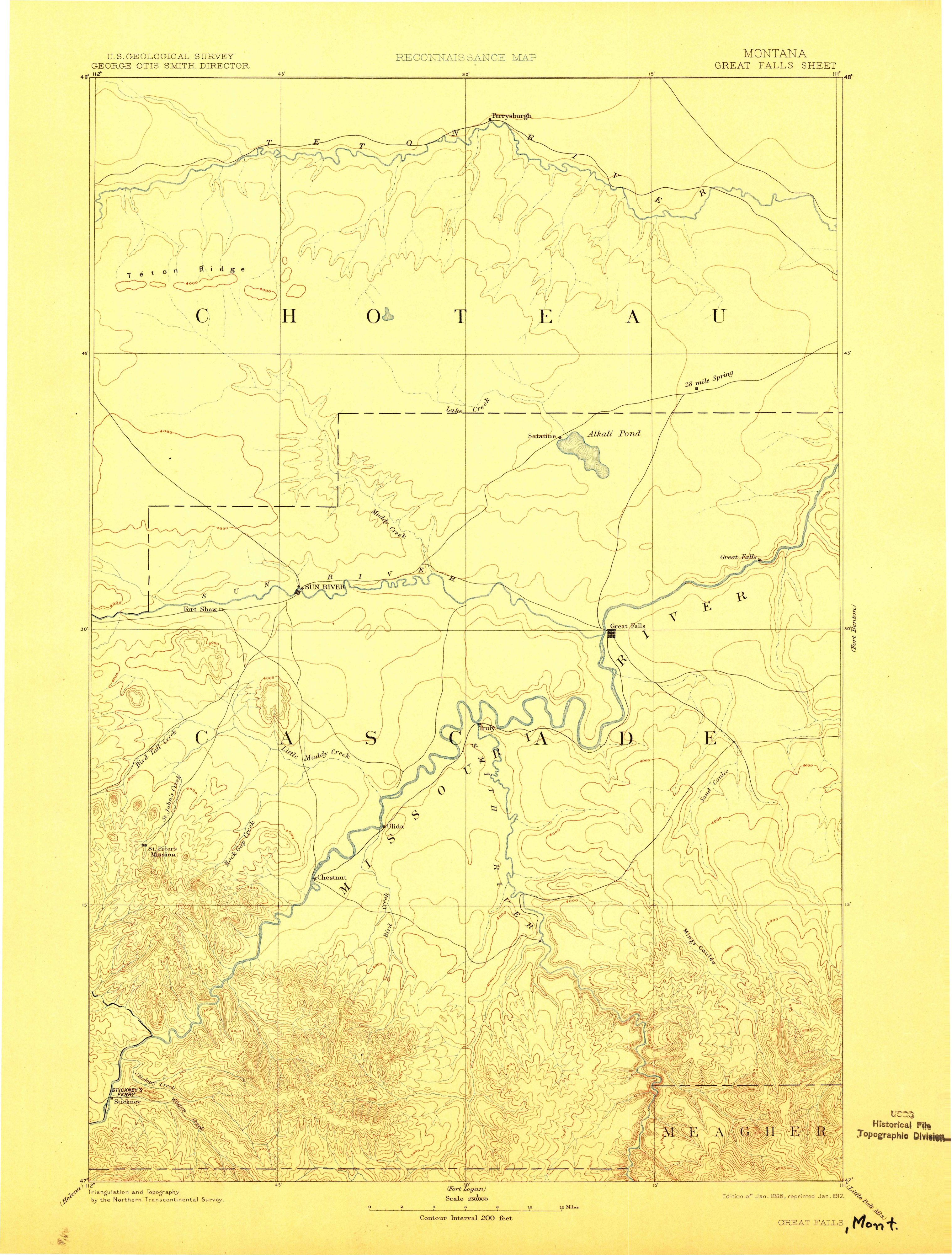
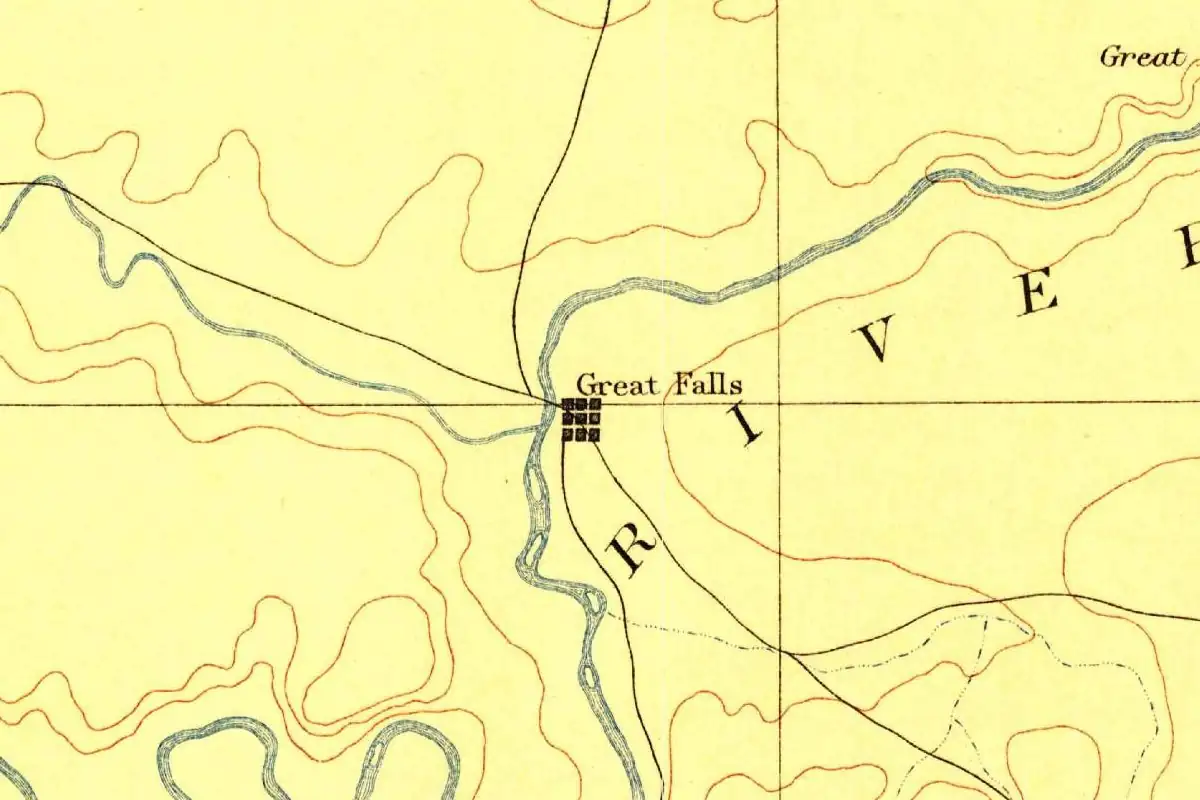
You can see how small the start was on the 1886 map at the top of this page. Great Falls is a block of nine little squares where a smaller river runs into the Missouri, two years after Gibson founded it. Later, with dams built on the river and electric streetlights installed, Great Falls picked up a nickname: “The Electric City.”
Towns named for the water
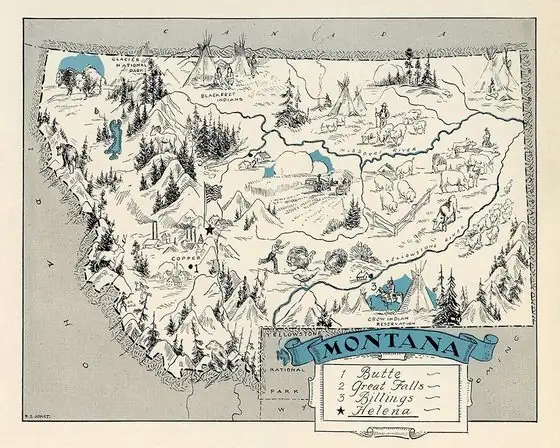
The eagles at Black Eagle Falls have a cousin in Idaho Falls, which started out as Eagle Rock, after a rock in the Snake River where eagles nested. And back east, Cuyahoga Falls, in Ohio, also ended up with the name of the falls on its river. You’ll find more of the state’s name stories on our Montana page.
Quick answers
What is Great Falls, Montana, named after?
The great falls of the Missouri River. Henry Gannett’s 1905 place-name volume for the Geological Survey says the city was “named from the falls in the Missouri River, near the city,” and the city says it gets its name from the waterfalls.
Did Lewis and Clark discover the great falls?
They weren’t the first to know about them. Hebgen wrote in 1913 that Lewis and Clark had heard about the falls from Indians before they arrived; Lewis reached them on June 13, 1805.
How many waterfalls are in Great Falls?
Five, according to the city, in a series of falls and rapids. Hebgen credits the expedition with naming Black Eagle Falls, Crooked Falls and a falls named for Coulter, one of the men.
Who founded Great Falls?
Paris Gibson, in 1884. The city says he read the Lewis and Clark journals, came from Fort Benton to see the falls and got backing from railroad owner James Hill.
Key dates
- 1805On June 13, Meriwether Lewis hears the roar and reaches the great falls of the Missouri.
- 1805The expedition celebrates the Fourth of July at White Bear Island after nearly a month of portage.
- 1884Paris Gibson, with backing from railroad owner James Hill, founds Great Falls.
Things to do in Great Falls, Montana
Lewis and Clark National Historic Trail Interpretive Center
A Forest Service center on the expedition's journey, focused on the challenge the explorers faced as they portaged the great falls of the Missouri, and on the native peoples of the West.
Giant Springs State Park
One of the largest freshwater springs in the country, first recorded by the Lewis and Clark Expedition in 1805, with unusual geologic features and room for family recreation.
River's Edge Trail
Almost 60 miles (97 km) of paved and singletrack trail along both sides of the Missouri, with views of river canyons, waterfalls and five hydroelectric dams.
First Peoples Buffalo Jump State Park
An archaeological site with possibly the largest bison cliff jump in North America, with a visitor center and interpretive trails about the people, the animals and the buffalo culture.
C.M. Russell Museum
A museum devoted to Charles Marion Russell (1864-1926), the Western artist whose paintings record the cultures, landscapes and wildlife of the West he lived in.
Getting there
Open Great Falls in Google Maps
Opens in a new tab. The pin is the center of Great Falls in the USGS place-name record.
The closest airports, Amtrak stations and intercity bus stops, measured in a straight line from the center of Great Falls.
Airports
- Great Falls International (GTF) 3 mi 6 km
- Helena Regional (HLN) 70 mi 112 km
Amtrak trains
- Shelby station (SBY) 74 mi 119 km
- Cut Bank station (CUT) 92 mi 148 km
Intercity buses
- Salt Lake Express Great Falls under 1 mi 0.4 km
Distances are as the crow flies, not by road. We don't list schedules or fares because they change; check with the airline, Amtrak or the bus company before you go. Official data (FAA commercial service airports (2025), FAA airport locations, Amtrak stations and Intercity Bus Atlas) from the FAA and the U.S. Bureau of Transportation Statistics, checked Nov 14, 2026.
Sponsored
Staying in Great Falls?
Compare hotels in Great Falls, Montana, on Expedia.
See hotels in Great FallsWe may earn a commission if you buy through this link. It never changes what we write. Read our affiliate disclosure
Historical Sources & References
- Meriwether Lewis, journal entry of June 13, 1805, in Thwaites, ed., Original Journals of the Lewis and Clark Expedition, vol. 2 (1904), pp. 147-148. The quoted passage on the spray and the roar (p. 147), arrival about noon after “about 15. Miles,” and on p. 148 the precipice “of at least eighty feet” and “the grandest sight I ever beheld.”
- Henry Gannett, The Origin of Certain Place Names in the United States (1905), p. 143. Great Falls “named from the falls in the Missouri River, near the city.”
- Henry Gannett, The Origin of Certain Place Names in the United States (1905), p. 71. Cascade County “so named because it contains the great falls of the Missouri River.”
- Helen Fitzgerald Sanders, A History of Montana, vol. 1 (1913), pp. 539-540. Max Hebgen’s account: the falls the explorers “had heard from the Indians about,” the eagle’s nest and Black Eagle Falls, the falls named for Coulter, Crooked Falls, Rainbow Falls and the journal’s rainbow line; the Fourth of July spot hardly three miles from the courthouse tower; and the 400-foot drop in eight miles.
- Helen Fitzgerald Sanders, A History of Montana, vol. 1 (1913), p. 426. Paris Gibson, “a pioneer and founder of the city of Great Falls,” elected to the U.S. Senate.
- City of Great Falls, “History”. The waterfalls “from which it gets its name”; the drop of more than 500 feet in rapids and five falls; the Piegan (Blackfeet); the falls heard from seven miles, the month-long portage and July 4 at White Bear Island; Gibson as an engineer; Gibson, Fort Benton, James Hill, the founding in 1884, the street plan and 886 acres of parks; “The Electric City.”
- GNIS feature 802113 (U.S. Geological Survey). The USGS name database entry for Great Falls, in Cascade County.
- U.S. Geological Survey, Great Falls sheet (1886). The 1:250,000 quadrangle the map at the top of this page was cropped from.
Sponsored
Put this 1886 map on your wall
The 1886 USGS Great Falls, Montana, sheet is in the public domain. Download the full-size scan for free, then have it printed on canvas with CanvasOnTheCheap.
Print a map on canvasDownload the full-size mapWe may earn a commission if you buy through this link. It never changes what we write. Read our affiliate disclosure
Spot something wrong, or know more? Tell us here. You can also email us or use our contact page. Corrections are noted here with their date, never made silently.