Beaufort, SC: Named for a Duke or a Town in France?
Beaufort's name has two explanations. The South Carolina Encyclopedia says the town, chartered in 1711, was named for Henry Somerset, second Duke of Beaufort, a Carolina proprietor. Robert Mills's 1826 Statistics of South Carolina found it hard to say and judged a town of that name in Anjou, France, the more probable source.
Two old explanations compete for the name of Beaufort, South Carolina: an English duke who led Carolina’s proprietors, or a town in Anjou, France. The modern state encyclopedia goes with the duke, Henry Somerset, but the first writer we found who took up the question in print, back in 1826, thought France was the better bet.
A duke at the head of the table
The South Carolina Encyclopedia’s entry, signed by Lawrence S. Rowland, puts it simply. Beaufort was chartered on January 17, 1711, and “was named for Henry Somerset, the second duke of Beaufort, a proprietor of Carolina from 1700 to 1714.” The proprietors were the small group of English lords who owned the colony under a royal charter. The entry adds that the town was laid out around a fort and blockhouse built in 1706 to guard against a Spanish invasion.
You can see the duke in the colony’s own laws from those years. The acts of 1712, printed in the Statutes at Large of South Carolina, open with “the most noble Prince, Henry Duke of Beaufort, Palatine,” named first, ahead of “the rest of the true and absolute Lords and Proprietors of this Province.” So when Beaufort got its charter, the man with that title sat at the top of the list of the colony’s owners.
That’s strong timing. It isn’t the same as a document saying “we name this town for the duke,” and none of the sources here quotes one.
The case for a town in France
Robert Mills, who compiled Statistics of South Carolina in 1826, went through the state district by district, and for Beaufort he gave the name its own heading. His answer was a shrug, then a lean:
“It is difficult to say from what source the name of the district is derived, whether from Henry, duke of Beaufort, who was one of the lords proprietors of the province, or from a town of Anjou in France of that name.”
He thought the French town “seems most probable,” because the English had meant Port Royal as “a place of refuge, or asylum, for French protestants,” a plan the Spaniards long defeated. That’s an argument from the area’s history, not a record of who chose the name.
Henry Gannett’s 1905 book on the origins of American place names, published by the U.S. Geological Survey, kept both stories alive. It says the South Carolina town is “said by some authorities to be named for the Duke of Beaufort,” while “other authorities claim that the name was given by the French Protestants,” taking the name of the town in Anjou. Gannett’s wording about those Protestants fleeing “Lord Berkeley” isn’t explained anywhere in his entry, so we’ve left it as he wrote it. Notice too that two lines up he gives Beaufort, North Carolina, a flat answer: named for the Duke of Beaufort, “a lord proprietor.” Only the South Carolina town gets the asterisk.
So which weighs more? The duke has the dates and a modern encyclopedia on his side. The French version has the oldest source we found that discusses the question, but Mills offers reasoning, not a document. If you want to be careful, the fair answer is “probably the duke, and nobody has produced the paper that settles it.”
A town that took a while to fill in
Port Royal had a head start on Beaufort by decades. Mills writes that Colonel Sayle’s settlers fixed on Port Royal in 1670 but soon moved north to where Charleston is now, worried about the Spaniards at St. Augustine. A Scottish colony under Lord Cardross tried again around 1682 and was driven off in 1686. Mills says no permanent settlement took hold before 1700.
Even after the charter, the town filled in slowly. Mills says the first lots were granted in 1717, and the encyclopedia adds that the Yamassee destroyed the town in 1715. A colonial act of December 1717 ordered people who took up front lots in Beaufort to build houses, all “to forward the speedy settlement” of the town and strengthen the frontier. By 1826, Mills could describe Beaufort as “regularly laid out in squares,” about fourteen miles (23 km) from the sea.
“Commonly called and known”
When the colony passed a new law for the town in 1740, under the royal government, it described Beaufort’s beginnings like this:
“during the Government of the heretofore true and absolute Lords Proprietors, a town was erected, appointed and established on Port Royal Island, in Granville county, and was commonly called and known by the name of Beaufort”
That’s about as close as the old record gets to a birth notice. It ties the town to the proprietors’ years, when the Duke of Beaufort was one of them, but it doesn’t say why the name was chosen. Even the lawmakers of 1740 just said that’s what everybody called it.
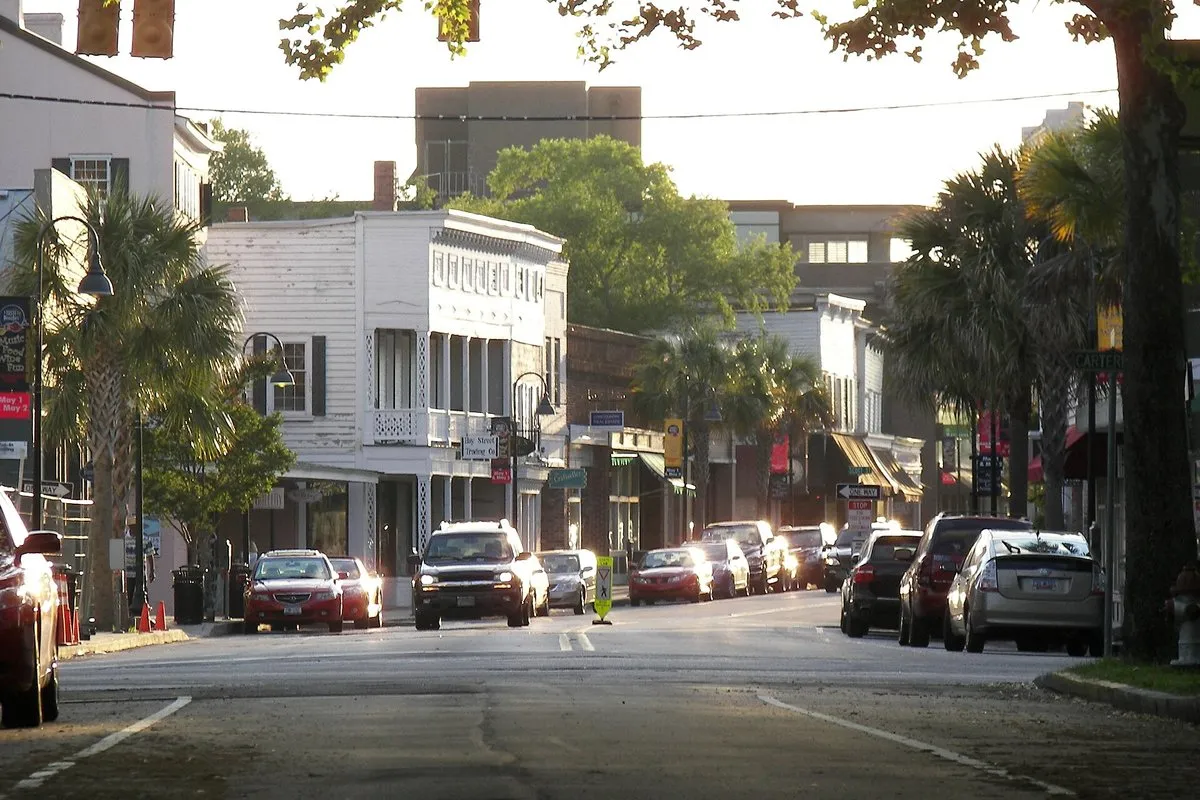
The name spread from there. Mills notes it later went to one of the colony’s precincts and then to a district of the state, and today Beaufort County takes in Hilton Head Island too. If you’re ever on Bay Street, you’re standing in what the encyclopedia calls the second-oldest town in South Carolina, still carrying a name its own records never quite explained.
Quick answers
Who is Beaufort, South Carolina, named after?
Sources disagree. The South Carolina Encyclopedia names Henry Somerset, second Duke of Beaufort; Robert Mills in 1826 thought a town in Anjou, France, more likely, and Gannett in 1905 printed both versions without choosing.
Was Beaufort named after a town in France?
Maybe. Mills called it “most probable,” linking Port Royal to plans for a French Protestant refuge, but he didn’t cite a naming record, and the encyclopedia names the duke.
When was Beaufort founded?
The South Carolina Encyclopedia gives a charter date of January 17, 1711. Mills says the first town lots were granted in 1717.
Key dates
- 1670Colonel Sayle's settlers fix on Port Royal, then soon move north to where Charleston is now, Mills writes in 1826.
- 1706A fort and blockhouse go up to guard against Spanish attack; the town is later laid out around them.
- 1711January 17: Beaufort is chartered, according to the South Carolina Encyclopedia.
- 1712Acts of the Carolina assembly open in the name of Henry Duke of Beaufort, Palatine, and the other Lords Proprietors.
- 1717The first lots in Beaufort are granted, according to Mills; a December act pushes lot owners to build houses.
- 1740A new act recalls that under the Proprietors a town on Port Royal Island was "commonly called and known by the name of Beaufort."
Getting there
Open Beaufort in Google Maps
Opens in a new tab. The pin is the center of Beaufort in the USGS place-name record.
The closest airports, Amtrak stations and intercity bus stops, measured in a straight line from the center of Beaufort.
Airports
- Hilton Head (HXD) Hilton Head Island 14 mi 23 km
- Savannah/Hilton Head International (SAV) 38 mi 60 km
- Charleston AFB/International (CHS) 49 mi 79 km
Amtrak trains
- Yemassee station (YEM) 21 mi 33 km
- Savannah station (SAV) 37 mi 59 km
Intercity buses
- FlixBus Savannah Bus Station 35 mi 56 km
- Greyhound Walterboro Augusta Hwy 45 mi 72 km
Distances are as the crow flies, not by road. We don't list schedules or fares because they change; check with the airline, Amtrak or the bus company before you go. Official data (FAA commercial service airports (2025), FAA airport locations, Amtrak stations and Intercity Bus Atlas) from the FAA and the U.S. Bureau of Transportation Statistics, checked Nov 13, 2026.
Sponsored
Staying in Beaufort?
Compare hotels in Beaufort, South Carolina, on Expedia.
See hotels in BeaufortWe may earn a commission if you buy through this link. It never changes what we write. Read our affiliate disclosure
Sponsored
Want the spooky side of Beaufort?
The name has its story above. For the ghost stories, US Ghost Adventures runs walking ghost tours in Beaufort.
See ghost tours in BeaufortWe may earn a commission if you book through this link. It never changes what we write. Read our affiliate disclosure
Historical Sources & References
- Robert Mills, Statistics of South Carolina (1826), pp. 365-366, 368-369. Sayle’s settlers at Port Royal in 1670, the Cardross colony of about 1682 and no permanent settlement before 1700 (pp. 365-366); the passage weighing the Duke of Beaufort against the town in Anjou, with the quotation above (p. 366); the town “regularly laid out in squares” (p. 368); the first lots granted in 1717 and its distance from the sea (p. 369).
- Henry Gannett, The Origin of Certain Place Names in the United States (USGS, 1905), p. 40. The South Carolina entry with both versions, the duke and the French Protestants’ town in Anjou, and the separate North Carolina entry naming the duke as “a lord proprietor.”
- The Statutes at Large of South Carolina, vol. 2 (1837), p. 390. A 1712 act enacted by “the most noble Prince, Henry Duke of Beaufort, Palatine,” and the rest of the Lords Proprietors.
- The Statutes at Large of South Carolina, vol. 3 (1838), pp. 574-575. The 1740 act for “Beaufort Town, on Port Royal Island,” with the preamble quoted above and its summary of the December 11, 1717, act on building houses on town lots.
- Lawrence S. Rowland, “Beaufort,” South Carolina Encyclopedia. The charter date of January 17, 1711, Henry Somerset as namesake and proprietor from 1700 to 1714, the 1706 fort and blockhouse and the Yamassee attack of 1715.
- GNIS feature 1245003 (U.S. Geological Survey). Gives this Beaufort an ID of its own, so it can’t be mixed up with Beaufort, North Carolina.
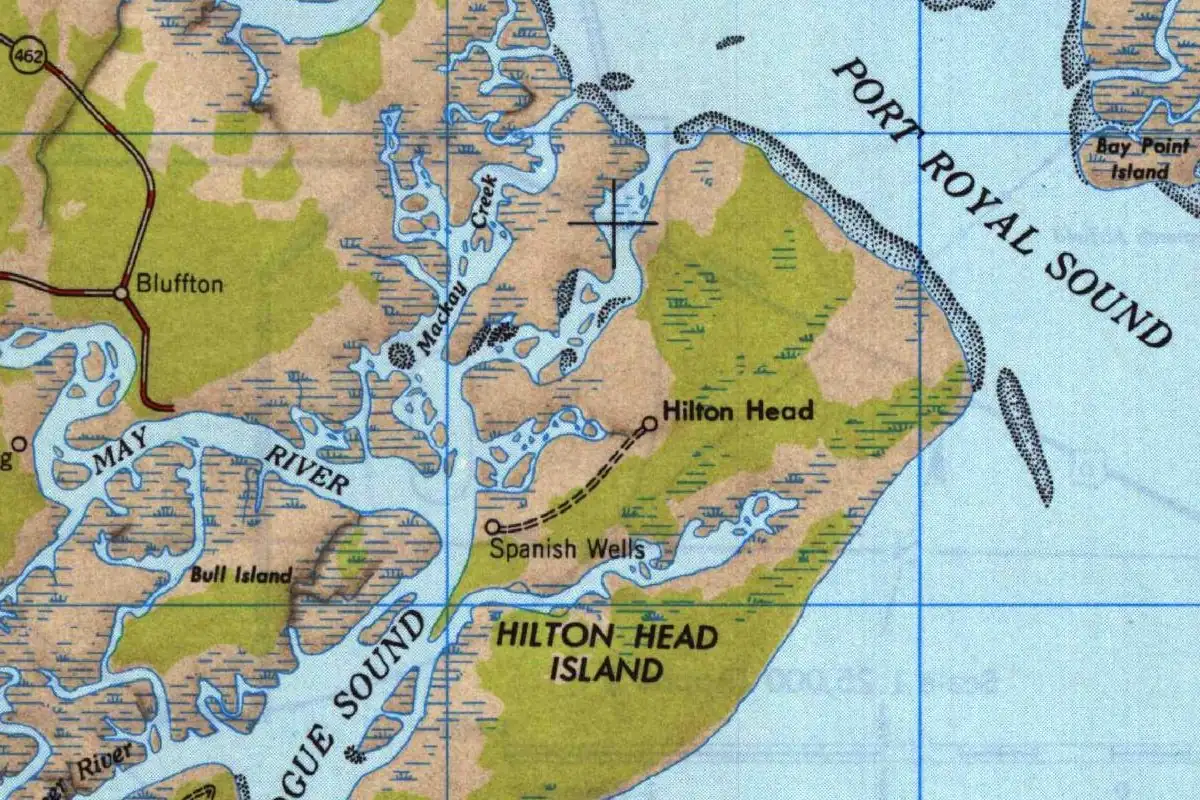
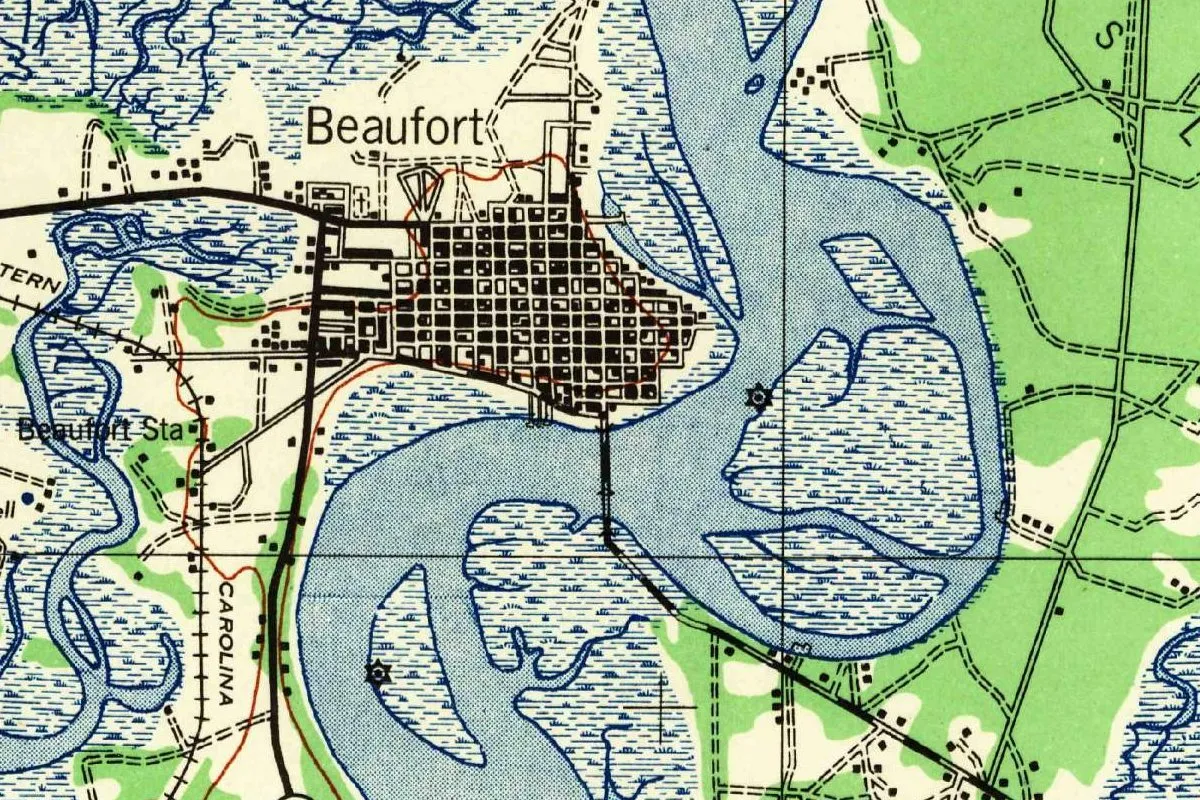
- U.S. Army Corps of Engineers, Fort Fremont sheet (1944). A 1944 Army Corps sheet, scanned in the USGS historical topo collection; our crop keeps the town’s grid and the river around it.
Spot something wrong, or know more? Tell us here. You can also email us or use our contact page. Corrections are noted here with their date, never made silently.