Columbia, South Carolina: A Capital Named by Law in 1786
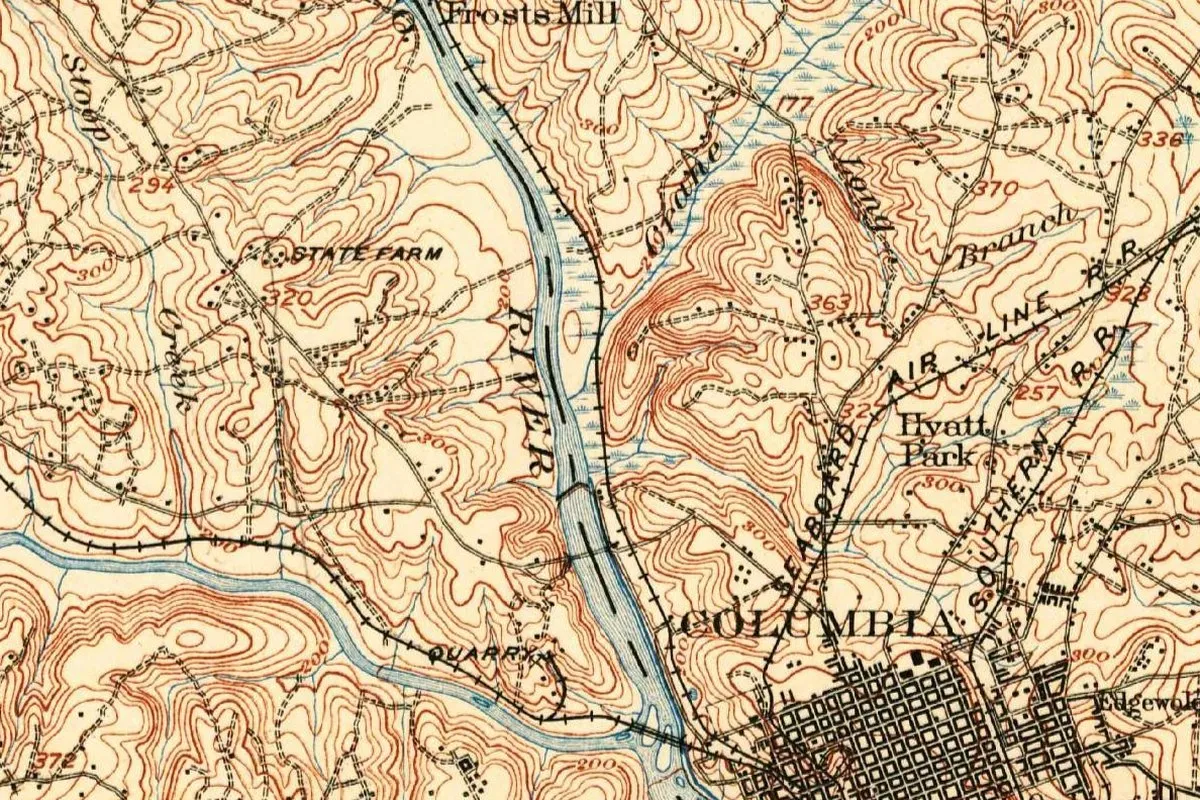
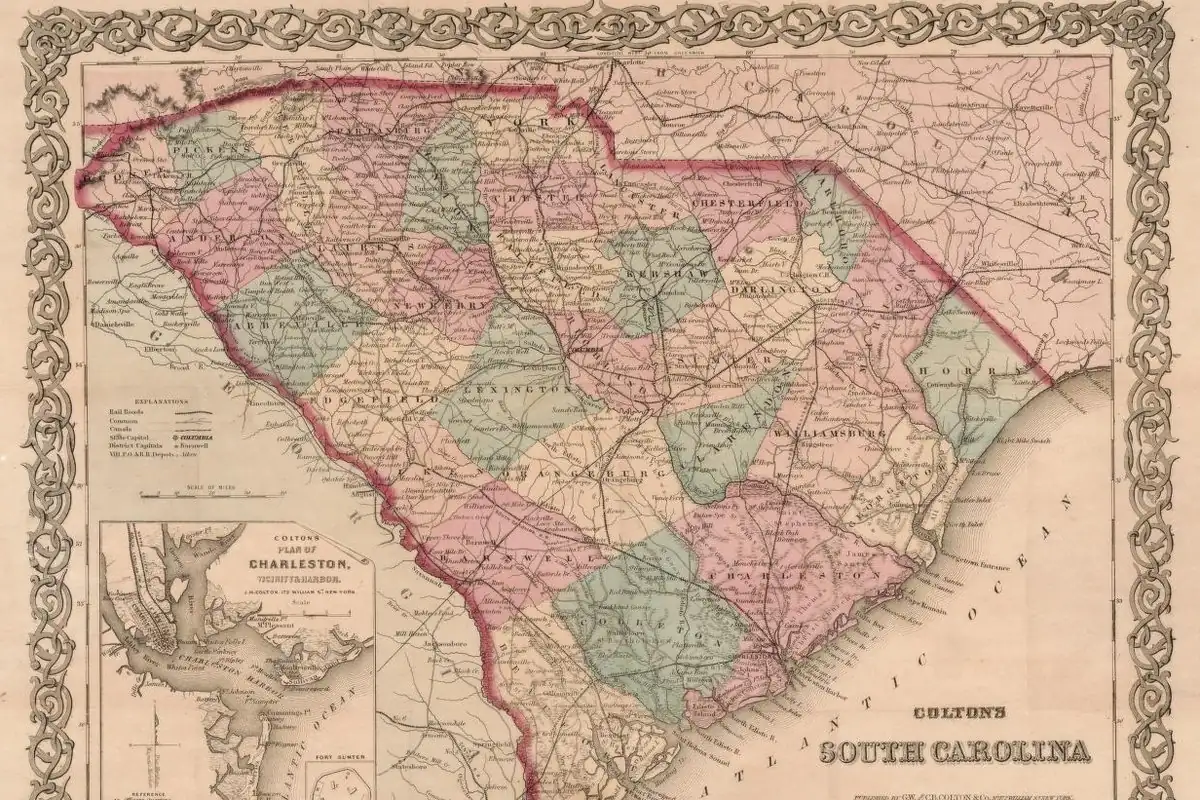
Columbia, South Carolina, was named by a 1786 law that said the new town “shall be called and known by the name of Columbia.” The same law planned to move the capital there from Charleston. The town didn’t exist yet, so lawmakers named it before a single lot was sold.
A town on paper near Friday’s ferry
The act was passed on March 22, 1786, and you can still read it in Thomas Cooper’s Statutes at Large of South Carolina. Its first line explains the whole idea: keeping the seat of government in Charleston “is productive of many inconveniencies and great expense to the citizens of this State.”
So the law told a set of commissioners to lay off a tract “of two miles square” (about 3.2 km on each side) “near Friday’s ferry, on the Congaree river,” taking in the hill where Thomas and James Taylor lived. The streets had to be at least sixty feet wide, with two main streets 150 feet wide crossing in the middle.
Section VII names it
Then, in its seventh section, the act settles the name in one line:
“That the said town shall be called and known by the name of Columbia.”
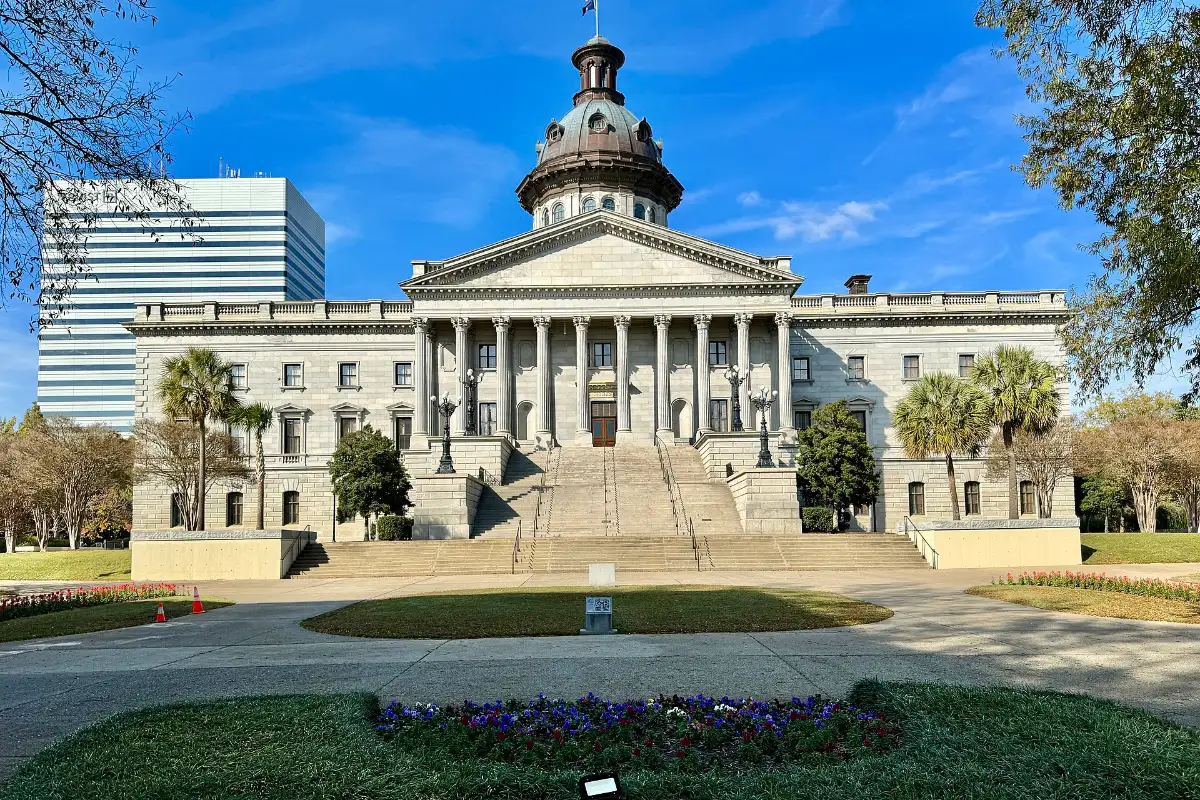
The next section says the town would become “the seat of government of this State” as soon as the public buildings were ready. The law doesn’t say who suggested the name or why. You may read that lawmakers picked Columbia over Washington, but we didn’t find that in the act or in the early histories we read, so treat it as a story for now.
A poetic name for America
What the word means isn’t a mystery, though. The Century Cyclopedia of Names, from 1905, defines Columbia as “a poetical name of the United States, or of the New World,” and traces it to Columbus. The act doesn’t say that’s why lawmakers chose it.
120 miles, 120 years
It took a while for the government to move in. Robert Mills’s 1826 Statistics of South Carolina says the state records were moved to Columbia on December 1, 1789, and the first legislature met there in January 1790.
David Ramsay noticed something neat about the timing in his history of the state. The legislature first met in Columbia in 1790, he wrote, “exactly 120 years after the first English settlement in Carolina.” He added that the state’s “reputed centre of population” sat just as many miles from the coast as years had passed: “The Interval of space was 120 miles,” Ramsay wrote, “of time, 120 years.” That’s about 193 km. He was talking about where people lived, not measuring the distance to Columbia. Ramsay also said the move eased the old rivalry between the coast around Charleston and the back country.
Quick answers
Why is Columbia, South Carolina, called Columbia?
A 1786 law named it. The act that planned to move South Carolina’s capital says the new town “shall be called and known by the name of Columbia.” It doesn’t say why. The Century Cyclopedia of Names defines the word Columbia as “a poetical name of the United States, or of the New World,” from Columbus.
Who named Columbia, South Carolina?
The South Carolina General Assembly, in its act of March 22, 1786. The law doesn’t say which lawmaker suggested the name. A story says Columbia beat Washington, but we didn’t find that in the act or in the early histories we read.
When did Columbia become the capital of South Carolina?
The 1786 act made it the seat of government once the public buildings were ready. Robert Mills’s 1826 chronology says the state records arrived on December 1, 1789, and the legislature first met there in January 1790.
Why did South Carolina move its capital from Charleston?
The act itself says keeping the government in Charleston caused “many inconveniencies and great expense” to the state’s citizens. Historian David Ramsay adds that the back country wanted a seat of government closer to the center of the state.
Key dates
- 1786March 22: the General Assembly passes the act that lays out a new town near Friday's ferry and names it Columbia.
- 1789December 1: the state records are moved to Columbia, Robert Mills's chronology says.
- 1790January: the legislature meets in Columbia for the first time.
Historical Sources & References
- Thomas Cooper, ed., The Statutes at Large of South Carolina, vol. 4 (1838), pp. 751-752. Act No. 1333, passed March 22, 1786: the “inconveniencies and great expense” of Charleston, the tract “of two miles square, near Friday’s ferry, on the Congaree river,” the street widths (p. 751), section VII, “the said town shall be called and known by the name of Columbia,” and section VIII on the seat of government (p. 752).
- David Ramsay, History of South Carolina, vol. 2 (1858 edition), p. 241. The back country’s claim to a more central seat of government; the legislature’s first meeting in Columbia in 1790, “exactly 120 years after the first English settlement in Carolina”; the “reputed centre of population” as many miles from the coast as years since settlement: “The Interval of space was 120 miles — of time, 120 years.”
- Robert Mills, Statistics of South Carolina (1826). The Richland district chapter, on Columbia as the seat of government, where “the legislature first met here in 1790”; the chronological table: the town ordered laid out on March 22, 1786, state records moved on December 1, 1789, and the first legislature in January 1790.
- The Century Cyclopedia of Names (1905), “Columbia,” p. 269. “A poetical name of the United States, or of the New World,” from Columbus; Columbia, South Carolina, “became the State capital in 1790.”
- GNIS feature 1245051 (U.S. Geological Survey). “Capital of State of South Carolina,” with the city’s official coordinates.
Spot something wrong, or know more? Tell us here. You can also email us or use our contact page. Corrections are noted here with their date, never made silently.