Cass, West Virginia: A Logging Town Named for a Paper Man
Cass, West Virginia, owes its name to a paper company, not a railroad: Joseph K. Cass was a top officer of the firm that built the town. The trains came later, to carry out the trees.
A sawmill for the big spruce
The company was the West Virginia Pulp & Paper Company, owned largely by the Luke family of New York. Roy B. Clarkson, who wrote the Cass entry in e-WV, the online encyclopedia of the West Virginia Humanities Council, says the firm already had paper mills at Luke, Maryland, and Covington, Virginia, and that both ran on red spruce. In the late 1800s John G. Luke bought up huge tracts of old-growth spruce and hardwood around Cheat Mountain.
The Covington mill could grind small trees into pulp. The big ones needed a sawmill. So in 1899 the company bought land on the Greenbrier River at the mouth of Leatherbark Creek, built a band sawmill there and put up a town for the mill hands.
Vice president or board chairman?
Clarkson says the town was founded in 1900 and named for Joseph K. Cass, “a Pennsylvania paper manufacturer who was vice president of the company.” The 1980 nomination that put the Cass Historic District on the National Register of Historic Places tells it a little differently. By 1902, it says, the construction camp on the Greenbrier had grown to town size and was “Incorporated, and named Cass for Joseph K. Cass, board chairman of the West Virginia Pulp and Paper Company of New York.”
So the two agree on the man and differ on his title and the year. Neither quotes a company record. If you came looking for a railroad baron behind the name, you won’t find one: either way, the man on the sign made paper.
Two railroads, one valley
A 1929 county report of the state Geological Survey says the Chesapeake and Ohio’s Greenbrier line was “completed to Cass in 1901.” The National Register nomination adds that once the C&O line could bring in materials that year, the company began building houses for its workers. A separate outfit, S. E. Slaymaker and Company, set up a construction camp just north of the site and laid track up Leatherbark Run toward the top of Cheat Mountain, for a logging line it called the Greenbrier, Cheat and Elk. The nomination says geared Shay engines worked it.
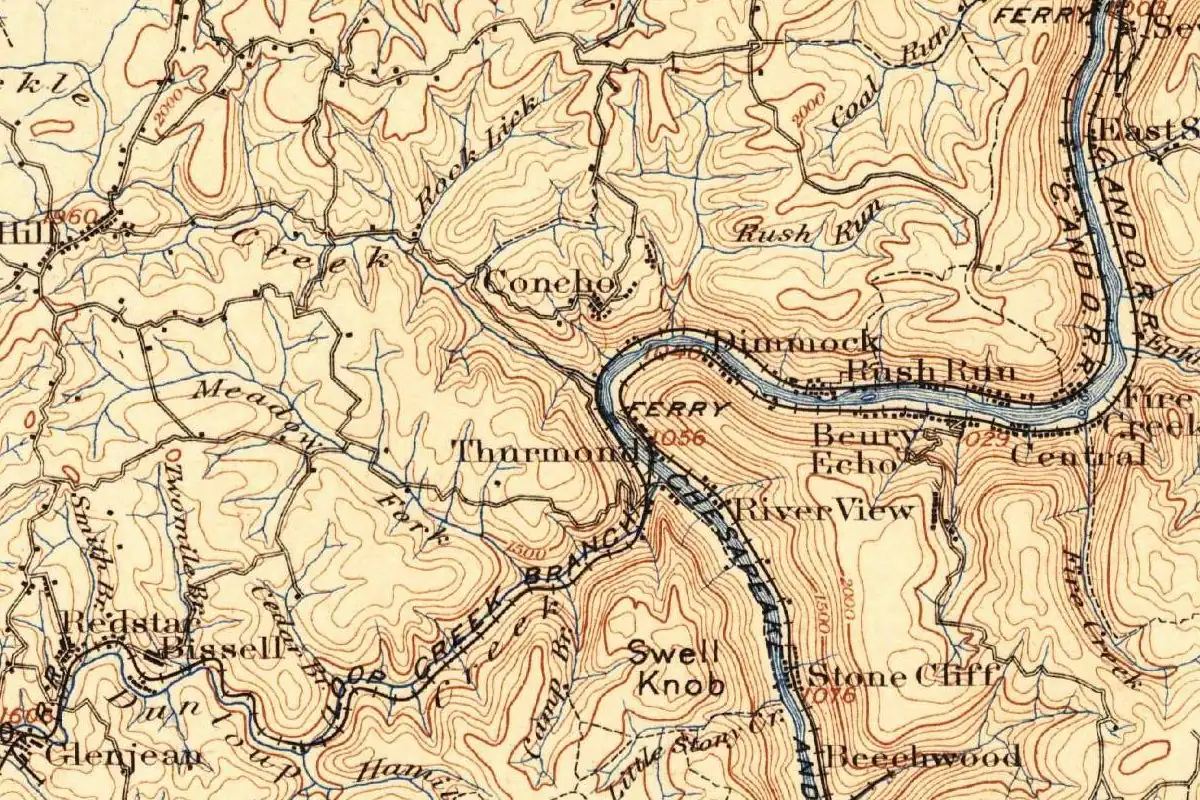
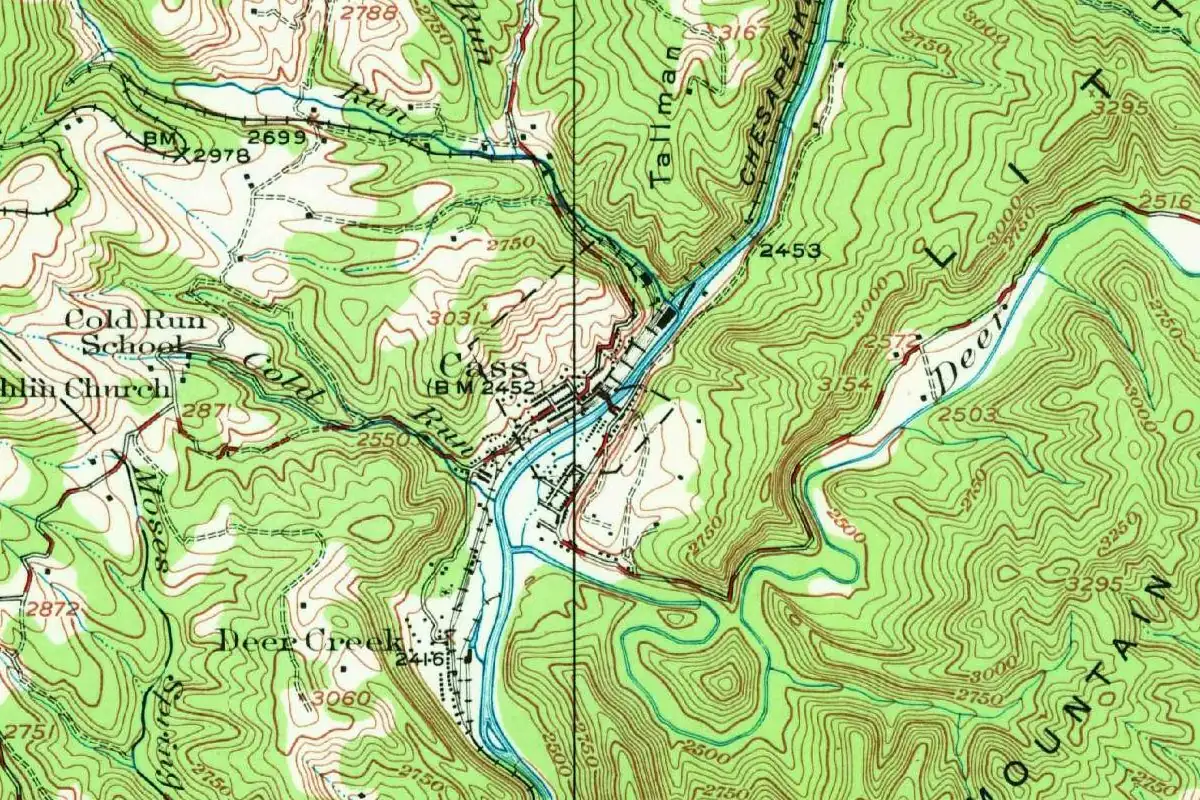
How big Cass got depends on whom you ask. The 1929 report gives 1,195 people in the 1920 census, “and hence the largest town in the county.” Clarkson puts it at “more than 2,000” by 1920, and the nomination counts more than 2,500 employees in the whole operation, with camps along the line. The 1922 Geological Survey sheet shows how tight the town itself was: streets jammed between the river and the slopes, with a rail line winding up the hill.
When the trees ran out
Clarkson says the original forests were mostly cut by 1920, and the town began a slow slide. The mill was sold in 1943 and kept sawing second-growth timber until July 1, 1960. Then, in 1962, the state bought 11 miles (18 km) of the old logging railroad and turned it into Cass Scenic Railroad State Park.
Today, Clarkson writes, visitors ride behind “antique steam engines up the steep grades formerly used by the log trains.” The grades are the loggers’ own, and the town still carries the paper man’s name.
Quick answers
Who was Joseph K. Cass?
A Pennsylvania paper manufacturer and an officer of the West Virginia Pulp & Paper Company, which founded Cass for its sawmill workers. Clarkson calls him the company’s vice president, and the 1980 National Register nomination calls him board chairman.
Was Cass built by a railroad?
No. A paper company built it around a sawmill. The Chesapeake and Ohio reached Cass in 1901, and a separate logging line climbed Cheat Mountain from there.
Why is there a scenic railroad at Cass?
After the mill closed in 1960, the state bought 11 miles (18 km) of the logging railroad in 1962 and made it a state park. Visitors now ride steam trains up the grades the log trains used.
Key dates
- 1899The West Virginia Pulp & Paper Company buys land on the Greenbrier River at the mouth of Leatherbark Creek.
- 1901The Chesapeake and Ohio's Greenbrier line reaches Cass.
- 1902Cass is incorporated and named, according to the National Register nomination.
- 1943The sawmill is sold and keeps cutting second-growth timber.
- 1960The sawmill closes on July 1.
- 1962The state buys 11 miles (18 km) of the logging railroad and creates Cass Scenic Railroad State Park.
Getting there
Open Cass in Google Maps
Opens in a new tab. The pin is the center of Cass in the USGS place-name record.
The closest airports, Amtrak stations and intercity bus stops, measured in a straight line from the center of Cass.
Airports
- North Central West Virginia (CKB) Clarksburg 64 mi 104 km
- Roanoke/Blacksburg Regional (Woodrum Field) (ROA) 74 mi 119 km
- Washington Dulles International (IAD) 138 mi 222 km
Amtrak trains
- Clifton Forge station (CLF) 41 mi 65 km
- White Sulphur Springs station (WSS) 47 mi 76 km
Intercity buses
- Barons Bus Lines Sutton Flatwood 46 mi 73 km
- Virginia Breeze, Operated by Dillon's Virginia Breeze · Lexington (Food Lion) 50 mi 81 km
- Virginia Breeze, Operated by Academy Virginia Breeze · Staunton (Crossing Way Park & Ride) 51 mi 82 km
Distances are as the crow flies, not by road. We don't list schedules or fares because they change; check with the airline, Amtrak or the bus company before you go. Official data (FAA commercial service airports (2025), FAA airport locations, Amtrak stations and Intercity Bus Atlas) from the FAA and the U.S. Bureau of Transportation Statistics, checked Nov 6, 2026.
Sponsored
Staying in Cass?
Compare hotels in Cass, West Virginia, on Expedia.
See hotels in CassWe may earn a commission if you buy through this link. It never changes what we write. Read our affiliate disclosure
Historical Sources & References
- Roy B. Clarkson, “Cass,” e-WV: The West Virginia Encyclopedia. The town founded in 1900 by the West Virginia Pulp & Paper Company and named for Joseph K. Cass, “a Pennsylvania paper manufacturer who was vice president of the company”; the Luke family and the spruce; the 1899 purchase at Leatherbark Creek; “more than 2,000” people by 1920; the mill sold in 1943 and closed on July 1, 1960; the 1962 state purchase of the railroad and the “antique steam engines.” Clarkson also wrote the book-length history of Cass.
- C. E. Turley, National Register of Historic Places Inventory-Nomination Form, Cass Historic District (1980), item 8. The C&O line bringing in materials in 1901; S. E. Slaymaker and Company, the Greenbrier, Cheat and Elk and the Shay engines; more than 2,500 employees; the town “Incorporated, and named Cass for Joseph K. Cass, board chairman of the West Virginia Pulp and Paper Company of New York,” by 1902.
- West Virginia Geological Survey, Pocahontas County (County Reports, 1929). The Greenbrier Division of the Chesapeake and Ohio “completed to Cass in 1901,” the logging line down Leatherbark Run, and the 1920 census count of 1,195, “the largest town in the county.”
- GNIS feature 1554083 (U.S. Geological Survey). The Interior Department’s place-name file for Cass, in Pocahontas County, with its map point.
Spot something wrong, or know more? Tell us here. You can also email us or use our contact page. Corrections are noted here with their date, never made silently.