La Crosse, Wisconsin: A Ball Game, a Cross and a Postmaster
La Crosse comes from Prairie de la Crosse, a French name for the prairie beside the Mississippi. Most sources tie it to the Native ball game the French called la crosse, played on that level ground. A rival tradition points to a cross. Nathan Myrick, the first postmaster, said he shortened the name to La Crosse.
La Crosse, Wisconsin, carries the French name of a ball game, though a cross, a bishop’s staff and a frontier postmaster all crowd into the story. The short version, and the one the city itself tells, is that French visitors named the prairie by the Mississippi for the game they saw Native people play there. The longer version has more twists.
The prairie of the game
Henry Gannett, who collected place-name origins for the U.S. Geological Survey, gave the city one sentence in the 1905 edition of his book, and it’s the classic answer: “A French name given the town because before its settlement the ground was a favorite place for ball playing with the Indians, the game being called by the French la crosse.”
The City of La Crosse says the same thing today. Its “About La Crosse” page puts it in a line: “French explorers named the area for the game Indians played on the prairie.”
The best support comes from the History of La Crosse County, published in Chicago in 1881, which gives the question a whole section. It says the place was already known as La Crosse in 1805, when Zebulon Pike, the army explorer, called it “Prairie de la Crosse.” In 1823 Lieutenant Martin Scott stopped there on the way to the St. Peter’s River and described the prairie as “being very level, is admirably well calculated for the game of la crosse, which is very much in favor with the Indians.” The book adds a note from the Historical Collections of Wisconsin saying the name came from the French name of the game, le jeu de crosse.
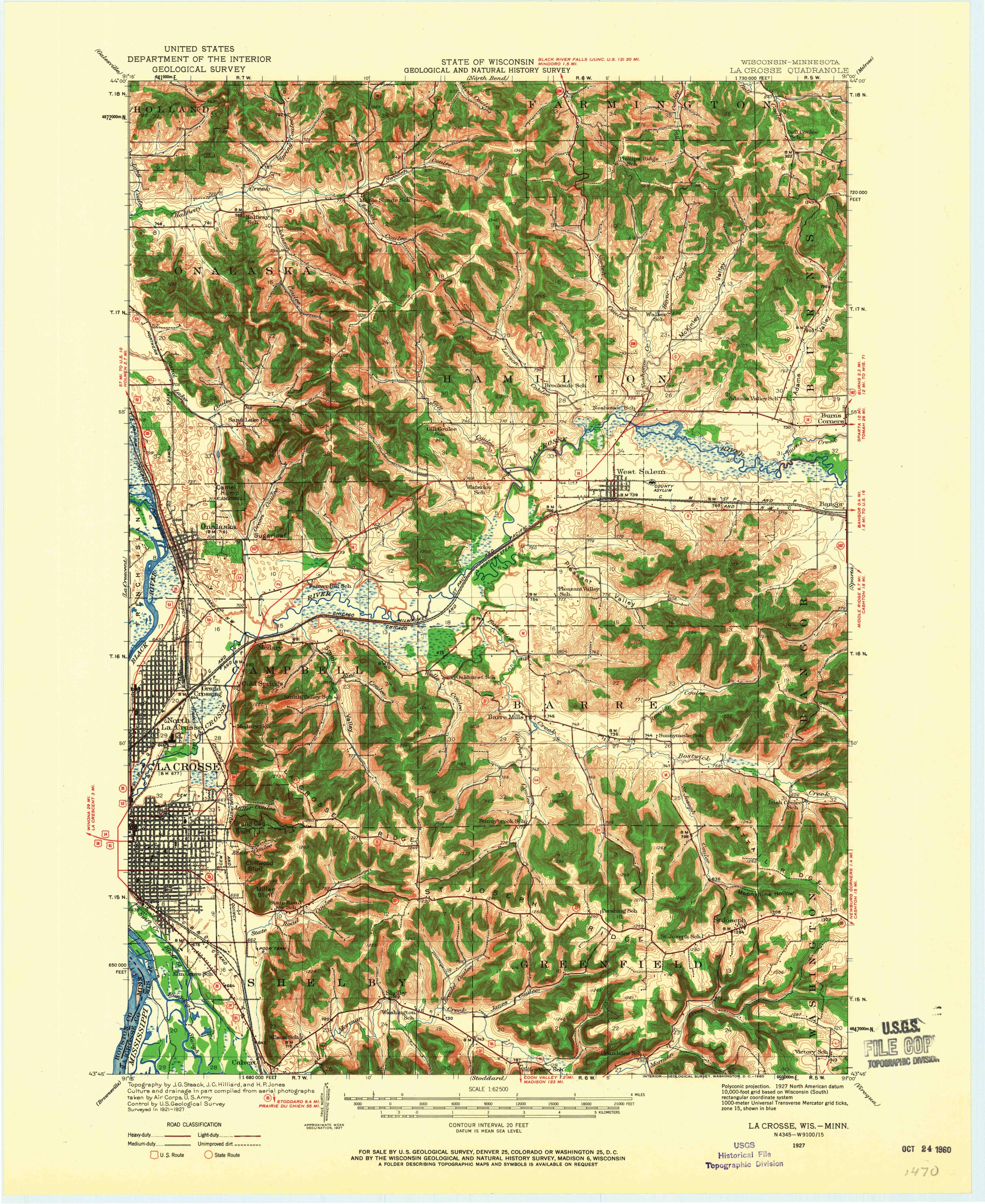
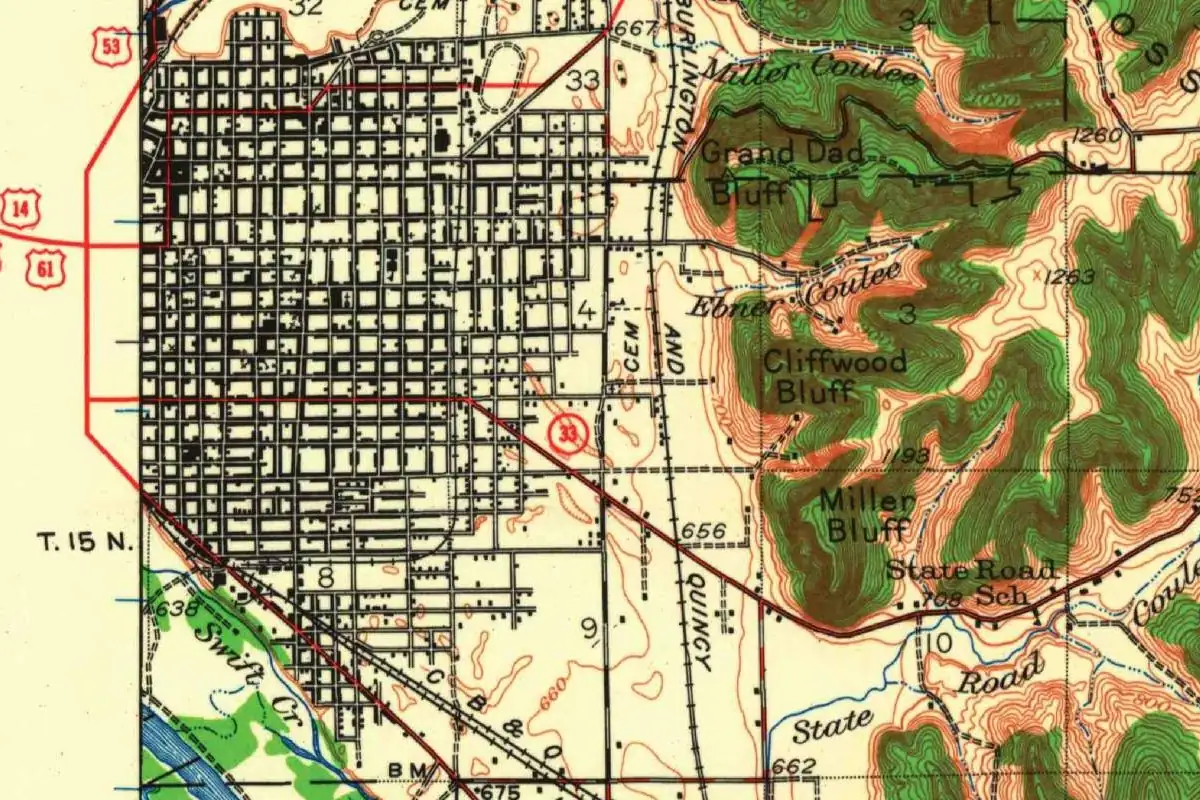
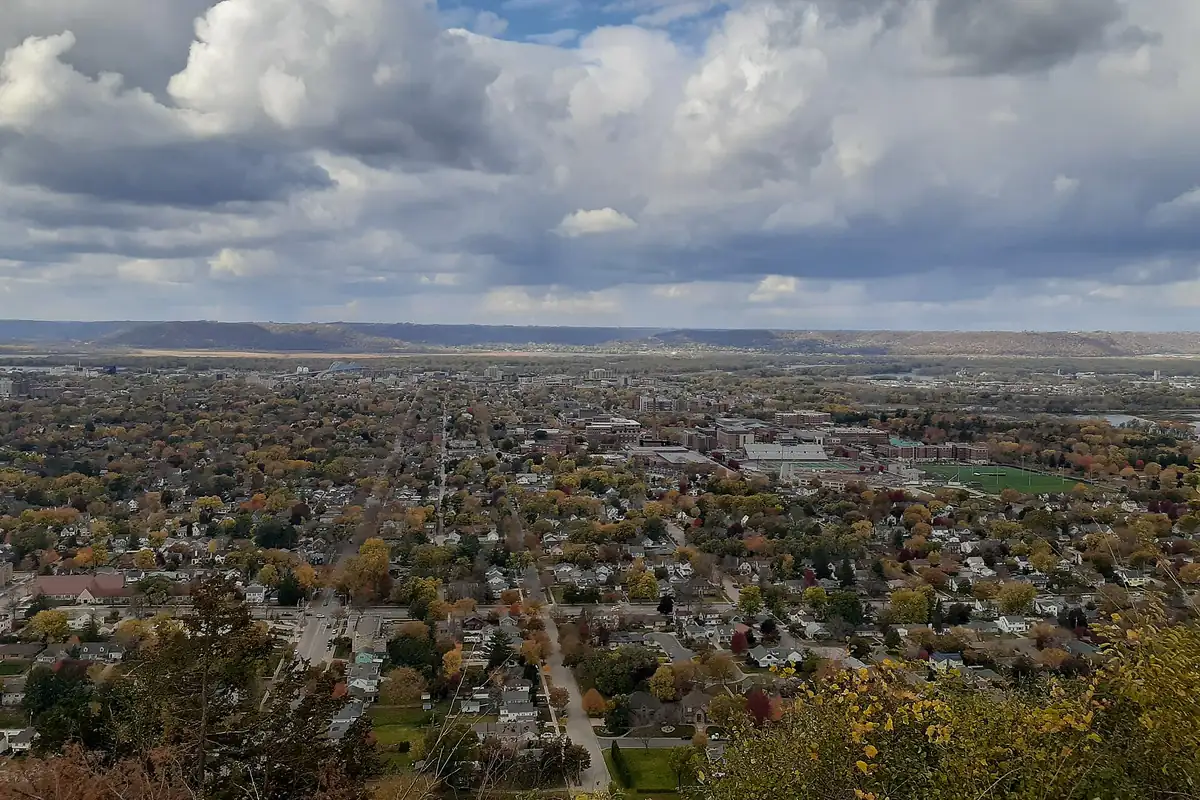
If you stand on the bluffs above town, it isn’t hard to picture. The 1927 map at the top of this page shows a long, flat shelf of ground between the river and the hills, now covered by the street grid.
A cedar cross and other theories
The 1881 history didn’t pretend the matter was settled. It opened the section by saying there were “several theories and statements,” and it listed them in order.
The first was a tradition that Catholic missionaries had put up a cedar cross near the river. Henry B. Coons of Potosi said French missionaries on their way to Prairie du Chien had camped on the prairie, raised a cross, “and called it Prairie la Crossette.” A steamboat traveler named William Staats Tippetts backed him up in a letter of May 1881. He remembered landing at La Crosse in 1840 and seeing, at the head of a grave, “a cross made of red cedar, hewn out about six feet high,” with a small wooden image of Christ behind a piece of window glass.
The county historians weren’t convinced. They thought a wooden cross was unlikely to survive that long beside a river where boat crews took any fuel they could find, and they suggested the tradition might come from a cross that friends placed over the grave of a son of Decora, who died in 1842. The likeness of the name to croix, the French word for cross, would “not bear investigation,” they wrote. Two other ideas, that the Root and La Crosse rivers formed the shape of a cross, or that this was a favorite crossing place, seemed to them “too puerile to be worthy of more than passing notice.”
A newer version of the religious story turns up on the city’s tourism website, Choose La Crosse, in a history section written by the La Crosse Public Library Archives. It says some people believe the curved playing sticks reminded the French of a bishop’s staff, a crozier, and that this explains the name. The archivists add right away: “However, this legend is not supported by primary source evidence.”
What nobody can pin down
The library’s account is the most careful one we read. It says Marquette and Joliet visited in 1673, and then: “It is unknown why or how, but this is the first known time that the area began to be called Prairie à la Crosse.” So the game is the explanation with the strongest record behind it, but the first person to call the prairie by that name, and the exact moment, aren’t known. That’s why we’ve marked this name disputed rather than settled.
The place had other names before any of these. The library gives a Ho-Chunk name, “Hinukwas Eja (hee-nook-was aja),” after the shape of two hills nearby. The 1881 history lists names of its own, gathered from settlers: enook-wagera, which it translates as a woman’s bosom, for two bluffs near the mouth of the La Crosse River; and two Sioux names, Topaktaype and Wazuvleca, the second translated as “strawberry prairie.”
The postmaster who cut the name short
Whatever the French meant, the modern spelling has a known author. Nathan Myrick was 19 when he arrived on November 8, 1841, the city says, and built a log cabin to start a fur trading business. The 1881 history says he was made the first postmaster in 1844. The book quotes him directly:
“The name of Prairie de la Crosse was of course French, and was changed by myself to La Crosse, and the post office so called at my suggestion.”
The county historians thought this “should be conclusive,” at least on how the town got its short form. The library archives offer a reason for dropping the first word: “Prairie” went, they say, to tell the town apart from Prairie du Chien, the older French settlement downriver.
The City of La Crosse says the village was incorporated as a city on March 14, 1856. The county around it carries the same name, and Gannett’s entry covers both.
Reading the map
The 1927 Geological Survey sheet doesn’t print the city’s name inside the area shown here, but the shape of the place is clear. You can see the grid of streets pressed against the bluffs, with Grand Dad Bluff, Cliffwood Bluff and Miller Bluff rising in brown contour lines, and the coulees, the steep side valleys of this part of Wisconsin, cutting into them: Miller Coulee, Ebner Coulee and State Road Coulee. Railroad lines marked Burlington and Quincy cross the flats.
Green Bay, on the other side of the state, also goes back to the French years, and its name has a disputed story of its own. You can read that story on our Green Bay page, or browse the rest of the state on our Wisconsin page.
Quick answers
Is La Crosse, Wisconsin, named after the sport of lacrosse?
Most sources say yes. Gannett’s 1905 USGS book and the City of La Crosse both say the French named the prairie for the ball game they saw Native people play there, which the French called la crosse.
What was La Crosse called before?
Prairie de la Crosse, the form Zebulon Pike used in 1805. The library archives also give Prairie à la Crosse and a Ho-Chunk name, Hinukwas Eja, for two nearby hills.
Who shortened the name to La Crosse?
Nathan Myrick, the first postmaster. In the 1881 county history he says he changed Prairie de la Crosse to La Crosse and that the post office took that name at his suggestion.
Does La Crosse mean “the cross”?
That’s an old tradition, not the documented answer. The 1881 county historians rejected the link to the French word croix, and the library archives say the bishop’s staff legend has no primary source support.
Key dates
- 1805Zebulon Pike calls the place Prairie de la Crosse.
- 1823Lieutenant Martin Scott finds the level prairie well suited to the game of la crosse.
- 1841Nineteen-year-old Nathan Myrick arrives on November 8 and builds a log cabin for a fur trading business.
- 1844Myrick becomes the first postmaster and, by his own account, shortens the name to La Crosse.
- 1856La Crosse is incorporated as a city on March 14.
Things to do in La Crosse, Wisconsin
Grandad Bluff Park
A city park since 1912 on top of the 1,184-foot (361 m) bluff above La Crosse, with a 1938 WPA stone shelter and a memorial to Ellen Pennel Hixon, who helped save the bluff from quarrying.
Hixon House Museum
The 1858 home of Gideon Hixon, kept by the La Crosse County Historical Society with its original Victorian and Arts and Crafts furnishings, including the Turkish Nook.
Myrick Park
A park named in 1904 for Nathan Myrick, the man who shortened the town's name, with Native effigy mounds and a border on the La Crosse River Marsh.
Riverside Park
A 14-acre park between the Mississippi River and downtown, dedicated in 1911 as Levee Park, with river views and the International Friendship Gardens for the city's sister cities.
Getting there
Open La Crosse in Google Maps
Opens in a new tab. The pin is the center of La Crosse in the USGS place-name record.
The closest airports, Amtrak stations and intercity bus stops, measured in a straight line from the center of La Crosse.
Airports
- La Crosse Regional (LSE) 5 mi 9 km
- Rochester International (RST) 63 mi 102 km
- Minneapolis-St Paul International/Wold-Chamberlain (MSP) 123 mi 198 km
Amtrak trains
- La Crosse station (LSE) 2 mi 4 km
- Winona station (WIN) 26 mi 42 km
Intercity buses
- Jefferson Lines La Crosse under 1 mi 1 km
- Greyhound Tomah McDonald's 40 mi 64 km
Distances are as the crow flies, not by road. We don't list schedules or fares because they change; check with the airline, Amtrak or the bus company before you go. Official data (FAA commercial service airports (2025), FAA airport locations, Amtrak stations and Intercity Bus Atlas) from the FAA and the U.S. Bureau of Transportation Statistics, checked Nov 14, 2026.
Sponsored
Staying in La Crosse?
Compare hotels in La Crosse, Wisconsin, on Expedia.
See hotels in La CrosseWe may earn a commission if you buy through this link. It never changes what we write. Read our affiliate disclosure
Historical Sources & References
- Henry Gannett, The Origin of Certain Place Names in the United States, 2nd ed. (USGS Bulletin 258, 1905), p. 178. La Crosse, county and city: “A French name given the town because before its settlement the ground was a favorite place for ball playing with the Indians, the game being called by the French la crosse.”
- History of La Crosse County, Wisconsin (Chicago: Western Historical Company, 1881), p. 328. “Origin of the name La Crosse”: “several theories and statements”; the cedar cross tradition; Henry B. Coons and “Prairie la Crossette”; the start of William Staats Tippetts’s 1881 letter.
- History of La Crosse County, Wisconsin (1881), p. 329. The rest of Tippetts’s letter and the “cross made of red cedar”; the historians’ doubts; croix “will not bear investigation”; the Root River and crossing theories, “too puerile”; enook-wagera, Topaktaype and Wazuvleca; Pike’s “Prairie de la Crosse” in 1805; Martin Scott in 1823.
- History of La Crosse County, Wisconsin (1881), p. 330. The Historical Collections of Wisconsin note on le jeu de crosse; N. Myrick, first postmaster in 1844, and the quoted passage on the name; “should be conclusive.”
- City of La Crosse, “About La Crosse”. “French explorers named the area for the game Indians played on the prairie”; Nathan Myrick’s arrival on November 8, 1841; incorporation on March 14, 1856.
- Choose La Crosse, “Our Story”. History section by the La Crosse Public Library Archives: Hinukwas Eja; Marquette and Joliet in 1673 and “It is unknown why or how”; the crozier legend, “not supported by primary source evidence”; “Prairie” dropped to distinguish the town from Prairie du Chien.
- GNIS feature 1567672 (U.S. Geological Survey). The USGS place-name entry for La Crosse, in La Crosse County.
- U.S. Geological Survey, La Crosse sheet (1927, 1960 printing). The 1:62,500 quadrangle the map at the top of this page was cropped from.
Sponsored
Put this 1927 map on your wall
The 1927 USGS La Crosse, Wisconsin, sheet, in this 1960 printing, is in the public domain. Download the full-size scan for free, then have it printed on canvas with CanvasOnTheCheap.
Print a map on canvasDownload the full-size mapWe may earn a commission if you buy through this link. It never changes what we write. Read our affiliate disclosure
Spot something wrong, or know more? Tell us here. You can also email us or use our contact page. Corrections are noted here with their date, never made silently.