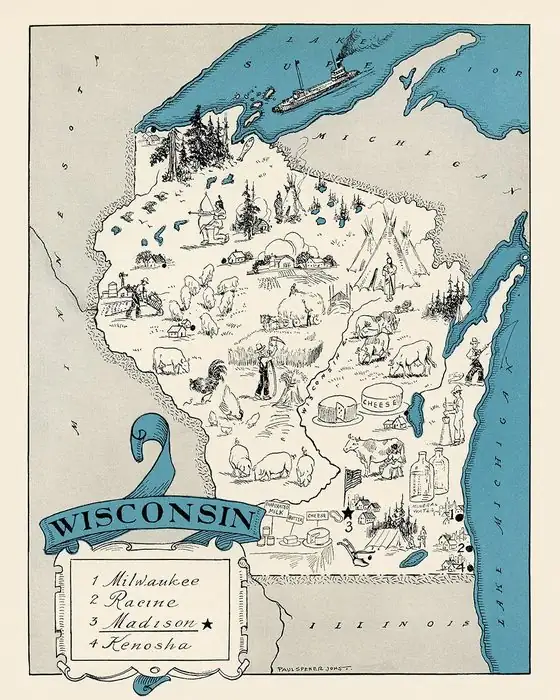
How Manitowoc, Wisconsin, Got Its River Name
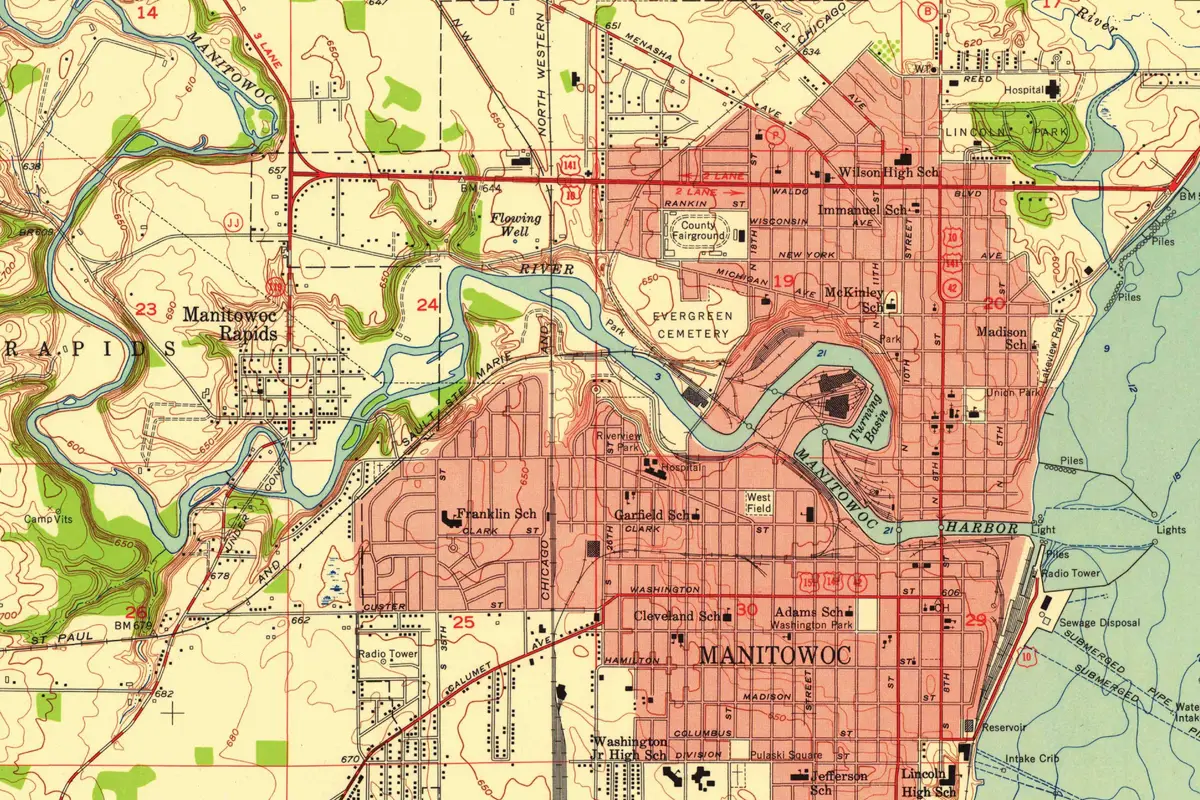
Manitowoc, Wisconsin, took its name from its river and harbor on Lake Michigan, a name local histories trace to Ojibwe. The city translates it as “home of the great spirit,” though older accounts differ about the spirit and even about how many spirits the name describes.
A river in the opening lines of a treaty
On July 29, 1829, representatives of the United States and of the Chippewa, Ottawa, and Potawatomi nations concluded a treaty at Prairie du Chien. The opening lines identify the Native parties by the waters where they lived. If you read the printed preamble, you’ll find “Manitoouck” at the end of the list, just after Milwaukee.
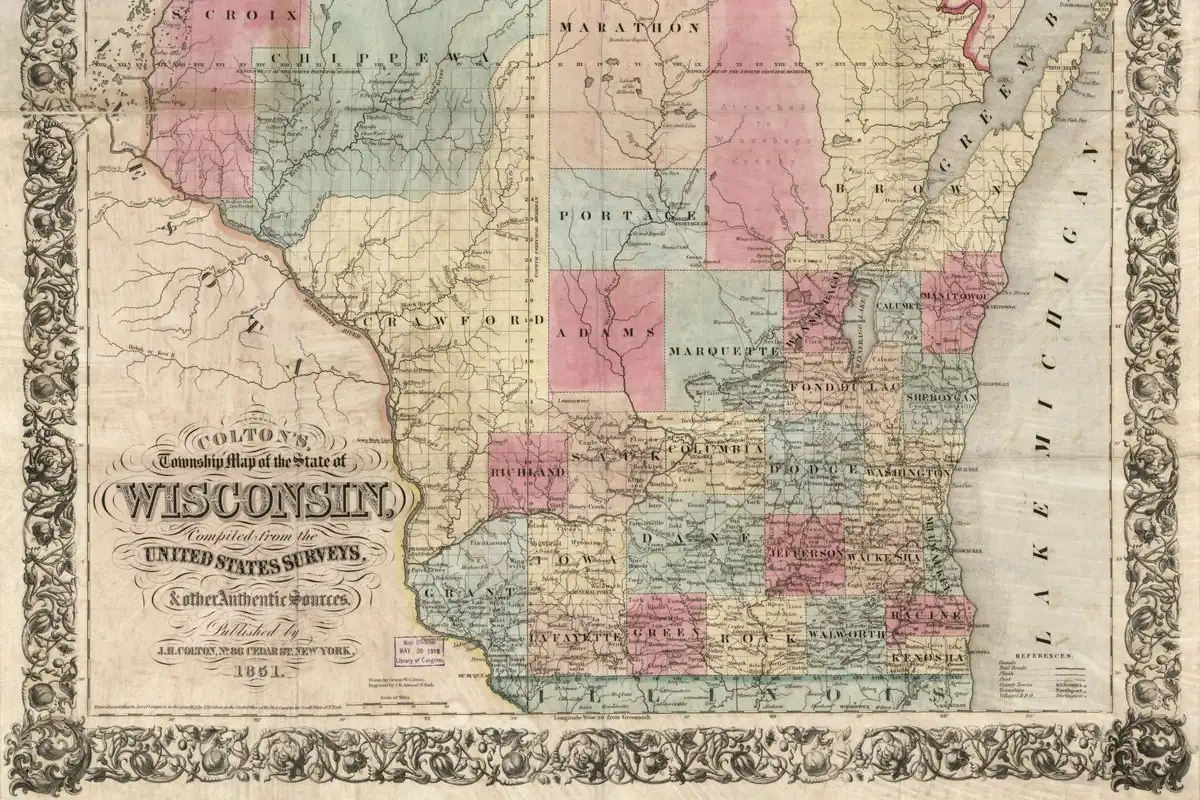
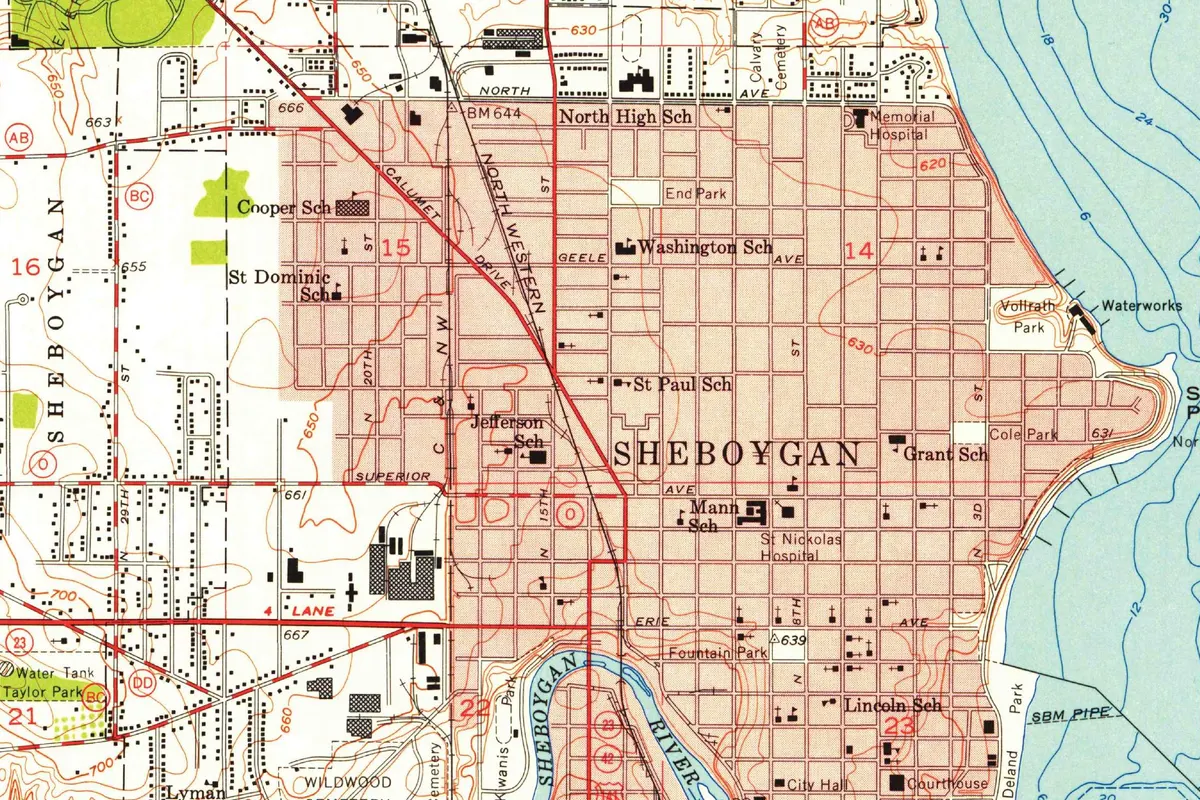
Seven years later, a town plat laid out Manitowoc. The people marking off lots had a name ready to hand. According to the city’s riverwalk history, it already belonged both to the stream and to its harbor. South along the same shore, Sheboygan likewise carried a river name onto a street map.
One spirit or many?
Open Jedidiah Morse’s 1822 report and you’ll find a darker reading. Morse describes an Ottawa chief:
“living at Ma-nitou-wauk, the river of bad spirits.”
His informant was Major Irwin, who cited the chief and Colonel Bowyer. The English words appear in Morse’s account of that conversation.
When Ralph Plumb wrote his county history in 1904, he had several English readings to choose from. He favored one that made the place a dwelling for a good spirit. He credited an 1847 letter by A. Benson with arguing for that reading. Yet Plumb also reported that Increase Lapham, in his 1844 book on Wisconsin, had understood the name to refer to spirits in the plural. A reader following Lapham would picture a river associated with spirits, with no particular one singled out.
In 1905 Henry Gannett gave the city and county a single entry in his federal dictionary of place-name origins. His two-word translation, “spirit land,” left open how many spirits there were or what anyone thought of them. The city’s riverwalk plan gives the spirit an honored place in its translation. A county land and water plan records an English rendering at the opposite extreme, “the Devil’s Den,” alongside the favorable one. It also recounts a story about a being glimpsed at the river mouth. The county recorded that account in a planning document prepared in 2015. If Manitoouck is this river, the treaty gives us a much earlier spelling, but its writers didn’t need to say what the word meant.
Quick answers
Did the river or the town get the name first?
The river. Morse wrote about it in 1822. The town plat didn’t follow until 1836.
What language does Manitowoc come from?
Probably Ojibwe, according to Plumb and the city’s riverwalk history. Morse’s account reaches us through several speakers, and the treaty names three nations. Neither identifies the first person to use the word.
Why do I see both “good spirit” and “great spirit”?
Different writers chose different English words. Plumb preferred a reading involving a good spirit. The city uses “great spirit” in its riverwalk history. The surviving accounts give us firmer ground for identifying the river than for choosing a single English translation.
Key dates
- 1822Jedidiah Morse prints the name Ma-nitou-wauk in his report to the Secretary of War.
- 1829A treaty signed at Prairie du Chien lists a river spelled Manitoouck in its opening lines.
- 1836A town plat lays out Manitowoc on Lake Michigan.
- 1904County historian Ralph Plumb records competing English interpretations of the name.
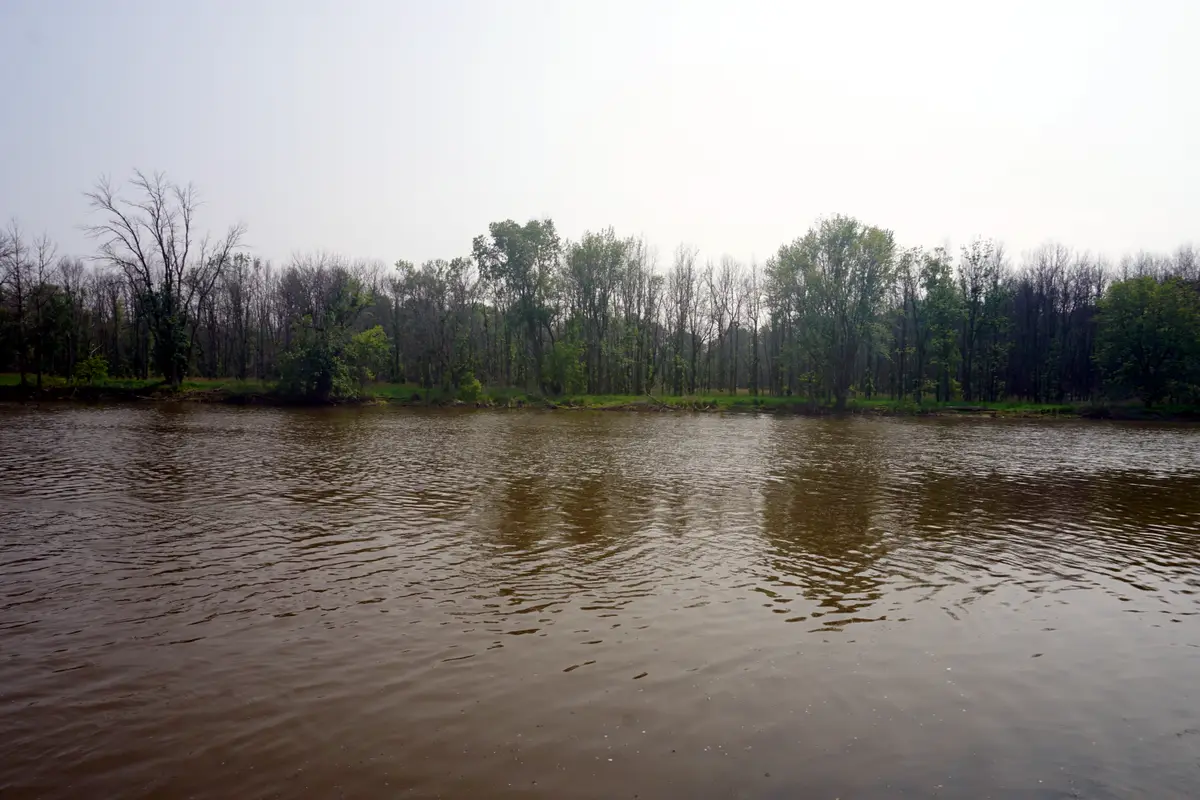
Getting there
Open Manitowoc in Google Maps
Opens in a new tab. The pin is the center of Manitowoc in the USGS place-name record.
The closest airports, Amtrak stations and intercity bus stops, measured in a straight line from the center of Manitowoc.
Airports
- Green Bay/Austin Straubel International (GRB) 36 mi 58 km
- Appleton International (ATW) 44 mi 71 km
- General Mitchell International (MKE) Milwaukee 80 mi 128 km
Amtrak trains
- Milwaukee-Downtown station (MKE) 74 mi 119 km
- Milwaukee Airport-Trains station (MKA) 80 mi 129 km
Intercity buses
- Greyhound Manitowoc WI (MTC) 2 mi 3 km
- Indian Trails Manitowoc (I43 Exit 149 Shell Station) 2 mi 3 km
- FlixBus Appleton WI (APP) 39 mi 63 km
Distances are as the crow flies, not by road. We don't list schedules or fares because they change; check with the airline, Amtrak or the bus company before you go. Official data (FAA commercial service airports (2025), FAA airport locations, Amtrak stations and Intercity Bus Atlas) from the FAA and the U.S. Bureau of Transportation Statistics, checked Nov 10, 2026.
Sponsored
Staying in Manitowoc?
Compare hotels in Manitowoc, Wisconsin, on Expedia.
See hotels in ManitowocWe may earn a commission if you buy through this link. It never changes what we write. Read our affiliate disclosure
Historical Sources & References
- Treaty of Prairie du Chien, July 29, 1829, U.S. Statutes at Large, vol. 7, p. 320. The river in the treaty preamble.
- Ralph G. Plumb, A History of Manitowoc County (1904), chapter II. Early interpretations and their sources.
- City of Manitowoc, Riverwalk Master Plan and Guidelines, p. 4. The river and harbor name and the city’s preferred translation.
- City of Manitowoc, Downtown Design Guidelines, History of Manitowoc. The town plat of 1836.
- Manitowoc County, Land and Water Resource Management Plan, chapter 1. Two contrasting local traditions.
- Jedidiah Morse, A Report to the Secretary of War (1822), appendix, p. 57. Morse’s account of the river name.
- Henry Gannett, The Origin of Certain Place Names in the United States (1905), p. 198. The federal entry for the city and county.
- USGS, Geographic Names Information System, Manitowoc (1568942). Location and federal identifier.
Spot something wrong, or know more? Tell us here. You can also email us or use our contact page. Corrections are noted here with their date, never made silently.