Hearst Castle: History, Tours and the Enchanted Hill Name
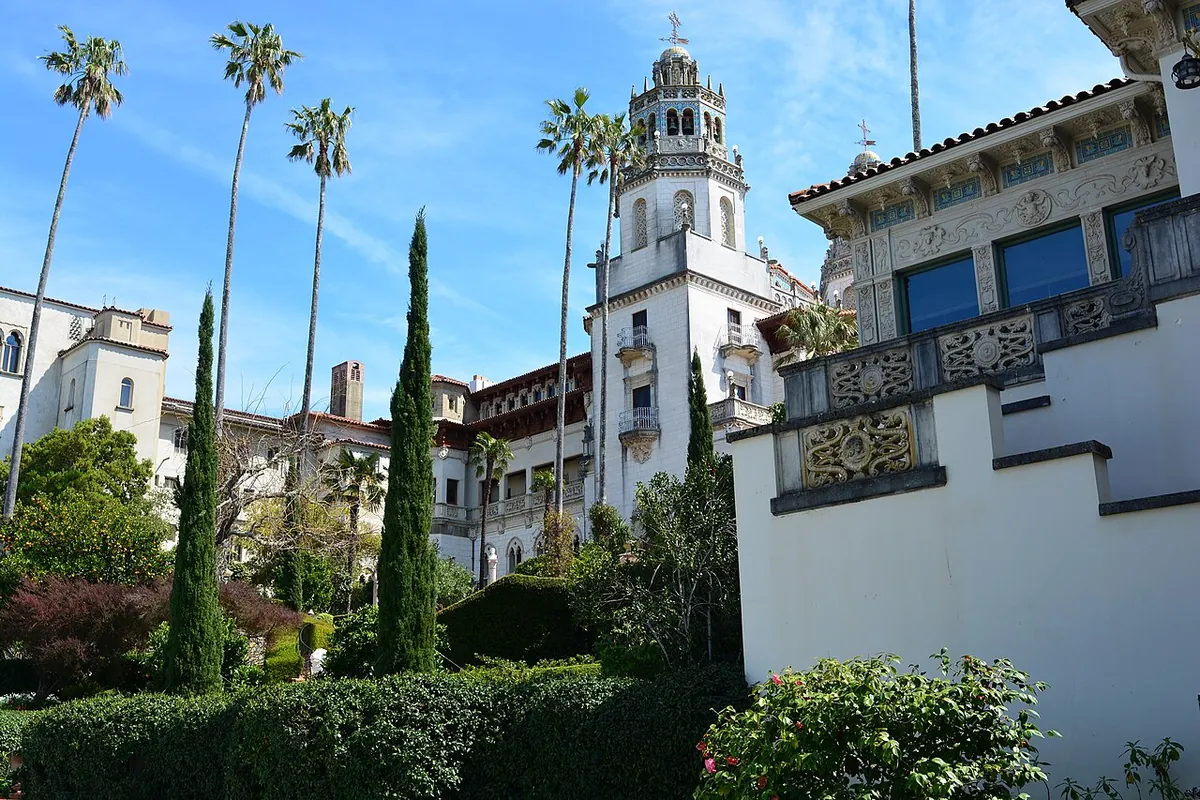
Hearst Castle wasn’t a castle to William Randolph Hearst, who called his San Simeon hilltop La Cuesta Encantada, the Enchanted Hill. The surname in the famous name is easy to explain. The word “castle” is a nickname that stuck to the place while he still lived in it.
Hearst Castle History: From Camp Hill to the Enchanted Hill
The hill was family property long before it had a house on it. California State Parks, which manages the estate, starts its history in 1865, the year George Hearst bought 40,000 acres (about 16,200 hectares) of ranch land around San Simeon. According to the Hearst Ranch, the Hearst cattle operation that still works the land, that land was part of the Piedra Blanca Rancho, which Governor Juan Bautista Alvarado had granted to José de Jesús Pico in 1840. Alvarado’s name turns up farther up the coast too: as our Big Sur page explains, he was the man who received the El Sur grant in 1834.
George’s only child spent summers on the ranch, and the hilltop where the house stands was their campground. PBS’s American Experience says ranch hands pitched furnished tents for the family there, on a rise they called “Camp Hill.” In a 1917 letter to his mother, which the Hearst Ranch dates and the Saturday Evening Post quoted in a 2023 history of the estate, William wrote that he “would rather spend a month at the ranch than any place in the world.”
The ranch passed to him when his mother, Phoebe Apperson Hearst, died in 1919. The Post’s article quotes the note he then sent the architect Julia Morgan: “Miss Morgan, we are tired of camping out in the open at the ranch in San Simeon and I would like to build a little something.” Morgan had studied at the École des Beaux-Arts in Paris, and the estate’s 1975 National Register nomination calls her a protégée of Hearst’s mother. The little something kept growing. Their collaboration began in 1919 and ran for close to 30 years, State Parks says, turning a hilltop campsite into a main house of 115 rooms, plus guesthouses, pools and gardens.
The name Hearst gave the place was Spanish: La Cuesta Encantada, which the state translates as “Enchanted Hill.” He used plainer words as well. In a Saturday Evening Post article of May 9, 1959, Frank J. Taylor wrote that Hearst “never referred to his grandiose shelter as a castle,” and that to him it was “the ranch house.” Taylor, writing after the state opened the estate to the public, still called it a castle himself, and not a modest one: “the only genuine castle in the United States.”
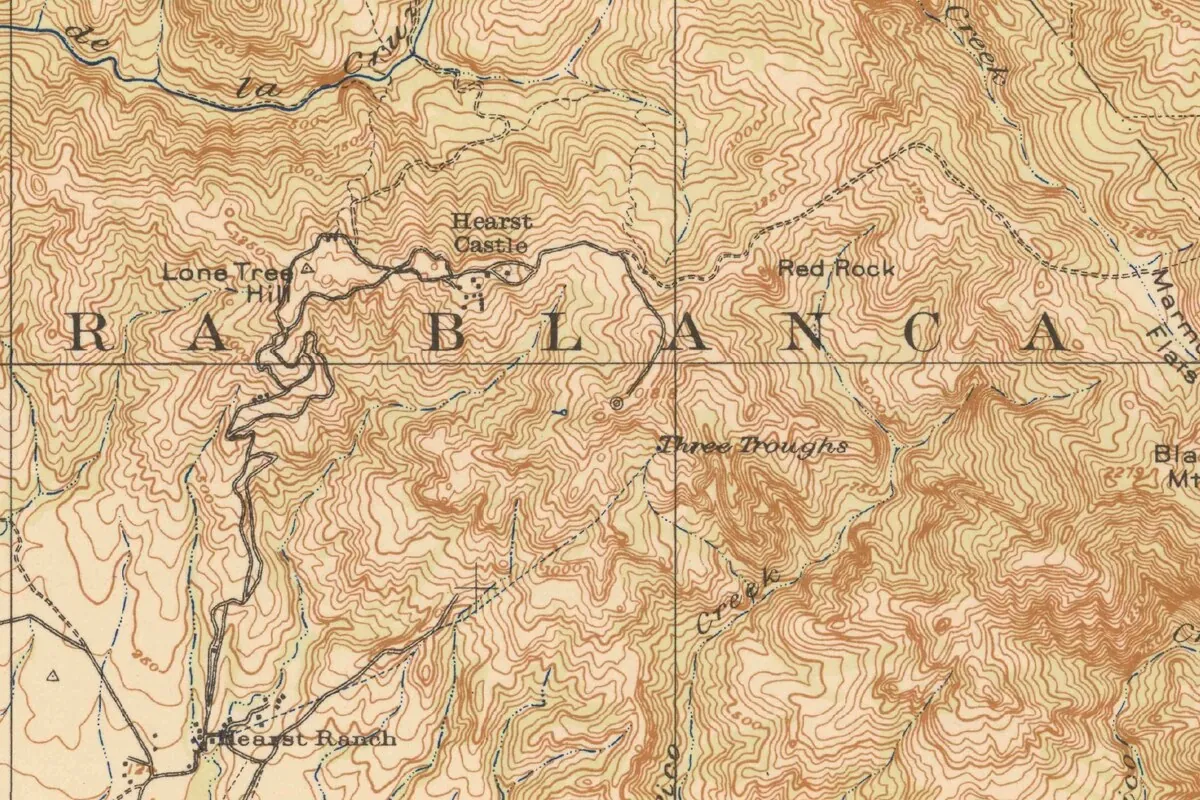
The first person to say “Hearst Castle” doesn’t turn up in any record we found. You can watch the name arrive on federal maps, though. The Geological Survey’s San Simeon sheet of 1919, mapped in 1917, shows a trail running past Lone Tree Hill and no buildings or name on the hilltop beside it. The Army Corps of Engineers revised that sheet from aerial photographs in 1937, and its version, the one at the bottom of this page, puts a cluster of buildings on the hill and the words “Hearst Castle.” That was a decade before Hearst moved away. Even the National Register form, which lists the estate under its historic name, La Cuesta Encantada, says the main building rises four stories “assuming castlelike proportions.”
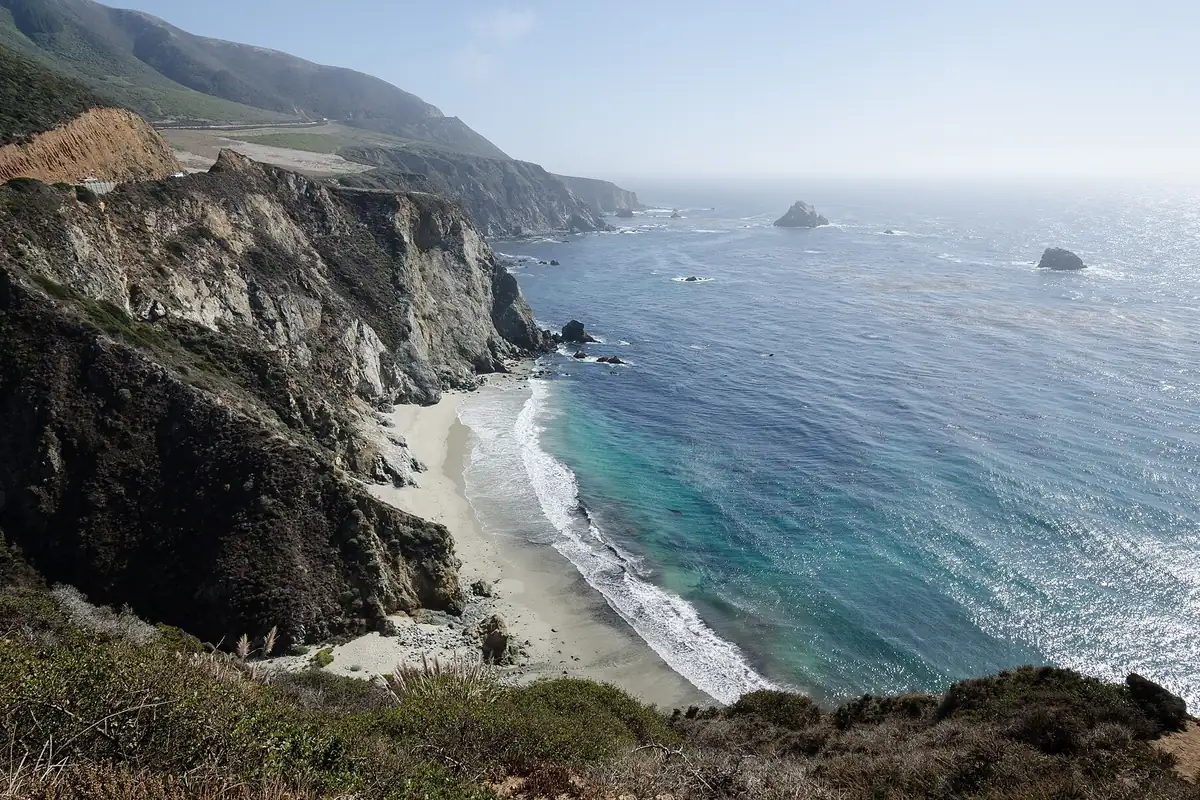
The main house, Casa Grande, has two matching towers that SAH Archipedia, an online encyclopedia of buildings from the Society of Architectural Historians, says were copied from the spire of the Gothic church in Ronda, Spain. For the rooms, Hearst bought ceilings, furniture and altars out of old European churches and monasteries. The look came from cathedrals and Spanish towns more than from fortresses. Still, Taylor wrote that for more than 30 years, drivers on Highway 1 below had sworn they’d seen a castle shining in the sky.
Work stopped and started with Hearst’s finances. Heart trouble in early 1947 sent him to Beverly Hills, where he died in 1951, and the estate wasn’t finished when he left. The Hearst Ranch says the Hearst Corporation and the family gave the hilltop to California in 1957. The National Register form dates the gift to 1958, the same year the Hearst San Simeon State Historical Monument opened to the public. That’s still the official name. “Hearst Castle” is on the State Parks list of trademarks, right beside it.
Visiting Hearst Castle: Tours and Tickets
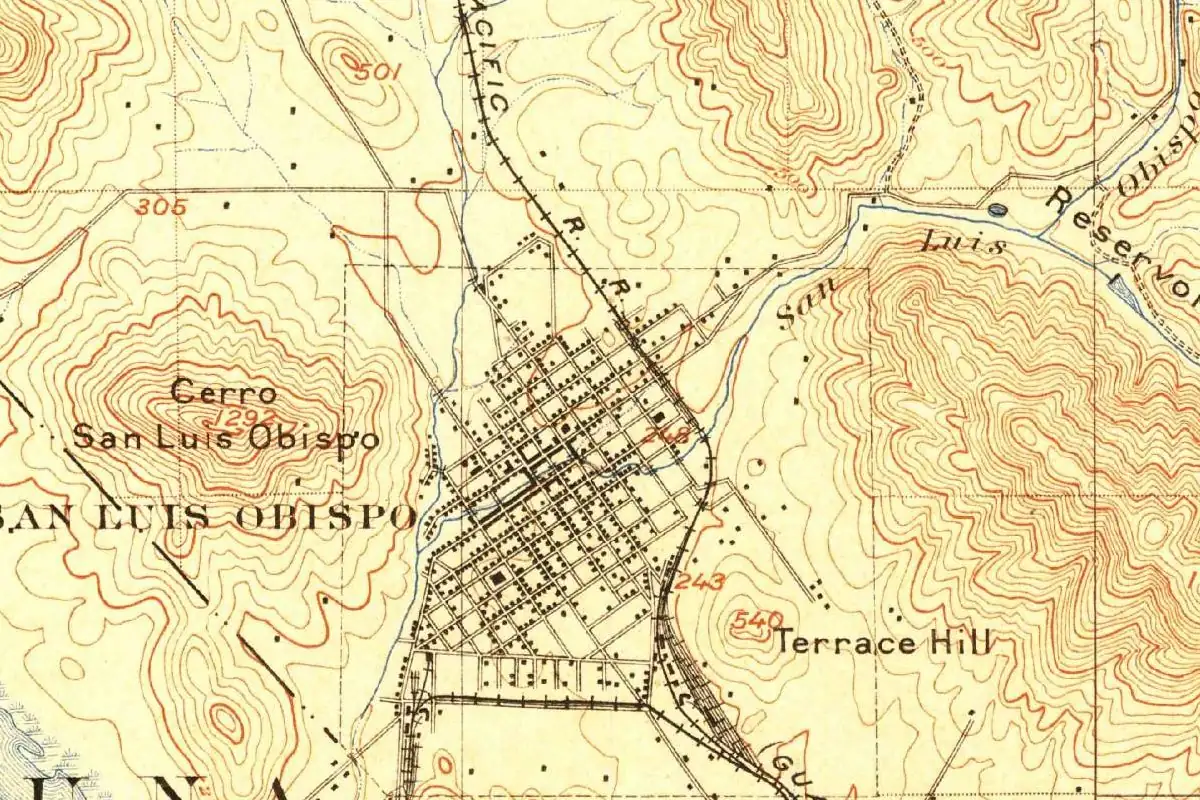
Every visit starts at the visitor center at the foot of the hill, off Highway 1. California State Parks puts its San Simeon campgrounds 35 miles (56 km) up Highway 1 from San Luis Obispo, and the visitor center another 5 miles (8 km) up the road. That city’s name, as our page on it explains, comes from a mission Junípero Serra founded in 1772. You can’t drive your own car to the top of the hill. State Parks runs buses up the 5-mile (8 km) road, about 15 minutes each way, with recorded commentary along the route.
When we checked the official FAQ in November 2026, the tours on offer were Grand Rooms (also in an accessibly designed version), Upstairs Suites, Cottages and Kitchen, Designing the Dream, and a semi-private tour about Julia Morgan. You book through ReserveCalifornia, reservations are strongly encouraged, and the park asks you to arrive 25 minutes before your tour. If you book more than one, leave at least two hours between start times to cover the bus rides.
After the guided part, State Parks says you can stay on the hilltop and walk the gardens and look at the outdoor Neptune Pool and the indoor Roman Pool until closing. Upstairs Suites takes in the Gothic Suite, where, according to the Post, Hearst wrote his daily newspaper column under a ceiling Morgan designed for him. Back at the bottom, the visitor center’s theater shows the film “Hearst Castle - Building the Dream.”
Quick answers
What did Hearst call Hearst Castle?
La Cuesta Encantada, Spanish for “Enchanted Hill.” Frank J. Taylor, writing in 1959, said Hearst never called it a castle and spoke of it as “the ranch house.”
Who designed Hearst Castle?
Julia Morgan, an architect trained at the École des Beaux-Arts in Paris. She and Hearst started work in 1919 and kept at it for nearly 30 years.
Can you drive up to Hearst Castle?
No. As of November 2026, every tour goes up the hill by State Parks bus from the visitor center, and the bus ride is part of the ticket.
Is Hearst Castle a real castle?
No. It’s a 20th-century house of poured concrete, begun in 1919, with towers modeled on a Spanish church. “Castle” is a nickname that was on a federal map by 1937.
Key dates
- 1865George Hearst buys the first of the San Simeon ranch land, part of the Piedra Blanca Rancho.
- 1919William Randolph Hearst inherits the ranch after his mother's death and starts building with architect Julia Morgan.
- 1937The Army's San Simeon map labels the hilltop "Hearst Castle."
- 1947Hearst leaves the hill for good because of his health, with the estate still unfinished.
- 1951Hearst dies in Beverly Hills.
- 1958The estate, given to the state by the Hearst Corporation and family, opens for public tours.
Getting there
Open Hearst Castle in Google Maps
Opens in a new tab. The pin is an approximate point for Hearst Castle.
The closest airports, Amtrak stations and intercity bus stops, measured in a straight line from the center of Hearst Castle.
Airports
- San Luis Obispo County Regional (SBP) 43 mi 69 km
- Santa Maria Public/Capt G Allan Hancock Field (SMX) 67 mi 109 km
- Mineta San Jose International (SJC) 123 mi 199 km
Amtrak trains
- Paso Robles station (PRB) 27 mi 44 km
- San Luis Obispo station (SLO) 40 mi 65 km
Intercity buses
- Amtrak Chartered Vehicle Amtrak Connecting Service · Paso Robles Amtrak Station 27 mi 44 km
- Gold Runner San Luis Obispo-Cal Poly 39 mi 63 km
- CLAS Amtrak Connecting Service · San Luis Obispo Amtrak Bus Stop 39 mi 63 km
Distances are as the crow flies, not by road. We don't list schedules or fares because they change; check with the airline, Amtrak or the bus company before you go. Official data (FAA commercial service airports (2025), FAA airport locations, Amtrak stations and Intercity Bus Atlas) from the FAA and the U.S. Bureau of Transportation Statistics, checked Nov 21, 2026.
Sponsored
Planning a visit?
Compare hotels near Hearst Castle on Expedia.
See hotels nearbyWe may earn a commission if you buy through this link. It never changes what we write. Read our affiliate disclosure
Historical Sources & References
- Hearst Castle (California State Parks), “History & Art”: George Hearst’s 40,000 acres in 1865, the inheritance in 1919, the name La Cuesta Encantada and its translation, the unfinished estate in 1947, and the list of trademarks.
- California State Parks, “Hearst San Simeon State Historical Monument”: the collaboration from 1919 for nearly 30 years, the hilltop campsite, the 115-room main house, the visitor center, the bus ride, the gardens and pools after the tour, and the film.
- California State Parks, “Hearst San Simeon State Park”: the campgrounds 35 miles north of San Luis Obispo on Highway 1 and 5 miles south of the castle’s visitor center.
- Hearst Castle, “FAQs”: the tours offered, reservations, buses only, arriving 25 minutes early and two hours between tours (as of November 2026).
- National Register of Historic Places nomination, La Cuesta Encantada (1975): the historic and common names, Julia Morgan as a protégée of Phoebe Hearst, the reinforced concrete, the “castlelike proportions” and the gift to the state dated 1958.
- Peter Chesney, “Hearst Castle,” SAH Archipedia: the towers modeled on the church at Ronda, and the ceilings, furniture and altars Hearst bought from European churches and monasteries.
- Saturday Evening Post, “Hearst Castle: The Enchanted Hill” (2023): Hearst’s 1917 letter about the ranch, his note to Morgan, the Gothic Suite and the excerpt from Frank J. Taylor’s 1959 article, with “the ranch house” and the drivers on Highway 1.
- PBS American Experience, “William Randolph Hearst’s Castle at San Simeon”: the family’s tents on “Camp Hill,” the move to Beverly Hills in 1947 and Hearst’s death in 1951.
- Hearst Ranch, “Piedra Blanca: The San Simeon Ranch”: the Piedra Blanca Rancho, the 1840 grant to José de Jesús Pico, the date of Hearst’s 1917 letter and the gift of the hilltop in 1957.
- U.S. Geological Survey, San Simeon quadrangle, 1919: the hilltop near Lone Tree Hill with a trail and no buildings, from the 1917 survey.
- U.S. Army Corps of Engineers, San Simeon quadrangle, 1937 (reprinted 1942): the map at the bottom of this page, with the label “Hearst Castle.”
Spot something wrong, or know more? Tell us here. You can also email us or use our contact page. Corrections are noted here with their date, never made silently.