Mount Vernon: The British Admiral Behind the Name
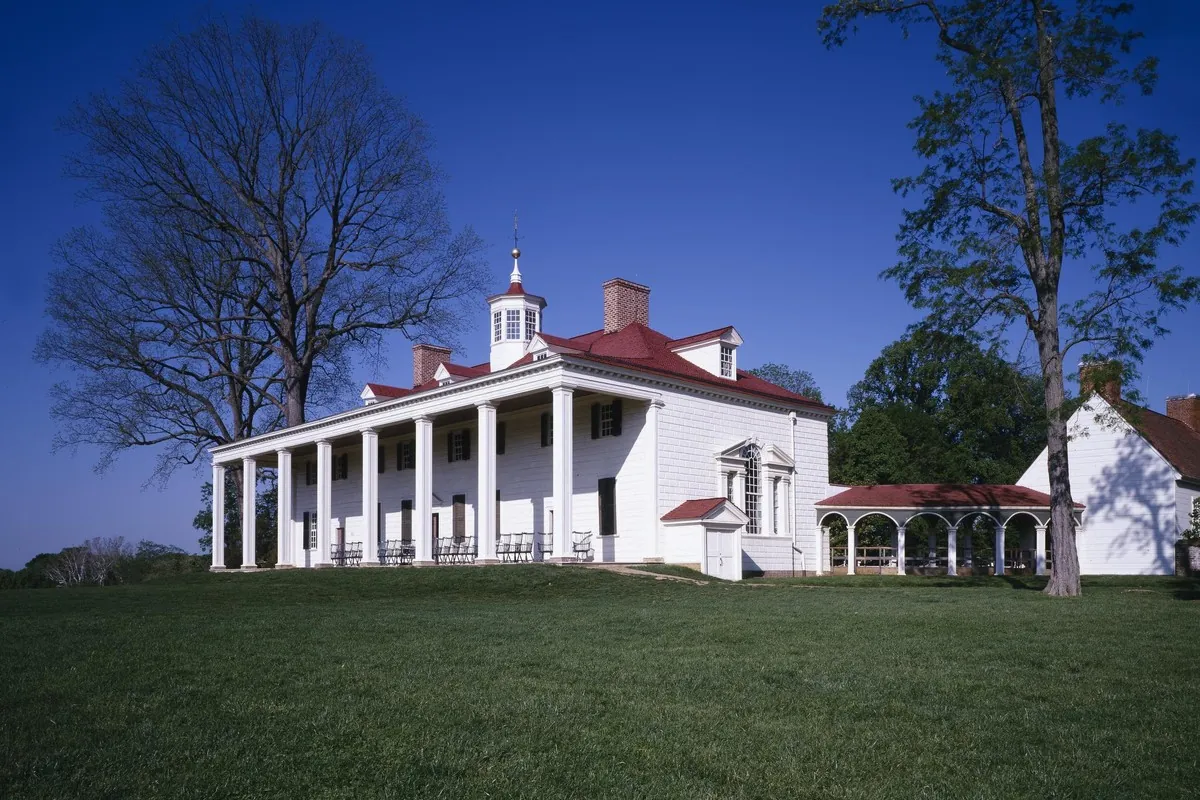
Mount Vernon wasn’t named by George Washington: his half-brother Lawrence renamed the family plantation around 1743 for Edward Vernon, a British admiral. So George Washington’s house carries the name of a Royal Navy officer, picked a generation before the Revolution.
Why Is It Called Mount Vernon?
The name is a salute to a commander. The National Historic Landmark nomination for Mount Vernon, filed with Virginia’s Department of Historic Resources, says Lawrence Washington renamed the plantation “after Admiral Vernon, under whom he had served in the Caribbean.” The National Gallery of Art’s history of the estate gives the admiral’s full name and dates, Edward Vernon (1684-1757), and puts Lawrence’s service with him in the Caribbean in 1741-42. Fairfax County’s historic-site sheet says Vernon was Lawrence’s commander when he served with the Virginia Foot Regiments.
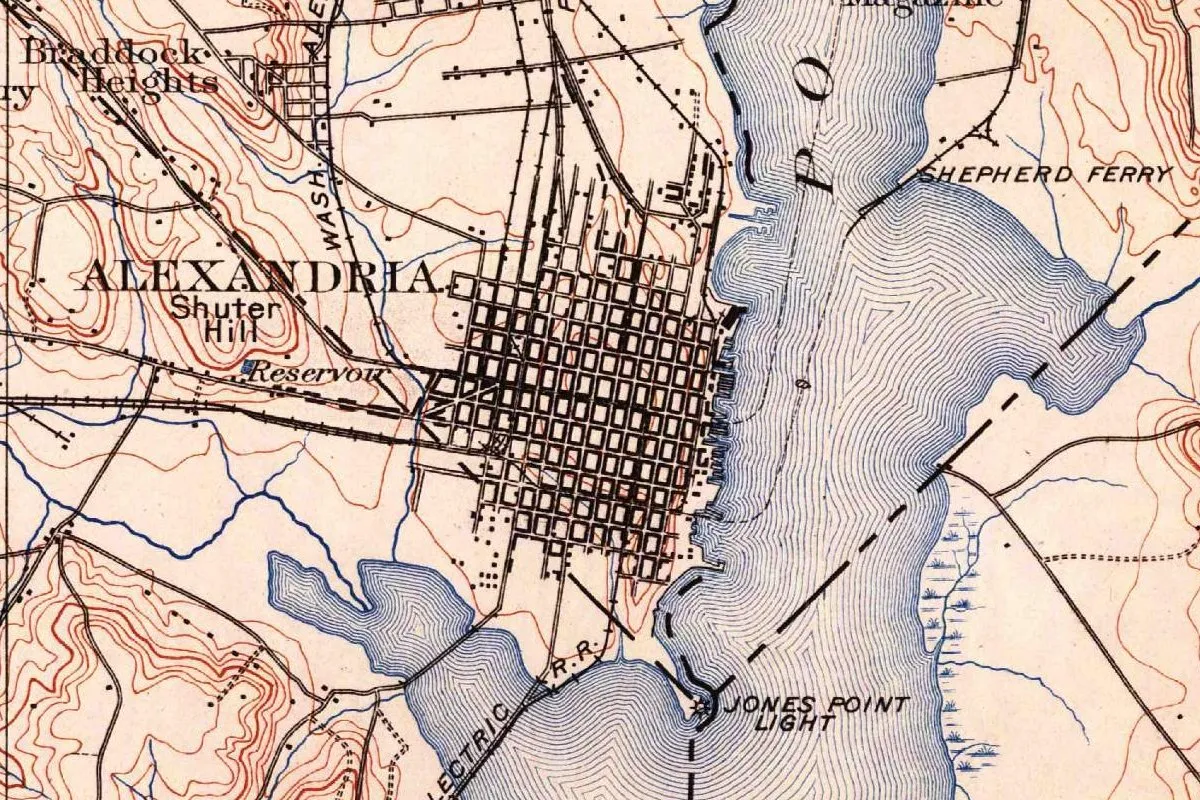
The “Mount” part fits the site. Virginia’s landmarks register places the house on the Potomac about seven miles (11 km) south of Alexandria, and a visitor in 1813 described it as standing on “a dignified height.” None of the sources we read say why Lawrence chose “Mount” in particular, though.
That same 1813 visitor got the story wrong in a way you might still hear. Elbridge Gerry Jr., quoted in the National Gallery’s history, wrote that Admiral Vernon had “frequently made visits” to George Washington’s father during the French war, “and thence is derived its name.” The documents point to Lawrence and his own war service instead, and none of them mention any visit.
Mount Vernon History: From Hunting Creek to Mount Vernon
The land you see from the house today was in the family long before it had this name. The landmark nomination says George’s great-grandfather John Washington and Nicholas Spencer got a 5,000-acre grant on the Potomac in 1674 that included it, and their heirs split it 16 years later. In 1726, Mildred Washington Gregory, whose inheritance included that share, sold it to Augustine, a brother of hers who would later be George’s father. The nomination calls it Hunting Creek Plantation at that point. The National Gallery calls it Little Hunting Creek Plantation.
Augustine probably built the first part of the house that’s there now, the nomination says, and the family lived there from about 1735 to 1738, with young George. Fairfax County dates the original core to 1734. In 1740 Augustine deeded the place to Lawrence, his eldest son, who moved in when he married three years later, in 1743, and gave it its new name.
George got it through his brother. Lawrence died in 1752. According to the National Gallery, his will left Mount Vernon to George once Lawrence’s wife, Ann Fairfax Washington, and their daughter, Sarah, had died. Ann gave George, who was 22, the chance of a long lease on December 17, 1754, and the estate became his outright when she died in 1761. George kept his brother’s name for it and spent decades enlarging the house, which Virginia’s register says he had finished remodeling by 1787.
Fairfax County’s sheet is direct about who made the plantation work: more than 300 enslaved people lived and worked there, growing wheat and tobacco and doing skilled trades such as blacksmithing and carpentry. At its largest the estate covered nearly 8,000 acres (about 3,200 hectares).
After Washington died there in 1799, the place slowly fell apart. In 1858, the National Gallery says, John Augustine Washington III, George’s great-grandnephew, sold the mansion and 200 acres to the Mount Vernon Ladies’ Association, which took formal possession in February 1860 and still runs it. Virginia’s register credits Ann Pamela Cunningham with organizing the association.
Washington’s name traveled from here, too. Martha Washington’s grandson George Washington Parke Custis spent his boyhood here, and our Arlington page tells how he first called his own estate up the Potomac Mount Washington before renaming it Arlington. And the nearest town to the estate has a naming story of its own: Alexandria carries the name of John Alexander, a Scot who acquired the land in 1669 and paid for it in tobacco.
Quick answers
What Is the Mount Vernon Name Origin?
It honors Edward Vernon, a British admiral who lived from 1684 to 1757. Lawrence Washington, George’s older half-brother, had served under him in the Caribbean around 1741-42 and renamed the family’s Potomac plantation in his honor once he settled there in 1743, according to the landmark nomination and the National Gallery of Art.
What Was Mount Vernon Called Before?
Hunting Creek Plantation, in the words of the 1977 landmark nomination, or Little Hunting Creek Plantation, as the National Gallery of Art’s history has it. That was the name when Mildred Washington Gregory sold the family’s half to Augustine, her brother and the father of George, in 1726.
Did George Washington Name Mount Vernon?
No. The name was already in place when George leased the estate from his brother’s widow in 1754. Lawrence chose it around 1743, and George kept it. An 1813 visitor’s story that the admiral had visited George’s father doesn’t match the documents.
Key dates
- 1674John Washington and Nicholas Spencer get a 5,000-acre grant on the Potomac that includes the future Mount Vernon.
- 1726Mildred Washington Gregory sells the family's half, then called Hunting Creek Plantation, to her brother Augustine.
- 1740Augustine Washington deeds the plantation to his eldest son, Lawrence.
- 1743Lawrence Washington settles there and renames it Mount Vernon for Admiral Edward Vernon.
- 1754December 17: Lawrence's widow, Ann, offers George Washington, then 22, a long-term lease on Mount Vernon.
- 1761Mount Vernon passes to George Washington on Ann's death.
- 1858The Mount Vernon Ladies' Association buys the mansion and 200 acres from John Augustine Washington III.
Getting there
Open Mount Vernon in Google Maps
Opens in a new tab. The pin is an approximate point for Mount Vernon.
The closest airports, Amtrak stations and intercity bus stops, measured in a straight line from the center of Mount Vernon.
Airports
- Ronald Reagan Washington Ntl (DCA) Arlington 10 mi 17 km
- Washington Dulles International (IAD) 26 mi 42 km
Amtrak trains
- Alexandria station (ALX) 7 mi 11 km
- Lorton station (LOR) 7 mi 12 km
Intercity buses
- OurBus Springfield, VA (Franconia-Springfield Metro) 6 mi 10 km
- Greyhound Springfield Bus Stop 6 mi 10 km
- FlixBus Arlington Rosslyn 13 mi 21 km
Distances are as the crow flies, not by road. We don't list schedules or fares because they change; check with the airline, Amtrak or the bus company before you go. Official data (FAA commercial service airports (2025), FAA airport locations, Amtrak stations and Intercity Bus Atlas) from the FAA and the U.S. Bureau of Transportation Statistics, checked Nov 21, 2026.
Sponsored
Planning a visit?
Compare hotels near Mount Vernon on Expedia.
See hotels nearbyWe may earn a commission if you buy through this link. It never changes what we write. Read our affiliate disclosure
Historical Sources & References
- National Historic Landmark nomination, Mount Vernon (1977), Virginia Department of Historic Resources: the 1674 grant, the division, the 1726 sale of Hunting Creek Plantation, Augustine’s house and family, the 1740 deed to Lawrence, his settling there three years later, and his renaming of the plantation for the admiral he had served under in the Caribbean.
- Virginia Department of Historic Resources, “Mount Vernon,” Virginia Landmarks Register: the location seven miles south of Alexandria, Washington’s remodeling finished by 1787, the 1858 purchase and Ann Pamela Cunningham.
- Fairfax County Inventory of Historic Sites, “Mount Vernon”: the county’s record of the house core of 1734, Lawrence’s renaming for his commander Edward Vernon, the lease and ownership dates, the more than 300 enslaved people and the nearly 8,000 acres.
- National Gallery of Art, History of Early American Landscape Design, “Mount Vernon”: Little Hunting Creek Plantation, Edward Vernon (1684-1757) and Lawrence’s service in 1741-42, Lawrence’s will, the lease of December 17, 1754, 1761, the 1858 sale and February 1860, and Elbridge Gerry Jr.’s 1813 account.
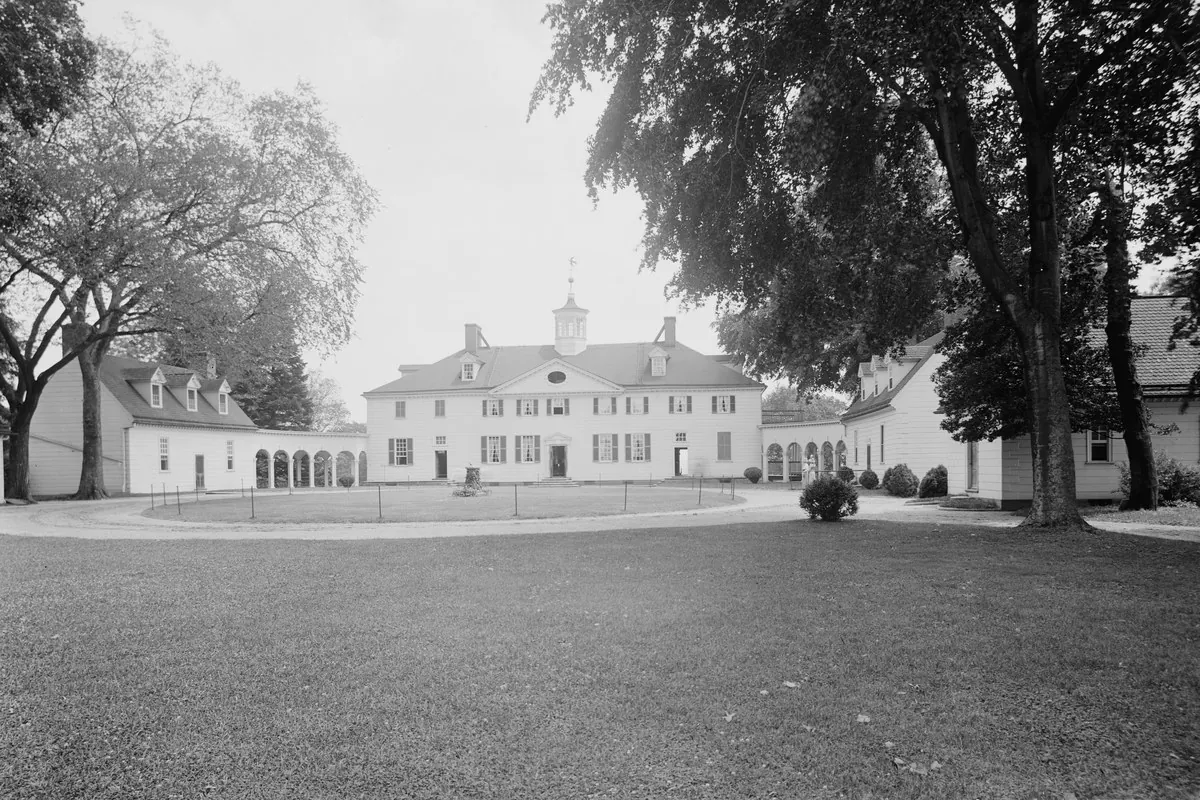
- “West view of the mansion at Mt. Vernon,” Library of Congress: the Detroit Publishing Co. photo at the bottom of this page, copyrighted between 1910 and 1920.
- GNIS feature 1495975, Mount Vernon (U.S. Geological Survey): the federal place-name record for the estate.
Spot something wrong, or know more? Tell us here. You can also email us or use our contact page. Corrections are noted here with their date, never made silently.