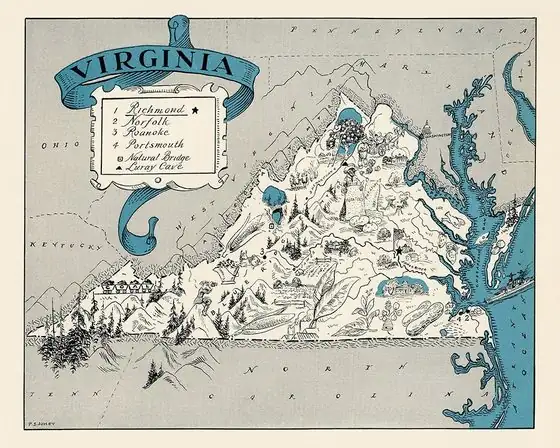
Alexandria, VA: Named for a Scot Who Paid in Tobacco
Alexandria, Virginia, is named for John Alexander, a Scotsman who bought a 6,000-acre tract on the Potomac in 1669 for 6,000 pounds of tobacco. When a town was laid out on part of that land in 1749, it was named Alexandria in his honor, the City of Alexandria says. The site was once known as Hunting Creek Warehouse and Belhaven.
The captain, the Scot and the tobacco
In 1669 a Scotsman named John Alexander paid 6,000 pounds of tobacco for the land where Alexandria, Virginia, stands, and the town took his name in 1749. He wasn’t the first owner, though. The City of Alexandria’s history says that on October 21, 1669, Virginia’s governor, Sir William Berkeley, granted 6,000 acres to Robert Howson, an English ship captain, for bringing 120 people. The tract ran along the river from Hunting Creek up to Little Falls.
Howson didn’t hold on to it. “Less than a month later, Howson sold the land to John Alexander for 6,000 pounds of tobacco,” the city writes. That’s the man the town is named for, some 80 years later.
The Alexanders stayed. By 1732, the city says, Philip and John Alexander were farming the land around a tobacco warehouse that Hugh West ran at the foot of what’s now Oronoco Street. A 1753 act of the Virginia assembly deals with another 6,000-acre tract in the area, in Truro parish of Fairfax County, which Robert Alexander of Stafford had left to his sons John and Gerard in a will of 1735. The act doesn’t say whether it’s the same land Howson sold. A national list of name origins keeps it general: Alexandria was “named for a prominent family of early settlers,” as Henry Gannett summed it up in 1905.
A town at Hunting Creek Warehouse
Fairfax County was created in 1742, and in the fall of 1748 merchants from Cameron asked the General Assembly for a town at the warehouse. The law they got doesn’t use the name Alexandria, at least not in its title. William Waller Hening’s collection of Virginia’s statutes doesn’t print the text; it lists the act among that session’s private acts by title alone:
“An act for erecting a town at Hunting-Creek warehouse, in the county of Fairfax.” (Hening, Statutes at Large, vol. 6, p. 214)
The name came the next spring. “In the spring of 1749, this site was selected and the new town was named Alexandria in honor of the early owner of much of the land, Scotsman John Alexander,” the city says. John West, the Fairfax County surveyor, laid out 60 acres, by tradition with help from a 17-year-old George Washington, and the lots were sold at auction in July 1749.
Belhaven, the other name
You’ll also find a second old name. The state’s official charter record for the city says it was “Once known as Hunting Creek Warehouse and as Belhaven.” The city’s history page lists a paper by Diane Riker and describes it this way: “For the first dozen years of its history, Alexandria, Virginia, was a town with two names.” We couldn’t open the paper itself, so we can’t tell you which name she found came first.
The colony’s laws, at least, settled on Alexandria early. An act of February 1752 allowed fairs to be held in “the town of Alexandria, in the county of Fairfax.”
In and out of the District
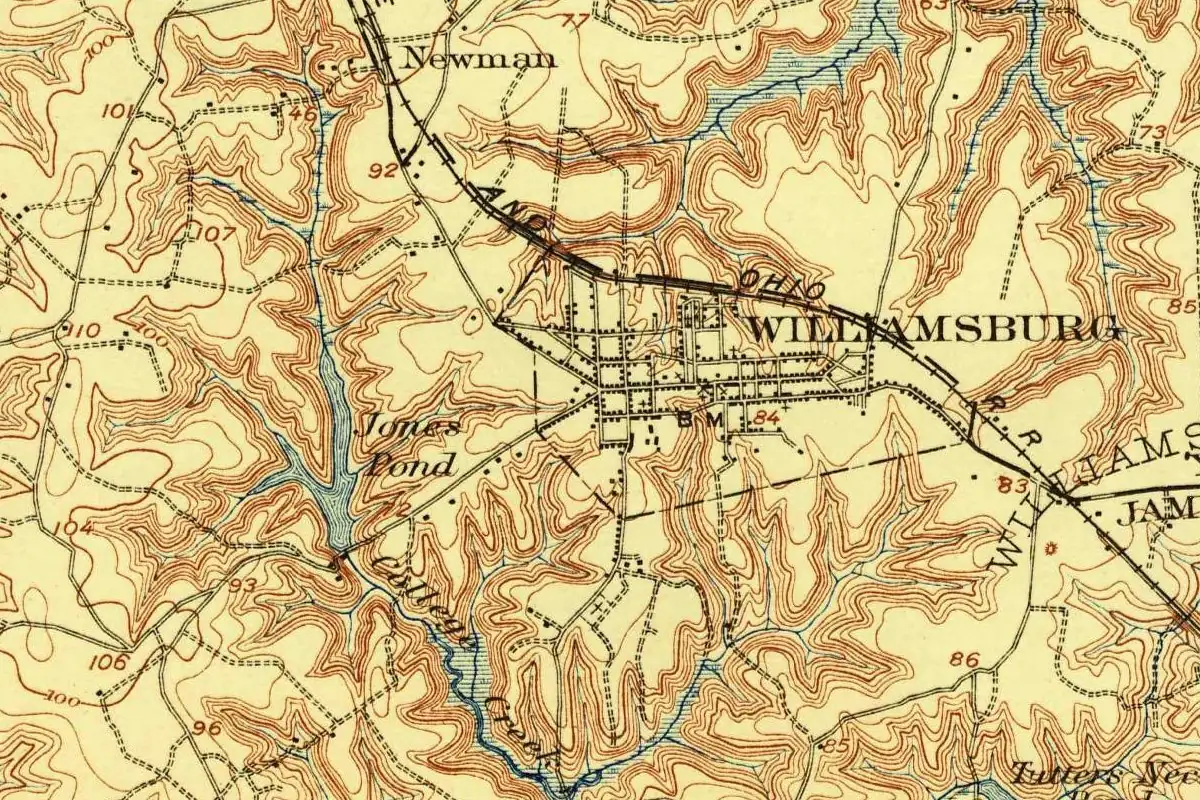
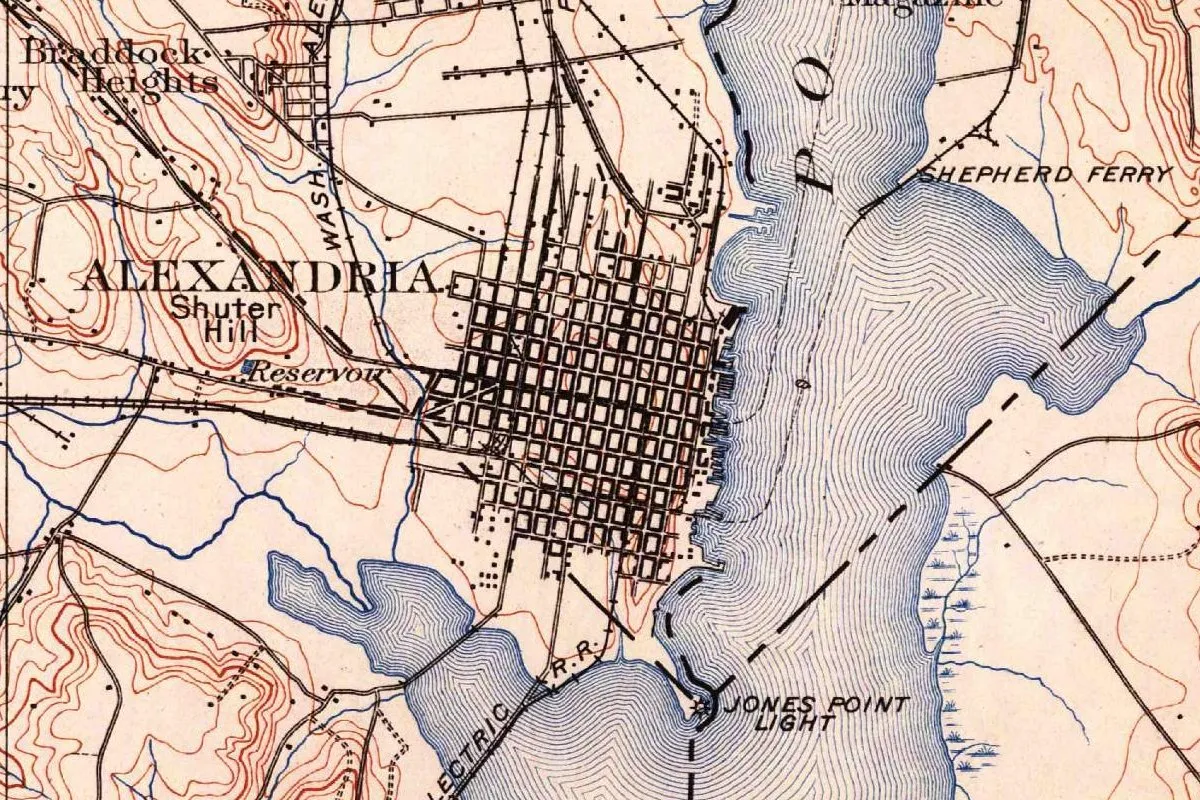
Alexandria became an incorporated town in 1779 and a city in 1852, according to the state’s charter record. In between, it spent almost half a century outside Virginia. The city says it was ceded to the new federal district in 1789, came under Congress in 1801 and went back to Virginia in 1847. Our District of Columbia page tells how Alexandria County voted in 1846 to leave. You can still see the old line on the map at the top of this page: the 1900 sheet draws the District’s boundary as a dashed line, with Jones Point light on the shore just below town.
Quick answers
Who is Alexandria, Virginia, named after?
John Alexander, a Scotsman who bought the land from Robert Howson in 1669 for 6,000 pounds of tobacco, according to the City of Alexandria.
When was Alexandria, VA, founded?
In 1749. The Virginia assembly passed an act for a town at Hunting Creek warehouse in its October 1748 session, and in the spring of 1749 the site was chosen and named Alexandria.
What was Alexandria, Virginia, called before?
Hunting Creek Warehouse and Belhaven, according to Virginia’s charter record for the city.
Was Alexandria ever part of Washington, D.C.?
Yes. The city says it was ceded to the federal district in 1789, came under Congress in 1801 and returned to Virginia in 1847.
Key dates
- 1669October 21: Robert Howson receives a 6,000-acre grant; less than a month later he sells it to John Alexander for 6,000 pounds of tobacco.
- 1732Hugh West has a tobacco warehouse at the foot of today's Oronoco Street, and Philip and John Alexander farm the land around it.
- 1748The Virginia assembly passes an act for erecting a town at Hunting Creek warehouse, in Fairfax County.
- 1749In spring the site is chosen and named Alexandria; John West lays out 60 acres, and lots are sold at auction in July.
- 1752An act allows fairs to be held in the town of Alexandria.
- 1779Alexandria is incorporated as a town.
- 1801Alexandria comes under the federal government as part of the District of Columbia, after Virginia's cession of 1789.
- 1847Alexandria returns to Virginia, the city says.
- 1852Alexandria is incorporated as a city.
Getting there
Open Alexandria in Google Maps
Opens in a new tab. The pin is the center of Alexandria in the USGS place-name record.
The closest airports, Amtrak stations and intercity bus stops, measured in a straight line from the center of Alexandria.
Airports
- Ronald Reagan Washington Ntl (DCA) Arlington 3 mi 5 km
- Washington Dulles International (IAD) 24 mi 39 km
Amtrak trains
- Alexandria station (ALX) under 1 mi 1 km
- Washington station (WAS) 7 mi 11 km
Intercity buses
- OurBus Alexandria, VA (King St- Old Town Station. Bus will stop on Cameron Street north of Commonwealth, by the metro station entrance, across the street from the Hilton) under 1 mi 1 km
- FlixBus Arlington Rosslyn 6 mi 10 km
- Amtrak Chartered Vehicle Amtrak Connecting Service · Washington Union Station 7 mi 11 km
Distances are as the crow flies, not by road. We don't list schedules or fares because they change; check with the airline, Amtrak or the bus company before you go. Official data (FAA commercial service airports (2025), FAA airport locations, Amtrak stations and Intercity Bus Atlas) from the FAA and the U.S. Bureau of Transportation Statistics, checked Nov 13, 2026.
Sponsored
Staying in Alexandria?
Compare hotels in Alexandria, Virginia, on Expedia.
See hotels in AlexandriaWe may earn a commission if you buy through this link. It never changes what we write. Read our affiliate disclosure
Sponsored
Want the spooky side of Alexandria?
The name has its story above. For the ghost stories, US Ghost Adventures runs walking ghost tours in Alexandria.
See ghost tours in AlexandriaWe may earn a commission if you book through this link. It never changes what we write. Read our affiliate disclosure
Historical Sources & References
- City of Alexandria, “A Brief History of Alexandria”. Howson’s grant of October 21, 1669, the sale to John Alexander for 6,000 pounds of tobacco, Hugh West’s warehouse by 1732, the 1748 petition, the naming in spring 1749, John West’s survey and the July auction, and the town’s years in the District of Columbia.
- Virginia Legislative Information System, “Charters: Alexandria”. “Once known as Hunting Creek Warehouse and as Belhaven,” established in 1749, a town in 1779 and a city in 1852.
- William Waller Hening, The Statutes at Large, vol. 6. The 1748 act “for erecting a town at Hunting-Creek warehouse” (p. 214), the fairs act for “the town of Alexandria” in 1752 (pp. 286-287), and the 1753 act on the Alexander family’s 6,000 acres in Truro parish (pp. 399-400).
- Henry Gannett, The Origin of Certain Place Names in the United States (USGS, 1905), p. 20. Alexandria “named for a prominent family of early settlers.”
- GNIS feature 1492456 (U.S. Geological Survey). Alexandria’s populated-place record, with the coordinates used for this page.
- U.S. Geological Survey, Washington sheet (1900). The source of the map at the top of this page.
Spot something wrong, or know more? Tell us here. You can also email us or use our contact page. Corrections are noted here with their date, never made silently.