Kailua-Kona, Hawaii: Two Seas on the Leeward Side
Kailua-Kona combines two Hawaiian place names. Kailua is translated literally as "two seas," probably meaning two currents, and Thrum's 1922 list gives "two currents of the sea." Kona means leeward and names the leeward districts of the islands. The federal place-name record still lists the town simply as Kailua.
Kailua-Kona, Hawaii, joins two Hawaiian names: Kailua, translated literally as “two seas,” and Kona, the word for the leeward side of its island. Put them together and you get a town name that reads, more or less, like an address: the Kailua on the Kona side.
Kailua: two seas, or two currents
Start with the first half. Place Names of Hawaiʻi, the 1974 reference work now searchable on the University of Hawaiʻi at Hilo’s Wehewehe Wikiwiki dictionary site, gives Kailua as “Literally, two seas,” and adds in parentheses “probably currents, especially on Hawaiʻi.” For this Kailua, it lists a village, a school, a bay and an ancient surfing area in Kona.
That “probably” is worth keeping. An older list says nearly the same thing with more confidence. In the place-name appendix Thomas G. Thrum wrote for the 1922 edition of Andrews and Parker’s Hawaiian dictionary, the entry reads:
“Kailua (kā’i-lu’ă): two currents of the sea. Land section, North Kona, Hawaii.”
Thrum was upfront about how he worked. At the top of his list he warned that because some names were very old and the compilers didn’t know the traditions of every locality, “not a few definitions are given literally.” So “two seas” is what the word says. Whether the people who first used it had two particular currents in mind is a different question, and the sources stop short of answering it. A University of Hawaiʻi at Hilo reef-study page does say the name refers “to two currents that meet in that area.”
Kona: the leeward side
The second half is easier. Thrum’s list defines Kona as “leeward,” a “name applied to the leeward districts in the Hawaiian islands.” The 1974 book says the same thing in two words, “Literally, leeward,” and lists Kona districts on Hawaiʻi, Kauaʻi, Molokaʻi, Niʻihau and Oʻahu. Lorrin Andrews’s 1865 dictionary, also on the Wehewehe site, goes a step further: kona was the name of the southwest wind, and of a division found on several islands, “mostly on the west or south-west sides.” On the Big Island, Thrum places Kailua in North Kona.
Why add Kona at all?
Because there’s more than one Kailua. The same dictionary entry that covers this town also lists a Kailua on East Maui and a much bigger one on Oʻahu, which it calls the second largest city in the Hawaiian Islands as of 1970. A 2002 companion volume, Hawaiʻi Place Names, gives the Oʻahu Kailua the same literal meaning, “two seas (probably two currents).” If you’ve ever searched for a hotel in “Kailua” and found yourself looking at the wrong island, you’ve met the problem.
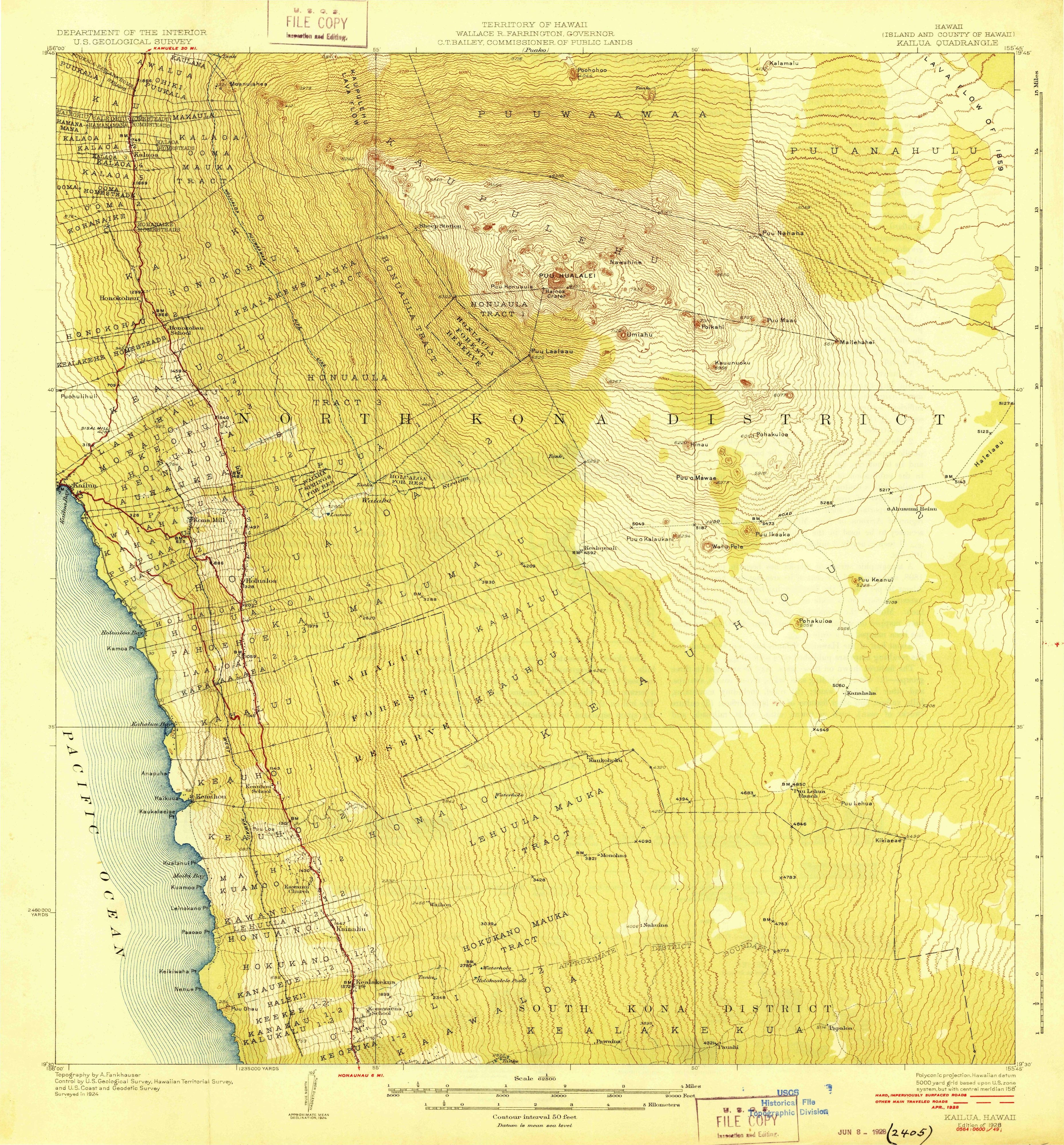
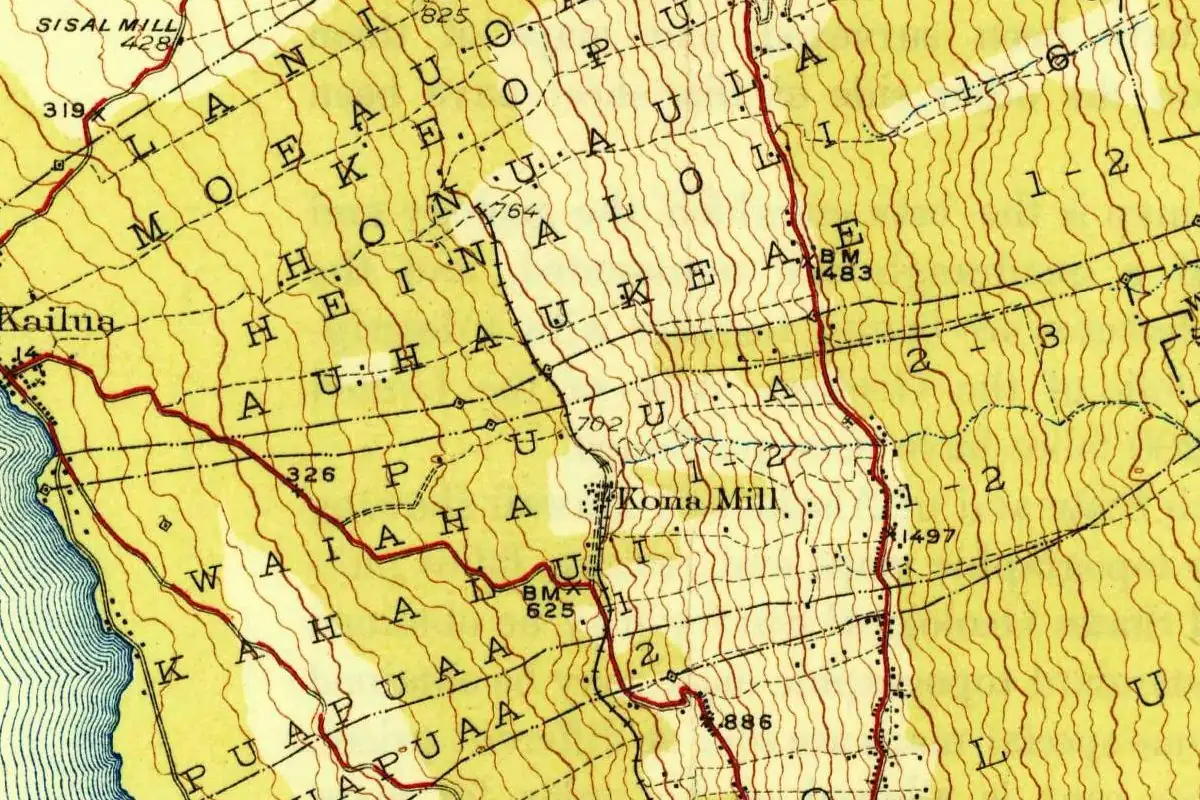
The sources on this page don’t say who first hyphenated the two names or when. The 2002 book does mention that the pier on Kailua Bay is “Also known as Kailua-Kona Wharf.” And the U.S. Geological Survey’s place-name database still lists the town under its plain old name, Kailua, in Hawaii County. So does the 1928 survey map at the top of this page, where “Kailua” sits right at the shoreline and “Kona Mill” is up the slope.
The village where the missionaries anchored
Kailua was already an important place when outsiders started writing it down. In 1820 a ship carrying the first company of Congregational missionaries from New England arrived off the coast. Hiram Bingham, one of them, published his account in 1847, and he gave the name plainly:
“On the morning of the 4th of April, 163 days from Boston, we came to anchor, abreast of the village of Kailua.”
On the same page, he describes sailing “toward Kailua, the residence of the king.”
On the next page he sketches what he saw: a large village of thatched houses “in a dry and sterile spot,” set off by coconut and kou trees, with plantations a few miles inland and the forest-covered slopes of Hualālai behind. People of every rank were out in the water swimming, surfing and sailing canoes, the king and his mother among them, Bingham says. On the beach, Kuakini, the brother of Kaʻahumanu and later governor of Hawaiʻi, invited the newcomers to his house. Hawaiʻi Place Names puts the landing on the shore of the bay at the site of today’s pier. The name the missionaries heard was the name they wrote down. It didn’t come from them.
Kamehameha’s bay had a name of its own
Here’s a wrinkle. The UH Hilo reef page says that in the time of Kamehameha I, Kailua Bay was called Kaiakeakua, “the sea of the god.” It places Kamehameha’s residence, Kūnuiākea, overlooking Kaiakeakua and Kamakahonu Beach, near ʻAhuena Heiau, and says the beach welcomed chiefs from other islands, and later the missionaries, because it was home to Kamehameha I and his son Liholiho. (Read that page with care: its opening paragraph describes Kawainui Marsh, which belongs to the Oʻahu Kailua, so it blends the two towns.)
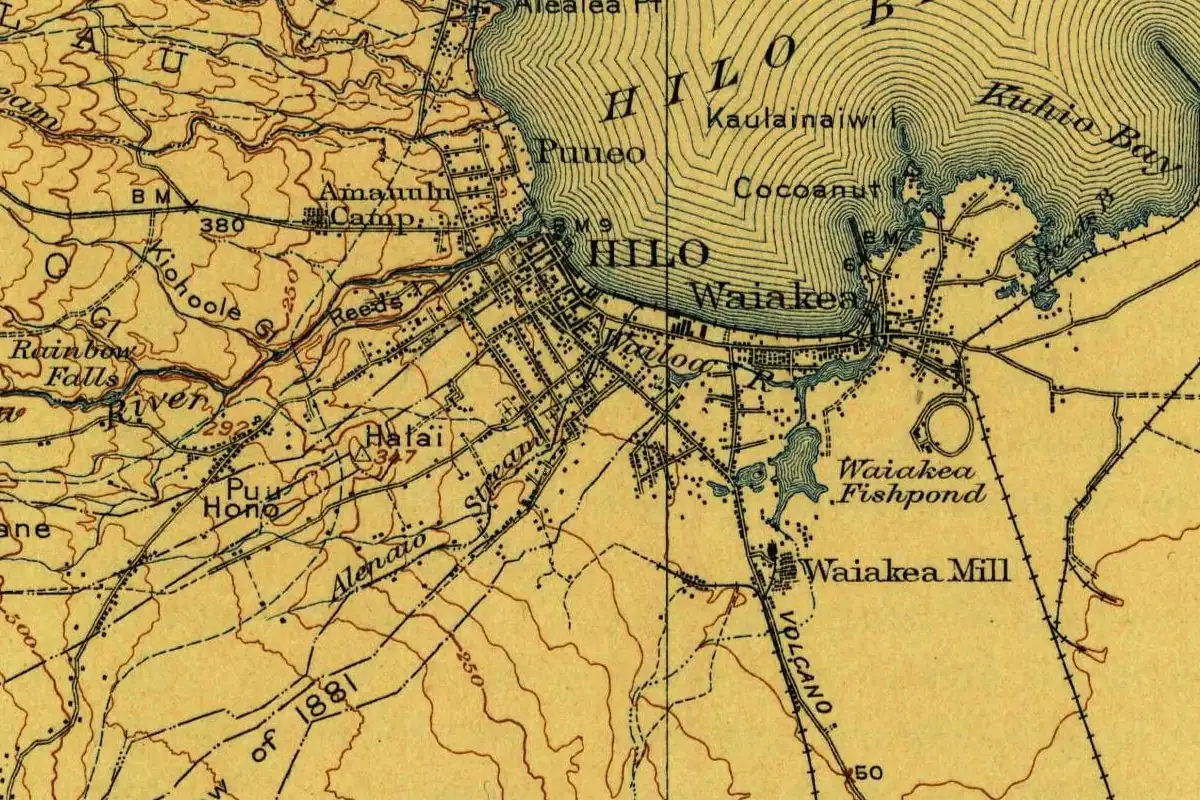
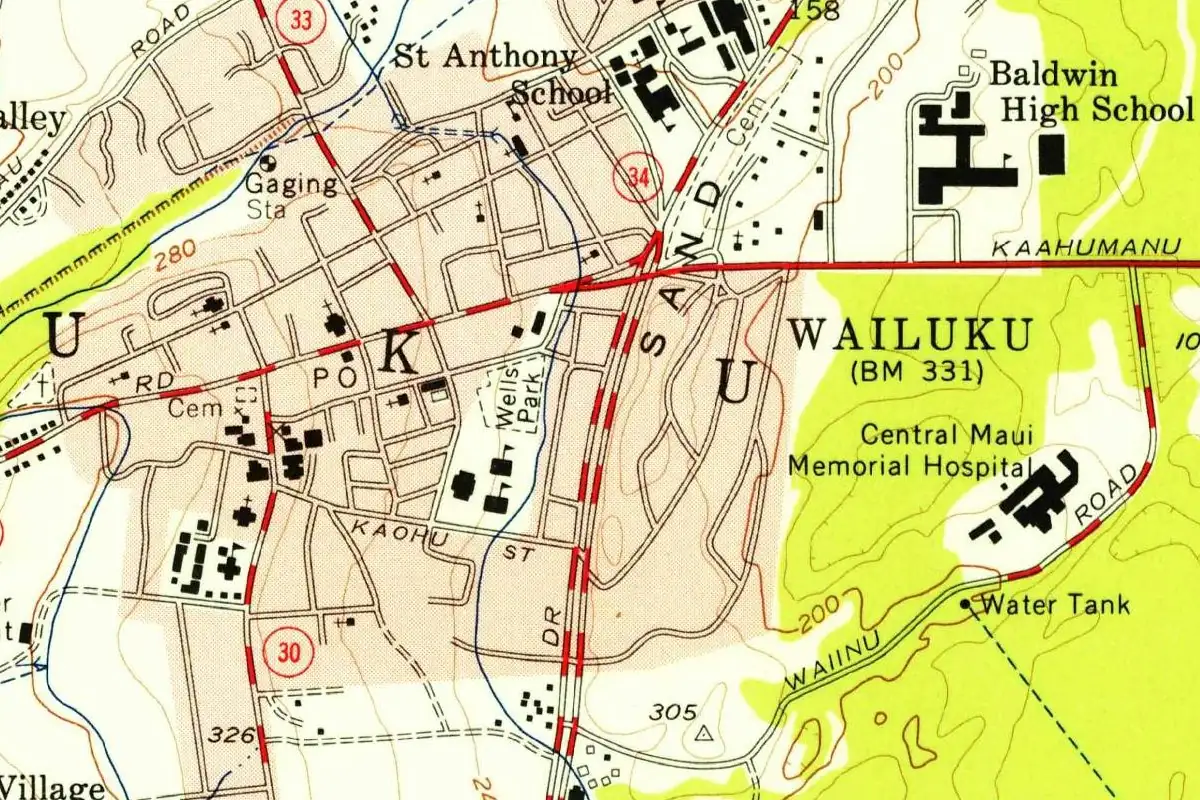
So the water and the village didn’t always share a name. What you can say for sure is that both halves of Kailua-Kona are Hawaiian, both have plain literal meanings in the standard references, and the hyphen is just there to tell one Kailua from another. You’ll find the island’s other big town in our story of Hilo, whose name Thrum also defined in the same 1922 list, and another name from Kamehameha’s wars in Wailuku. The rest of the state’s name stories are on our Hawaii page.
Quick answers
What does Kailua-Kona mean?
It’s two names joined. Kailua is translated literally as “two seas,” probably meaning currents, and Kona means “leeward,” the name of the island’s leeward district.
What does Kailua mean in Hawaiian?
“Two seas,” literally, according to Place Names of Hawaiʻi (1974), which adds “probably currents.” Thrum’s 1922 list gives “two currents of the sea,” while warning that some of his definitions were literal.
Is Kailua-Kona the same as Kailua on Oahu?
No. They’re different towns on different islands that share the Hawaiian name Kailua. The “Kona” in Kailua-Kona points to the leeward district of the Big Island.
What is Kailua-Kona’s official name?
The U.S. Geological Survey’s place-name database lists it simply as Kailua, in Hawaii County, and the 1928 survey map labels it Kailua too.
Key dates
- 1820On April 4, the first company of New England missionaries anchors off the village of Kailua and lands at the bay.
- 1922Thomas Thrum's place-name list defines Kailua as "two currents of the sea" and Kona as "leeward."
Things to do in Kailua-Kona, Hawaii
Huliheʻe Palace
A museum on the edge of Kailua Bay in a house built in 1838 by High Chief John Adams Kuakini, then governor of Hawaiʻi Island, and later used by Hawaiian royalty.
Mokuaikaua Church
The church calls itself the first Christian church established in the Hawaiian Islands. The present building was started in 1835 and dedicated in early 1837, and its stone arch marks the mission's 90th anniversary in 1910.
Kaloko-Honokōhau National Historical Park
A park on the lava coast north of town where Hawaiians built a thriving settlement and fishponds that sustained life along the Kona coast. At Honokōhau Beach you can see the historic ʻAiʻopio fishtrap.
Puʻuhonua o Hōnaunau National Historical Park
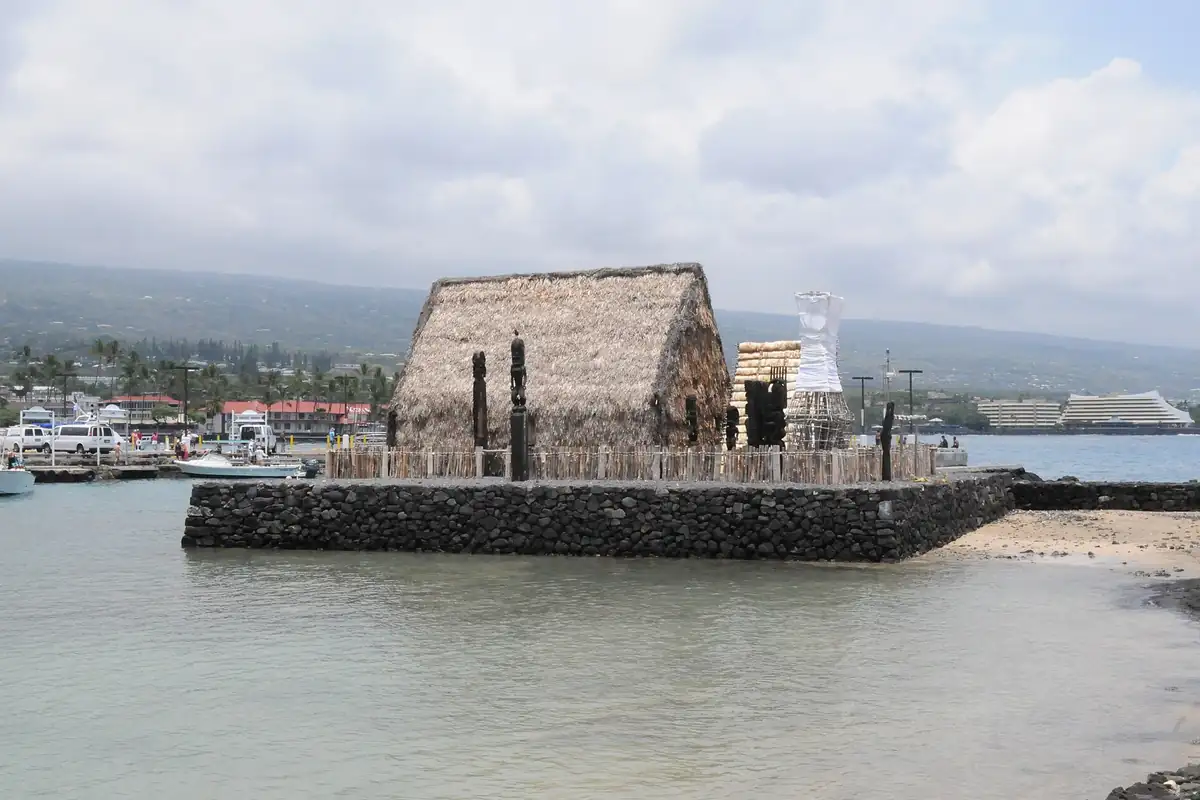
A place of refuge on the Kona coast where those who broke the kapu, defeated warriors and civilians in wartime could be safe, with the Hale o Keawe on the Royal Grounds and ʻĀleʻaleʻa Heiau.
Getting there
Open Kailua-Kona in Google Maps
Opens in a new tab. The pin is the center of Kailua-Kona in the USGS place-name record.
The closest airports, Amtrak stations and intercity bus stops, measured in a straight line from the center of Kailua-Kona.
Airports
- Ellison Onizuka Kona International at Keahole (KOA) Kailua Kona 8 mi 12 km
- Hilo International (ITO) 62 mi 99 km
- Kahului (OGG) 92 mi 147 km
Distances are as the crow flies, not by road. We don't list schedules or fares because they change; check with the airline, Amtrak or the bus company before you go. Official data (FAA commercial service airports (2025), FAA airport locations, Amtrak stations and Intercity Bus Atlas) from the FAA and the U.S. Bureau of Transportation Statistics, checked Nov 14, 2026.
Sponsored
Staying in Kailua-Kona?
Compare hotels in Kailua-Kona, Hawaii, on Expedia.
See hotels in Kailua-KonaWe may earn a commission if you buy through this link. It never changes what we write. Read our affiliate disclosure
Historical Sources & References
- Thomas G. Thrum, “Hawaiian Place Names,” in Andrews and Parker, A Dictionary of the Hawaiian Language (1922), p. 639. The quoted entry: Kailua, “two currents of the sea. Land section, North Kona, Hawaii,” with the pronunciation marks.
- Thrum, “Hawaiian Place Names” (1922), p. 652. Kona: “leeward. Name applied to the leeward districts in the Hawaiian islands.”
- Thrum, “Hawaiian Place Names” (1922), p. 625. The opening note that “not a few definitions are given literally.”
- Wehewehe Wikiwiki (University of Hawaiʻi at Hilo), “kailua”. Place Names of Hawaiʻi (1974): “Literally, two seas (probably currents, especially on Hawaiʻi)”; the Kona village, school, bay and surfing area; the Kailuas on Maui and Oʻahu. Hawaiʻi Place Names (2002): the April 4, 1820, landing at the site of the pier, “Also known as Kailua-Kona Wharf,” and the Oʻahu Kailua’s meaning.
- Wehewehe Wikiwiki (University of Hawaiʻi at Hilo), “kona”. Place Names of Hawaiʻi (1974): Kona, the leeward districts on five islands, “Literally, leeward.” Andrews (1865): the southwest wind, and island divisions “mostly on the west or south-west sides.”
- Hiram Bingham, A Residence of Twenty-One Years in the Sandwich Islands (1847), p. 85. The quoted arrival “abreast of the village of Kailua” on April 4, and “Kailua, the residence of the king.”
- Hiram Bingham, A Residence of Twenty-One Years in the Sandwich Islands (1847), p. 86. The village of thatched houses “in a dry and sterile spot,” the coconut and kou trees, Hualālai behind, the king and his mother in the water, and Kuakini’s invitation.
- University of Hawaiʻi at Hilo, Coral Health Atlas, “Kailua”. “Two seas” as two currents that meet; Kaiakeakua, “the sea of the god”; Kūnuiākea, Kamakahonu and ʻAhuena Heiau; Kamehameha I and Liholiho. The page’s first paragraph concerns the Oʻahu Kailua.
- GNIS feature 365355 (U.S. Geological Survey). The USGS place-name entry, listed as Kailua, Hawaii County.
- U.S. Geological Survey, Kailua sheet (1928). The 1:62,500 quadrangle the map at the top of this page was cropped from.
Sponsored
Put this 1928 map on your wall
The 1928 USGS Kailua, Hawaii, sheet is in the public domain. Download the full-size scan for free, then have it printed on canvas with CanvasOnTheCheap.
Print a map on canvasDownload the full-size mapWe may earn a commission if you buy through this link. It never changes what we write. Read our affiliate disclosure
Sponsored
Cruising to Hawaii?
Compare Hawaii cruises on CruiseDirect.
See Hawaii cruisesWe may earn a commission if you buy through this link. It never changes what we write. Read our affiliate disclosure
Spot something wrong, or know more? Tell us here. You can also email us or use our contact page. Corrections are noted here with their date, never made silently.