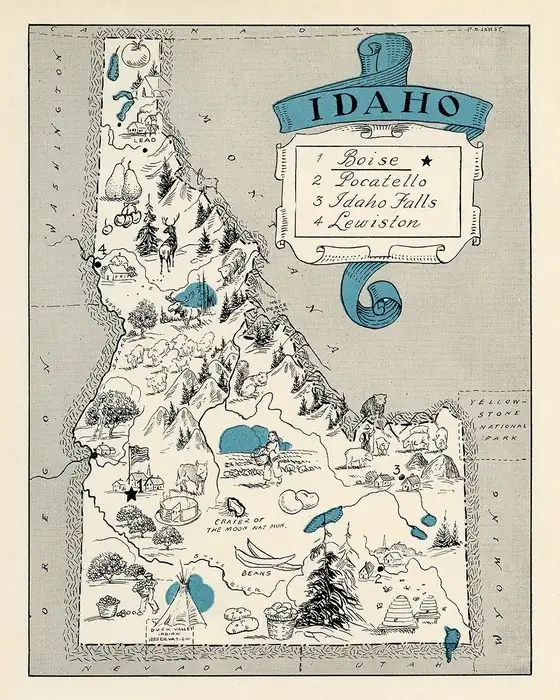
Moscow, Idaho: How Paradise Valley Became Moscow
Sources disagree. The Idaho State Historical Society says Samuel M. Neff, who had lived in Moscow, Pennsylvania, and Moscow, Iowa, took credit for suggesting it. A 1978 county history says five settlers, Neff among them, chose it after the post office rejected Paradise Valley. A 1947 book claimed it came from a tribe called 'Masco.'
Moscow, Idaho, got its name after the post office told Paradise Valley to pick another one, and the sources don’t agree on who picked Moscow. One story credits a storekeeper who’d lived in two other Moscows. Another says five neighbors sat down and chose it together. A third, from a famous 1947 travel book, skips Russia and the neighbors altogether.
Paradise was taken
Before it was Moscow, the place had a more hopeful name. The Idaho State Historical Society says that by 1872 enough settlers were farming “in an area known as Paradise Valley” that Alonzo Leland of Lewiston began trying to get a mail route extended there. John Hailey, Idaho’s delegate to Congress, then filed an application for a post office on March 5, 1873, and the Paradise office opened on March 19. The city of Moscow’s own history adds an earlier nickname: the area was first called “Hog Heaven,” it says, before it became Paradise Valley.
Paradise didn’t last. In 1978, Lalia P. Boone explained why in a study of the post offices of Latah County for the county historical society’s quarterly: “To avoid confusion with other offices named Paradise, the U.S. Post Office asks for a change of name. Moscow is chosen and becomes the official name for the post office December 26, 1876.” The state historical society gives the same date. So the name wasn’t a first choice. It was a replacement.
The storekeeper with two Moscows
The best-known answer to “why Moscow” points to Samuel Miles Neff. In 1874 he opened a small grocery store about a mile from the Paradise post office. Almon Asbury Lieuallen, in the valley since 1871, enlarged it into a general store, acquired Neff’s farm and moved the post office there. Then comes the line everyone quotes. The state historical society says:
“S. M. Neff, who previously had lived in Moscow, Pennsylvania, and Moscow, Iowa, took credit for suggesting that Lieuallen’s townsite on his farm be named Moscow.”
Notice the wording: Neff took credit. The society doesn’t say anyone else confirmed it. The city’s history goes further, saying Neff filed for a postal permit under the name of Moscow because the area “reminded him of his hometown of Moscow, Pennsylvania,” and it puts that in 1877, not 1876. The Museum of Idaho says there’s “some dispute about how the name Moscow came to be, but it probably came from S. M. Neff.” So if you’ve seen both years, that’s why.
A name carried west from a hometown isn’t unusual. Settlers did the same in Peoria, Arizona, named after the Illinois town its first farmers left.
Five men and a name that would “bode well”
Boone, who’d gone through the postal records, told it as a group decision. The Post Office Department, she wrote, rejected two names in Latah County because there were too many offices with them already, “Paradise Valley” and “Fairview.” Then:
“Messrs. Lieuallen, McGregor, Deakin, Russell, and Neff met in Paradise Valley and seriously considered several names. They were searching for a name that would bode well for the new town. ‘Moscow’ was chosen.”
She added that these names “were not haphazardly chosen, nor were they left to the decision of one man.” Neff is in the room in her version. He just isn’t alone. A postal rename forced by a duplicate name happened elsewhere, too: in Bend, Oregon, one account says “Farewell Bend” lost its first word because the name was already in use.
Russia, or a tribe called “Masco”?
The obvious guess is the Russian city. In the government’s 1905 bulletin on place-name origins, Henry Gannett wrote that Moscow in Somerset County, Maine, “and twenty-five other places” were “named from the city in Russia.” He didn’t single out Idaho, and the Museum of Idaho says that in this town’s story, “the one thing you don’t see is a direct connection to Russia.”
John Gunther, the journalist, went the other way in Inside U.S.A., his 1947 tour of the country. “Moscow, a charming town, gets its curious name not from anything Russian,” he wrote on page 114, “but from an Indian tribe called originally ‘Masco.’” He gave no source, and none of the other sources found for this page mentions a Masco tribe. The Museum of Idaho does note an earlier name of a different kind: the Nez Perce, it says, called the area Tat-Kin-Mah, “place of the spotted deer.”
For a town that really did take a Black Sea city’s name on purpose, compare Odessa, Delaware.
Moscow on the Pullman sheet
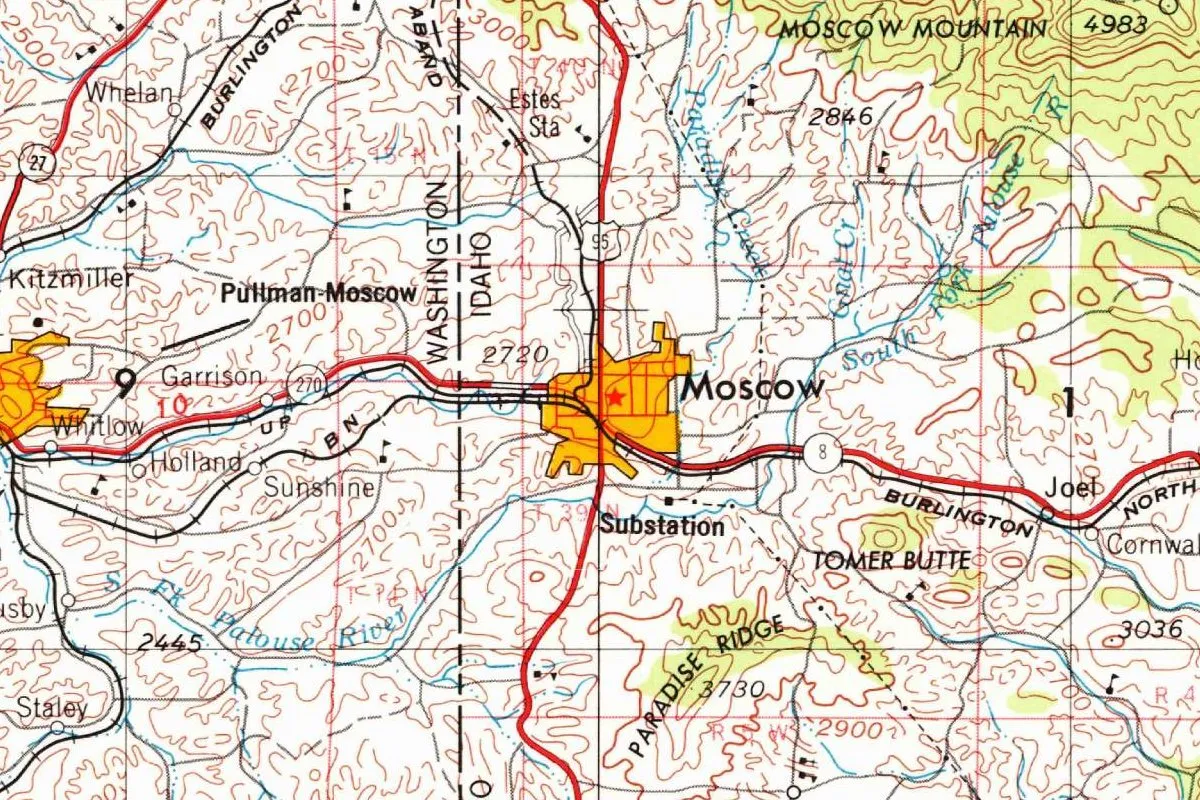
The map at the top of this page isn’t even an Idaho sheet. Moscow sits so close to the state line that it falls on the Pullman, Washington, sheet, which Army mapmakers compiled in 1955 and the Geological Survey revised in 1974. This copy was printed in 1976. The town is a yellow patch just east of the dashed Washington-Idaho boundary, with Moscow Mountain rising to 4,983 feet (1,519 m) to the north. You’ll also find the word Paradise still on it, twice: Paradise Creek is labeled north of town, and Paradise Ridge, 3,730 feet (1,137 m), sits to the south.
Moscow grew from there. The railroad arrived in 1885, the town was incorporated in 1887, and in 1889 it was picked as the site of the University of Idaho, the city says. Paradise lives on in the creek and the ridge; the town itself has answered to Moscow, Idaho, ever since the post office made the switch.
Quick answers
Who named Moscow, Idaho?
Nobody knows for sure. The Idaho State Historical Society says Samuel M. Neff took credit for suggesting the name; Lalia P. Boone wrote in 1978 that Lieuallen, McGregor, Deakin, Russell and Neff chose it together.
Is Moscow, Idaho, named after Moscow, Russia?
Not directly, as far as the sources here go. The Neff story points to Moscow, Pennsylvania, and Moscow, Iowa, and the Museum of Idaho says there’s no direct connection to Russia. John Gunther claimed in 1947 that it came from a tribe called “Masco.”
What was Moscow, Idaho, called before?
Paradise Valley. The post office there opened in 1873 as Paradise, and the city says the area was nicknamed “Hog Heaven” even earlier.
When was Moscow, Idaho, named?
December 26, 1876, according to the Idaho State Historical Society and Lalia P. Boone. The city’s history puts Neff’s Moscow application in 1877.
Key dates
- 1871Almon Asbury Lieuallen settles in Paradise Valley.
- 1873March 19: the Paradise post office is established, after John Hailey filed for it on March 5.
- 1874Samuel M. Neff opens a small grocery store about a mile from the post office.
- 1876December 26: the post office's name is changed to Moscow, per the Idaho State Historical Society and Lalia P. Boone.
- 1877November 20: Lieuallen becomes postmaster. The city's own history dates Neff's Moscow application to this year.
- 1885The railroad reaches Moscow.
- 1887Moscow is incorporated.
- 1889Moscow is chosen as the site of the University of Idaho.
- 1947John Gunther's Inside U.S.A. says the name comes from a tribe called "Masco."
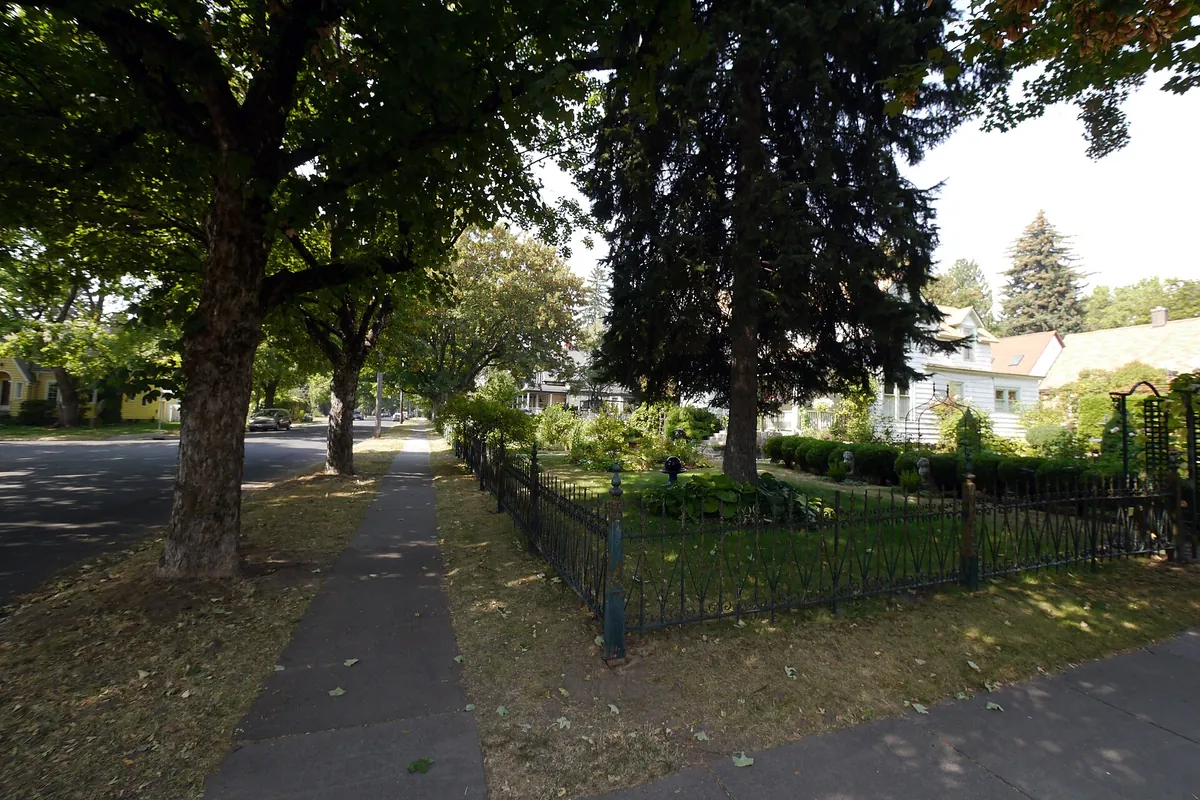
Things to do in Moscow, Idaho
University of Idaho Arboretum and Botanical Garden
A 63-acre garden on the University of Idaho campus, south of the President's Residence on Nez Perce Drive, with native and introduced plants chosen to thrive in the Inland Pacific Northwest.
McConnell Mansion
The house that William J. McConnell, merchant and Idaho governor from 1887 to 1893, built in 1886 in the Fort Russell neighborhood. The Latah County Historical Society shows rooms interpreted from 1900 to the 1930s.
Latah Trail
A trail on the historic Moscow-Arrow railroad corridor, which the Latah Trail Foundation works to keep for walking, biking and other non-motorized travel between Latah County's communities.
Appaloosa Museum
A museum in the Palouse Country that preserves and exhibits the history of the Appaloosa horse breed, with an activity center, gift shop and picnic area.
Getting there
Open Moscow in Google Maps
Opens in a new tab. The pin is the center of Moscow in the USGS place-name record.
The closest airports, Amtrak stations and intercity bus stops, measured in a straight line from the center of Moscow.
Airports
- Pullman/Moscow Regional (PUW) 5 mi 9 km
- Lewiston/Nez Perce County (LWS) 25 mi 40 km
Amtrak trains
- Spokane station (SPK) 67 mi 107 km
Intercity buses
- Northwestern Stage Lines Moscow (U of I) under 1 mi 0.6 km
- Wheat Line Travel Washington · Eastern WA Univ 59 mi 94 km
Distances are as the crow flies, not by road. We don't list schedules or fares because they change; check with the airline, Amtrak or the bus company before you go. Official data (FAA commercial service airports (2025), FAA airport locations, Amtrak stations and Intercity Bus Atlas) from the FAA and the U.S. Bureau of Transportation Statistics, checked Nov 17, 2026.
Sponsored
Staying in Moscow?
Compare hotels in Moscow, Idaho, on Expedia.
See hotels in MoscowWe may earn a commission if you buy through this link. It never changes what we write. Read our affiliate disclosure
Historical Sources & References
- Idaho State Historical Society, Reference Series No. 35, “The Name ‘Moscow’” (1993). Paradise Valley, John Hailey’s application of March 5, 1873, the office of March 19, Neff’s store, Lieuallen, the change of December 26, 1876, and Neff, who “took credit for suggesting” the name.
- Lalia P. Boone, “Post offices of Latah County” (1978). The rename “to avoid confusion with other offices named Paradise” (p. 5), Lieuallen’s store (p. 17), and the five men who chose a name that “would bode well” (p. 25). Checked against the page images.
- City of Moscow, “History”. “Hog Heaven,” Neff’s application of 1877 and his “hometown of Moscow, Pennsylvania,” the railroad of 1885, incorporation in 1887 and the university in 1889.
- Museum of Idaho, “Origins of Idaho Place Names”. “Some dispute,” Neff’s two Moscows, no direct connection to Russia, and Tat-Kin-Mah.
- John Gunther, Inside U.S.A. (1947), p. 114. The “Masco” claim. Checked against the page image.
- Henry Gannett, The Origin of Certain Place Names in the United States (1905), p. 216. Moscow, Maine, “and twenty-five other places, named from the city in Russia.”
- National Register nomination, Almon Asbury Lieuallen House. Lieuallen in Paradise Valley in 1871 and the post office moved to his store and renamed on December 26, 1876.
- University of Idaho Arboretum; McConnell Mansion; Latah Trail Foundation; Appaloosa Museum. The details in the things-to-do list.
- GNIS feature 400006 (U.S. Geological Survey). Moscow’s listing as a populated place in Latah County and its coordinates.
- Pullman sheet, compiled 1955, revised 1974, printed 1976. The sheet the map at the top was cropped from, prepared by the U.S. Army Topographic Command and revised by the Geological Survey from 1973 aerial photographs, in a printing of 1976, with Moscow Mountain at 4,983 feet (1,519 m).
Spot something wrong, or know more? Tell us here. You can also email us or use our contact page. Corrections are noted here with their date, never made silently.