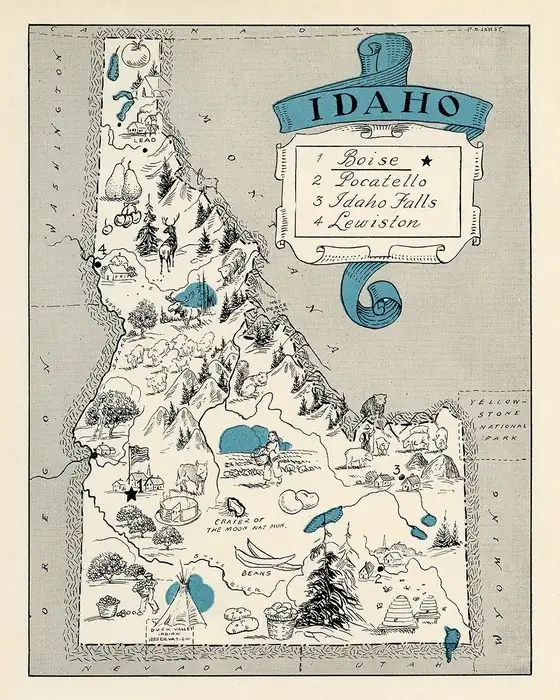
Sandpoint, Idaho: A Point of Sand or the Railroad's Sand?
Sources give two explanations. The local historian Bob Gunter traces the name to a "point of sand" the fur trader David Thompson described in 1809. A 1973 National Register nomination says the Northern Pacific named it because it collected sand there for the whole railroad. The town had been called Pend Oreille first.
Sandpoint, Idaho, owes its name to sand, but two stories disagree about which sand: a point David Thompson noticed in 1809, or sand the railroad collected. One version comes from local historians, the other from a 1973 federal nomination for the town’s train station. Neither one is the name the place started with.
First it was Pend Oreille
An Illustrated History of North Idaho, published in 1903, dates the settlement to 1880, “when Robert Weeks opened a general store and dealt in furs.” The Northern Pacific’s survey came through the same year. “The town was for a long time known as Pend Oreille,” the book says. “On an old railroad map we find it so named as a station on the Northern Pacific railroad.”
The first post office wasn’t even on this side of the water. It was at a settlement called Venton, “about three and one-half miles across the lake,” roughly 5.6 km away. When the railroad was finished and Venton collapsed, the office moved to “Sandpoint, or, as it was then called, Pend Oreille,” with John Russell as postmaster. Emma L. Weeks came next, and “the name of the railroad station and postoffice was changed to Sandpoint about the time that Mrs. Weeks became postmistress.” The book doesn’t say why.
Thompson’s point of sand
The older story begins with the fur trade. A history first published in Sandpoint Magazine in 2001 says trappers working for David Thompson, the North West Company’s agent and surveyor, built a trading post on the Hope peninsula in 1809. It goes on: “Thompson described the peninsula where Sand Creek empties into Lake Pend Oreille as a ‘pointe of sand,’ an apt name for the village and town that would eventually grow up there.”
The local historian Bob Gunter makes the link outright. “David Thompson, explorer, cartographer, and fur trader mentioned in his 1809 journal ‘a point of sand,’” he writes. “That is how Sandpoint eventually got its name.” Neither piece quotes the journal entry itself, and Gunter agrees with the 1903 book on the timing: the town and the station were named Sandpoint while Emma Weeks ran the post office.
Thompson’s name turns up across this corner of the map. The Forest History Society says that in 1809 he gave the name Kullyspel to the people on Pend Oreille Lake, a word that comes up in the story of Kalispell, Montana. The next year, men working under him built Spokane House, one of two fur posts that, in Edmond Meany’s 1923 words, “helped materially to fix the name on the country” around Spokane.
The railroad’s sand
The other story puts the name on the railroad. In 1973, Arthur A. Hart, director of the Idaho State Historical Museum, prepared the National Register nomination for the town’s depot, which he called “the state’s only Gothic style railway station.” His statement of significance says “the Northern Pacific Railroad was the principal developer of the town, even giving it its name ‘Sandpoint,’ because this was the point on the N.P. mainline where sand was collected for use on the entire system.”
The nomination gives no source for the sand story; its only reference is the 1972 state preservation plan. The 1903 history doesn’t mention it. So you’re left with two sands and no paper trail that settles it.
A town on the lake
The 1903 history says “Sandpoint was incorporated in 1900,” and that the first municipal election was held in 1901. The Sandpoint Magazine history gives 1901 as the year of incorporation. At the time, the town was in Kootenai County, the county that still holds Coeur d’Alene. The history guide on Sandpoint.com says the bill forming Bonner County passed in 1907, and Gunter calls Sandpoint its county seat, in the center of the county, in northern Idaho.
The depot Hart wrote about came later. Great American Stations says the Northern Pacific built it in 1916, and it’s still in use.
Sandpoint on the 1901 map
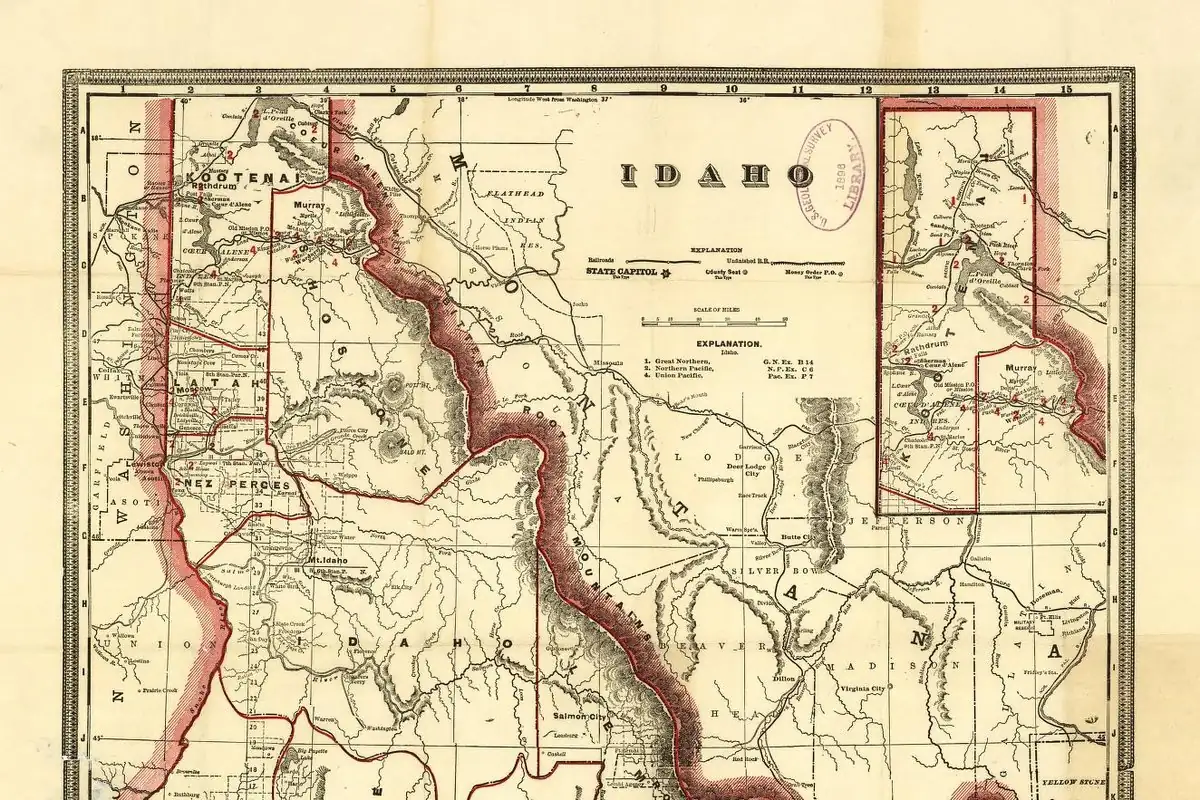
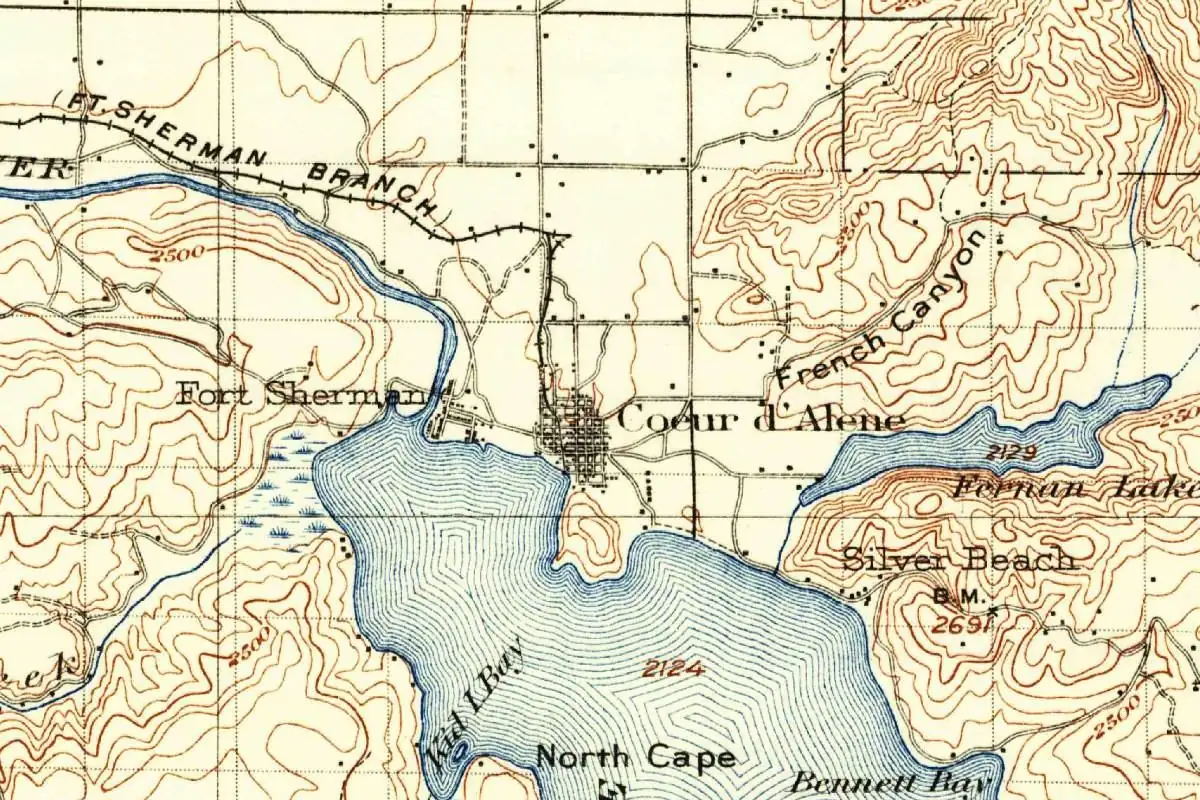
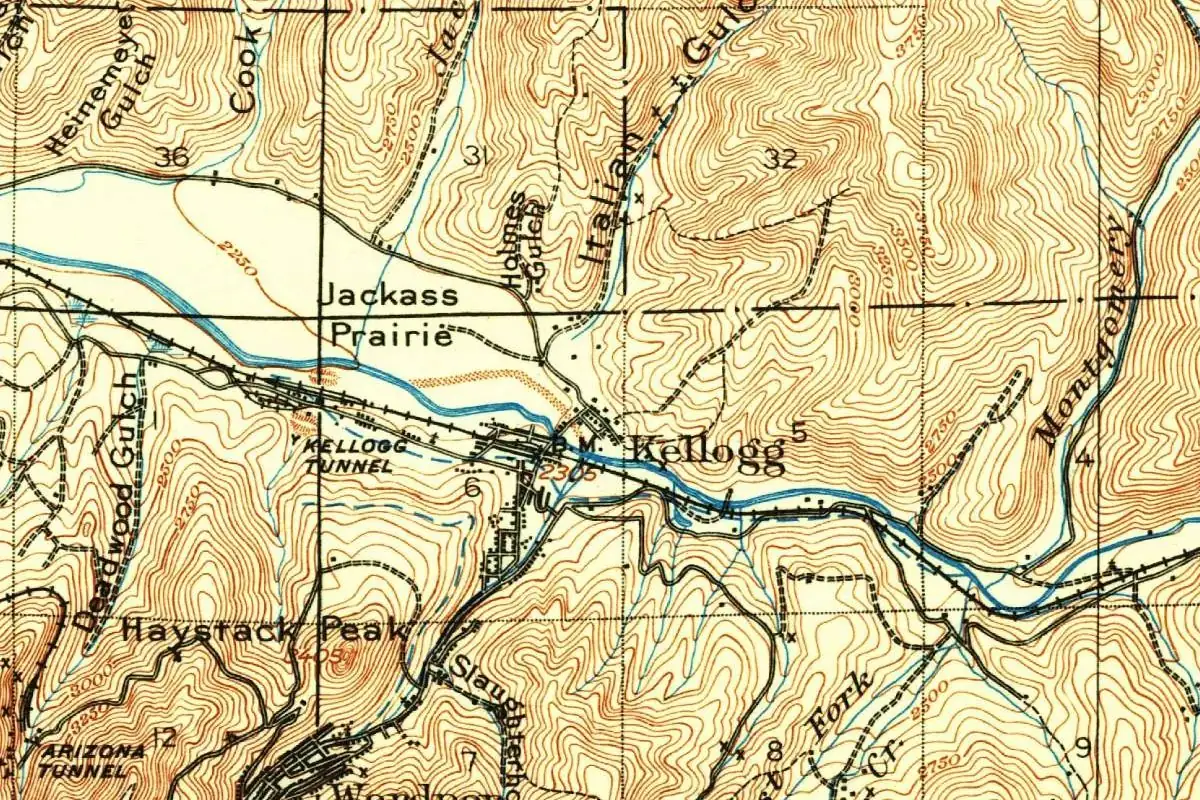
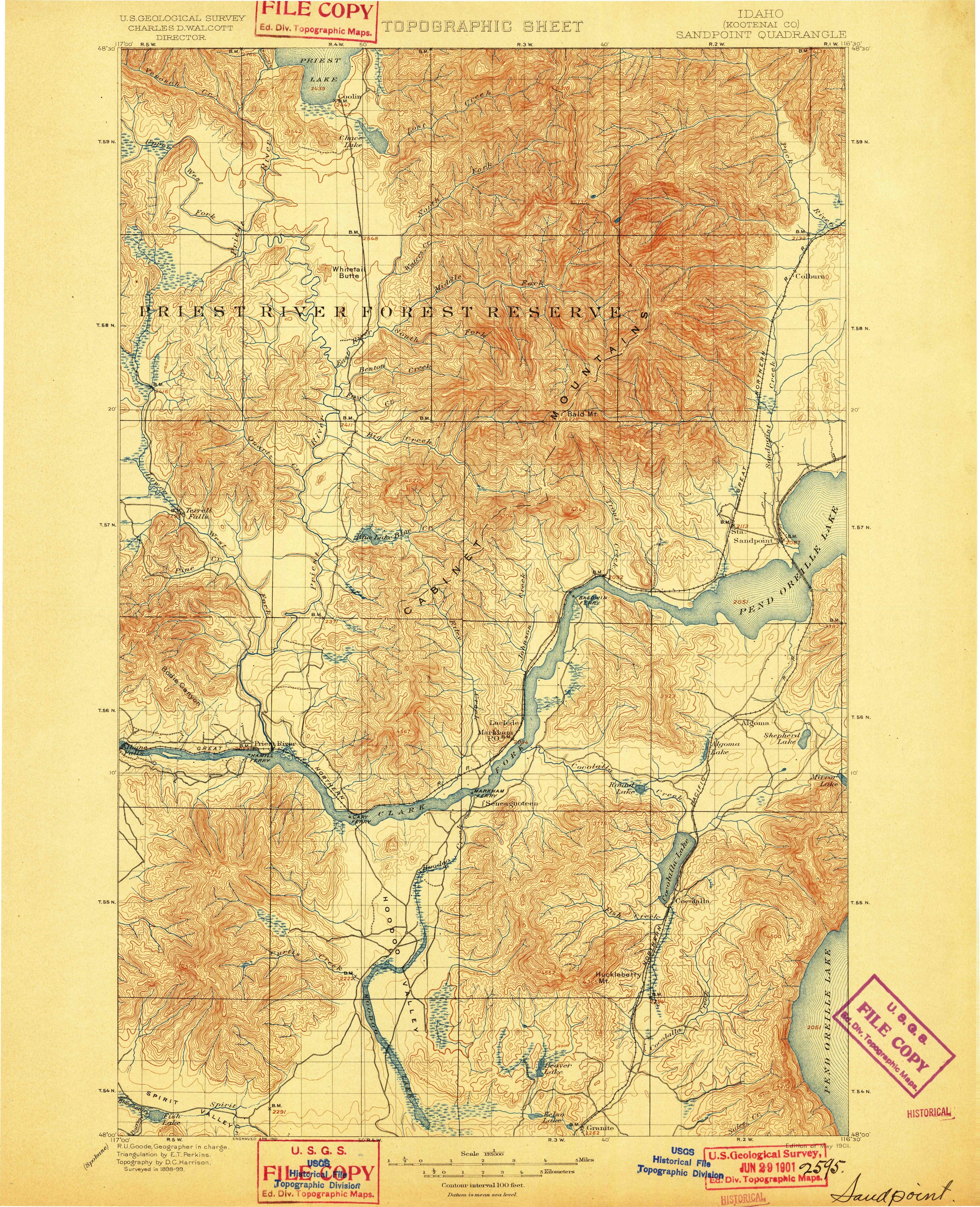
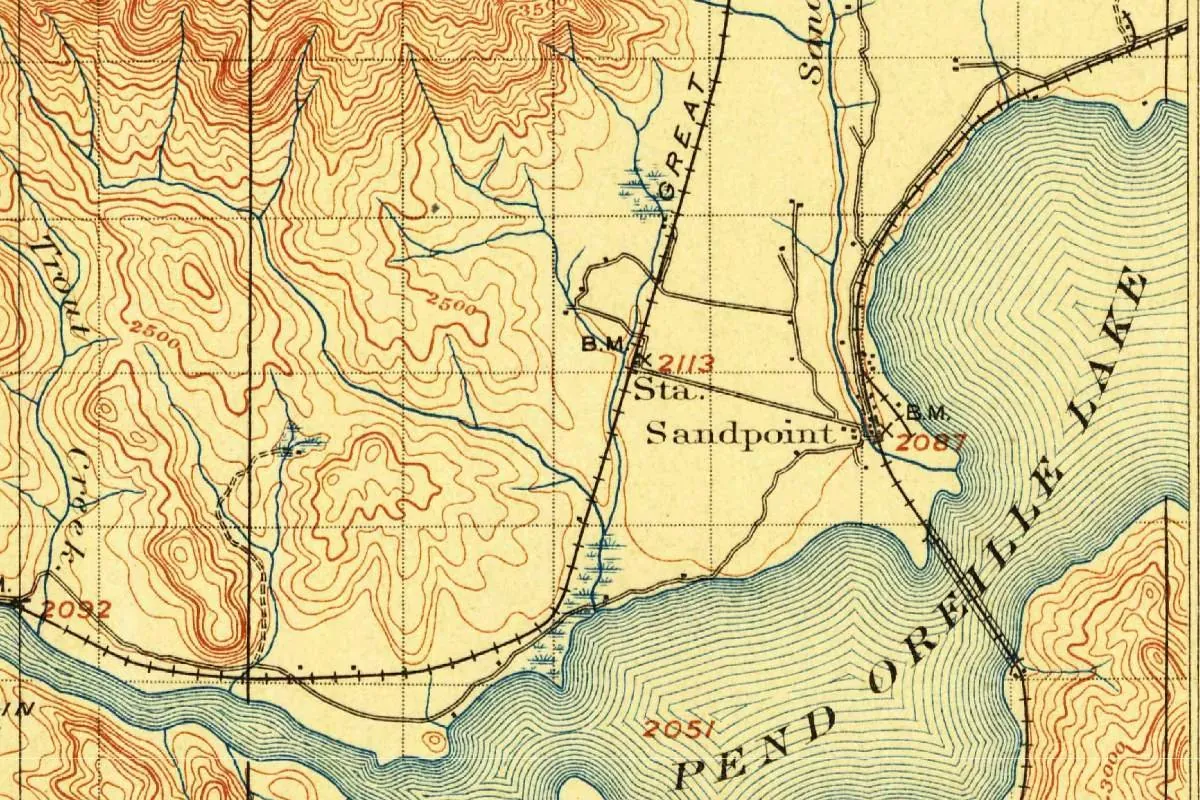
The map at the top of this page comes from the Geological Survey’s Sandpoint quadrangle at 1:125,000, “Edition of May 1901,” engraved in April of that year. The margin, which labels the sheet “IDAHO (KOOTENAI CO),” credits R. U. Goode as geographer in charge, triangulation by E. T. Perkins and topography by D. C. Harrison, “Surveyed in 1898-99.” On the full sheet, Sandpoint sits near the right edge, a little above the middle, at the northwest end of the lake.
In this detail, you’ll find Sandpoint lettered in small type beside a handful of buildings, with “Sta.” for the station. Railroad lines run past it, and the words PEND OREILLE LAKE cross the water. At the top edge, a creek name is cut off after “Sand.” The contour lines are drawn every 100 feet (30 m).
Quick answers
Where does the name Sandpoint come from?
From sand, but the sources differ. The local historian Bob Gunter points to a “point of sand” David Thompson described in 1809; a 1973 National Register nomination says the Northern Pacific gathered sand there.
What was Sandpoint called before?
Pend Oreille. A 1903 history says the station and post office carried that name before they became Sandpoint.
When did Sandpoint get its name?
No year is on record. The 1903 history says the change came about the time Emma L. Weeks became postmistress, and the town was incorporated in 1900 or 1901, depending on the source.
Key dates
- 1809Fur trappers working for David Thompson of the North West Company build a trading post on the Hope peninsula of Lake Pend Oreille.
- 1880Robert Weeks opens a general store, and the Northern Pacific's survey runs through the area.
- 1900Sandpoint is incorporated, by the 1903 history's account.
- 1901The first municipal election is held, and the Geological Survey issues its Sandpoint sheet.
- 1916The Northern Pacific builds its brick Gothic Revival depot in Sandpoint.
- 1973The depot's National Register nomination credits the Northern Pacific with the town's name.
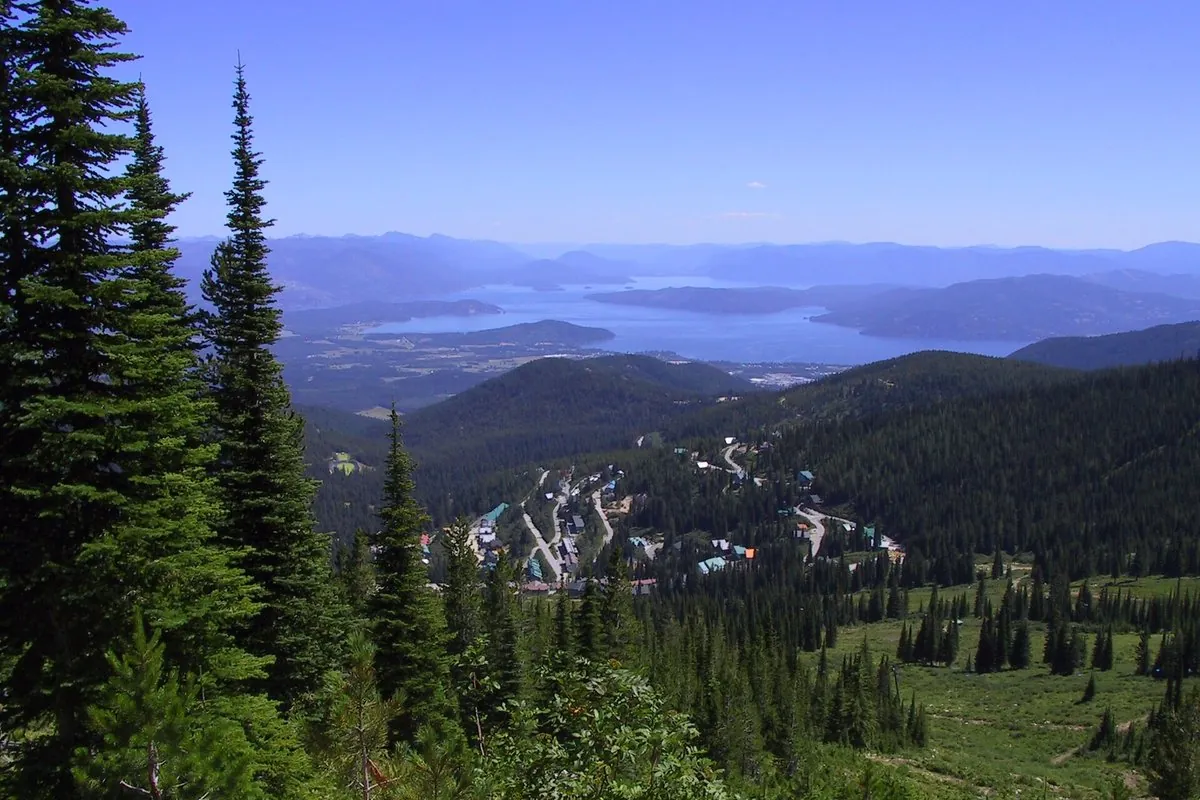
Things to do in Sandpoint, Idaho
Bonner County History Museum
The county museum in Lakeview Park, in view of Lake Pend Oreille, with a big yellow caboose on the lawn. Exhibits cover the ice age floods, the Kalispel and Kootenai people, the fur trade and the town's growth from a handful of buildings by the tracks into a resort town.
Walking Tour of Historic Downtown Sandpoint
The historical society's guided walk through downtown, stopping at the families and businesses that shaped the early town.
Cedar Street Bridge
A marketplace built over Sand Creek in downtown Sandpoint, the creek whose mouth the sandy-point story is about.
Sandpoint depot
The red-brick Gothic Revival station the Northern Pacific built in 1916. Great American Stations calls it the oldest former Northern Pacific depot still in active use in Idaho.
Getting there
Open Sandpoint in Google Maps
Opens in a new tab. The pin is the center of Sandpoint in the USGS place-name record.
The closest airports, Amtrak stations and intercity bus stops, measured in a straight line from the center of Sandpoint.
Airports
- Spokane International (GEG) 64 mi 103 km
- Glacier Park International (GPI) Kalispell 106 mi 170 km
Amtrak trains
- Sandpoint station (SPT) under 1 mi 0.6 km
- Libby station (LIB) 47 mi 75 km
Intercity buses
- Jefferson Lines Coeur D Alene 41 mi 66 km
- Gold Line Travel Washington · Deer Park 48 mi 78 km
- Northwestern Stage Lines Spokane 59 mi 94 km
Distances are as the crow flies, not by road. We don't list schedules or fares because they change; check with the airline, Amtrak or the bus company before you go. Official data (FAA commercial service airports (2025), FAA airport locations, Amtrak stations and Intercity Bus Atlas) from the FAA and the U.S. Bureau of Transportation Statistics, checked Nov 18, 2026.
Sponsored
Staying in Sandpoint?
Compare hotels in Sandpoint, Idaho, on Expedia.
See hotels in SandpointWe may earn a commission if you buy through this link. It never changes what we write. Read our affiliate disclosure
Historical Sources & References
- Bob Gunter, “History – What’s In A Name?”. Thompson’s “point of sand,” the post office moved from Venton, the early name Pend Oreille, Emma Weeks, and Sandpoint as county seat.
- “Sandpoint History,” from Sandpoint Magazine (2001). The trading post on the Hope peninsula in 1809 and Thompson’s “pointe of sand.”
- Arthur A. Hart, National Register nomination, Sandpoint Burlington Northern Railway Station (1973). The Northern Pacific as the town’s developer and the sand collected on its main line.
- An Illustrated History of North Idaho (1903), pp. 792-793. Weeks’s store, the name Pend Oreille, Venton, the change to Sandpoint, and incorporation in 1900. Checked against the page image.
- Bonner County History Museum, its walking tour, Cedar Street Bridge and Great American Stations. The places listed above, and the date of the depot.
- Sandpoint’s GNIS entry, feature 398095 (U.S. Geological Survey). The city’s listing as a populated place in Bonner County, with its coordinates.
- U.S. Geological Survey, Sandpoint quadrangle (May 1901). The 1:125,000 sheet the map at the top was cropped from.
Sponsored
Put this 1901 map on your wall
The Geological Survey's 1901 Sandpoint sheet, surveyed in 1898-99, when the lake town still sat in Kootenai County, is in the public domain. Download the full-size scan for free, then have it printed on canvas with CanvasOnTheCheap.
Print a map on canvasDownload the full-size mapWe may earn a commission if you buy through this link. It never changes what we write. Read our affiliate disclosure
Spot something wrong, or know more? Tell us here. You can also email us or use our contact page. Corrections are noted here with their date, never made silently.