Gary, Indiana: A Steel City Named for Its Company's Chairman
Gary is named for Elbert H. Gary, chairman of the board of the United States Steel Corporation. The company began laying out its mill, harbor and railroad on the Lake Michigan shore on March 12, 1906, built the town alongside it through a land subsidiary, and named both the steelworks and the city for him.
A mill, a harbor and a city, all at once
Gary, Indiana, carries the name of U.S. Steel’s chairman, Elbert H. Gary, because his company built a steel mill and a city together on the dunes in 1906. Most towns grow first and get a name later. This one had its name, its street plan and its biggest employer before most of its people showed up.
The Indiana Historical Bureau dates the start to March 12, 1906, when U.S. Steel engineers began laying out a mill, harbor and railroad on the south shore of Lake Michigan, “effectively establishing the city of Gary.” Steve McShane, curator of the Calumet Regional Archives at Indiana University Northwest, adds that the crews went out that day through a snowstorm, led by Ralph E. Rowley.
The decision had come a year earlier. In 1905, McShane writes, Gary himself announced that the corporation would build “a new plant to be located on the south shore of Lake Michigan, in Calumet Township, Lake County, Indiana.” The company’s lawyer, Armanis F. Knotts, quietly bought up about 9,000 acres along 7 miles (11 km) of shoreline. The 1911 Encyclopaedia Britannica described the tract as “mainly of sand dunes and swamps.”
Elbert H. Gary, chairman of the board
So who was the man on the sign? The sources here don’t spend much time on his life, but they agree on his job. In 1901, McShane writes, J. P. Morgan financed the new United States Steel Corporation and Gary directed it, pulling the Carnegie interests and other steel companies into one firm. By the time the Indiana site was chosen, he was chairman of the board.
The Britannica, writing when the city was only a few years old, put the naming in one plain sentence:
“The city was chartered in 1906 and was named in honour of Elbert Henry Gary (b. 1846), chairman of the board of directors and chairman of the finance committee of the United States Steel Corporation.”
The Indiana Historical Bureau says the same thing today, and so does the university’s archive: after much discussion, McShane writes, “the Corporation settled on a northwest Indiana site in the Calumet Region and named it after Judge Gary.” The choice came from the company that owned the land, and you won’t find a rival version in any of the sources on this page.
The mill and the town got the same name
Here’s a detail that’s easy to get backward. The steelworks wasn’t named after a town that already existed, and the town wasn’t named after the mill. Indiana University’s project description for its U.S. Steel photograph collection says it directly: “Both the steel mill and the town were named for Judge Elbert H. Gary, Chairman of the Board of U.S. Steel.”
They were built side by side. U.S. Steel formed a subsidiary, the Indiana Steel Company, to build Gary Works, and another, the Gary Land Company, to design the city. The site needed heavy work first. The engineers moved the Grand Calumet River, which ended up as a “moat” between the mill and the town, and rerouted three major rail lines, McShane writes. Over twelve million cubic yards (about 9 million cubic meters) of sand were removed, and a harbor a mile (1.6 km) long was dug between two piers. The Britannica says the Steel Corporation started on the town in June 1906, beginning with sewers and with mains for water, gas and electricity. In June 1906, before mill construction began, the land company counted 334 people in the area, according to the university’s proposal.
The land company’s president, Eugene J. Buffington, didn’t oversell it. “Gary is nothing more than the product of effort along practical lines to secure the right living conditions around a steel manufacturing plant,” he said, as McShane quotes him.
An ore boat called the Elbert H. Gary
The chairman’s name didn’t stop at the city limits. On July 23, 1908, just over two years after the snowy survey, “the ore boat Elbert H. Gary entered Gary Works harbor with the first load of iron ore,” McShane writes. In December the first blast furnace started, and in February 1909 the mill tapped its first steel.
So the first shipload of ore for the steel mill named Gary, in the city named Gary, arrived on a boat named Gary.
Two Garys from the beginning
The company’s plan covered only part of the city. McShane describes the First Subdivision, about 800 acres on corporation land south of the mill, with paved streets, brick and stone business blocks along Broadway and 5th Avenue, and houses for skilled workers and foremen. Local boosters called it the “Magic City.”
South of that, on land the company didn’t control, grew what people called “The Patch,” with shacks, saloons and crowded boardinghouses. By 1920, McShane says, 52 nationalities lived in Gary, along with many African American migrants from the South and Mexican workers.
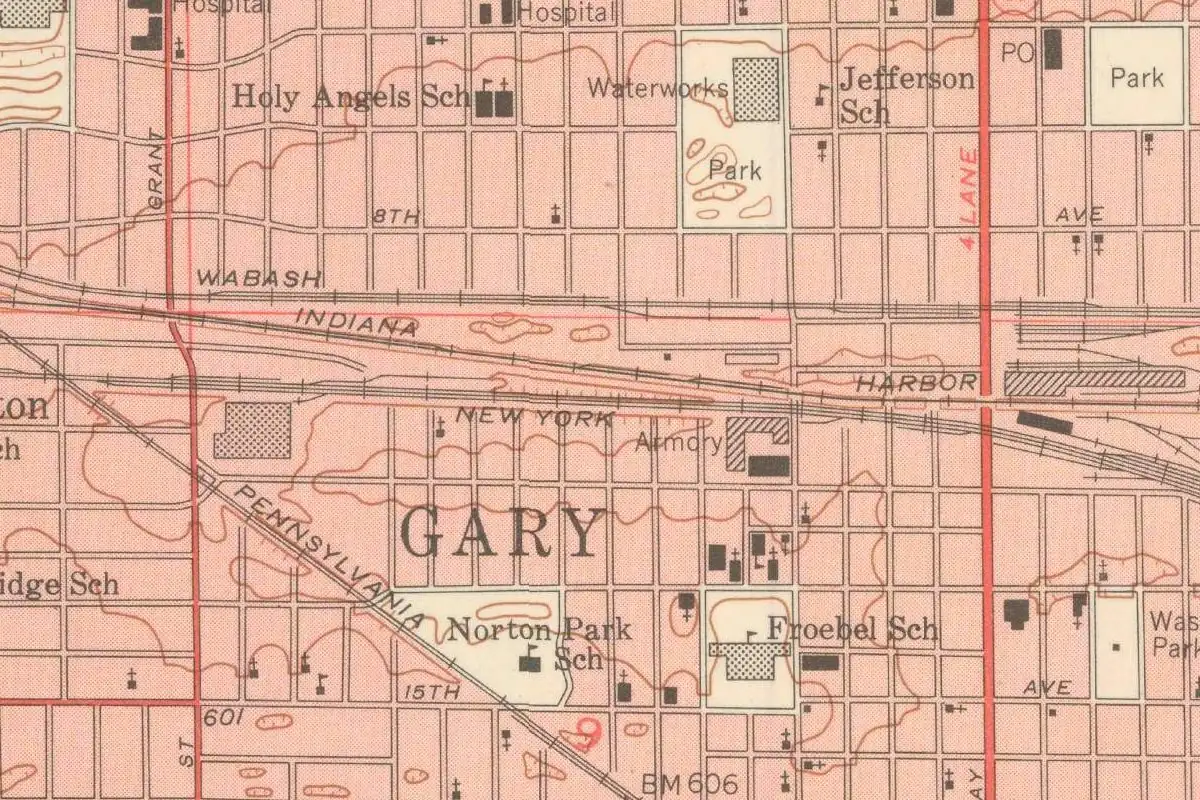
The Britannica put Gary about 25 miles (40 km) southeast of Chicago and counted 16,802 people there in 1910, and it listed seven railways serving the new city. On the 1953 map at the top of this page, you can see two of them, the Wabash and the Pennsylvania, still cutting straight across town.
A town named from the top
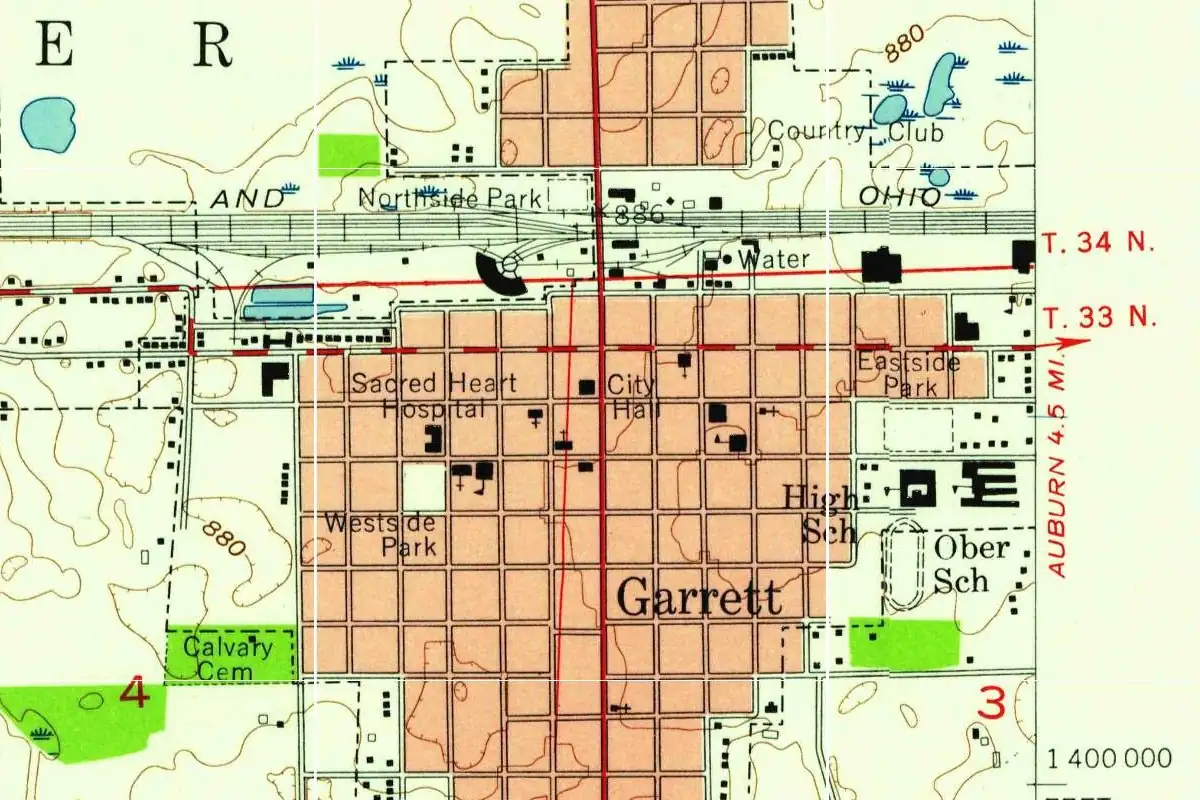
Elsewhere in Indiana, Garrett, in DeKalb County, carries the name of a Baltimore & Ohio Railroad president. Gary’s name was settled while the mill site was still dunes and swamp, and the man it honored was the chairman of the company that drew the streets.
Quick answers
Who is Gary, Indiana, named after?
Elbert H. Gary, chairman of the board of the United States Steel Corporation. The 1911 Britannica says the city was chartered in 1906 and named in his honor.
Who chose the name Gary?
U.S. Steel. The corporation picked the site on Lake Michigan and “named it after Judge Gary,” according to the Calumet Regional Archives. No town vote or local naming record shows up in the sources.
Was the city named after the Gary Works mill?
No. Indiana University’s archive says the mill and the town were both named for Elbert H. Gary at the same time, as U.S. Steel built them side by side.
When was Gary founded?
In 1906. U.S. Steel engineers began laying out the mill, harbor and railroad on March 12, 1906, and the company started building the town that June.
Key dates
- 1906On March 12, U.S. Steel engineers begin laying out the mill, harbor and railroad yards on the Lake Michigan shore.
- 1906The Steel Corporation starts building the town in June; the city is chartered and named for Elbert H. Gary.
- 1908On July 23, the ore boat Elbert H. Gary brings the first load of iron ore into the Gary Works harbor.
- 1910The census counts 16,802 people in Gary.
Things to do in Gary, Indiana
Marquette Park
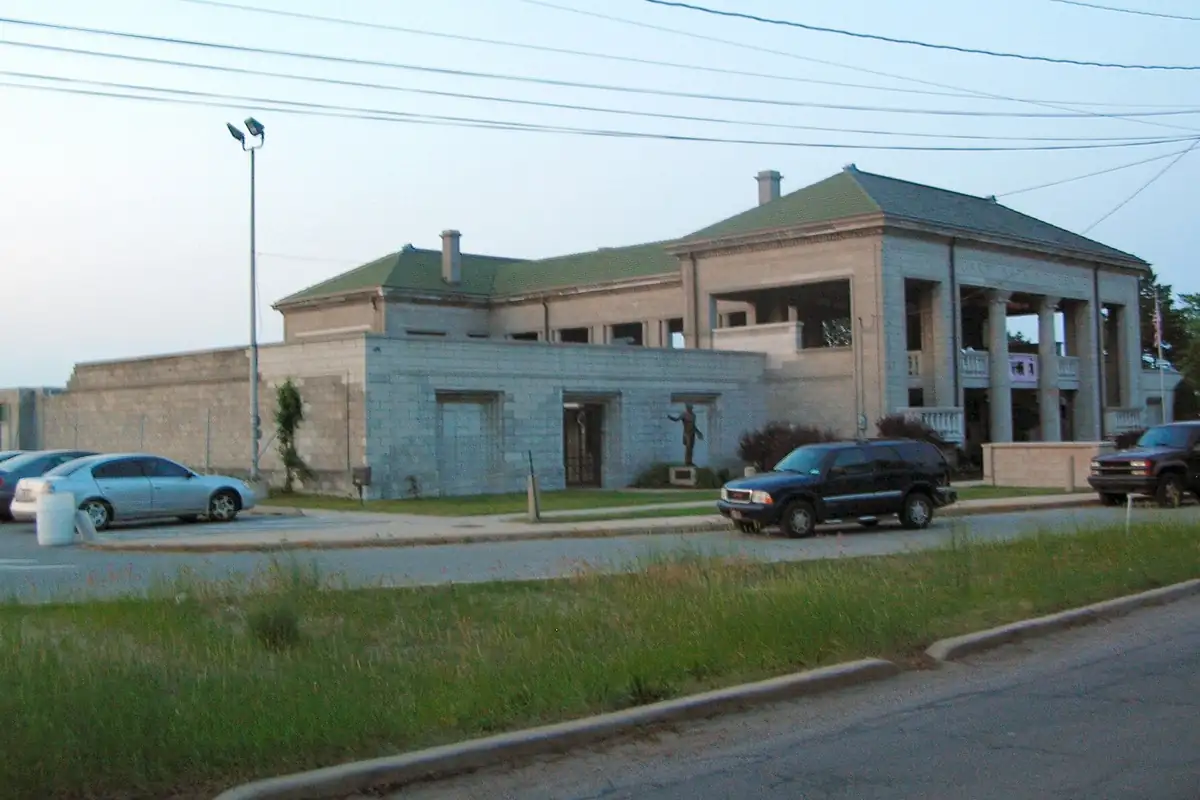
Lakefront park on land U.S. Steel bought and donated to the city, later renamed for Pere Jacques Marquette. Its pavilion was designed by the office of George W. Maher.
Gary Bathing Beach Aquatorium
The city's old bathhouse, opened in 1922 and rescued from demolition in 1991 by the Chanute Aquatorium Society, now a memorial to Octave Chanute, who flew a glider from a nearby dune in 1896, and to the Tuskegee Airmen.
Paul H. Douglas Center for Environmental Education
Indiana Dunes National Park's environmental education hub in Gary, with hands-on exhibits, ranger-guided hikes, live animals and a Nature Play Zone.
Paul H. Douglas Trail (Miller Woods)
A trail from North Lake Street through wetlands, globally rare black oak savanna, open dunes and beach, with views of Lake Michigan and lupine in the savanna.
Getting there
Open Gary in Google Maps
Opens in a new tab. The pin is the center of Gary in the USGS place-name record.
The closest airports, Amtrak stations and intercity bus stops, measured in a straight line from the center of Gary.
Airports
- Chicago Midway International (MDW) 25 mi 40 km
- Chicago O'Hare International (ORD) 39 mi 63 km
Amtrak trains
- Dyer station (DYE) 10 mi 17 km
- Hammond-Whiting station (HMI) 11 mi 17 km
Intercity buses
- FlixBus Gary IN (GRY) under 1 mi 1 km
- Barons Bus Lines Gary under 1 mi 1 km
- Amtrak Chartered Vehicle Amtrak Connecting Service · Hammond-Whiting Amtrak Station 11 mi 17 km
Distances are as the crow flies, not by road. We don't list schedules or fares because they change; check with the airline, Amtrak or the bus company before you go. Official data (FAA commercial service airports (2025), FAA airport locations, Amtrak stations and Intercity Bus Atlas) from the FAA and the U.S. Bureau of Transportation Statistics, checked Nov 14, 2026.
Sponsored
Staying in Gary?
Compare hotels in Gary, Indiana, on Expedia.
See hotels in GaryWe may earn a commission if you buy through this link. It never changes what we write. Read our affiliate disclosure
Historical Sources & References
- Encyclopaedia Britannica, 11th ed., vol. 11 (1910), “Gary,” pp. 480-481. The quoted naming sentence; the city “chartered in 1906”; the tract of “sand dunes and swamps”; town building from June 1906, starting with sewers and utility mains; the seven railways, among them the Wabash and the Pennsylvania; about 25 miles southeast of Chicago; 16,802 people in 1910.
- Indiana Historical Bureau, Indiana Almanac, March 12. The March 12, 1906, survey of the mill, harbor and railroad, and the naming for board chairman Elbert H. Gary.
- Steve McShane, “The Magic City of Steel,” Calumet Regional Archives. Gary’s 1905 announcement; the formation of U.S. Steel in 1901; the site “named it after Judge Gary”; Knotts’s purchases of 9,000 acres along seven miles of shore; the snowstorm and Ralph E. Rowley; the Indiana Steel Company and the Gary Land Company; Buffington’s quote; the ore boat Elbert H. Gary on July 23, 1908, and the first iron and steel; the First Subdivision, the “Magic City” and “The Patch”; 52 nationalities by 1920.
- Indiana University Digital Library Program, “Steelmaker-Steeltown”. “Both the steel mill and the town were named for Judge Elbert H. Gary”; the land development company; 334 people counted in June 1906.
- GNIS feature 434979 (U.S. Geological Survey). The national names database lists Gary as a populated place in Lake County.
- U.S. Geological Survey, Gary sheet (1953). The 1:24,000 quadrangle the map at the top of this page was cropped from.
Spot something wrong, or know more? Tell us here. You can also email us or use our contact page. Corrections are noted here with their date, never made silently.