Why Is It Called Cedar Rapids, Iowa? The River's Rapids
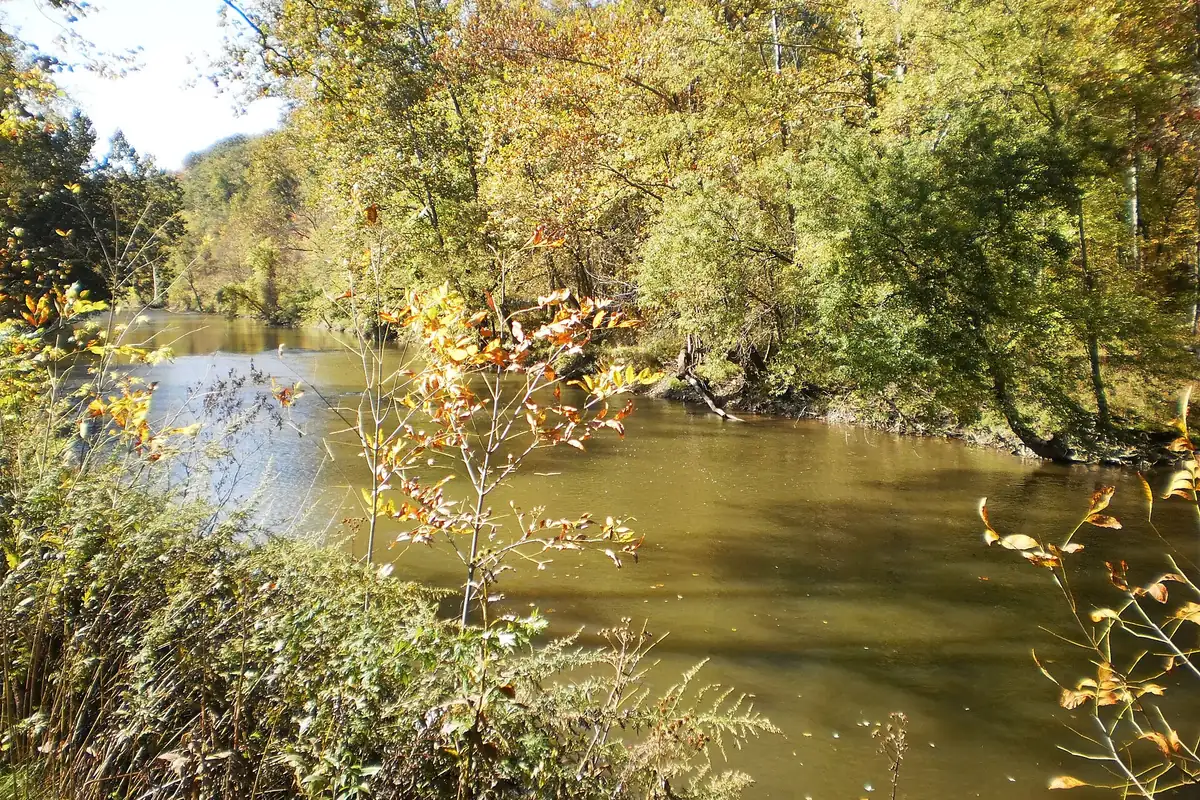
Cedar Rapids, Iowa, is named for the Cedar River and the rapids in it where the town was laid out. Surveyed as Rapids City in 1841, it was incorporated by the state as the town of Cedar Rapids on January 15, 1849. A 1911 Linn County history says rock in the riverbed formed the rapids.
Rapids first, the river second
Cedar Rapids, Iowa, was surveyed in 1841 as Rapids City, and by 1849 it also carried the name of the river those rapids were in, the Cedar. A Linn County history from 1911 puts it simply: the town took “its name from the name of the river and the rapids which are formed here by the rock foundations in the river bed.”
That history, by Luther A. Brewer and Barthinius L. Wick, says the place wasn’t much of a town when settlers first showed up in the late 1830s. What drew them was that you could ford the river there, the banks had plenty of timber, and trappers passed through. The man who saw more in it was N. B. Brown, a trained miller. He looked at the rapids and saw a dam, and a dam meant power for sawmills and gristmills.
Rapids City on the surveyor’s books
Brown and his partners bought out a squatter named Osgood Shepherd and set to work. On July 4, 1841, Brown started building a dam. A month later the surveying began, and Brewer and Wick printed the entry from Brown’s old account book:
“August 4, 1841. Commenced surveying ‘Rapids City.’”
The two historians add that the town was “first named by Brown.” A survey written for the city in 1997 lists the seven men behind the plat on the east bank: Nicholas Brown, Addison Daniels, Hosea Gray, George Greene, A. L. Roach, J. E. Sanford and S. H. Tryon. If you want an even older name, Brewer and Wick offer one, carefully: “It would seem that Cedar Rapids was first called Columbus, next Rapids City, and finally Cedar Rapids.” That “it would seem” is theirs, and no date comes with the Columbus part.
Where the Cedar comes in
Rapids City described the water. Cedar Rapids pinned it to a particular river. Gannett’s 1905 USGS bulletin on place-name origins has no entry for the city, but it does have one for the river under its older name, the Red Cedar, “so named from the abundance of cedar trees which formerly grew along its banks.” So the first half of the city’s name goes back, by way of the river, to trees.
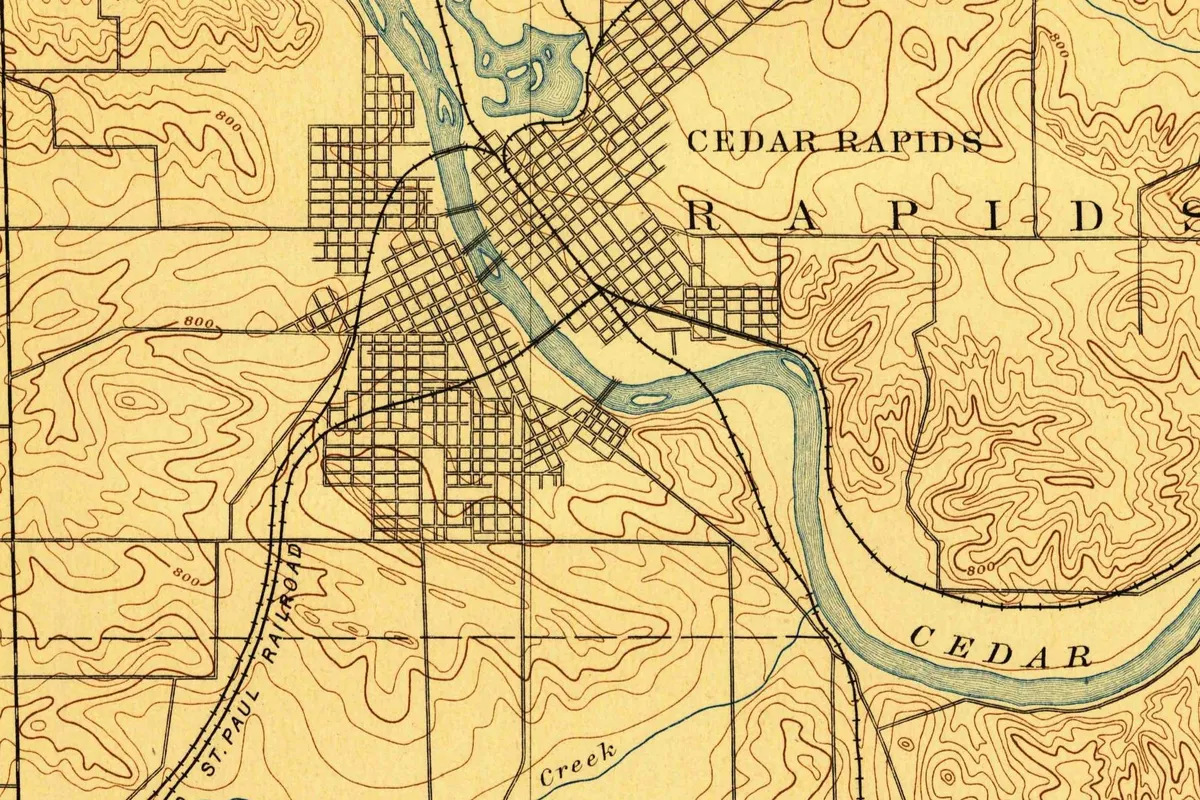
The second half is about rock. The rapids gave the town its first name and its first industry, and the 1887 map at the top of this page shows what had grown up around them by then: streets on both banks, bridges across the river, and islands just upstream.
The 1849 law that settled it
By the end of the 1840s the town had about 300 people, the 1997 survey says, and it was incorporated on January 15, 1849, “and given a new name - ‘Cedar Rapids.’” Brewer and Wick printed the act itself, approved that day by Ansel Briggs, the first governor of Iowa. Its first section says the town, “as surveyed and recorded” in Linn County, “shall hereafter be known by the name of the town of Cedar Rapids.”
Notice that the law already calls it the town of Cedar Rapids before it gets around to naming it. The new name was likely in use a little earlier. A section of Brewer and Wick’s book on the Cedar Rapids post office says that office was established in 1847. Still, you won’t find an exact day when people stopped saying Rapids City, and the 1849 act is the firm date.
Kingston, and a date that went astray
Across the river, David W. King ran a ferry and laid out a separate town on the west bank. The 1997 survey says he platted it as Kingston in 1852, and that Kingston stayed its own unincorporated village until Cedar Rapids annexed it in 1870. After that, people called that side West Cedar Rapids. Cedar Rapids itself had become a city in 1856.
You may run into a different version. A 2023 plan for downtown Cedar Rapids says Rapids City was renamed Cedar Rapids after it consolidated with Kingston. That mixes up two separate events. The town was already Cedar Rapids by law in 1849, more than 20 years before Kingston joined it.
So the name is about as literal as names get. Brown came for the waterpower, and the water he dammed is right there in the name, along with a river that took its own name from cedar trees that, as Gannett put it, “formerly grew along its banks.”
Quick answers
Why is it called Cedar Rapids?
For the Cedar River and its rapids. A 1911 Linn County history says the town took “its name from the name of the river and the rapids which are formed here by the rock foundations in the river bed.”
What was Cedar Rapids called before?
Rapids City. Surveying of “Rapids City” began on August 4, 1841, according to N. B. Brown’s account book. The 1911 history adds that the town “would seem” to have been called Columbus even earlier.
Is Cedar Rapids named after cedar trees?
Only by way of the river. Gannett’s 1905 guide says the Red Cedar River was named for the cedar trees that once grew along its banks, and the city is named for the river.
When did Rapids City become Cedar Rapids?
No later than January 15, 1849, when the state incorporated “the town of Cedar Rapids.” The annexation of Kingston in 1870 was a separate, later event.
Key dates
- 1841July 4: N. B. Brown starts building a dam across the Cedar River to power mills.
- 1841August 4: surveying begins on the new town of Rapids City, on the east bank of the Cedar.
- 1847The town's post office is established, with Joseph Greene as postmaster.
- 1849January 15: Gov. Ansel Briggs approves the act incorporating the town of Cedar Rapids.
- 1852David King plats Kingston on the west bank, across the river from Cedar Rapids.
- 1856Cedar Rapids is incorporated as a city.
- 1870Cedar Rapids annexes Kingston, which becomes known as West Cedar Rapids.
Getting there
Open Cedar Rapids in Google Maps
Opens in a new tab. The pin is the center of Cedar Rapids in the USGS place-name record.
The closest airports, Amtrak stations and intercity bus stops, measured in a straight line from the center of Cedar Rapids.
Airports
- The Eastern Iowa (CID) Cedar Rapids 9 mi 15 km
- Waterloo Regional (ALO) 54 mi 87 km
Amtrak trains
- Cedar Rapids station (CRI) 1 mi 2 km
- Iowa City station (IAC) 25 mi 40 km
Intercity buses
- Jefferson Lines Cedar Rapids (JL - Lindale Mall) 1 mi 2 km
- Greyhound Lindale Mall Bus Stop 2 mi 3 km
Distances are as the crow flies, not by road. We don't list schedules or fares because they change; check with the airline, Amtrak or the bus company before you go. Official data (FAA commercial service airports (2025), FAA airport locations, Amtrak stations and Intercity Bus Atlas) from the FAA and the U.S. Bureau of Transportation Statistics, checked Nov 13, 2026.
Sponsored
Staying in Cedar Rapids?
Compare hotels in Cedar Rapids, Iowa, on Expedia.
See hotels in Cedar RapidsWe may earn a commission if you buy through this link. It never changes what we write. Read our affiliate disclosure
Historical Sources & References
- Luther A. Brewer and Barthinius L. Wick, History of Linn County Iowa, vol. 1 (1911). N. B. Brown as a miller who saw the value of the rapids; the purchase from Osgood Shepherd; Brown’s account-book entry “Commenced surveying ‘Rapids City’” (p. 308); the name taken “from the name of the river and the rapids” and the possible earlier name Columbus (p. 309); the dam begun July 4, 1841 (p. 315); the text of the act of January 15, 1849 (pp. 353-354); the post office of 1847 (p. 84); and David W. King’s Kingston.
- Henry Gannett, The Origin of Certain Place Names in the United States (USGS, 1905), p. 259. The Red Cedar River in Iowa, “so named from the abundance of cedar trees which formerly grew along its banks.”
- Marlys A. Svendsen, survey of the Cedar Rapids central business district and industrial corridors (1997), p. 2. The seven founders and the 1841 plat of Rapids City, about 300 residents by 1849, incorporation and the new name on January 15, 1849, Kingston platted in 1852 and annexed in 1870, and the 1856 charter.
- Cedar Rapids Downtown Vision & Action Plan 2023. The version that ties the new name to the consolidation with Kingston, which the 1849 act contradicts.
- GNIS feature 465941 (U.S. Geological Survey). Lists Cedar Rapids under Linn County; the latitude and longitude here match it.
- U.S. Geological Survey, Cedar Rapids sheet (1887). The source of the map at the top of this page.
Spot something wrong, or know more? Tell us here. You can also email us or use our contact page. Corrections are noted here with their date, never made silently.