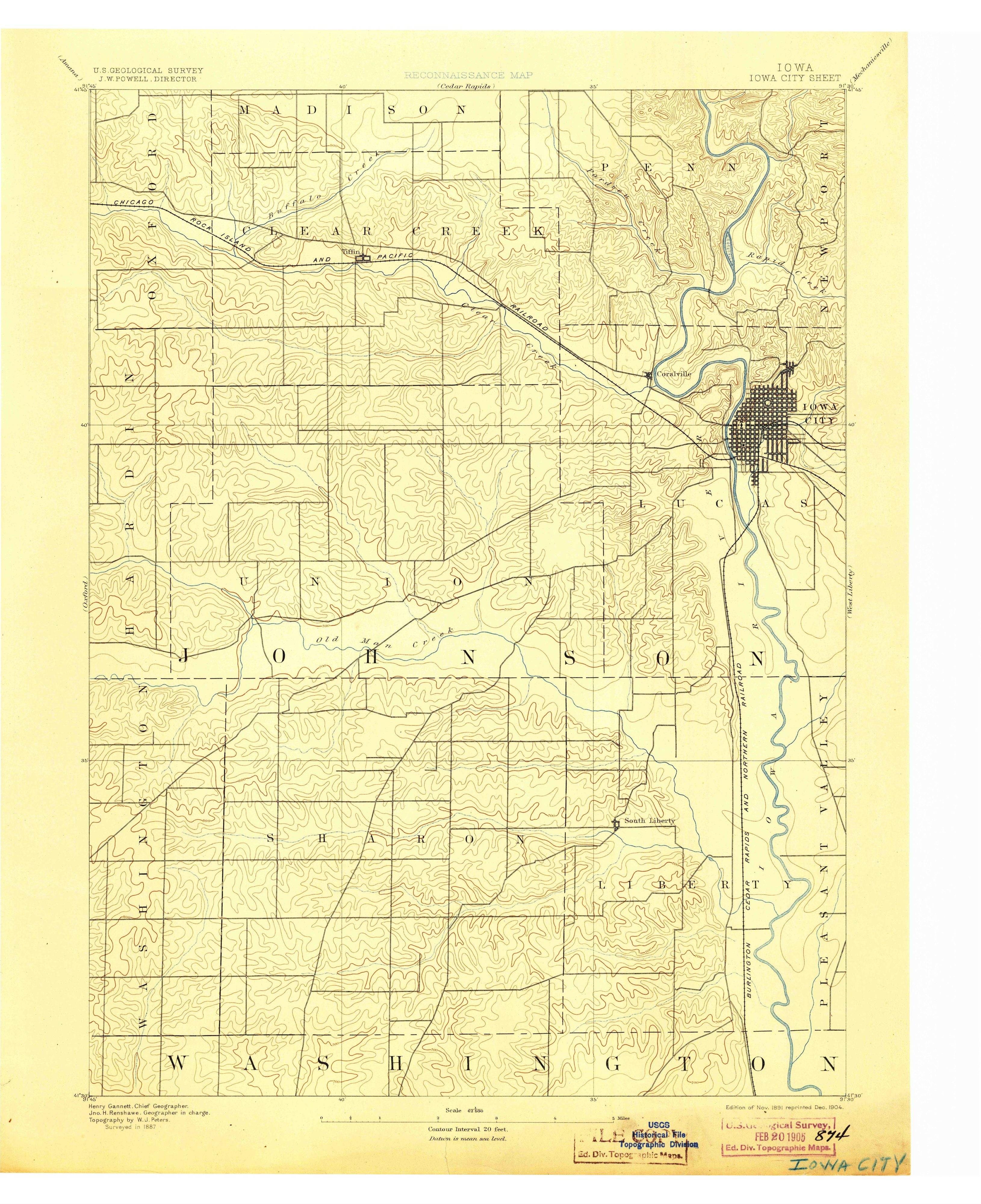
How Iowa City Got Its Name Before It Was Laid Out
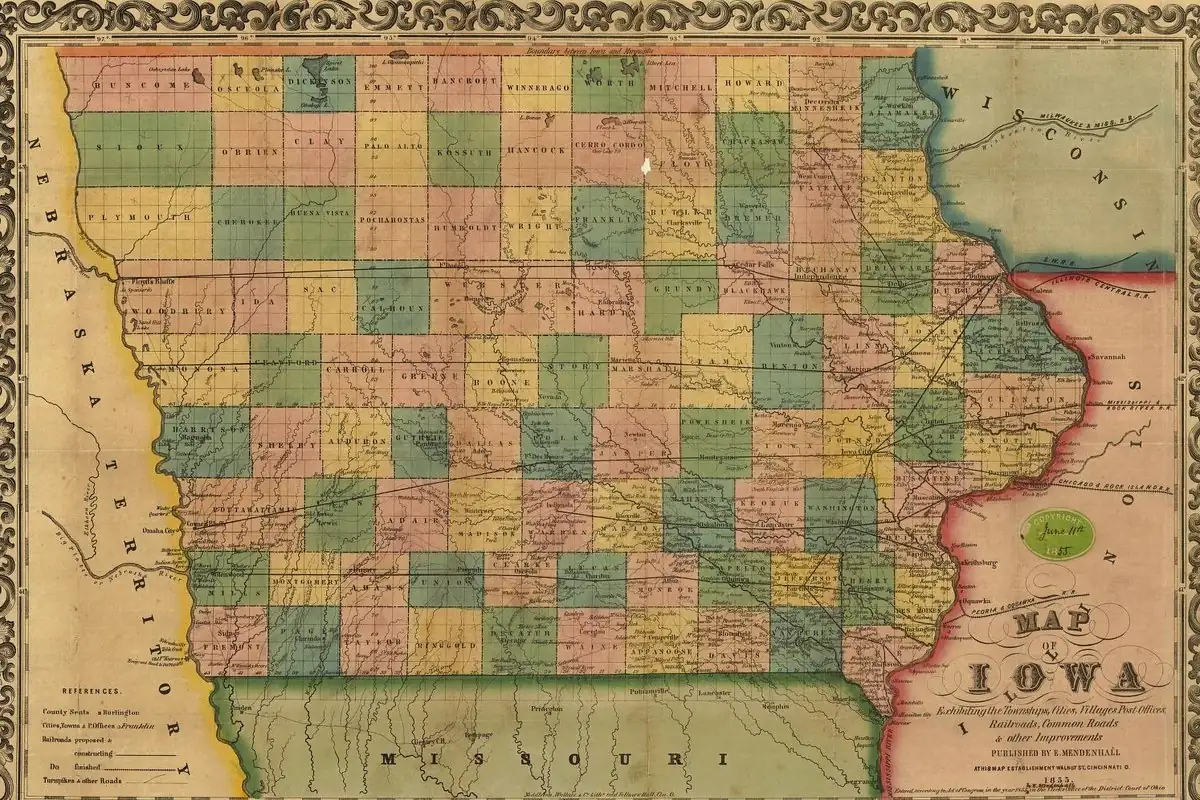
Iowa City was named by law. In January 1839 the first Legislative Assembly of Iowa Territory ordered commissioners to pick a capital site in Johnson County and lay out a town "to be called 'Iowa City.'" On May 4, 1839, they marked the spot with a post reading "Seat of Government, City of Iowa," according to Benjamin Shambaugh's 1893 history.
A capital named by law
Iowa City, Iowa, had its name before it had a single street: the territorial legislature ordered in 1839 that its new capital be called Iowa City. The town wasn’t named for a founder, a river or a landmark. It was named for the job it was built to do, which was to be the seat of government of the Territory of Iowa.
That’s the story Benjamin F. Shambaugh laid out in 1893, in a history of the town published by the State Historical Society of Iowa. Iowa had become its own territory on July 3, 1838, with a temporary capital at Burlington. In January 1839, the first Legislative Assembly appointed three commissioners to find a site inside Johnson County, and, as Shambaugh puts it, “At the place thus selected the commissioners were ordered to found a town to be called Iowa City.”
So the name came first. The place came second.
Two laws and three commissioners
The founding act, approved January 21, 1839, told the commissioners to meet on the first of May at the town of Napoleon, pick “the most eligible point” in Johnson County, lay out 640 acres in lots, streets and squares, and have the town platted. Burlington would host the legislature until the new buildings were ready.
A supplementary act spelled out the name. Once the site was chosen and the United States agreed, the commissioners were to “proceed to lay out a town to be called ‘Iowa City.’” The same act named the three men for the job: Chauncey Swan, John Ronalds and Robert Ralston.
The territory also asked Washington for land. Congress answered with an act approved March 3, 1839, but it gave one section instead of the four the territory wanted. Meanwhile, the settlers already farming in Johnson County were nervous. Each one, Shambaugh says, hoped the capital would land near his claim and feared it would land right on top of it, since none of them had any rights to the land that the government was bound to respect.
As for the word Iowa itself, that’s a separate story, and it’s older than the town. You can read it on our Iowa page.
The ride to Napoleon
The commissioners nearly didn’t make it. On the morning of May 1, 1839, a crowd of settlers gathered at Napoleon to wait for them. Shambaugh says Burlington and the southeastern counties were bitterly against putting the capital in Johnson County, and some people believed there’d been an attempt to keep a majority of commissioners from showing up. By noon, only Swan, of Dubuque County, had arrived. If a majority didn’t meet that day, the law said, their actions would be void.
It is said, Shambaugh writes, that Swan climbed onto a dry-goods box and asked for a volunteer to bring in another commissioner before midnight. The nearest one, Ronalds, lived 35 miles (56 km) away in Louisa County, so the round trip was about 70 miles (113 km), including crossings of the Cedar River. A young man named Philip Clark said he’d go.
Henry Felkner, who was in the crowd, remembered Swan checking his watch again and again as the night wore on. When the riders finally pulled up and walked in, Felkner said, it was “just five minutes to twelve o’clock.” The oath was signed and dated May 1.
Shambaugh wasn’t entirely convinced. Somebody who was there hinted that Swan’s watch had been turned back, “for it was noticed that from midnight to sunrise were the shortest six hours on record.” Shambaugh thought that wasn’t improbable, since he found it hard to see how anyone covered 70 miles (113 km) on horseback in 12 hours over the roads of the time.
A post in the ground
Starting on May 2, Swan and Ronalds looked over the county. On May 4, 1839, they settled on a spot in Section Ten of Township 79 North, Range 6 West, and drove a post or slab into the ground about where the old Capitol stood in Shambaugh’s day. He printed its inscription:
“SEAT OF GOVERNMENT, CITY OF IOWA. May 4th, 1839.”
The law said Iowa City; the post said City of Iowa. Either way, it described a capital, not a town that already existed. Ralston, the commissioner who’d missed the May 1 meeting, showed up on May 6 and signed off on what the other two had done. The next day Swan was made acting commissioner, in charge of the work on the ground.
Ralston got his own name on the map, too. The little stream that drained the town site became Ralston Creek, which Shambaugh says was “Named in honor of Robert Ralston, one of the three commissioners.”
From capital to college town
Construction moved fast. By July 4, 1840, the contractors were ready to lay the Capitol’s cornerstone, and Gov. Robert Lucas came up from Burlington to give the speech. Shambaugh describes a barbecue in the city park, booming guns and cheers for “Iowa” and her “Capitol.”
From 1839 to 1857, Shambaugh writes, Iowa City was the capital and “the nerve-center of Iowa politics.” Then, in 1857, the capital moved for good to Des Moines. The town kept the name anyway, even after the job it described had gone west.
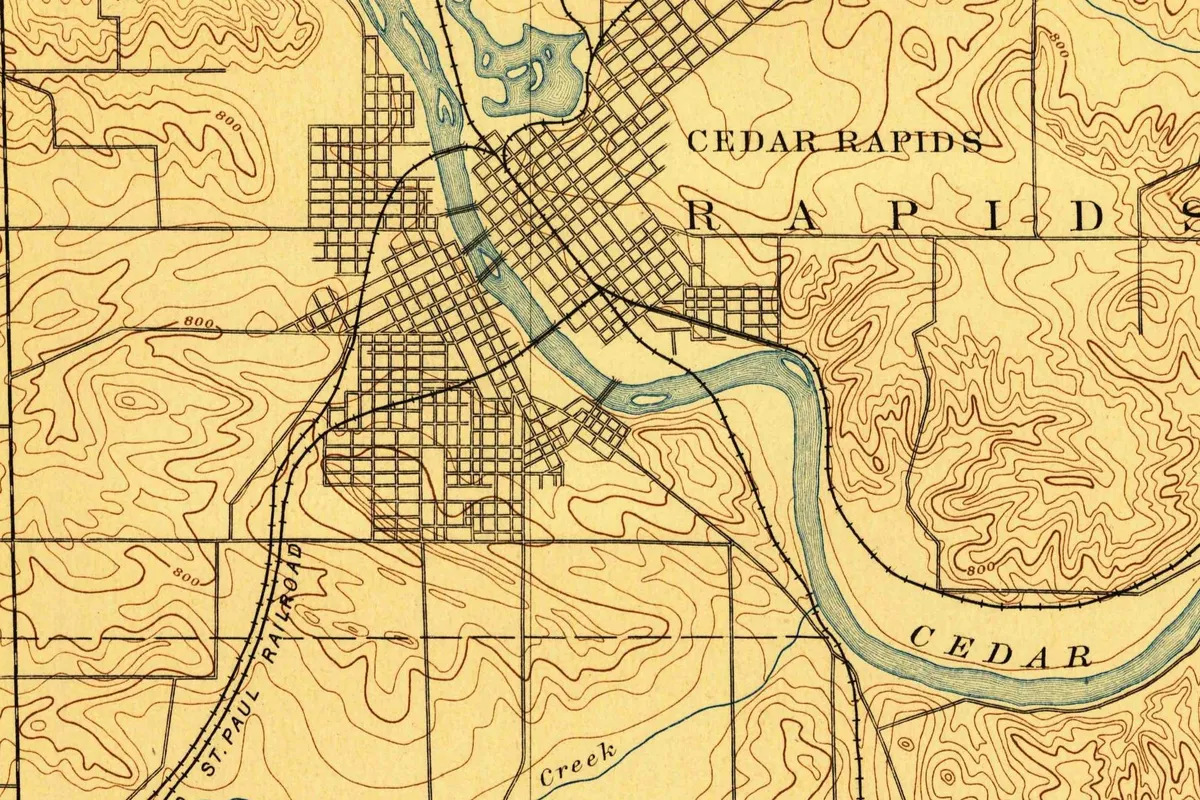
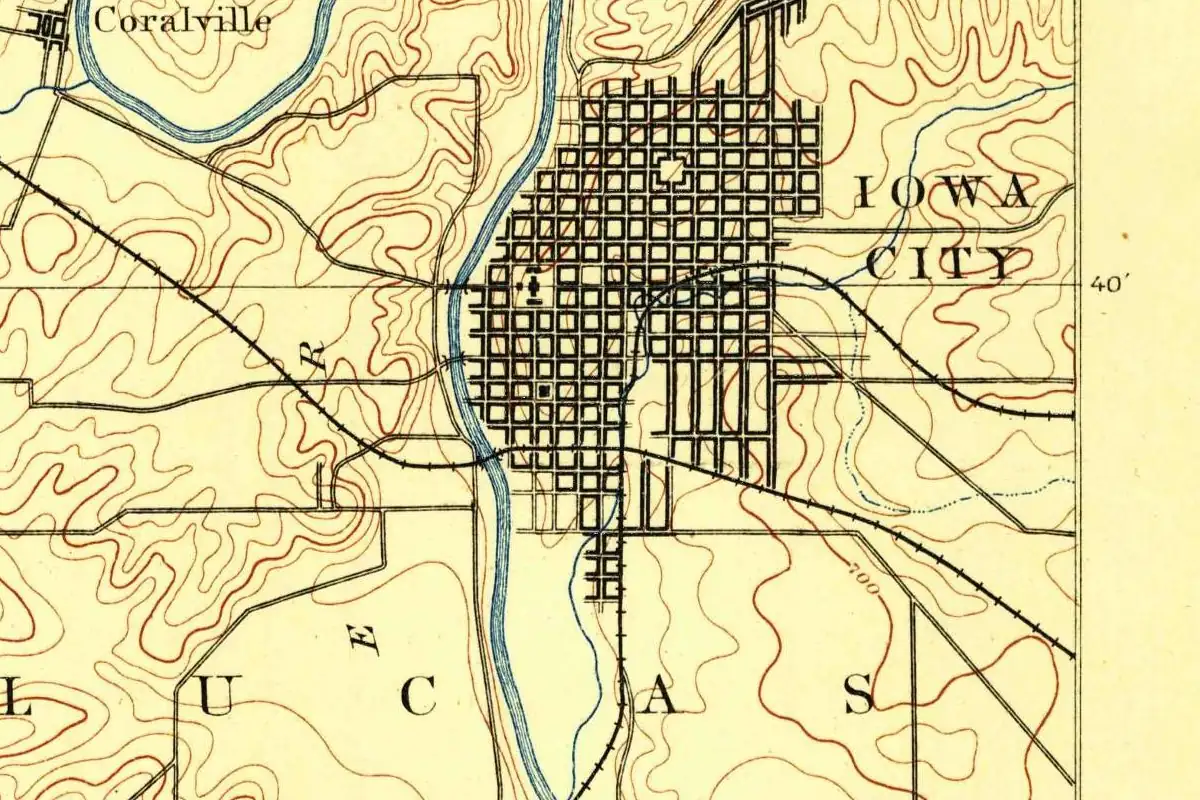
You can see the result on the 1891 map at the top of this page: a neat grid of blocks laid out on the east bank of the river, with an open square near the middle of town. Swan’s home county, by the way, is the one around Dubuque, whose own name goes back to a French-Canadian lead miner.
Quick answers
Why is it called Iowa City?
Because it was founded to be the capital of Iowa Territory. A supplementary act of the territorial legislature in 1839 ordered a town “to be called ‘Iowa City’” at the chosen site, Shambaugh’s 1893 history says.
Who named Iowa City?
The first Legislative Assembly of Iowa Territory, in January 1839. Commissioners Chauncey Swan, John Ronalds and Robert Ralston then picked the site.
Was Iowa City ever called the City of Iowa?
That’s what the marker said. The post the commissioners set up on May 4, 1839, read “SEAT OF GOVERNMENT, CITY OF IOWA,” though the law itself used “Iowa City.”
Is Iowa City the capital of Iowa?
No, not anymore. It was the capital from 1839 until 1857, when the seat of government moved to Des Moines.
Key dates
- 1838The Territory of Iowa is established on July 3, with a temporary capital at Burlington.
- 1839On January 21 the legislature approves the act to locate a capital in Johnson County; a supplementary act names the future town Iowa City.
- 1839On May 4 the commissioners mark the site with a post reading "Seat of Government, City of Iowa."
- 1840The cornerstone of the Capitol is laid on July 4.
- 1857The capital moves to Des Moines.
Things to do in Iowa City, Iowa
Old Capitol Museum
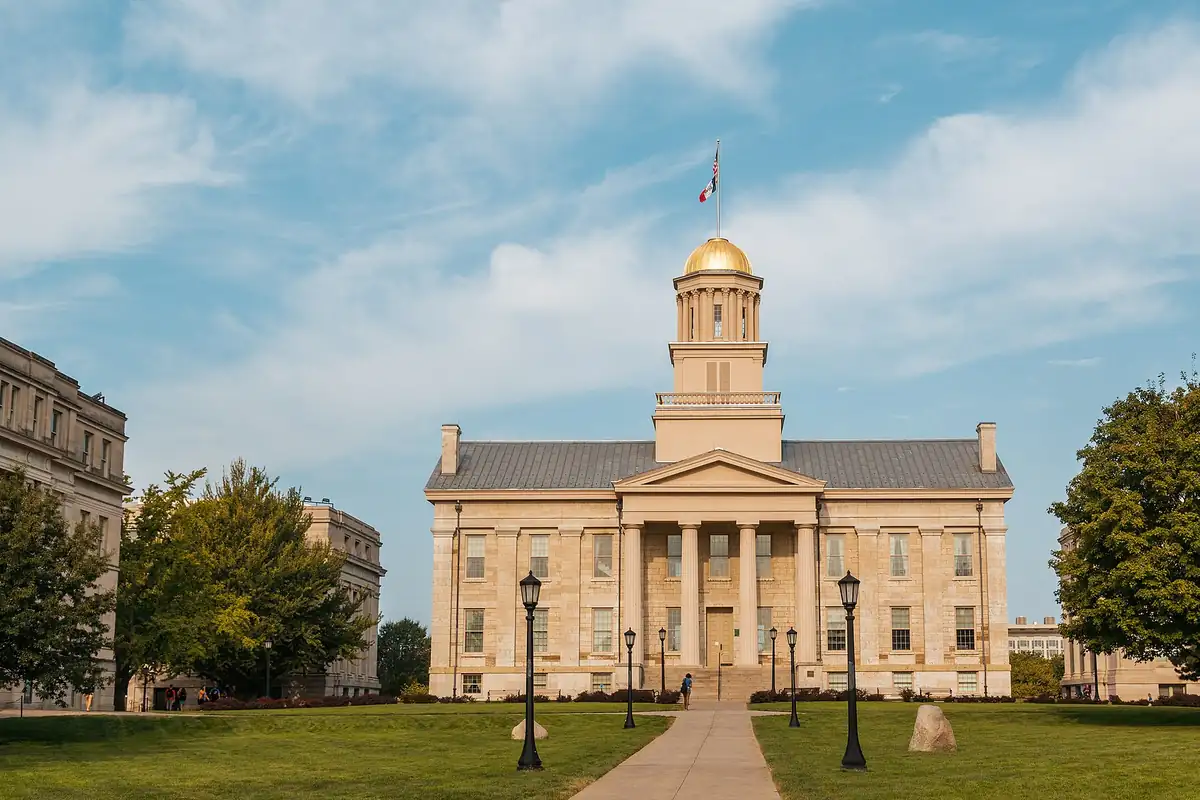
The capitol building at the center of this story, which served state legislatures and then the university, survived a major fire in 2001 and is now a National Historic Landmark and museum.
Plum Grove Historic Home
The seven-room Greek Revival house that Robert Lucas, Iowa's first territorial governor, built in 1844 from local materials, once part of an 80-acre farm.
University of Iowa Museum of Natural History
Established in 1858, it calls itself the second oldest museum in the United States west of the Mississippi, with specimens, objects and artifacts on display.
Stanley Museum of Art
The University of Iowa's art museum, a campus and community hub for visual culture whose collections include Jackson Pollock's Mural and the Stanley Collection of African Art.
Getting there
Open Iowa City in Google Maps
Opens in a new tab. The pin is the center of Iowa City in the USGS place-name record.
The closest airports, Amtrak stations and intercity bus stops, measured in a straight line from the center of Iowa City.
Airports
- The Eastern Iowa (CID) Cedar Rapids 18 mi 29 km
- Quad Cities International (MLI) Moline 55 mi 88 km
Amtrak trains
- Iowa City station (IAC) under 1 mi 0.6 km
- Cedar Rapids station (CRI) 26 mi 41 km
Intercity buses
- Jefferson Lines Iowa City under 1 mi 0.6 km
- Greyhound Iowa City Burlington Trailways under 1 mi 0.6 km
Distances are as the crow flies, not by road. We don't list schedules or fares because they change; check with the airline, Amtrak or the bus company before you go. Official data (FAA commercial service airports (2025), FAA airport locations, Amtrak stations and Intercity Bus Atlas) from the FAA and the U.S. Bureau of Transportation Statistics, checked Nov 14, 2026.
Sponsored
Staying in Iowa City?
Compare hotels in Iowa City, Iowa, on Expedia.
See hotels in Iowa CityWe may earn a commission if you buy through this link. It never changes what we write. Read our affiliate disclosure
Historical Sources & References
- Benjamin F. Shambaugh, Iowa City: A Contribution to the Early History of Iowa (1893), p. 6. The Territory of Iowa on July 3, 1838, with a temporary capital at Burlington; the commissioners appointed in January 1839 and ordered “to found a town to be called Iowa City.”
- Shambaugh, Iowa City (1893), pp. 18-19. The founding act approved January 21, 1839 (meeting at Napoleon on May 1, 640 acres, platting) and the supplementary act’s “town to be called ‘Iowa City’”; Swan, Ronalds and Ralston as commissioners; Congress’s act of March 3, 1839, granting one section instead of four.
- Shambaugh, Iowa City (1893), pp. 20-22. The settlers’ fears for their claims; the crowd at Napoleon on May 1, 1839; Burlington’s opposition; Swan alone at noon; Philip Clark’s ride for Ronalds, 35 miles (56 km) away; Henry Felkner’s “just five minutes to twelve o’clock”; the joke about “the shortest six hours on record” and Shambaugh’s doubts.
- Shambaugh, Iowa City (1893), pp. 22-23. The county examined from May 2; the site chosen May 4, 1839, and the quoted inscription on the post; Ralston’s arrival on May 6; Swan made acting commissioner on May 7.
- Shambaugh, Iowa City (1893), p. 2. Ralston Creek, “Named in honor of Robert Ralston.”
- Shambaugh, Iowa City (1893), p. 62. The cornerstone of the Capitol laid on July 4, 1840, with Governor Lucas’s oration and the celebration.
- Shambaugh, Iowa City (1893), preface and p. 109. Iowa City as capital and “the nerve-center of Iowa politics” from 1839 to 1857; the final removal of the capital to Des Moines in 1857 (preface).
- GNIS feature 457827 (U.S. Geological Survey). The U.S. gazetteer listing for Iowa City, in Johnson County.
- U.S. Geological Survey, Iowa City sheet (1891). The 1:62,500 quadrangle the map at the top of this page was cropped from.
Sponsored
Put this 1891 map on your wall
The 1891 USGS Iowa City, Iowa, sheet is in the public domain. Download the full-size scan for free, then have it printed on canvas with CanvasOnTheCheap.
Print a map on canvasDownload the full-size mapWe may earn a commission if you buy through this link. It never changes what we write. Read our affiliate disclosure
Spot something wrong, or know more? Tell us here. You can also email us or use our contact page. Corrections are noted here with their date, never made silently.