Camden, Maine: The Town That Lost Its 'B'
Camden is named for Charles Pratt, Lord Camden, a British judge and peer who sided with the American colonists against Parliament's taxes. Robinson's 1907 town history says the name was given to the township as early as 1768. Massachusetts incorporated the town of "Cambden" on February 17, 1791, and the extra b disappeared after 1800.
Cambden, with a b
Camden, Maine, was spelled Cambden for its first few decades, a name honoring Lord Camden, the British judge who stood up for the colonies. The “b” shows up on the earliest permits to settle here and in the act that made it a town. Then, quietly, it fell out.
Reuel Robinson, who wrote the town’s history in 1907, noticed it going through the old books. “We find it spelled Cambden (occasionally Campden) on the old records, up to 1800,” he wrote in a footnote. “With the beginning of the new century, the present form, Camden, began to be used.”
So the town’s name is older than its spelling. And it’s older than the town, too.
A township named before the war
Long before anyone wrote down Cambden, the Penobscot Nation knew this harbor by another name. The Camden History Society in London, which keeps a guide to all the American Camdens, says they called it Megunticook, “the swelling ocean.” The Camden Public Library gives it as “great sea swells.” Robinson’s history mentions an old Massachusetts reading, “large bay,” but the authorities it goes on to quote, Eaton’s Annals of Warren, Francis Sogabason of Old Town and Sogabason Neptune, settle on “great swells of the sea.” Those, the passage says, are “sufficient to establish the meaning of the word.” The same book names Mt. Megunticook, Lake Megunticook and the Megunticook River, so you’ll keep running into the old word around town.
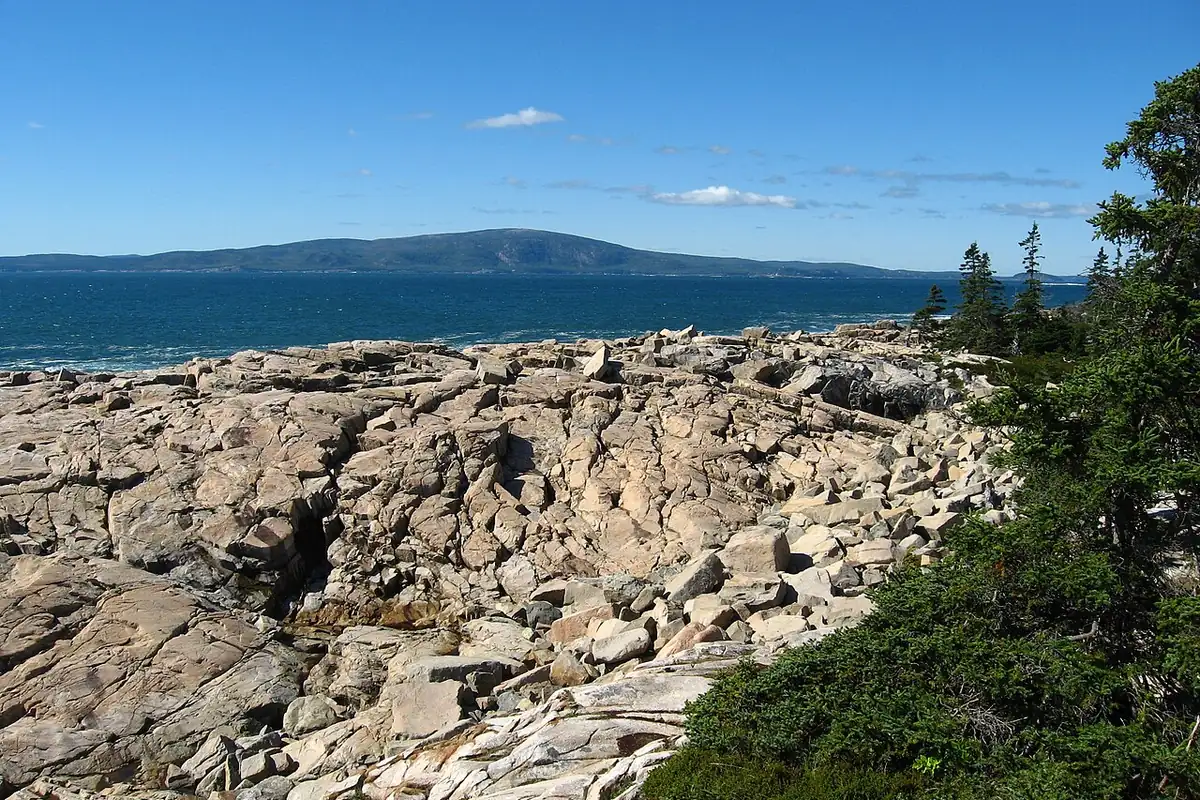
English explorers saw the hills behind the harbor early. The library notes that Capt. George Weymouth sighted the Camden Hills in 1605, and John Smith described them in 1614 as “the high mountains of Penobscot, against whose feet doth beat the sea.” The library says the first settlers came in 1769, after a group of proprietors, the Twenty Associates, finished surveying their land in 1768.
That’s when the English name appears. Robinson says the name Camden “was given to the township as early as 1768, in honor of Charles Pratt, then Baron, afterwards Earl of Camden.” The library adds that the area was surveyed as part of the Megunticook Plantation, so for a while the place answered to both.
A permit to settle in Cambden
The Twenty Associates sold their land a lot at a time, and Robinson prints one of the permits they issued. It’s dated Boston, May 5, 1769, and it’s headed “Permission to Settle in the Town of Cambden”:
“Whereas, you, William Gregory, have manifested to the Committee of the Propriety, called the Twenty Associates of the Lincolnshire Company, your desire to become a settler in the Town of Cambden, now settling near St. Georges River.”
Gregory got lot number four. Notice what the permit calls this place: a “Town of Cambden” that was just “now settling.” The name came first, and the people followed. James Richards, whom the library calls the first settler, built his log cabin here that same year.
Why Lord Camden?
Charles Pratt was a judge who served as Lord Chancellor of England, and the Camden History Society says he was an outspoken supporter of the American colonists in the House of Lords. In his first speech there, in 1766, he argued that taxation was founded on consent. He was one of only five peers to vote against the Declaratory Act, Parliament’s claim of an absolute right to tax the colonies.
Robinson, writing more than a century later, picked one of his speeches to show why a Maine town might want the name. When Parliament proposed setting Native warriors on the colonists, Lord Camden said the plan “ought to be damned.” Robinson’s verdict: “From such a man Camden may well be proud to have derived its name.”
The London society adds a twist. Camden opposed the use of force against the colonies, but he didn’t want independence and was unhappy when it came. He never visited America. Americans named towns for him anyway, and plenty of them; Robinson remarks that his popularity “is shown by the large number of towns named for him in various parts of the country.” Henry Gannett, the U.S. Geological Survey’s place-name man, lumped Maine’s Camden into one entry with several others, all “named for Chief Justice Pratt, Earl of Camden, a friend of the colonies during the Revolution.”
One of the biggest is Camden, New Jersey, laid out across the river from Philadelphia in 1773. Its story starts with a ferry, not a land company.
From plantation to town of Cambden
After the Revolution, the plantation had grown to 331 people by 1790, Robinson says, and it asked the General Court in Boston for a town government. Maine was still part of Massachusetts. The act passed on February 17, 1791, and its title is spelled the old way: “An act to incorporate the Plantation of Cambden, in the County of Hancock into a Town by the name of Cambden.”
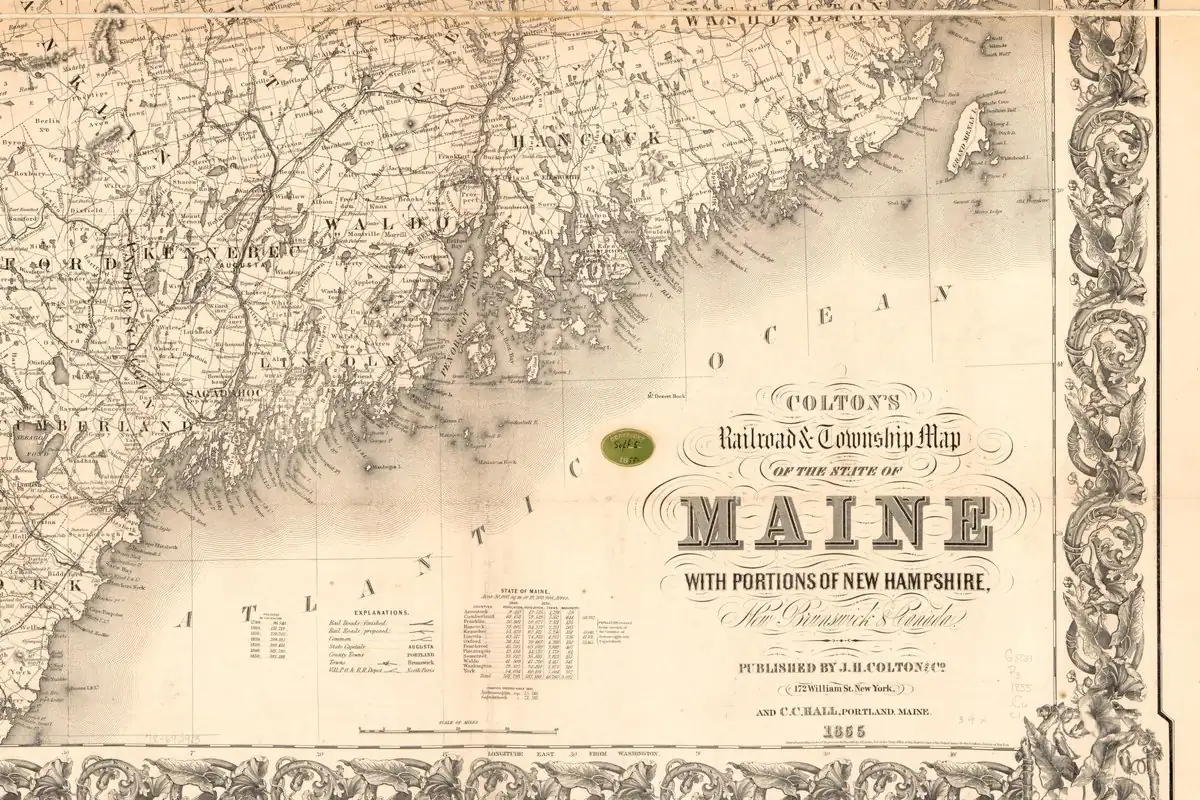
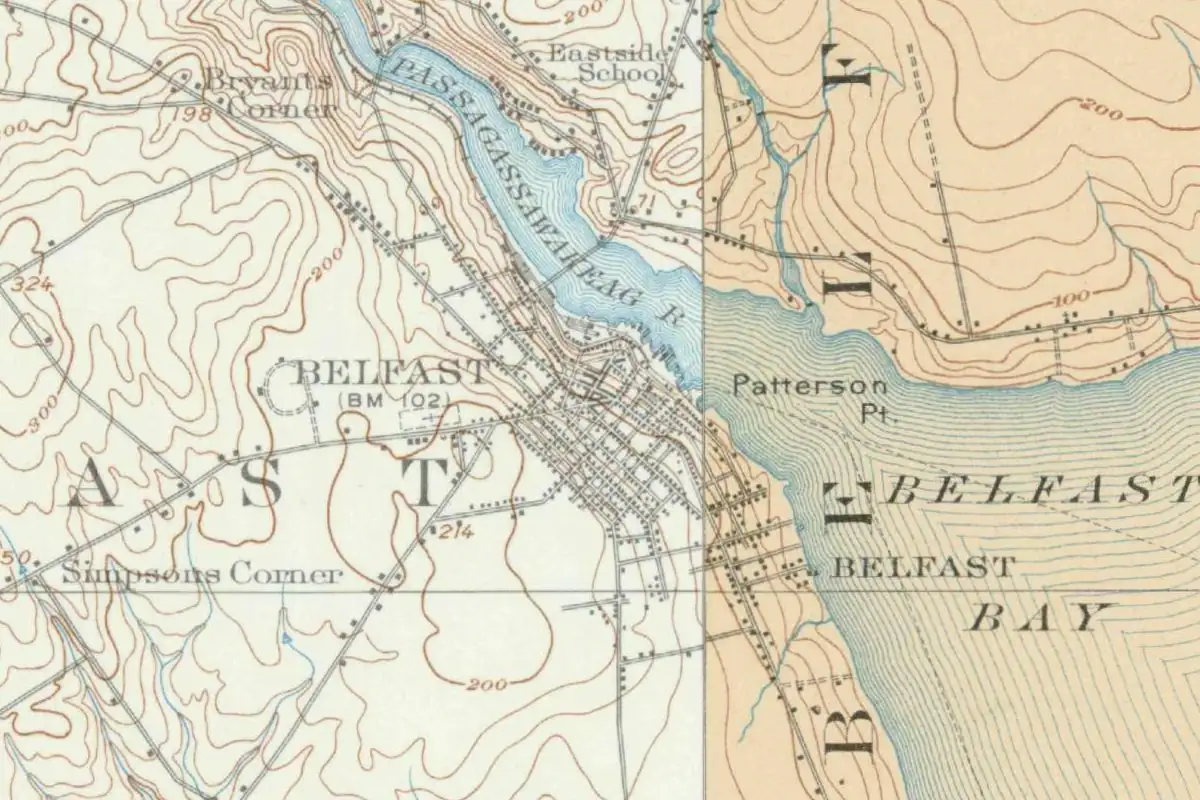
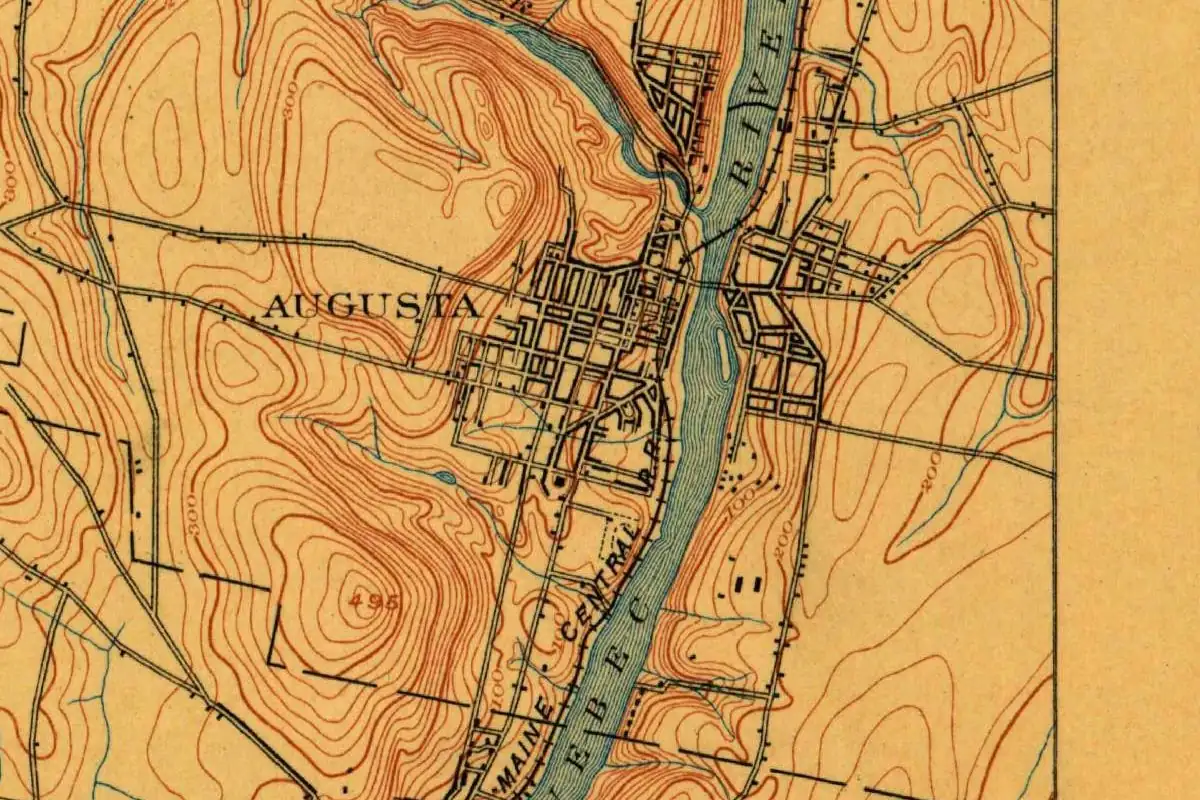
That made Camden, in Robinson’s count, the twenty-second town of Maine. If the date sounds familiar, it’s because Bath got its own act from the same General Court on February 17, 1781, exactly ten years earlier. Up the bay, Belfast had already taken a name from across the Atlantic in 1773.
The town that shrank
The 1791 town was much bigger than the Camden you visit today. It took in Goose River Village across the river, the home of the lime kilns and ice harvesting. Goose River renamed itself Rockport, and in 1891 it split off for good. The library says Camden lost three-quarters of its territory and half its population in the separation, along with its most profitable industries.
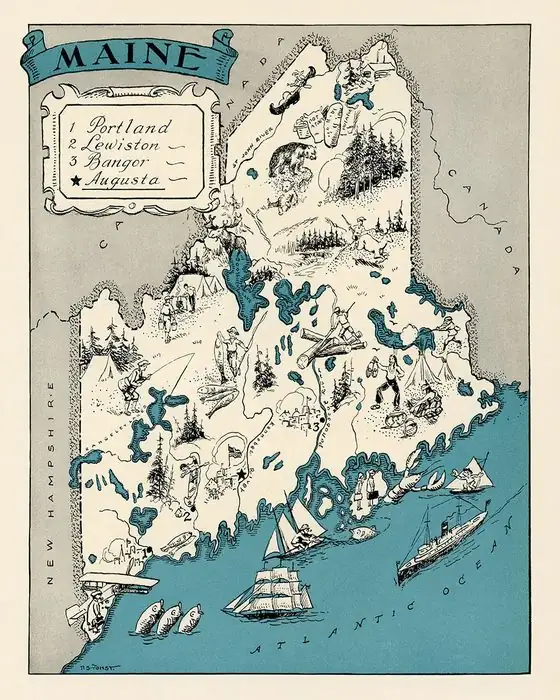
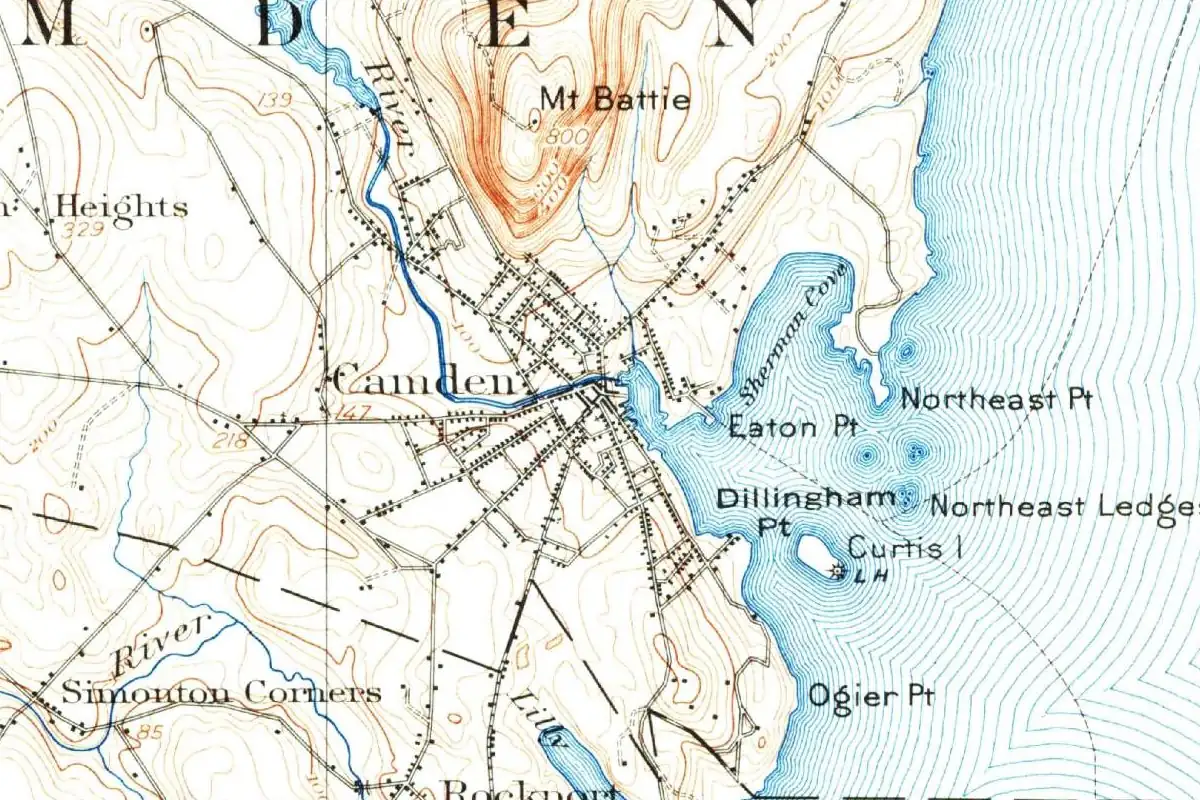
The next year a fire destroyed nearly all of Camden’s business district, and the town rebuilt it in brick. The old map at the top of this page, from 1904, catches Camden just after both changes, with Rockport sitting at the bottom edge as a separate place. For more name stories from this state, see our Maine page.
The name outlasted the spelling, the plantation and half the town. What’s left is a harbor that a Penobscot word and an English judge still share.
Quick answers
Who is Camden, Maine, named after?
Charles Pratt, Lord Camden, a British judge and peer who backed the American colonists in Parliament. Robinson’s 1907 history says the township had the name as early as 1768.
Why was Camden, Maine, spelled Cambden?
That’s how the early records wrote it, including the 1769 settlers’ permits and the 1791 act of incorporation. Robinson found that the present spelling began to be used with the new century, after 1800.
What does Megunticook mean?
Great sea swells, or the swelling ocean. The Camden Public Library, the Camden History Society and the authorities quoted in Robinson’s 1907 history all give versions of that; one old Massachusetts collection had “large bay.”
When did Rockport split from Camden?
In 1891. Goose River Village, which had already renamed itself Rockport, separated from Camden and took about three-quarters of the town’s land with it.
Key dates
- 1605Capt. George Weymouth sights the Camden Hills.
- 1768The name Camden is already applied to the township, in honor of Lord Camden.
- 1769On May 5, the Twenty Associates issue William Gregory a permit to settle in the "Town of Cambden."
- 1791On February 17, Massachusetts incorporates the plantation as the town of Cambden.
- 1891Goose River, by then called Rockport, separates from Camden.
Things to do in Camden, Maine
Camden Hills State Park
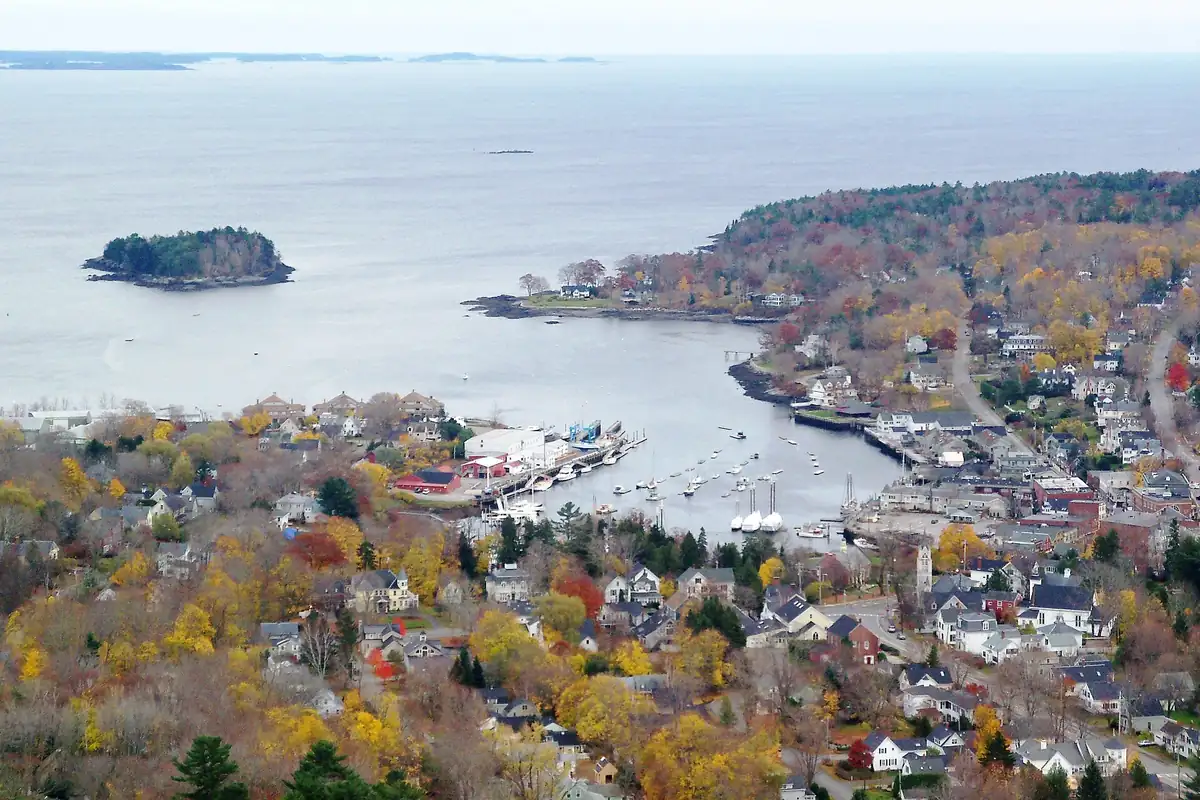
A state park where you can drive up the Mt. Battie Auto Road to a scenic vista with sweeping views of Camden, Penobscot Bay and the surrounding islands. Other hikes in the park are well mapped.
Camden Opera House
A historic downtown venue built in 1894 after a fire burned the business district, now home to a wide variety of shows, from touring musicians to Camden Ballet Theatre's holiday Nutcracker.
Walsh History Center
The local history room of the Camden Public Library, with the Rodney C. Lynch Photograph Collection of Camden people and places and online links to the full texts of the town's old histories.
Maine Windjammer Association
The association calls itself the largest fleet of traditional tall ships in the Americas, offering multi-day sailing vacations along the Maine coast. The Camden History Society notes the town's own large fleet of windjammers.
Getting there
Open Camden in Google Maps
Opens in a new tab. The pin is the center of Camden in the USGS place-name record.
The closest airports, Amtrak stations and intercity bus stops, measured in a straight line from the center of Camden.
Airports
- Bangor International (BGR) 43 mi 69 km
- Portland International Jetport (PWM) 73 mi 118 km
Amtrak trains
- Brunswick station (BRK) 49 mi 79 km
- Freeport station (FRE) 57 mi 92 km
Intercity buses
- Concord Coach Lines Camden-Rockport 1 mi 2 km
- FlixBus Augusta ME (AGM) 38 mi 61 km
- Greyhound Waterville J & S Oil Co 38 mi 61 km
Distances are as the crow flies, not by road. We don't list schedules or fares because they change; check with the airline, Amtrak or the bus company before you go. Official data (FAA commercial service airports (2025), FAA airport locations, Amtrak stations and Intercity Bus Atlas) from the FAA and the U.S. Bureau of Transportation Statistics, checked Nov 14, 2026.
Sponsored
Staying in Camden?
Compare hotels in Camden, Maine, on Expedia.
See hotels in CamdenWe may earn a commission if you buy through this link. It never changes what we write. Read our affiliate disclosure
Historical Sources & References
- Camden Public Library, “Midcoast History”. Weymouth in 1605, John Smith’s 1614 description, the Twenty Associates’ survey of 1768 and the Megunticook Plantation (“great sea swells”), James Richards in 1769, the town named for Charles Pratt in 1791, Rockport’s separation in 1891 and the fire of 1892.
- Camden History Society, “Camdens American and Canadian”. Lord Camden’s record on the colonies, the Declaratory Act vote, his views on independence, Megunticook as “the swelling ocean,” the “Cambden (sic) Plantation,” the act of February 17, 1791, Rockport’s name and separation, and the Camden Opera House of 1894.
- Reuel Robinson, History of Camden and Rockport (1907), p. 32. The 1769 permit to William Gregory, “Permission to Settle in the Town of Cambden,” quoted above.
- Reuel Robinson, History of Camden and Rockport (1907), pp. 85-88. The name given to the township as early as 1768 and the footnote on the Cambden spelling until 1800 (p. 85), Lord Camden’s speech and “the large number of towns named for him” (pp. 85-86), Megunticook as “large bay” and “great swells of the sea,” quoted from Locke (pp. 86-87), and the population of 1790, the act of February 17, 1791, and Camden as the twenty-second town of Maine (p. 88). The same book’s opening chapter names Mt. Megunticook, Lake Megunticook and the Megunticook River (pp. 6-11).
- Henry Gannett, The Origin of Certain Place Names in the United States (USGS, 1905), p. 65. The town in Knox County among the Camdens “named for Chief Justice Pratt, Earl of Camden, a friend of the colonies during the Revolution.”
- GNIS feature 563374 (U.S. Geological Survey). The USGS listing for Camden, a populated place in Knox County.
- U.S. Geological Survey, Rockland sheet (1904). The 1:62,500 quadrangle the map at the top of this page was cut from.
Spot something wrong, or know more? Tell us here. You can also email us or use our contact page. Corrections are noted here with their date, never made silently.