Charlevoix, Michigan: A French Name Replaced Pine River
Charlevoix, Michigan, borrowed its county’s tribute to a French Jesuit explorer, gradually replacing the settlement’s name of Pine River. Pierre François Xavier de Charlevoix is the man behind the name, but he didn’t name this town himself.
The county had the name first
The Library of Michigan dates the county’s change from Keskauko to Charlevoix to 1843. That’s the county, not a founding date for the city. The distinction matters because the settlement at the waterway continued to be called Pine River.
The Charlevoix Historical Society describes how the two names overlapped. People traveling by water spoke of going to Charlevoix, meaning the county, while their destination port was Pine River. Over time, the county name became the settlement’s name too. You don’t need a single dramatic renaming ceremony to explain that kind of change.
Who proposed the county’s tribute, and why this particular Frenchman? The society says the reason for the 1843 choice isn’t known. The identity of the man honored is much clearer: Henry Gannett’s 1905 federal gazetteer names the missionary and historian as the namesake of both county and village.
Pine River on the waterfront
Pine River was a practical name for a settlement reached from Lake Michigan. The historical society connects the old settlement name with its waterway; a supposed connection to a prominent pine on the bluff is presented as a possibility, rather than an established fact.
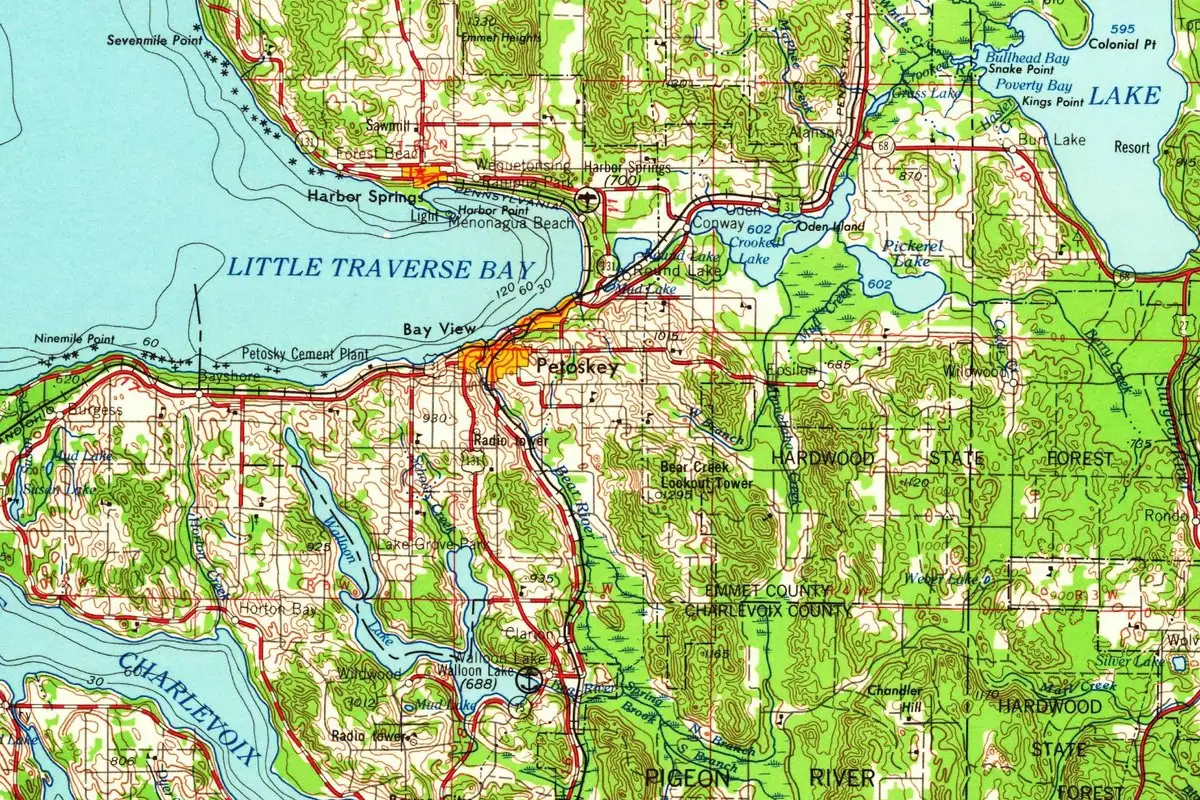
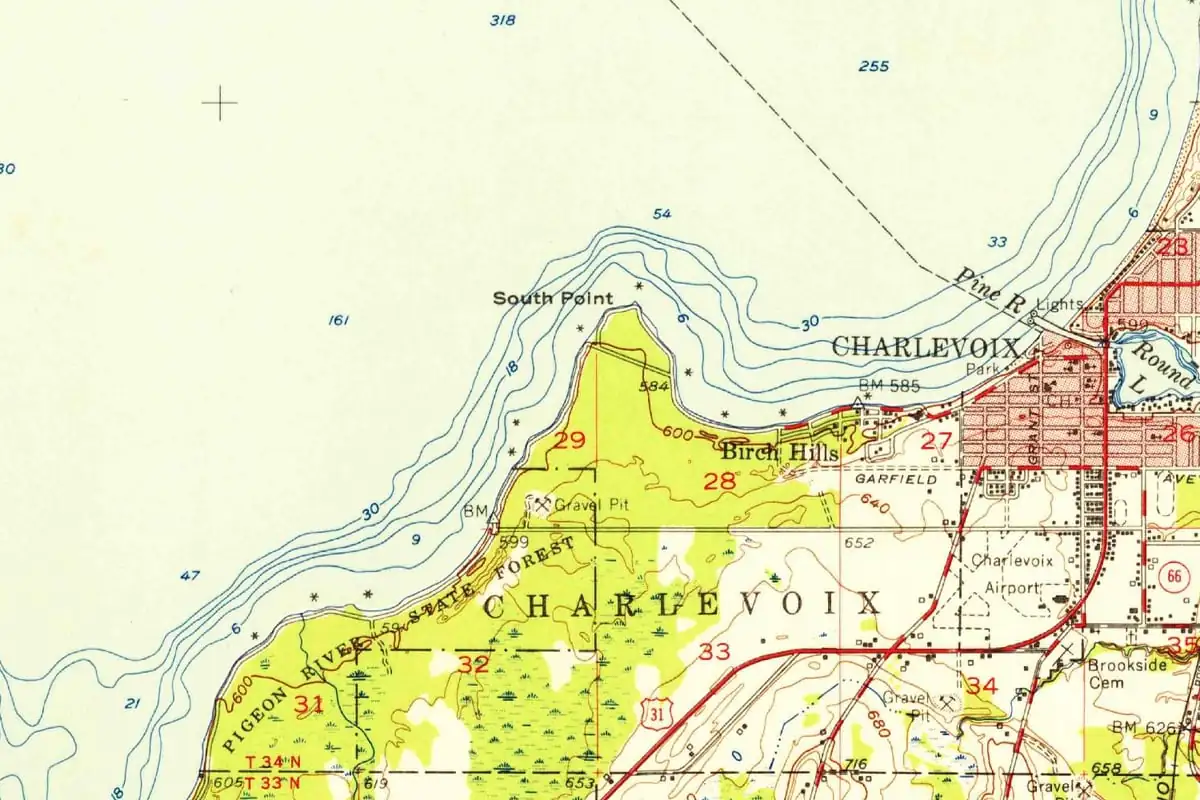
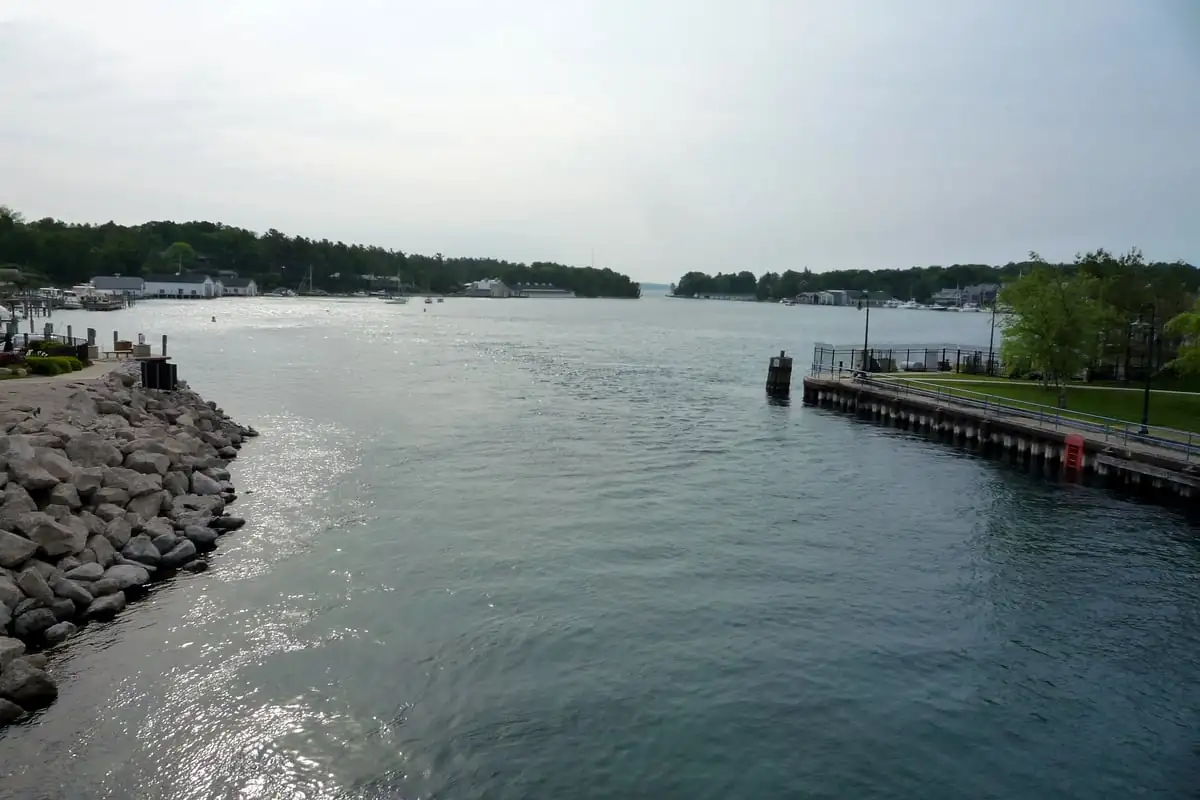
The geography still helps you understand the older name. Charlevoix fronts Lake Michigan, Round Lake and Lake Charlevoix. Kathryn Bishop Eckert’s architectural history describes Round Lake as the inland harbor, connected to Lake Michigan by a navigable channel. This was a port before it became a familiar resort address.
Perry F. Powers’s 1912 regional history follows the business taking shape there. In 1864 John S. Dixon arranged with Fox & Rose to build a dock deep enough for steamboats. Goods came in; wood for steamers went out. His chapter still calls the little settlement Pine River while describing those early operations.
The French name didn’t erase the older one all at once. They belonged to the same place while its harbor and businesses were growing.
What the 1879 charter actually tells us
Powers records a public meeting in February 1879 to consider incorporation, followed by a petition to the legislature. The resulting act received approval on April 3. The law reproduced on page 284 ends its boundary description with these words:
“…be and the same are hereby constituted a village corporate by the name of the village of Charlevoix.”
That’s the legal name of the new village corporation. It isn’t evidence that nobody had called the place Charlevoix before April 1879. The historical society’s account of overlapping usage makes that distinction especially useful.
So the dates answer different questions. In 1843, the county acquired the explorer’s surname. In 1879, the village charter put that surname into its corporate identity. In between, Pine River and Charlevoix shared the waterfront.
Quick answers
Who was Charlevoix, Michigan, named after?
Pierre François Xavier de Charlevoix, the French Jesuit explorer and historian. The settlement adopted the name already given to its county.
What was Charlevoix called before?
Pine River, the same name as its waterway. The historical society says the two names coexisted before Charlevoix became the official village name.
Did Charlevoix get its name in 1843 or 1879?
Both dates belong to the story: 1843 is the county’s name change, while 1879 is the village’s incorporation. The town name was in use before the charter.
Did Father Charlevoix name the town himself?
No. The county and town were named in his honor later; none of the sources here attributes their naming to him.
Key dates
- 1843The county received the name Charlevoix, according to the Library of Michigan.
- 1864John S. Dixon arranged with Fox & Rose to build a steamboat dock at Pine River.
- 1879The village incorporation act was approved April 3, establishing the corporate name Charlevoix.
Getting there
Open Charlevoix in Google Maps
Opens in a new tab. The pin is the center of Charlevoix in the USGS place-name record.
The closest airports, Amtrak stations and intercity bus stops, measured in a straight line from the center of Charlevoix.
Airports
- Pellston Regional/Emmet County (PLN) 28 mi 46 km
- Cherry Capital (TVC) Traverse City 43 mi 69 km
Intercity buses
- Indian Trails Charlevoix under 1 mi 0 km
Distances are as the crow flies, not by road. We don't list schedules or fares because they change; check with the airline, Amtrak or the bus company before you go. Official data (FAA commercial service airports (2025), FAA airport locations, Amtrak stations and Intercity Bus Atlas) from the FAA and the U.S. Bureau of Transportation Statistics, checked Nov 10, 2026.
Sponsored
Staying in Charlevoix?
Compare hotels in Charlevoix, Michigan, on Expedia.
See hotels in CharlevoixWe may earn a commission if you buy through this link. It never changes what we write. Read our affiliate disclosure
Historical Sources & References
- Charlevoix Historical Society, “Early History”. Pine River, overlapping usage of the two names, the explorer honored and the uncertainty about the county’s choice.
- Library of Michigan, Charlevoix county guide. The county’s original name and its 1843 change.
- Perry F. Powers, A History of Northern Michigan and Its People (1912), pp. 280–284. Sections “Charlevoix as a Village” and “Charlevoix as a Corporation”: the dock venture and the 1879 act quoted from page 284 above.
- Kathryn Bishop Eckert, “Charlevoix and Vicinity,” SAH Archipedia. The namesake and the three-lake harbor setting.
- Henry Gannett, The Origin of Certain Place Names in the United States (1905), p. 76. Identifies the missionary and historian behind both names.
- Charlevoix in GNIS, entry 623115. USGS identification of the populated place in Charlevoix County.
Spot something wrong, or know more? Tell us here. You can also email us or use our contact page. Corrections are noted here with their date, never made silently.