Muskegon, Michigan: A Swamp Name With a Fish Story
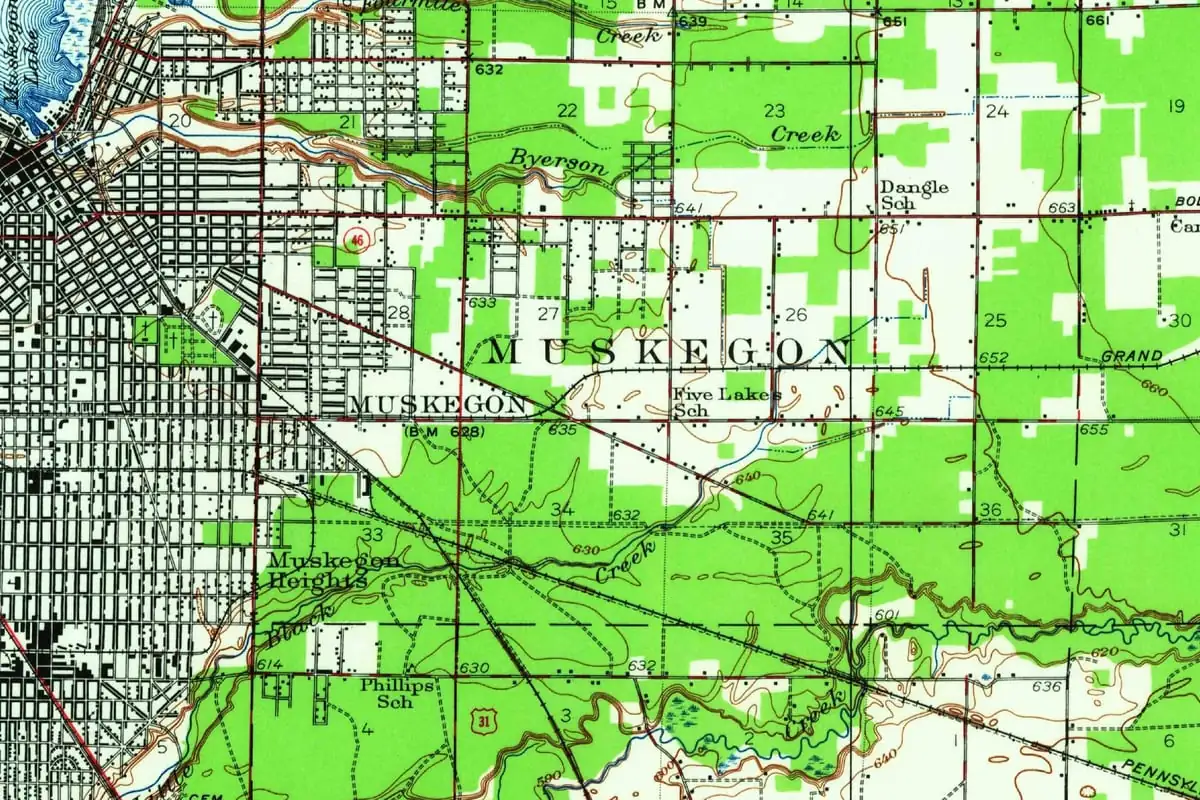
Muskegon, Michigan, keeps a river’s Indigenous name, but old histories disagree about whether it meant marshland or fish. The familiar explanation is a swamp or marshy river; the fish interpretation survives in an early county history, without comparable linguistic support.
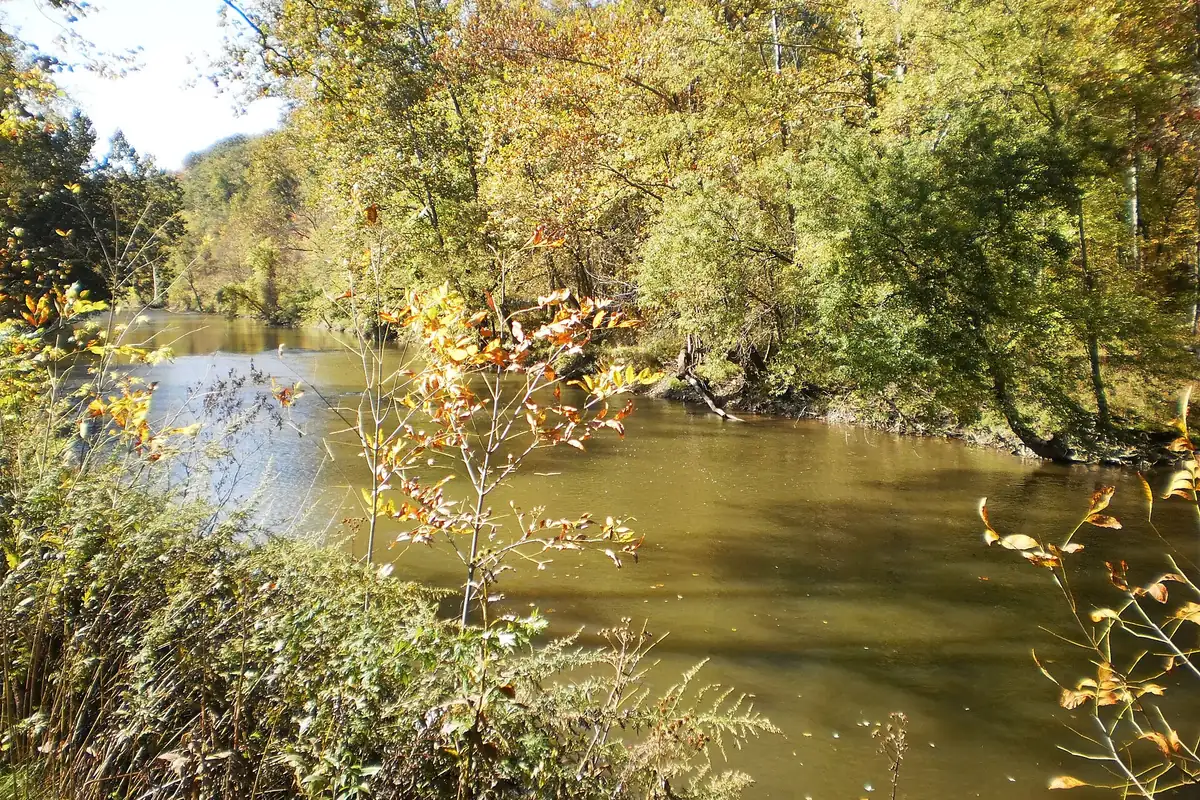
The river behind the city
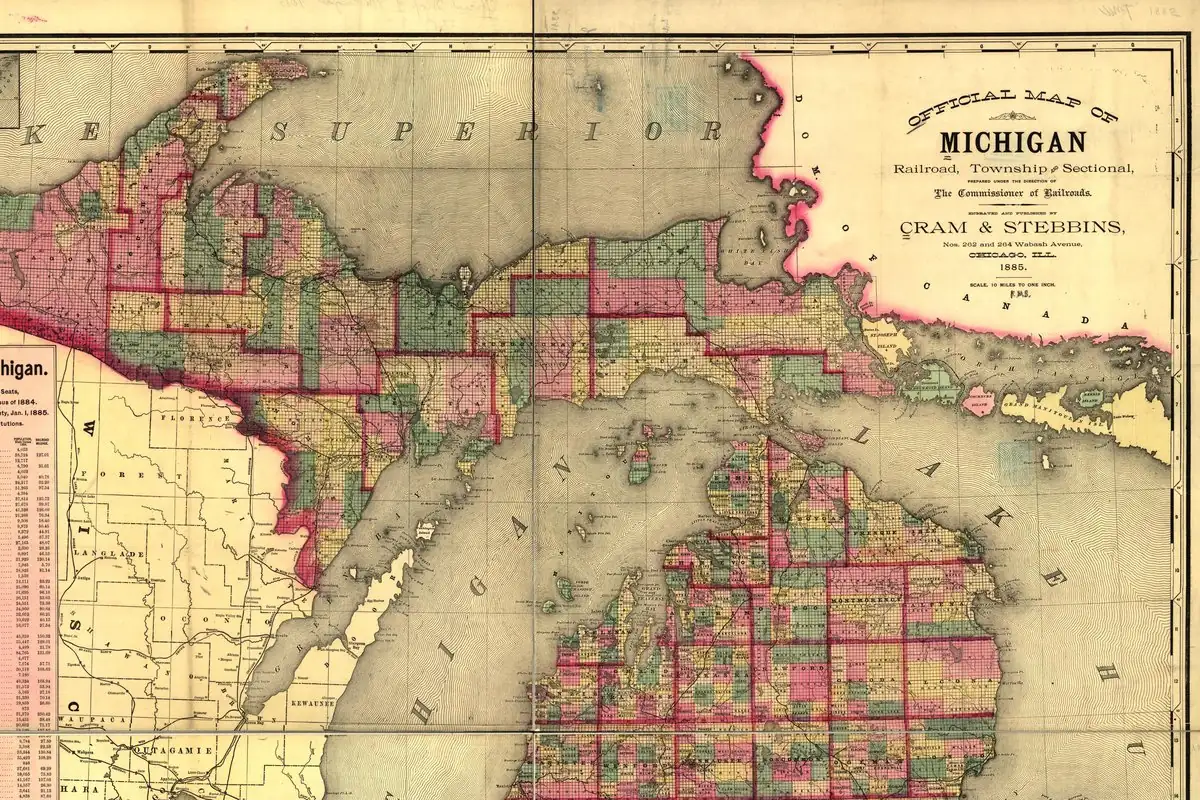
A 2008 application by the Michigan Lighthouse Conservancy, included in the city commission’s papers in 2023, traces Muskegon to Masquigon, which it identifies as an Odawa term associated with the river. Its English rendering is marshy river or swamp. The application also reports that French maps used the river name before the town developed, though it doesn’t identify an individual who chose the city’s name.
Detroit also took its name from its river, although that city’s familiar word came through French.
A swamp, a wet prairie, or plenty of fish?
If you look only at recent accounts, the swamp explanation can seem settled. The 1882 History of Muskegon County preserves a disagreement. It credits Henry H. Holt with a reading connected to a marshy river or wet prairie, then gives Father Van Pamel of Muskegon a different interpretation: plentiful fish.
The book records those opinions, but it doesn’t show how either man analyzed the Indigenous word. A local historian’s translation and a language dictionary aren’t the same kind of evidence.
Henry Gannett’s 1905 place-name bulletin for the U.S. Geological Survey puts the city and county together under an Ojibwe word for swamp. Today’s Ojibwe People’s Dictionary, developed with the University of Minnesota, supplies useful linguistic evidence: mashkiig means “a swamp, a muskeg,” and mashkiigong is its locative form.
That supports a connection with marshland. It doesn’t, by itself, document the local word’s entire journey into English or settle the older sources’ different language labels. The dictionary entry doesn’t offer the fish interpretation. Here, “disputed” flags the competing historical explanations, not equal evidence for both.
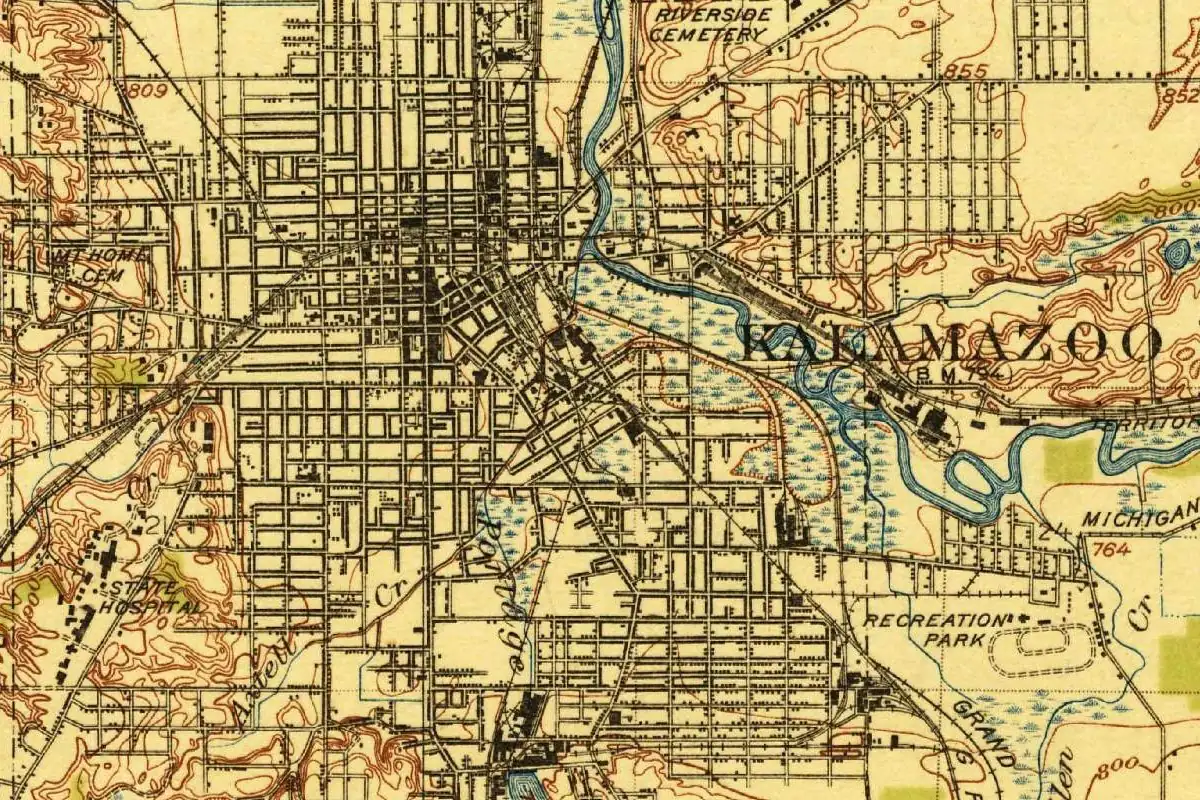
You’ll find another river name with troublesome translations at Kalamazoo. Muskegon’s swamp reading has dictionary support, but the early disagreement still belongs in its story.
The post office settles the spelling
Even the English spelling took time to settle. Holt’s historical sketch, reprinted in the 1882 county history, says the legislature organized a township called Muskego in 1837, then reorganized the territory as Muskegon in 1838. These were township designations, not evidence that the city underwent two formal renamings.
In the sketch reprinted in 1882, Holt credited the post office:
“This confusion in regard to the name ended at the establishment of Muskegon postoffice in 1848.”
In Holt’s telling, the post office supplied a dependable spelling for a name already in use.
His sketch also says the old township records burned in 1874. That helps explain why his retrospective account matters, while giving us a reason to be careful with it. A post office could settle the letters; it couldn’t settle every explanation of the word behind them.
Quick answers
What does Muskegon mean?
There’s no agreed translation. Gannett gave swamp; Holt read the name as marshy river or wet prairie. Father Van Pamel thought it meant plentiful fish. The Ojibwe People’s Dictionary records a swamp word, mashkiig.
Was Muskegon named after its river?
Probably. The Michigan Lighthouse Conservancy traces the name to Masquigon, a name it says French maps gave the river. Its account doesn’t identify who chose the city’s name.
Was Muskegon once called Muskego?
The township was, according to Holt’s sketch as printed in 1882. That spelling shouldn’t be presented as a separately documented former name of the city.
When did the spelling Muskegon become established?
1848 is the turning point Holt gives: he credits the Muskegon post office with ending the spelling confusion. That’s a retrospective explanation, not a claim that nobody wrote Muskegon before then.
Key dates
- 1837Holt's history, reprinted in 1882, records a township organized under the spelling Muskego.
- 1838The same history records the township's reorganization as Muskegon.
- 1848Holt credits the establishment of the Muskegon post office with ending the spelling confusion.
Getting there
Open Muskegon in Google Maps
Opens in a new tab. The pin is the center of Muskegon in the USGS place-name record.
The closest airports, Amtrak stations and intercity bus stops, measured in a straight line from the center of Muskegon.
Airports
- Gerald R Ford International (GRR) Grand Rapids 44 mi 71 km
- Kalamazoo/Battle Creek International (AZO) 78 mi 125 km
Amtrak trains
- Holland station (HOM) 32 mi 51 km
- Grand Rapids station (GRR) 35 mi 56 km
Intercity buses
- Indian Trails Holland (Bus/Amtrak) 32 mi 51 km
- FlixBus Holland Bus Stop 35 mi 56 km
Distances are as the crow flies, not by road. We don't list schedules or fares because they change; check with the airline, Amtrak or the bus company before you go. Official data (FAA commercial service airports (2025), FAA airport locations, Amtrak stations and Intercity Bus Atlas) from the FAA and the U.S. Bureau of Transportation Statistics, checked Nov 10, 2026.
Sponsored
Staying in Muskegon?
Compare hotels in Muskegon, Michigan, on Expedia.
See hotels in MuskegonWe may earn a commission if you buy through this link. It never changes what we write. Read our affiliate disclosure
Historical Sources & References
- History of Muskegon County, Michigan (H. R. Page & Co., 1882), pp. 33, 49–50. Competing meanings attributed to Holt and Van Pamel; Holt’s sketch of township spellings, the post office and lost records.
- Henry Gannett, The Origin of Certain Place Names in the United States (USGS Bulletin 258, 1905), p. 218. The swamp interpretation for the Michigan city and county.
- Ojibwe People’s Dictionary, mashkiig. A modern language reference for the swamp word and its forms; not a history of Muskegon’s naming.
- Michigan Lighthouse Conservancy, lighthouse preservation application (2008, revised 2009), in the May 9, 2023 city commission packet. The Conservancy’s account connecting Muskegon with the Indigenous river name Masquigon.
- USGS geographic names database, Muskegon, feature 1620963. Official identification of Muskegon in Muskegon County; its identifier doesn’t prove an etymology.
Spot something wrong, or know more? Tell us here. You can also email us or use our contact page. Corrections are noted here with their date, never made silently.