Why Is It Called Jacksonville, Oregon? A Gold Camp Mystery
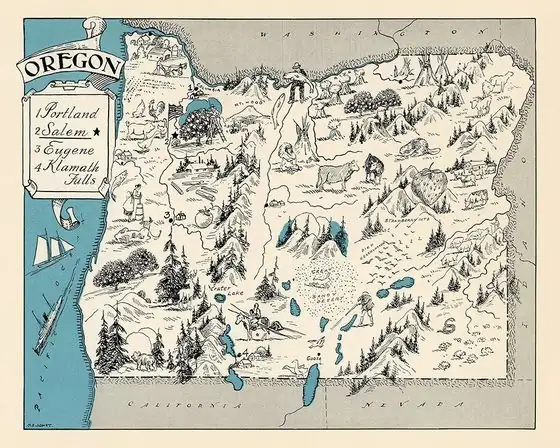
The early histories don't explain it. The 1852 gold camp went by Table Rock at first, and the town that grew there sits on Jackson Creek in Jackson County, which Oregon's archives say was named for President Andrew Jackson. Neither A. G. Walling in 1884 nor H. H. Bancroft in 1888 says which Jackson the town took.
A camp called Table Rock
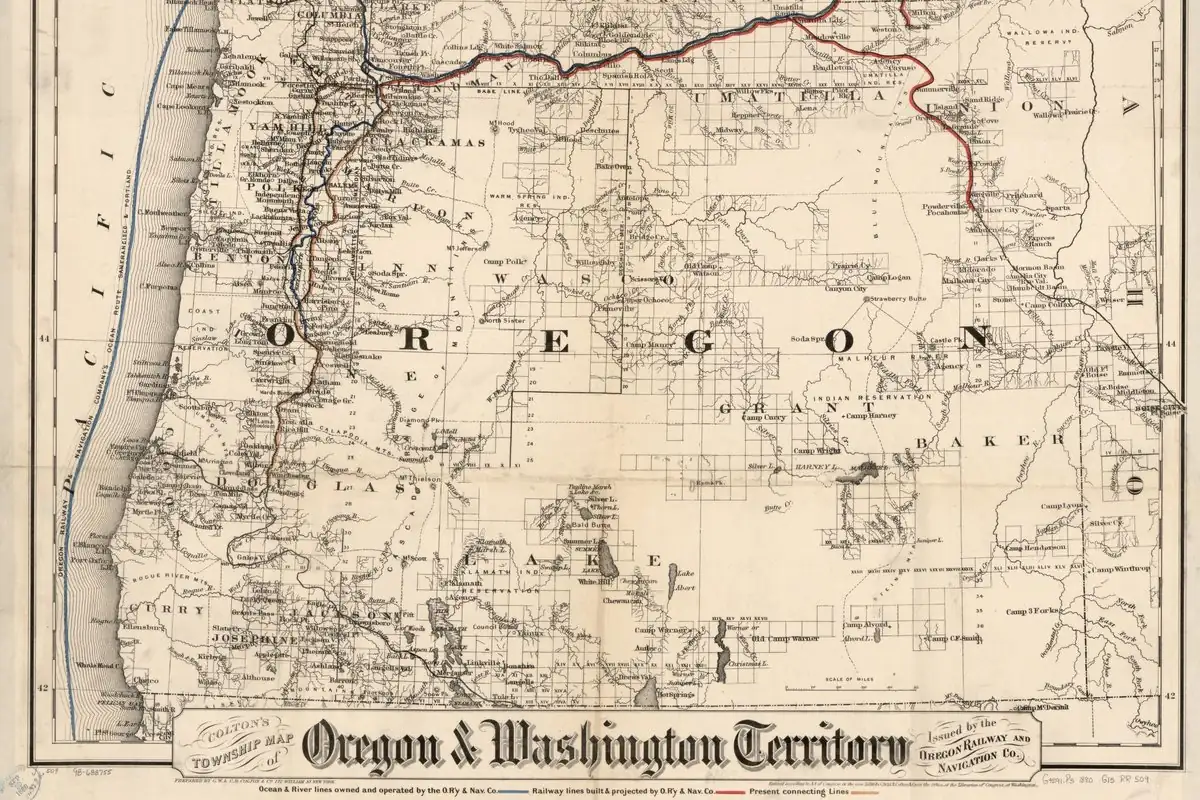
In 1852 the gold camp that became Jacksonville, Oregon, was called Table Rock, and the 1880s histories don’t explain its Jackson name. There were two Jacksons right at hand, a creek and a brand-new county, and the old books never say which one the town took.
That gap isn’t for lack of trying. A. G. Walling, who wrote the big History of Southern Oregon in 1884, saw the problem coming. Partway into his chapter on the town, he stops to warn you:
“Much of the history of Jacksonville is unwritten; but, fortunately, many of those who dug its foundations, and reared its schools and churches, still survive, and upon the faithfulness of their memories must depend the accuracy of the records.”
He then tells the gold story from those memories, and the name never comes up.
Gold on Jackson Creek
Walling says gold had been found “somewhat earlier, on Jackson creek, nearly opposite the present City brewery, by two young men,” who passed the news to James Cluggage and J. R. Poole. Cluggage and Poole went on to strike Rich Gulch “in December, 1851, or January, 1852.” By February 1852, he writes, every foot of the gulch had been staked and claimed.
Hubert Howe Bancroft’s History of Oregon, published four years later, tells it a little differently. In his version a man named Sykes, who worked for A. A. Skinner, found gold on Jackson Creek in February 1852, “about on the west line of the present town of Jacksonville,” and soon after two packers, Cluggage and Pool, found Rich Gulch half a mile (about 0.8 km) north of Sykes’s find.
So the two histories disagree by a couple of months on the dates. They agree on the creek, though. Both call it Jackson Creek, and both put the first gold on it, right at the edge of the future town.
The camp grew fast. Walling says a trading post opened in a tent that February, and in March W. W. Fowler built the first log cabin “near the head of Main, the only street in the embryo city.”
“Though without relevance”
Bancroft is the one who gives you the camp’s other name. In a footnote to his account of the summer of 1852, he writes:
“Jacksonville was at this time called Table Rock, though without relevance.”
He doesn’t spell out why the name had no relevance. He does add that the first newspaper published there was the Table Rock Sentinel, so the old name ended up on a masthead too.
The Advisory Council on Historic Preservation describes the place in 1851-52 as the “Table Rock City” mining camp, so you’ll see both forms. Bancroft’s footnote doesn’t say when or why people switched to Jacksonville.
A county for a president
The other Jackson is the county. Walling says “the county of Jackson was organized by an act of the legislature passed January 12, 1852.” The Oregon State Archives give the same date and say the county was “named for President Andrew Jackson.” Henry Gannett’s 1905 USGS bulletin on place names also lists Jackson County, Oregon, among the counties named for Gen. Andrew Jackson. It has no entry for the town.
That’s where the timeline gets messy. The Oregon History Project says that when the territorial legislature created Jackson County on January 12, 1852, it named the camp, which it says was “called Jacksonville,” the county seat. But Walling dates Rich Gulch to December 1851 or January 1852, Bancroft dates the first find to February, and Bancroft says the camp was still called Table Rock that July. Those accounts can’t all be right about when the name Jacksonville was in use.
What you’re left with is a town on Jackson Creek, in Jackson County, that went by Table Rock for at least part of its first year. Maybe the camp took the creek’s name. Maybe it took the county’s, and through it the president’s. The books from the 1880s, written while early settlers were still around, simply don’t say.
The name on the map
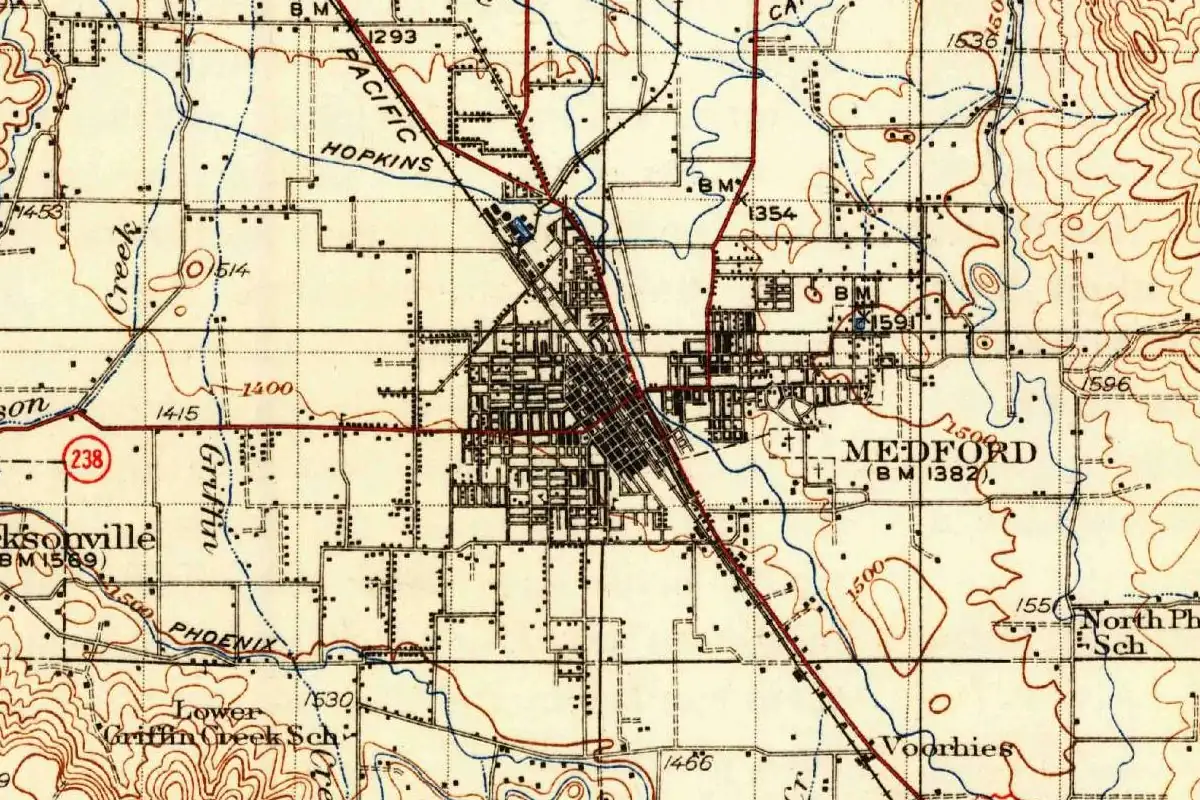
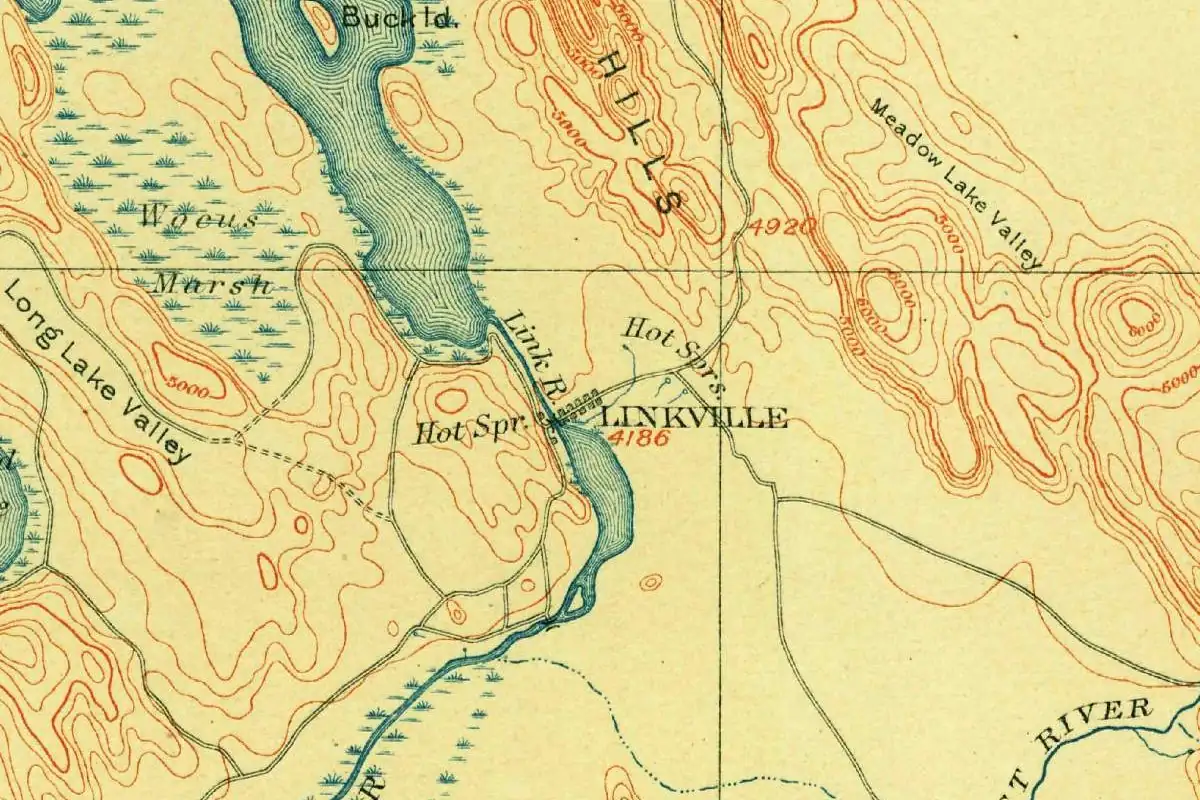
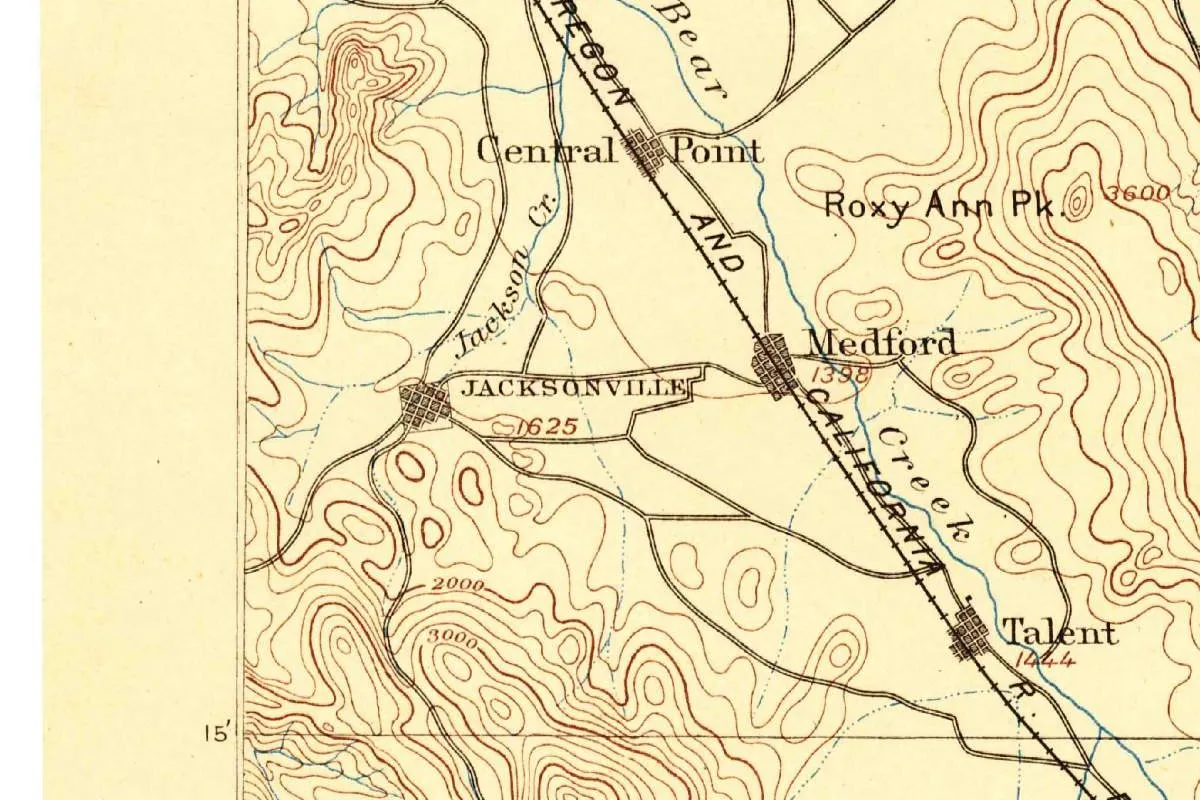
The U.S. Geological Survey’s Ashland sheet of 1891 shows a small street grid labeled Jacksonville with “Jackson Cr.” running just north of it, while the railroad towns of Medford and Central Point sit off to the east. The Advisory Council’s profile says the town was incorporated in 1860.
Plenty of towns in Oregon have a clear paper trail for their names. Jacksonville has a creek, a county, a president and a mining camp with a different name, and its early chroniclers left you to connect them.
Quick answers
Was Jacksonville, Oregon, named after Andrew Jackson?
Not directly, as far as the record goes. Jackson County was named for President Andrew Jackson, according to the Oregon State Archives, but neither Walling’s 1884 history nor Bancroft’s 1888 history explains where the town’s name came from.
What was Jacksonville, Oregon, called before?
Table Rock. Bancroft says the place “was at this time called Table Rock” in 1852, and the Advisory Council on Historic Preservation calls the early camp Table Rock City.
Is it the same Jacksonville as the one in Florida?
No. Jacksonville, Florida is a different city with its own naming story. The Oregon town grew out of an 1850s gold camp in the Rogue Valley.
Key dates
- 1851Walling dates the strike at Rich Gulch to December 1851 or January 1852, after two young men found gold on Jackson Creek.
- 1852January 12: an act of the legislature organizes Jackson County, which the state archives say was named for President Andrew Jackson.
- 1852February: Bancroft's date for Sykes's gold find on Jackson Creek. Walling says every foot of Rich Gulch was claimed that month.
- 1852Around July, Bancroft says, the place that became Jacksonville was called Table Rock, "though without relevance."
- 1860Jacksonville is incorporated, according to the Advisory Council on Historic Preservation.
- 1891A U.S. Geological Survey map labels the town Jacksonville, with Jackson Creek just to its north.
Getting there
Open Jacksonville in Google Maps
Opens in a new tab. The pin is the center of Jacksonville in the USGS place-name record.
The closest airports, Amtrak stations and intercity bus stops, measured in a straight line from the center of Jacksonville.
Airports
- Rogue Valley International/Medford (MFR) 6 mi 10 km
- Southwest Oregon Regional (OTH) North Bend 100 mi 161 km
Amtrak trains
- Klamath Falls station (KFS) 61 mi 99 km
- Dunsmuir station (DUN) 84 mi 136 km
Intercity buses
- Pacific Crest Bus Lines Front Street Station - Medford 5 mi 8 km
- Oregon POINT Front Street Station - Medford 5 mi 8 km
- Greyhound Grants Pass A-1 Market 20 mi 33 km
Distances are as the crow flies, not by road. We don't list schedules or fares because they change; check with the airline, Amtrak or the bus company before you go. Official data (FAA commercial service airports (2025), FAA airport locations, Amtrak stations and Intercity Bus Atlas) from the FAA and the U.S. Bureau of Transportation Statistics, checked Nov 13, 2026.
Sponsored
Staying in Jacksonville?
Compare hotels in Jacksonville, Oregon, on Expedia.
See hotels in JacksonvilleWe may earn a commission if you buy through this link. It never changes what we write. Read our affiliate disclosure
Sponsored
Want the spooky side of Jacksonville?
The name has its story above. For the ghost stories, US Ghost Adventures runs walking ghost tours in Jacksonville.
See ghost tours in JacksonvilleWe may earn a commission if you book through this link. It never changes what we write. Read our affiliate disclosure
Historical Sources & References
- A. G. Walling, History of Southern Oregon (1884), pp. 340, 359-360. The act of January 12, 1852, organizing Jackson County (p. 340); the opening quote about the town’s “unwritten” history, the gold on Jackson Creek, Cluggage and Poole and the Rich Gulch dates (p. 359); the tent trading post and W. W. Fowler’s first cabin (p. 360).
- Hubert Howe Bancroft, History of Oregon, vol. II (1888), pp. 186, 240. Sykes’s February 1852 find on Jackson Creek and Rich Gulch half a mile north of it (p. 186); the footnote saying the town was then “called Table Rock, though without relevance,” and the Table Rock Sentinel (p. 240, note 16).
- Henry Gannett, The Origin of Certain Place Names in the United States (USGS, 1905), p. 167. Jackson County, Oregon, among the counties “named for Gen. Andrew Jackson.”
- Oregon State Archives, Jackson County records guide. The county’s creation on January 12, 1852, and its naming for President Andrew Jackson.
- Oregon History Project, “Jacksonville: The First Town”. Its statement that the legislature named the camp, “called Jacksonville,” the county seat in January 1852.
- Advisory Council on Historic Preservation, Jacksonville, Oregon. The “Table Rock City” mining camp of 1851-52 and incorporation in 1860.
- GNIS feature 1122366 (U.S. Geological Survey). Feature 1122366, which assigns the town to Jackson County.
- U.S. Geological Survey, Ashland sheet (1891). The 1891 Ashland map, with Jacksonville and Jackson Creek side by side.
Spot something wrong, or know more? Tell us here. You can also email us or use our contact page. Corrections are noted here with their date, never made silently.