Pigeon Forge, Tennessee: Named for Birds and an Iron Forge
Pigeon Forge takes the first half of its name from the Little Pigeon River, named for the passenger pigeons that flocked there, and the second from Isaac Love's iron forge. The Old Mill and the Chamber of Commerce say his son William Love, the first postmaster, chose the name in 1841 or 1842.
Pigeon Forge, Tennessee, is named for two things: the passenger pigeons of the Little Pigeon River, and an iron forge Isaac Love built on its bank. Both are gone now. The birds are extinct, and the forge was taken apart and shipped to Kentucky in 1885.
The pigeon half
The first word came from the river. The 1974 nomination of the town’s mill to the National Register of Historic Places, written by Michael Carberry of the East Tennessee Development District, puts it this way: “Its unusual name is derived from the Passenger Pigeons (now extinct) which flocked to the valley in migrating (thus the ‘Pigeon River’) and the ‘Forge’ came from the early iron works there.”
The Pigeon Forge Department of Tourism tells the same story with a slightly different picture. It says the town “takes the first part of its name from the Little Pigeon River,” which was named for “passenger pigeons that once roosted on its banks.” The National Park Service, writing about Great Smoky Mountains National Park, agrees: “The town of Pigeon Forge and local branches of the Pigeon River in Tennessee were named after these birds.”
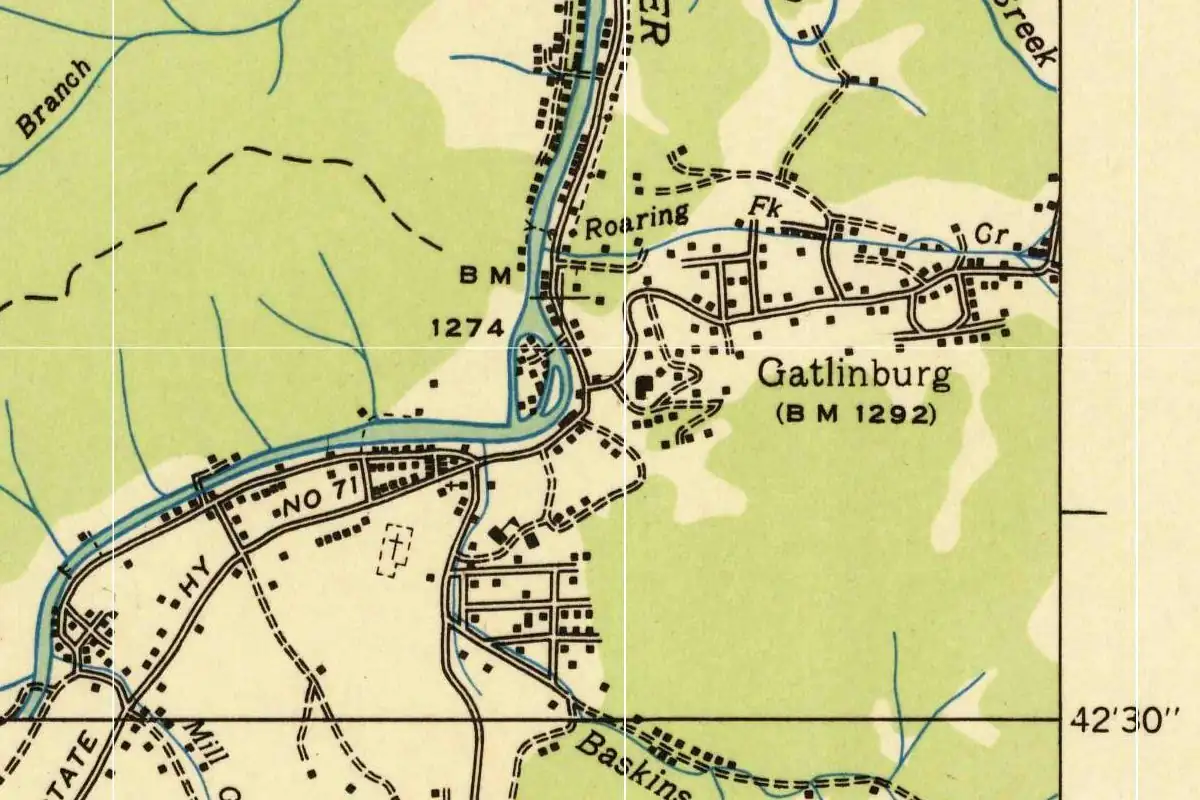
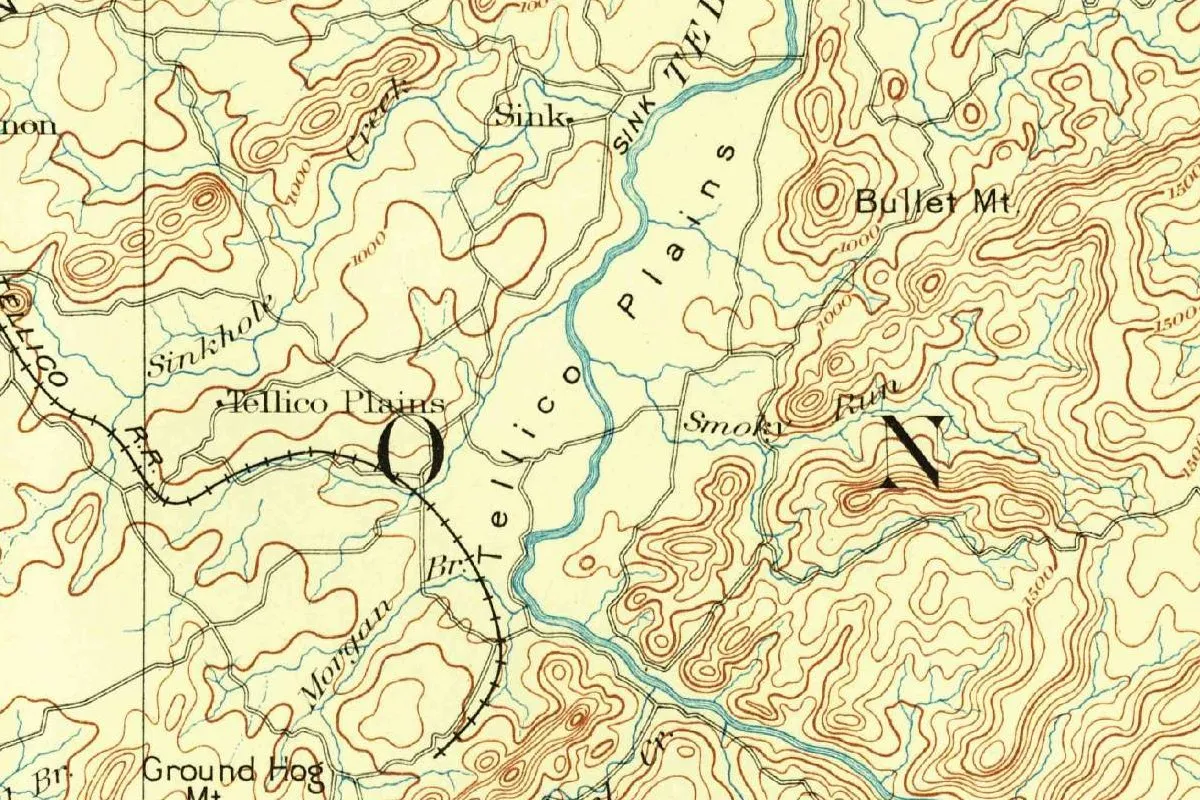
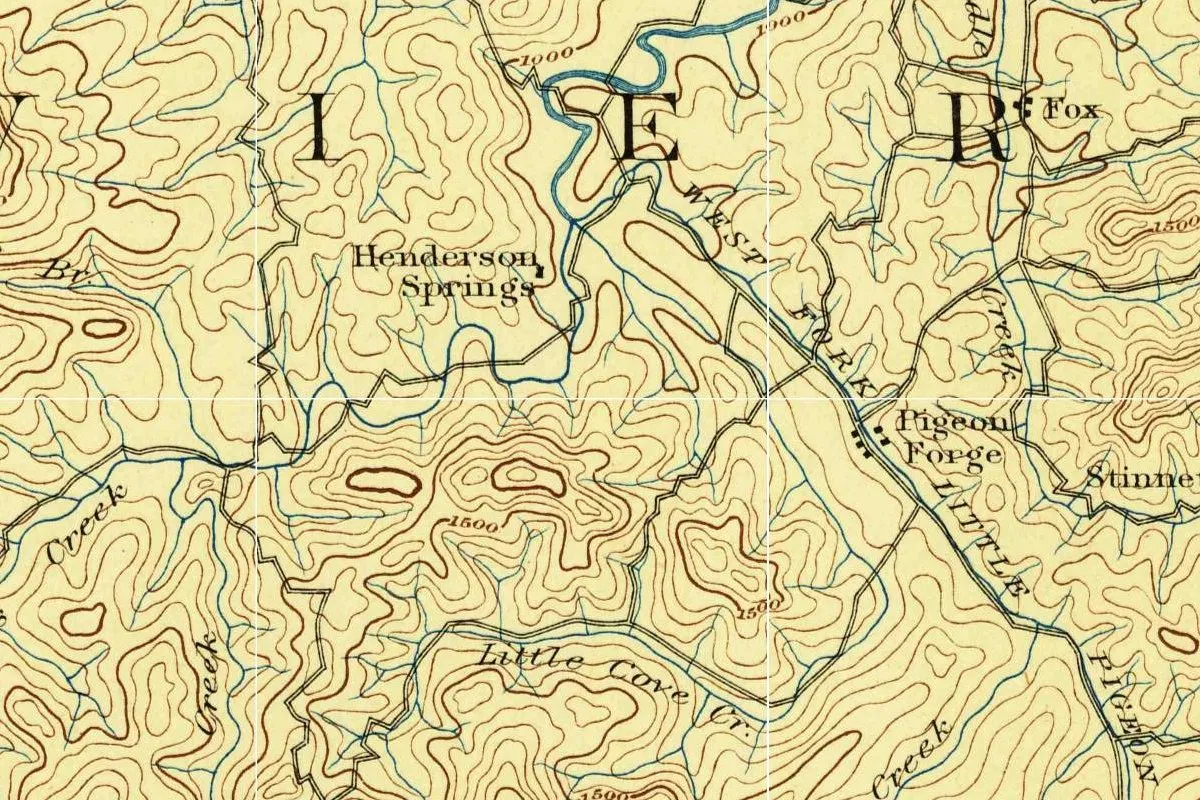
The same river runs through Gatlinburg, whose valley sits on the West Prong of the Little Pigeon. On the 1892 map at the top of this page, the river at Pigeon Forge is labeled “West Fork” and “Little Pigeon.”
The forge half
The second word came from iron. The tourism department and the Old Mill both say Isaac Love built an iron forge there in 1817. The Old Mill calls it “the first industry on the river,” and says its glow “was said to be visible from surrounding ridges.”
The National Register nomination is a little more cautious about the date. “As early as 1820 Isaac Love began iron production operations in the area,” it says. He dug the ore from hillside banks, carried it to the river and smelted it “at the rustic forge which occupied the same site as the Old Mill.” By 1836, Love and his three sons, William K., James L. and Preston A. Love, had about 7,000 acres (2,800 ha) for the business. Some of it came cheap: the Tennessee legislature let land “unfit for cultivation” be taken tax free for iron works.
The ore wasn’t good enough, or plentiful enough, to keep the forge going. The nomination says full-time work stopped by 1838, with occasional runs until the 1860s.
If you like towns named for ironworks, there’s Clifton Forge, Virginia, where William Lyle Alexander named his forge for his father’s estate. And Birmingham, Alabama, borrowed its name from England’s iron town.
A mill, a post office and a name
The mill came next. The nomination dates it to 1830 and lists Isaac Love as the builder. The Old Mill’s own history credits his son William with building the gristmill “to serve the mountain families who farmed this valley.”
The post office is where the name was made official. The Old Mill says that “by 1842,” the first post office “was established inside the mill, and William Love became the first postmaster. One of his first duties was to name the town.” He chose Pigeon Forge, it says, “for two reasons”: the passenger pigeons that “once filled the sky by the hundreds of thousands,” and the iron forge next door.
The Pigeon Forge Chamber of Commerce gives a slightly earlier year: “In 1841, Love’s son William built the post office and gave the town the name of Pigeon Forge.” The two accounts agree on the man and the reasons. They differ by a year on the date, and on whether the post office was a building of its own or a room in the mill.
The Loves didn’t keep the place much longer. The Old Mill says the family sold the forge and mill to John Sevier Trotter in 1849, and that by the Civil War the forge no longer worked. In 1885, according to the nomination, “the forge below the mill was dismantled and sent to Kentucky.” The mill stayed, and it kept changing jobs. During the Civil War, the nomination says, looms were set up there to make cloth for the military, and in the early 20th century a generator at the mill supplied the area with electricity until 1930. The tourism department says it “is in operation today.” Where exactly the forge stood depends on the source. The 1974 nomination puts it on “the same site as the Old Mill,” while the Old Mill says “nearby” and “next door,” so if you stand by the mill wheel, you’re at the forge site or close to it.
The birds that gave half the name
The pigeons went the way of the forge. The National Park Service’s page on the species says “the last passenger pigeon, Martha, died in the Cincinnati Zoo in 1914.” So by the time Pigeon Forge incorporated as a city, in 1961 by the Chamber’s account, the birds and the forge had both been gone for decades.
Pigeon Forge on the 1892 map
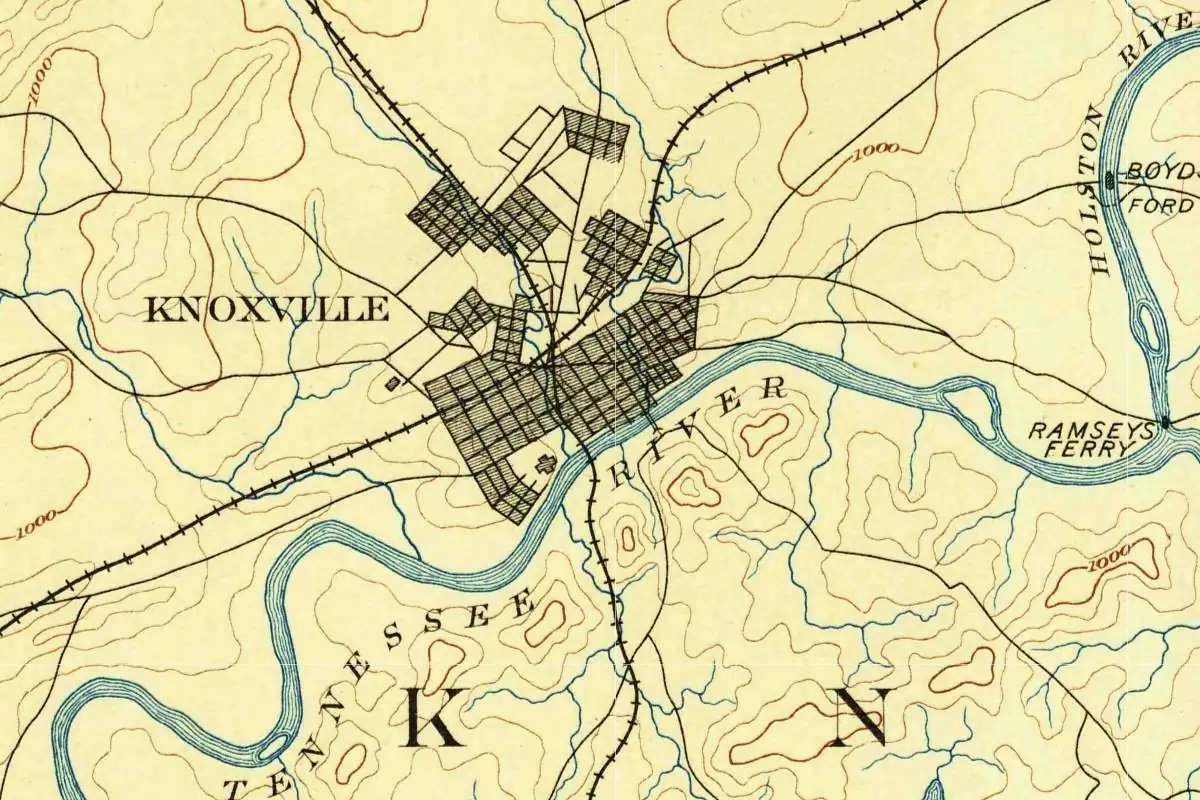
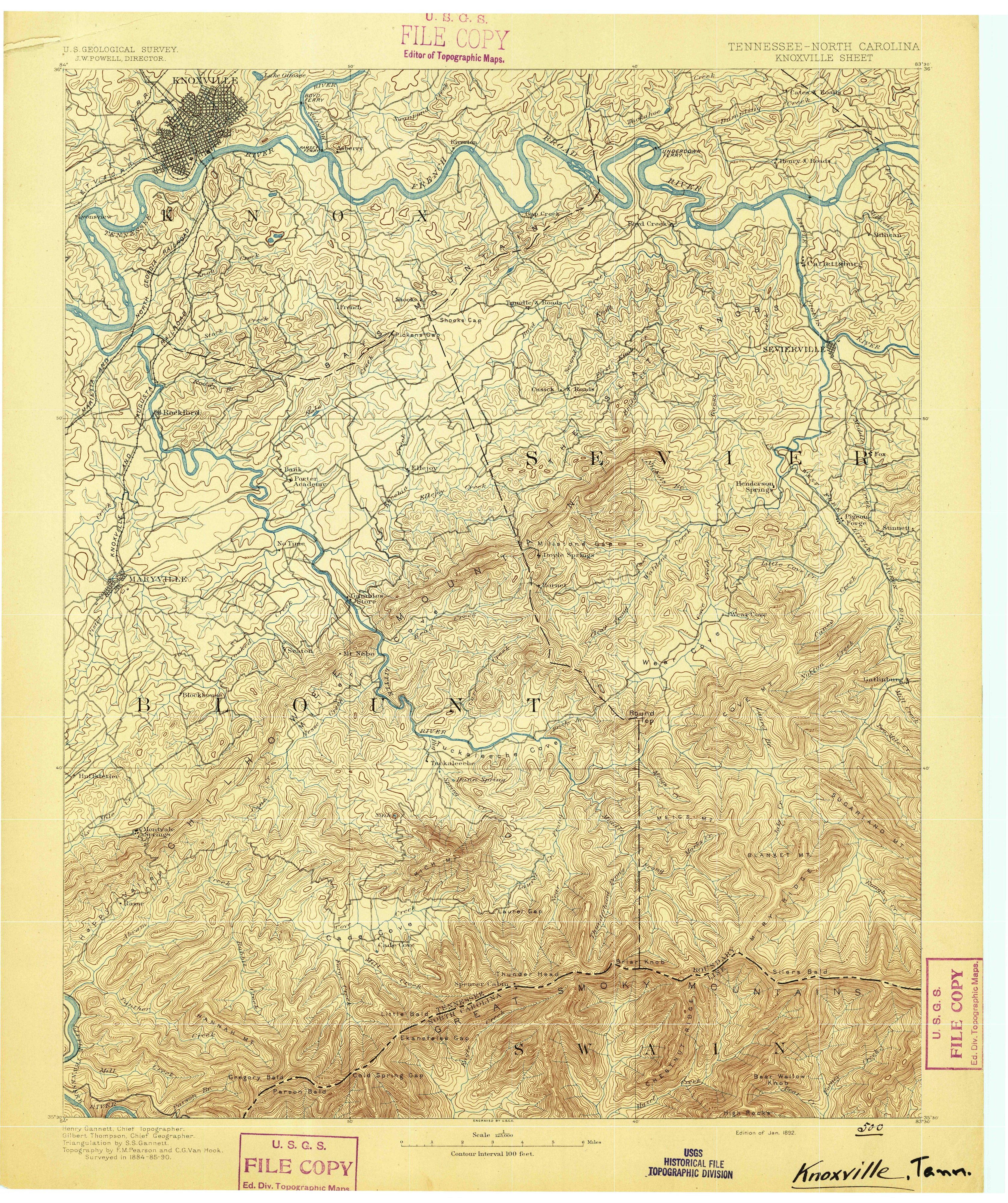
The map at the top of this page comes from the Geological Survey’s Knoxville sheet, a 1:125,000 map of Tennessee and North Carolina, in its “Edition of Jan. 1892.” The margin says the area was “Surveyed in 1884-85-90” and lists Henry Gannett as chief topographer, with topography by F. M. Pearson and C. G. Van Hook. The 1886 edition of the same sheet doesn’t label Pigeon Forge at all. On the full 1892 sheet, Pigeon Forge sits on the right-hand side, a little above the middle, with Sevierville, Gatlinburg and Knoxville also on the sheet.
In this detail, Pigeon Forge is a cluster of small black squares beside the river. Henderson Springs is marked to the northwest. The Chamber says a health resort opened there in the 1870s. The contour lines are drawn every 100 feet (30 m).
Quick answers
Why is it called Pigeon Forge?
Because of the Little Pigeon River, named for the passenger pigeons that flocked there, and the iron forge Isaac Love built beside it, according to the 1974 National Register nomination and the town’s tourism department.
Who named Pigeon Forge?
William Love, Isaac Love’s son and the first postmaster, according to the Old Mill and the Chamber of Commerce.
Is Isaac Love’s forge still there?
No. The National Register nomination says the forge below the mill was dismantled in 1885 and sent to Kentucky. The mill built in 1830 still stands.
Key dates
- 1817Isaac Love sets up an iron forge on the Little Pigeon River, by the date the Old Mill, the Chamber and the tourism department give.
- 1820Isaac Love has begun iron production in the area by this year, according to the 1974 National Register nomination.
- 1830The mill is built; the National Register nomination puts it on the forge site.
- 1841The Chamber's date for the post office William Love built and named Pigeon Forge.
- 1842By this year, the Old Mill says, the first post office is inside the mill, with William Love as postmaster.
- 1849The Love family sells the forge and mill to John Sevier Trotter.
- 1885The forge below the mill is dismantled and sent to Kentucky.
- 1892The Geological Survey's Knoxville sheet labels Pigeon Forge; the 1886 edition did not.
- 1914Martha, the last passenger pigeon, dies at the Cincinnati Zoo.
- 1961Pigeon Forge incorporates as a city.
Things to do in Pigeon Forge, Tennessee
The Old Mill
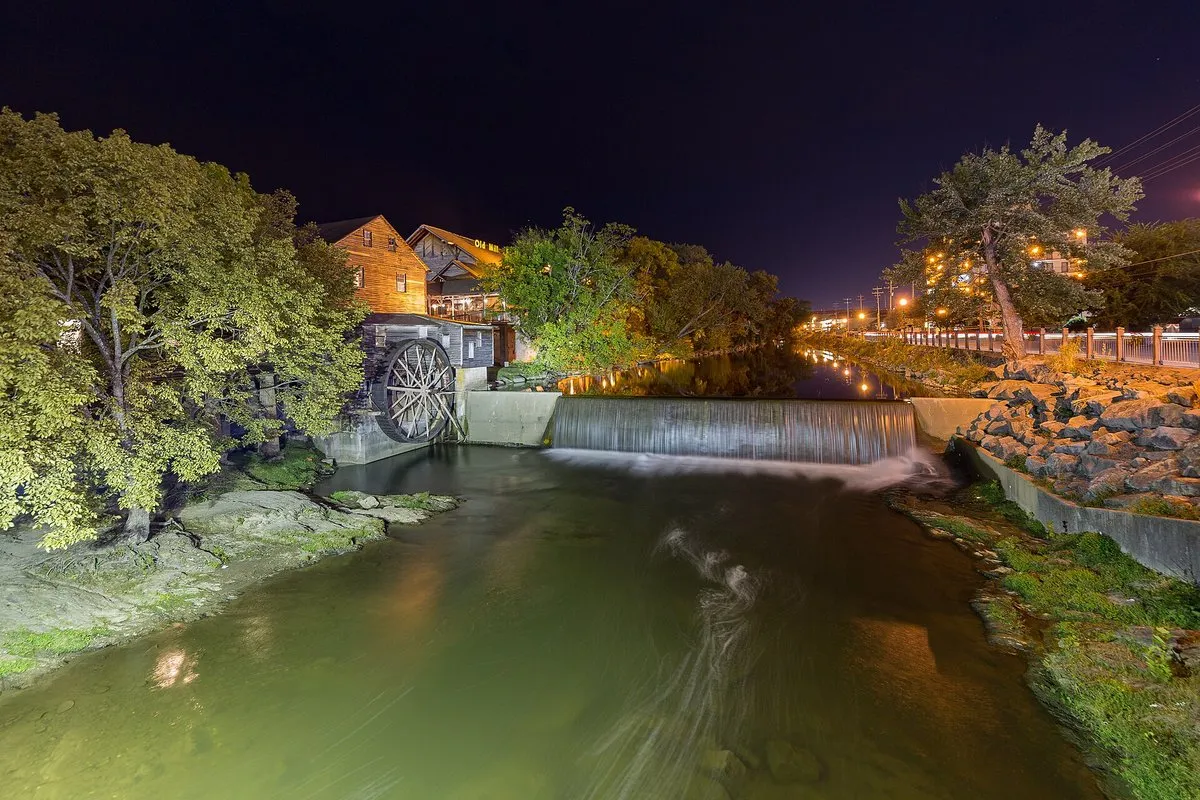
A water-powered mill on the east bank of the Little Pigeon River, built in 1830 where, or near where, Isaac Love's forge stood, and listed on the National Register of Historic Places. It's still in operation, with a restaurant and shops around it.
Patriot Park
A city park with a half-mile (0.8 km) walking trail, memorials to local veterans, and the flags of all 50 states.
Dollywood
A theme park spanning 160 acres (65 ha) in the Great Smoky Mountains, with more than 50 rides and demonstrations by master craftsmen. The tourism department calls it Tennessee's most visited commercial attraction.
Great Smoky Mountains National Park
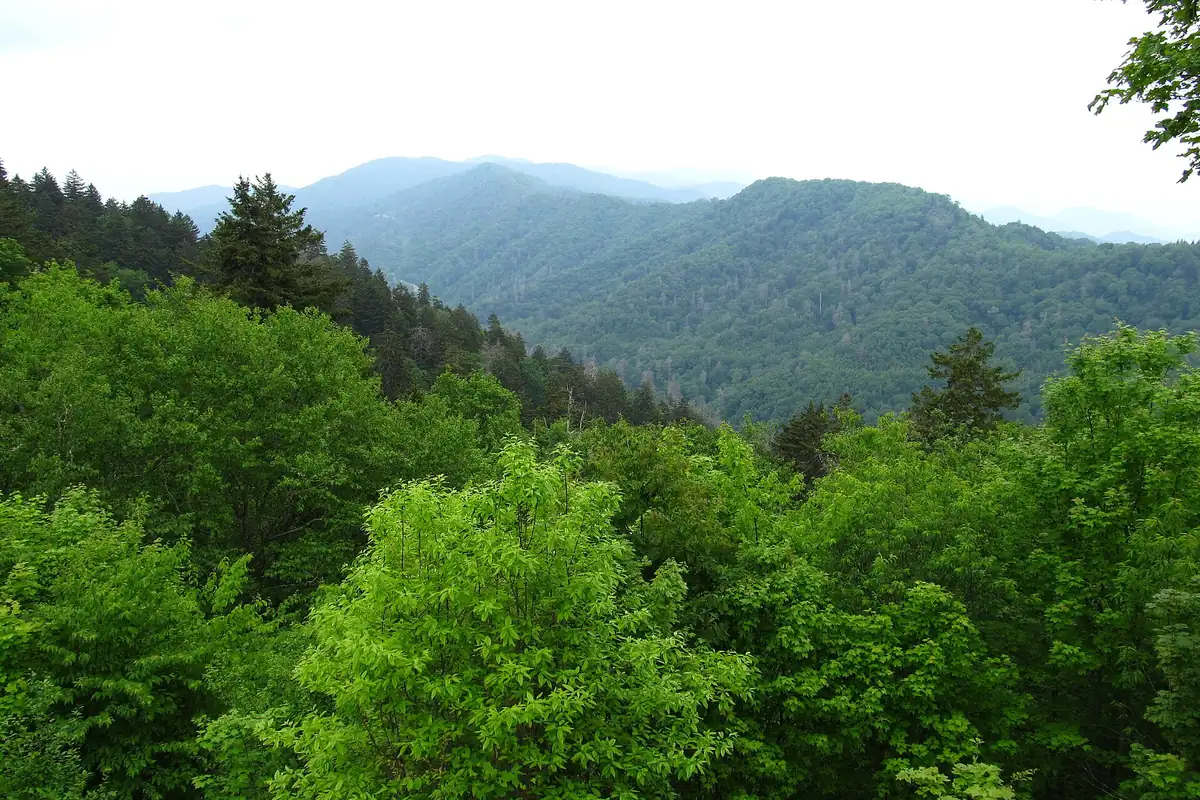
The national park on the North Carolina and Tennessee line, with forested ridges, a wide range of plants and wildlife, and what's left of old Southern Appalachian mountain life. The park service says no national park gets more visitors.
Getting there
Open Pigeon Forge in Google Maps
Opens in a new tab. The pin is the center of Pigeon Forge in the USGS place-name record.
The closest airports, Amtrak stations and intercity bus stops, measured in a straight line from the center of Pigeon Forge.
Airports
- McGhee Tyson (TYS) Alcoa 25 mi 40 km
- Asheville Regional (AVL) 62 mi 100 km
Amtrak trains
- Toccoa station (TCA) 85 mi 136 km
- Clemson station (CSN) 86 mi 139 km
Intercity buses
- Greyhound Knoxville Area Transit Bus Stop 23 mi 37 km
- Sunway Charters Asheville 58 mi 93 km
Distances are as the crow flies, not by road. We don't list schedules or fares because they change; check with the airline, Amtrak or the bus company before you go. Official data (FAA commercial service airports (2025), FAA airport locations, Amtrak stations and Intercity Bus Atlas) from the FAA and the U.S. Bureau of Transportation Statistics, checked Nov 18, 2026.
Sponsored
Staying in Pigeon Forge?
Compare hotels in Pigeon Forge, Tennessee, on Expedia.
See hotels in Pigeon ForgeWe may earn a commission if you buy through this link. It never changes what we write. Read our affiliate disclosure
Historical Sources & References
- Michael Carberry, National Register nomination, “Pigeon Forge Mill” (1974). The pigeons and the iron works behind the name, Isaac Love’s iron production “as early as 1820,” the mill of 1830, and the forge sent to Kentucky in 1885.
- The Old Mill, “Our History”. Isaac Love’s forge of 1817, William Love’s gristmill, the post office “by 1842,” the two reasons for the name, and the sale to John Sevier Trotter in 1849.
- Pigeon Forge Chamber of Commerce, “About Pigeon Forge”. William Love’s post office and the name in 1841, Henderson Springs, and the incorporation of 1961.
- Pigeon Forge Department of Tourism, “Fast Facts”. Both halves of the name, the forge of 1817, and the mill of 1830.
- National Park Service, “Missing from Our Skies”. Pigeon Forge named for the passenger pigeon, and Martha’s death in 1914.
- City of Pigeon Forge, Patriot Park, Dollywood and Great Smoky Mountains National Park. The places listed above.
- Pigeon Forge’s GNIS entry, feature 1297439 (U.S. Geological Survey). The city’s listing as a populated place in Sevier County, with its coordinates.
- U.S. Geological Survey, Knoxville sheet (January 1892). The 1:125,000 sheet the map at the top was cropped from.
Sponsored
Put this 1892 map on your wall
The Geological Survey's 1892 Knoxville sheet, the first edition to label Pigeon Forge on the Little Pigeon River, is in the public domain. Download the full-size scan for free, then have it printed on canvas with CanvasOnTheCheap.
Print a map on canvasDownload the full-size mapWe may earn a commission if you buy through this link. It never changes what we write. Read our affiliate disclosure
Spot something wrong, or know more? Tell us here. You can also email us or use our contact page. Corrections are noted here with their date, never made silently.