Biltmore Estate: Name, History and a Station Called Best
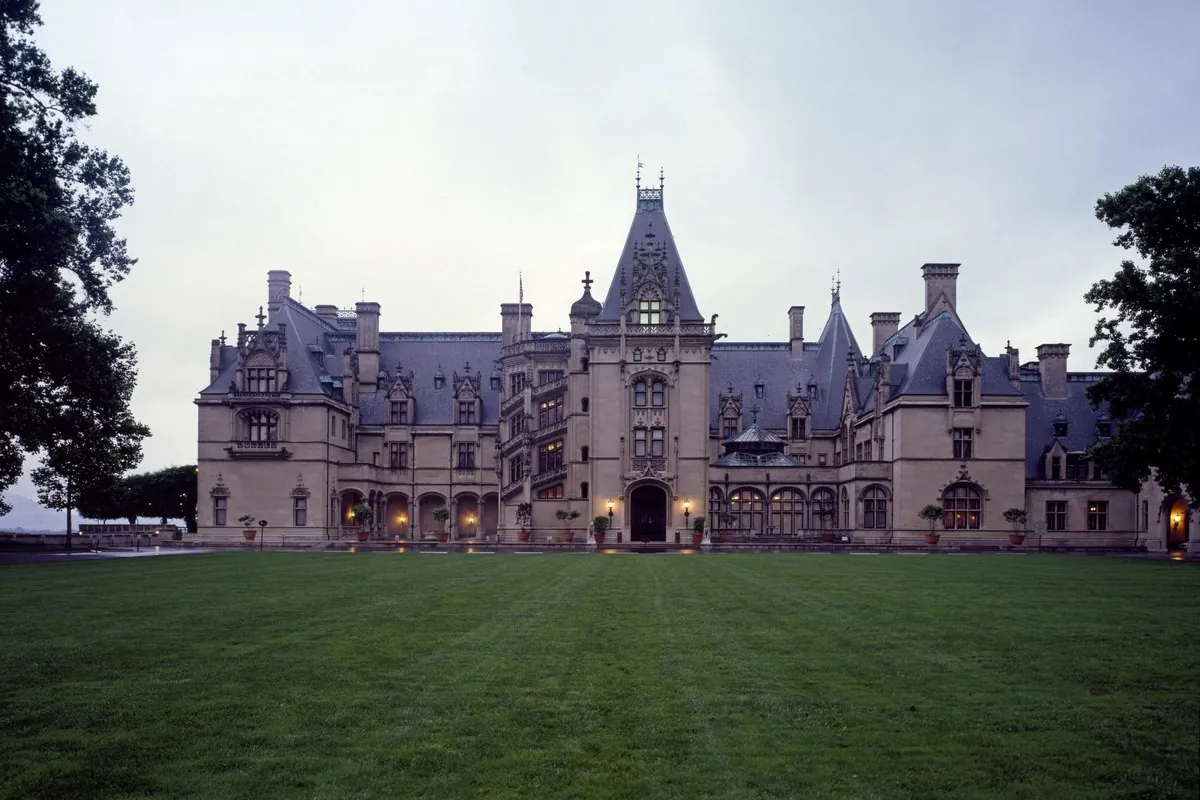
Biltmore Estate’s name joins Bildt, the Vanderbilts’ Dutch ancestral home, with an old word for rolling land, and it replaced a railroad stop called Best. George W. Vanderbilt made up the word for his North Carolina estate, and it ended up on a mansion, a town and a forest.
Why Is It Called Biltmore Estate?
The name is a compound. The Society of Architectural Historians, in its SAH Archipedia entry on the house, says the estate’s name comes from Bildt, the family’s Dutch ancestral home, and from the Middle English word “more,” meaning open, rolling land. The family name tells you the Dutch half: Vanderbilt. And the SAH says rolling hills above the French Broad River were part of what drew him here.
We haven’t seen a letter in which Vanderbilt explains the choice himself. The SAH entry is the clearest independent statement we found, so that’s the version we give here.
Vanderbilt was the grandson of Cornelius Vanderbilt, the shipping and railroad magnate, according to the SAH, and the National Park Service names his father, William Henry Vanderbilt. The SAH says he first came to the country around Asheville in 1888, traveling with his mother, liked the mild winters and the views and picked a site about five miles (8 km) south of the town.
Biltmore Estate History: The Station Called Best
Before Vanderbilt, the site went by a plain, practical name. F. A. Sondley’s 1922 history of Asheville and Buncombe County explains that in March 1880 the state sold its interest in the Western North Carolina Railroad to W. J. Best “and his associates.” When the line reached the area south of Asheville, the stop there “was made a station and called Best.”
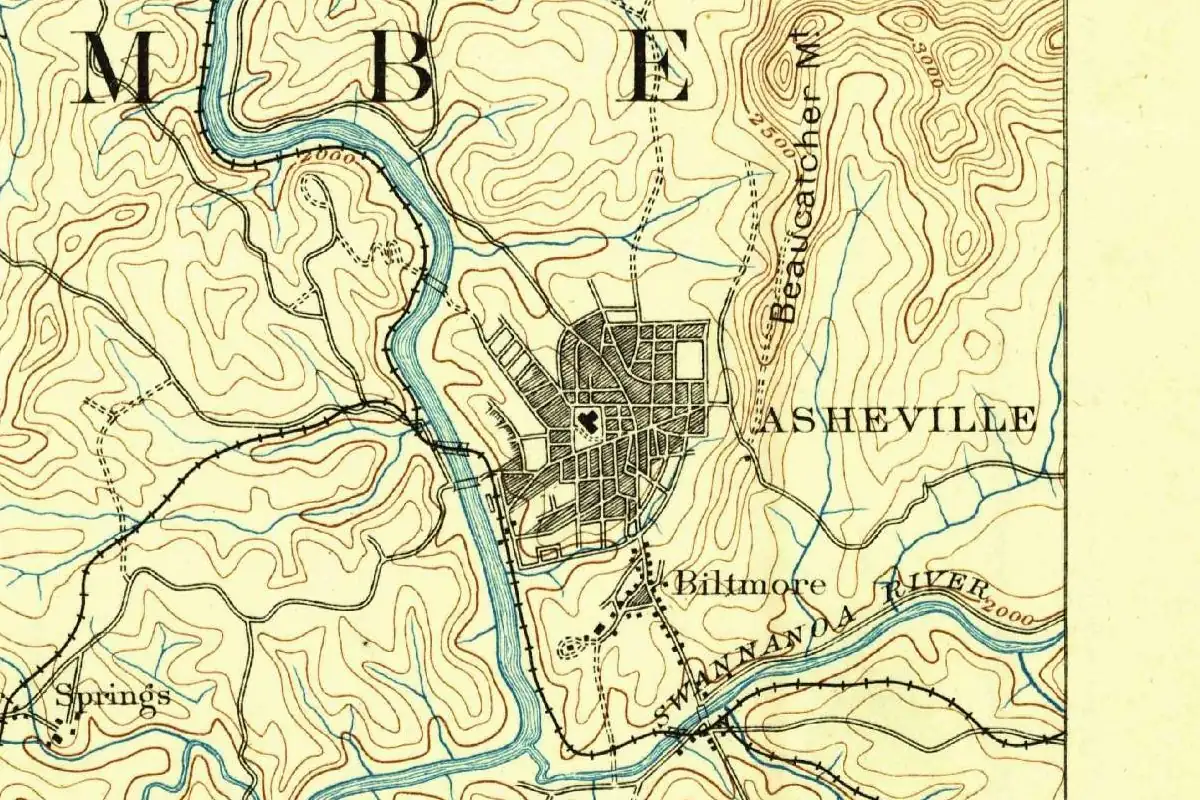
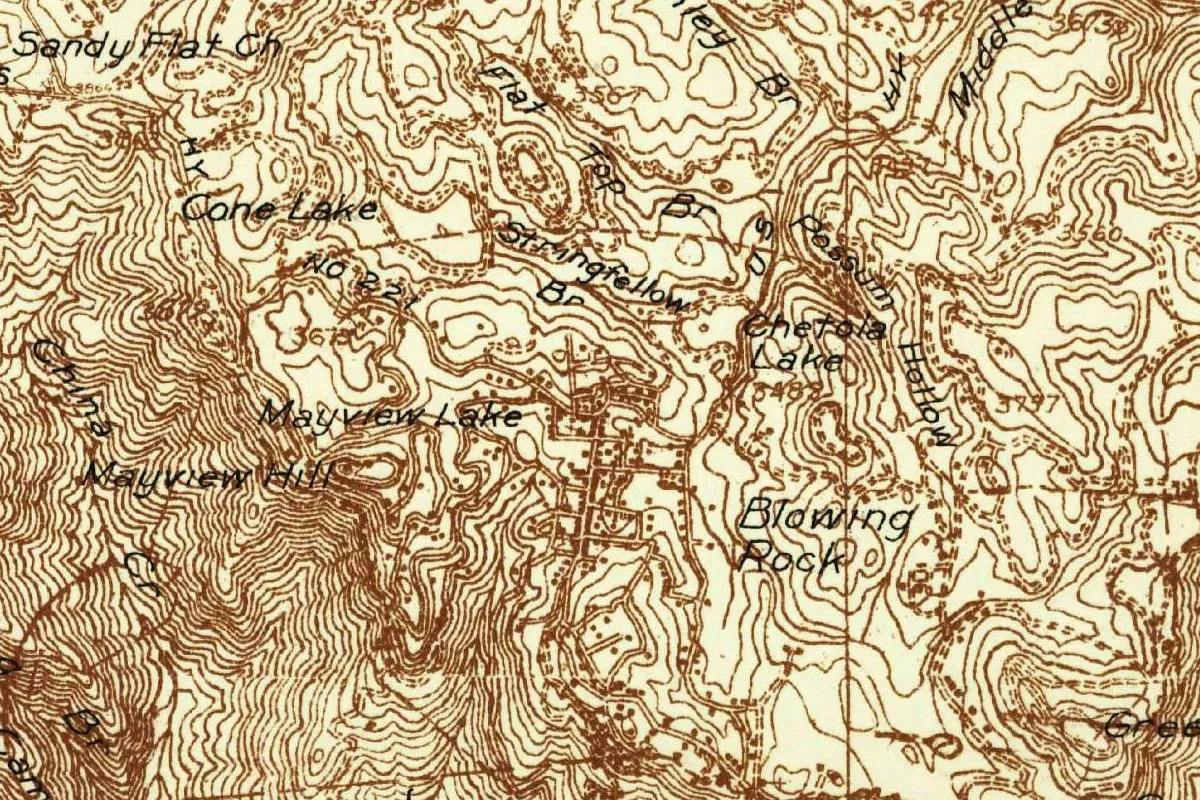
Then Vanderbilt arrived. Sondley says he began buying land in the neighborhood on May 3, 1888, and that his purchase took in Best. On its site he built a new town south of the Swannanoa River, incorporated under the name Biltmore on March 6, 1893. So there was a town called Biltmore two years before the house was finished.
If you look at our Asheville page, the 1894 federal survey map at the top of that page already shows Biltmore south of the city, beside the Swannanoa. Asheville has its own naming wrinkle: in 1795 the county clerk began writing “Asheville” in the minutes while the town’s legal name was still Morristown.
Biltmore History: The House, the Forest and the 1930 Opening
Vanderbilt hired Richard Morris Hunt to design the house (the SAH notes Hunt was the first American to train in architecture at Paris’s École des Beaux-Arts) and Frederick Law Olmsted to lay out the grounds. The SAH says Hunt and Vanderbilt toured England and France together in 1889, that building started in 1890 and that the house was finished in 1895, with 250 rooms. The estate’s own fact sheet says work began in 1889, and that Biltmore House first opened to family and friends on Christmas Eve, 1895.
The land was as big as the house. Sources give Vanderbilt’s holdings as about 120,000 acres (the SAH and the Park Service) or 125,000 acres (the 1963 landmark nomination and the estate). That nomination is about the forest more than the mansion: it says Vanderbilt put Gifford Pinchot in charge of the estate’s woodlands in December 1891, where he tried out scientific forestry on worn-out farmland. After Vanderbilt died in 1914, the SAH says, his widow, Edith, sold about 87,000 acres to the federal Forest Service. The estate says that land went into Pisgah National Forest.
The family opened Biltmore to the public in 1930, the SAH says, to bring tourists to Asheville during the Depression. In the same decade, as our Blue Ridge Parkway page explains, Asheville’s business boosters pushed to get the new parkway routed through their city. The estate covers about 8,000 acres (3,200 hectares) today, according to its own figures.
Quick answers
What Is the Biltmore Estate Name Origin?
It’s a made-up compound. According to the Society of Architectural Historians, “Bilt” comes from Bildt, the Vanderbilt family’s Dutch ancestral home, and “more” is a Middle English word for open, rolling land. The SAH doesn’t say when Vanderbilt first used the name.
What Was the Biltmore Estate Site Called Before?
Best, or at least the railroad station that stood where the town of Biltmore was built. Sondley’s 1922 county history says the stop got that name after the state sold its railroad interest to W. J. Best and a group of partners in 1880. The estate itself never carried the name Best.
When Did Biltmore Estate Open to the Public?
In 1930. The Society of Architectural Historians says the family opened the estate that year to help Asheville’s tourist trade during the Depression. Before that, the house had been a private home since Christmas Eve of 1895, when it first welcomed family and friends.
Key dates
- 1880North Carolina sells its interest in the Western North Carolina Railroad to W. J. Best and his associates; a station on the line is later called Best.
- 1888May 3: George W. Vanderbilt starts buying land near Asheville.
- 1891December: Vanderbilt hires Gifford Pinchot to manage the estate's forests.
- 1893March 6: The town of Biltmore, built where Best had been, is incorporated.
- 1895Christmas Eve: Biltmore House opens to Vanderbilt's family and friends.
- 1930The family opens the estate to the public to bring visitors to Asheville during the Depression.
Getting there
Open Biltmore Estate in Google Maps
Opens in a new tab. The pin is an approximate point for Biltmore Estate.
The closest airports, Amtrak stations and intercity bus stops, measured in a straight line from the center of Biltmore Estate.
Airports
- Asheville Regional (AVL) 7 mi 12 km
- Greenville Spartanburg International (GSP) Greer 48 mi 78 km
- Charlotte/Douglas International (CLT) 93 mi 150 km
Amtrak trains
- Greenville station (GRV) 48 mi 77 km
- Spartanburg station (SPB) 53 mi 86 km
Intercity buses
- Sunway Charters Asheville 4 mi 6 km
- Greyhound Asheville Asheland Ave 4 mi 6 km
- FlixBus Spartanburg 50 mi 80 km
Distances are as the crow flies, not by road. We don't list schedules or fares because they change; check with the airline, Amtrak or the bus company before you go. Official data (FAA commercial service airports (2025), FAA airport locations, Amtrak stations and Intercity Bus Atlas) from the FAA and the U.S. Bureau of Transportation Statistics, checked Nov 21, 2026.
Sponsored
Planning a visit?
Compare hotels near Biltmore Estate on Expedia.
See hotels nearbyWe may earn a commission if you buy through this link. It never changes what we write. Read our affiliate disclosure
Historical Sources & References
- Society of Architectural Historians, SAH Archipedia, “Biltmore”: the name from Bildt and the Middle English “more,” Vanderbilt’s 1888 visit, the site south of Asheville, about 120,000 acres, Hunt and Olmsted, the 1889 trip, building from 1890 to 1895, 250 rooms, the 87,000 acres sold to the Forest Service and the opening to the public in 1930.
- F. A. Sondley, Asheville and Buncombe County (1922), p. 165: the county history, with the 1880 railroad sale to W. J. Best, the station called Best, Vanderbilt’s purchases from May 3, 1888, the house finished in 1895 and the town of Biltmore incorporated on March 6, 1893. Public domain.
- National Historic Landmark nomination, “Biltmore Estate and Biltmore Forestry School Site” (approved 1963), North Carolina State Historic Preservation Office: the 125,000 acres bought from 1888 and Gifford Pinchot’s appointment in December 1891.
- National Park Service, “Biltmore Estate”: George’s father, William Henry Vanderbilt, Olmsted’s link to the family and the 120,000 acres in 1888.
- Biltmore, “10 Fast Facts About Biltmore”: the estate’s own figures, used only for its own dates and sizes: building from 1889, the Christmas Eve 1895 opening, about 125,000 acres in Vanderbilt’s lifetime, Pisgah National Forest and 8,000 acres today.
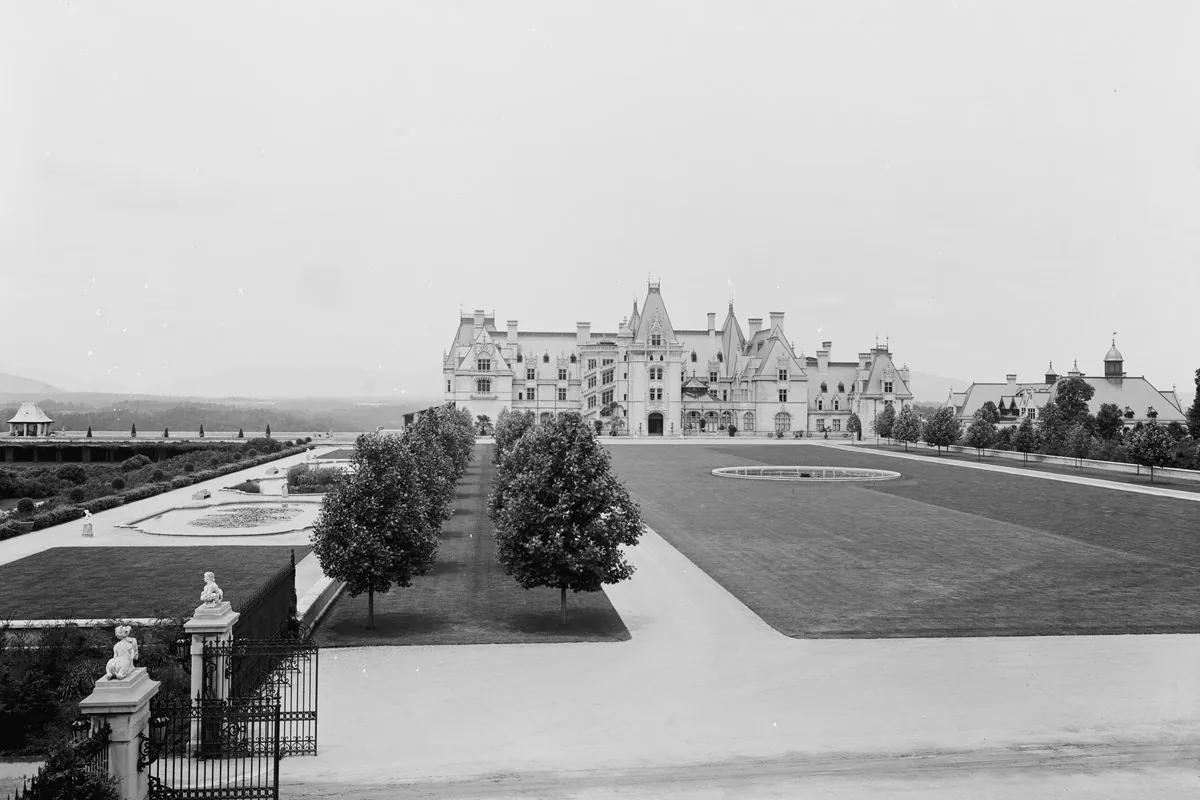
- “Biltmore House, Biltmore [i.e. Asheville], N.C.,” Library of Congress: the William Henry Jackson photo for the Detroit Publishing Co. at the bottom of this page, dated about 1902.
Spot something wrong, or know more? Tell us here. You can also email us or use our contact page. Corrections are noted here with their date, never made silently.