Graceland: The Grace Behind Elvis Presley's Home
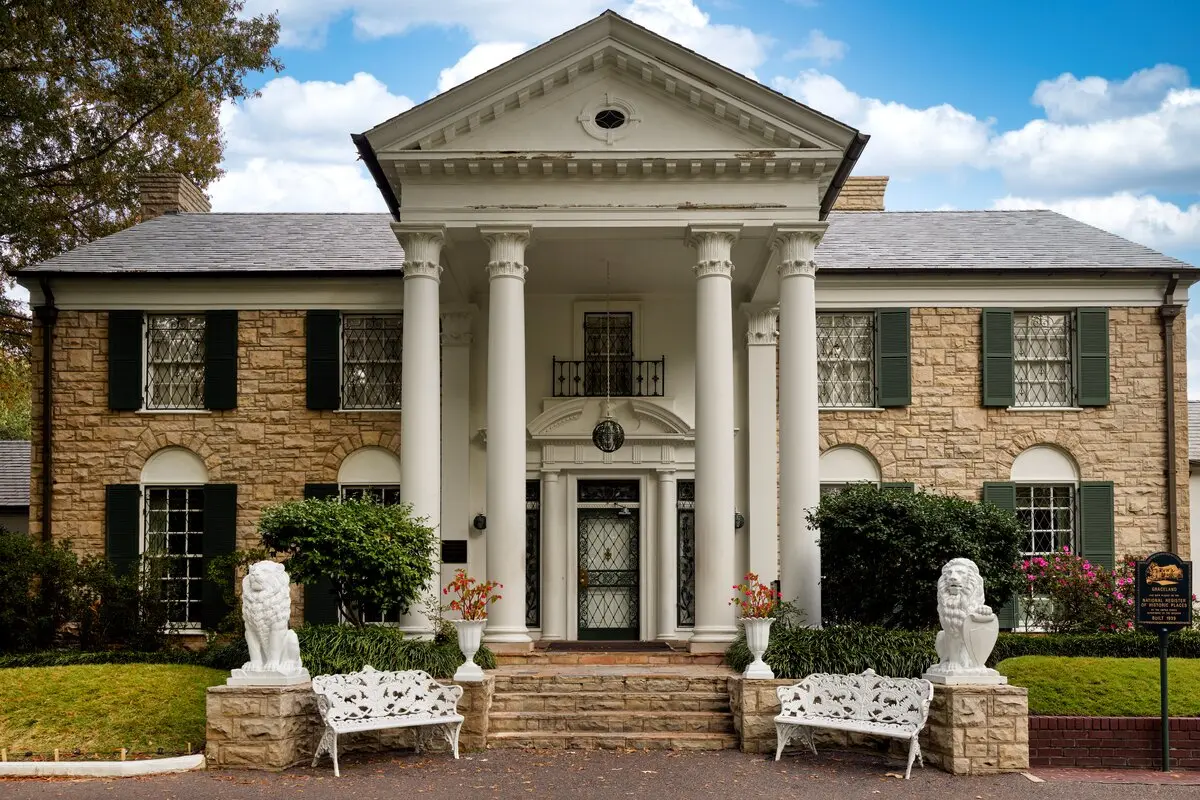
Graceland is named for Grace Toof, whose family farm had the name before her niece built the house in 1939. Elvis Presley kept it after buying it in 1957. So Graceland’s name is older than rock and roll, and it belongs to a woman the records barely describe. If you’ve assumed Elvis made it up, you’re in good company, but the property had its name before he arrived.
Why Is It Called Graceland?
The clearest statement is in the National Register nomination of 1991, written by Jennifer M. Tucker: the name predates Elvis, and the first Graceland was a farm of about 500 acres that the Toof family owned on the site in the 1800s. The National Historic Landmark nomination, prepared by Jody Cook of the Park Service in 2004, names the woman behind it. Stephen C. Toof was Ruth Brown Moore’s grandfather, and she inherited the farm from her aunt Grace, Toof’s daughter, “who gave the property her name.”
The Tennessee Encyclopedia tells it from the house’s side. Camille Wells writes that Ruth Moore, a Toof through her mother, and her husband built the house, which she named Graceland after the family’s old farm. Graceland’s own history page agrees that the farm was named for a female relative called Grace.
Not one of these sources dates the farm’s name, or anything more about Grace herself. The Landmark nomination says only that the land had been in Ruth Moore’s family for nearly a century by 1939.
Graceland History: Who Built the Mansion?
Ruth Brown Moore and Dr. Thomas D. Moore, her husband, put up the house in 1939, according to both nominations. The Landmark nomination describes a two-story Classical Revival house with outbuildings, designed by the Memphis firm of Furbringer and Erhman. The 1991 nomination spells the second name Ehrman and gives the partners as Max Furbringer and Merrill Ehrman.
Their daughter, Ruth Marie, was a “musical prodigy” in the Landmark nomination’s words, playing piano and harp by age four. It says the architects laid out the house to show off her talent, with front rooms that could open up to hold as many as 500 listeners. Graceland’s history page adds that she later played harp with the Memphis Symphony.
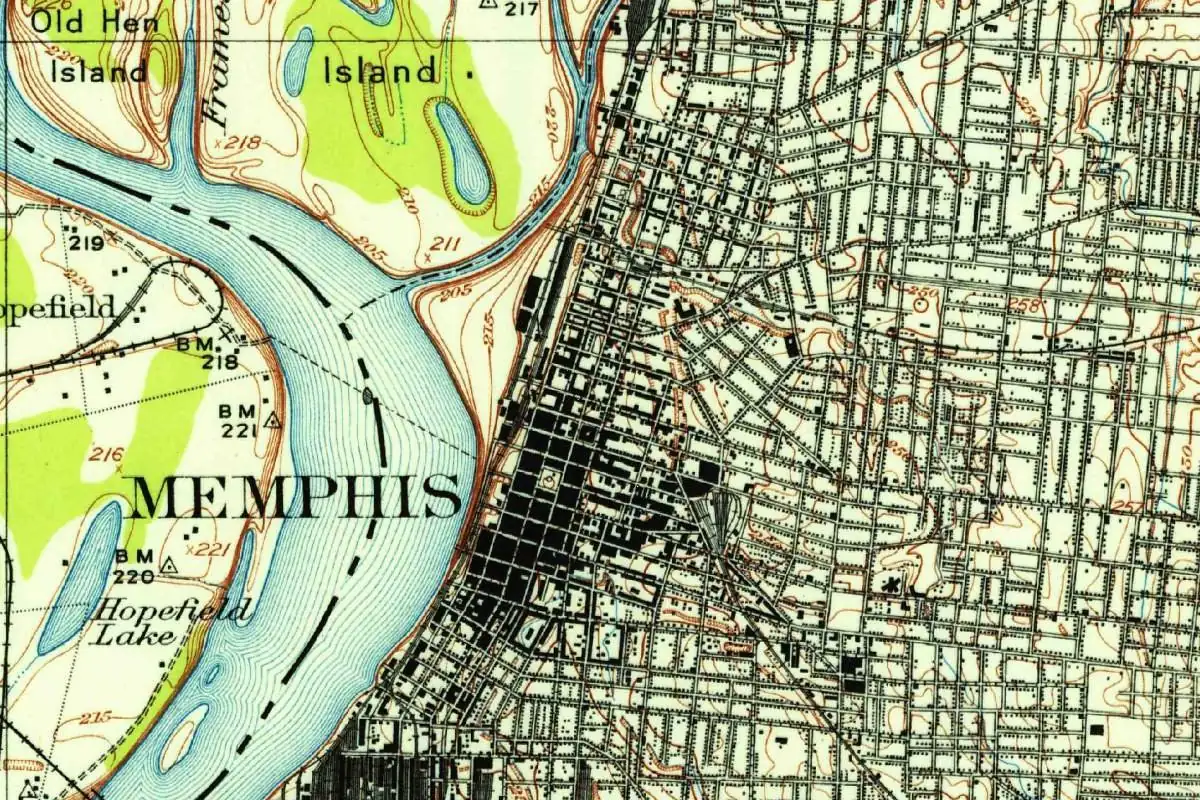
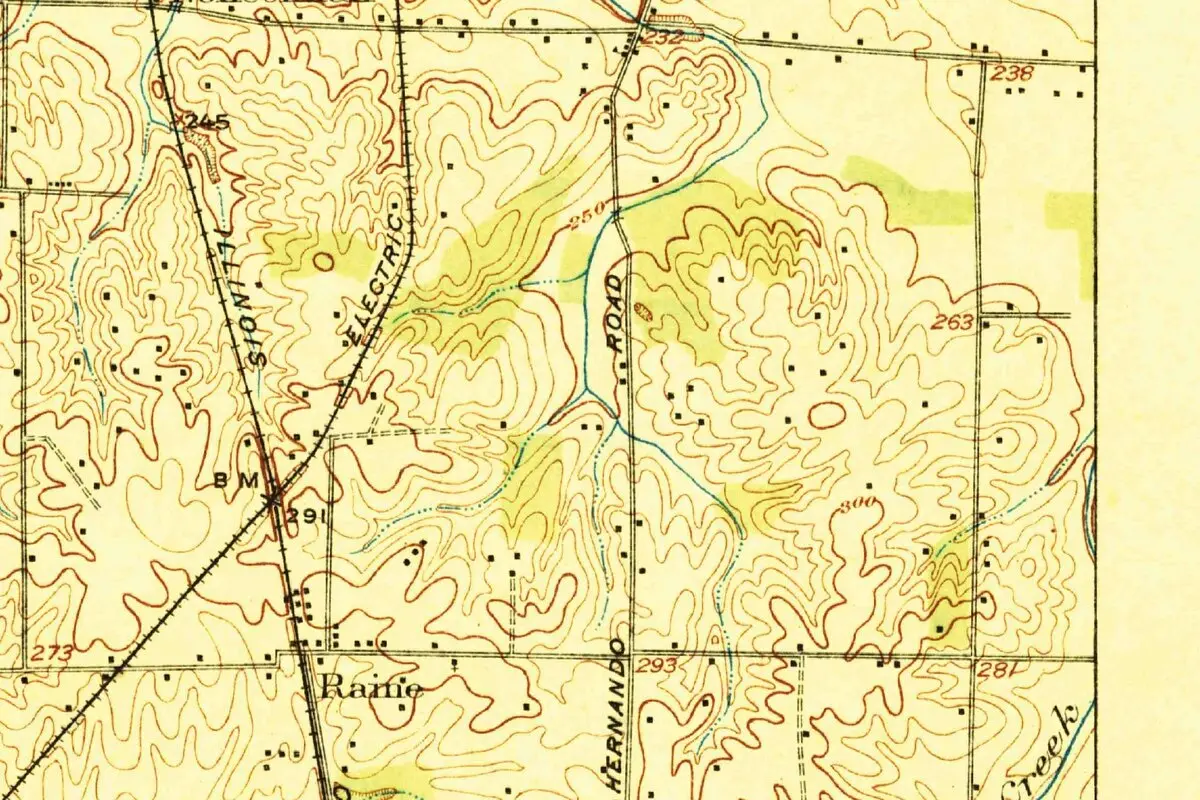
The 1927 map that closes this page shows the area before any of that. On the Geological Survey’s 1927 Memphis sheet, the spot where the house went up a dozen years later sits in open country beside Hernando Road, with railroad lines and scattered farm buildings nearby.
When Did Elvis Buy Graceland?
In March 1957. The Landmark nomination says the Presleys had bought a house in east Memphis, on Audubon Drive, in 1956, but it didn’t suit them for long. They bought Graceland, then a “farm” of 13.8 acres about 10 miles (16 km) south of downtown in Whitehaven, and moved in that April: Elvis with his mother and father plus his grandmother, Minnie May Presley. A Library of Congress note with Carol M. Highsmith’s photo gives the date as March 19, 1957, and the price as $102,500. Elvis was 22, Graceland’s history page says.
He kept the name. Whitehaven was still mostly rural then, and the 1991 nomination says Memphis annexed that part of Shelby County in 1969. Graceland opened its doors to visitors in 1982, and the Landmark nomination dates its period of significance from 1957 to 1977, the year Presley died.
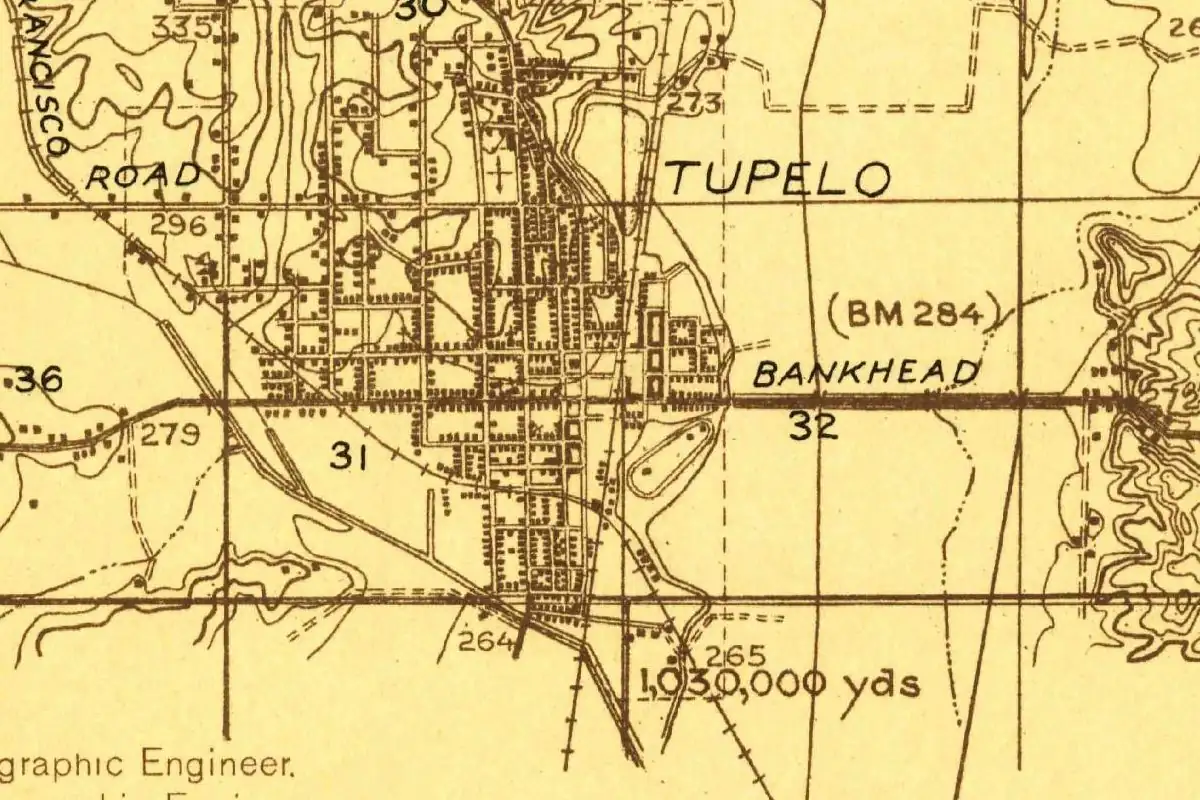
The city around it has a borrowed name too. Memphis is named after the old Egyptian city, and in 1820 a notice for the newly laid-out town called the river “the American Nile.” In Tupelo, Mississippi, you can visit Elvis’s birthplace, a two-room house that his father, grandfather and uncle put up, where his life began on January 8, 1935.
Quick answers
Who Named Graceland?
Grace Toof, daughter of Stephen C. Toof, lent it her name. The Toof family’s farm on the site was called Graceland in the 1800s, and Grace’s niece, Ruth Brown Moore, kept the name when she and her husband built the house in 1939. Elvis Presley bought it, name and all, in 1957.
Did Elvis Presley Name Graceland?
No. According to the 1991 National Register nomination, the name is older than his purchase, and the Landmark nomination says Grace Toof gave the farm her name. Ruth Moore, Grace’s niece, used it for the house in 1939, almost two decades before Elvis moved in.
Who Built Graceland?
Ruth Brown Moore and Dr. Thomas D. Moore built it in 1939, on land her family had owned for nearly 100 years. The Memphis architects Furbringer and Ehrman designed the two-story Classical Revival house, with front rooms that could open up for musical evenings.
When Did Graceland Open to the Public?
In 1982, five years after Elvis Presley died in 1977. It was added to the National Register in 1991, and a National Historic Landmark nomination followed in 2004.
Key dates
- 1800sThe Toof family's farm on the site, about 500 acres, is called Graceland, after Stephen C. Toof's daughter Grace.
- 1939Ruth Brown Moore, Grace's niece, and Dr. Thomas D. Moore build the house and keep the family's name for it.
- 1957March: Elvis Presley buys Graceland, then about 13.8 acres in rural Whitehaven, and moves in that April.
- 1969Memphis annexes the part of Shelby County that includes Whitehaven.
- 1977Presley dies; the Landmark nomination ends Graceland's period of significance with this year.
- 1982Graceland opens its doors to visitors.
- 1991November: Graceland goes on the National Register.
Getting there
Open Graceland in Google Maps
Opens in a new tab. The pin is an approximate point for Graceland.
The closest airports, Amtrak stations and intercity bus stops, measured in a straight line from the center of Graceland.
Airports
- Frederick W Smith International/Memphis (MEM) 3 mi 4 km
- Jackson Regional (MKL) 73 mi 118 km
Amtrak trains
- Memphis station (MEM) 6 mi 10 km
- Marks station (MKS) 56 mi 90 km
Intercity buses
- FlixBus Memphis Greyhound Bus Station 2 mi 3 km
- Delta Bus Lines Inc. Memphis (Airport) 2 mi 3 km
- Jefferson Lines Memphis (MATA Airways Transit Center) 2 mi 4 km
Distances are as the crow flies, not by road. We don't list schedules or fares because they change; check with the airline, Amtrak or the bus company before you go. Official data (FAA commercial service airports (2025), FAA airport locations, Amtrak stations and Intercity Bus Atlas) from the FAA and the U.S. Bureau of Transportation Statistics, checked Nov 21, 2026.
Sponsored
Planning a visit?
Compare hotels near Graceland on Expedia.
See hotels nearbyWe may earn a commission if you buy through this link. It never changes what we write. Read our affiliate disclosure
Historical Sources & References
- Jody Cook, “Graceland,” National Historic Landmark nomination (2004). Page 4: the Moores’ 1939 house, Stephen C. Toof’s granddaughter, and her aunt Grace as the one “who gave the property her name”; Ruth Marie and the music rooms; Furbringer and Erhman; roughly ten miles south of downtown; opened 1982; significance 1957-1977. Page 14: Audubon Drive; the 13.8-acre “farm” in Whitehaven bought in March 1957; the move in April.
- Jennifer M. Tucker, “Graceland,” National Register nomination (1991). The name predates Presley’s purchase; the Toof farm of five hundred acres; Max Furbringer and Merrill Ehrman; the annexation of 1969.
- Camille Wells, “Graceland,” Tennessee Encyclopedia. Ruth Moore, whose mother was a Toof, named the house after the old family farm.
- Graceland, “History of Graceland”. The operator’s history: the farm named for a relative called Grace; Ruth Marie Moore and the Memphis Symphony; Elvis’s age in 1957.
- Carol M. Highsmith, “Front exterior of Graceland” (Library of Congress). The photo on this page, taken in 2022; its notes give the purchase on March 19, 1957, for $102,500.
- USGS, Memphis, Tennessee-Arkansas, 1:62,500 map, 1927 edition. Shown on this page; surveyed 1916, engraved 1921; a U.S. government work, free to reuse.
Spot something wrong, or know more? Tell us here. You can also email us or use our contact page. Corrections are noted here with their date, never made silently.