The Alamo's Name: Cottonwoods or Soldiers From Parras
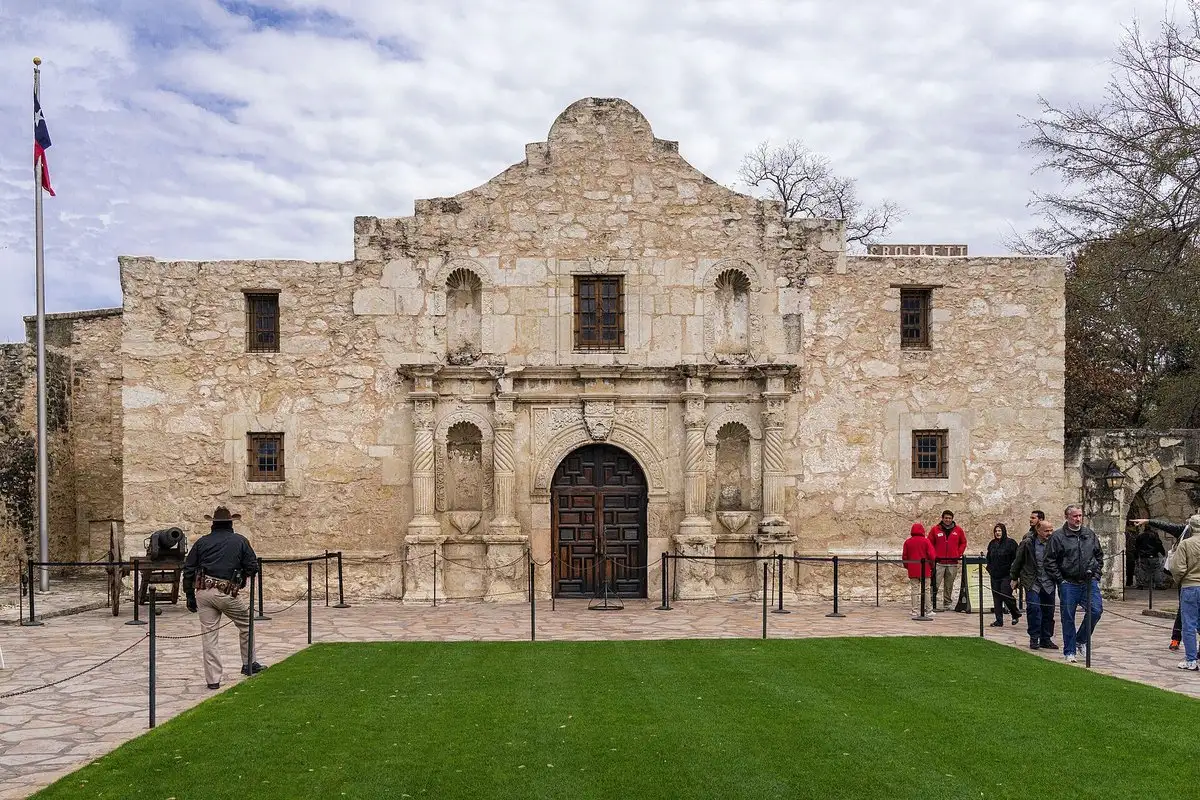
The Alamo was Mission San Antonio de Valero, and its nickname has two stories: the cottonwoods, or álamos, around it, or soldiers from Álamo de Parras. Both stories are in print, and no document we’ve found settles which one is right.
A mission first
The Alamo didn’t start as a fort. The Handbook of Texas says Mission San Antonio de Valero was founded on May 1, 1718, and that it was started by Father Antonio de San Buenaventura y Olivares, of the College of Santa Cruz of Querétaro. It moved more than once in its early years. After a hurricane destroyed most of its buildings in 1724, it reached its last site on the east bank of the San Antonio River. The church you see today was begun in the 1750s, and the Spanish government ordered the mission secularized in 1793.
The mission’s saint came from the river. Our San Antonio article tells how Spanish travelers named the river for St. Anthony in 1691, and how Martín de Alarcón’s 1718 expedition founded the fort and the mission there; the Handbook names Olivares as the friar who started the mission.
So where does “Alamo” come in? There are two answers.
Story one: the cottonwoods
Álamo is a Spanish word for a tree. In 1890, William Corner’s San Antonio de Bexar: A Guide and History explained it in a footnote:
“‘Alamo’ is the Spanish name for the cottonwood tree, a species of poplar quite common upon the banks of Texas rivers and creeks …”
Then he added: “The Alamo seems to have been built in a grove of these trees.” Note his “seems,” because you won’t find more certainty than that in his book. Corner doesn’t say who first called the mission the Alamo, or when, and he doesn’t cite a document for the grove.
Story two: the soldiers from Álamo de Parras
The Handbook of Texas tells a different story. Its entry on the Second Flying Company of San Carlos de Parras says the company, 100 Spanish lancers, arrived in Texas in January 1803, and that “the men came from the pueblo of San José y Santiago del Álamo, near Parras in southern Coahuila.” The Handbook’s entry on the mission lists it among the site’s uses: “quarters for the Second Flying Company of San Carlos de Parras (1803-).” The company entry goes on: “In place of the company’s long name a shortened one, La Compañía del Álamo, or simply El Álamo, became commonly used. Through this association Mission Valero came to be known as the Alamo.”
That’s a clear answer, but the Handbook entry doesn’t quote the document where the name first shows up.
A record from 1788
Corner’s book has one more clue. In an interview printed in the book, Bishop Neraz leafs through the old church registers, translating from the Spanish as he goes, and reads out the title of one of them:
“Book in which are entered the Baptismal Records which were made of the children of the Second Company of Volunteers de San Carlos de Parras which stayed (or remained) in the Alamo.”
The record says the book begins on March 1, 1788. Read as the bishop translated it, that title puts a company from San Carlos de Parras at the Alamo in 1788, years before the 1803 arrival the Handbook describes. We’ve only seen his translation, though, not the book itself.
Corner adds, without a year, that “shortly after the secularization of the Alamo, a company of volunteers from San Carlos de Parras was quartered in the building.” And the Sidney Lanier essay he reprints says a San Carlos de Parras company was driven by the Comanches to take up quarters inside the Alamo’s walls in the 1700s.
None of this settles the question. The cottonwood story rests on Corner’s “seems,” and the company story rests on a Handbook entry that doesn’t quote the first document to use the name. That’s why we list the origin as disputed.
The church becomes the state’s
The state of Texas bought the mission church from the Catholic Church in 1883, the Handbook says, and conveyed it to the city of San Antonio for a museum. Seven years later, Corner could describe the church as the building “now commonly known as the Alamo.”
Quick answers
What does Alamo mean in Spanish?
Álamo is the Spanish name for the cottonwood, a kind of poplar, Corner (1890) says. It’s also part of the name of the pueblo near Parras, in Coahuila, that a Spanish cavalry company came from.
Why is it called the Alamo?
There are two stories. Corner (1890) says the mission “seems to have been built” in a grove of cottonwoods. The Handbook of Texas says the name came from the Compañía del Álamo, soldiers from Álamo de Parras quartered at the mission.
What was the Alamo’s original name?
Mission San Antonio de Valero, founded on May 1, 1718, the Handbook of Texas says.
When was the Alamo church built?
It was begun in the 1750s, after an earlier church collapsed, the Handbook says. The state of Texas bought it in 1883.
Key dates
- 1718May 1: Mission San Antonio de Valero is founded. Father Antonio de San Buenaventura y Olivares started it.
- 1724After a hurricane wrecks most of its buildings, the mission moves to its last site, on the east bank of the San Antonio River.
- 1788A baptismal book opens for the children of a San Carlos de Parras company "which stayed (or remained) in the Alamo," in Bishop Neraz's translation.
- 1793The Spanish government orders San Antonio de Valero secularized.
- 1803January: the Second Flying Company of San Carlos de Parras, from the pueblo of San José y Santiago del Álamo near Parras, arrives in Texas.
- 1883The state of Texas buys the mission church from the Catholic Church.
- 1890William Corner's guide to San Antonio says alamo means cottonwood and the mission seems to have been built in a grove of them.
Find it in Google Maps
Opens in a new tab. The pin is an approximate point for The Alamo.
Sponsored
Planning a visit?
Compare hotels near The Alamo on Expedia.
See hotels nearbyWe may earn a commission if you buy through this link. It never changes what we write. Read our affiliate disclosure
Sponsored
Want the spooky side of the Alamo?
The Alamo's name has its story above. For ghost stories, US Ghost Adventures runs walking ghost tours in San Antonio that include the Alamo.
See ghost tours in San AntonioWe may earn a commission if you book through this link. It never changes what we write. Read our affiliate disclosure
Historical Sources & References
- William Corner, San Antonio de Bexar: A Guide and History (1890). The cottonwood footnote and the church “now commonly known as the Alamo” (p. 8); the company of volunteers from San Carlos de Parras quartered in the Alamo after secularization (p. 28); Sidney Lanier’s sketch on the Parras company inside the Alamo (p. 75); Bishop Neraz and the 1788 baptismal book (p. 110).
- Randell G. Tarín, “Second Flying Company of San Carlos de Parras,” Handbook of Texas Online. The company’s arrival in 1803, its home pueblo near Parras, and the name La Compañía del Álamo.
- Susan Schoelwer, “San Antonio de Valero Mission,” Handbook of Texas Online. The 1718 founding, the 1724 move, the church begun in the 1750s, secularization in 1793 and the state’s purchase in 1883.
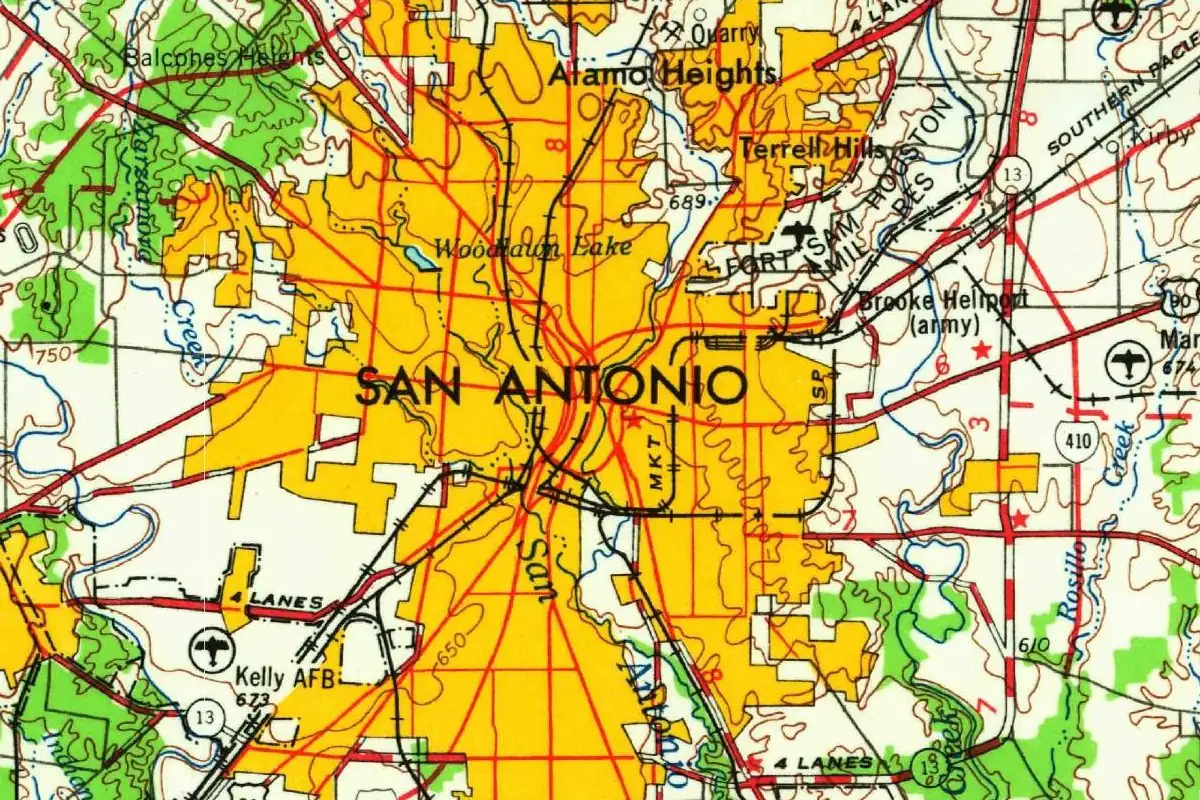
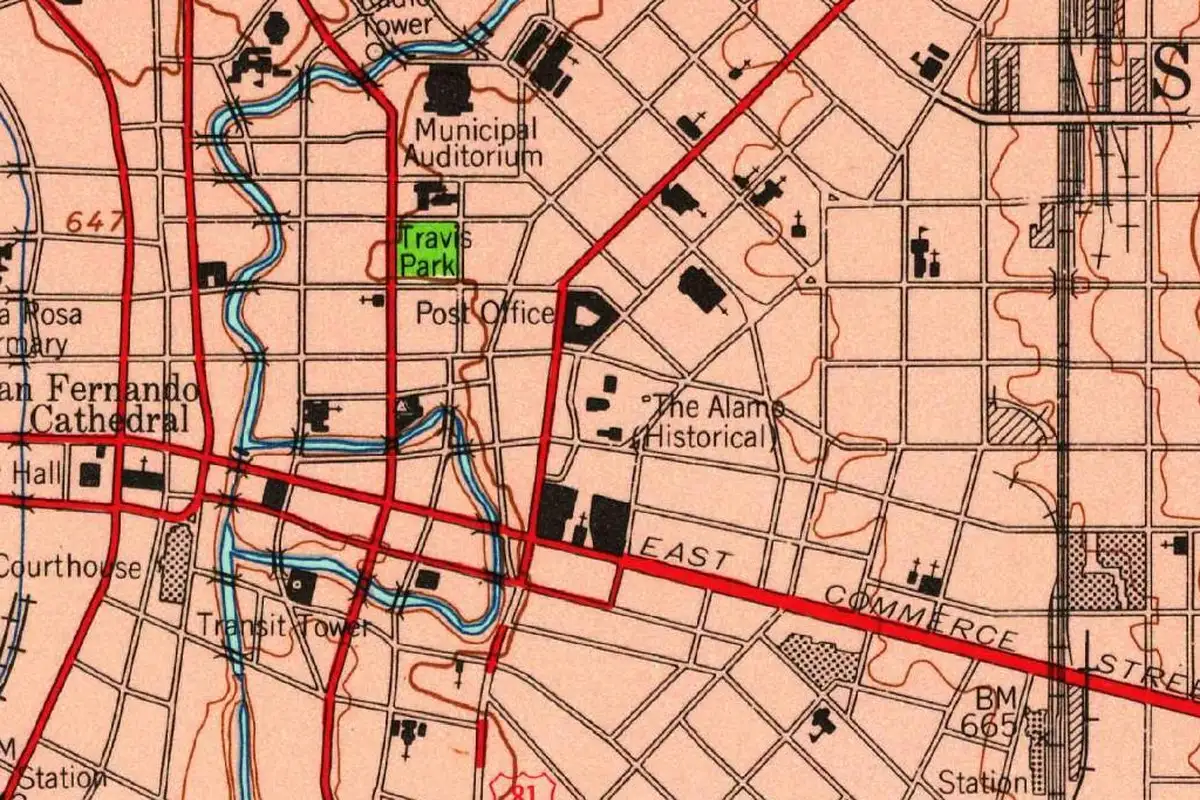
- U.S. Geological Survey, San Antonio East sheet (1953). The map on this page.
Spot something wrong, or know more? Tell us here. You can also email us or use our contact page. Corrections are noted here with their date, never made silently.