Washington Monument: Meaning, History and Visiting
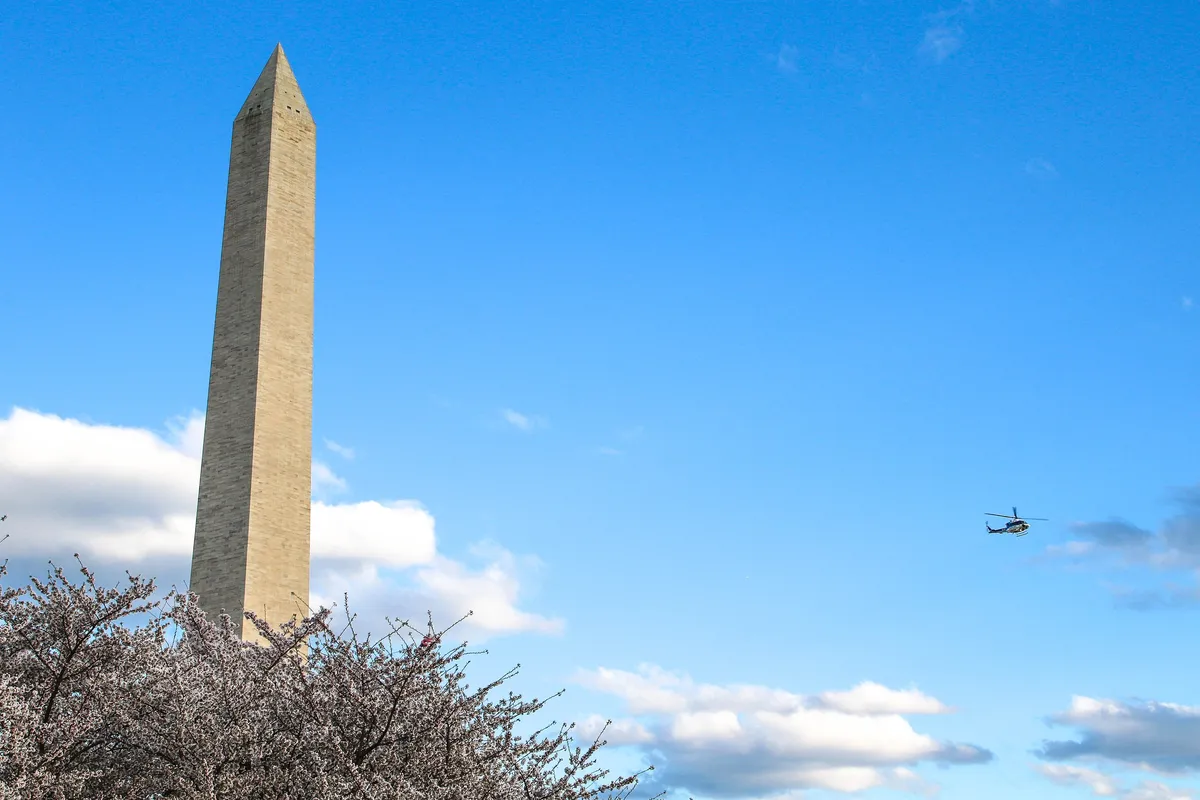
The Washington Monument took from 1848 to 1884 to build, and while it stood half-finished, its grounds went by the Beef Depot during the Civil War. It was always going to be George Washington’s monument. The fight was over everything else: who could pay for it, who ran it, and what it should look like.
What Does the Washington Monument Mean?
It honors George Washington, who led the Continental Army and then became the country’s first president. Congress proposed a memorial to him right after his death on December 14, 1799, John Lockwood writes in the National Archives’ journal Prologue, but none of the plans that followed went anywhere. The capital already carried his name, as you can read on our District of Columbia page, which quotes a September 9, 1791, letter from the city’s commissioners that called it “the city of Washington.”
The name on the monument came from private citizens. The Washington National Monument Society first met on September 26, 1833, Lockwood writes, with Chief Justice John Marshall as its president. Former president James Madison took over after Marshall died in 1835, according to the National Park Service.
What the monument was supposed to mean was bigger at first than what you see now. The design by Robert Mills that the society adopted, the Park Service says, called for a 600-foot (183 m) obelisk with an almost flat top, topped by Washington riding a chariot, and a ring of 30 columns around its base that formed a “National Pantheon,” with statues of 30 Revolutionary heroes and men who signed the Declaration. The society told Mills in 1848 to start with the obelisk alone, and the rest was never built.
Washington Monument History: Why the Obelisk Took Decades
Money was the trouble from the start. The society capped gifts at a dollar a person each year and gave each donor a certificate, the Park Service says. Lockwood counts that cap as the first of three mistakes. The second, written into the society’s constitution, limited donations to “white inhabitants,” and the third kept women from serving as members or agents. By 1838 the society had raised only $28,000 toward a project expected to cost about $1 million.
The cornerstone went down anyway, on July 4, 1848, with President James K. Polk presiding and, Lockwood notes, a first-term congressman from Illinois named Abraham Lincoln in the crowd. By late 1854 the shaft stood 152 feet (46 m) high and the money was gone.
Then the society itself was hijacked. In 1855, Lockwood writes, the Know-Nothings, as the nativist American Party was called, bought memberships at a dollar apiece after Pope Pius IX sent a stone for the monument, and voted their own people into office. The old leadership wouldn’t accept the vote, and didn’t get control back until 1858. The next year, women started a Ladies Washington National Monument Society, with women as all its officers. It broke up sometime in 1863.
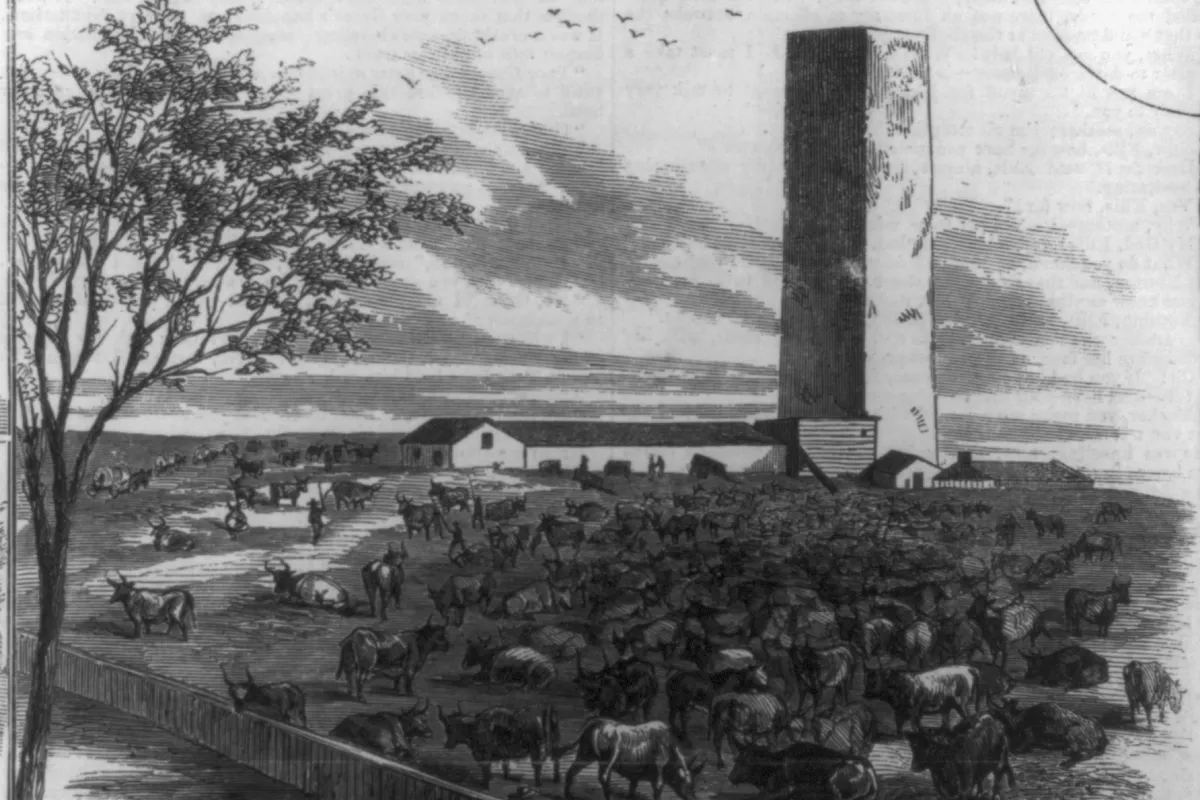
By then the unfinished stump had picked up new names. In 1861 a presidential order gave over the grounds “to use the Monument Grounds for Cattle belonging to the Government,” the Park Service says, and through the war people called them by three names: “Beef Depot,” “Cattle Meadow” and “Washington National Monument Cattle Yard.” The engraving at the bottom of this page, from Frank Leslie’s Illustrated Newspaper of February 1, 1862, carries the first of those names in its title.
Congress finally took over. A law of August 2, 1876, put the Army Corps of Engineers in charge, under Lt. Col. Thomas Lincoln Casey, and the Park Service says federal money depended on the society handing the monument over to the government. Casey’s crews strengthened the foundation, laid a second cornerstone 150 feet up in 1880, and kept going. The height came down from the planned 600 feet to 555 feet, 5 1/8 inches (169 m), about 10 times the width of the base, the way a true obelisk is built.
On December 6, 1884, Casey himself set the eight-inch aluminum tip on top, a rare metal at the time. The formal dedication came on February 21, 1885. Lockwood explains it would have been the next day, Washington’s birthday, but that was a Sunday. Ordinary visitors had to wait until October 9, 1888, when the monument opened to the public, after the hoist used to lift the stones had been turned into a passenger elevator.
The pause left a mark you can still see. The Park Service’s answer is that the government finished the top two-thirds with marble from a different quarry, and that weather has worn the two kinds of stone differently, so the color changes partway up. There’s even a third kind of marble right at the line between the two building phases.
Visiting Washington Monument: Tickets and the View
Going up is free, but you need a timed ticket for anyone 2 or older. When we checked the Park Service’s ticket page in November 2026, it said you could reserve ahead at Recreation.gov for a service charge of $1.00 a ticket, or line up for free same-day tickets at the window in the Washington Monument Lodge, just east of the monument on 15th Street. The window starts handing them out at 8:45 a.m., and the tickets usually run out. It also said the monument closes one day in the first week of each month for maintenance, plus July 4 and Christmas.
The elevator takes about 70 seconds to reach the observation deck, 500 feet (152 m) up, with windows on all four sides, and a small museum sits one level down at 490 feet. The Park Service’s FAQ lists what you can pick out from there, including the Capitol to the east, the White House to the north and the Lincoln Memorial to the west. The 896 steps inside have been off-limits to visitors since 1976. Some of the commemorative stones that states, towns, groups and countries sent to honor Washington line the walls, and you can see a few on the ride down.
The Mall you look down on had a plainer name once. Our Washington, D.C. names guide quotes an old history saying the city’s engraved plan showed “the walk,” which “came to be called” the Mall.
Quick answers
Who is the Washington Monument named after?
George Washington, the first president. The Washington National Monument Society, which met for the first time in 1833, set out to build a monument to him in the city that already bore his name.
Why are there different shades of stone?
Because construction stopped in 1854 at about 152 feet. The Park Service says the government finished the rest by 1884 with marble from a different quarry, and the two stones have weathered differently over time.
When was the Washington Monument completed?
On December 6, 1884, when the capstone and its aluminum tip were set. It was dedicated on February 21, 1885, and opened to the public on October 9, 1888.
Can visitors go inside the Washington Monument?
Yes, with a timed ticket. The tickets are free, though the Park Service adds a $1 service charge for booking ahead, and the elevator goes up to the observation deck at 500 feet.
Key dates
- 1833September 26: the Washington National Monument Society holds its first meeting, with Chief Justice John Marshall as president.
- 1848July 4: President James K. Polk presides as the cornerstone is laid.
- 1854The society runs out of money with the shaft 152 feet high.
- 1855The Know-Nothings take over the society; the original society regains control in 1858.
- 1861A presidential order turns the grounds over to government cattle, and they become known as the Beef Depot.
- 1876August 2: Congress passes a law to finish the monument, under the Army Corps of Engineers.
- 1884December 6: the capstone and its aluminum tip are set in place.
- 1885February 21: the monument is dedicated.
- 1888October 9: the monument opens to the public.
Getting there
Open Washington Monument in Google Maps
Opens in a new tab. The pin is an approximate point for Washington Monument.
The closest airports, Amtrak stations and intercity bus stops, measured in a straight line from the center of Washington Monument.
Airports
- Ronald Reagan Washington Ntl (DCA) Arlington 3 mi 4 km
- Washington Dulles International (IAD) 23 mi 37 km
Amtrak trains
- Washington station (WAS) 2 mi 3 km
- Alexandria station (ALX) 6 mi 10 km
Intercity buses
- OurBus Washington, DC (Dupont Circle, 20th St and Massachusetts Ave NW) 1 mi 2 km
- FlixBus Dc Dupont Circle 2 mi 3 km
- Amtrak Chartered Vehicle Amtrak Connecting Service · Washington Union Station 2 mi 3 km
Distances are as the crow flies, not by road. We don't list schedules or fares because they change; check with the airline, Amtrak or the bus company before you go. Official data (FAA commercial service airports (2025), FAA airport locations, Amtrak stations and Intercity Bus Atlas) from the FAA and the U.S. Bureau of Transportation Statistics, checked Nov 21, 2026.
Sponsored
Planning a visit?
Compare hotels near Washington Monument on Expedia.
See hotels nearbyWe may earn a commission if you buy through this link. It never changes what we write. Read our affiliate disclosure
Historical Sources & References
- National Park Service, “Washington Monument Construction Timeline”: the founding of the society and Madison’s presidency after 1835; the $1 limit and certificates; Mills’s design with the “National Pantheon” and Washington in a chariot on top; the obelisk alone (1848); the cornerstone of July 4, 1848; 152 feet in 1854; the 1861 order and the Beef Depot, Cattle Meadow and Cattle Yard; federal funding tied to the transfer; Casey; the second cornerstone in 1880; December 6, 1884; February 21, 1885; the elevator; October 9, 1888.
- John Lockwood, “The Men—and the Women—Who Built the Washington Monument,” Prologue: Washington’s death and the 1799 proposal; the meeting of September 26, 1833, and John Marshall; the three mistakes ($1 limit, “white inhabitants,” no women); $28,000 by 1838; Polk and Lincoln at the cornerstone; the Know-Nothings in 1855 and the society’s return in 1858; the Ladies Washington National Monument Society (1859-1863); the law of August 2, 1876; the obelisk’s proportions and its 555-foot height; the aluminum tip; why the dedication was moved to February 21.
- National Park Service, “Frequently Asked Questions”: the height of 555 feet 5 1/8 inches; why the color changes; the observation deck at 500 feet and museum at 490; the 896 steps, closed since 1976; the commemorative stones; the view.
- National Park Service, “Fees & Passes”: timed tickets, the $1.00 service charge, same-day tickets at the Washington Monument Lodge, the 70-second elevator ride and monthly closures (as of November 2026).
- “Beef Depot Monument,” Frank Leslie’s Illustrated Newspaper, February 1, 1862, Library of Congress: the engraving at the bottom of this page.
- GNIS feature 531850, Washington Monument: the federal identifier for the monument.
Spot something wrong, or know more? Tell us here. You can also email us or use our contact page. Corrections are noted here with their date, never made silently.