Glacier National Park: History, Glaciers and Visiting
Glacier National Park is named for the ice on its peaks, and a 1908 Montana newspaper gave Senator Thomas H. Carter credit for suggesting the name. The idea was on paper two years before that, in a letter from a government geologist, so the name doesn’t have one tidy inventor. What it does have is a clear subject, the glaciers, and there are far fewer of those now than when the park got its name.
Why Is It Called Glacier National Park?
The oldest mention of the name that the National Park Service knows about comes from 1906. That year George Bird Grinnell, the magazine editor who spent decades pushing to protect these mountains, traded letters with François E. Matthes, a glacial geologist. Matthes sketched out a park of “roughly 1500 sq. miles, containing upward of 50 ice-bodies and over 200 lakes.” Then he added: “It might fitly be called Glacier Park.”
There’s a small wrinkle in that quote. In the source notes at the bottom of the same Park Service page, John Taliaferro’s 2019 biography of Grinnell gives Matthes’s last line as “Glacier National Park.” Either way, the ice came first in the idea.
Two years later, a newspaper handed the credit to someone else. On April 29, 1908, The River Press of Fort Benton, Montana, printed a Washington dispatch dated April 22. A Senate committee had just backed “the bill to establish the Glacier national park,” it said, and the bill had been introduced by Senator Thomas H. Carter of Montana, “who suggested the name for the reservation.” The next sentences add that the park would hold “the principal glacier in United States territory outside of Alaska” and “great fields of ice.”
The Park Service’s page calls that paper the Free River Press and runs the glacier line as Carter’s reason for the name. On the 1908 page itself, though, they’re separate statements: one says Carter suggested the name, the other describes the land. So Matthes wrote the words first, as far as anyone has found, and Carter got the public credit while his bill was moving.
The English name wasn’t the first to point at the ice. The Park Service says Indigenous people have long called the area “the place where there is a lot of ice,” and others call it “the land of the shining mountains.” Its sources are two films. In one, a Park Service video of Kootenai cultural leaders, Vernon Finley gives the term Ya·qawiswit̓xuki for Glacier Park and explains it as “the place where there’s a lot of ice.” In the other, Blackfeet tribal hydrologist Tyrel Fenner says, “we’ve called it the land of shining mountains and that was because of the glaciers.”
Not everyone in Montana liked it. In April 1910, a few weeks before the park became law, The Helena Independent ran an editorial titled “Advertising that is Questionable,” quoted at length by the Park Service. Glacier Park was picturesque, it allowed, “and also barren, unproductive, frigid and a dreary waste.” Worse, “‘Glacier Park in Montana’ has a chilly sound.” The paper wanted homeseekers to think of Montana as “a perpetual summer resort,” not a land of ice.
The Park Service’s verdict is short: the paper was wrong. Real glaciers turned out to be a draw, and the Great Northern Railway leaned on them in its advertising.
Glacier National Park History
The first call for a park came long before anyone named it. In 1873, Army Lieutenant John Van Orsdale climbed over Cut Bank Pass and became, the Park Service says, among the first white Americans to lay eyes on a glacier in what’s now the park. Ten years later he wrote to Fort Benton’s River Press that Montana would gain a lot if the area were made a national park. The Park Service calls him the first to suggest it.
Grinnell first visited the mountains in 1885, after reading articles that James Willard Schultz had written for Grinnell’s own magazine, Forest and Stream. In 1887 he and Lieutenant John H. Beacom photographed a big glacier from Lake Josephine, and Donald Robinson’s 1960 history of the park says Beacom named it for Grinnell while they were there. Grinnell Glacier still carries the name.
Carter’s bill took three tries. Robinson’s history says he introduced it on December 11, 1907, sent in a rewritten version on February 24, 1908, and tried again on June 26, 1909, after the House let the second one die. Montana’s congressman, Charles N. Pray, was reported to have said the weather was one of his biggest helps on the final House vote: it was so hot that day that many members stayed away. President William Howard Taft signed the bill on May 11, 1910, and Glacier became the 10th national park in the country.
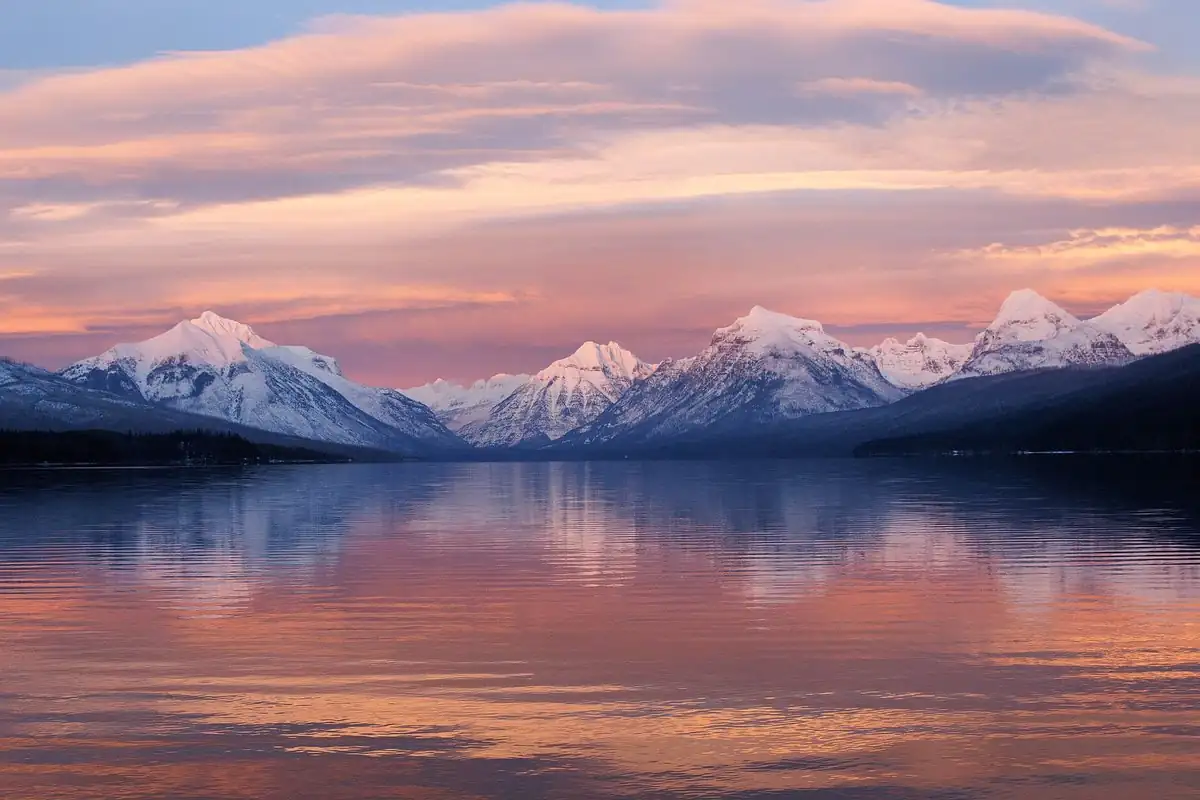
Names inside the park were still settling then. Lake McDonald, its biggest lake, had been called Terry Lake for General Terry before a fur trader’s name took over.
After 1910, the U.S. Geological Survey sent William C. Alden into the backcountry to study the ice. His booklet came out in 1914, built on fieldwork from the summers of 1911 to 1913, and its first line is the clearest statement of the name you’ll find: “Glacier National Park derives its name and much of its interest from the presence of many small glaciers.”
Alden counted “about 90 small glaciers,” from Blackfeet Glacier, with 3 square miles (about 8 km²) of ice, down to patches only a few acres across. He was candid about their size. Next to Alaska’s, he wrote, they were “insignificant,” but they were among the best examples of their kind in the country.
The count has dropped a lot since. The Park Service says that, by aerial images from 2015, 26 named glaciers were still at least 0.1 km² (about 25 acres), the size it uses to call a body of ice a glacier. That isn’t the same yardstick Alden used, so the two numbers don’t line up exactly. The park still calls the loss of its glaciers the loss of “the park’s namesake.”
Visiting Glacier National Park
You’ll meet other names with stories as you go. Logan Pass is named for Major William R. Logan, the park’s first superintendent, from 1910 to 1912, according to Robinson’s list of place names. Going-to-the-Sun Mountain got its name from Schultz, who tied it to a Blackfeet legend: Napi, the Old Man, had come down to help his people and then climbed this mountain’s slopes to go back up to the sun, where he lived. Robinson didn’t buy it. He thought the legend was “probably invented by the white men,” and that Schultz liked to embroider his stories.
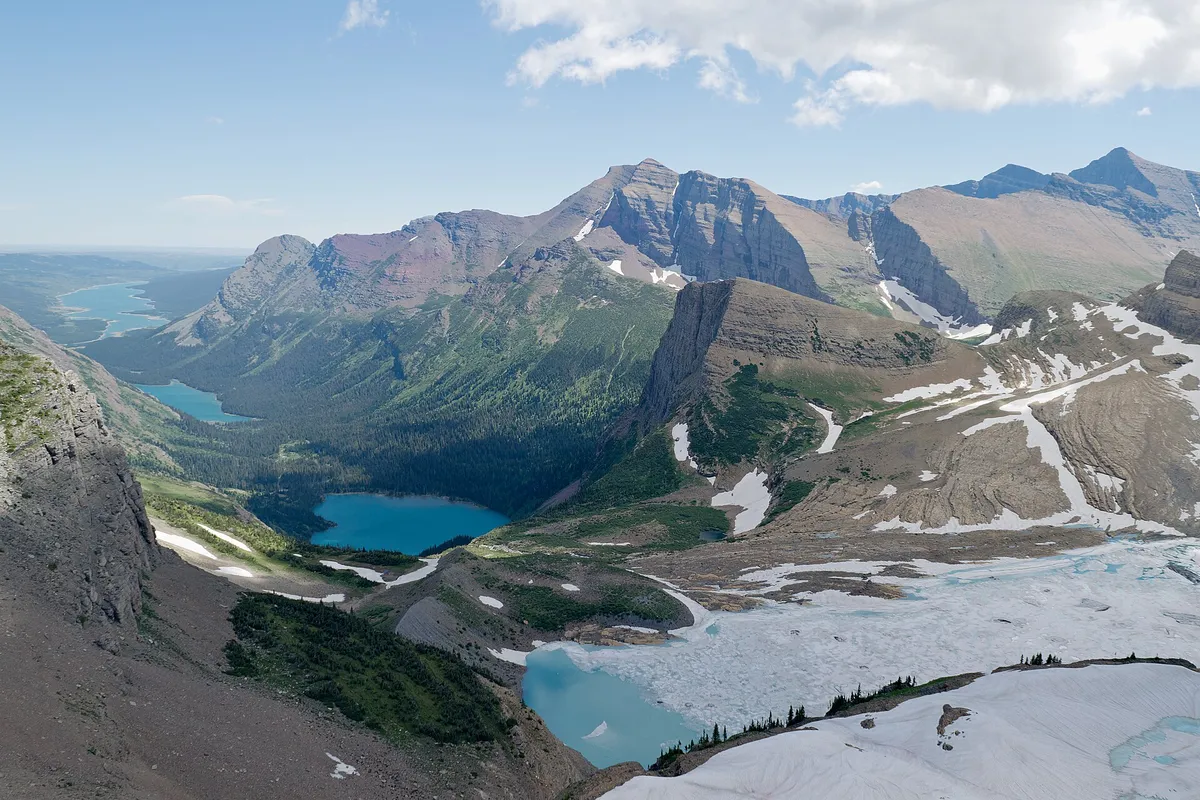
If you hike to Grinnell Glacier, you’re standing near the ice that Grinnell and Beacom photographed in 1887. The Park Service pairs their picture with one from around 1920 to show how much it had already changed, and the photo at the top of this page shows the view from the overlook above it in 2016.
The 1908 River Press item had one more detail worth looking for. Within the park, it said, springs only a short walk apart send their water to Hudson Bay, the Pacific and the Gulf of Mexico. Alden made the same point in 1914 about the water running off these mountains.
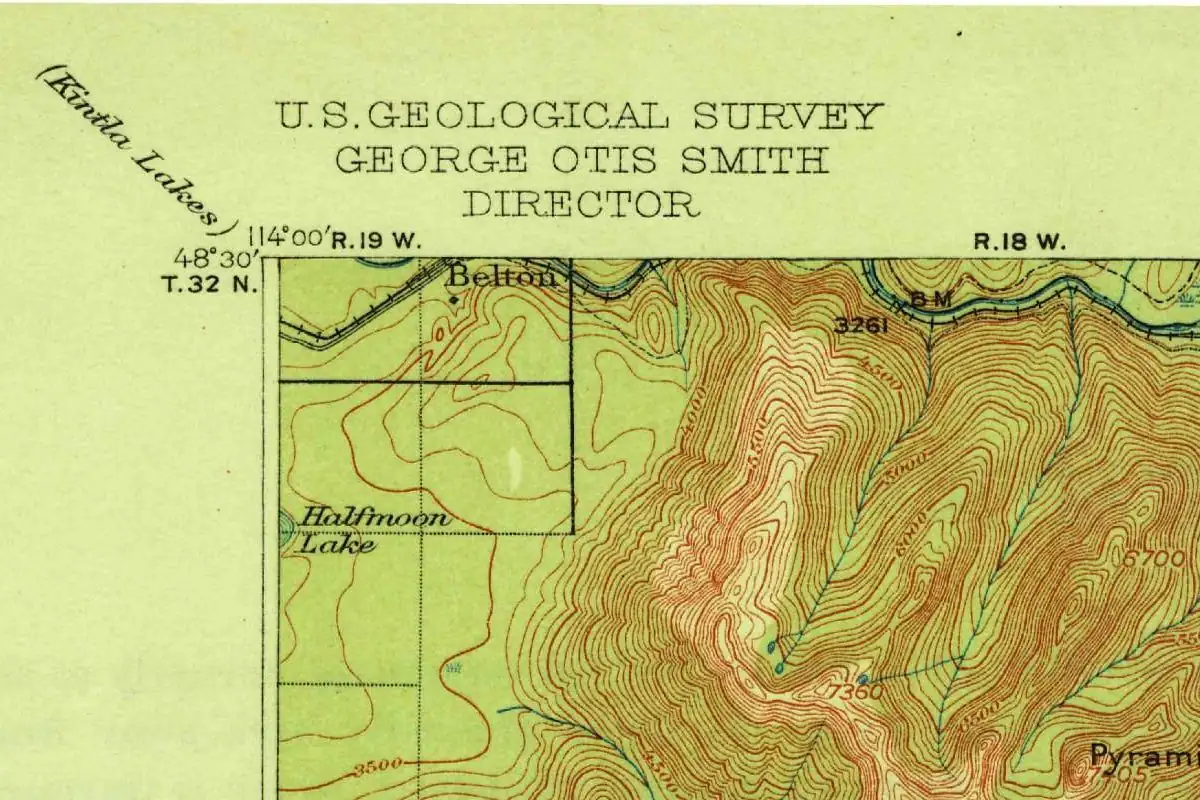
The western road into the park runs through West Glacier, a town that went by Belton until it changed its name on October 1, 1949.
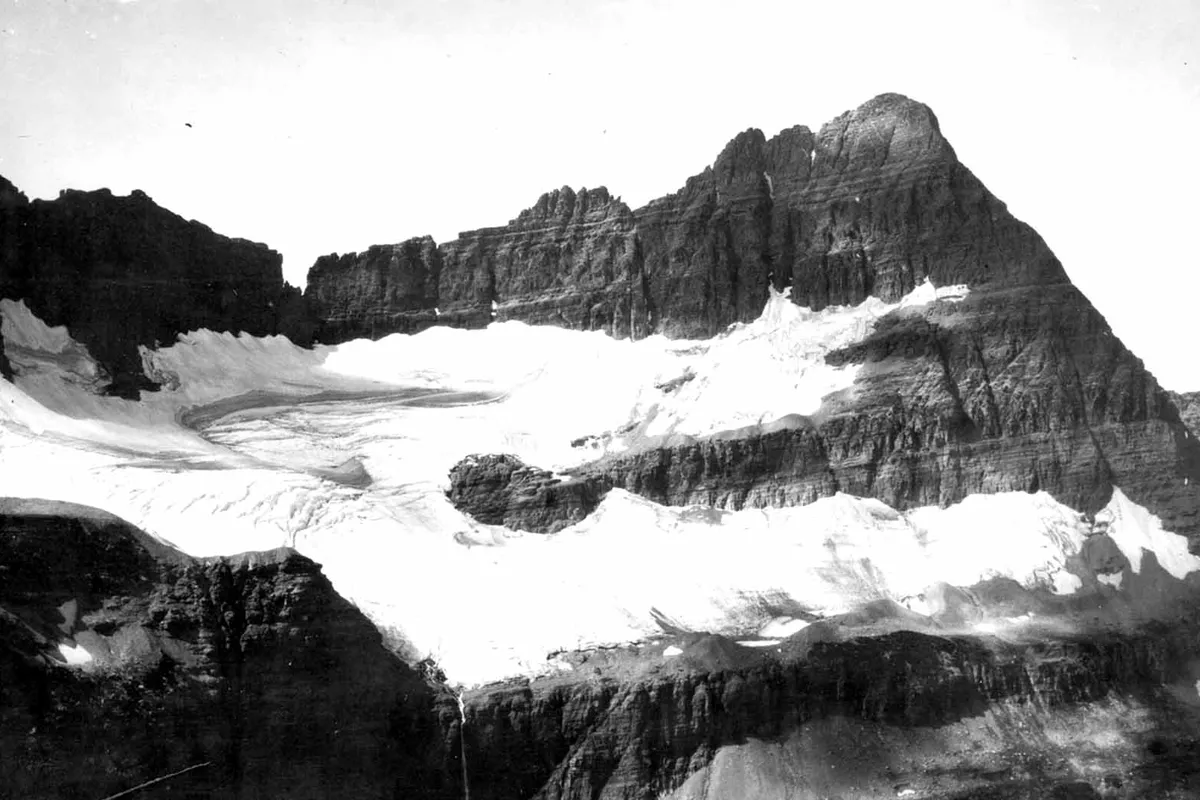
The picture below comes from Alden himself: Shepard Glacier, which he listed among the ones a tourist could reach if willing to do some mountain climbing, as he saw it in 1913.
Quick answers
Why Is It Called Glacier National Park?
For its glaciers. William C. Alden’s 1914 Geological Survey booklet says the park “derives its name and much of its interest from the presence of many small glaciers,” and he counted about 90 of them.
Who Suggested the Name Glacier Park?
The earliest known mention is in a 1906 letter from geologist François E. Matthes to George Bird Grinnell: “It might fitly be called Glacier Park.” In 1908, though, The River Press of Fort Benton credited Senator Thomas H. Carter, who it said “suggested the name.”
When Did Glacier National Park Open?
It became a national park on May 11, 1910, when President William Howard Taft signed the bill that Carter had first introduced in 1907. The Park Service counts it as the nation’s 10th.
Are Reservations Needed to Drive Into Glacier National Park?
Not in 2026. The Park Service’s Going-to-the-Sun Road page says vehicle reservations aren’t required this year, so check the park’s site for the year you plan to go.
Key dates
- 1883Lt. John Van Orsdale writes to Fort Benton's River Press suggesting the area become a national park.
- 1887George Bird Grinnell and Lt. John H. Beacom photograph the glacier that will carry Grinnell's name.
- 1906François E. Matthes writes that the proposed park "might fitly be called Glacier Park."
- 1907December 11: Senator Thomas H. Carter introduces his first bill to create the park.
- 1908The River Press reports that Carter "suggested the name for the reservation."
- 1910May 11: President William Howard Taft signs Carter's Glacier National Park bill.
- 1914William C. Alden's Geological Survey booklet counts about 90 small glaciers in the park.
- 2015Aerial images show 26 named glaciers still big enough to count, by the Park Service's measure.
Find it in Google Maps
Opens in a new tab. The pin is a point from the USGS place-name record, so it may not be the middle of the area.
Sponsored
Planning a visit?
Compare hotels in the area on Expedia.
See hotels nearbyWe may earn a commission if you buy through this link. It never changes what we write. Read our affiliate disclosure
Historical Sources & References
- National Park Service, “How Glacier Got Its Name”. Matthes’s 1906 letter (“It might fitly be called Glacier Park”), with the source note that quotes Taliaferro’s 2019 biography of Grinnell giving “Glacier National Park”; the 1908 credit to Carter; Van Orsdale in 1873 and his 1883 letter; the 1887 photo by Grinnell and Beacom; The Helena Independent of April 17, 1910; the Kootenai and Blackfeet phrases, from films by Vernon Finley (2009) and Ethan Newberry (2023); the Great Northern’s advertising.
- The River Press (Fort Benton, Mont.), April 29, 1908, p. 1. “The Glacier National Park”: the Senate committee’s favorable report, Carter “who suggested the name for the reservation,” “the principal glacier in United States territory outside of Alaska,” and the springs that run to Hudson Bay, the Pacific and the Gulf of Mexico.
- William C. Alden, Glaciers of Glacier National Park (1914). P. 3: “derives its name and much of its interest from the presence of many small glaciers”; “about 90 small glaciers”; Blackfeet Glacier’s 3 square miles; Shepard among the glaciers reached by “mountain climbing”; fieldwork in 1911-1913. P. 4: the glaciers “insignificant” beside Alaska’s.
- National Park Service, “Glacier’s Glaciers”. 26 named glaciers over 0.1 km² in 2015 imagery, and the loss of “the park’s namesake.”
- Donald H. Robinson, Through the Years in Glacier National Park (1960), chapter 2. Carter’s bills of December 11, 1907, February 24, 1908, and June 26, 1909; Pray and the hot day; Taft’s signature on May 11, 1910.
- Robinson, Through the Years in Glacier National Park, appendix A. Place names: Grinnell Glacier, named for Grinnell by Beacom in 1887; Logan Pass, for Maj. William R. Logan; Going-to-the-Sun Mountain and Schultz’s legend, “probably invented.”
- National Park Service, “East Side History”. Schultz’s articles in Forest and Stream, Grinnell’s arrival in 1885 and Taft’s signature on May 11, 1910.
- National Park Service, “History & Culture”. Glacier as “the country’s 10th national park.”
- National Park Service, “One of Our Homelands”. The video of Kootenai cultural leaders that the “How Glacier Got Its Name” page cites for Ya·qawiswit̓xuki.
- National Park Service, “Going-to-the-Sun Road”. “Vehicle reservations are not required in 2026.”
- W. C. Alden, Shepard Glacier, 1913, U.S. Geological Survey. The photo at the bottom of this page, a federal work in the public domain; the same 1800-pixel scan is on the Geological Survey’s own page for it.
- GNIS feature 1803454, Glacier National Park (U.S. Geological Survey). The park’s entry in the federal place-names database, the identifier Wikidata gives for it.
Spot something wrong, or know more? Tell us here. You can also email us or use our contact page. Corrections are noted here with their date, never made silently.