Pearl Harbor: Name, History and Visiting
Pearl Harbor is named for the pearl oysters once found in its waters, which Hawaiians called Wai Momi, “Waters of Pearl,” the National Park Service says. So the name is much older than the naval base and older than 1941. It’s a translation, more or less, of what people on Oʻahu already called the place.
Pearl Harbor Meaning: Why the English Name Refers to Pearls
The Park Service tells it simply. In ancient times, Hawaiians referred to the area as Wai Momi, “for the abundance of pearl-producing oysters that thrived in the bay.” The two Hawaiian words check out in the old dictionary, too. The 1922 Andrews-Parker Dictionary of the Hawaiian Language defines momi as “a pearl; the pearl of the oyster,” and wai as the general word for anything liquid, fresh water above all.
You can watch the English name take shape in a trader’s memoir. Peter Corney sailed to the islands to trade several times from 1813 to 1818, and his account, first printed in a London weekly in 1821 and reprinted in Honolulu in 1896, describes an inlet west of Honolulu: “Wy Momi, or Pearl Water.” Inside, he wrote, “there are many divers employed here, diving for the pearl oysters, which are found in great plenty.” A few pages later he calls the same water “Pearl River,” and mentions an island in it that belonged to a Spaniard he calls Mr. Manning, or Don Marin, covered with his goats, rabbits and hogs.
What happened to the pearls is a story of its own. Pacific Historic Parks, the nonprofit partner of the national memorial, says the oysters were harvested and eaten raw or cooked, and the pearls thrown away, because they had no value until foreigners arrived. Seeing the money in them, it says, Kamehameha made the harbor’s oysters kapu, off-limits to anyone but himself. The same group writes that by the mid-1800s the lagoon was known as Pearl Harbor “in reference to the small oysters once found in the waters.”
There are other Hawaiian names in the record, and they don’t all mean the same piece of water. The 1922 dictionary lists Awalau, “literally, many channels,” as a “Hawaiian name for Pearl Harbor.” Pacific Historic Parks says the easternmost bay, now East Loch, “was once called Puuloa.” Older lists treat Puuloa as a piece of land: W. D. Alexander’s 1903 federal list of Hawaiian names enters “Puuloa; [long hill]; (land section); Ewa; Oahu,” and Thomas Thrum’s list in the 1922 dictionary says the same, “long hill. Land section, Ewa, Oahu.” Those are literal readings from word lists. None of the sources here says how Puuloa came to stand for the water.
Pearl Harbor History: From Oysters to the Naval Base
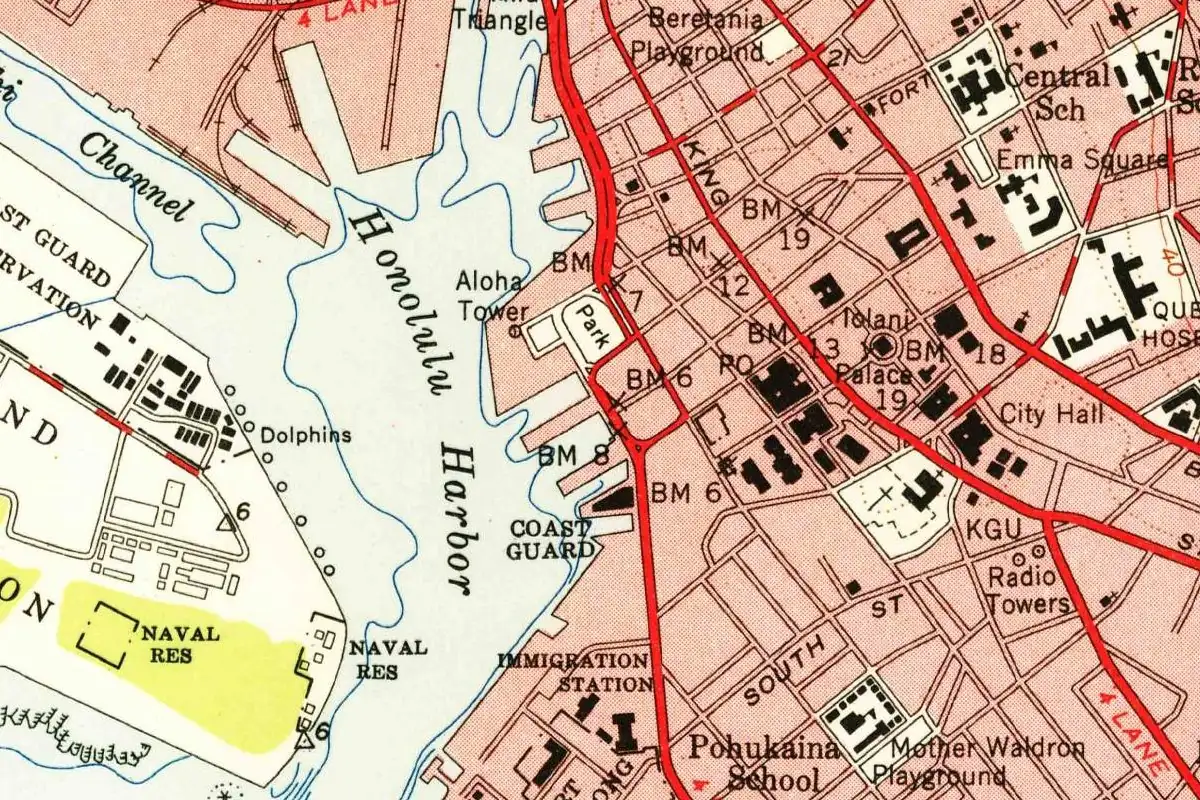
For a long time the harbor was hard to get into. The Park Service says a coral reef blocked deep-draft ships when Captain James Cook reached Hawaii in 1778, so Western ships kept using Honolulu Harbor. Corney, in the 1810s, found no more than 15 feet (4.6 m) of water on the bar at high tide.
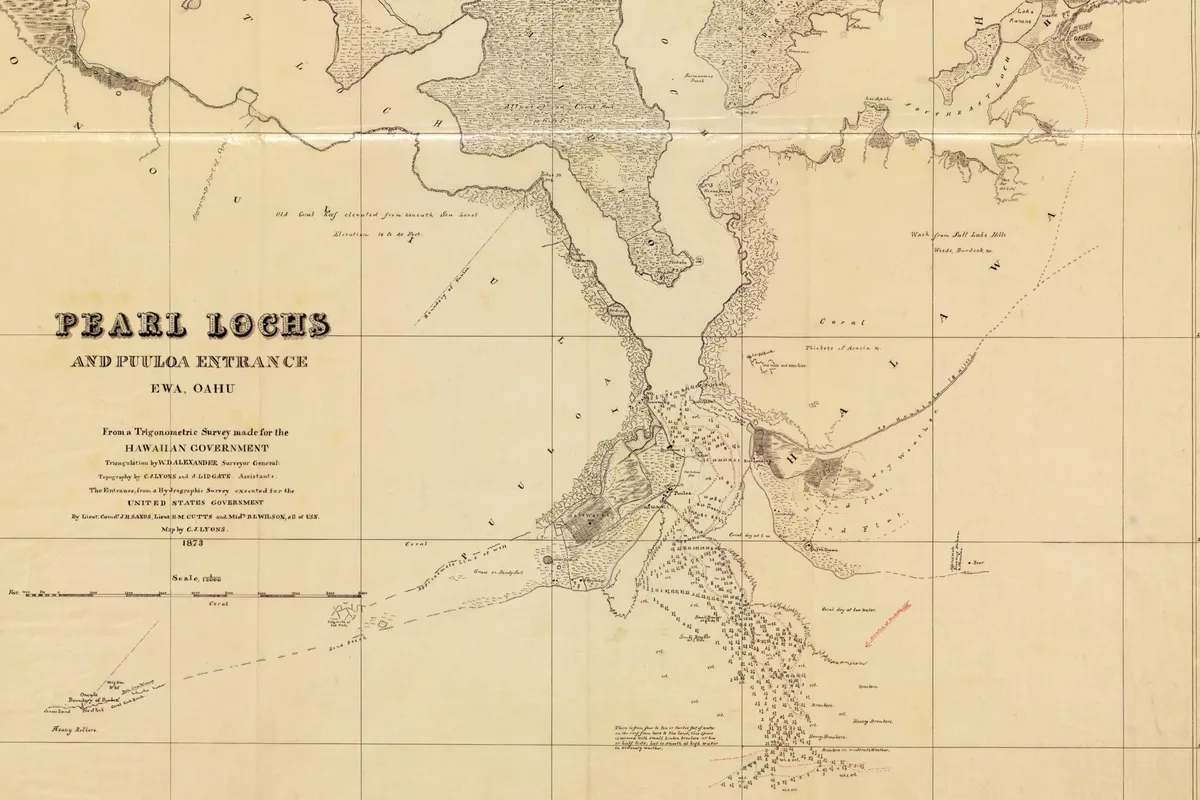
The name on paper kept shifting in the meantime. An 1873 map drawn from a trigonometric survey for the Hawaiian government, with the triangulation by W. D. Alexander as surveyor general, is titled “Pearl Lochs and Puuloa Entrance, Ewa, Oahu.” You can see it at the bottom of this page. The entrance on it came from a survey by U.S. Navy officers. Thirty years later, Alexander still entered the water as “Pearl Lochs” in his federal list, right next to the entry for Pearl City.
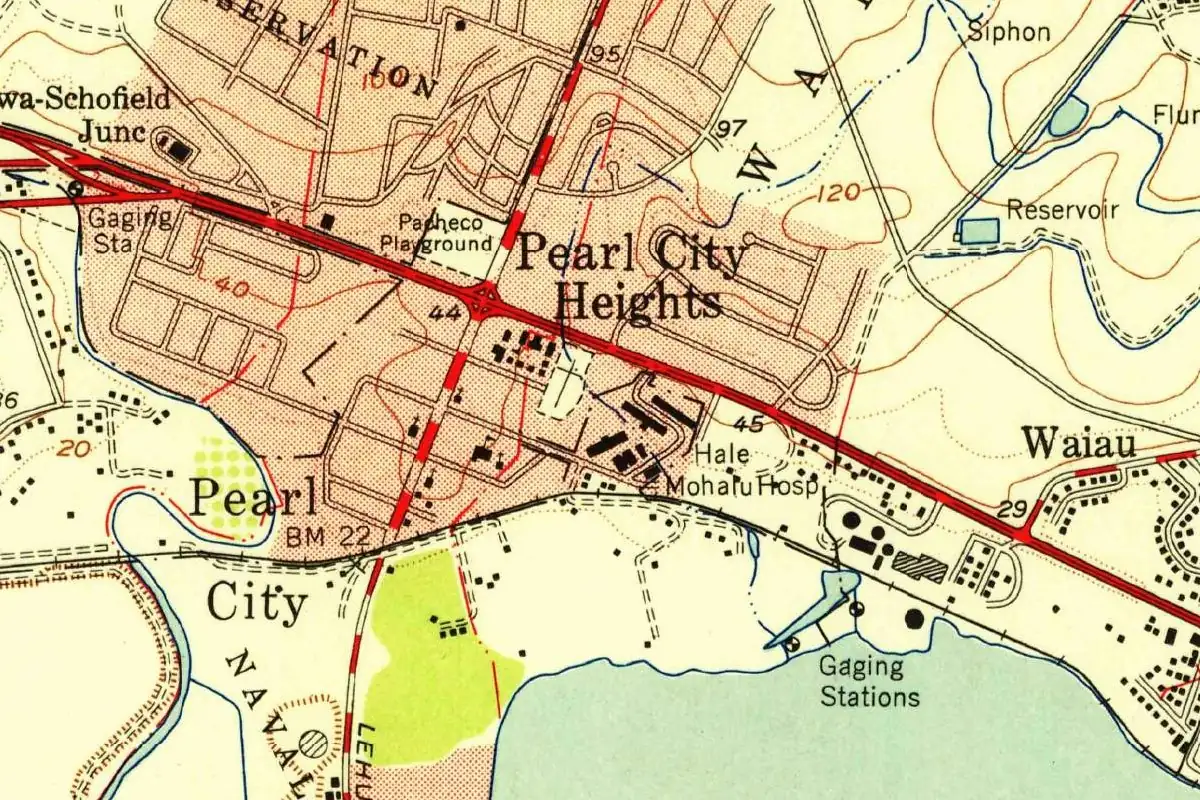
That town, Pearl City, was laid out by a railroad on the harbor’s shore in 1890, and its own page found no record from 1890 explaining the name. For the busier harbor to the east, and the captain who called it Fair Haven in 1794, see how Honolulu got its name.
The naval story came in steps. According to the Park Service, the United States won sole rights to the harbor in 1887 and started dredging and deepening the channel in 1902, and Congress made the harbor an official naval base in 1908. Three years later, the USS California was the first big ship to sail in.
Then came December 7, 1941, when Japan’s surprise attack destroyed the USS Arizona along with many other ships and drew the United States into World War II. That’s why most people know the name. But the attack didn’t give the place its name, it only made the name famous.
Today the federal place-names record lists Pearl Harbor as the official name, under the class “Bay,” with a decision of the U.S. Board on Geographic Names dated 2000.
Visiting Pearl Harbor
When people say they’re visiting Pearl Harbor, they usually mean Pearl Harbor National Memorial and the USS Arizona Memorial, which the Park Service has run since 1980. The visitor center and the memorial are fee-free, the Park Service says.
The boat out to the Arizona takes planning. The memorial program costs nothing to reserve, but you can book it only online, through Recreation.gov, which charges its own $1 fee per ticket, and the park no longer hands out same-day tickets in person. Each boat carries up to 145 people. The program covers a safety talk, the boat out, a stop at the memorial and the ride back.
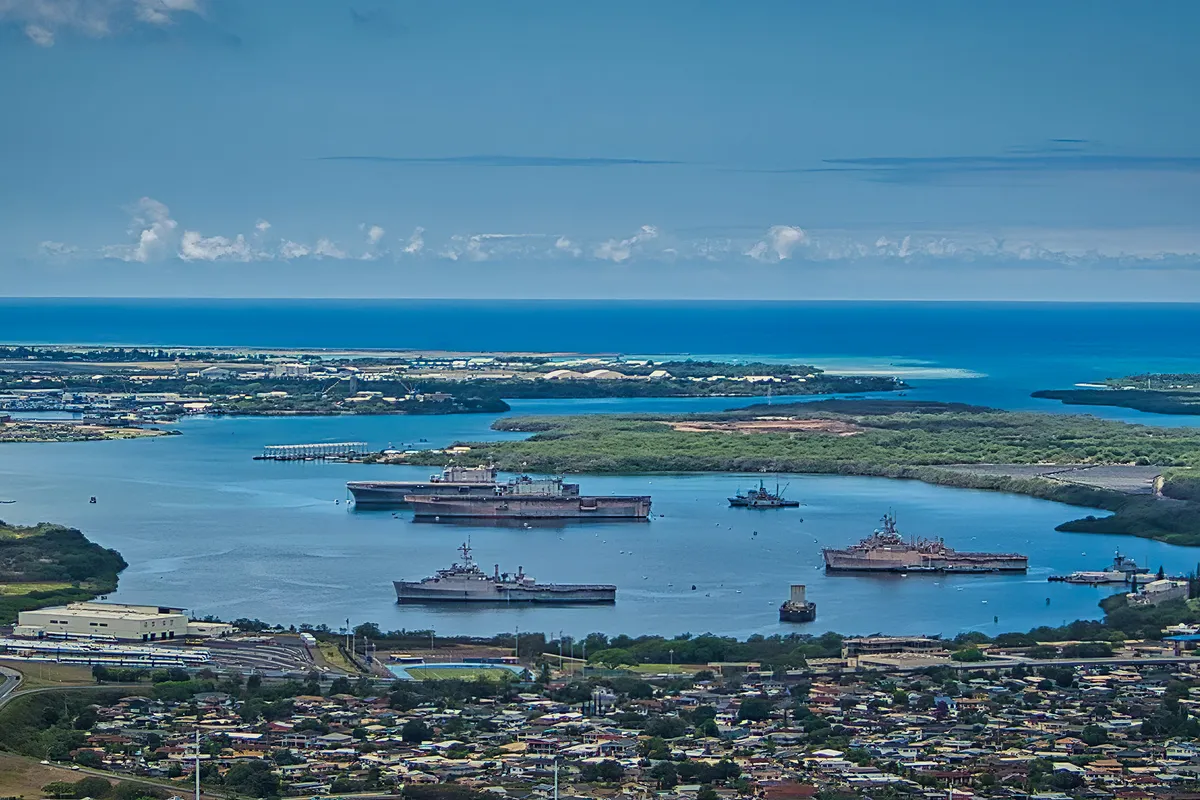
If you can, take a minute before or after to look at the water itself. Its branching lochs are what the 1873 map calls Pearl Lochs, and the many channels behind the Hawaiian name Awalau.
Quick answers
Why Is It Called Pearl Harbor?
For the pearl oysters that once lived in it. The National Park Service says Hawaiians called the area Wai Momi, “Waters of Pearl,” for the many oysters there that made pearls, and a trader in the 1810s wrote it down as “Wy Momi, or Pearl Water.”
What Were Pearl Harbor’s Earlier Hawaiian Names?
Wai Momi, according to the Park Service, and Awalau, “many channels,” according to the 1922 Andrews-Parker dictionary. Pacific Historic Parks says East Loch was once called Puuloa, while older word lists use Puuloa for a land section in Ewa.
Was Pearl Harbor Named After the 1941 Attack?
No. Corney’s account calls it Pearl Water and Pearl River in the 1810s, an 1873 survey map calls it Pearl Lochs, and Pacific Historic Parks says the name Pearl Harbor was in use by the mid-1800s.
Are Pearl Harbor and the USS Arizona Memorial the Same Place?
No. Pearl Harbor is the whole body of water, and the USS Arizona Memorial is one site in it, reached by a boat program that starts from the Pearl Harbor National Memorial visitor center.
Key dates
- 1821A London weekly prints Peter Corney's account of "Wy Momi, or Pearl Water," and its pearl divers.
- 1873A survey map for the Hawaiian government is titled "Pearl Lochs and Puuloa Entrance, Ewa, Oahu."
- 1887The United States gets sole rights to use Pearl Harbor, the National Park Service says.
- 1902The United States starts dredging and deepening the harbor's channel.
- 1903W. D. Alexander's federal list of Hawaiian names enters Pearl Lochs and the land section Puuloa.
- 1908Congress designates Pearl Harbor a U.S. naval base.
- 1922The Andrews-Parker dictionary gives Awalau, "many channels," as a Hawaiian name for Pearl Harbor.
- 1941December 7: Japan attacks the U.S. fleet at Pearl Harbor.
Find it in Google Maps
Opens in a new tab. The pin is a point from the USGS place-name record, so it may not be the middle of the area.
Sponsored
Planning a visit?
Compare hotels in the area on Expedia.
See hotels nearbyWe may earn a commission if you buy through this link. It never changes what we write. Read our affiliate disclosure
Historical Sources & References
- National Park Service, “Pearl Harbor”. Wai Momi, “Waters of Pearl,” for its pearl oysters; the reef in Cook’s time; exclusive rights in 1887; dredging from 1902; the naval base designation in 1908; the USS California in 1911; the attack of December 7, 1941; the Park Service’s role since 1980.
- Peter Corney, Voyages in the Northern Pacific (1896). First printed in The London Literary Gazette in 1821. Pp. 99-100: “Wy Momi, or Pearl Water,” its bar with “not more than fifteen feet of water,” Mr. Manning’s (Don Marin’s) island and the pearl divers. P. 115: the island “in Pearl River.”
- Andrews and Parker, A Dictionary of the Hawaiian Language (1922). Awalau, “literally, many channels,” “Hawaiian name for Pearl Harbor”; momi, “a pearl; the pearl of the oyster”; wai, liquid, fresh water. Thomas G. Thrum’s “Hawaiian Place Names” in the same volume: Puuloa, “long hill. Land section, Ewa, Oahu.”
- W. D. Alexander, Hawaiian Geographic Names (1903). “Pearl Lochs; Ewa; Oahu,” “Pearl City; (village),” and “Puuloa; [long hill]; (land section); Ewa; Oahu.”
- Lyons and Lidgate, “Pearl Lochs and Puuloa Entrance, Ewa, Oahu” (1873). The map at the bottom of this page: a trigonometric survey for the Hawaiian government, triangulation by W. D. Alexander, the entrance from a hydrographic survey by U.S. Navy officers, map by C. J. Lyons.
- Pacific Historic Parks, “Pearl Harbor”. East Loch “was once called Puuloa”; the name Pearl Harbor by the mid-1800s, for the small oysters; pearls discarded until foreigners came, and Kamehameha’s kapu on the oysters.
- National Park Service, “USS Arizona Memorial Programs”. Free reservations only through Recreation.gov, its $1 fee per ticket, the end of same-day in-person tickets, 145 people per boat, and the fee-free visitor center and memorial.
- GNIS feature 363230, Pearl Harbor (U.S. Geological Survey). Official name Pearl Harbor, class Bay, Honolulu County, with a Board on Geographic Names decision dated 2000 (read in the Geological Survey’s Hawaii names file).
Spot something wrong, or know more? Tell us here. You can also email us or use our contact page. Corrections are noted here with their date, never made silently.