Diamond Head: Name, History and Hiking the Crater
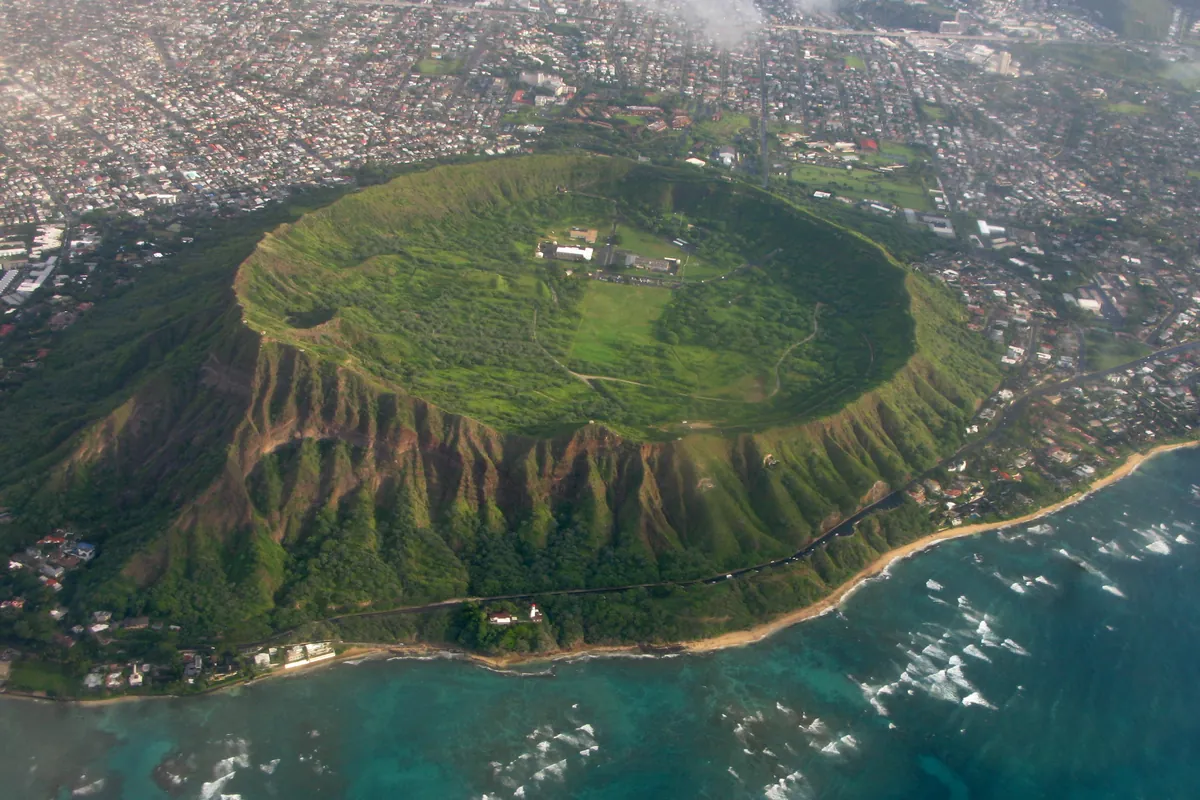
Diamond Head is named for calcite crystals that visiting sailors took for diamonds, and its Hawaiian name, Lēʻahi, is read as the brow of an ʻahi fish. The gems were calcite, a common mineral. The Hawaiian name is the older one, and it comes with more than one explanation, so you’ll find both of its readings below.
Why Is Diamond Head Called Diamond Head?
The earliest account of the name that we could find comes from the book about the voyage of H.M.S. Blonde, the British frigate that visited Oʻahu in 1825. Published in London in 1826, it describes a trip to “the Diamond Mountain, so called because some crystals found there had been mistaken by ignorant European sailors for diamonds, and therefore for a time the place had been tabooed.” So by the 1820s the mistake was already an old story, and the book doesn’t name the sailors.
The English name was around even earlier. In the years 1813 to 1818 the trader Peter Corney made repeated trips to Hawaiʻi, and he wrote that three harbors lay on Oʻahu’s south shore “between Diamond hill and Barber’s Point,” and that you saw the village of Waikīkī once you rounded “Diamond hill.” A weekly paper in London printed his account in 1821. That’s the same Corney who wrote down Pearl Harbor’s Hawaiian name as “Wy Momi, or Pearl Water.”
Hawaiʻi’s Division of State Parks tells the story the same way and says what the crystals really were. Its brochure says Western explorers and traders came to Lēʻahi in the late 1700s and mistook calcite crystals on the crater’s slope for diamonds, and that’s how Diamond Head became the crater’s common name. A 2023 resolution in the state House dates it a bit later, when it says British sailors found the crystals “in the early 1800s,” and adds that the crater was also called Kaimana-Hila, “Diamond Hill.” None of these sources gives a date or a ship for the first time someone used the name.
The Hawaiian name, Lēʻahi, has two readings, and the state brochure gives both. One tradition says Hiʻiaka, a sister of the fire goddess Pele, named the place because the summit looks like the forehead, or lae, of an ʻahi, the yellowfin tuna. The other reading is “fire headland,” for the fires once lit on the summit to guide canoes along the shore. The brochure adds that a heiau, or temple, built on top honored the wind god, to keep strong updrafts from blowing those fires out.
Thomas Thrum, who drew up the place-name list in the back of the 1922 Hawaiian dictionary, came down on the side of the fish. His list gives Leahi as “crest of the ahi fish.” That same year, in the Hawaiian Annual, he wrote that the name “is said to have been originally ‘lae-ahi,’” and that this meaning was better than “the mistakenly given one of ‘fire-wreath,’ which would be ‘lei-ahi.’” The government list of Hawaiian names that W. D. Alexander drew up in 1903 just enters “Diamond Head (Leahi)” and gives no translation. The 2023 House resolution also traces the name to “Lae-ahi,” Hiʻiaka’s comparison with the brow of the ʻahi, later shortened to Lēʻahi.
Diamond Head History
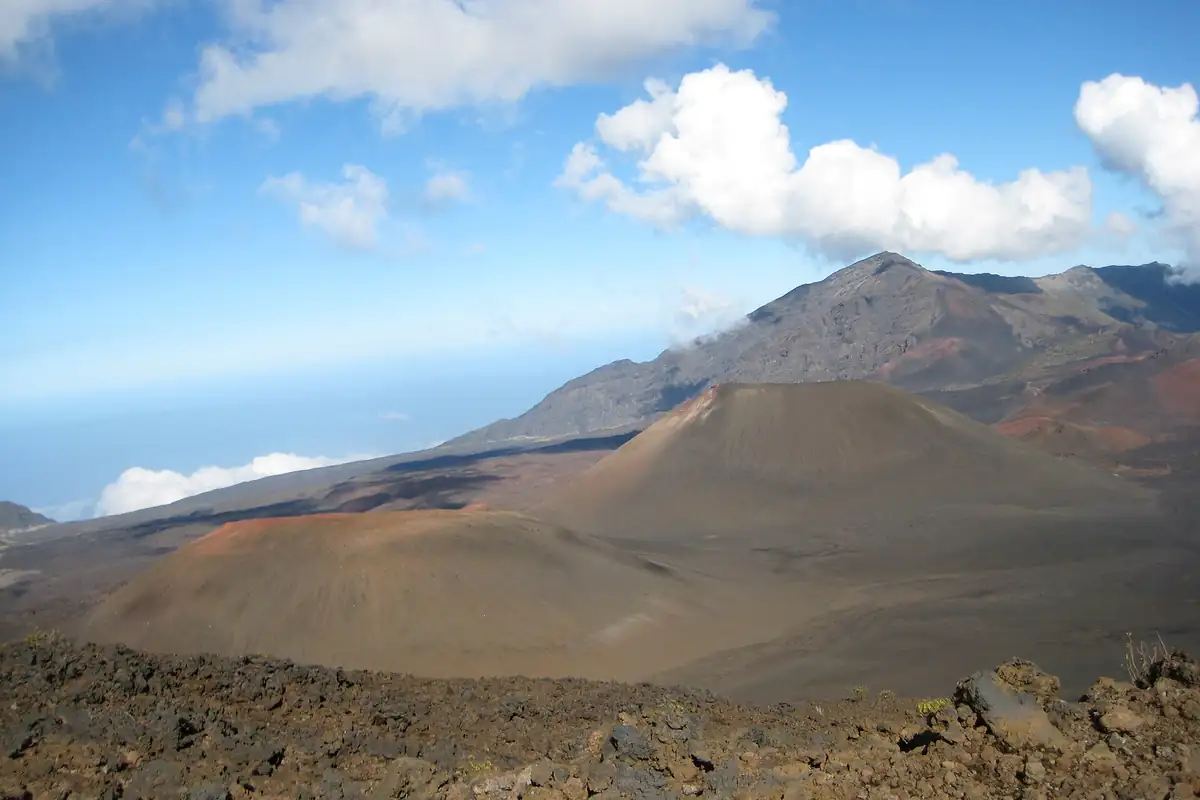
The crater itself is far older than either name. The state dates it to roughly 300,000 years ago and a single short eruption, when hot ash and fine particles blown into the air settled and hardened into a rock called tuff. Diamond Head is a tuff cone, and the brochure says the crater covers 350 acres (142 ha) and is wider than it is tall.
From the top you can see along the coast from Koko Head to Waiʻanae, and that view made it useful to the Army. The federal government bought Diamond Head in 1904 for military use, and fortification began in 1908, with gun batteries and a tunnel cut through the crater’s north side from Fort Ruger. A Fire Control Station went up at the summit to aim the artillery of batteries at Fort DeRussy in Waikīkī and at Fort Ruger. The brochure dates its construction to 1908-1910, while the state’s park page says it was completed in 1911. The brochure also notes that no artillery was ever fired from Diamond Head in a war. The lighthouse below the summit was built in 1917, and in 1968 the crater joined the federal list of National Natural Landmarks.
The two names are still sorting themselves out. A 2023 resolution in the Hawaiʻi House, H.C.R. 104, asked the Department of Land and Natural Resources and the City and County of Honolulu to list the roads, monuments, landmarks and parks that use the name “Diamond Head” and to say how they could be renamed “Lēʻahi.” It’s a request for a report, not a renaming. The state park already carries both names, as Diamond Head (Lēʻahi) State Monument, and the federal place-names record keeps Diamond Head as the official name of the summit.
Hiking Diamond Head
The summit trail you hike today is the Army’s trail. It was built in 1908 so mules could haul building materials up to the Fire Control Station, and it climbs 560 feet (171 m) in 0.8 mile (1.3 km) from the crater floor, the state says. Near the top you go up steep stairs, through a lighted tunnel 225 feet (69 m) long and into the old station itself. Today’s public entrance into the crater is the Kahala Tunnel, which the brochure says was built in the 1940s.
As of the state’s 2026 page, visitors who aren’t Hawaiʻi residents need an entry and parking reservation, the park is open from 6 a.m. to 6 p.m., and the last reservation slot is at 4 p.m. Plan on an hour and a half to two hours for the hike, the state says, and warns that the trail isn’t ADA accessible. Rules can change, so check the Diamond Head State Monument page before you go.
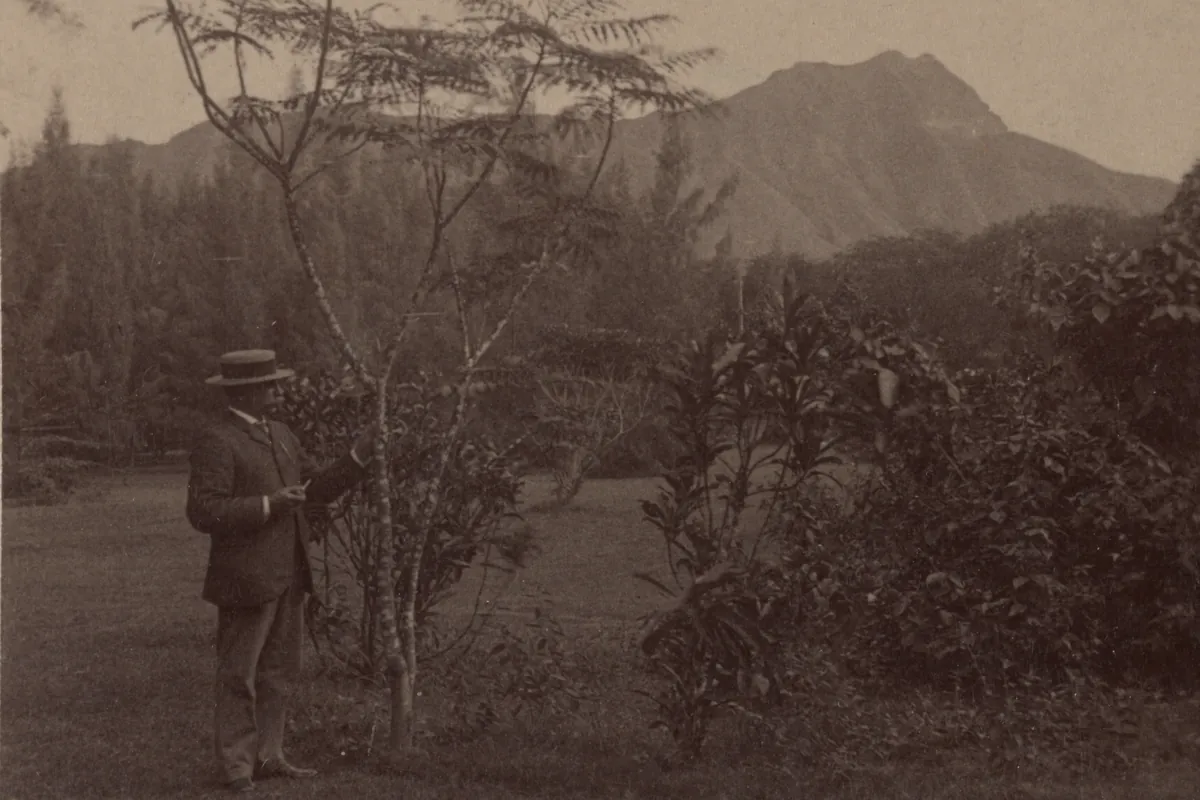
You can see Diamond Head from most of Waikīkī, and if you’d like the rest of the neighborhood’s names, from Waikīkī to Punchbowl, our guide to Honolulu’s place names explains them. Honolulu itself has a harbor story: a captain who sailed in on November 21, 1794, had already named it Fair Haven. The photo at the bottom of this page shows Diamond Head from Kapiʻolani Park in a stereograph copyrighted in 1896, years before the Army bought the crater.
Quick answers
Are there diamonds on Diamond Head?
No. The crystals that gave the crater its English name were calcite, according to Hawaiʻi State Parks. The 1826 account of H.M.S. Blonde already said they had been “mistaken by ignorant European sailors for diamonds.”
What does Lēʻahi mean?
The reading Hawaiʻi State Parks gives first, and the one Thomas Thrum preferred in 1922, is the ʻahi fish’s brow. Hawaiʻi State Parks says Hiʻiaka named the summit for the forehead (lae) of an ʻahi and also gives a second reading, “fire headland,” for signal fires once lit on top.
When was the Diamond Head trail built?
In 1908. The U.S. Army built it as part of Oʻahu’s coastal defenses, so mules could carry materials up to the Fire Control Station at the summit.
Is Diamond Head still called Diamond Head officially?
Yes. The federal place-names record lists Diamond Head as the official name, and the state park is called Diamond Head (Lēʻahi) State Monument. A 2023 House resolution only asked agencies how a change to Lēʻahi could be made.
Key dates
- 1821A London weekly prints trader Peter Corney's account, which calls the crater "Diamond hill."
- 1826The account of H.M.S. Blonde's voyage says crystals there were mistaken by sailors for diamonds.
- 1904The federal government buys Diamond Head for military use.
- 1908The Army builds the trail to the summit for its coastal defenses.
- 1917The Diamond Head lighthouse is built.
- 1922Thomas Thrum's list of place names translates Leahi as "crest of the ahi fish."
- 1968Diamond Head is designated a National Natural Landmark.
- 2023A Hawaiʻi House resolution asks state and city agencies how places named Diamond Head could be renamed Lēʻahi.
Find it in Google Maps
Opens in a new tab. The pin is a point from the USGS place-name record, so it may not be the middle of the area.
Sponsored
Planning a visit?
Compare hotels in the area on Expedia.
See hotels nearbyWe may earn a commission if you buy through this link. It never changes what we write. Read our affiliate disclosure
Historical Sources & References
- Voyage of H.M.S. Blonde to the Sandwich Islands, in the Years 1824-1825 (1826), pp. 144-145. The excursion to “the Diamond Mountain, so called because some crystals found there had been mistaken by ignorant European sailors for diamonds.”
- Peter Corney, Voyages in the Northern Pacific (1896 reprint of the 1821 text), p. 97. “Between Diamond hill and Barber’s Point” and “On rounding Diamond hill”; the voyages of 1813-1818 and the 1821 London printing are given in the title page and preface.
- Hawaiʻi Division of State Parks, Diamond Head (Lēʻahi) State Monument brochure. Hiʻiaka and the forehead (lae) of the ʻahi, “fire headland,” the heiau of the wind god, the calcite crystals of the late 1700s, the tuff cone of about 300,000 years ago and 350 acres, the 1904 purchase, the 1908 fortification and trail, the Fire Control Station of 1908-1910, the 1917 lighthouse, the Kahala Tunnel of the 1940s and the 1968 National Natural Landmark.
- Hawaiʻi Division of State Parks, “Diamond Head State Monument”. The trail’s 0.8 mile and 560 feet, the 225-foot tunnel, the station “completed in 1911,” reservations for non-residents, hours and the advice on the hike.
- Andrews and Parker, A Dictionary of the Hawaiian Language (1922). Thomas G. Thrum’s “Hawaiian Place Names”: “Leahi (le-a’hi): crest of the ahi fish (Germo germo). Diamond Head, Honolulu, Oahu.”
- Thomas G. Thrum, “Wrestling with Place Names,” Hawaiian Annual for 1922. Leahi “is said to have been originally ‘lae-ahi,’ the crest of the fish ahi,” preferred to “fire-wreath,” which “would be ‘lei-ahi.’”
- W. D. Alexander, Hawaiian Geographic Names (1903). “Diamond Head; (Leahi); Oahu; elevation, 761 feet,” with no translation.
- Hawaiʻi House of Representatives, H.C.R. No. 104, H.D. 1 (2023). “Lae-ahi” and Hiʻiaka’s comparison with the brow of the ʻahi, British sailors and calcite “in the early 1800s,” Kaimana-Hila, “Diamond Hill,” and the request to identify places named Diamond Head and the process for renaming them Lēʻahi.
- Strohmeyer & Wyman, “Diamond Head from Kapiolani Park” (1896), Library of Congress. The stereograph at the bottom of this page; the Library lists no known restrictions on publication.
- GNIS feature 358757, Diamond Head (U.S. Geological Survey). Official name Diamond Head, a summit in Honolulu County, by decision of the Board on Geographic Names.
Spot something wrong, or know more? Tell us here. You can also email us or use our contact page. Corrections are noted here with their date, never made silently.