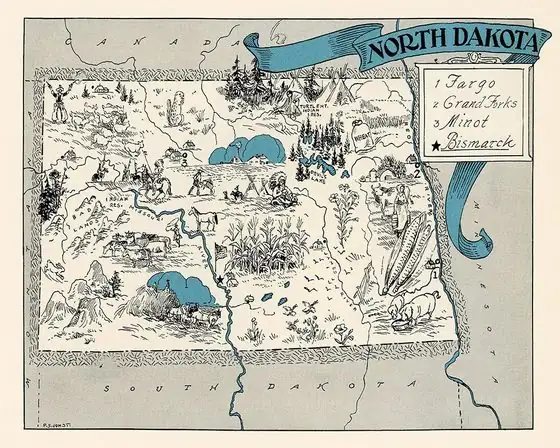
Enderlin, North Dakota: End of the Line, or a Book?
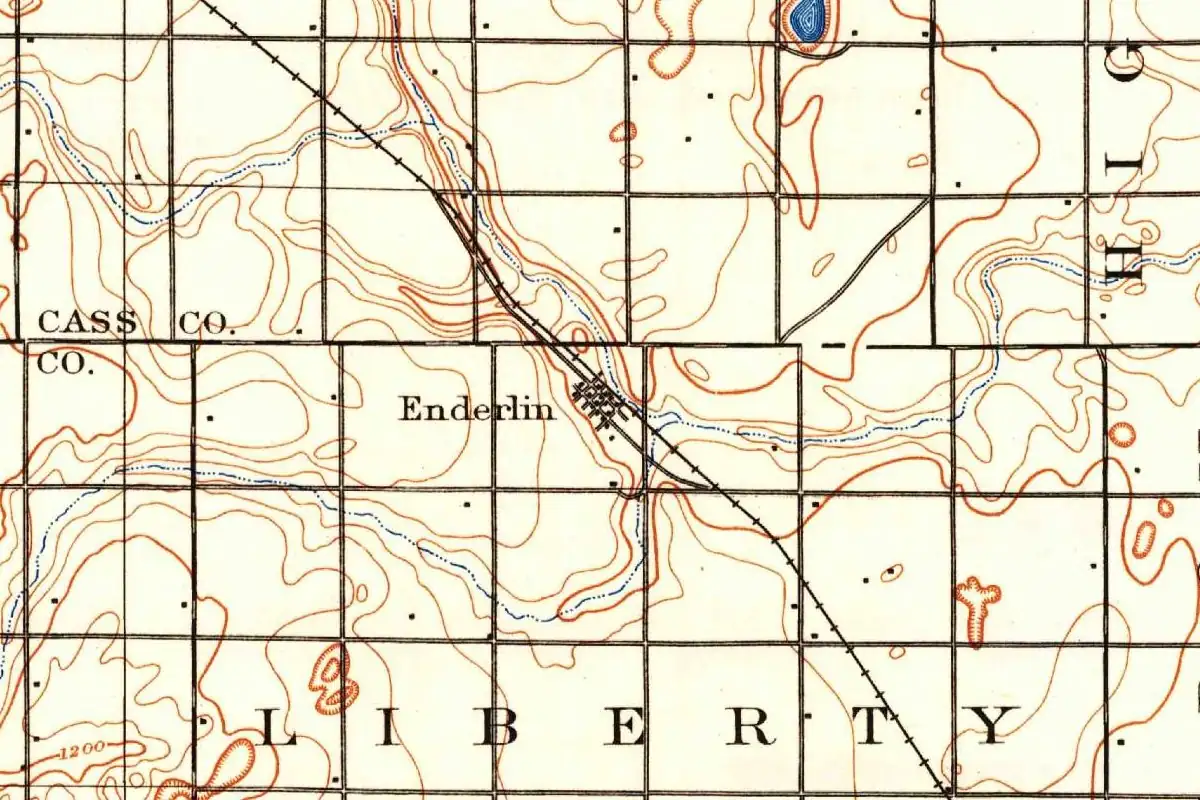
Enderlin, North Dakota, sounds a lot like “end of the line,” but the city points out that the Soo Line’s tracks ended at Valley City in 1891, not here. What the city calls the “official Soo Line word” is different: the railroad’s general manager, F. D. Underwood, took the name from a book he’d read.
The joke that fits too well
You can see why the story caught on. Enderlin was a Soo Line town from the start, and the name practically spells out a railroad punchline. Prairie Public’s Dakota Datebook repeats that version, tracing the name to what it calls the German phrase “end der line,” because for a time this was the end of the Soo Line.
The city isn’t buying it. Its history page says the “end of the line” idea “has been exploited,” and that in 1891 the end of the tracks was at Valley City. So the pun has a problem with the map. Douglas Wick, in his 1988 book of North Dakota place names, is just as cool on it. He calls the “end der line” story, said to come from German workers when the site was the end of a branch line, “folklore.”
A name from a book
The version the city gives instead is short. It says the name was chosen by “Mr. F. D. Underwood, then General Manager, for a name he had seen in an English book he had read.” Dakota Datebook tells it a little differently, as “a character in a book,” but its own source list points back to the city’s page, so it isn’t a separate witness.
Wick also says the name came from a character in a book, but he gives the suggestion to someone else: either Mrs. A. L. Allen or Mrs. Fred D. Underwood, “both wives of Soo Line RR officials.” So the book story has two backers, and they disagree only about who brought it up, Underwood or one of the two wives.
That makes the book the stronger of the two explanations: the city and Wick both tell it, and both reject the pun. Still, nobody we read names the book, the author or the character, and nobody shows a letter from the railroad. That’s why this page calls the origin disputed: you get one story with two different people behind it, and a joke that won’t go away.
What the railroad record does show
The 1909 History of the Red River Valley puts the railroad here early. The Soo “made their first survey into what is now Enderlin in the fall of 1890, and began construction work in 1891.” The same book says voters chose to incorporate a village in 1896. The city adds that the town plat was filed on October 7, 1891, and Dakota Datebook says the Soo reached Enderlin that fall and built a four-stall roundhouse, which later grew into a shop where whole locomotives were rebuilt.
Underwood, for his part, didn’t stay anonymous in North Dakota. Wick says the town of Underwood, in McLean County, was named for Fred D. Underwood, a Soo Line vice president.
A Soo Line connection to Willard, Ohio
Here’s a side trail you might not expect. In 1891 Daniel Willard was also working for the Soo Line, where he spent 14 years starting in 1884. When he left in 1899 for the Baltimore and Ohio, he went as assistant general manager under F. D. Underwood, who had moved to the B&O from the same job on the Soo, according to Railway Age’s 1942 obituary of Willard. An Ohio railroad town later took Willard’s name: Willard, Ohio.
So the man the city credits with naming Enderlin was Willard’s boss when Willard moved to the B&O.
Quick answers
Does Enderlin mean “end of the line”?
That’s a popular story, but the City of Enderlin rejects it, noting that the Soo Line’s tracks ended at Valley City in 1891. Wick (1988) calls it folklore.
Who named Enderlin, North Dakota?
The city says F. D. Underwood, the Soo Line’s general manager, chose a name he’d seen in an English book. Wick (1988) says the name, taken from a character in a book, was suggested by either Mrs. A. L. Allen or Mrs. Fred D. Underwood. None of the sources we found identifies the book.
When was Enderlin founded?
The town plat was filed on October 7, 1891, the same fall the Soo Line arrived. The railroad had surveyed the site in the fall of 1890.
Key dates
- 1890Fall: the Soo Line makes its first survey into what is now Enderlin.
- 1891October 7: the town plat is filed, and the Soo Line reaches Enderlin that fall.
- 1896Voters decide to incorporate a village.
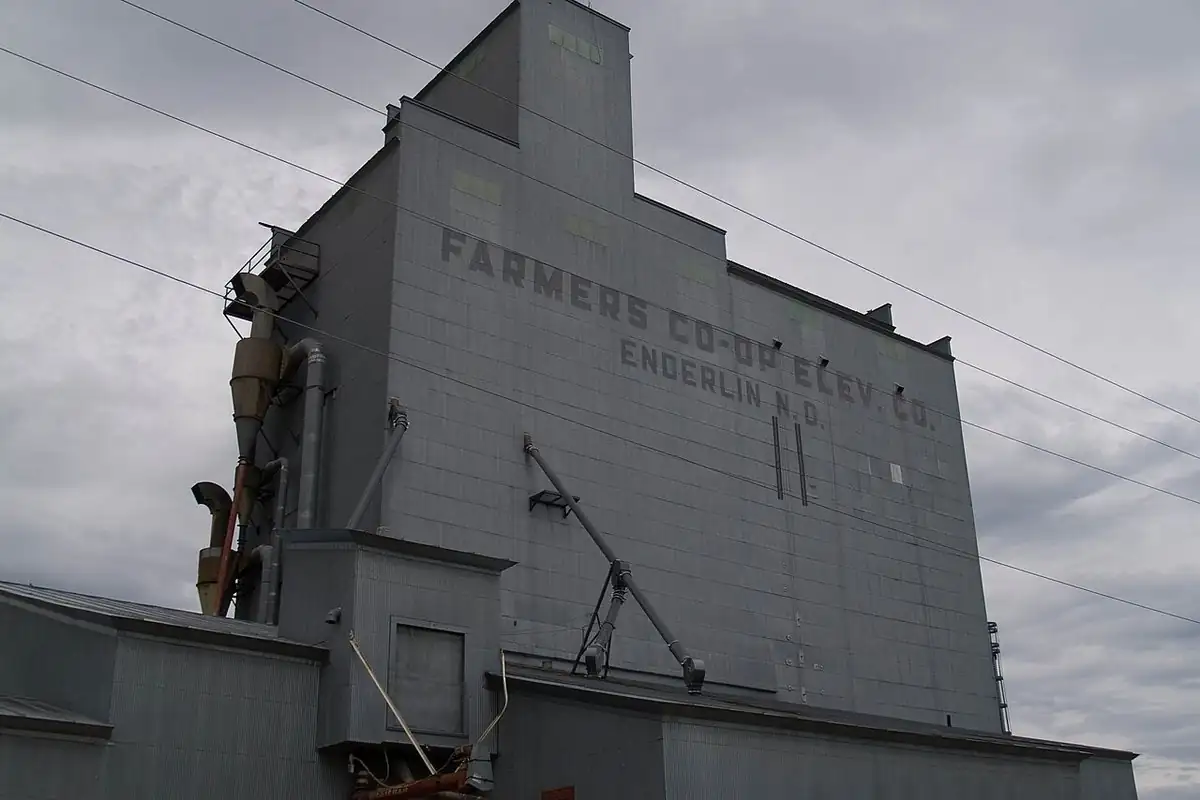
Getting there
Open Enderlin in Google Maps
Opens in a new tab. The pin is the center of Enderlin in the USGS place-name record.
The closest airports, Amtrak stations and intercity bus stops, measured in a straight line from the center of Enderlin.
Airports
- Hector International (FAR) Fargo 42 mi 68 km
- Jamestown Regional (JMS) 55 mi 89 km
Amtrak trains
- Fargo station (FAR) 43 mi 68 km
- Detroit Lakes station (DLK) 84 mi 136 km
Intercity buses
- Jefferson Lines Valley City 28 mi 45 km
Distances are as the crow flies, not by road. We don't list schedules or fares because they change; check with the airline, Amtrak or the bus company before you go. Official data (FAA commercial service airports (2025), FAA airport locations, Amtrak stations and Intercity Bus Atlas) from the FAA and the U.S. Bureau of Transportation Statistics, checked Nov 6, 2026.
Sponsored
Staying in Enderlin?
Compare hotels in Enderlin, North Dakota, on Expedia.
See hotels in EnderlinWe may earn a commission if you buy through this link. It never changes what we write. Read our affiliate disclosure
Historical Sources & References
- City of Enderlin, “History”. The townsite bought by Edward Pierce for the Minnesota Land and Trust Company; the plat filed October 7, 1891; the “end of the line” story rejected because Valley City was the end of the tracks in 1891; F. D. Underwood and “a name he had seen in an English book.”
- Carole Butcher, “October 7: Enderlin, North Dakota,” Dakota Datebook (Prairie Public, 2025). Both versions of the name, the “character in a book,” the four-stall roundhouse and the locomotive overhaul shop.
- History of the Red River Valley, vol. 2 (1909), p. 775. The Soo’s first survey in the fall of 1890, construction in 1891, and the 1896 vote to incorporate a village.
- Douglas A. Wick, North Dakota Place Names (1988). Enderlin, from a “character in a book, suggested by either Mrs. A. L. Allen or Mrs. Fred D. Underwood, both wives of Soo Line RR officials,” with the “end der line” story called folklore; and Underwood, McLean County, “named for Fred D. Underwood, Soo Line RR Vice President” (read through the archive’s text search).
- “Daniel Willard Dies in 82nd Year,” Railway Age (July 11, 1942). Willard’s 14 years on the Soo Line from July 1884, and his move in 1899 to the B&O under F. D. Underwood, who had come from the Soo.
- GNIS feature 1036347 (U.S. Geological Survey). The USGS gazetteer page for Enderlin, in Ransom County, with the note “Founded in 1891.”
Spot something wrong, or know more? Tell us here. You can also email us or use our contact page. Corrections are noted here with their date, never made silently.