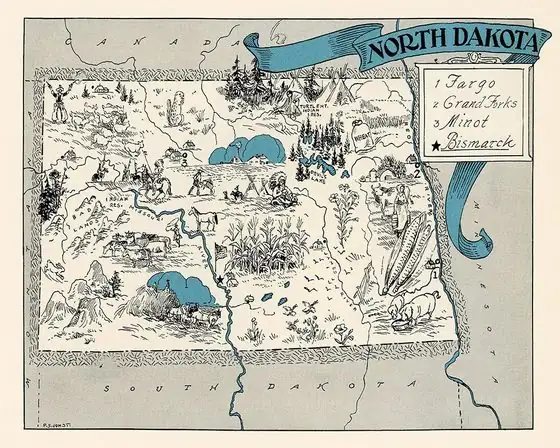
Williston, North Dakota: The Judge or the Stockholder?
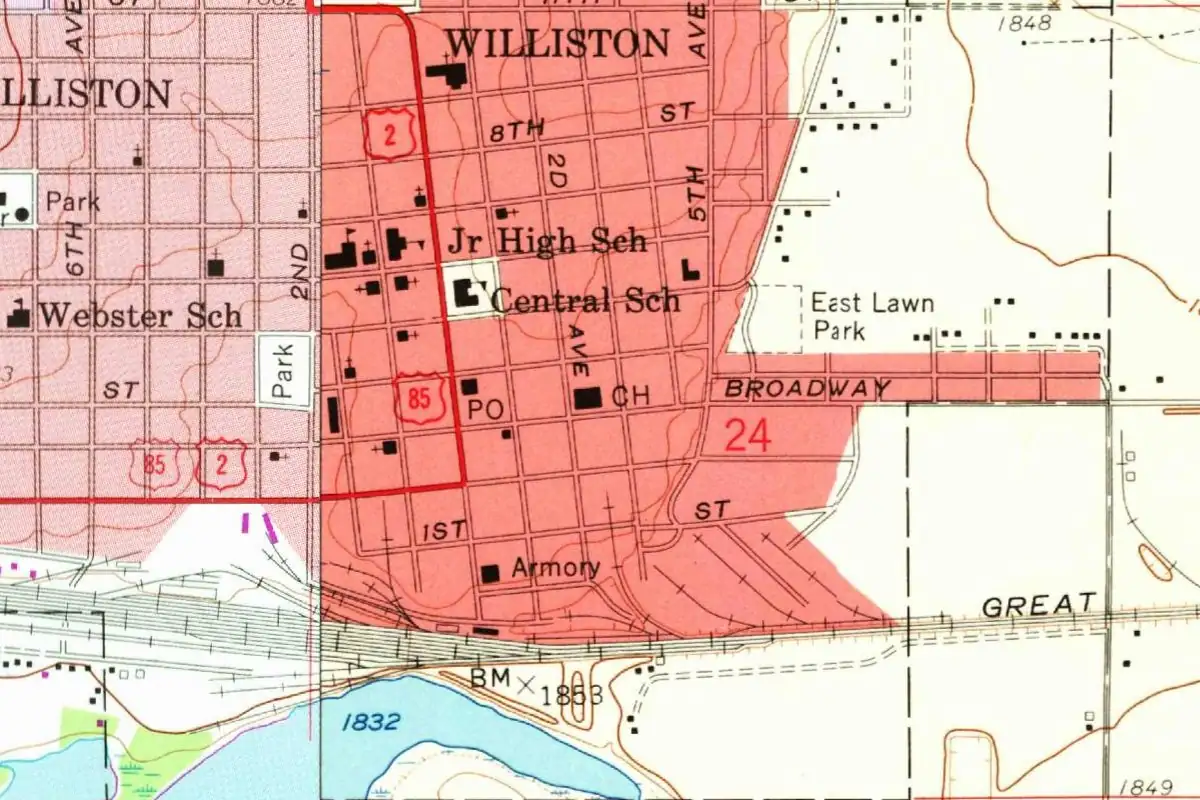
Williston, North Dakota, has two men in the running for its name, a territorial judge and a New York railroad stockholder, and both lead to James J. Hill. The older books say the judge. The 1938 state guide and a 1988 gazetteer say the stockholder.
The judge: Lorenzo P. Williston
The first version is the oldest one in print. Henry Gannett, the Geological Survey’s place-name man, wrote in 1905 that Williston was “named for Associate Justice Lorenzo P. Williston.” Williston was one of the first judges of Dakota Territory, and Clement Lounsberry’s 1917 history says he was transferred to Montana in 1863.
Lounsberry added the railroad link in one line:
“The Town of Williston, N. D., was named in honor of Judge Williston, who was greatly admired by Mr. James J. Hill, the great railroad builder.”
That’s a tidy answer. The catch is that he doesn’t say how he knew.
The stockholder: Willis James
Two decades later, the state guide written by the Federal Writers’ Project told it differently. It says Williston “was named by James J. Hill, builder and first president of the G. N. Ry., for his friend,” a man the guide calls S. Willis James, “of New York City, who was one of the stockholders in the company.” The guide also notes, as of 1938, that the town’s James Memorial Library “is a gift of the James family.”
Douglas Wick’s North Dakota Place Names, published in 1988, agrees, and gives the full name, Daniel Willis James, “a GNRR stockholder and good friend of GNRR President James J. Hill.” Neither book quotes Hill himself, and neither mentions the judge.
So you’ve got two candidates, two sets of sources and one railroad president in the middle. Nobody we read settles it.
Sidetrack 25 on the Little Muddy
Whoever the name honors, you can credit the town itself to the railroad. Wick says the station was founded in 1887 at “Sidetrack #25.” The 1938 guide says a post office called Little Muddy had operated on Robert Matthews’s ranch below the present town, and that “with the coming of the railroad Williston was moved to higher ground farther W.” When the rails were laid into it in 1887, it was “only a tent colony and a few log cabins.” The Geological Survey’s gazetteer adds that the town was incorporated in 1904.
The same guide tells a grim frontier story from 1888: a coroner’s jury cleared Josephine Grinnell in the death of her husband, George, with the verdict that he “came to his death through an act of Almighty God, by the hand of His agent, Josephine Grinnell.”
Quick answers
Which man is Williston, North Dakota, named for?
Sources disagree. Gannett (1905) and Lounsberry (1917) say Associate Justice Lorenzo P. Williston; the 1938 state guide and Wick (1988) say Daniel Willis James, a New York stockholder of the Great Northern.
Did James J. Hill name Williston?
The 1938 guide says he did, for his friend Willis James. Lounsberry doesn’t say who chose the name, only that Judge Williston “was greatly admired by” Hill.
What was Williston called before?
Wick says the station was founded at “Sidetrack #25” in 1887, and the 1938 guide says an earlier post office nearby was called Little Muddy.
Key dates
- 1863Judge Lorenzo P. Williston is transferred from Dakota Territory to Montana.
- 1887The railroad station is founded at Sidetrack 25, and the rails are laid into the new town.
- 1888A coroner's jury at Williston rules on the death of George Grinnell.
- 1904Williston is incorporated.
Getting there
Open Williston in Google Maps
Opens in a new tab. The pin is the center of Williston in the USGS place-name record.
The closest airports, Amtrak stations and intercity bus stops, measured in a straight line from the center of Williston.
Airports
- Williston Basin International (XWA) 10 mi 16 km
- Dickinson/Theodore Roosevelt Regional (DIK) 100 mi 162 km
Amtrak trains
- Williston station (WTN) under 1 mi 0.5 km
- Stanley station (STN) 58 mi 93 km
Distances are as the crow flies, not by road. We don't list schedules or fares because they change; check with the airline, Amtrak or the bus company before you go. Official data (FAA commercial service airports (2025), FAA airport locations, Amtrak stations and Intercity Bus Atlas) from the FAA and the U.S. Bureau of Transportation Statistics, checked Nov 6, 2026.
Sponsored
Staying in Williston?
Compare hotels in Williston, North Dakota, on Expedia.
See hotels in WillistonWe may earn a commission if you buy through this link. It never changes what we write. Read our affiliate disclosure
Historical Sources & References
- Henry Gannett, The Origin of Certain Place Names in the United States (1905), p. 326. Williston, Williams County, “named for Associate Justice Lorenzo P. Williston.”
- Clement A. Lounsberry, North Dakota History and People, vol. 1 (1917), p. 274. Judge Williston among the territory’s first associate justices, his transfer to Montana in 1863, and the town “named in honor of Judge Williston, who was greatly admired by Mr. James J. Hill.”
- Federal Writers’ Project, North Dakota: A Guide to the Northern Prairie State (1938), Tour 6. Named by James J. Hill for his friend Willis James, a stockholder; the James Memorial Library; Little Muddy post office; the move to higher ground; the rails of 1887; the Grinnell verdict of 1888.
- Douglas A. Wick, North Dakota Place Names (1988). The GNRR station founded in 1887 at “Sidetrack #25,” named for Daniel Willis James, “a GNRR stockholder and good friend of GNRR President James J. Hill” (the online copy is a restricted loan, so we read search excerpts).
- GNIS feature 1032815 (U.S. Geological Survey). Where the Geological Survey places Williston, in Williams County, and its summary line, “Founded in 1887 and incorporated in 1904.”
Spot something wrong, or know more? Tell us here. You can also email us or use our contact page. Corrections are noted here with their date, never made silently.