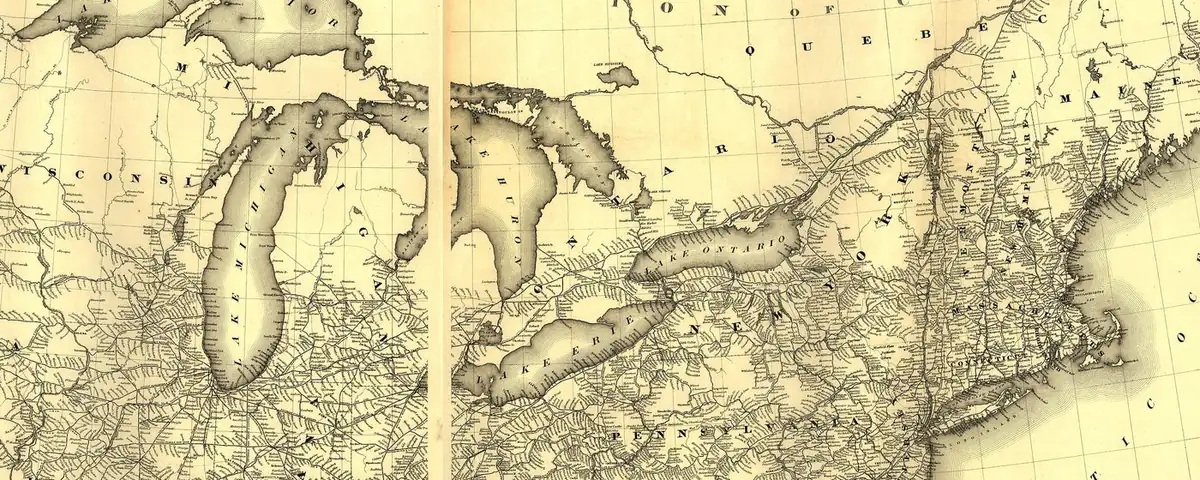
Weird Town Names in America and the Stories Behind Them
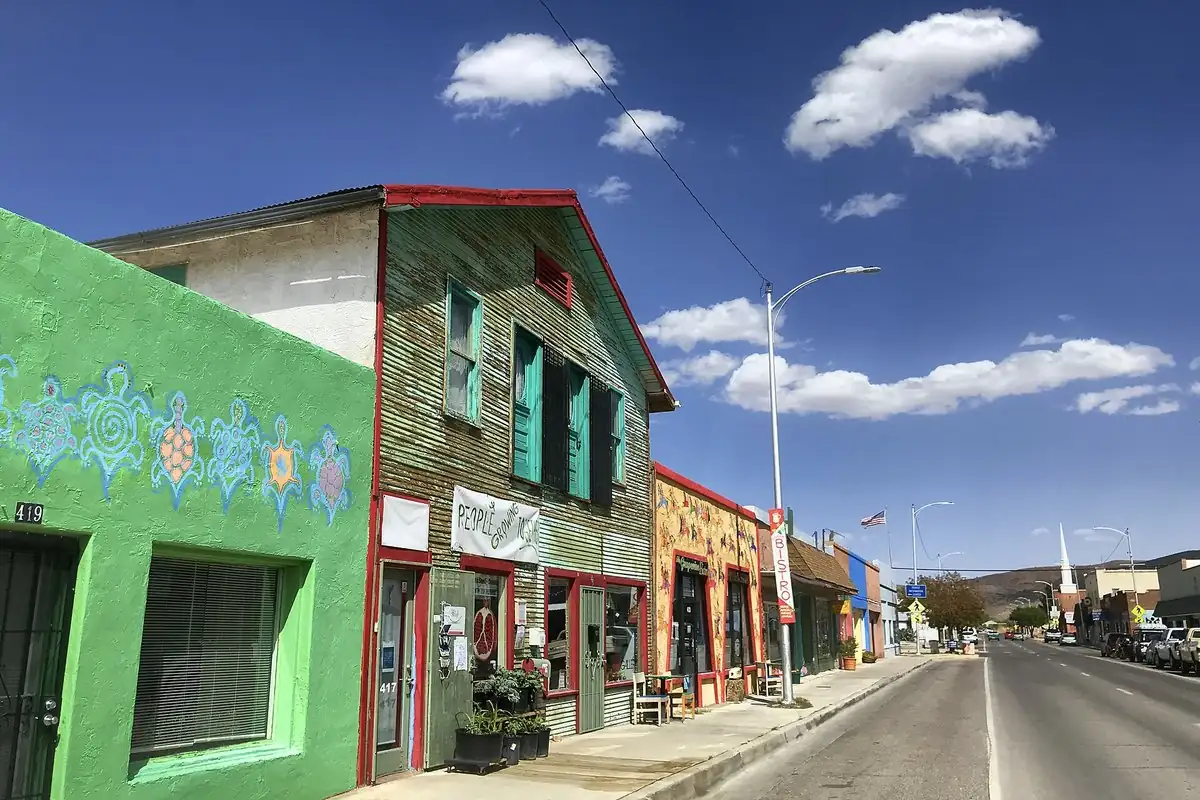

Weird town names usually have ordinary explanations, and that’s half the fun. Truth or Consequences, New Mexico, was plain Hot Springs until 1950, when its voters took the name of a radio quiz show. Show Low, Arizona, came out of a card game.
The rest of these strange town names work the same way. A map engraver’s slip gave West Virginia a Ravenswood instead of a Ravensworth. Beloit, Wisconsin, is a word somebody made up. Texarkana and Paragould are glued together from other names, and Normal, Illinois, is named for a teachers’ school, not for being ordinary.
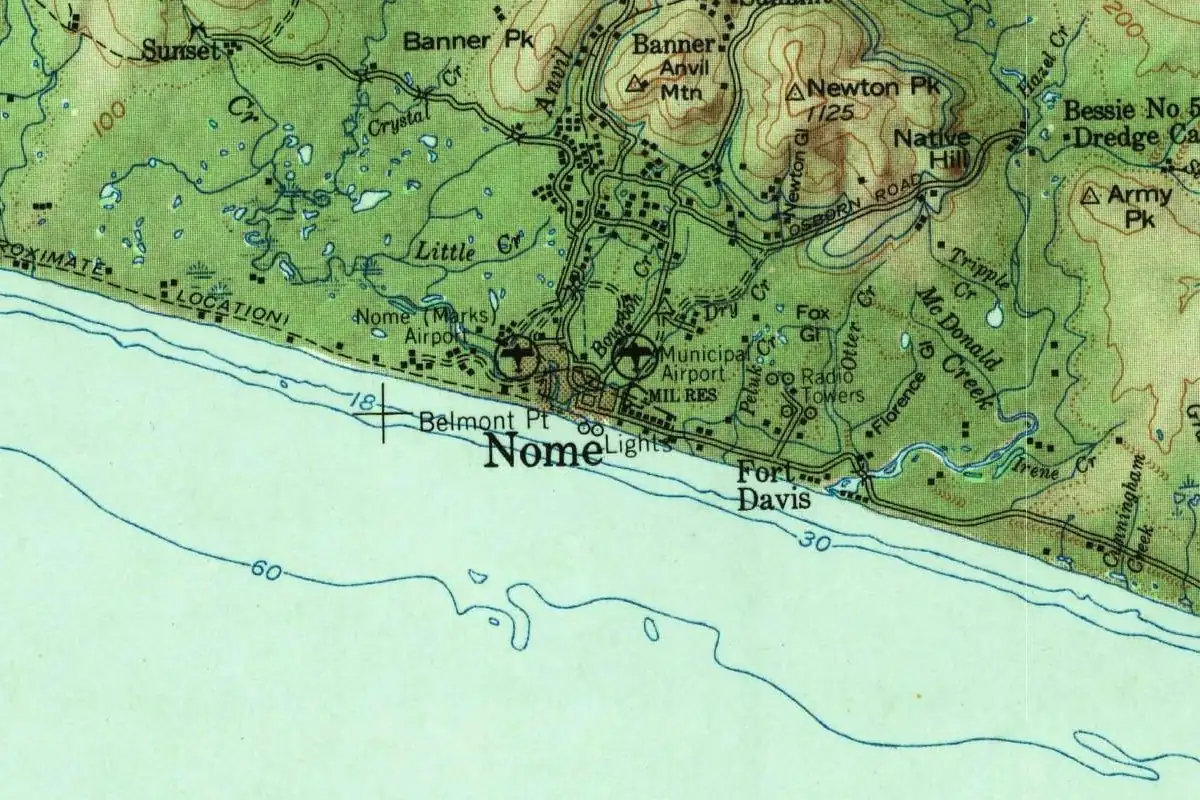
Some names only sound funny if you read them the wrong way. Lead, South Dakota, is said “leed,” and El Reno, Oklahoma, has nothing to do with reindeer. A few are still a puzzle: nobody can prove that Nome, Alaska, really came from a mapmaker’s “? name,” and the stories tell you when the old books disagree.
You won’t find names in Native languages on this list. A word isn’t weird just because it isn’t English, and those names have their own stories on the site.
How we picked these. The name sounds odd for a town, because it's a phrase, an everyday word, a person's full name, a name borrowed from somewhere unexpected, a made-up or blended word, a spelling mistake, or a word that means something else today, and an official, historical or encyclopedic source tells where it came from. Each story below lists the source that confirms it.
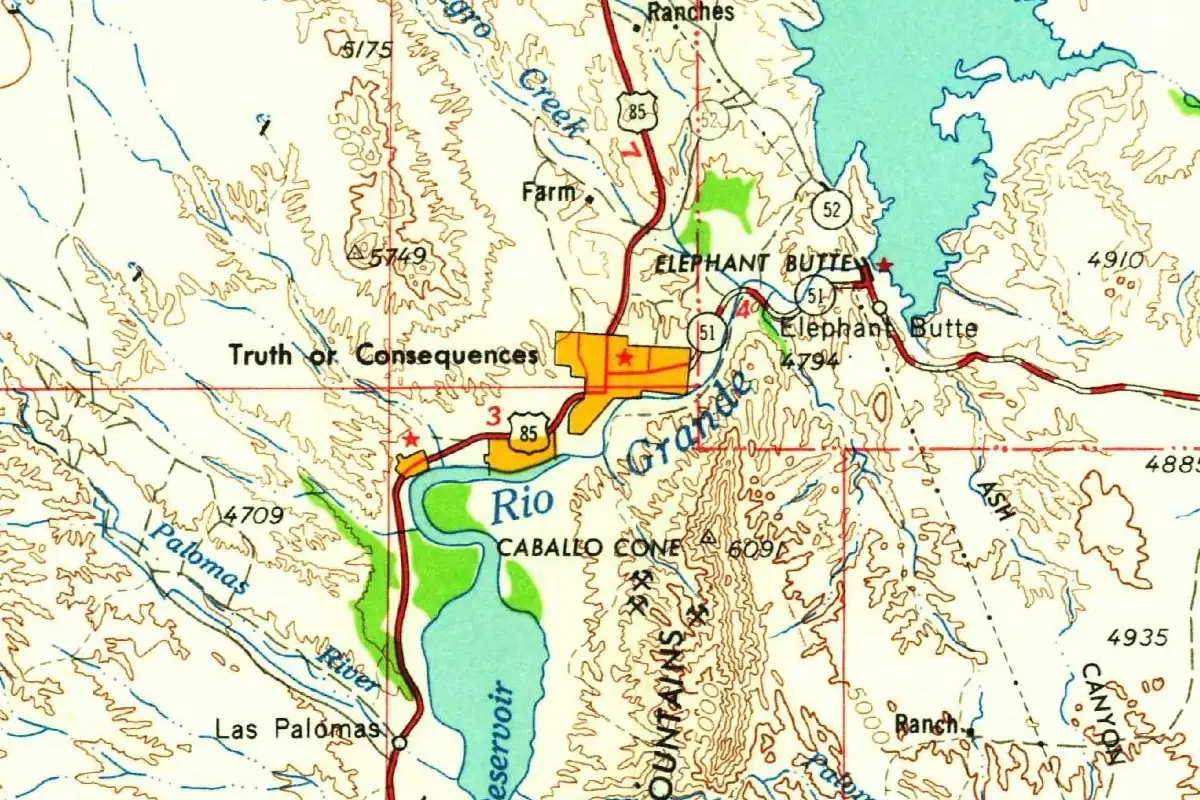 Sierra County, NM
Truth or Consequences, New Mexico, is named for a radio quiz show. Until 1950 it was Hot Springs, and its voters swapped names on a radio host's offer.
DocumentedUntil 1950 it was Hot Springs. Then its voters took the name of a radio quiz show, on the host's offer. Source: History of the Name (City of Truth or Consequences)
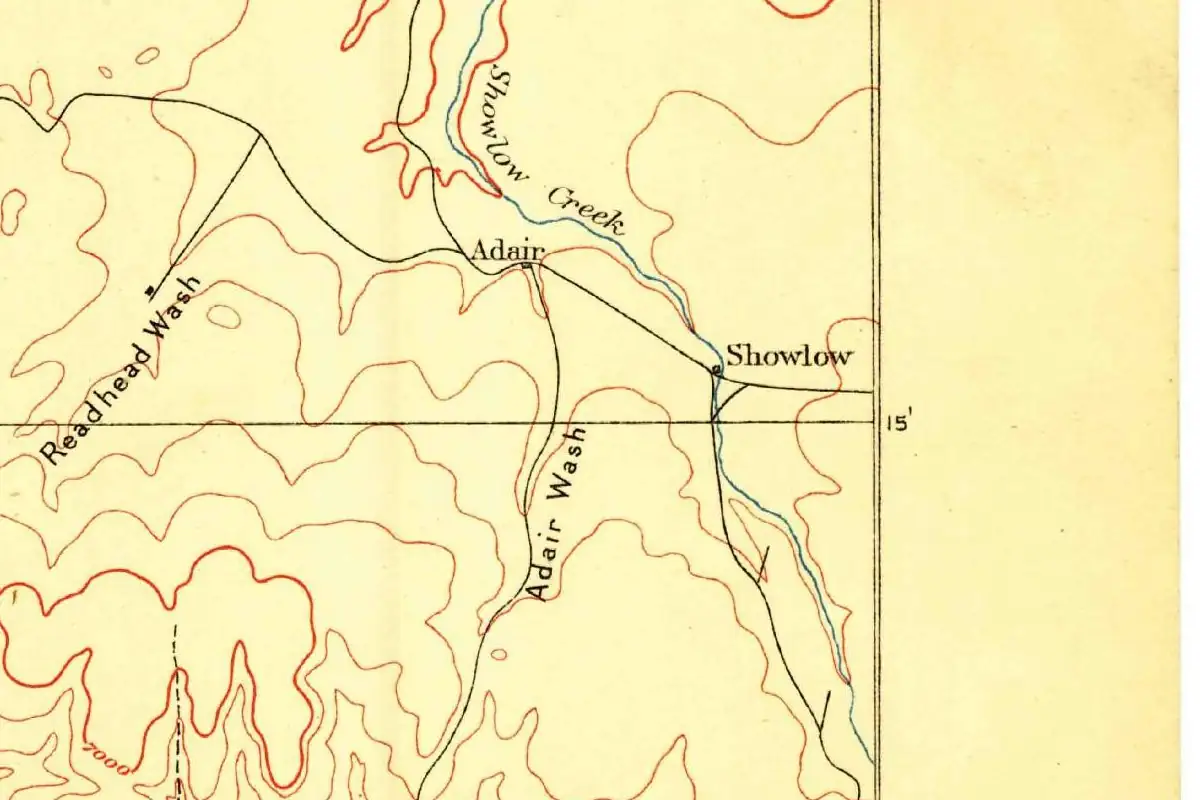 Navajo County, AZ
Show Low, Arizona, was won in a game of seven-up. The winning call was "show low," and Corydon Cooley, who took the ranch, kept it as the name.
DocumentedWon in a game of seven-up. The winning call was "show low," and Corydon Cooley, who took the ranch, kept it as the name. Source: James H. McClintock, Arizona: Prehistoric, Aboriginal, Pioneer, Modern, vol. 2 (1916)
 Cochise County, AZ
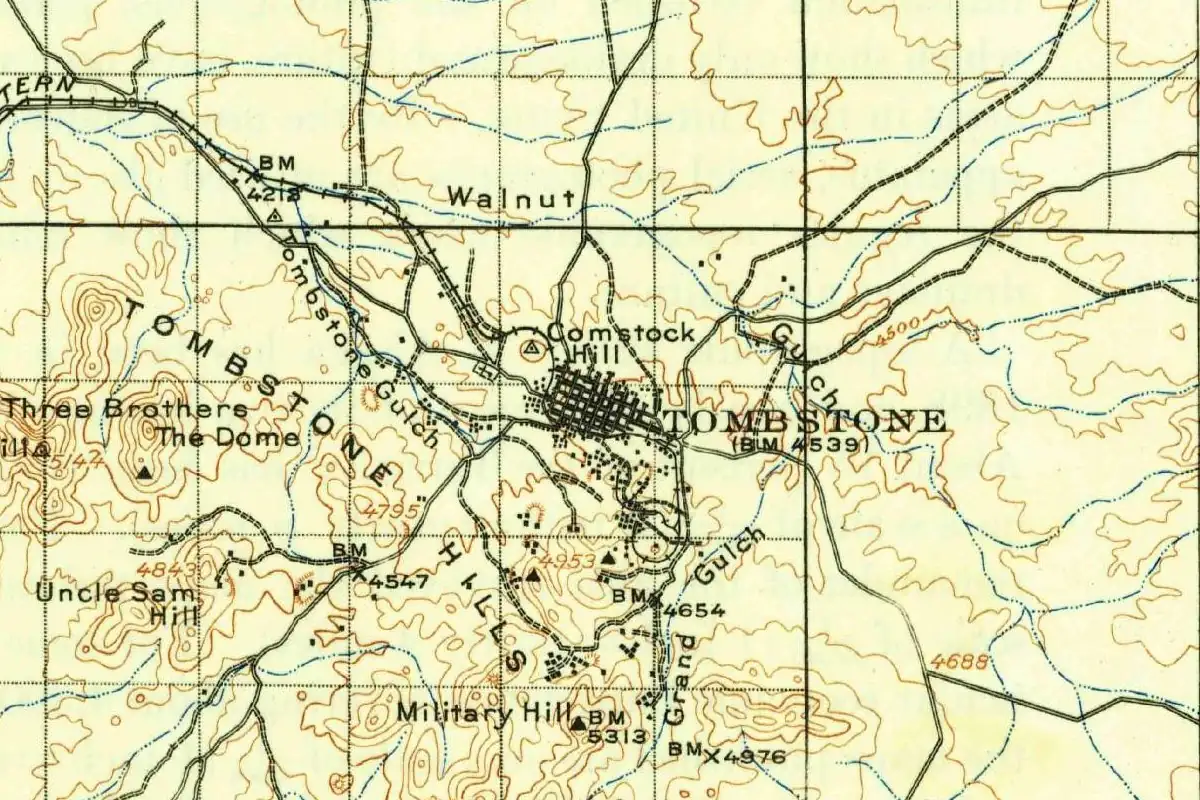
Ed Schieffelin was told the only stone he'd find in the hills of Tombstone, Arizona, would be his tombstone. He found silver and named his claim Tombstone.
DocumentedEd Schieffelin was told the only stone he'd find in those hills would be his tombstone. He found silver and named his claim Tombstone. Source: Patrick Hamilton, The Resources of Arizona, 2nd ed. (1883)
 Jackson County, WV
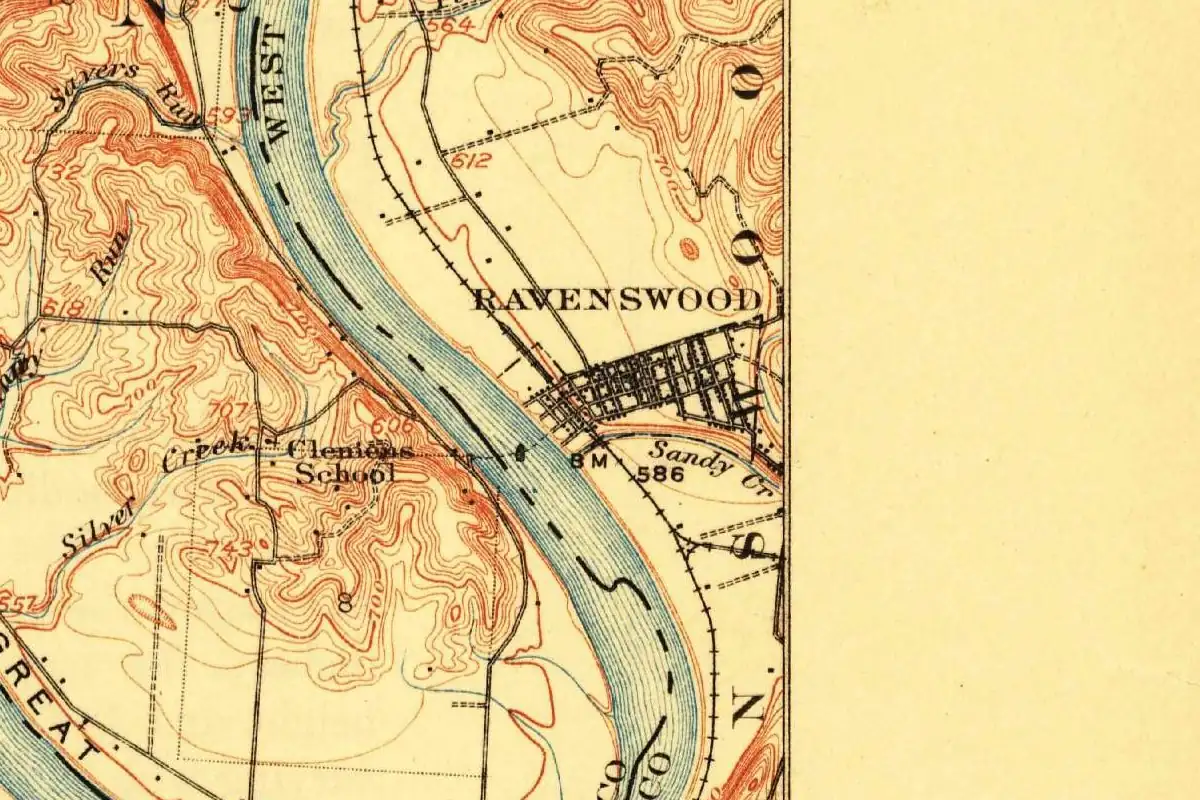
Ravenswood, West Virginia, was supposed to be Ravensworth. A map engraver spelled it wrong, and the mistake was never fixed.
DocumentedIt was supposed to be Ravensworth. A map engraver spelled it wrong, and the mistake was never fixed. Source: Virgil A. Lewis, History of West Virginia (1889)
 Rock County, WI
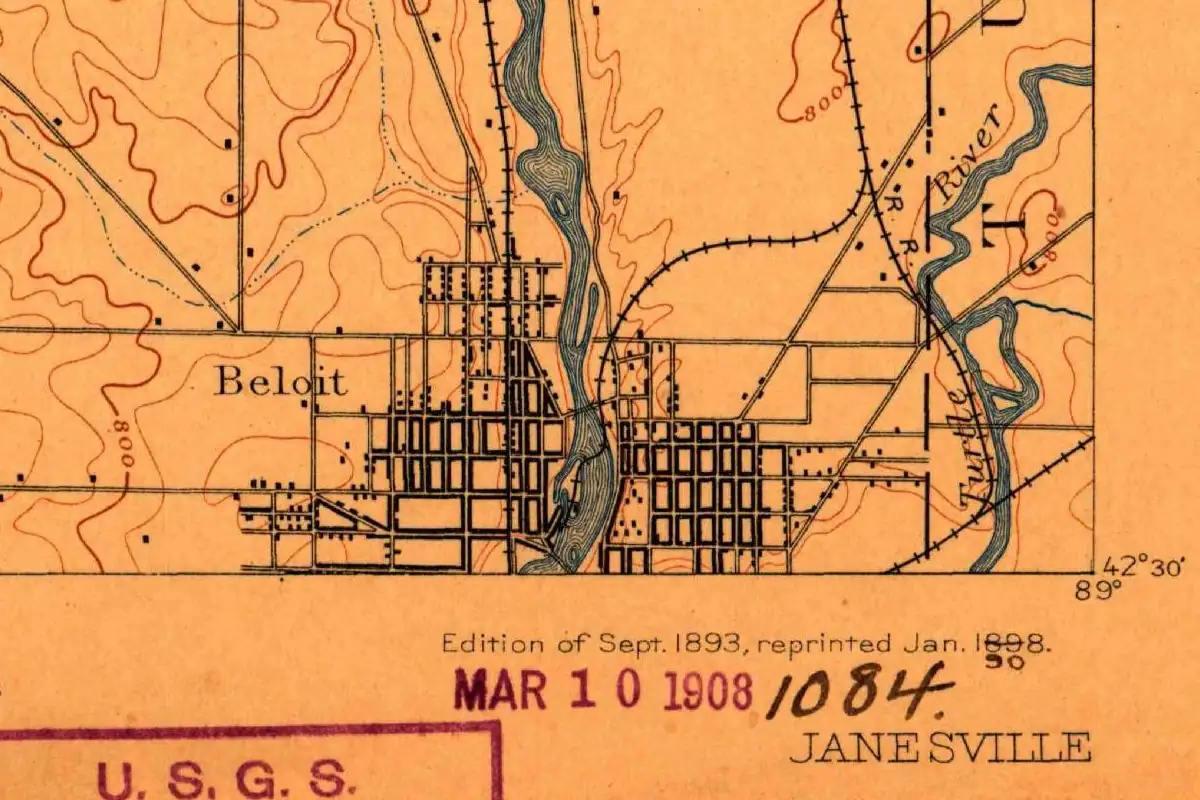
Beloit, Wisconsin, has a name that means nothing in any language. Settlers made it up around 1838, and they never agreed on who did.
DisputedA made-up word that means nothing in any language. The man who presented it said it was "no more French than it was Hebrew." Source: The History of Rock County, Wisconsin (Western Historical Company, 1879)
 McLean County, IL
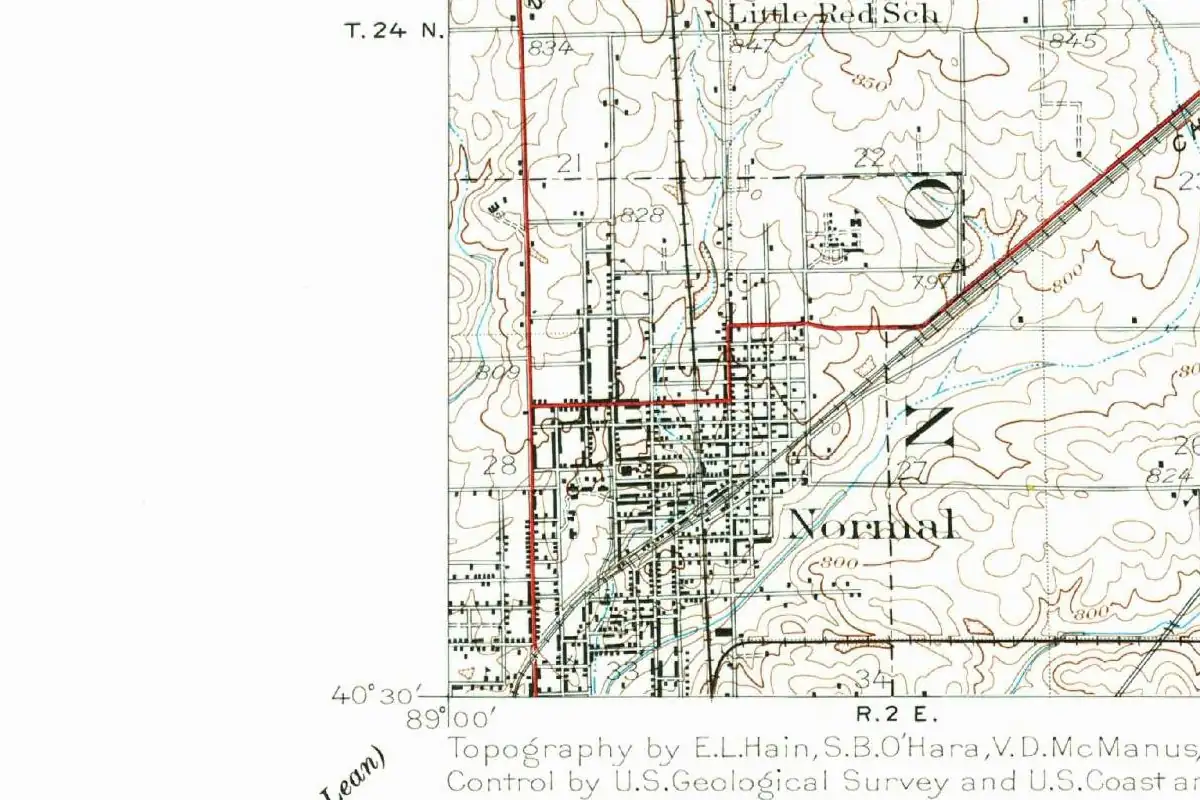
Normal, Illinois, is named for a school, not for being ordinary. The railroad stop called North Bloomington took the name of the State Normal University.
DocumentedNamed for a school, not for being ordinary. The railroad junction called North Bloomington took the name in honor of the new State Normal University. Source: Jacob L. Hasbrouck, History of McLean County, Illinois, vol. 1 (1924)
 Miller County, AR
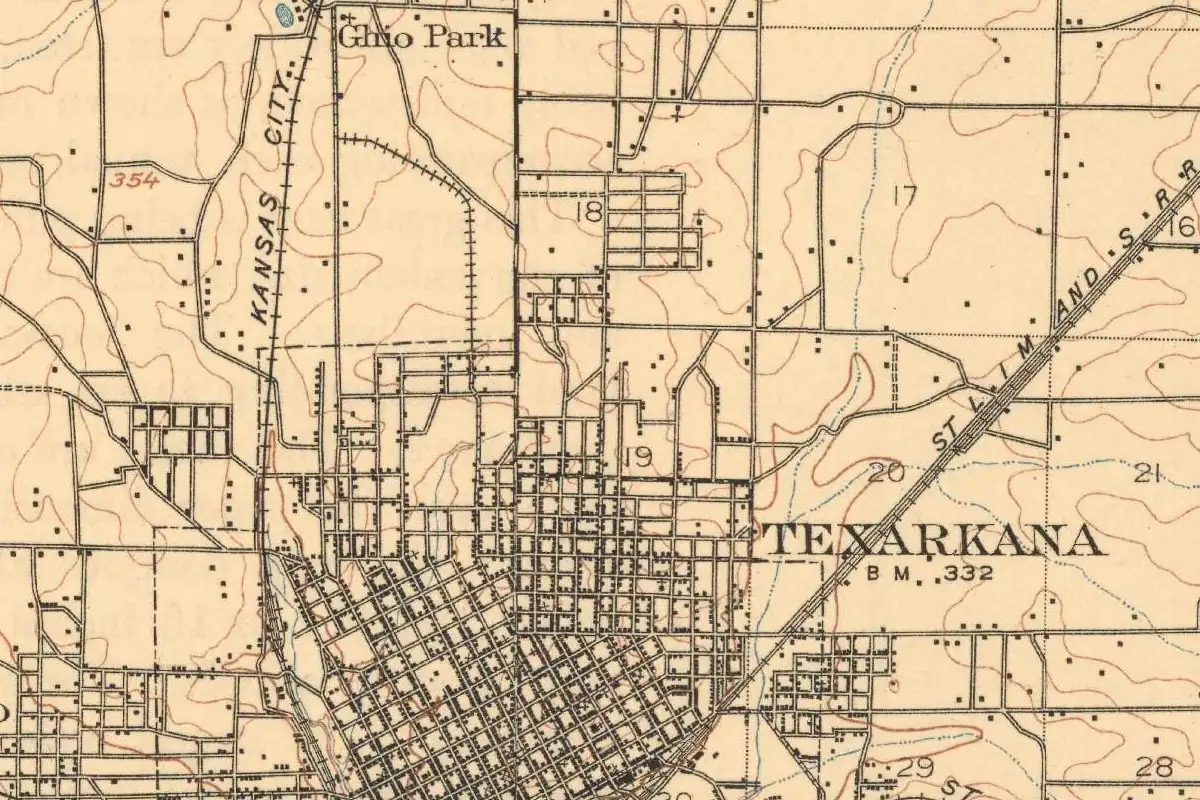
Nobody can say for sure who came up with the name Texarkana, Arkansas, and the old books can't even agree on how many states are packed into it.
DisputedA name glued together from state names. The old books can't even agree whether it packs in two states or three. Source: Biographical and Historical Memoirs of Southern Arkansas (Goodspeed, 1890)
 Greene County, AR
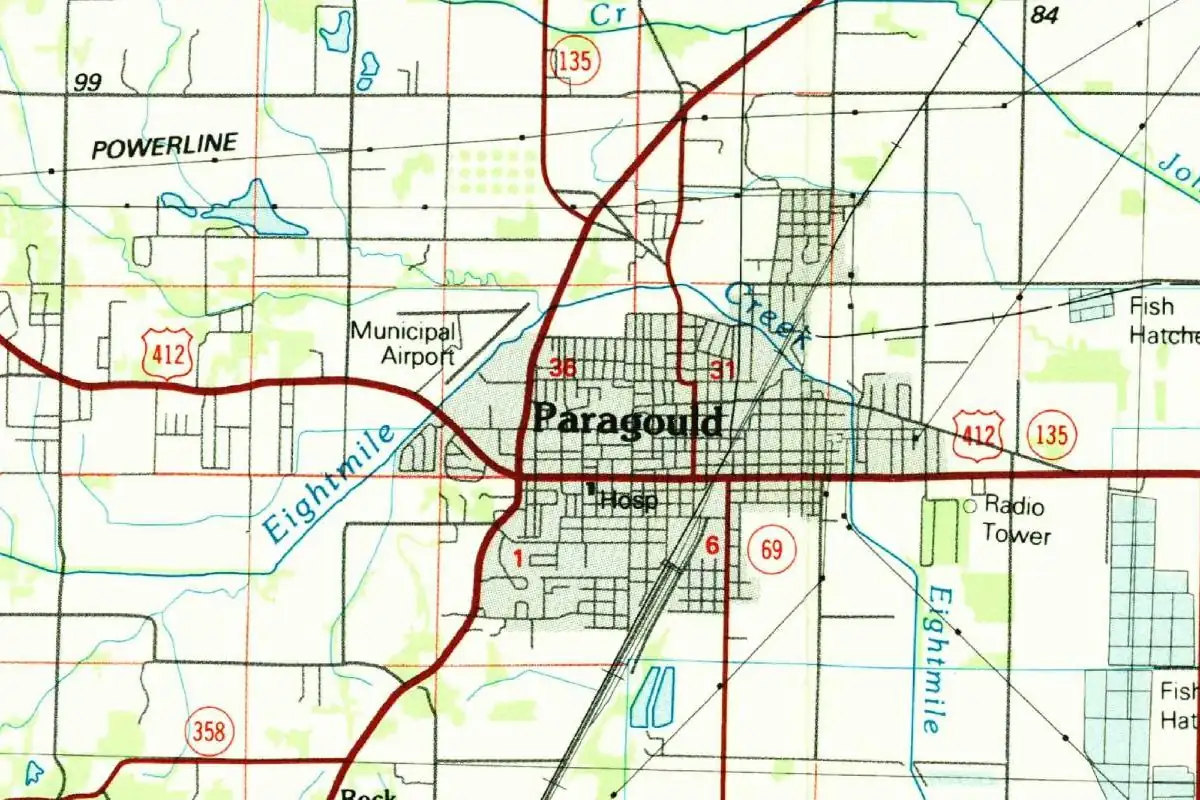
Paragould, Arkansas, is named for two railroad presidents at once, with Jay Gould's name stuck on in place of the last syllable of Paramore's.
DocumentedNamed for two railroad presidents at once: Paramore, with Gould swapped in for his last syllable. Source: Biographical and Historical Memoirs of Northeast Arkansas (Goodspeed, 1889)
 Canadian County, OK
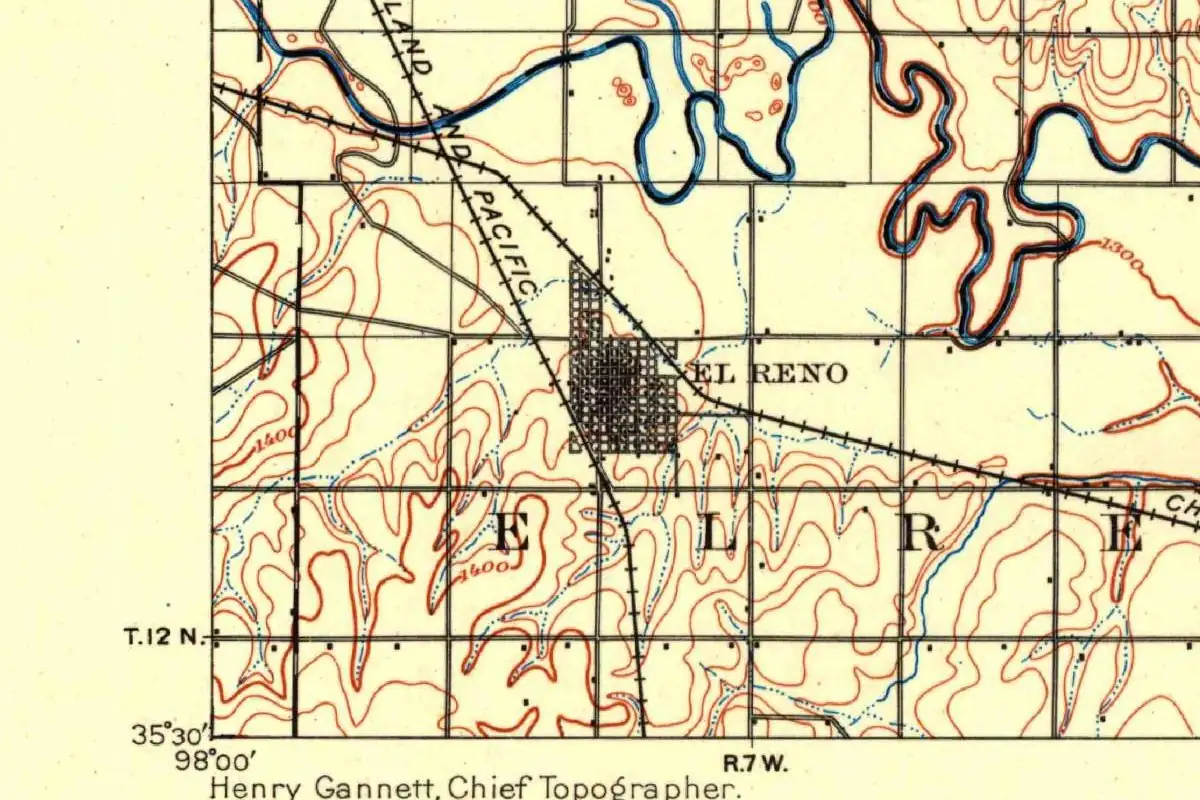
In 1905, a U.S. Geological Survey book said El Reno, Oklahoma, meant "the reindeer." But the Post Office turned down plain Reno, and the town added "El."
DocumentedA 1905 government book said it meant "the reindeer." It doesn't: the Post Office turned down plain Reno, so the town added "El." Source: Claude Hensley, "How El Reno Acquired Its Name," Chronicles of Oklahoma (1933)
 Carter County, OK
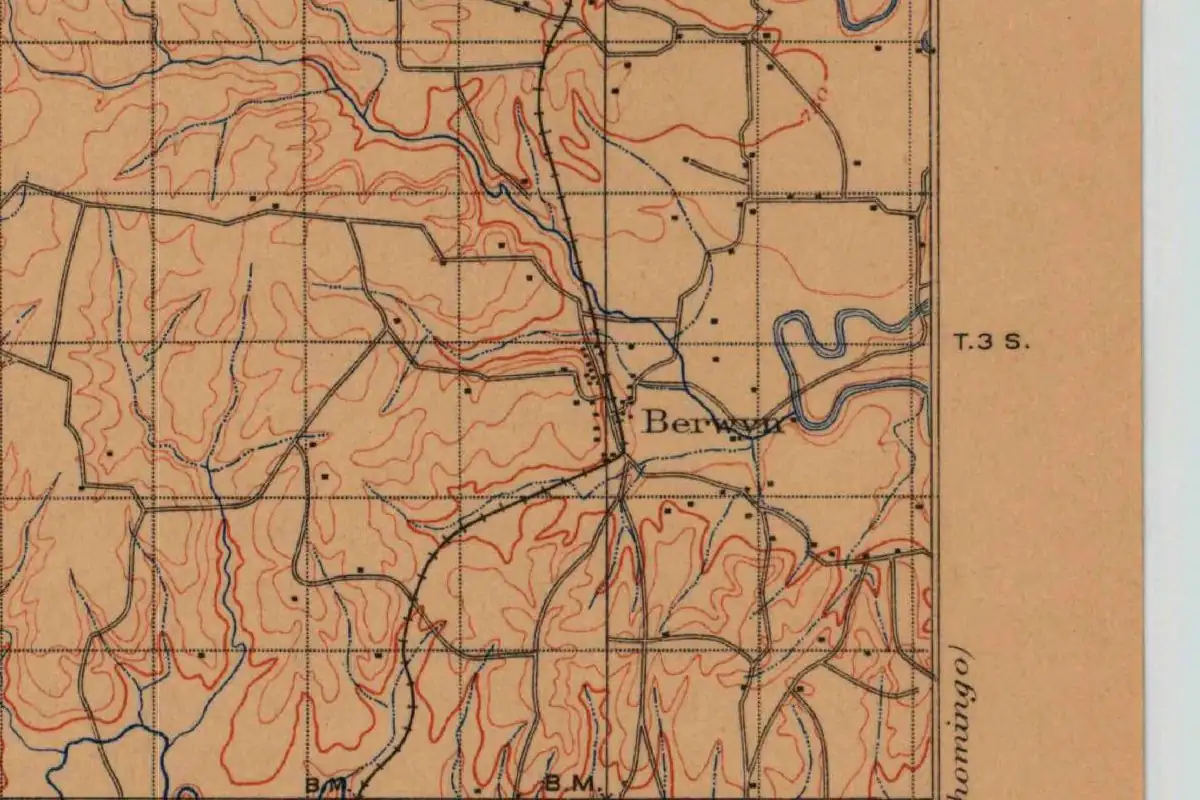
Before it took the name of a singing cowboy in 1941, the little town of Gene Autry, Oklahoma, had already been Lou, Dresden and Berwyn.
DocumentedBerwyn, Oklahoma, became Gene Autry on November 16, 1941, in honor of the radio and movie singing cowboy. Source: Historical Notes, Chronicles of Oklahoma, vol. 19, no. 4 (December 1941)
 Custer County, NE
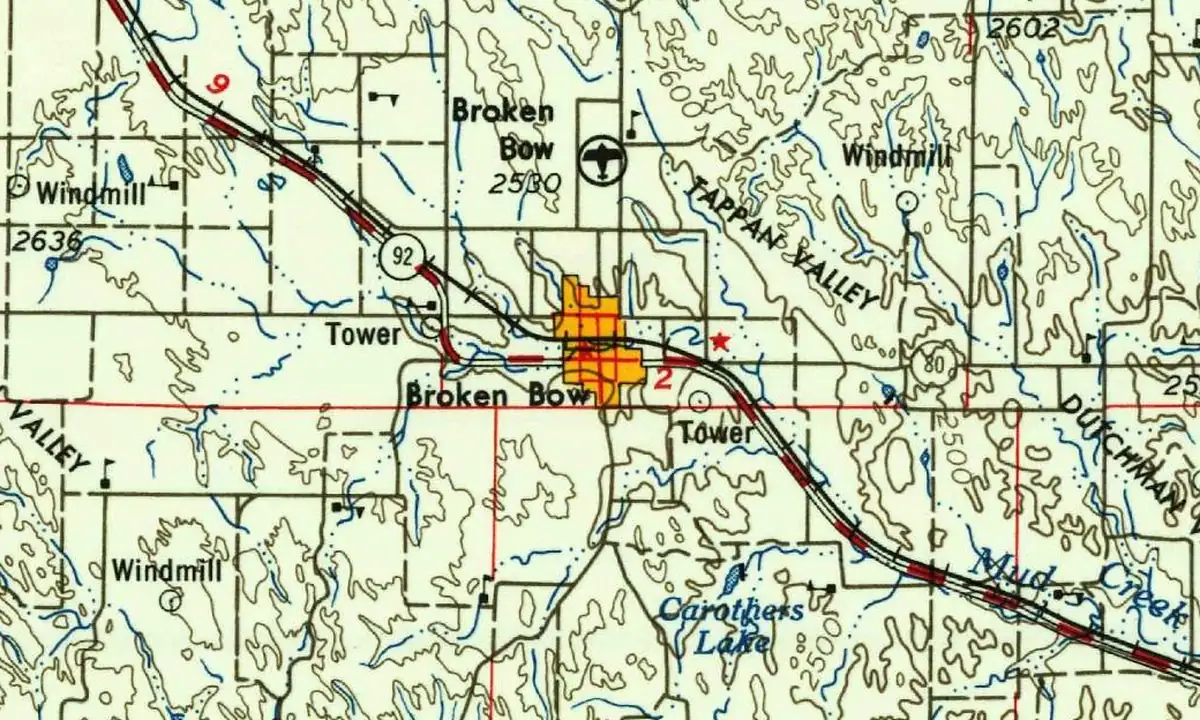
Broken Bow, Nebraska, is named for a broken bow found nearby. Wilson Hewitt sent it in as a name after the post office turned down his earlier choices.
DocumentedNamed for a broken bow found near the town site, after the post office turned down the homesteader's earlier choices. Source: Lilian Linder Fitzpatrick, Nebraska Place-Names (University of Nebraska, 1925)
 Cass County, NE
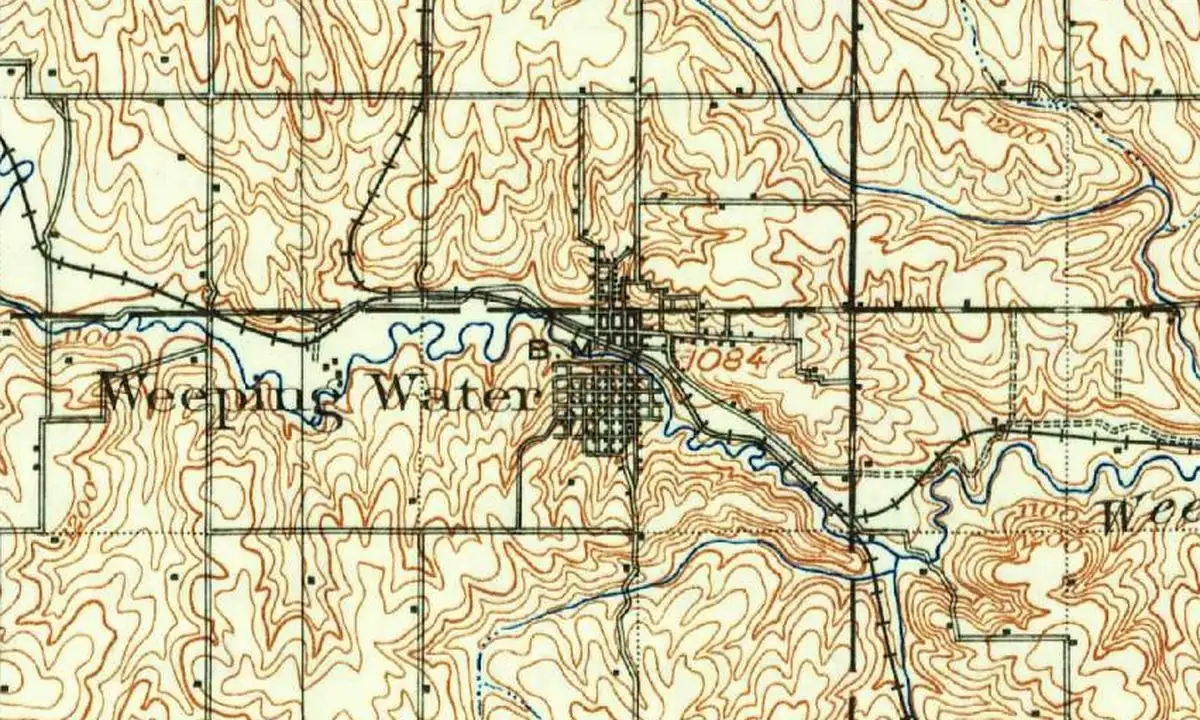
Weeping Water, Nebraska, is named for its creek, which French traders called L'Eau qui Pleure. A 1925 study says the weeping-women legend came later.
DocumentedNamed for its creek, which French traders called L'Eau qui Pleure, the water that weeps. The weeping-women legend came later. Source: Lilian Linder Fitzpatrick, Nebraska Place-Names (University of Nebraska, 1925)
 Lawrence County, SD
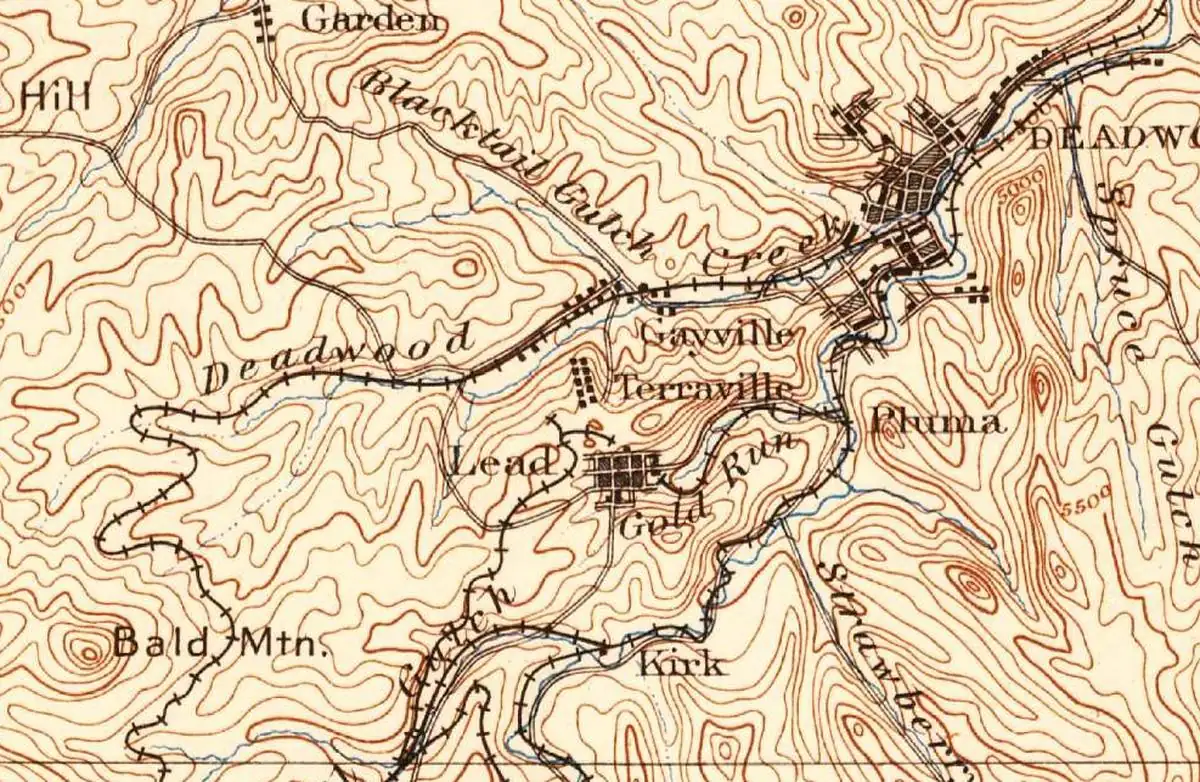
Lead, South Dakota, takes its name from an old miners' word: a "lead" is a ledge or vein of ore, and the hills around town were full of them.
DocumentedSay it "leed." It's a miners' word for a ledge of ore, and it has nothing to do with the gray metal. Source: Lead community profile (Advisory Council on Historic Preservation)
 Wasco County, OR
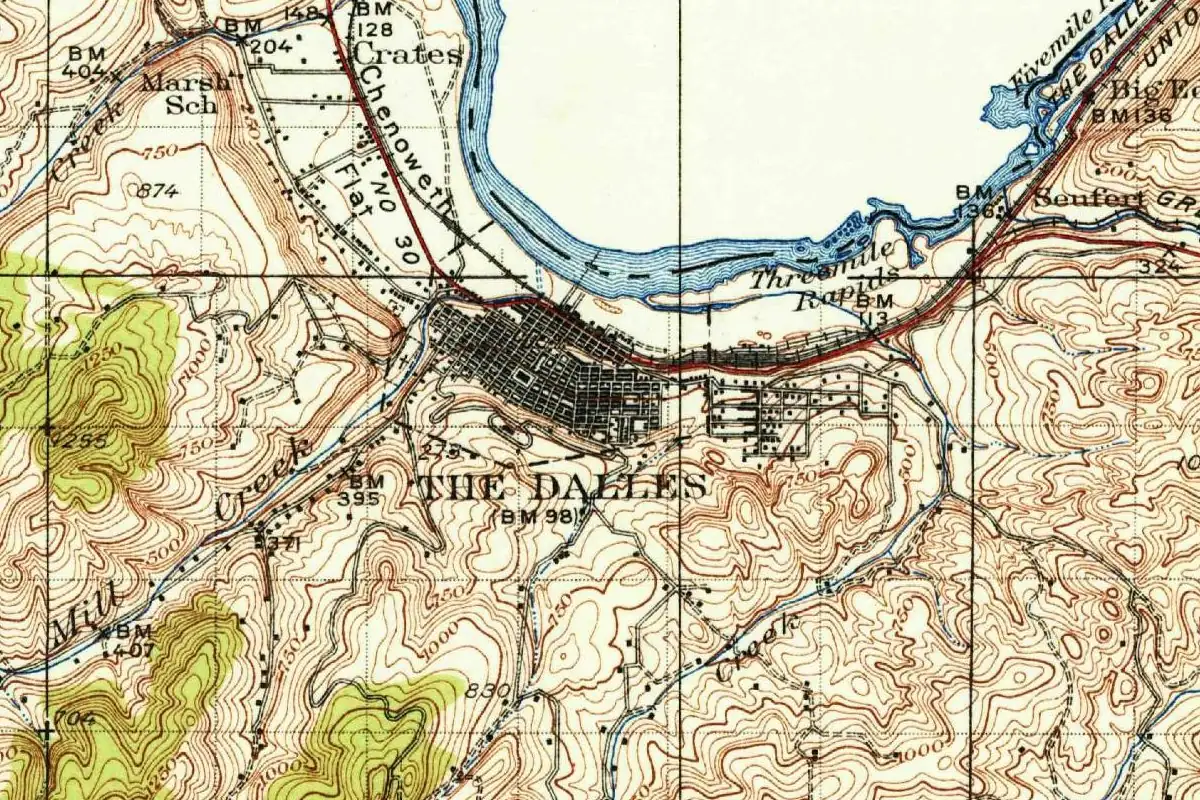
The Dalles, Oregon, took its name from what French boatmen called the Columbia River's rapids upstream: dalle, a word for a trough or a flagstone.
DocumentedFrench boatmen called the Columbia's rapids dalles. The town was named for them, and the "The" came along with the name. Source: An Illustrated History of Central Oregon (Western Historical Publishing, 1905)
 Nome Census Area, AK
A mapmaker's question mark may be the reason Nome, Alaska, is called Nome.
DisputedNamed for Cape Nome, maybe from a chart note, "? name," misread as C. Nome. That's the USGS explanation, but a 1905 history of the town had its doubts. Source: Donald J. Orth, Dictionary of Alaska Place Names (USGS Professional Paper 567, 1967)
 Washtenaw County, MI
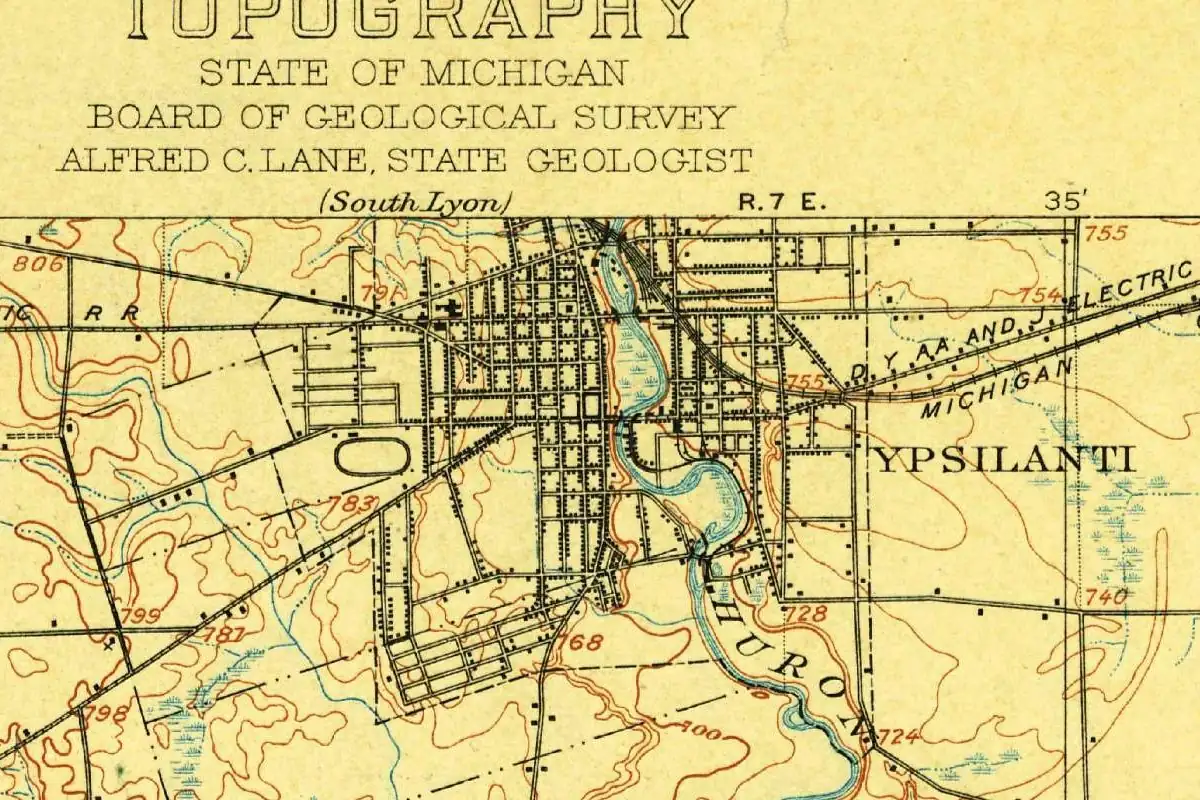
Ypsilanti, Michigan, came close to being called Waterville. A territorial judge wanted to honor a Greek general instead, and in 1825 his choice won.
DocumentedA Michigan town with a Greek general's name. A territorial judge got it picked over Waterville in 1825. Source: History of Washtenaw County, Michigan (Chas. C. Chapman & Co., 1881)
Sources for this page
- History of the Name (City of Truth or Consequences) (accessed Oct 31, 2026)
- James H. McClintock, Arizona: Prehistoric, Aboriginal, Pioneer, Modern, vol. 2 (1916) (accessed Oct 31, 2026)
- Virgil A. Lewis, History of West Virginia (1889) (accessed Oct 31, 2026)