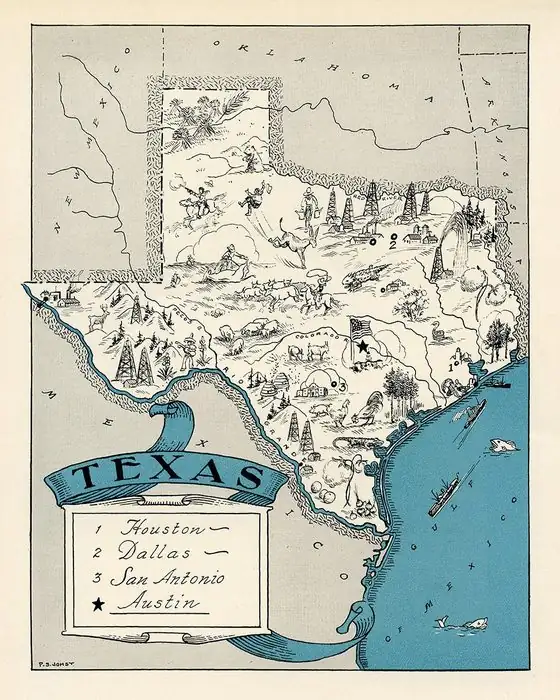
Why Is Corpus Christi Called Corpus Christi? A Feast Day
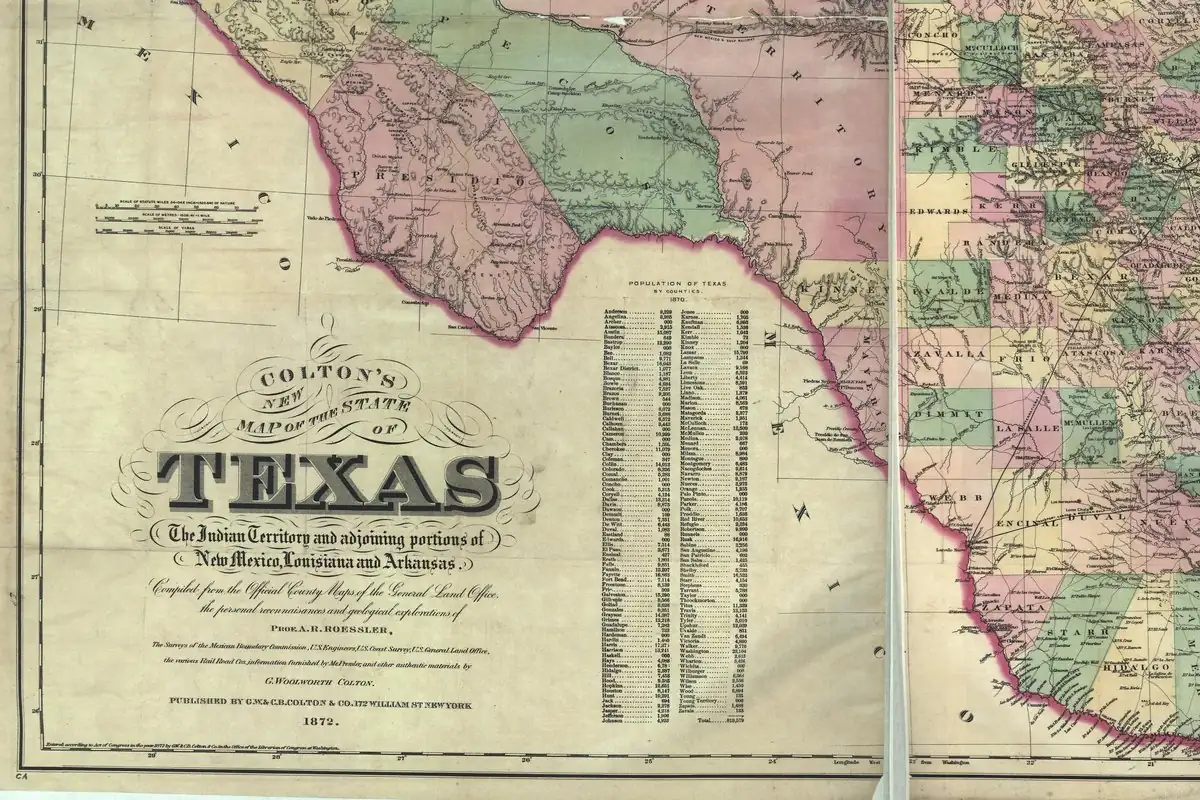
The city took its name from Corpus Christi Bay, and the bay's name means the Body of Christ, a Catholic feast day. A popular story says Alonso Álvarez de Pineda found the bay on that feast in 1519, but his records are lost. The Handbook of Texas finds the present name first in Spanish reports of 1766.
Corpus Christi got its name from the bay it sits on, and the bay was named for the Catholic feast of the Body of Christ, but who named it isn’t on record. The famous story says a Spanish explorer did it in 1519. The paperwork for that story hasn’t survived.
A feast day, not a person
Corpus Christi means “the Body of Christ,” and it’s the name of a feast in the Catholic calendar. Henry Gannett’s 1905 list of place names keeps it short: the city in Nueces County, and the bay, were “named with reference to a festival of the Roman Catholic Church.” Nobody’s honoring a founder or a saint here. It’s a day on the church calendar that stuck to a body of water, and then to the town on its shore.
The town came last. By the time anyone built a house here, the bay had carried the name for decades, and when the settlement finally got a proper name, it borrowed the bay’s.
The Pineda story
You’ll see it on the city’s own website: “Legend has it that in 1519, on the Roman Catholic Feast Day of Corpus Christi, Spanish explorer Alonzo Alvarez de Pineda discovered a lush semi-tropical bay.” The National Park Service, which runs Padre Island National Seashore just south of the city, tells it the same way and even gives a date, June 24, 1519. Both of them call it a legend, and that’s the right word.
The Handbook of Texas explains why. In its history of Nueces County, Christopher Long writes that Pineda “reputedly reached Corpus Christi Bay on the feast of Corpus Christi, 1519,” and then adds: “Conclusive evidence, however, is lacking because the records of his expedition are lost.” The Handbook’s entry on the bay says only that it “may have been first sighted by” Pineda on Corpus Christi Day 1519.
The oldest local history we found didn’t lean on Pineda at all. In The Story of Corpus Christi, published in 1916 by the city’s chapter of the Daughters of the Confederacy, Mary A. Sutherland starts with the French explorer La Salle in 1687 and then gives the name in one line:
“The Bay was discovered on a Catholic festival day, Corpus Christi Day, and hence the name Corpus Christi.”
She doesn’t say who discovered it, or when.
Other names, and the first paper trail
Not every Spaniard who saw the bay called it Corpus Christi. Capt. Joaquín de Orobio y Basterra, sent by Governor José de Escandón to explore the Gulf Coast, reached the bay on February 26, 1747, according to the Handbook, and Orobio said he named it for St. Michael the Archangel. That one didn’t last.
The Handbook’s bay entry says the first reference to Corpus Christi Bay by its present name shows up in reports by Col. Diego Ortiz Parrilla in 1766. The Park Service adds that the long island on the Gulf side was then known as Isla Corpus Christi. So the name was in use by the 1760s. Who first put it there is the part that’s missing.
By the time English-language writers got to it, the bay had its name, and Kennedy’s entry says nothing about a town or Kinney’s post. William Kennedy’s 1841 book on the Republic of Texas, published in London, gives it a short, admiring entry:
“Corpus Christi Bay is about forty miles from north to south, and twenty from east to west. … The bay is beautiful: the water deep, clear, and free from bars, and the beach elevated.”
That’s roughly 40 by 20 miles, or 64 by 32 km. The Handbook calls it one of the few natural harbors on the Texas coast.
From Kinney’s Ranch to Corpus Christi
The city started as a trading post. The Handbook says Henry Lawrence Kinney and his partner William P. Aubrey set one up on the west shore of the bay in September 1839; the city gives 1838-39. (The bay entry also has Kinney running a store in 1838 on Live Oak Point, which Kennedy’s 1841 book places up the coast, between Copano and Aransas bays.) The city says the settlement was called Kinney’s Trading Post, or Kinney’s Ranch. Sutherland remembered it the second way:
“Sometime in the Forties, one Colonel Kinney purchased the Villareal tract of land, bordering on the bay shore, upon which the city now stands, and it became known as Kinney’s Ranch.”
Raids forced Kinney out in 1842, the Handbook says, but he came back, and a post office opened the same year with Aubrey as postmaster. By the mid-1840s, Long writes, the settlement was “now known as Corpus Christi.” The city’s history gives a practical reason for the switch: the town took the name because a “more definite postmark for letters was needed.”
The sources don’t agree on when the U.S. Army showed up. The bay entry says Gen. Zachary Taylor landed troops on July 31, 1845, and Long’s entry says the army camped nearby in September 1845. Either way, it stayed until March 1846 and then marched south to the Rio Grande, where it built the fort that gave Brownsville its name.
The town was incorporated on April 25, 1846, but no officials were elected, so the charter was repealed. It was incorporated again on February 16, 1852, which is why the city counts 1852 as its start. Kinney, whom the Handbook credits with helping found the city, organized a state fair there that same year. So if you’re asking who founded Corpus Christi, it’s Kinney. If you’re asking who named it, the record goes blank, and a good story fills the gap.
Quick answers
What does Corpus Christi mean?
It means “the Body of Christ.” It’s the name of a Catholic feast day, and the city’s name comes from Corpus Christi Bay, which carried it first.
Did Alonso Álvarez de Pineda name Corpus Christi Bay?
There’s no surviving record that he did. The city and the National Park Service call the 1519 story a legend, and the Handbook of Texas says the records of his voyage are lost.
Who founded Corpus Christi?
Henry Lawrence Kinney, with his partner William P. Aubrey. Their trading post on the bay, founded in 1839 according to the Handbook of Texas, grew into the town.
Key dates
- 1747Joaquín de Orobio y Basterra reaches the bay at the mouth of the Nueces; he reports naming it for St. Michael the Archangel.
- 1766Reports by Col. Diego Ortiz Parrilla carry the earliest use of the name Corpus Christi Bay that the Handbook of Texas has found.
- 1839September: Henry Lawrence Kinney and William P. Aubrey set up a trading post on the west shore of the bay.
- 1841William Kennedy's book on Texas, published in London, describes Corpus Christi Bay without mentioning any town.
- 1845Gen. Zachary Taylor's army arrives and camps at the settlement before marching to the Rio Grande the next spring.
- 1846April 25: Corpus Christi is incorporated, but no officials are elected and the corporation is repealed.
- 1852February 16: Corpus Christi is incorporated again, this time for good.
Getting there
Open Corpus Christi in Google Maps
Opens in a new tab. The pin is the center of Corpus Christi in the USGS place-name record.
The closest airports, Amtrak stations and intercity bus stops, measured in a straight line from the center of Corpus Christi.
Airports
- Corpus Christi International (CRP) 7 mi 11 km
- Victoria Regional (VCT) 78 mi 126 km
- San Antonio International (SAT) 136 mi 219 km
Intercity buses
- Greyhound Corpus Christi Bus Station under 1 mi 0.8 km
Distances are as the crow flies, not by road. We don't list schedules or fares because they change; check with the airline, Amtrak or the bus company before you go. Official data (FAA commercial service airports (2025), FAA airport locations, Amtrak stations and Intercity Bus Atlas) from the FAA and the U.S. Bureau of Transportation Statistics, checked Nov 13, 2026.
Sponsored
Staying in Corpus Christi?
Compare hotels in Corpus Christi, Texas, on Expedia.
See hotels in Corpus ChristiWe may earn a commission if you buy through this link. It never changes what we write. Read our affiliate disclosure
Sponsored
Want the spooky side of Corpus Christi?
The name has its story above. For the ghost stories, US Ghost Adventures runs walking ghost tours in Corpus Christi.
See ghost tours in Corpus ChristiWe may earn a commission if you book through this link. It never changes what we write. Read our affiliate disclosure
Historical Sources & References
- William Kennedy, Texas: The Rise, Progress, and Prospects of the Republic of Texas, vol. 1 (1841), pp. 51-52. Live Oak Point between Copano and Aransas bays (p. 51); the entry “Corpus Christi Bay and its Tributaries,” quoted above, with the bay’s size and description, and no word of a town on its shore (p. 52).
- Henry Gannett, The Origin of Certain Place Names in the United States (USGS, 1905), p. 92. The city and bay “named with reference to a festival of the Roman Catholic Church.”
- Mary A. Sutherland, The Story of Corpus Christi (1916), pp. 1, 12. La Salle in 1687 and the line “hence the name Corpus Christi” (p. 1); Kinney’s purchase of the Villareal tract and the name Kinney’s Ranch (p. 12).
- Art Leatherwood, “Corpus Christi Bay,” Handbook of Texas Online. Pineda as a possible first sighting in 1519, Orobio’s name for St. Michael the Archangel, the 1766 reports of Ortiz Parrilla as the first use of the present name, Kinney’s store on Live Oak Point in 1838, Taylor’s landing of July 31, 1845, and the bay as a natural harbor.
- Christopher Long, “Corpus Christi, TX,” Handbook of Texas Online. Orobio’s arrival on February 26, 1747, the trading post of September 1839, the post office of 1842, “now known as Corpus Christi,” Taylor’s camp of September 1845, and the incorporations of 1846 and 1852.
- Christopher Long, “Nueces County,” Handbook of Texas Online. Pineda “reputedly” at the bay in 1519, and the lost records of his expedition.
- Amelia W. Williams, “Kinney, Henry Lawrence,” Handbook of Texas Online. Kinney as a founder of the city and the fair of 1852.
- City of Corpus Christi, “About Corpus Christi”. The Pineda legend, the names Kinney’s Trading Post and Kinney’s Ranch, the “more definite postmark” behind the change of name, the army’s stay until March 1846, and the 1852 incorporation.
- National Park Service, “The Spanish,” Padre Island National Seashore. The legend dated June 24, 1519, and the island’s name of Isla Corpus Christi at the time of Ortiz Parrilla’s visit in 1766.
- GNIS feature 1333380 (U.S. Geological Survey). Record 1333380, filed under Nueces County.
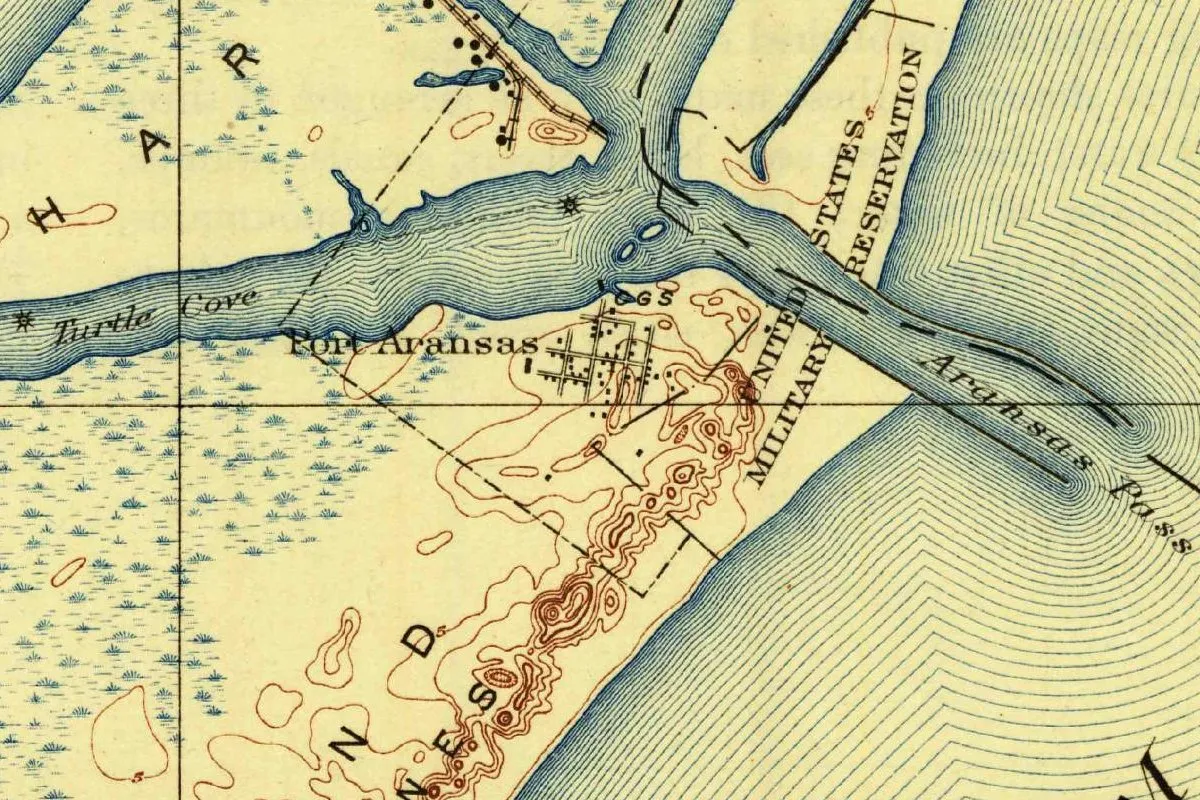
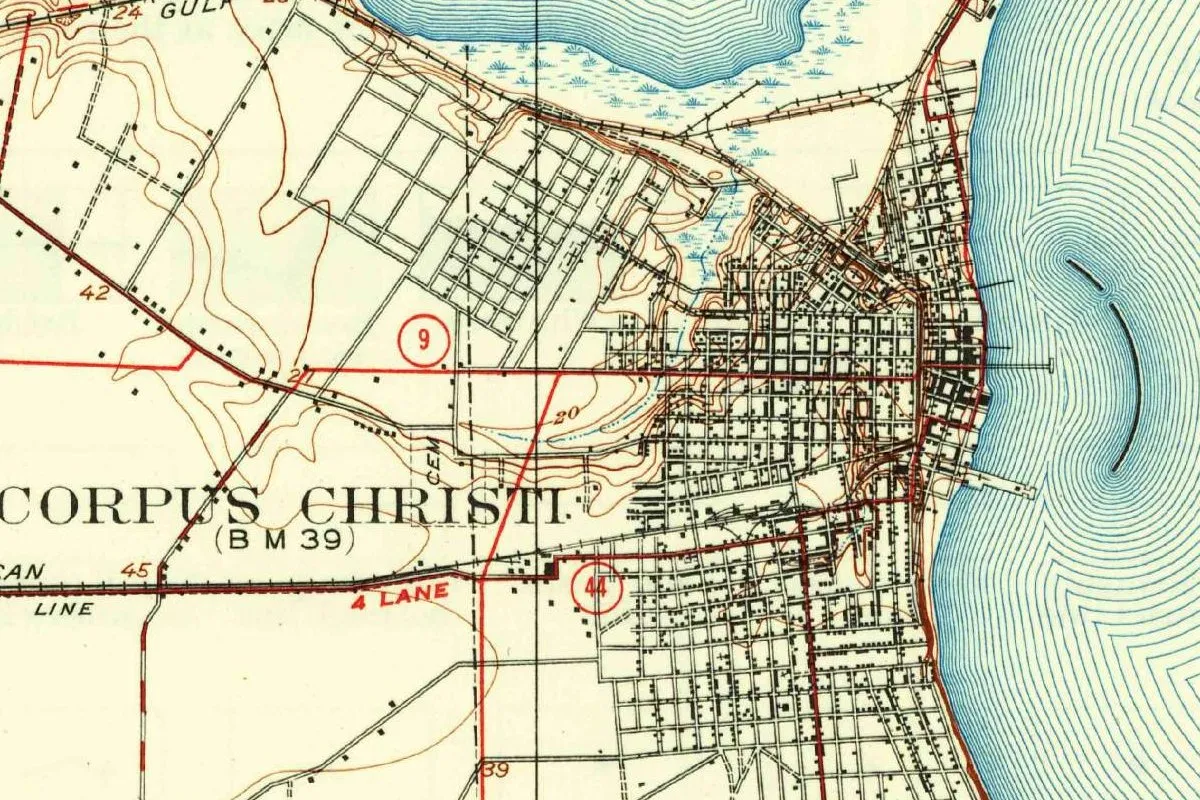
- U.S. Geological Survey, Corpus Christi sheet (1:62,500), edition of 1925, reprinted 1949. A quadrangle surveyed in 1922, printed in 1925 and reissued in 1949 with highway numbers, used for the bayfront detail.
Spot something wrong, or know more? Tell us here. You can also email us or use our contact page. Corrections are noted here with their date, never made silently.