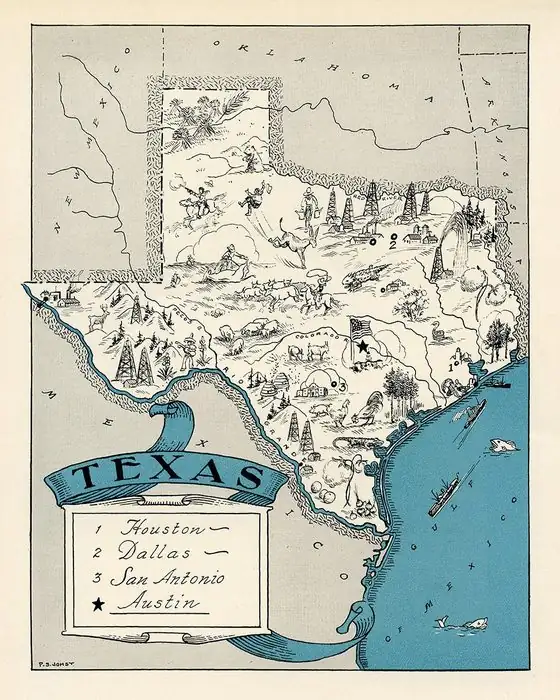
Why Is It Called Laredo, Texas? A Port Town in Spain
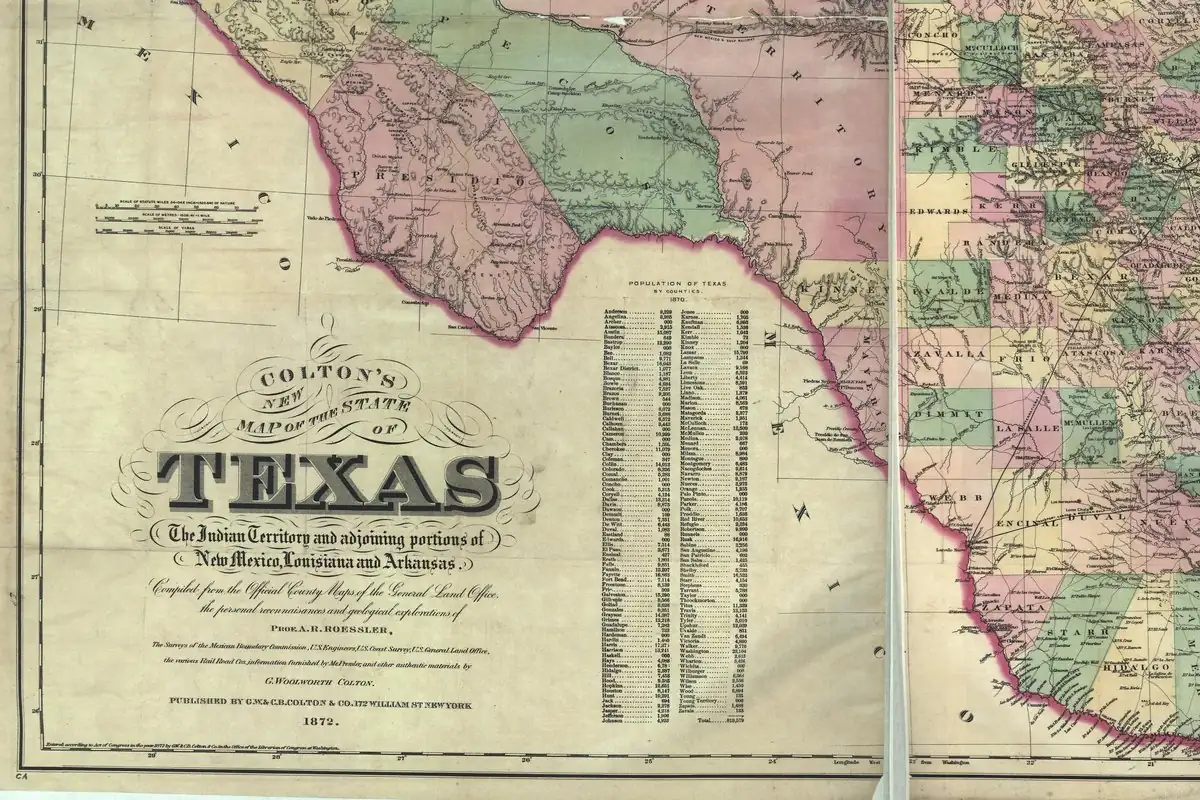
Laredo, Texas, is named for Laredo, a seaport on the Bay of Biscay in Spain's old province of Santander. José de Escandón, who ran the colony of Nuevo Santander, gave the name San Agustín de Laredo to the settlement Tomás Sánchez founded on the Rio Grande on May 15, 1755.
A seaport’s name on the Rio Grande
Laredo, Texas, borrowed its name from a seaport on Spain’s northern coast, on the Bay of Biscay. The man who chose it, José de Escandón, was running the Spanish colony of Nuevo Santander, and he named the new settlement on the Rio Grande San Agustín de Laredo in 1755.
Henry Gannett’s 1902 list of place-name origins for the U.S. Geological Survey kept it short. It says Laredo, the city in Webb County, was “named for the seaport town in Spain,” and his 1905 edition repeats it almost word for word.
Sánchez asked, Escandón named
The town’s founder and the man who named it weren’t the same person. The Handbook of Texas says Tomás Sánchez de la Barrera y Garza, a rancher on the south bank of the river, asked Escandón in 1754 for permission to found a town on the north bank. Escandón wanted a settlement on the Nueces River instead and sent Sánchez to look. Sánchez came back saying he’d found no good site there and asked again for a spot near a river crossing called Paso de Jacinto.
This time Escandón said yes. He made Sánchez captain and chief justice of the new settlement, “to be named Laredo.” On May 15, 1755, Sánchez moved there with his family and a few others, about 30 miles (48 km) upriver from the ranch at Dolores, by the Handbook’s count.
Seb. S. Wilcox, writing in the Southwestern Historical Quarterly in 1938, tells it this way:
“Escandón gave the new settlement the name of San Agustín de Laredo, said to be so named after the town of Laredo on the Bay of Biscay in Santander, Spain.”
Notice the “said to be.” Wilcox hedges, and none of the sources here quotes Escandón explaining the choice. They all point to the same place in Spain, though, and nobody offers a rival.
Names from home
Wilcox adds a detail in a footnote that helps you see why a Spanish port would turn up in South Texas. In naming his settlements, he says, Escandón used the names of his king and prince first, then his viceroys, and finally “those of towns in his native province of Santander, Spain.” Laredo, he notes, was among the last towns Escandón founded.
That fits what the Handbook says about Escandón himself. He was born in Soto la Marina, Santander, Spain, in 1700, and the colony he ran, Nuevo Santander, stretched from the Pánuco River in Mexico to the Guadalupe River in Texas. Laredo was the last town established under his authority.
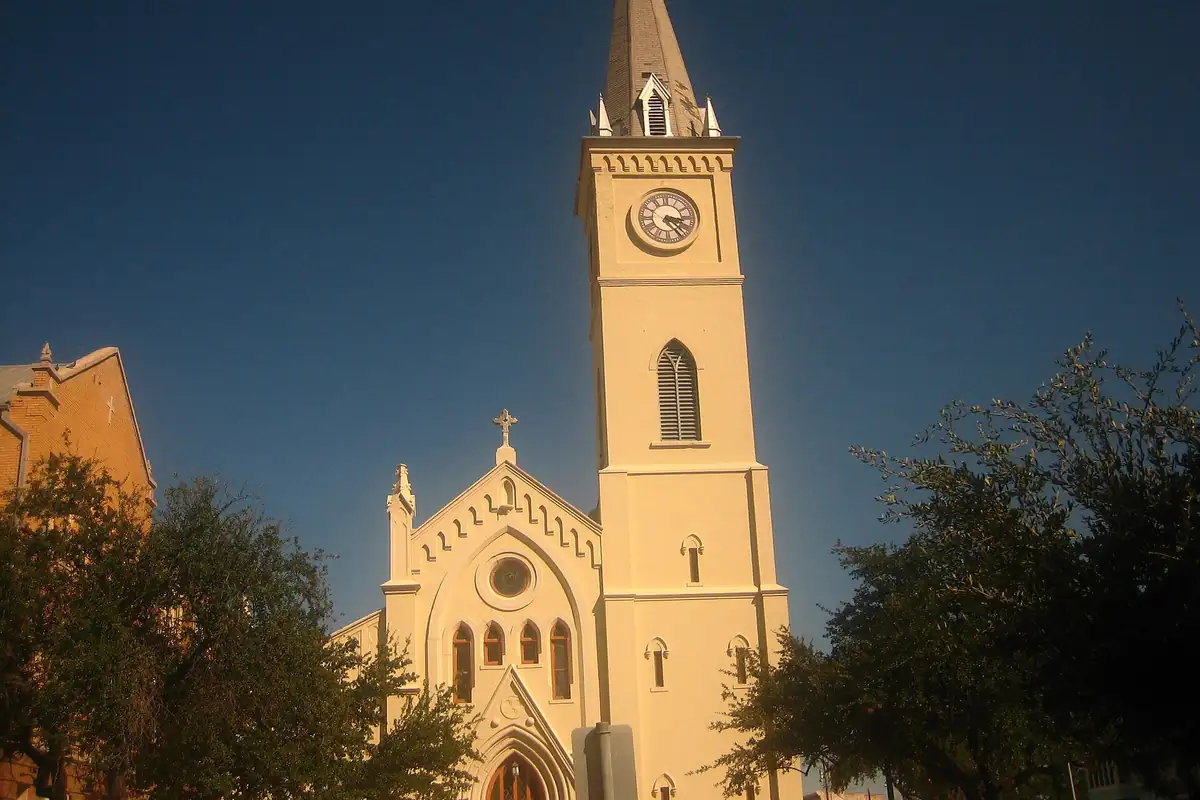
The “San Agustín” in the full name is a saint’s name. It stayed with the plaza and the parish. The church that became San Agustín Cathedral in 2000, in the photo at the bottom of this page, was built between 1866 and 1872. A century earlier, the commissioners of 1767 had kept the east side of the plaza for a church.
From ranch settlement to villa
Laredo started small. An inspector, Tienda de Cuervo, counted 85 people there in 1757, and he reported that Laredo was the usual crossing for travelers heading to Texas from Nuevo León and Coahuila. The town got its first resident priest in 1760.
In 1767 royal commissioners laid out San Agustín Plaza and divided the land into porciones, long lots with half a mile (0.8 km) of river frontage reaching about 15.5 miles (25 km) back from the water. They also raised Laredo to a villa, a town with its own government. Wilcox calls their record, the Acta de la General Visita al Pueblo de San Agustín de Laredo, “the first charter of Laredo.”
Two Laredos
The name got a twin after the Mexican War. When the Rio Grande became the international boundary, the Handbook says, the line split Laredo, whose people had homes and ranches on both banks. Some families who didn’t want to live under the American flag moved across the river to what became Nuevo Laredo, in Tamaulipas. In 1848 Laredo also became the seat of the new Webb County.
The Handbook also says Laredo’s parish was the second oldest run by secular clergy in what’s now the southwestern United States, after San Fernando de Béxar in San Antonio, about 150 miles (241 km) to the northeast. And if you’d like to see another American city named for a place in Spain, Toledo, Ohio argues about who picked its name.
Quick answers
Why is Laredo, Texas, called Laredo?
It’s named after Laredo, a seaport on the Bay of Biscay in the old Spanish province of Santander. Henry Gannett’s 1902 survey of place names says it was “named for the seaport town in Spain.”
Who named Laredo, Texas?
José de Escandón, the colonizer of Nuevo Santander, gave the settlement the name San Agustín de Laredo. Tomás Sánchez, who asked for the town and led the first families there, was its founder.
When was Laredo, Texas, founded?
On May 15, 1755. It became a villa, with its own town government, in 1767.
What does the San Agustín in San Agustín de Laredo mean?
It’s Saint Augustine. The full colonial name joined the saint to the Spanish town’s name, and San Agustín lives on in the plaza and the cathedral.
Key dates
- 1754Tomás Sánchez asks José de Escandón for permission to found a town on the north bank of the Rio Grande.
- 1755May 15: Sánchez founds Laredo with his family and a few other families.
- 1757Inspector Tienda de Cuervo counts 85 people in the settlement.
- 1760Laredo gets its first resident priest, the start of San Agustín parish.
- 1767Royal commissioners lay out San Agustín Plaza, hand out the porciones and make Laredo a villa.
- 1848Laredo becomes the seat of the new Webb County; with the Rio Grande now the border, some families move across to what becomes Nuevo Laredo.
Getting there
Open Laredo in Google Maps
Opens in a new tab. The pin is the center of Laredo in the USGS place-name record.
The closest airports, Amtrak stations and intercity bus stops, measured in a straight line from the center of Laredo.
Airports
- Laredo International (LRD) 4 mi 6 km
- McAllen International (MFE) 121 mi 194 km
Intercity buses
- FlixBus Laredo 610 Salinas Ave under 1 mi 0.2 km
- Greyhound Zapata Stripes 45 mi 72 km
Distances are as the crow flies, not by road. We don't list schedules or fares because they change; check with the airline, Amtrak or the bus company before you go. Official data (FAA commercial service airports (2024), FAA airport locations, Amtrak stations and Intercity Bus Atlas) from the FAA and the U.S. Bureau of Transportation Statistics, checked Nov 11, 2026.
Sponsored
Staying in Laredo?
Compare hotels in Laredo, Texas, on Expedia.
See hotels in LaredoWe may earn a commission if you buy through this link. It never changes what we write. Read our affiliate disclosure
Sponsored
Want the spooky side of Laredo?
The name has its story above. For the ghost stories, US Ghost Adventures runs walking ghost tours in Laredo.
See ghost tours in LaredoWe may earn a commission if you book through this link. It never changes what we write. Read our affiliate disclosure
Historical Sources & References
- Henry Gannett, The Origin of Certain Place Names in the United States (1902), p. 157. Laredo “named for the seaport town in Spain.”
- Henry Gannett, The Origin of Certain Place Names in the United States, 2nd ed. (1905), p. 181. The same entry, “named from the seaport town in Spain.”
- Seb. S. Wilcox, “Laredo During the Texas Republic,” Southwestern Historical Quarterly 42 (1938), pp. 86-87. The passage quoted above (p. 86), Escandón’s naming habits in footnote 11 (pp. 86-87), and the 1767 Acta as “the first charter of Laredo.”
- Carlos E. Cuéllar, “Laredo, TX,” Handbook of Texas Online. The 1755 founding about 30 miles upriver from Dolores, Paso de Jacinto, Tienda de Cuervo’s 1757 count, the 1760 priest and the second-oldest secular parish, the 1767 plaza, porciones and villa status, Nuevo Laredo, Webb County, and the 150 miles to San Antonio.
- Winifred W. Vigness, “Sánchez de la Barrera y Garza, Tomás,” Handbook of Texas Online. Sánchez’s 1754 petition, the Nueces detour, the settlement “to be named Laredo” and the May 15, 1755 founding.
- Clotilde P. García, “Escandón, José de,” Handbook of Texas Online. Escandón’s birth in Soto la Marina, Santander, and the extent of Nuevo Santander.
- Robert E. Wright, rev. Melissa Barrientos-Whitfield, “San Agustín Cathedral, Laredo,” Handbook of Texas Online. The parish of 1760, the church site reserved in 1767, the church built from 1866 to 1872 and the cathedral of 2000.
- GNIS feature 1339633 (U.S. Geological Survey). Federal record of Laredo, a populated place in Webb County, with the coordinates shown here.
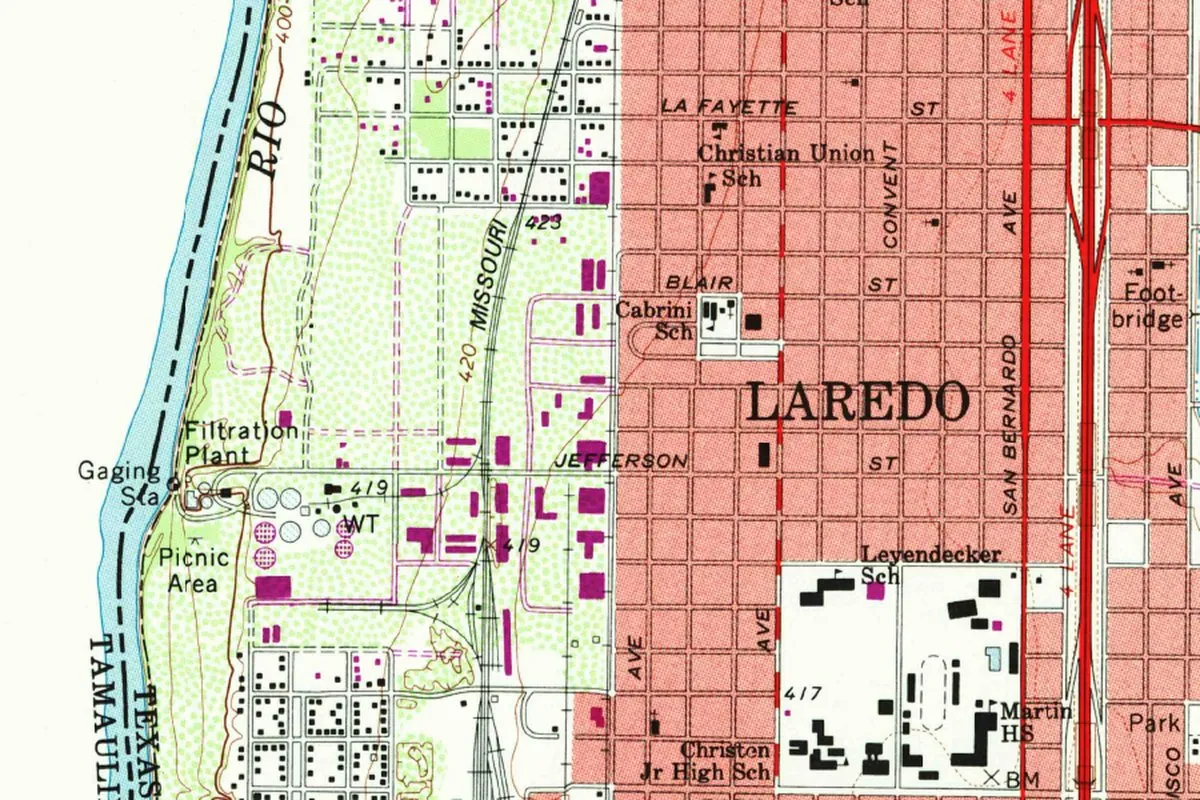
- U.S. Geological Survey, Laredo West quadrangle (1965, photorevised 1980). The source of the map at the top of this page.
Spot something wrong, or know more? Tell us here. You can also email us or use our contact page. Corrections are noted here with their date, never made silently.