Houghton, Michigan: Named for the State's First Geologist
Houghton is named for Douglass Houghton (1809-1845), Michigan's first state geologist, according to Michigan Tech's A. E. Seaman Mineral Museum. The legislature also gave his name to Houghton County, created in 1845, the year he drowned in Lake Superior. Michigan Tech's materials department says the town began in 1852 as Portage Lake.
Houghton, Michigan, carries the name of Douglass Houghton, the state’s first geologist, who drowned in Lake Superior in 1845. Michigan Tech, which has its campus in the city, says so on its mineral museum’s website: “The City of Houghton, the home of Michigan Tech, is named after Douglass Houghton.”
The geologist who went exploring
The museum describes him as “the first State Geologist of Michigan (1837-1845) and second professor at the University of Michigan.” The Library of Michigan adds two more jobs to the list. He was a physician, and he was mayor of Detroit in 1842-43.
The 1883 History of the Upper Peninsula of Michigan remembered him as “a gentleman of ripe scholarship and practical talents.” It says he “was assigned the task of first exploring the Upper Peninsula for the location and extent of its vast mineral resources,” and that the rich mineral fields owed their early geological work to him. Then it gives the end of the story: Houghton “came to his death by drowning in Lake Superior off Keweenaw Point, in 1845, while at his post of duty in the geological survey.” Michigan Tech’s materials science department puts the drowning “near Eagle River.”
If you’ve read our story on Gunnison, Colorado, this will sound familiar. That town is named for an Army engineer whose 1853 railroad survey crossed the region months before he was killed.
A county first, then a town
Two things carry his name here, and you can easily mix them up. The county came first. The 1883 history says “HOUGHTON COUNTY was named by the Legislature of the State in honor of one of its distinguished citizens—Prof. Douglass Houghton.” The Library of Michigan says the county was created on March 19, 1845, out of Marquette and Ontonagon counties (the first has its seat at Marquette), and fully organized on May 18, 1846.
Henry Gannett gave the county a single line in his 1905 Origin of Certain Place Names: “Houghton; county in Michigan, named for Douglas Houghton, formerly State geologist.” He spelled the first name with one s. The museum, the Library of Michigan and the 1883 history all use two.
The city is a separate case, and it’s the museum that names it for Houghton. None of the sources we read says whether the town took the name straight from the man or by way of the county.
Shelden’s store on Portage Lake
The 1883 history says the first settlers arrived in the fall of 1852, and “Ransom Shelden was the first.” That year, with C. C. Douglass, who bought the land where Houghton and Hancock now stand, he put up a store “which was generally known as ‘Shelden’s Store.’” It was, the book says, “the first building erected on the ground now occupied by Houghton.”
The place had another name at first. Michigan Tech’s materials department lists 1852 as the year “Portage Lake, the town that will eventually be renamed as Houghton, is established by Ransom Sheldon,” spelling his name with an o. The 1883 history keeps the lake’s name in its account of the churches, saying the Rev. Lewis Earl was sent in 1854 “to what was then known as the Portage Lake Mission.” We didn’t find a date for the switch from Portage Lake to Houghton.
In December 1854, Ernest F. Pletschke surveyed and platted it into town lots. Houghton was incorporated as a village on November 4, 1861, with 854 people, and its first election, on December 2, 1861, drew 185 votes. Out in Arizona, the copper camp of Jerome also took a person’s name, though it was a mining company officer’s rather than a geologist’s.
The College of Mines on the 1915 map
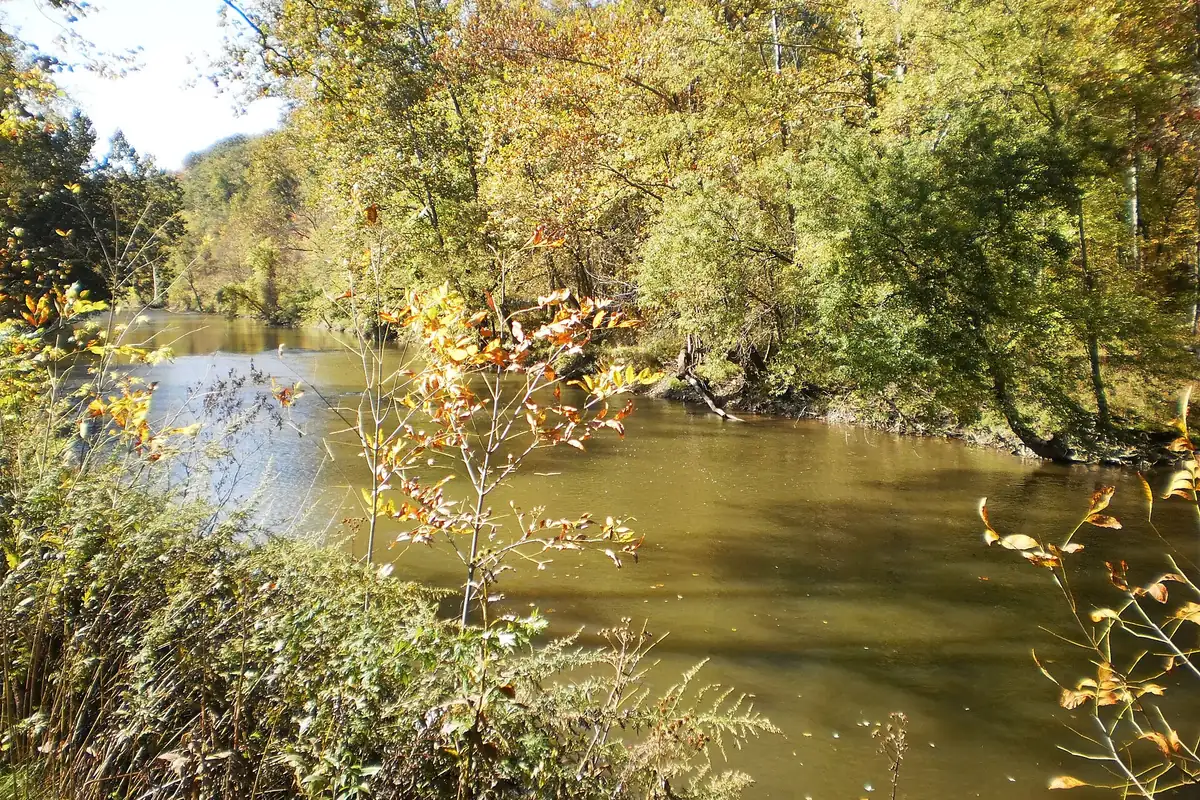
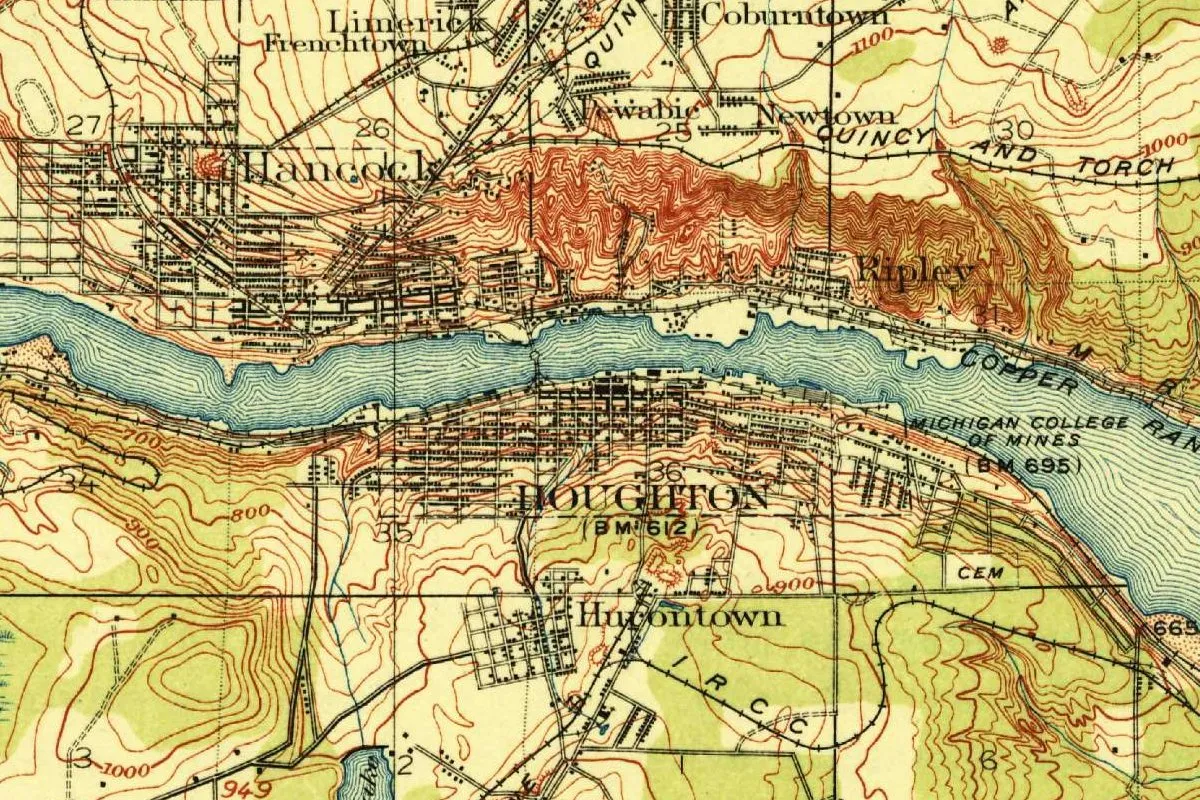
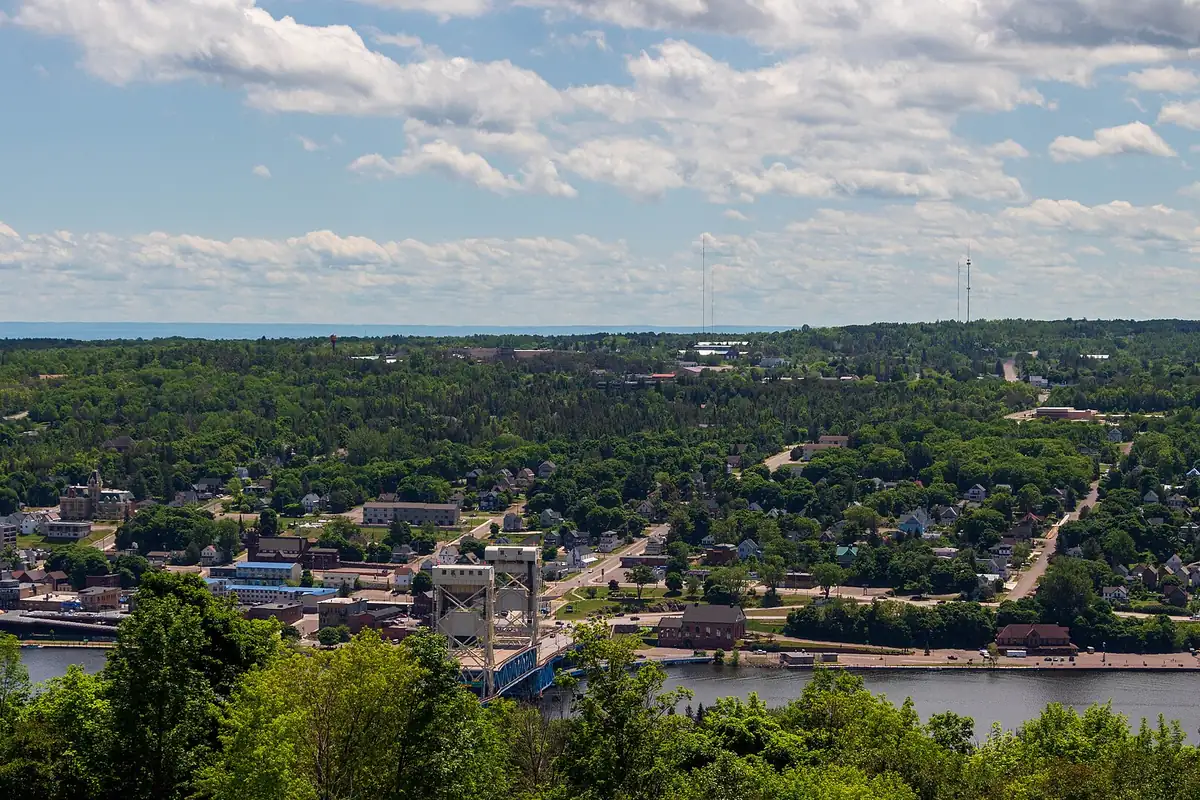
The map at the top of this page is a detail from the Geological Survey’s Houghton quadrangle, surveyed in 1908, 1909, 1911 and 1912 and engraved in August 1914. The copy is the edition of February 1915, with topography by A. M. Walker and L. D. Townsend and George Otis Smith as director. Houghton’s grid sits on the south shore of Portage Lake, with “Michigan College of Mines” just to the east. Hancock faces it across the water under a steep hillside, and rail lines labeled Quincy and Torch and Copper Range run along the shores of what the mineral museum calls Michigan’s Copper Country. The photo below looks across the same water today.
Quick answers
Who is Houghton, Michigan, named after?
Douglass Houghton (1809-1845), Michigan’s first state geologist, according to Michigan Tech’s A. E. Seaman Mineral Museum. He was also a physician and mayor of Detroit, the Library of Michigan says.
Is Houghton named after the county?
No source we read says so. The legislature named Houghton County for Douglass Houghton, the 1883 county history says, and the mineral museum says the city is named for him too.
What was Houghton called before?
Portage Lake, Michigan Tech’s materials science department says. The 1883 history mentions a “Portage Lake Mission” there in 1854.
How did Douglass Houghton die?
He drowned in Lake Superior in 1845 while working on the state’s geological survey. The 1883 history puts it off Keweenaw Point; Michigan Tech says near Eagle River.
Key dates
- 1837Douglass Houghton becomes Michigan's first state geologist, a post he holds until 1845.
- 1845Houghton County is created on March 19 from Marquette and Ontonagon counties. Douglass Houghton drowns in Lake Superior the same year.
- 1846Houghton County is fully organized on May 18.
- 1852Ransom Shelden settles in the fall and opens Shelden's Store, the first building on the site of Houghton.
- 1854Ernest F. Pletschke plats the village in December.
- 1861Houghton is incorporated as a village on November 4, with 854 people, and holds its first election on December 2.
- 1915The Geological Survey issues its Houghton quadrangle in February, showing the Michigan College of Mines on the lakeshore.
Things to do in Houghton, Michigan
A. E. Seaman Mineral Museum
Michigan Tech's museum is the official Mineral Museum of Michigan, with 40,000 specimens, what it calls the finest collection of native copper, fine native silver, minerals that glow under black light, and a Copper Pavilion.
Houghton Waterfront Trail
A paved, barrier-free trail of 4.5 miles (7.2 km) along the city's waterfront, open to walkers, joggers and bikers.
Nara Nature Park
A 100-acre (40 ha) park that Bob and Ruth Nara gave to the city, at the east end of the Waterfront Trail, with a 4,500-foot (1,372 m) elevated boardwalk along both banks of the Pilgrim River and trails that link to Michigan Tech's trail system.
Quincy Mine
Tours of the Quincy Mine go more than 360 feet (110 m) underground, into workings where miners were digging in the 1860s, and the association also tours what it calls the oldest historic smelter site in the world.
Getting there
Open Houghton in Google Maps
Opens in a new tab. The pin is the center of Houghton in the USGS place-name record.
The closest airports, Amtrak stations and intercity bus stops, measured in a straight line from the center of Houghton.
Airports
- Houghton County Memorial (CMX) Hancock 5 mi 8 km
- Marquette Sawyer Regional (SAW) Gwinn 77 mi 124 km
Intercity buses
- Indian Trails Hancock under 1 mi 1 km
Distances are as the crow flies, not by road. We don't list schedules or fares because they change; check with the airline, Amtrak or the bus company before you go. Official data (FAA commercial service airports (2025), FAA airport locations, Amtrak stations and Intercity Bus Atlas) from the FAA and the U.S. Bureau of Transportation Statistics, checked Nov 17, 2026.
Sponsored
Staying in Houghton?
Compare hotels in Houghton, Michigan, on Expedia.
See hotels in HoughtonWe may earn a commission if you buy through this link. It never changes what we write. Read our affiliate disclosure
Historical Sources & References
- History of the Upper Peninsula of Michigan (1883), p. 250. The legislature naming Houghton County for Prof. Douglass Houghton, his work exploring the Upper Peninsula, and his drowning off Keweenaw Point in 1845. Checked against the page image.
- History of the Upper Peninsula of Michigan (1883), p. 272. Ransom Shelden and the first settlers of 1852, C. C. Douglass, Shelden’s Store, the plat of December 1854, and the village of 1861. Checked against the page image.
- History of the Upper Peninsula of Michigan (1883), p. 273. The Rev. Lewis Earl sent in 1854 to the Portage Lake Mission. Checked against the page image.
- A. E. Seaman Mineral Museum, “U-M Collection Highlights”. Douglass Houghton’s dates and posts, and the city named after him.
- Michigan Tech, Materials Science and Engineering, “History”. Houghton’s drowning near Eagle River in 1845 and Portage Lake, founded in 1852, the town later renamed Houghton.
- Library of Michigan, “Houghton County”. The county created on March 19, 1845, organized on May 18, 1846, and named for Douglass Houghton, geologist, physician and mayor of Detroit.
- Henry Gannett, The Origin of Certain Place Names in the United States, 2nd ed. (1905), p. 161. Houghton County, “named for Douglas Houghton.” Checked against the page image.
- A. E. Seaman Mineral Museum; Waterfront Trail; Nara Nature Park; Quincy Mine. The details in the things-to-do list.
- GNIS feature 628661 (U.S. Geological Survey). Houghton as a populated place in Houghton County, with its coordinates.
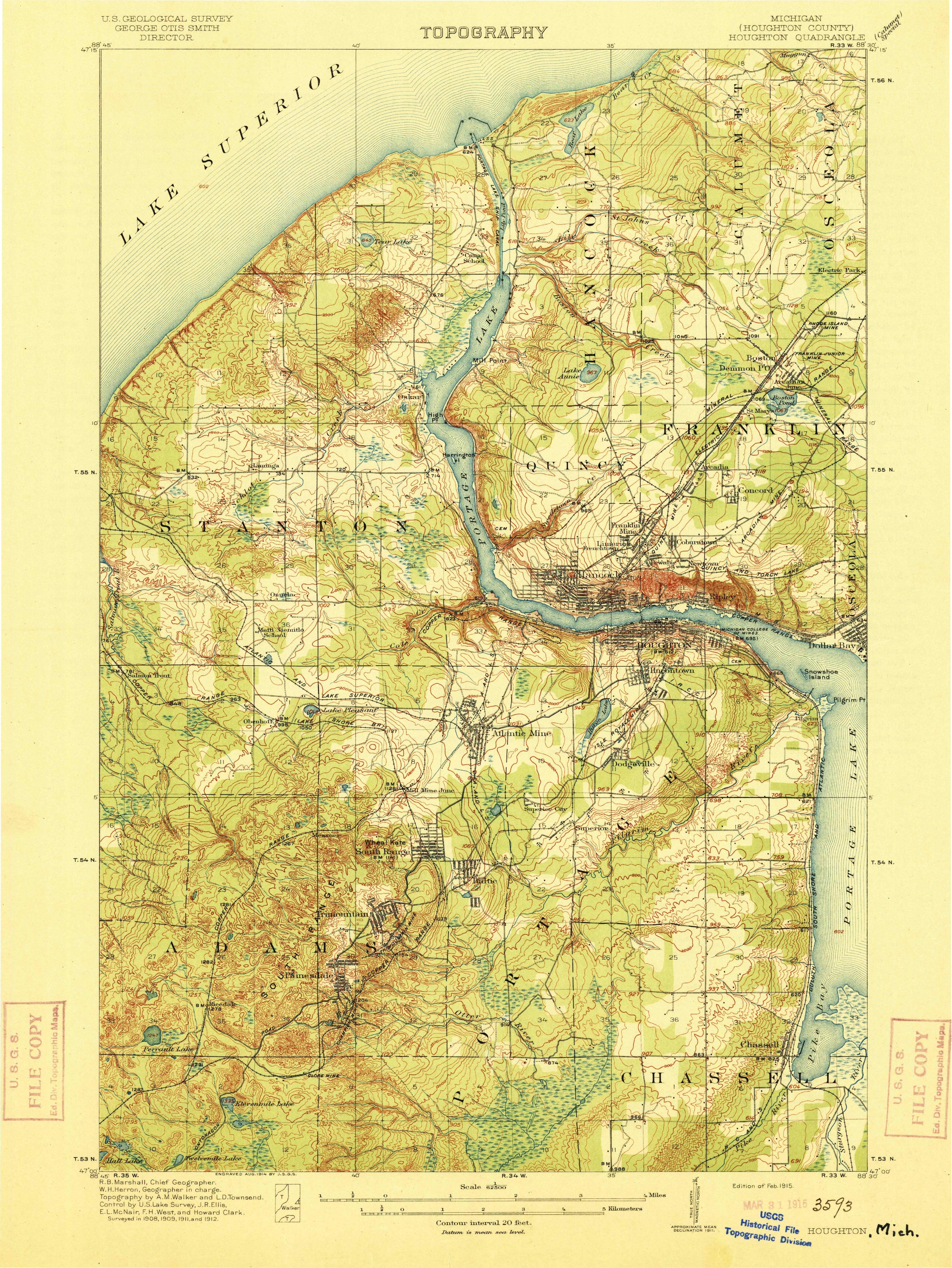
- U.S. Geological Survey, Houghton quadrangle (1915). The 1:62,500 edition of February 1915 that the map at the top of this page was cropped from.
Sponsored
Put this 1915 map on your wall
The Geological Survey's 1915 Houghton sheet is in the public domain. Download the full-size scan for free, then have it printed on canvas with CanvasOnTheCheap.
Print a map on canvasDownload the full-size mapWe may earn a commission if you buy through this link. It never changes what we write. Read our affiliate disclosure
Spot something wrong, or know more? Tell us here. You can also email us or use our contact page. Corrections are noted here with their date, never made silently.