Hannibal, Missouri: Named for the Carthaginian General
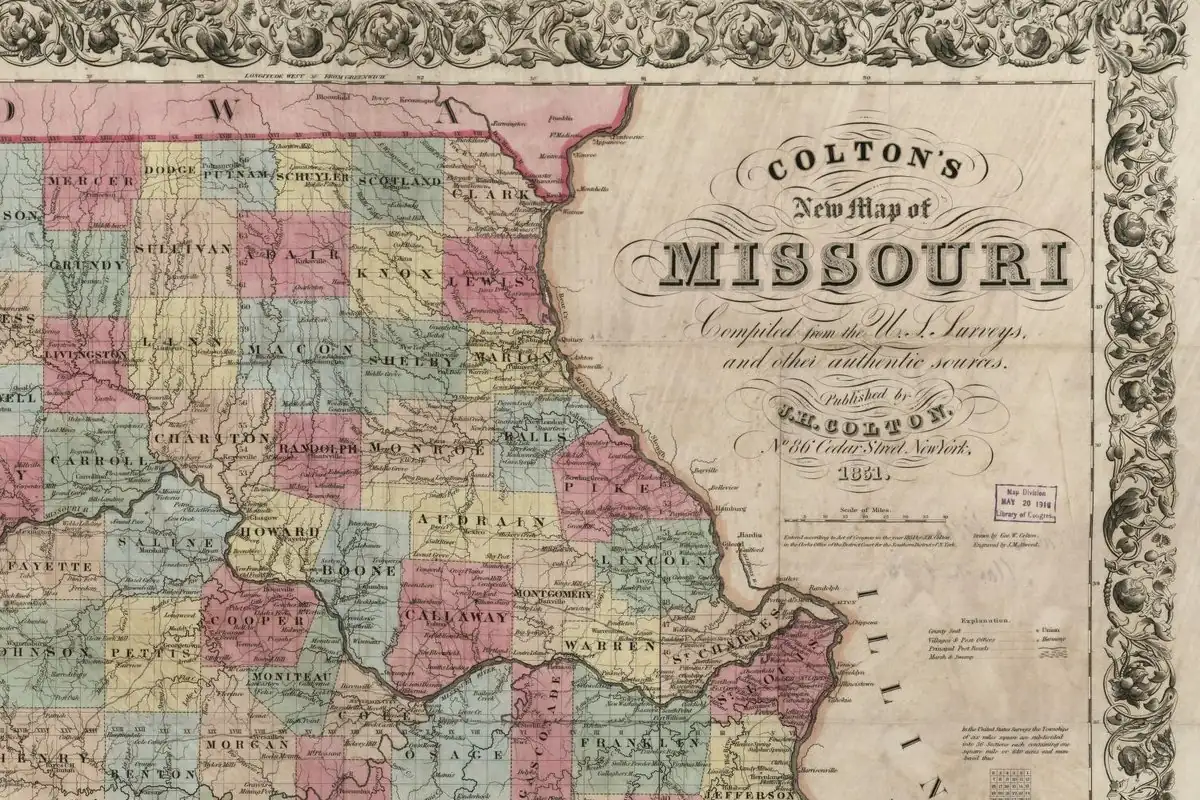
Hannibal is named for Hannibal, the general of ancient Carthage, as Henry Gannett's 1905 survey bulletin states. Who chose it is less certain. A local tradition credits the French surveyor Antoine Soulard, who supposedly named the creek first; Hannibal historian Thomas H. Bacon argued in 1905 that the American surveyor William V. Rector named the town site.
A general from Carthage on the Mississippi
Hannibal, Missouri, Mark Twain’s boyhood town, carries the name of a general from ancient Carthage, though who first put it on the map is still argued. The name itself isn’t in doubt. When Henry Gannett compiled his second edition of American name origins for the U.S. Geological Survey in 1905, the entry was one line long: “Hannibal; city in Marion County, Missouri. Named for the Carthaginian general.”
That’s the Hannibal of the ancient Mediterranean world, not a settler or a local landowner. His name got to Missouri the way a lot of names did in the young republic: somebody with a head full of ancient history wrote it down.
So who was that somebody? That’s where Hannibal’s own historians part ways.
The creek version: Antoine Soulard
The older story starts with a stream. The Mississippi town grew up where a small creek runs into the river, and according to a tradition recorded in the Marion County history, the creek was called Hannibal before the town was.
Thomas H. Bacon, a Hannibal writer who put together a big local history called A Mirror of Hannibal in 1905, summed up that tradition this way: under the French dominion, the surveyor general Antoine Pierre Soulard “came up this way and named as Hannibal Creek the stream which figures in the site of the present city.” Bacon added that Soulard came from a family “of high lineage” and had a literary bent, supposedly with a big library.
A modern version of the story appears in a 2015 essay published by the University of Missouri’s Campus Writing Program. Citing facts compiled for the Hannibal History Museum by historian Lisa Marks, it says Soulard first mapped the area in 1800 and named the little tributary “Hannibal” after the Carthaginian general. In that telling, settlers later renamed the stream Bear Creek in 1819, after noticing black bears sleeping in fallen sycamore trees along the banks.
It’s a good story, and it’s the one the essay credits to the museum’s research. Just keep in mind that neither source quotes a map or a note in Soulard’s own hand.
The town-site version: William V. Rector
Bacon himself didn’t buy the Soulard tradition. Right after repeating it, he made his own case:
“There should be no doubt that instead of being named by the French Surveyor General the Hannibal site was so designated by the American Surveyor General, William V. Rector. The period involved an era of general craze for classic names.”
His reasoning was mostly about fashion. Bacon wrote that Professor John Fiske had first suggested the idea to him, and he backed it up with a passage from Rural Hours, by the novelist Cooper’s daughter, Susan Fenimore Cooper: a diary of rural outings in 1848 and 1849 in Otsego County, New York, the county of Cooperstown. Cooper complained about the flood of ancient Greek and Roman names that spread across the country after the Revolution. Bacon pointed out that Marion County had picked up two more of them: Palmyra, the county seat, laid out in 1819, and a later river town platted as Port Scipio.
Bacon also had a practical argument. The original town plat, he wrote, was laid out with a surveyor’s precision, with blocks numbered back and forth the way federal survey sections are. To him, that pointed to Rector, a professional who, according to Bacon, bought into the town-site deal himself.
So there are two candidates, and the record you can read today doesn’t settle it. Gannett names the general and stops there.
Moses Bates and a paper from 1819
The founding story is firmer. The City of Hannibal says the town was founded in 1819 by Moses D. Bates. Bacon fills in how that happened. Bates had been in business in St. Louis before 1818, and in the fall of that year he worked as a chain carrier on the federal survey of northeast Missouri, helping survey the site of the future town.
With Bates’s advice, Bacon writes, Thompson Bird located his father’s land certificate “at the mouth of Bear Creek.” Investors bought in, Rector among them. A paper dated April 17, 1819, shows the town already surveyed and divided into blocks and lots. Back then the site was in Pike County, Missouri Territory.
There’s a catch, though, and it’s why the naming question stays open. The original plat, Bacon wrote, is like ancient Greek statuary in one respect: “It does not exist.” The plat filed seventeen years later was accepted as a true copy, but the first one, the paper that might have shown who wrote “Hannibal” on it and when, is gone.
From steamboat landing to Twain’s hometown
Whatever its source, the name stuck. The city says Hannibal quickly became a major docking port for steamboats, flatboats and packet steamers on the upper Mississippi, and reached city status by 1845.
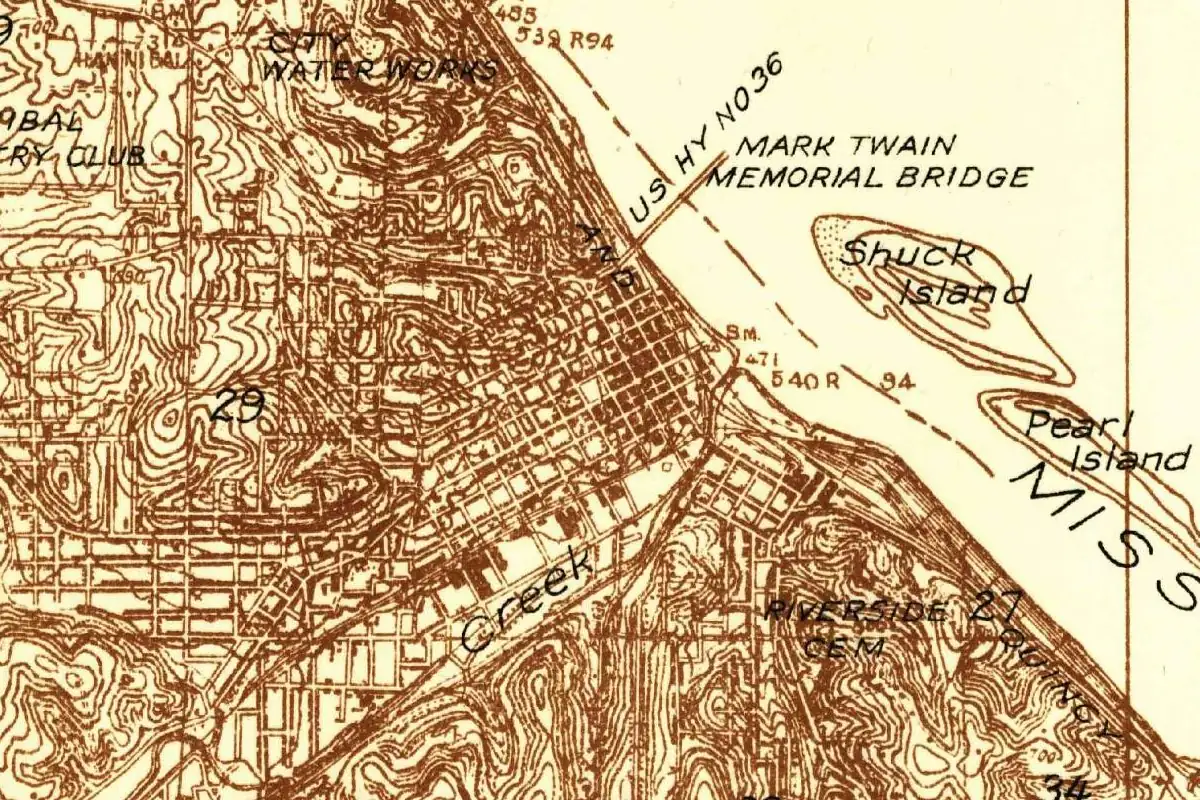
You can see that river town on the 1936 map at the top of this page: a tight grid of streets along the Mississippi, the creek slicing diagonally across the south side, and the Mark Twain Memorial Bridge crossing the river. By then the town had a second identity. The local visitors bureau calls Hannibal “America’s Hometown,” celebrated around the world as the boyhood home of Samuel Langhorne Clemens, the author Mark Twain.
That’s the twist in the name. A town that most visitors come to for an American writer is named for a soldier of the ancient world, and the creek that may have carried the name first now goes by Bear Creek.
Other names from the classics
Hannibal wasn’t alone. Syracuse, in New York, borrowed its name from an ancient city in Sicily, and Athens, Georgia, took its name from the Greek city of learning. Bacon would’ve called them part of the same craze. For Hannibal’s neighbors and the rest of the state, start at our Missouri page.
Quick answers
Who is Hannibal, Missouri, named after?
Hannibal, the general of ancient Carthage. Gannett’s one-line entry for the city, from 1905, says the city was “Named for the Carthaginian general.”
Was Hannibal, Missouri, named after Mark Twain?
No. The name refers to the Carthaginian general. The visitors bureau celebrates Hannibal as Twain’s boyhood home, but none of the sources here ties him to the name.
Who named Hannibal, Missouri?
Nobody can say for certain. A local tradition credits French surveyor Antoine Soulard, who supposedly named the creek first, while Thomas H. Bacon argued in 1905 that American surveyor William V. Rector named the town site.
What was Bear Creek called before?
According to the Soulard tradition, Hannibal Creek. A 2015 University of Missouri essay says settlers renamed it Bear Creek in 1819 after seeing black bears in the sycamores along its banks.
Key dates
- 1818Moses D. Bates works as a chain carrier on the federal survey of northeast Missouri, including the future town site.
- 1819An April 17 paper shows the town at the mouth of Bear Creek already surveyed into blocks and lots; the city dates its founding to this year.
- 1845Hannibal becomes a city.
- 1905Henry Gannett's bulletin and Thomas H. Bacon's A Mirror of Hannibal both tie the name to the Carthaginian general.
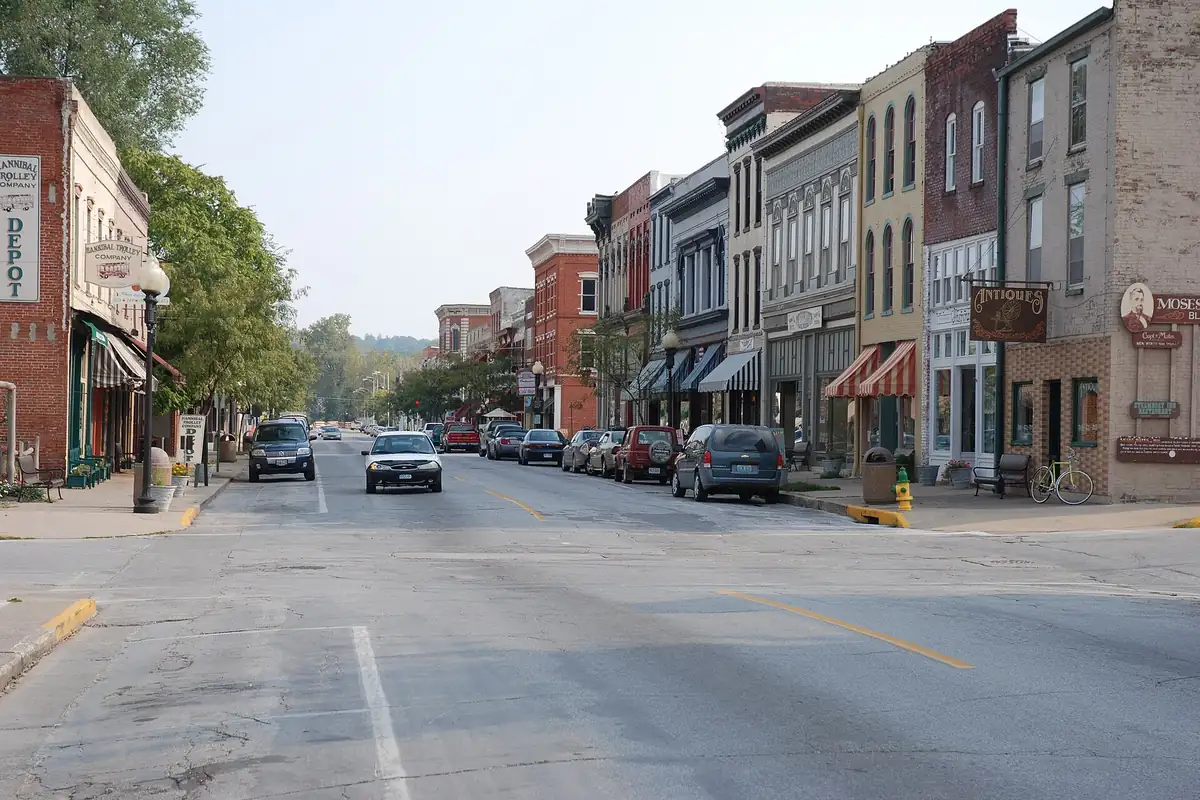
Things to do in Hannibal, Missouri
Mark Twain Boyhood Home & Museum
A group of historic buildings tied to Samuel Clemens's childhood, including his boyhood home, the Becky Thatcher and Huckleberry Finn houses and his father's justice of the peace office, plus a gallery with Norman Rockwell paintings.
Mark Twain Cave
A cave that has drawn visitors for about 200 years, now a National Natural Landmark, with an electrically lit, gently paced walking tour.
Mark Twain Riverboat
Riverboat cruises on the Mississippi that leave from the Port of Hannibal on Riverfront Drive, a way to see the river that made the town a steamboat landing.
Rockcliffe Mansion
A Georgian Revival house built from 1898 to 1900 on a limestone bluff above the Mississippi, listed on the National Register of Historic Places, with more than 30 rooms and mostly original furnishings.
Getting there
Open Hannibal in Google Maps
Opens in a new tab. The pin is the center of Hannibal in the USGS place-name record.
The closest airports, Amtrak stations and intercity bus stops, measured in a straight line from the center of Hannibal.
Airports
- Columbia Regional (COU) 77 mi 124 km
- St Louis Lambert International (STL) St. Louis 85 mi 137 km
Amtrak trains
- Quincy station (QCY) 17 mi 28 km
- Macomb station (MAC) 63 mi 102 km
Distances are as the crow flies, not by road. We don't list schedules or fares because they change; check with the airline, Amtrak or the bus company before you go. Official data (FAA commercial service airports (2025), FAA airport locations, Amtrak stations and Intercity Bus Atlas) from the FAA and the U.S. Bureau of Transportation Statistics, checked Nov 14, 2026.
Sponsored
Staying in Hannibal?
Compare hotels in Hannibal, Missouri, on Expedia.
See hotels in HannibalWe may earn a commission if you buy through this link. It never changes what we write. Read our affiliate disclosure
Historical Sources & References
- Henry Gannett, The Origin of Certain Place Names in the United States, 2nd ed. (1905), p. 149. “Hannibal; city in Marion County, Missouri. Named for the Carthaginian general.”
- Thomas H. Bacon, A Mirror of Hannibal (1905), pp. 86-87. Bates in St. Louis and as chain carrier in the 1818 survey; Thompson Bird’s location “at the mouth of Bear Creek”; Rector buying in; the paper of April 17, 1819, showing the town surveyed into blocks and lots, in Pike County; the Marion County history’s tradition of Soulard naming Hannibal Creek; Bacon’s quoted case for William V. Rector and the “craze for classic names,” with Fiske and Cooper’s Rural Hours; Palmyra laid out in 1819.
- Thomas H. Bacon, A Mirror of Hannibal (1905), p. 88. Port Scipio; the plat numbered like federal sections; the original plat that, like Greek statuary, “does not exist,” and the plat filed seventeen years later accepted as a true copy.
- City of Hannibal, “About Hannibal”. Founded in 1819 by Moses D. Bates; a docking port for steamboats, flatboats and packet steamers; city status by 1845.
- University of Missouri Campus Writing Program, “Hannibal, MO: America’s Hometown Amidst Fictional Landscape” (2015). The modern telling, credited to facts compiled by Lisa Marks for the Hannibal History Museum: Soulard mapping the area in 1800 and naming the creek, and the 1819 rename to Bear Creek for the bears in the sycamores.
- Visit Hannibal (Hannibal Convention & Visitors Bureau). “America’s Hometown” and Hannibal as the boyhood home of Samuel Langhorne Clemens, the author Mark Twain.
- GNIS feature 735640 (U.S. Geological Survey). The national gazetteer’s entry for Hannibal, in Marion County.
- U.S. Geological Survey, Hannibal sheet (1936). The 1:48,000 quadrangle the map at the top of this page was cropped from.
Spot something wrong, or know more? Tell us here. You can also email us or use our contact page. Corrections are noted here with their date, never made silently.