Why Is It Called Wimberley, Texas? The Mill's Third Owner
Wimberley is named for Pleasant Wimberley, a North Carolina-born rancher who bought the mill on Cypress Creek in 1874. The settlement had already been called Winters' Mill and Cude's Mill after earlier owners. The post office that opened in 1880 got the shorter name Wimberley, the Handbook of Texas says.
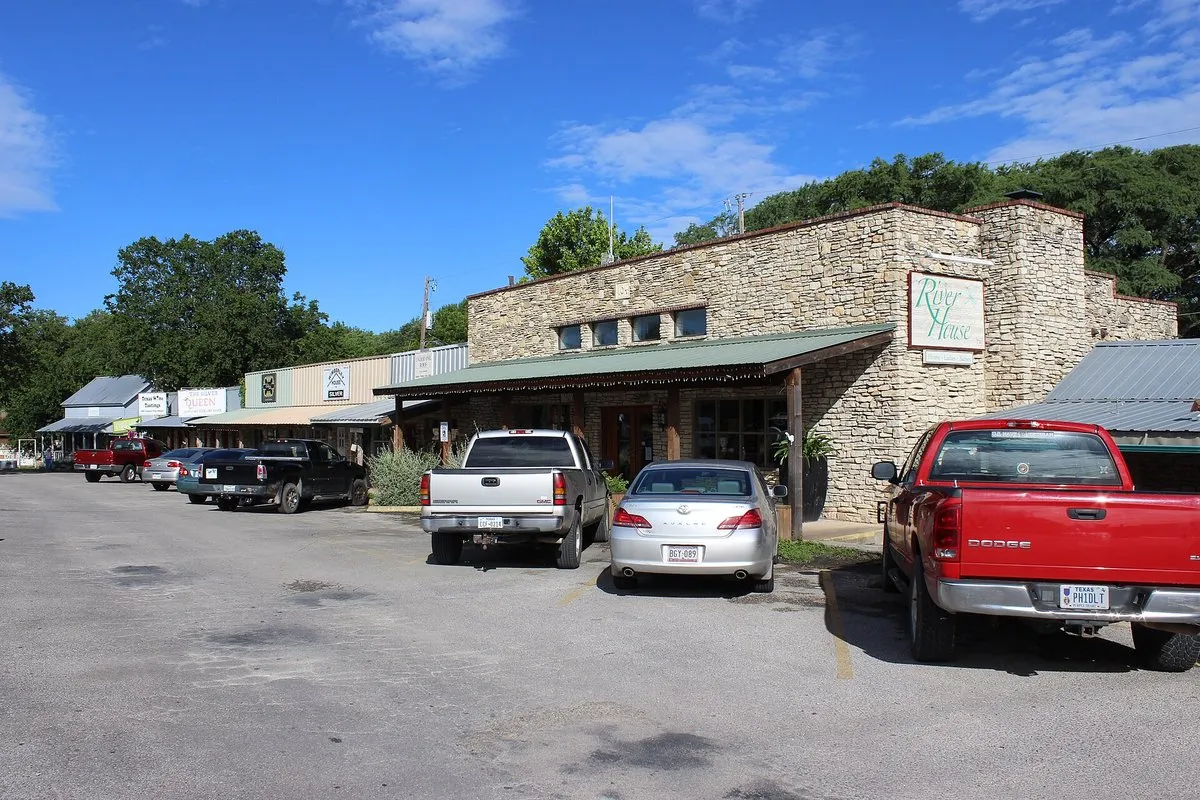
Wimberley, Texas, is named for Pleasant Wimberley, who bought the Cypress Creek gristmill in 1874; the post office trimmed the mill’s name in 1880. He was the mill’s third owner, and each of the first two had also lent the settlement a name.
Why is it called Wimberley, Texas?
Because of a mill, and the man who owned it last. Dorothy Wimberley Kerbow’s Handbook of Texas article on the town follows the place through three names. First came William Carvin Winters, who had fought at San Jacinto. He put up a gristmill on Cypress Creek in 1856, and the settlement took the name Winters’ Mill. John M. Cude and his wife, Nancy Winters Cude, took it over in 1864, and the place became Cude’s Mill. Then, on March 5, 1874, the rancher Pleasant Wimberley of Blanco County handed the Cudes $8,000 in gold. From then on the settlement was Wimberley’s Mill.
The final step came through the mail. On January 19, 1880, the Handbook says, the postmaster at San Marcos, Alfred vom Stein, applied to Washington for the settlement’s own post office. His paperwork proposed Wimberleyville, with Robert Moore to run the office. The department granted the office but trimmed the name to Wimberley.
Not every account agrees on that middle form. A Texas Historical Commission marker placed in 1974 says the post office opened in 1880 as “Wimberley Mills” and was soon renamed Wimberley. Kerbow’s separate Handbook biography of Pleasant Wimberley says residents named the town Wimberley Mills because the mill was its most important business, and that by 1880 the Post Office shortened it. The Wimberley Institute of Cultures, the local history group, sides with the Wimberleyville version. Either way, the result was the same.
One caution about the sources: both Handbook entries come from the same writer, so they aren’t two independent witnesses. Pleasant Wimberley’s tombstone in the Wimberley Cemetery, as Kerbow records, reads: “Pleasant Wimberley-For Whom The Town Was Named.”
Wimberley, Texas history
Before the mill there was a trading post. The Handbook says a small settlement was already here in 1848, when Hays County was set up. The state marker puts Winters in the valley that same year, building a grist mill and a sawmill on Cypress Creek, then rebuilding on higher ground around 1856 after a flood. Kerbow’s biography of Wimberley gives yet another year, 1850, for the mill. The three dates are best read side by side.
Pleasant Wimberley came to milling late. The biography says he was born on May 2, 1823, in Wake County, North Carolina, and spent some years in Mississippi and Arkansas before arriving at Brenham, Texas, at Christmas in 1847. In 1855 the family drove a longhorn herd to a ranch where Blanco and Llano counties meet and raised cattle and stage horses there for 18 years. After the Civil War, the biography says, he moved the family away from raids in Blanco County and bought the Cypress Creek mill: 200 acres (81 ha) with the mill and the house the Winters and Cude families had lived in. A son, Zachariah, and a grandson were his partners.
The mill did more than grind grain. According to the Handbook it also sawed lumber, cut shingles, made flour and molasses and ginned cotton, and the marker says it went over to steam power in 1900. Wimberley himself died on January 30, 1919. His mill outlived him by six years, closing in 1925, and was pulled down in 1934.
The house survived. The Wimberley Institute of Cultures calls the Winters-Wimberley House the oldest documented stone house in the village and says Pleasant Wimberley’s descendants lived in it until 1997. The house joined the National Register in 2002, and the Wimberley Valley Museum occupies it today.
Wimberley isn’t the only town whose name came from a mill or a forge. In Pennsylvania, Coryell’s Ferry gave way to the name of Benjamin Parry’s rebuilt New Hope Mills and became New Hope. In Tennessee, Pigeon Forge is named for Isaac Love’s iron forge, and the name was picked in 1841 or 1842 by his son William, who ran the first post office.
After the mill, tourism took over. The federal Advisory Council on Historic Preservation reports the owners of Blue Hole began charging swimmers and picnickers to use it in the 1920s, and that summer homes went up along the rivers and creeks by midcentury. Wimberley sits in western Hays County in Texas, about 14 miles (23 km) northwest of San Marcos, beside the Blanco River and Cypress Creek.
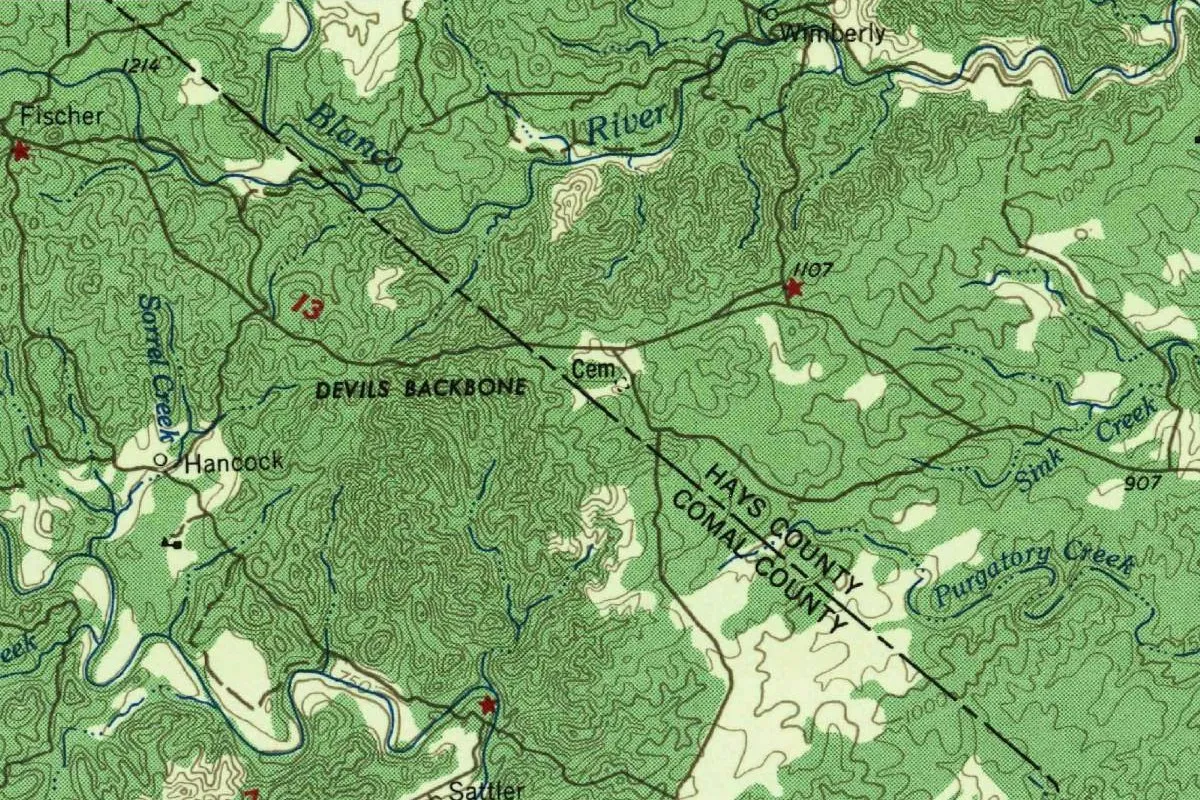
Wimberley on the 1957 map
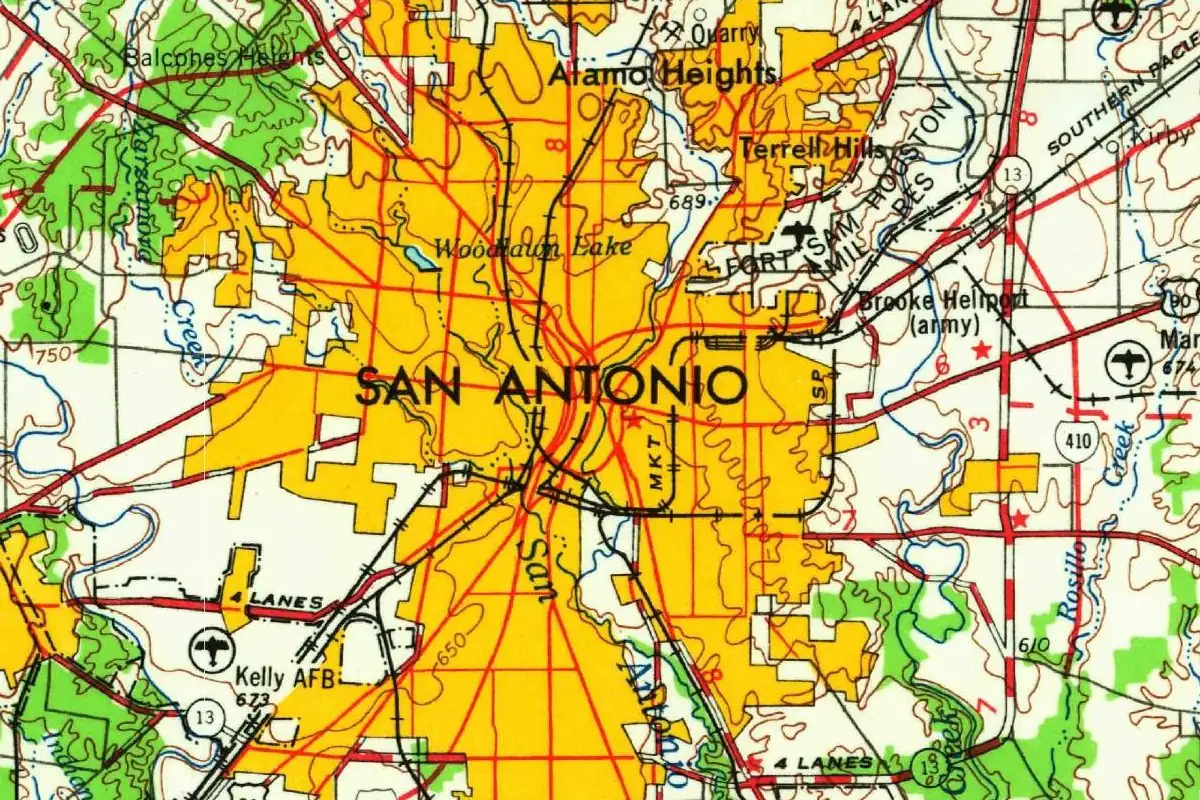
Our map is a crop of the San Antonio sheet, NH 14-8, of the Army Map Service’s Western United States series at 1:250,000. The margin dates the compilation to 1954, done photogrammetrically from aerial photographs taken in 1952 and 1953, field annotated and with road data from 1954. A Survey stamp on it reads October 15, 1957, and a handwritten note reads “Printed by A.M.S. for G.S.,” meaning the Army printed it for the Geological Survey. Older sheets don’t help: the 1887 Blanco sheet stops just north of town, and the 1929 Hunter sheet leaves this area unsurveyed.
Look at the top edge and you’ll find the town lettered “Wimberly,” without the second e, a slip that a 1964 revision of the sheet repeated. Below it the Blanco River winds west past Fischer, with Hancock, Sattler, Devils Backbone and a cemetery to the south, Sorrel, Sink and Purgatory creeks, and a dashed line between Hays and Comal counties.
Quick answers
Who was Wimberley, Texas, named after?
Pleasant Wimberley (1823-1919), who bought the mill on Cypress Creek in 1874. The settlement was called after his mill, then after him.
What was Wimberley, Texas, called before?
Winters’ Mill, then Cude’s Mill from 1864, then Wimberley’s Mill or Wimberley Mills after 1874. The post office made it Wimberley in 1880.
Is it Wimberley, Texas, or Wimberly?
Wimberley, with two e’s, the spelling of the family name in the Handbook. A 1957 Army map spelled it Wimberly.
Key dates
- 1848Hays County is organized, with a small trading post at the site; the state marker says William C. Winters arrives and builds a mill on Cypress Creek.
- 1856The Handbook's date for Winters's gristmill; the marker says he rebuilt on higher ground about then, after a flood.
- 1864John M. and Nancy Winters Cude buy the mill, and the place becomes Cude's Mill.
- 1874Pleasant Wimberley buys the mill on March 5 for $8,000 in gold.
- 1880A post office opens; the name granted is Wimberley.
- 1919Pleasant Wimberley dies on January 30.
- 1925The mill stops running; it is torn down in 1934.
- 1957The Army Map Service's San Antonio sheet, printed for the Geological Survey, spells the town Wimberly.
Things to do in Wimberley, Texas
Blue Hole Regional Park
A city park around a spring-fed swimming hole on Cypress Creek, with hiking trails, picnic areas and a playground; the swim area requires a reservation.
Cypress Creek Nature Trail & Preserve
A 7.24-acre (2.9 ha) preserve just east of Wimberley Square, bought by the city in 2001, with a creekside walking path that links up with Blue Hole Regional Park.
Wimberley Valley Museum
A volunteer-run museum in the Winters-Wimberley House, the stone home where the millers lived, with exhibits on Winters, Pleasant Wimberley and the town, and grinding stones from the old mill.
EmilyAnn Theatre & Gardens
A community theater with gardens, an outdoor amphitheater that seats up to 400 and a 50-seat indoor studio theater.
Getting there
Open Wimberley in Google Maps
Opens in a new tab. The pin is the center of Wimberley in the USGS place-name record.
The closest airports, Amtrak stations and intercity bus stops, measured in a straight line from the center of Wimberley.
Airports
- Austin-Bergstrom International (AUS) 29 mi 47 km
- San Antonio International (SAT) 39 mi 63 km
Amtrak trains
- San Marcos station (SMC) 13 mi 20 km
- Austin station (AUS) 28 mi 45 km
Intercity buses
- FlixBus San Marcos CARTS 13 mi 20 km
- Greyhound Comfort, TX 48 mi 78 km
Distances are as the crow flies, not by road. We don't list schedules or fares because they change; check with the airline, Amtrak or the bus company before you go. Official data (FAA commercial service airports (2025), FAA airport locations, Amtrak stations and Intercity Bus Atlas) from the FAA and the U.S. Bureau of Transportation Statistics, checked Nov 21, 2026.
Sponsored
Staying in Wimberley?
Compare hotels in Wimberley, Texas, on Expedia.
See hotels in WimberleyWe may earn a commission if you buy through this link. It never changes what we write. Read our affiliate disclosure
Historical Sources & References
- Dorothy Wimberley Kerbow, “Wimberley, TX,” Handbook of Texas Online. The trading post of 1848, the three mill names, the 1874 purchase, vom Stein’s 1880 application and the Wimberleyville name, and the mill’s closing and demolition.
- Dorothy Wimberley Kerbow, “Wimberley, Pleasant,” Handbook of Texas Online. Pleasant Wimberley’s life, the 1850 mill date, the 200-acre purchase, Wimberley Mills and the tombstone.
- Texas Historical Commission, “Wimberley Mills” marker (1974). Winters in 1848, the rebuilding about 1856, steam in 1900 and the “Wimberley Mills” post office.
- Wimberley Institute of Cultures, “How Wimberley Got Its Name” and Winters-Wimberley House. The naming sequence and the house, its families and its National Register listing.
- Advisory Council on Historic Preservation, Preserve America: Wimberley. The 1880 name and the rise of tourism and Blue Hole.
- Wimberley Parks & Recreation, Blue Hole Regional Park; City of Wimberley, Cypress Creek Nature Trail & Preserve; EmilyAnn Theatre & Gardens. The details in the things-to-do list.
- U.S. Geological Survey, GNIS feature 1350280. Wimberley’s federal record.
- Army Map Service, San Antonio sheet NH 14-8, printed 1957. The sheet the map at the top was cropped from.
Spot something wrong, or know more? Tell us here. You can also email us or use our contact page. Corrections are noted here with their date, never made silently.