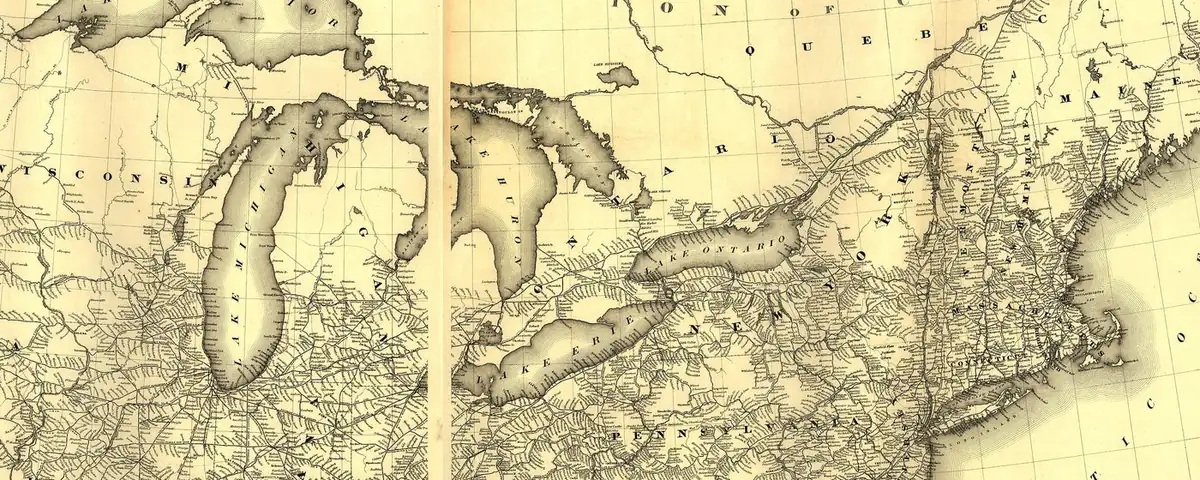
Railroad Towns: How America's Train Towns Got Their Names
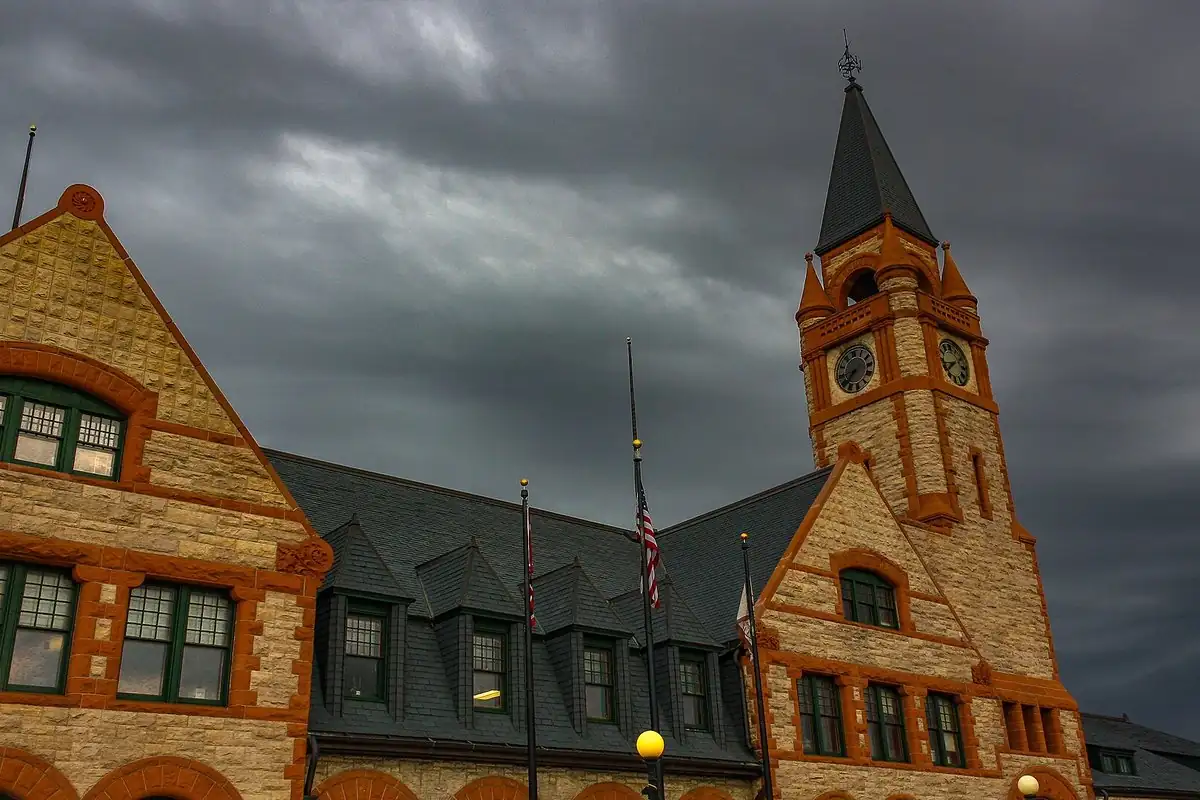

Paragould, Arkansas, is two railroad presidents stuck together. The town was laid out where their two lines crossed, and Jay Gould’s name took the place of the last syllable of Paramore’s. Railroad towns are full of names like that, and this page tells you where they came from.
Every place here was laid out, founded or named by a railroad, or named for someone who built or ran one. The list runs in order of each town’s railroad birthday, from 1837, when an engineer picked a spot in the Georgia woods for the end of a state railroad and people started calling it Terminus, to 1913, when the Alaska Railroad set up the construction camp that became Anchorage.
The names tell you who held the map. Many honor railroad men: presidents like Frederick Billings and Alexander Mitchell, a director like Crawford Livingston, a chief engineer like James E. Ainsworth. Some honor a railroad man’s family, like Hope and Florence, both named for daughters, and Hattiesburg, named for a builder’s wife. Others were picked for business, like Bismarck, renamed to attract German money, or for convenience, like Alliance, chosen because it was one short word near the top of the alphabet. And a few honor Native nations and leaders, like Cheyenne, Huron and Pocatello.
How we picked these. The town was laid out, founded or named by a railroad, or named for someone who built or ran one, as a historical, official or encyclopedic source confirms. Each story below lists the source that confirms it.
 Fulton County, GA
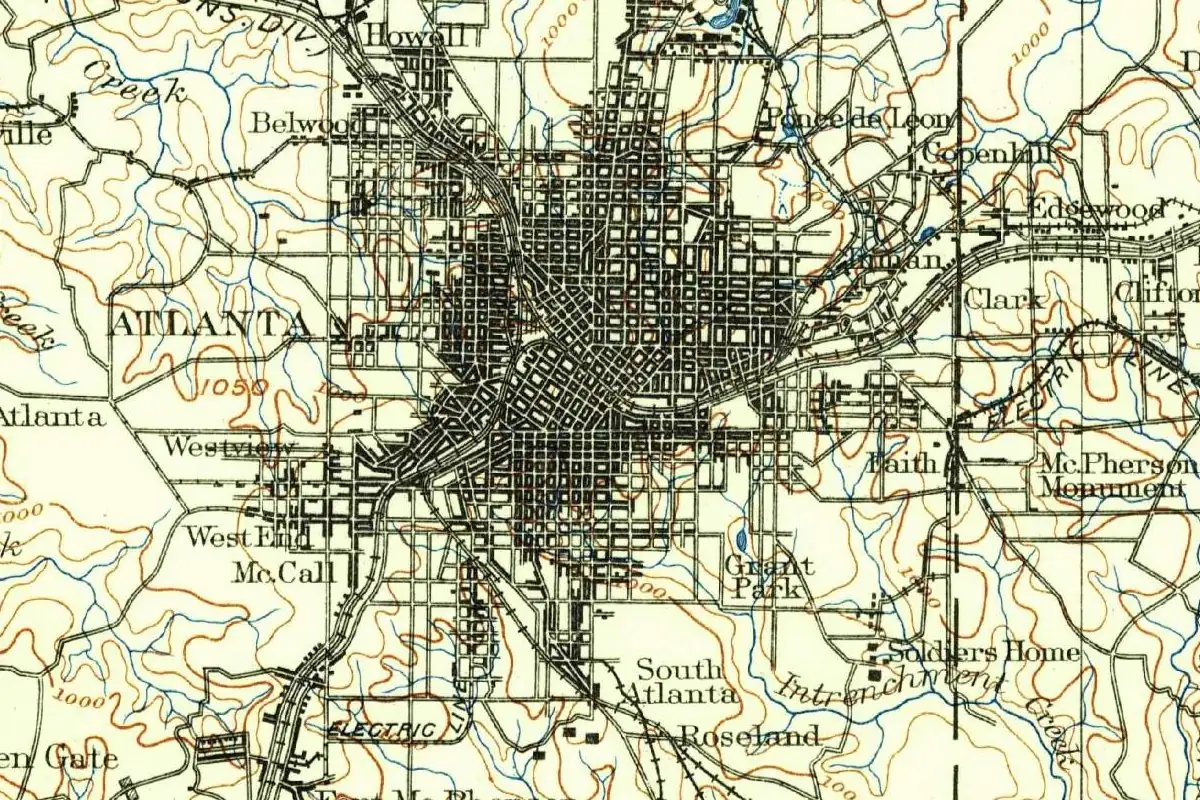
Atlanta, Georgia, was called Terminus and then Marthasville before a railroad engineer coined its name from the word Atlantic.
DisputedBorn in 1837 as Terminus, the spot an engineer picked for the end of a state railroad. Marthasville came next, then Atlanta in 1847. Source: Lucian Lamar Knight, Georgia's Landmarks, Memorials and Legends, vol. 1 (1913)
 Blair County, PA
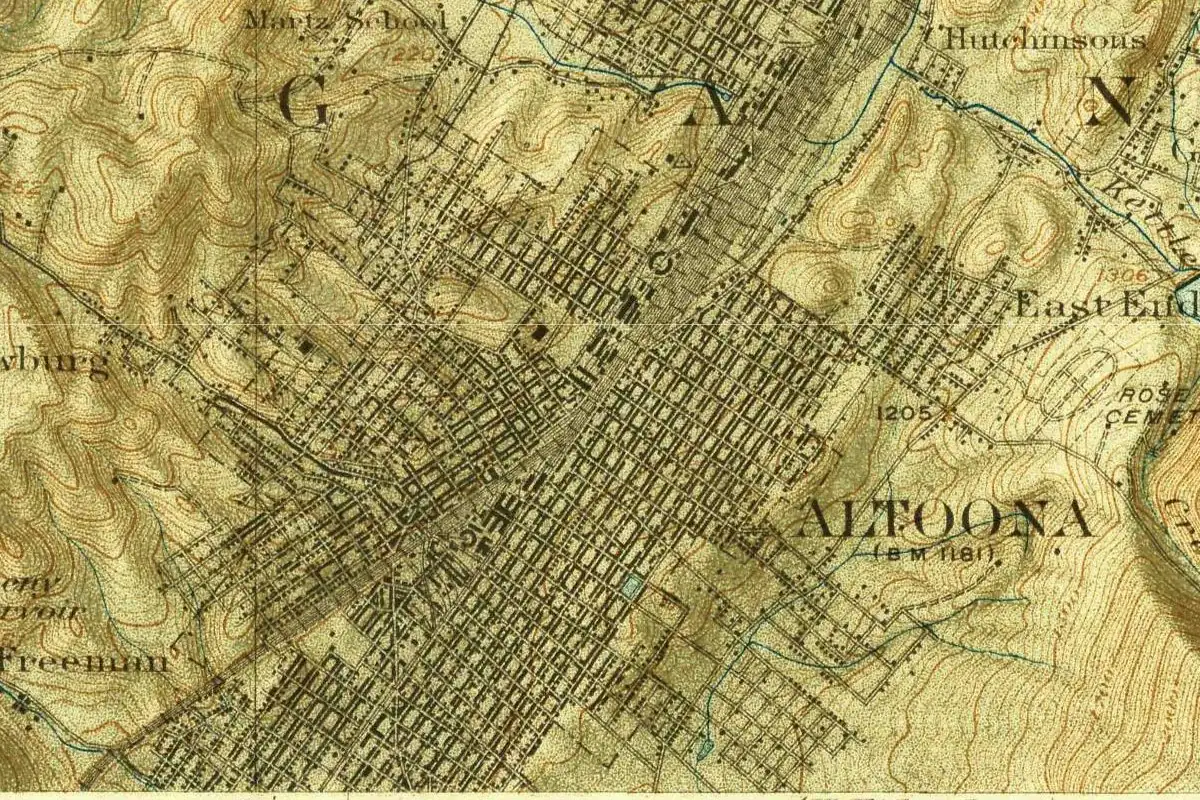
The name Altoona, Pennsylvania, has three rival explanations: a Latin word for high, a German city on the Elbe and a word from Cherokee country in Georgia.
DisputedThe Pennsylvania Railroad picked this spot for its shops in 1849. One of three stories about the name says an engineer laying out the yards named it for Altona, near Hamburg. Source: A. Howry Espenshade, Pennsylvania Place Names (1925), pp. 175-176
 Florence County, SC
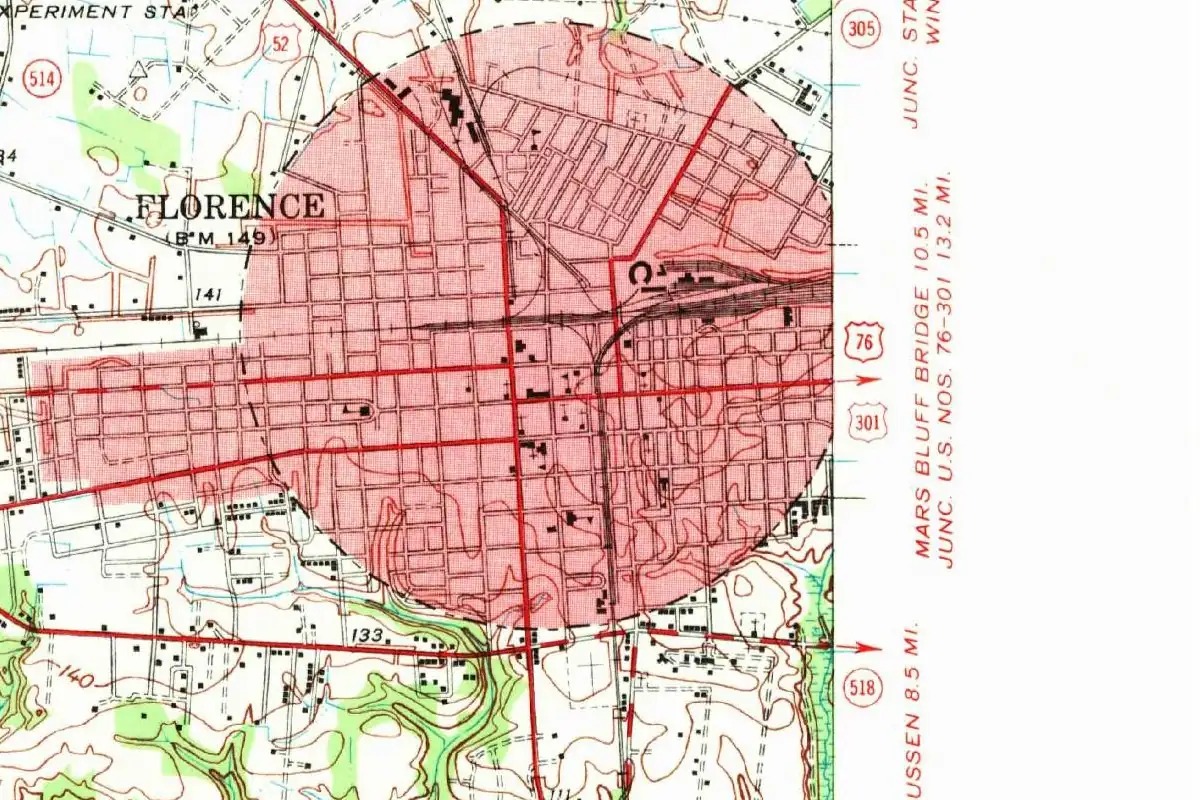
Florence, South Carolina, is named for Florence Harllee, daughter of Gen. W. W. Harllee, who was president of the Wilmington & Manchester Railroad.
DocumentedStarted as a railroad crossing in the 1850s, named for Florence Harllee, daughter of the Wilmington & Manchester Railroad's president. Source: Our History: About Florence (City of Florence)
 Story County, IA
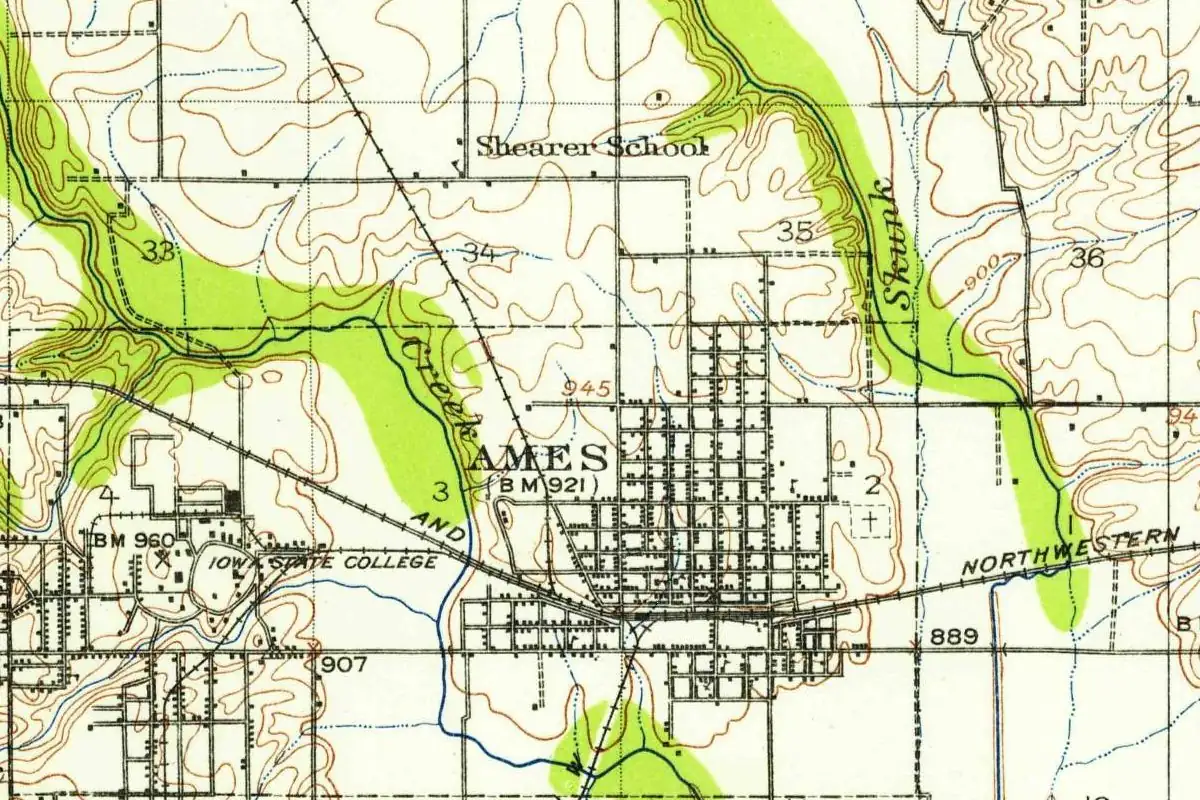
Before the railroad stop that became Ames, Iowa, had a name, a Story County paper joked that it should be called Ditto.
DocumentedA depot on the line that became the Chicago & North Western, laid out in 1865 and named for Oakes Ames for his help building western railroads. Source: W. H. Stennett, Place Names of the Chicago & North Western (1908)
 Laramie County, WY
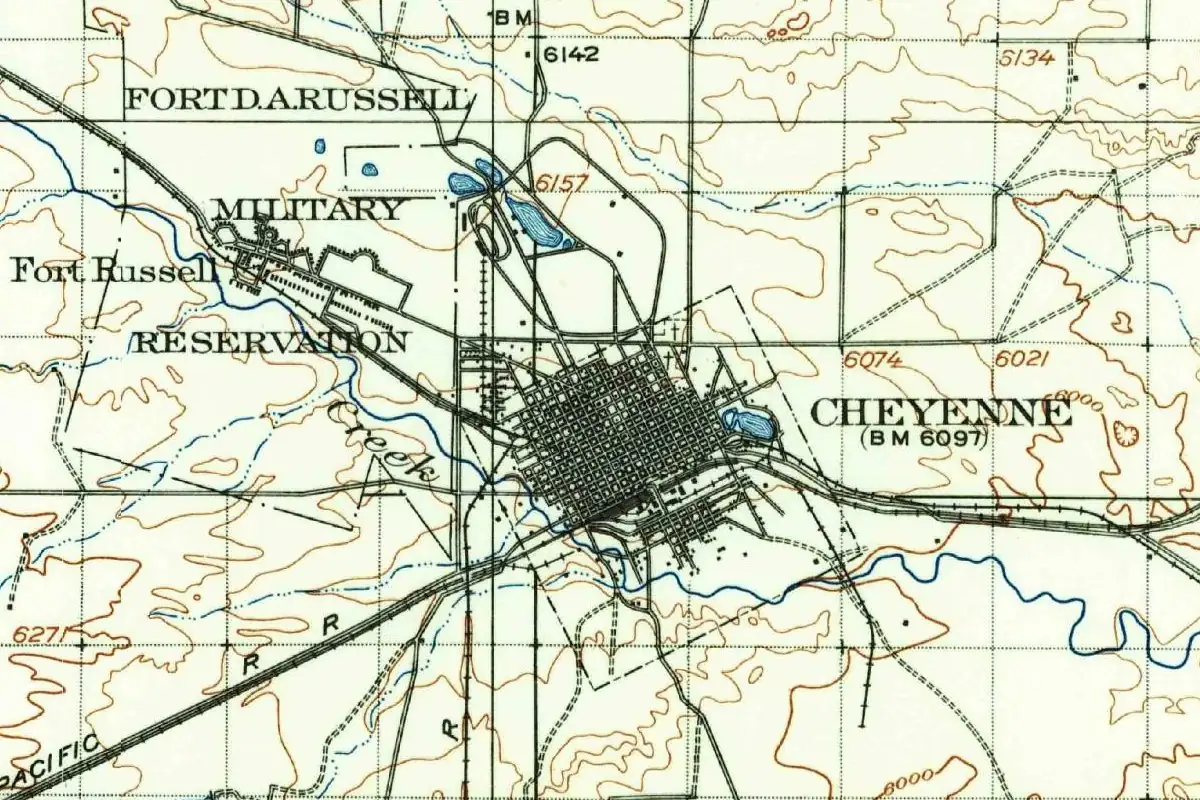
Cheyenne, Wyoming, is named for the Cheyenne people, and the word has nothing to do with the French chien, or dog, despite an old guess that it did.
DocumentedIn July 1867 the Union Pacific's chief engineer, Grenville Dodge, put a division point on Crow Creek and named it Cheyenne. Source: Grenville M. Dodge, How We Built the Union Pacific Railway (1910)
 Cheyenne County, NE
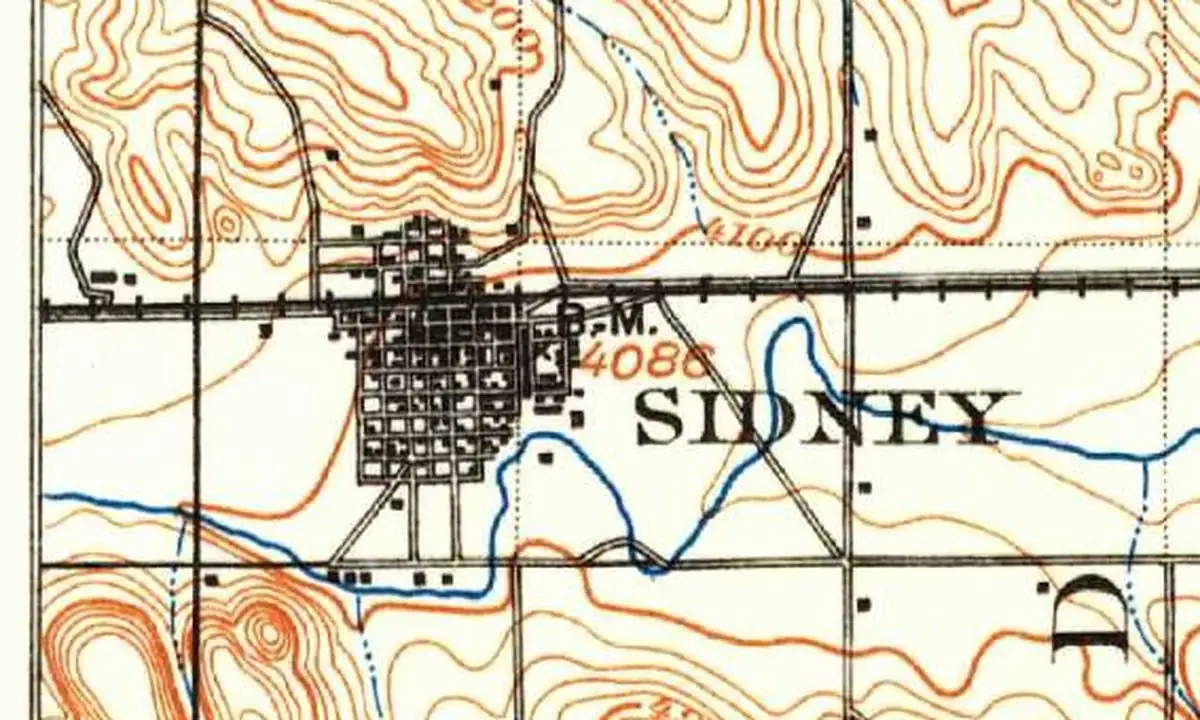
Sidney, Nebraska, is named for Sidney Dillon, a Union Pacific builder who later ran the railroad. A 1925 study seems to mix him up with a lawyer.
DocumentedA Union Pacific town from 1867, named for Sidney Dillon, who helped build the railroad and later ran it. Source: Lilian Linder Fitzpatrick, Nebraska Place-Names (1925)
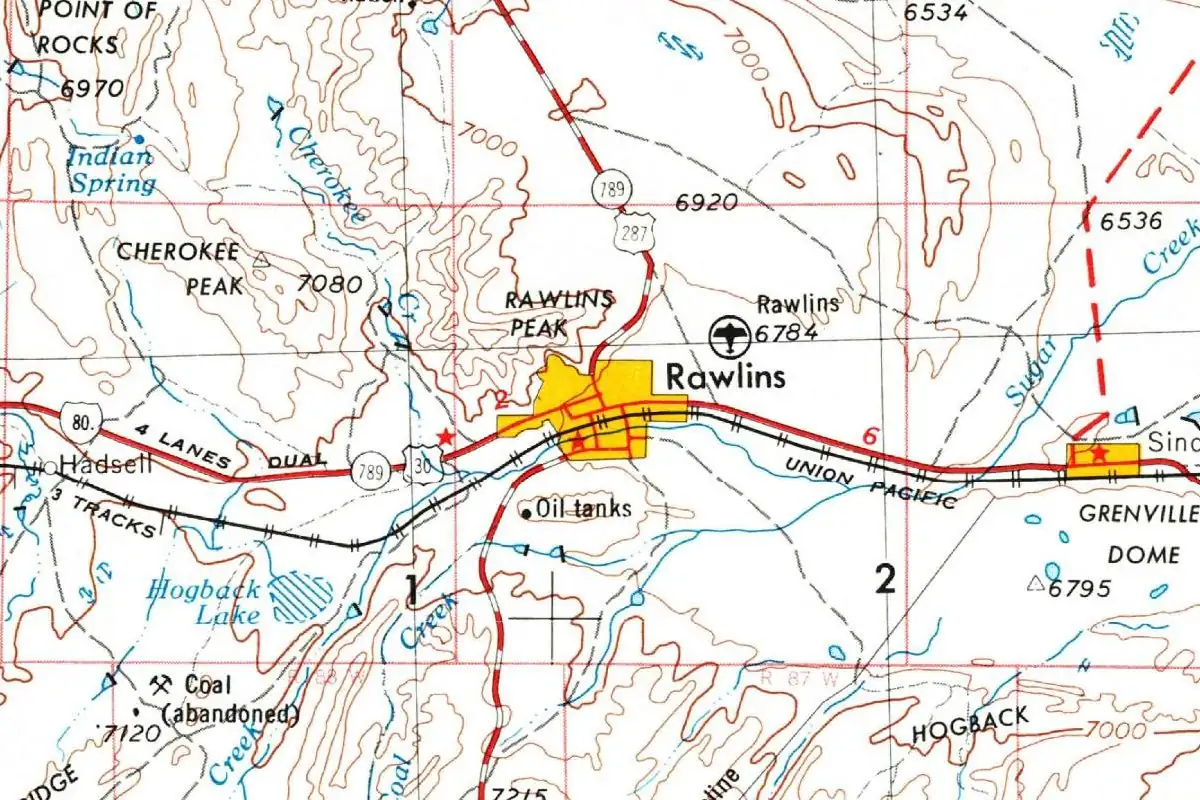 Carbon County, WY
Rawlins, Wyoming, got its name because a thirsty general once said that if anything was ever named for him, he wanted it to be a spring of water.
DocumentedDodge named a spring for thirsty Gen. John Rawlins in 1867, then named the Union Pacific station there Rawlins. Source: Grenville M. Dodge, How We Built the Union Pacific Railway (1910)
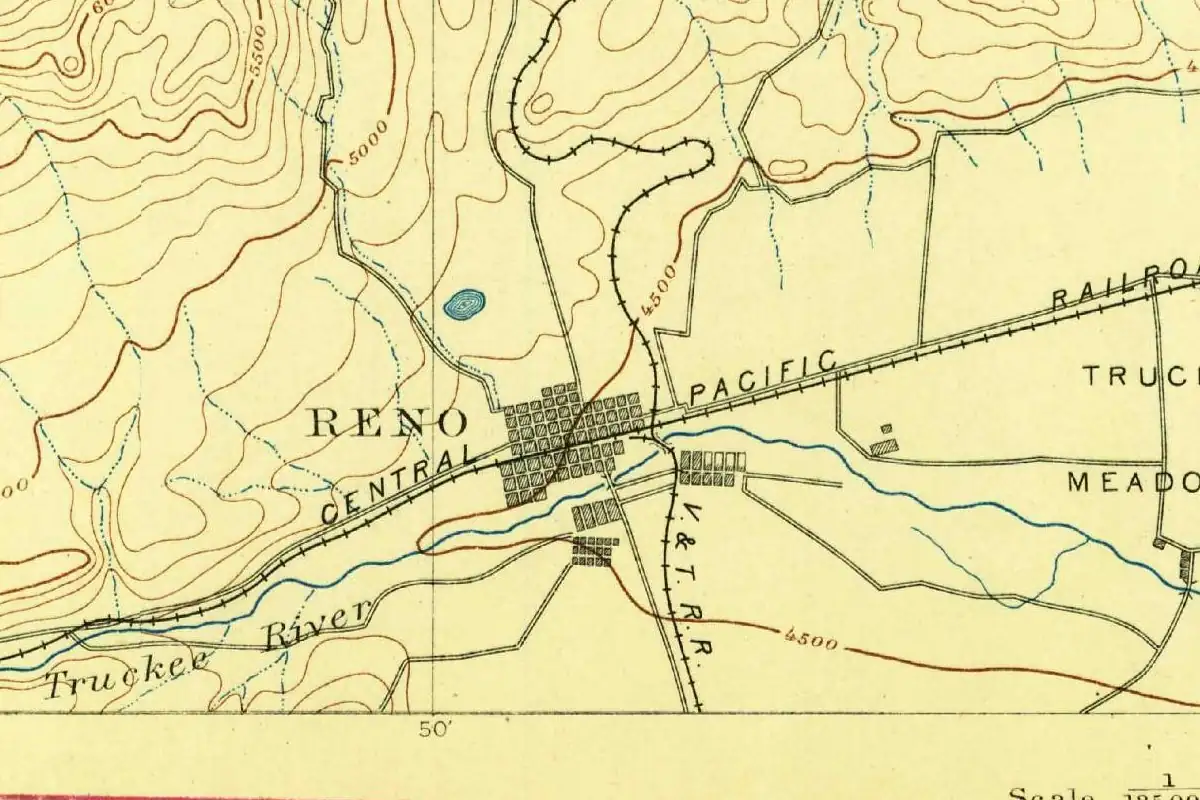 Washoe County, NV
Before it was Reno, Nevada, it was Lake's Crossing, a toll bridge on the Truckee River. In 1868 the railroad's new town took the name of Gen. Jesse Reno.
DocumentedThe railroad laid out a town at Lake's Crossing, christened it Reno for Gen. Jesse Reno, and auctioned the first lots on May 9, 1868. Source: Myron Angel, ed., History of Nevada (1881)
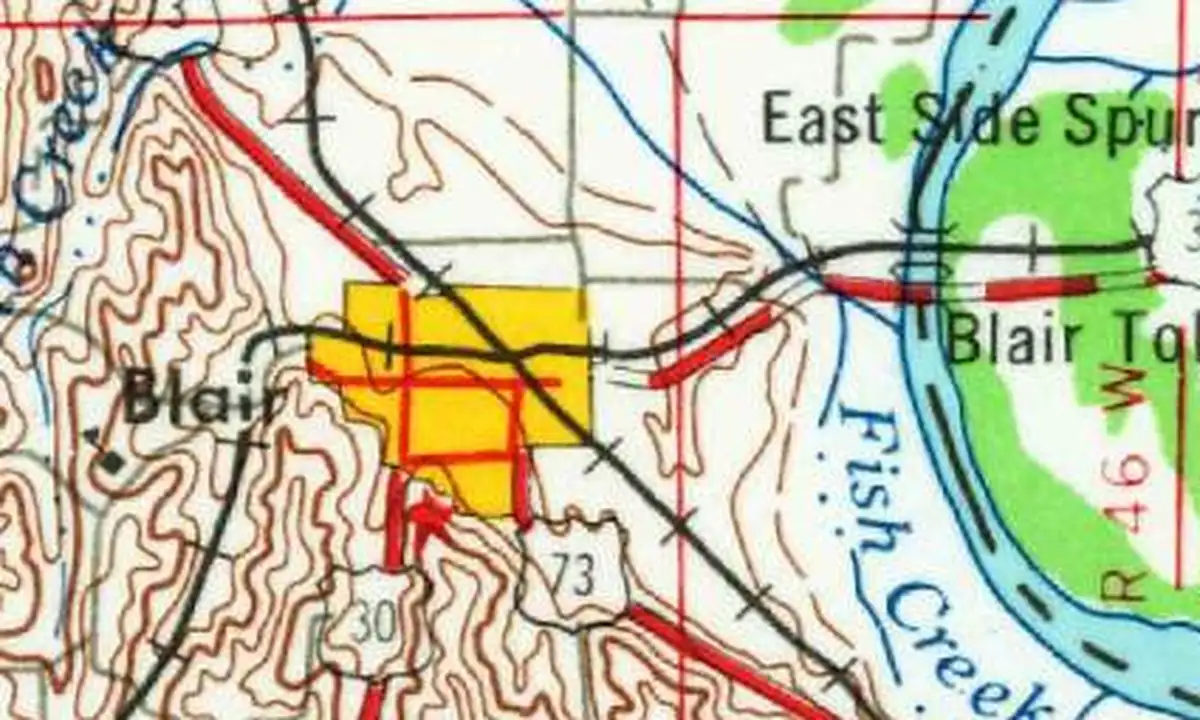 Washington County, NE
Railroad builder John I. Blair owned the ground under Blair, Nebraska, and the town took his name. A local history doubts he ever set foot there.
DocumentedPlatted in 1869 on land owned by railroad builder John I. Blair, where the railroad crossed the Missouri. Source: Lilian Linder Fitzpatrick, Nebraska Place-Names (1925)
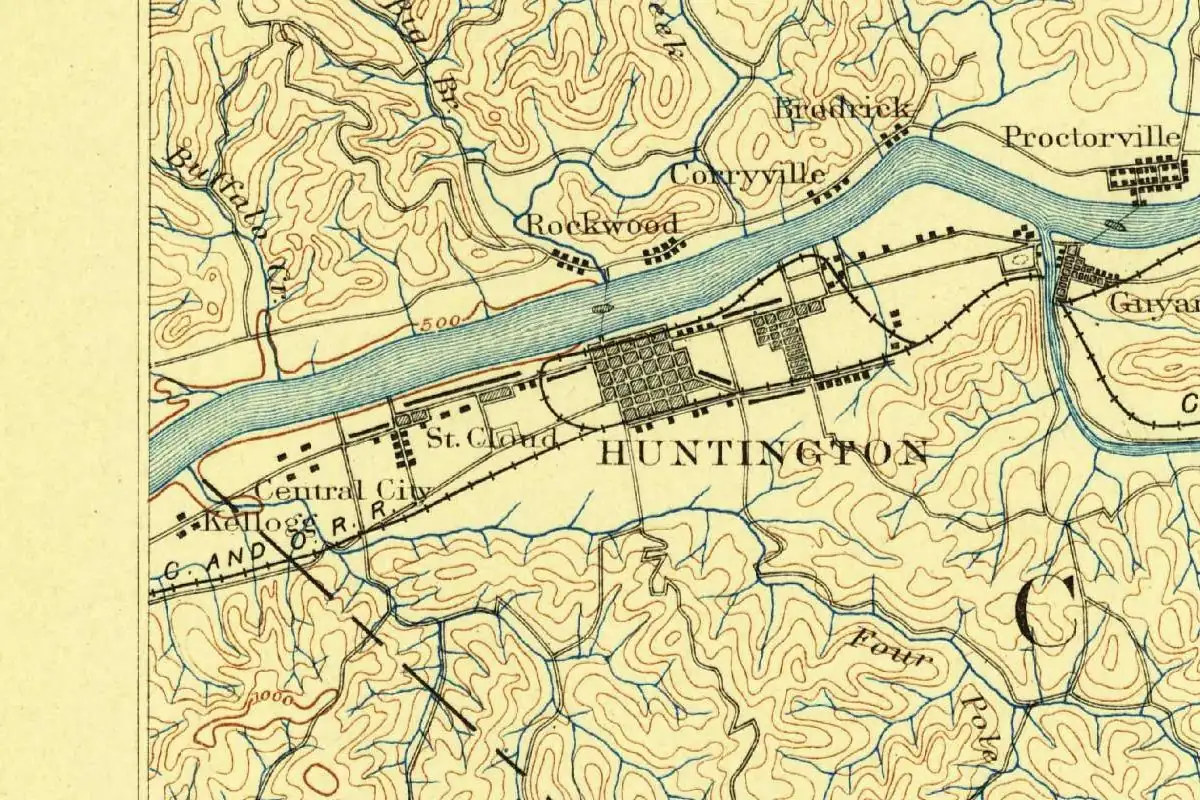 Cabell County, WV
Huntington, West Virginia, is named for Collis P. Huntington, the railroad man who bought the land and had a brand-new city laid out on it.
DocumentedIncorporated on February 27, 1871, and named for C. P. Huntington of the Chesapeake and Ohio Railroad, who had the city laid out. Source: Virgil A. Lewis, History of West Virginia (1889)
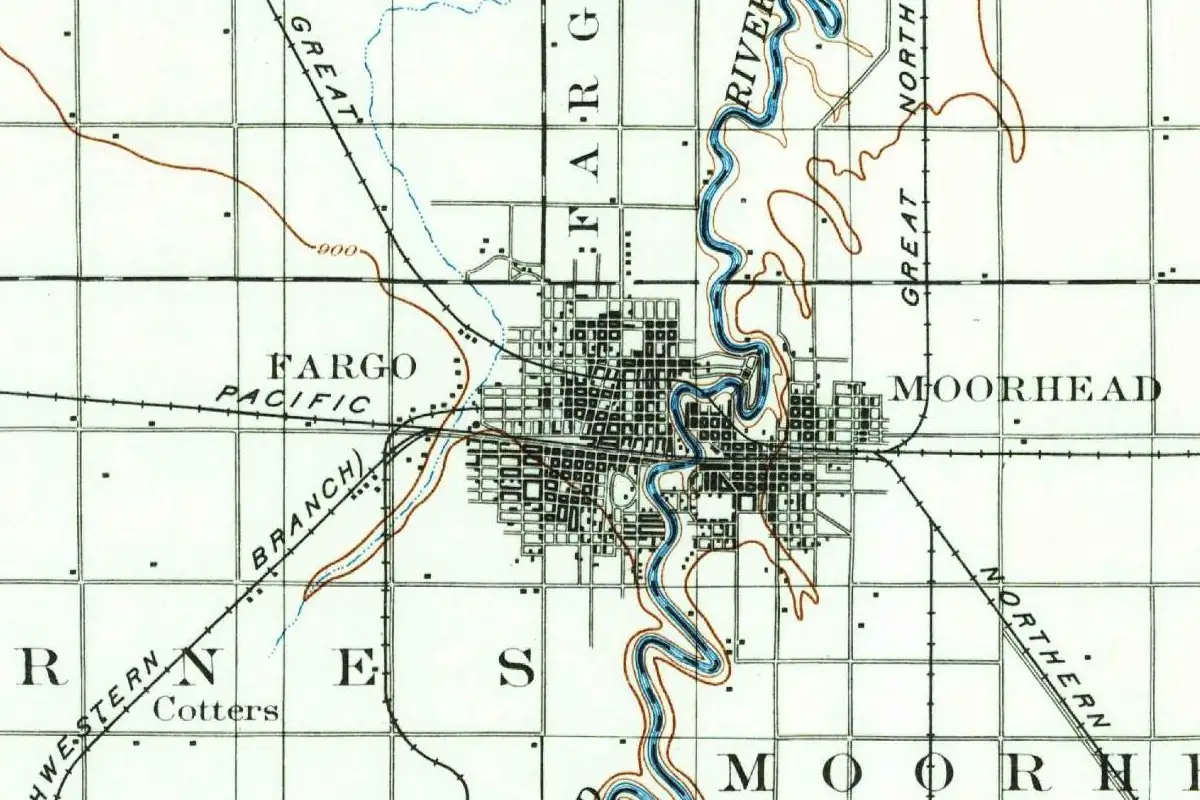 Cass County, ND
Fargo, North Dakota, got its first post office in 1871 under another name, Centralia, and only switched to Fargo in 1873.
DocumentedLocated at the Northern Pacific's Red River crossing and named for W. G. Fargo of Wells Fargo. The post office took the name in 1873. Source: Clement A. Lounsberry, North Dakota History and People, vol. 1 (1917)
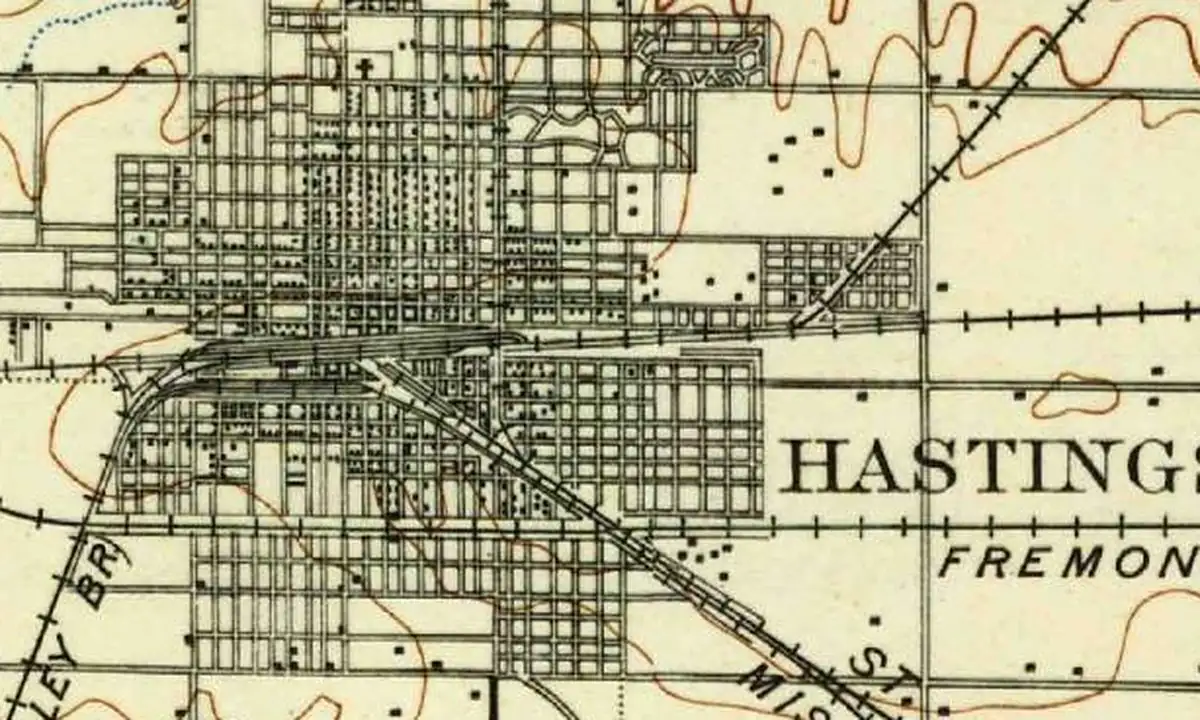 Adams County, NE
Hastings, Nebraska, is named for Colonel Thomas D. Hastings, whose railroad met the Burlington there in 1872. Old sources disagree on his initials.
DocumentedFounded in 1872, when the first railroad reached the spot, and named for Colonel Hastings of a second railroad that crossed it. Source: History (City of Hastings)
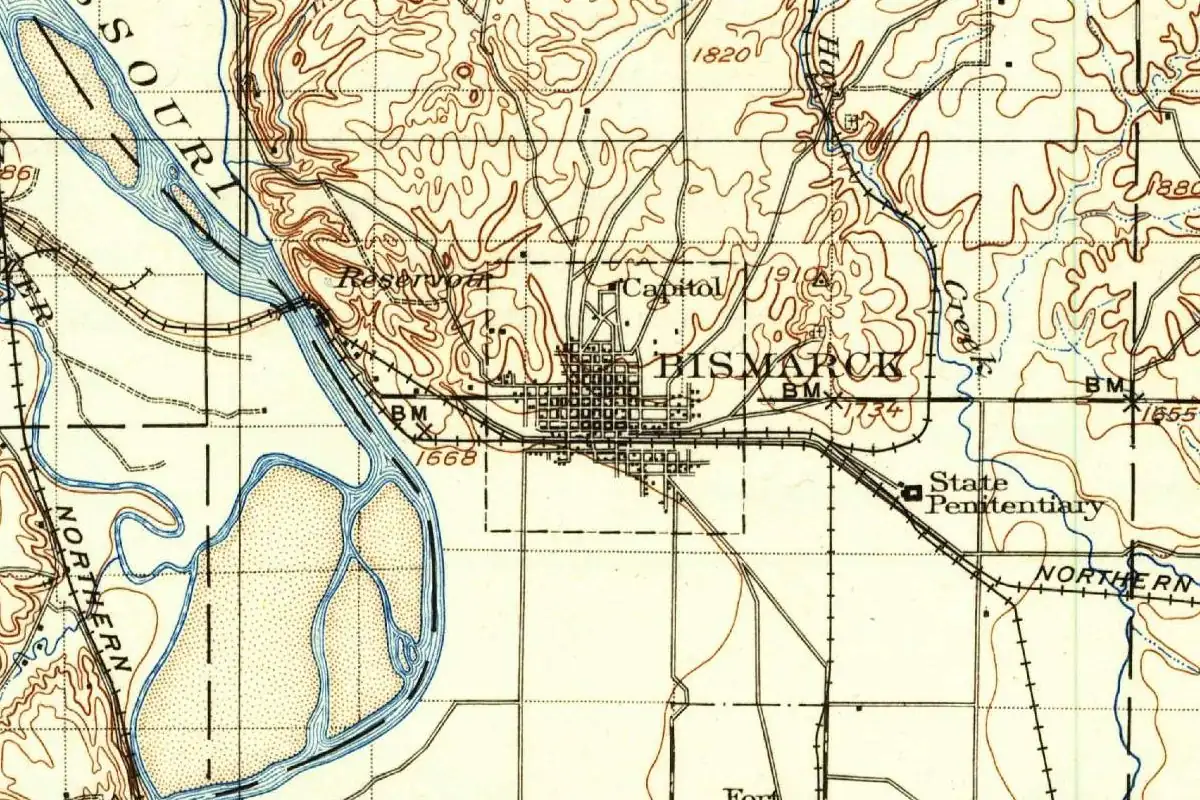 Burleigh County, ND
Bismarck, North Dakota, took the name of Germany's chancellor in 1873 for a business reason: the Northern Pacific wanted German investors to notice.
DocumentedLaid out in 1872 at the Northern Pacific's Missouri River crossing as Edwinton, then renamed Bismarck to attract German money. Source: Clement A. Lounsberry, North Dakota History and People, vol. 1 (1917)
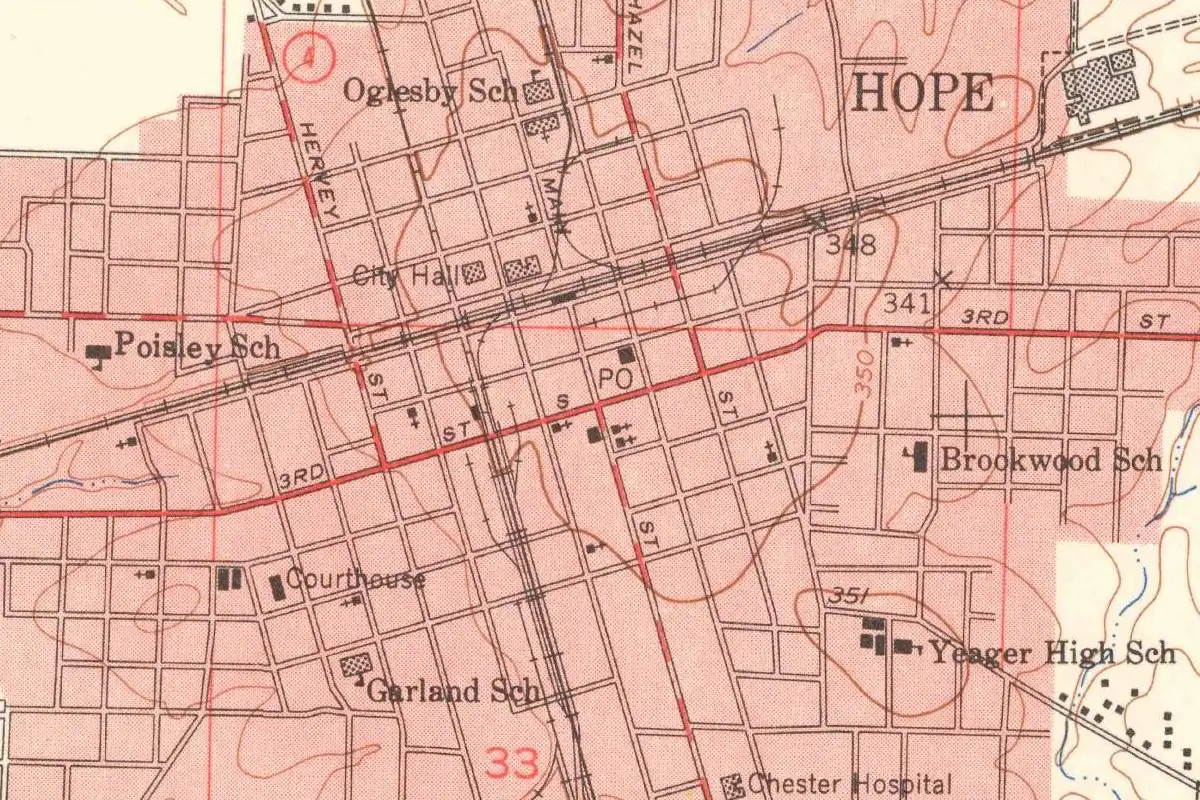 Hempstead County, AR
Hope, Arkansas, wasn't named for a feeling but for a person, Miss Hope Loughborough, whose father sat on the board of the railroad that laid out the town.
DocumentedLaid out by the Cairo & Fulton Railroad in 1873 and named for Miss Hope Loughborough, daughter of one of its directors. Source: Biographical and Historical Memoirs of Southern Arkansas (Goodspeed, 1890)
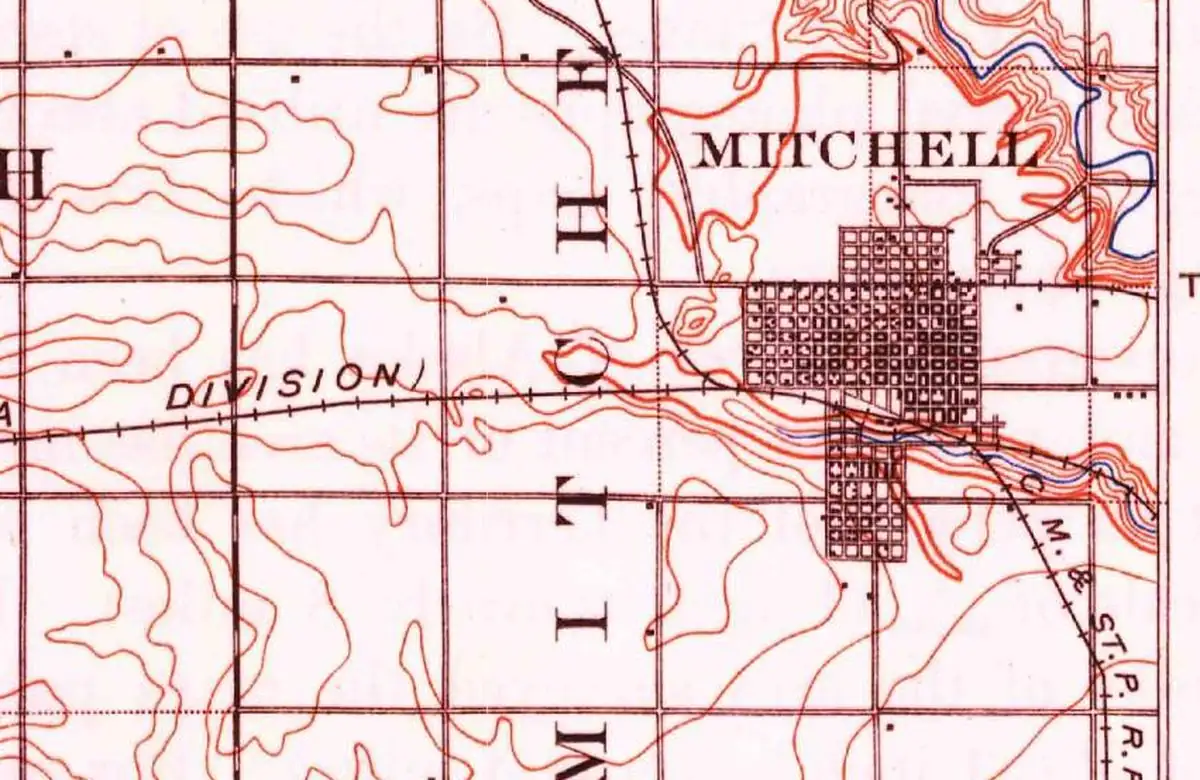 Davison County, SD
Mitchell, South Dakota, is named for Alexander Mitchell, the Milwaukee banker who was president of the Milwaukee Road when its tracks came through.
DocumentedLaid out along the tracks in 1879 and named for Alexander Mitchell, then president of the Chicago, Milwaukee and St. Paul Railway. Source: W. H. Stennett, Place Names of the Chicago & North Western (1908)
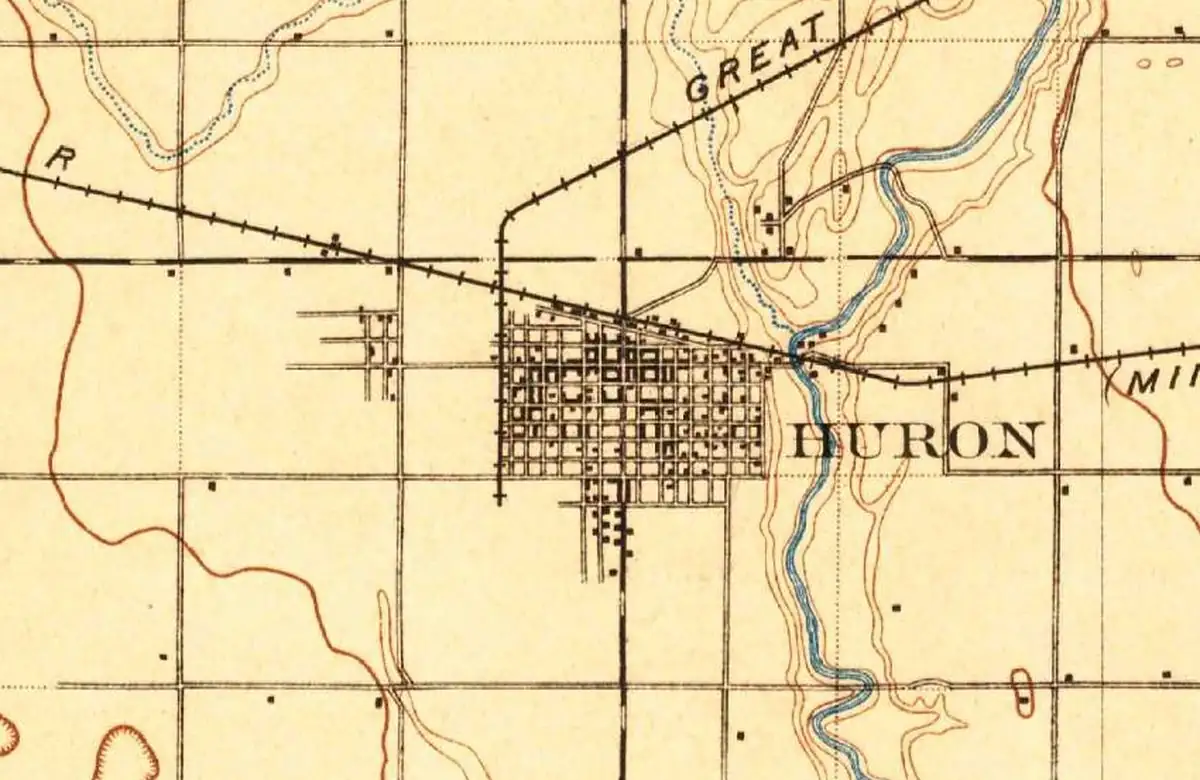 Beadle County, SD
Huron, South Dakota, is named for the Huron people, a Great Lakes nation, by the Chicago & North Western railroad that founded the town in 1880.
DocumentedPlatted in 1880 on the spot the Chicago & North Western picked for its division headquarters on the James River, and named for the Huron people. Source: History (City of Huron)
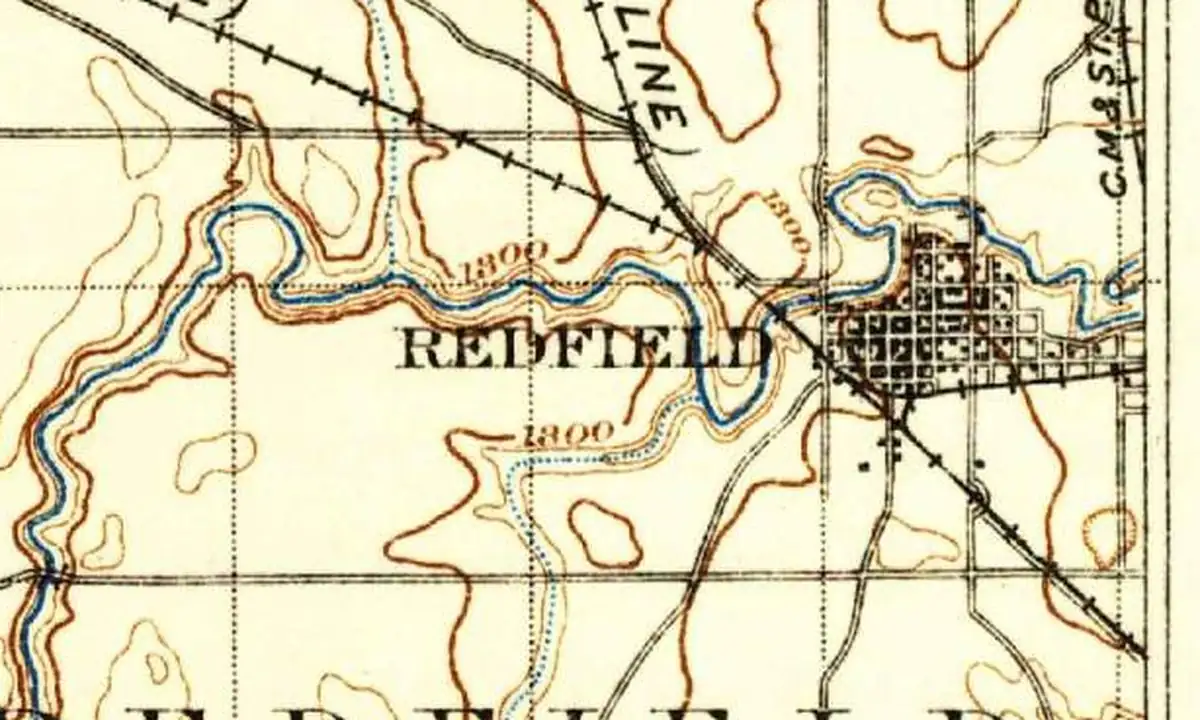 Spink County, SD
Redfield, South Dakota, is named for J. B. Redfield, a longtime Chicago & North Western Railway officer. Before that, it was called Stennett Junction.
DocumentedLaid out in 1880 and named for J. B. Redfield, one of the oldest officers of the Chicago & North Western Railway. Source: W. H. Stennett, Place Names of the Chicago & North Western (1908)
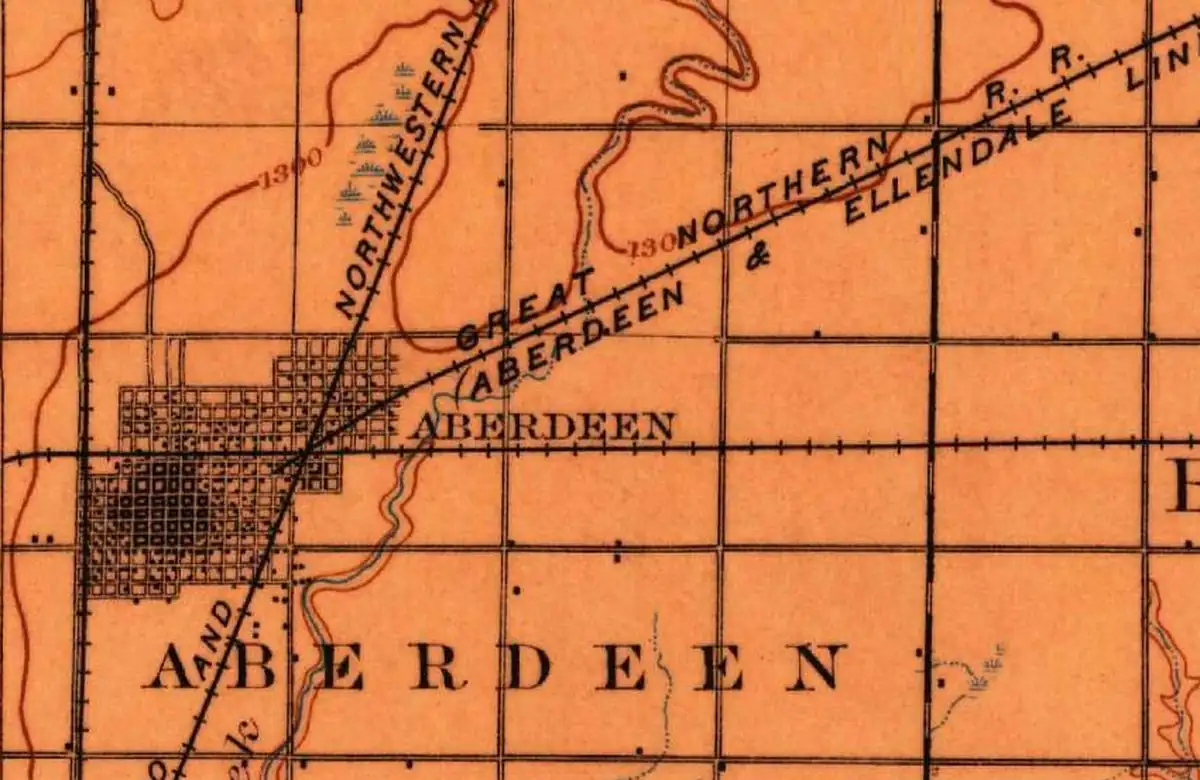 Brown County, SD
Aberdeen, South Dakota, is named for Aberdeen, Scotland, home region of Alexander Mitchell, the Milwaukee banker who ran the railroad that built the town.
DocumentedIts birthday is July 6, 1881, when the first Milwaukee Road train arrived. The name honors railroad boss Alexander Mitchell's Scottish home. Source: How Aberdeen Was Founded (Dacotah Prairie Museum)
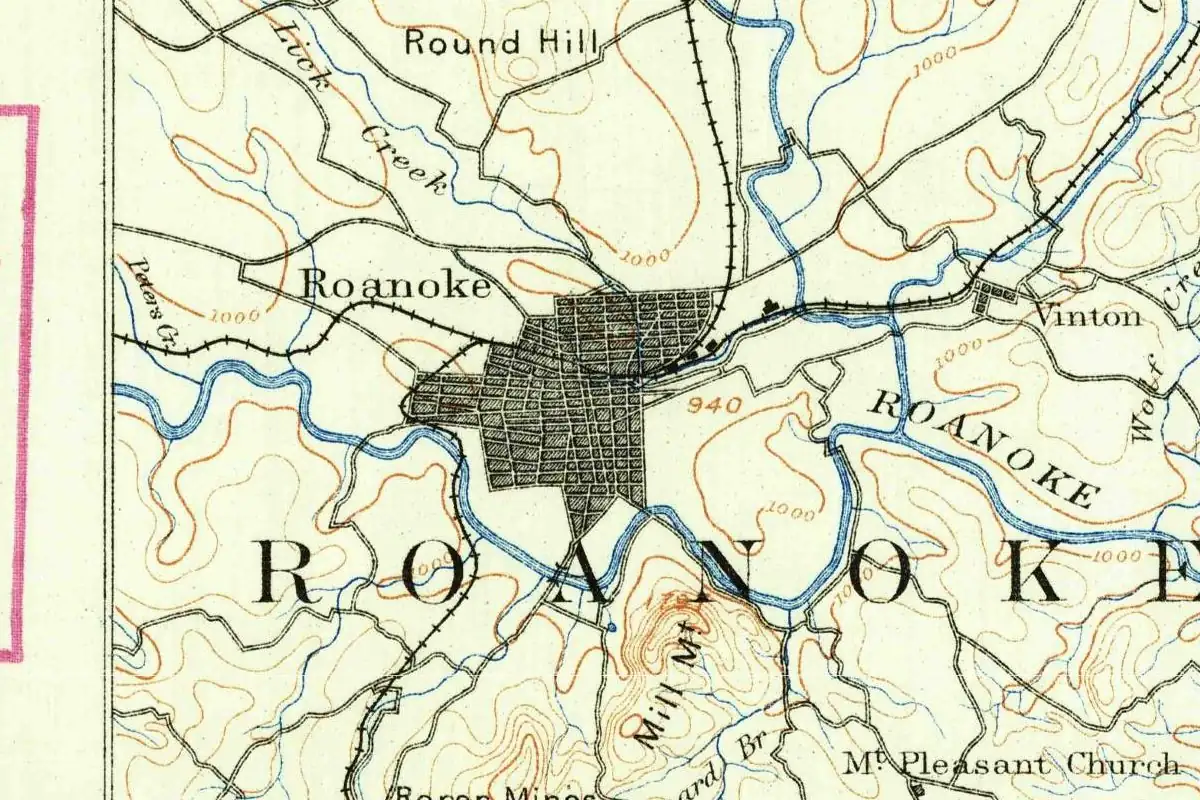 Independent city, VA
Until 1882, Roanoke, Virginia, was Big Lick, named for a salt lick. When two railroads met there, the town took the name of its river and county.
DocumentedIn 1881 the railroad renamed its Big Lick station, a junction with the Shenandoah Valley line, Roanoke. The town followed in 1882. Source: The Railroad Gazette, July 29, 1881
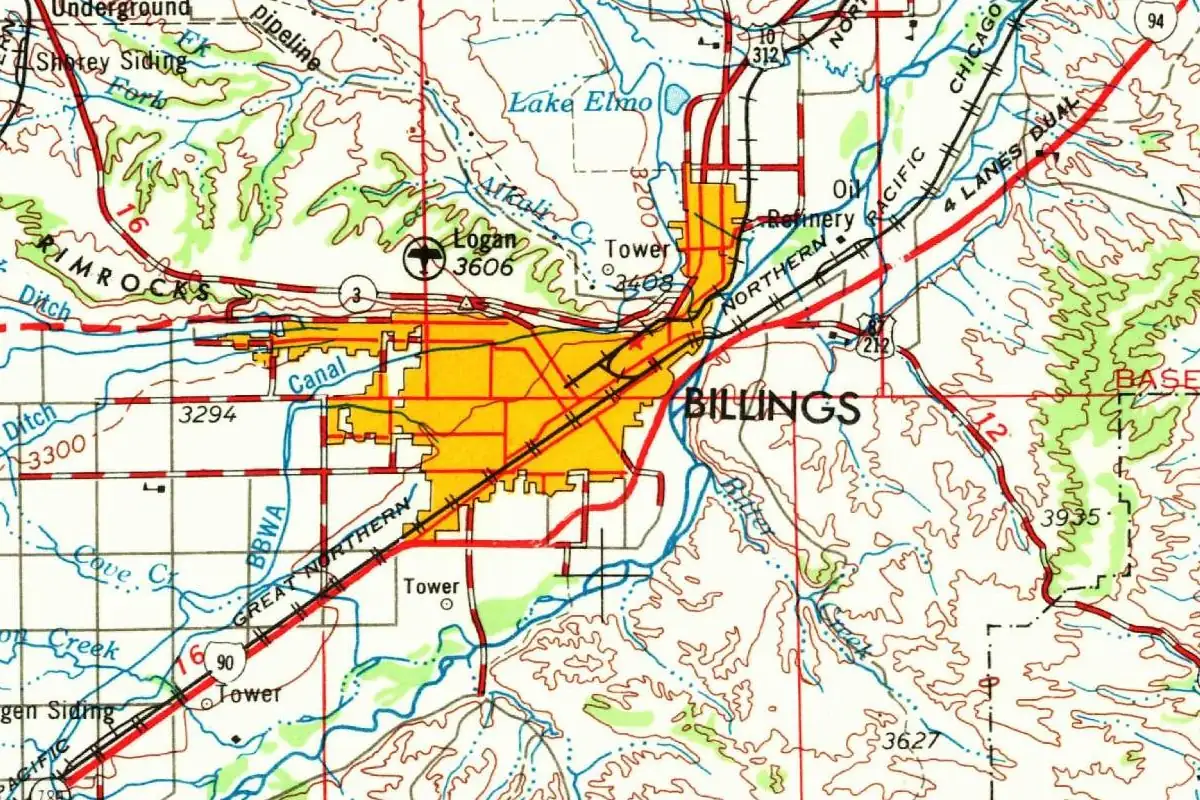 Yellowstone County, MT
A 1905 federal book said Billings, Montana, was named for Parmly Billings, but the record points to his father, railroad president Frederick Billings.
DocumentedA Northern Pacific townsite platted in March 1882 and named for Frederick Billings, the railroad's former president. Source: An Illustrated History of the Yellowstone Valley (1907)
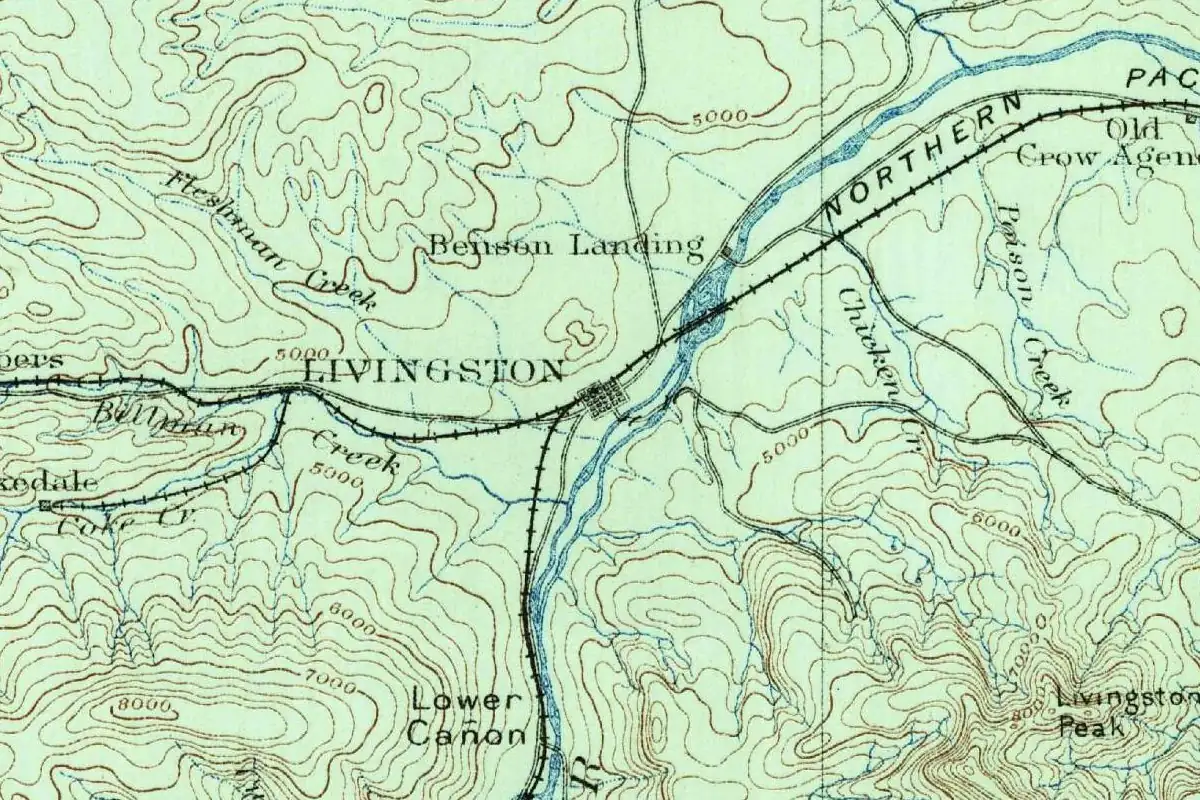 Park County, MT
Livingston, Montana, started out in 1882 as Clark City, and its people didn't know the railroad had already put another name on its maps.
DocumentedIts first settlers called it Clark City, not knowing the Northern Pacific had already mapped it as Livingston, for a director. The plat came in 1882. Source: An Illustrated History of the Yellowstone Valley (1907)
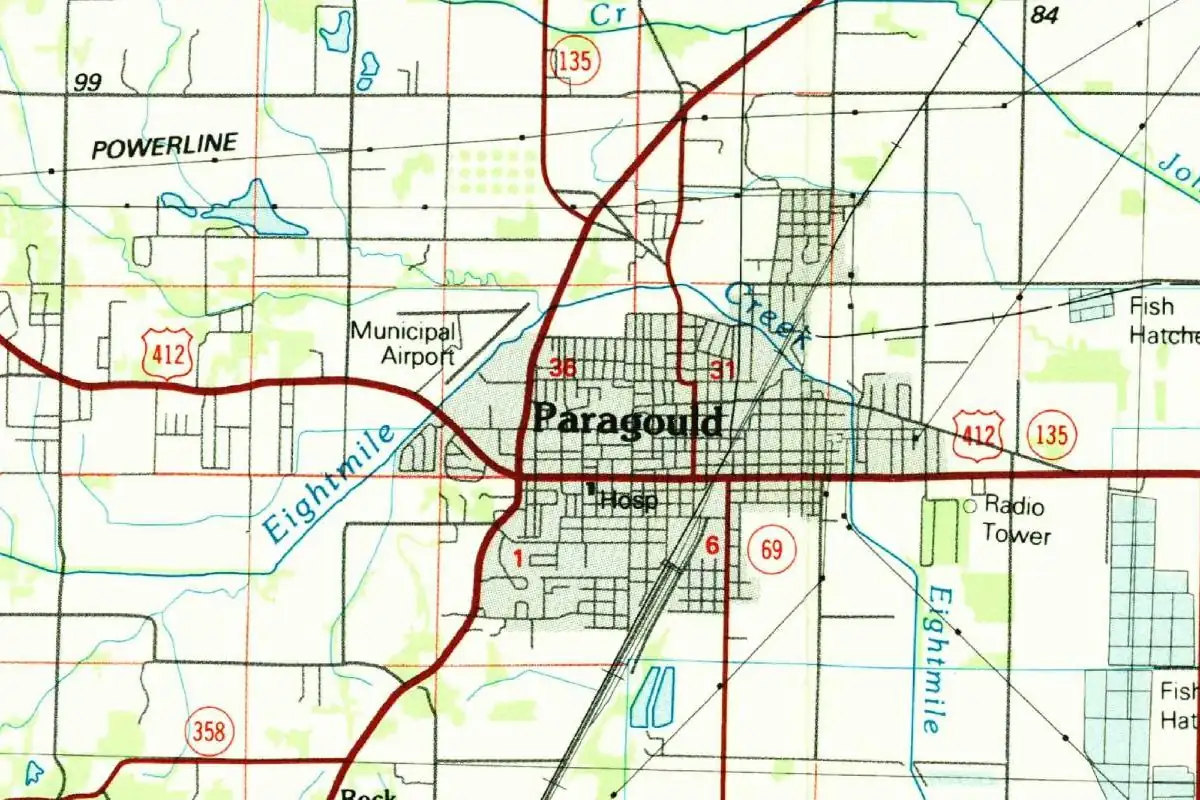 Greene County, AR
Paragould, Arkansas, is named for two railroad presidents at once, with Jay Gould's name stuck on in place of the last syllable of Paramore's.
DocumentedLaid out in 1882 where two railroads crossed. It mixes the names of their presidents, Paramore and Jay Gould. Source: Biographical and Historical Memoirs of Northeast Arkansas (Goodspeed, 1889)
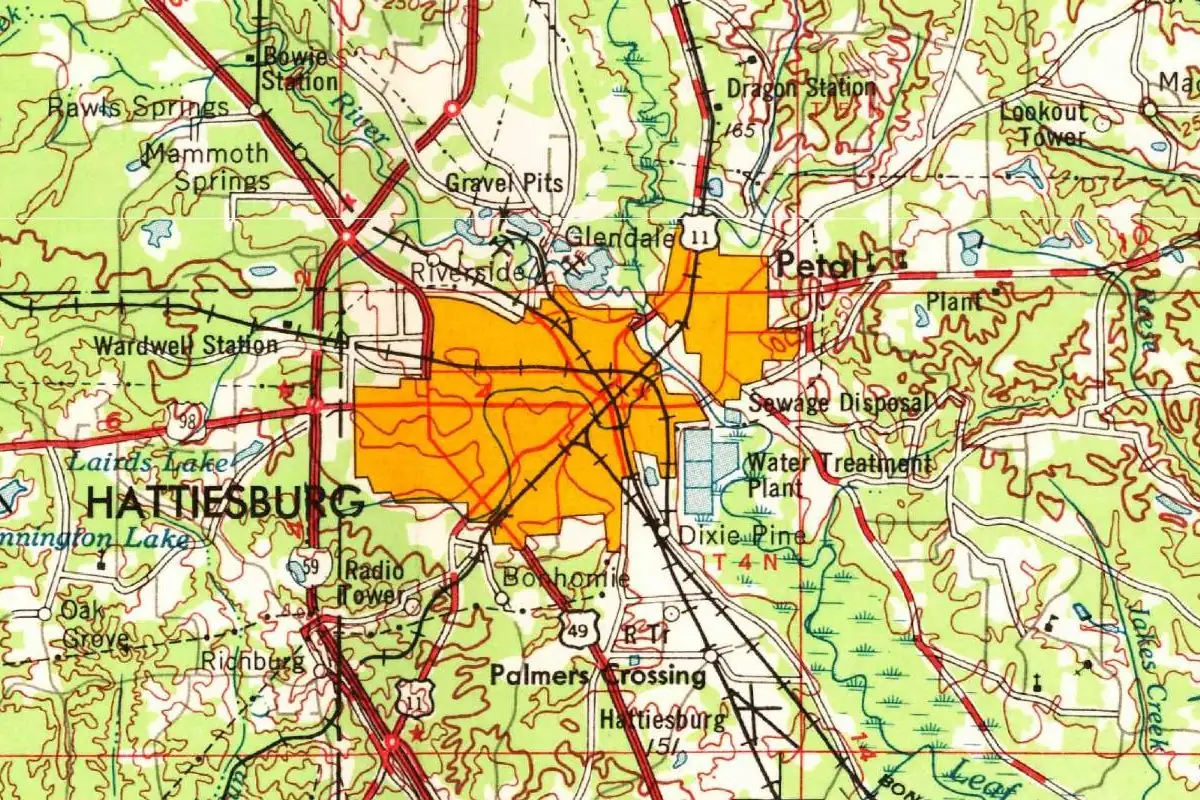 Forrest County, MS
Hattiesburg, Mississippi, is named for Hattie, the wife of railroad builder W. H. Hardy, who picked the town's spot while eating lunch in the pine woods.
DocumentedRailroad builder W. H. Hardy founded it in 1882 and named it for his wife, Hattie. Source: Dunbar Rowland, ed., Mississippi, vol. 1 (1907)
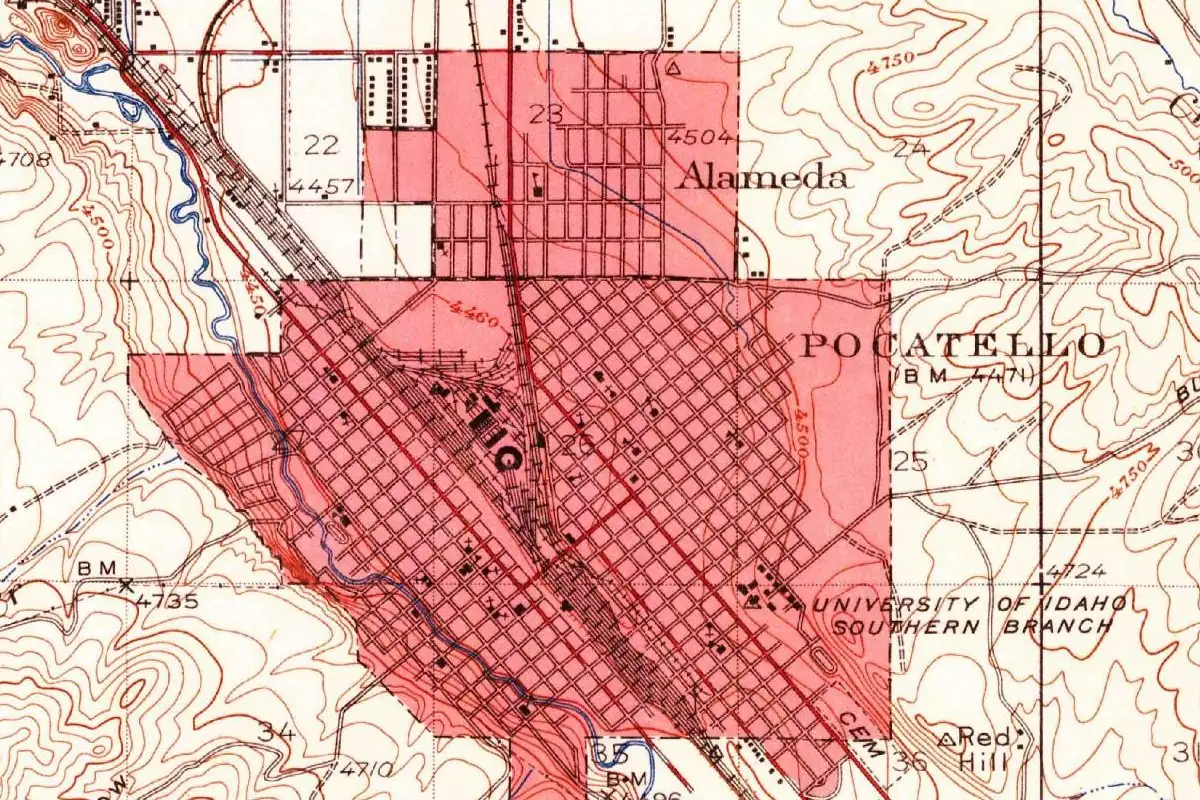 Bannock County, ID
Pocatello, Idaho, carries the name of a chief of the 1860s, and the name was on a railroad station before there was much of a town around it.
DocumentedGrew up on railroad land where the Oregon Short Line crossed the Utah & Northern, which put up a station here in 1882. It "owes her birth" to the railroad, a 1915 history says. Source: Arthur C. Saunders, The History of Bannock County, Idaho (1915), p. 122
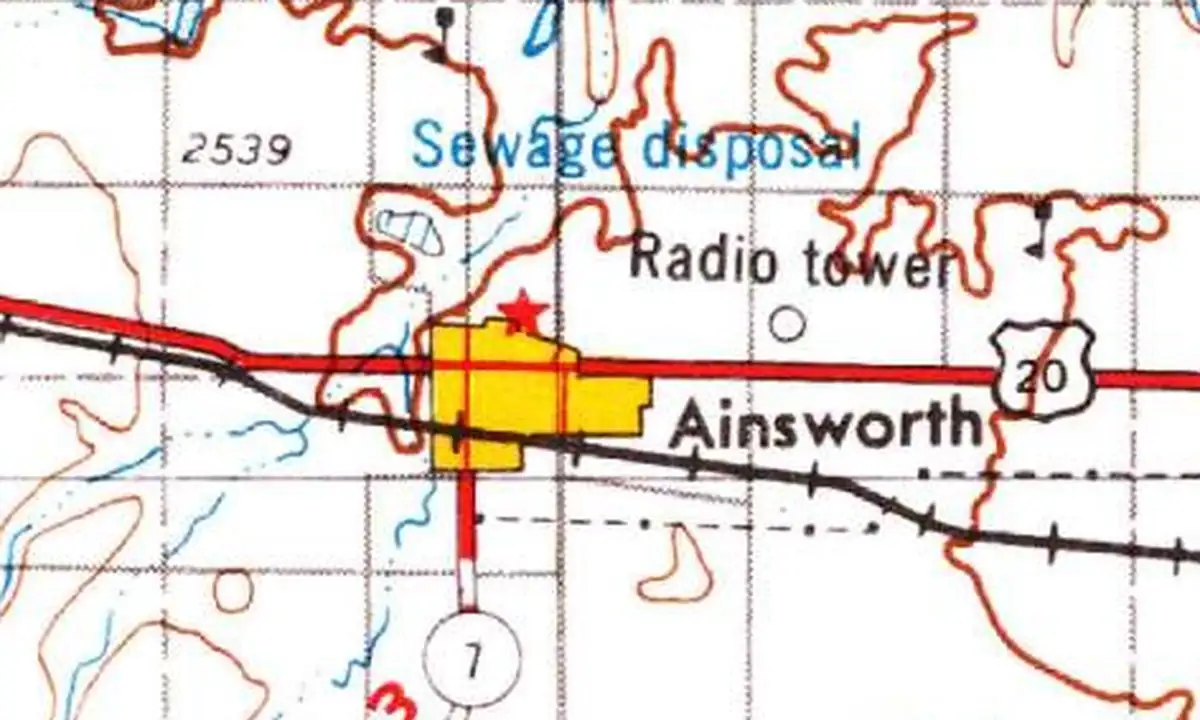 Brown County, NE
Ainsworth, Nebraska, is named for Captain James E. Ainsworth, the civil engineer in charge of building the railroad through this area in the early 1880s.
DocumentedNamed for Captain James E. Ainsworth, the railroad's chief civil engineer while the line was built through in the early 1880s. Source: Lilian Linder Fitzpatrick, Nebraska Place-Names (1925)
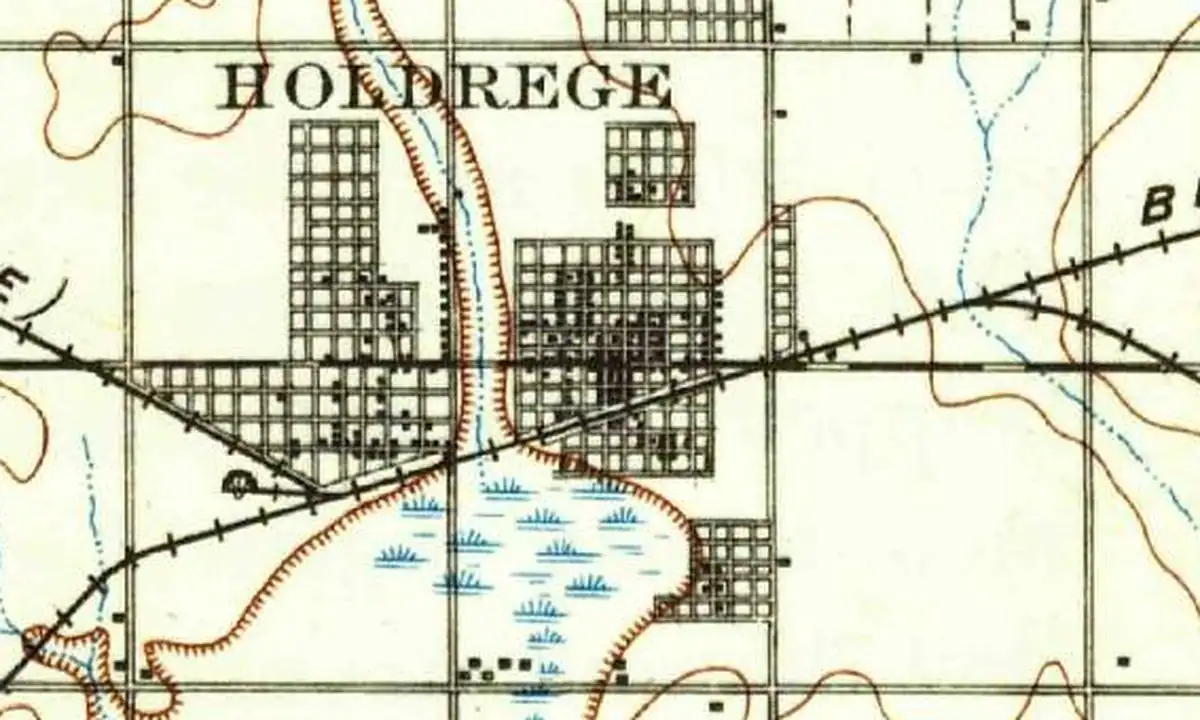 Phelps County, NE
Holdrege, Nebraska, is named for George W. Holdrege, who ran the Burlington's Nebraska lines for years. It began in 1883, just after the railroad arrived.
DocumentedStarted in 1883, just after the railroad came through, and named for George W. Holdrege of the Burlington. Source: Lilian Linder Fitzpatrick, Nebraska Place-Names (1925)
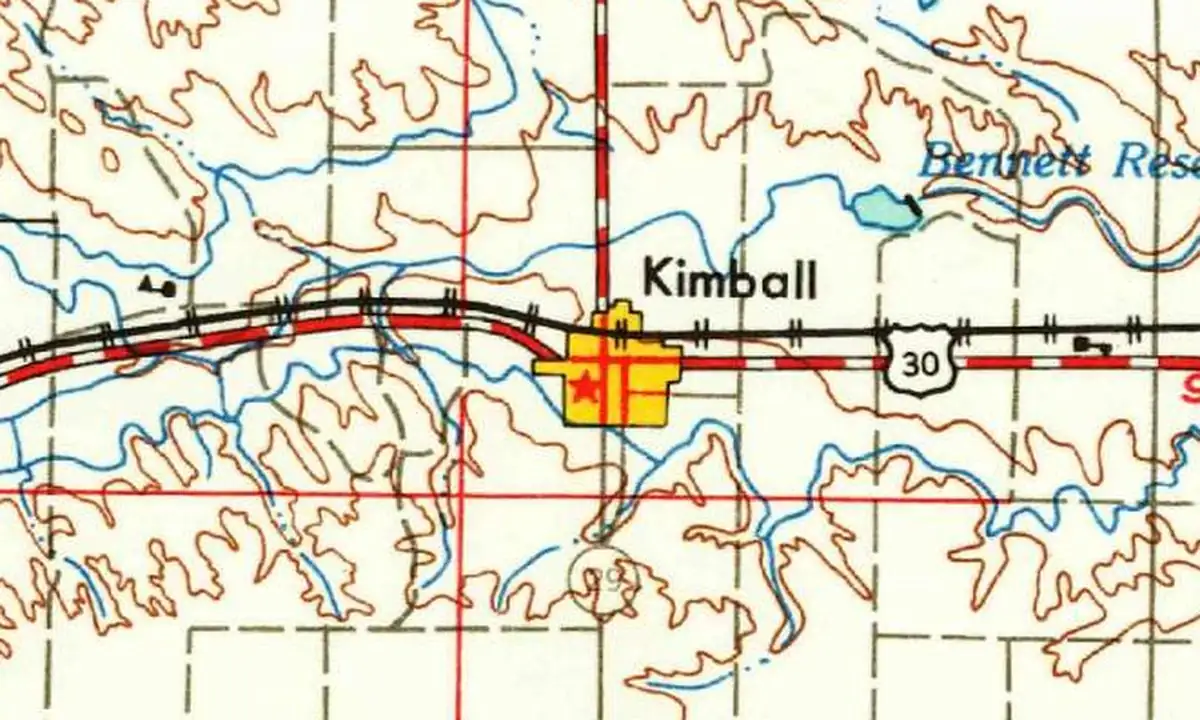 Kimball County, NE
Kimball, Nebraska, started out as Antelopeville, for the antelope nearby. In 1885 it was renamed for Thomas L. Kimball, a top Union Pacific official.
DocumentedAntelopeville until 1885, when it was renamed for Thomas L. Kimball, vice president and general manager of the Union Pacific. Source: Lilian Linder Fitzpatrick, Nebraska Place-Names (1925)
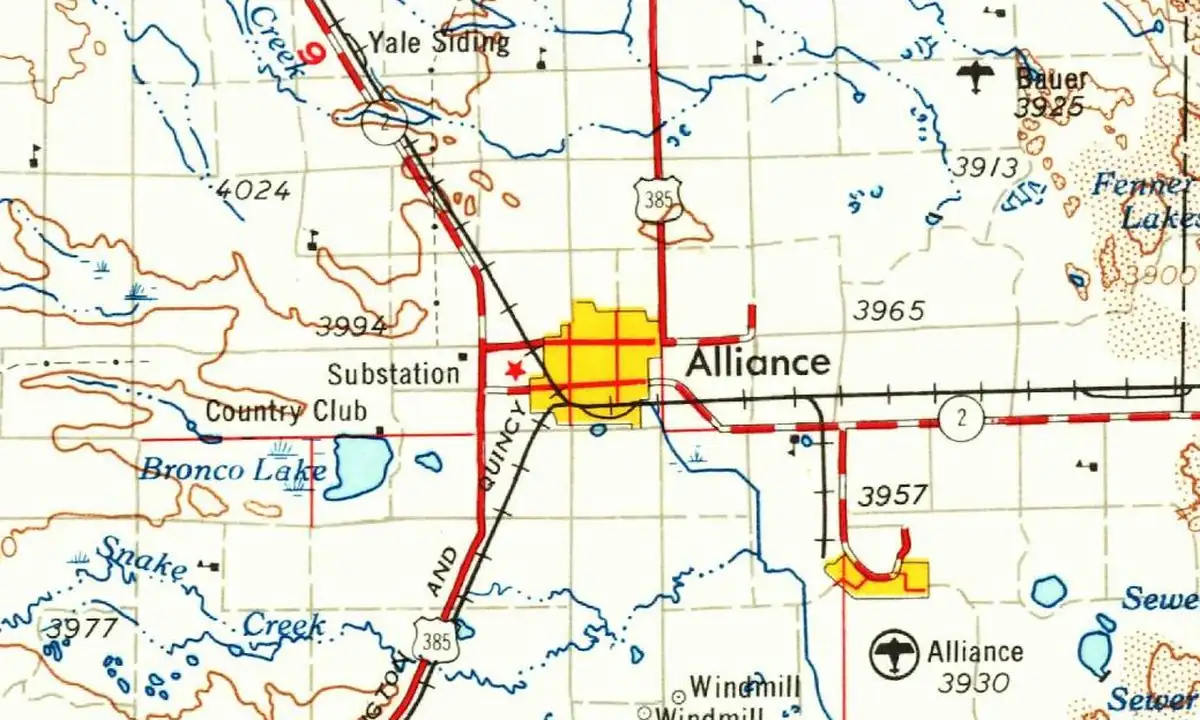 Box Butte County, NE
Alliance, Nebraska, was named by a railroad boss who wanted a short, one-word name no other Nebraska town had, near the top of the alphabetical list.
DocumentedFounded as Grand Lake in 1887. After the Burlington opened a station in 1888, railroad superintendent G. W. Holdrege offered the name Alliance. Source: About Our County (Box Butte County)
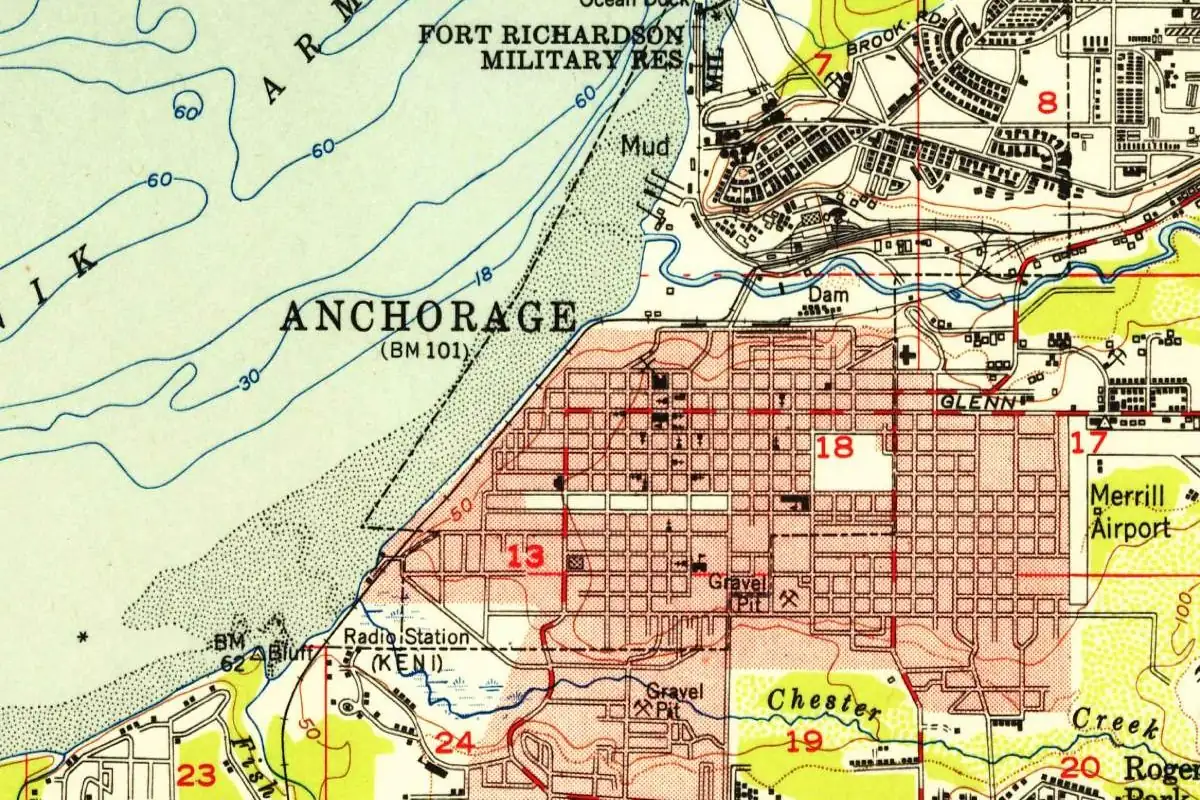 Anchorage Municipality, AK
Anchorage, Alaska, is named for Knik Anchorage, the spot just offshore where ships anchored off the new railroad camp.
DisputedBegan in 1913 as the Alaska Railroad's construction camp, named for Knik Anchorage, the spot just offshore where ships anchored. Source: Donald J. Orth, Dictionary of Alaska Place Names (USGS, 1967)
Sources for this page
- Biographical and Historical Memoirs of Northeast Arkansas (Goodspeed, 1889), Greene County (accessed Nov 1, 2026)
- Lucian Lamar Knight, Georgia's Landmarks, Memorials and Legends, vol. 1 (1913), pp. 565-571 (accessed Nov 1, 2026)
- Donald J. Orth, Dictionary of Alaska Place Names (USGS Professional Paper 567, 1967), entry Anchorage (accessed Nov 1, 2026)
- Grenville M. Dodge, How We Built the Union Pacific Railway (1910), pp. 23-25 (accessed Nov 1, 2026)
- W. H. Stennett, A History of the Origin of the Place Names Connected with the Chicago & North Western and Chicago, St. Paul, Minneapolis & Omaha Railways (1908) (accessed Nov 1, 2026)
- Lilian Linder Fitzpatrick, Nebraska Place-Names (University of Nebraska, 1925) (accessed Nov 1, 2026)
- Clement A. Lounsberry, North Dakota History and People, vol. 1 (1917) (accessed Nov 1, 2026)
- Biographical and Historical Memoirs of Southern Arkansas (Goodspeed, 1890), Hempstead County (accessed Nov 1, 2026)
- Dunbar Rowland, ed., Mississippi: Comprising Sketches of Counties, Towns, Events, Institutions, and Persons, vol. 1 (1907) (accessed Nov 1, 2026)
- An Illustrated History of the Yellowstone Valley (Western Historical Publishing Co., 1907) (accessed Nov 1, 2026)
- Arthur C. Saunders, The History of Bannock County, Idaho (Tribune Company, 1915), chapter XL, "Pocatello" (accessed Nov 1, 2026)