Same Name, Different Places: Common Town Names in America
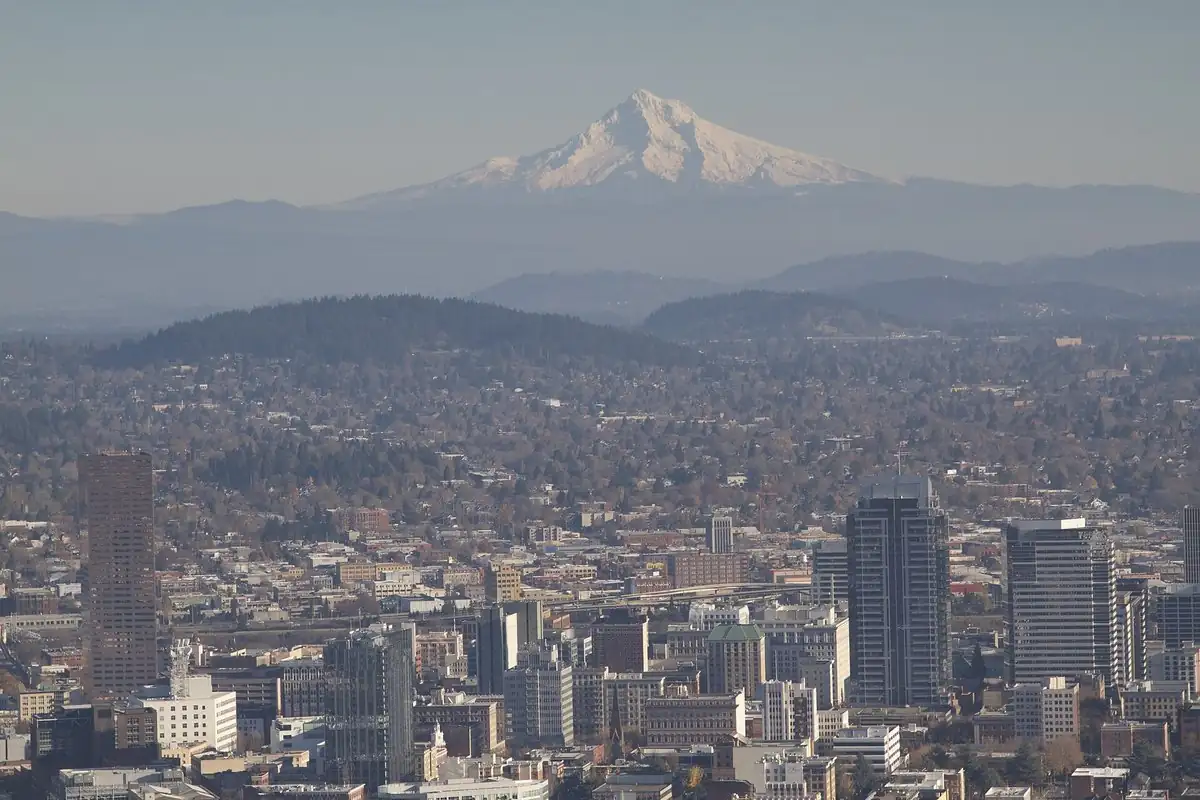

Portland, Oregon, got its name from a coin toss. In 1845 one of its two owners, Francis Pettygrove, “of Maine,” wanted Portland, and the other, Amos Lovejoy, from Massachusetts, wanted Boston, so they tossed a penny and Portland won. That’s how a lot of the most common town names in America got around: people brought them from somewhere else. This page gathers towns that share their name with another place, here or abroad, and tells you where each one got its copy.
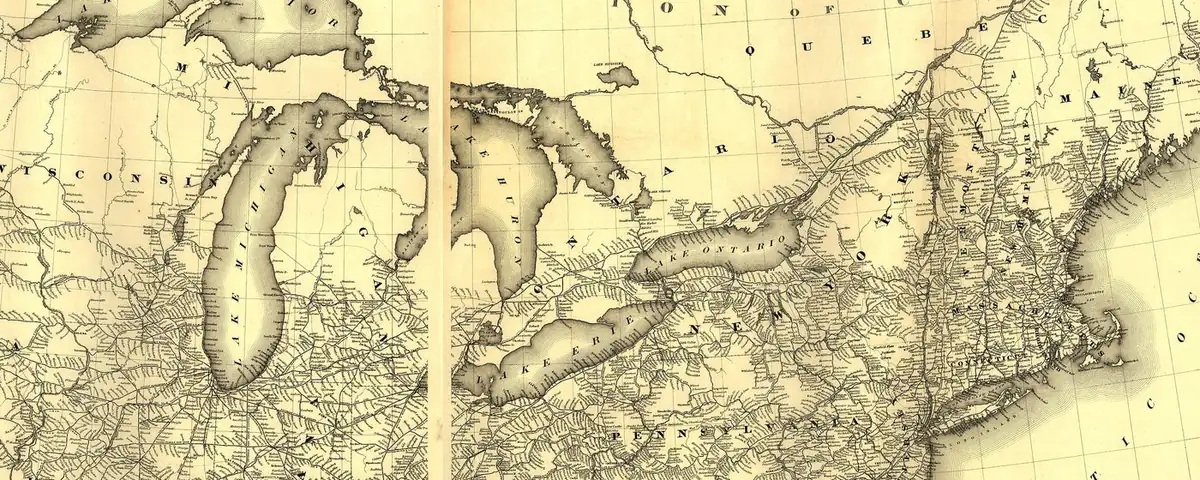
Each card says where that town’s name came from, and which source says so. The oldest ones came from England. A 1658 Connecticut act explained the habit: settlers named their towns after English places, “as Boston, Hartford, Windsor, York,” to keep their memory alive, and nobody had used London yet. Later, names moved west from American towns. Men from Columbus, Ohio, laid out Columbus, Nebraska, and a settler suggested Aurora, Nebraska, as a compliment to his wife, a native of Aurora, Illinois. Others reached farther, to Egypt for Memphis, Spain for Toledo and Sicily for Syracuse. The list runs roughly in order of when each town got its name, from Boston in 1630 to Gettysburg, South Dakota, in 1884.
Not everybody liked it. Col. Jacob Davis picked a French name for Montpelier, Vermont, because he saw confusion coming from “so many places of the same name.” And Willard J. Daniels, one of the men credited with suggesting Toledo in 1833, is said to have argued that no place on “the western continent” had it. By 1905, Henry Gannett’s federal list of place names had a Toledo in Illinois “named from the city in Ohio.”
How we picked these. The town shares its name with another well-known place, in the U.S. or abroad, and a historical, official or encyclopedic source says where this town's copy of the name came from. Each story below lists the source that confirms it.
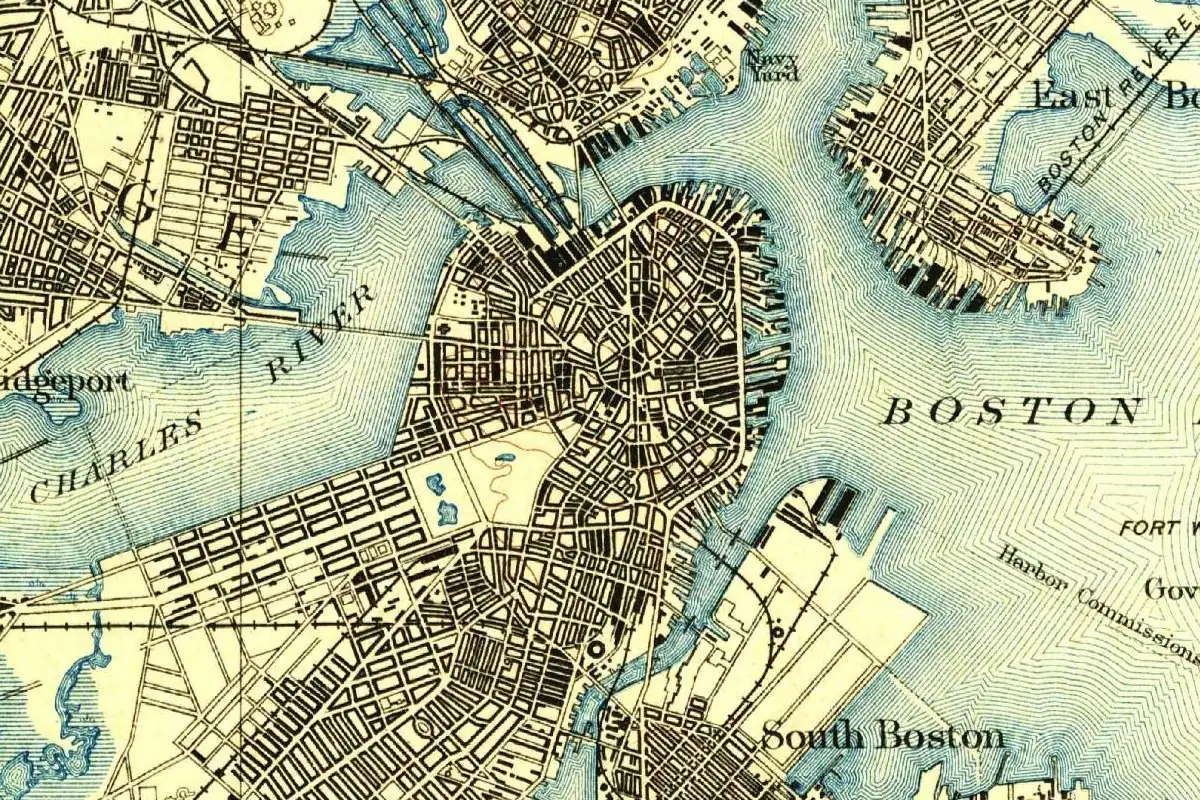 Suffolk County, MA
Before it was Boston, the colonists' town on the Shawmut peninsula was Trimountain. In 1630 it took the name of Boston, a town in Lincolnshire, England.
Disputed"Sixteen places in the country" took their names from this Boston, a 1905 federal book says. Its own name came from Boston, Lincolnshire, England. Source: Henry Gannett, The Origin of Certain Place Names in the United States, 2nd ed. (USGS Bulletin 258, 1905), pp. 52-53
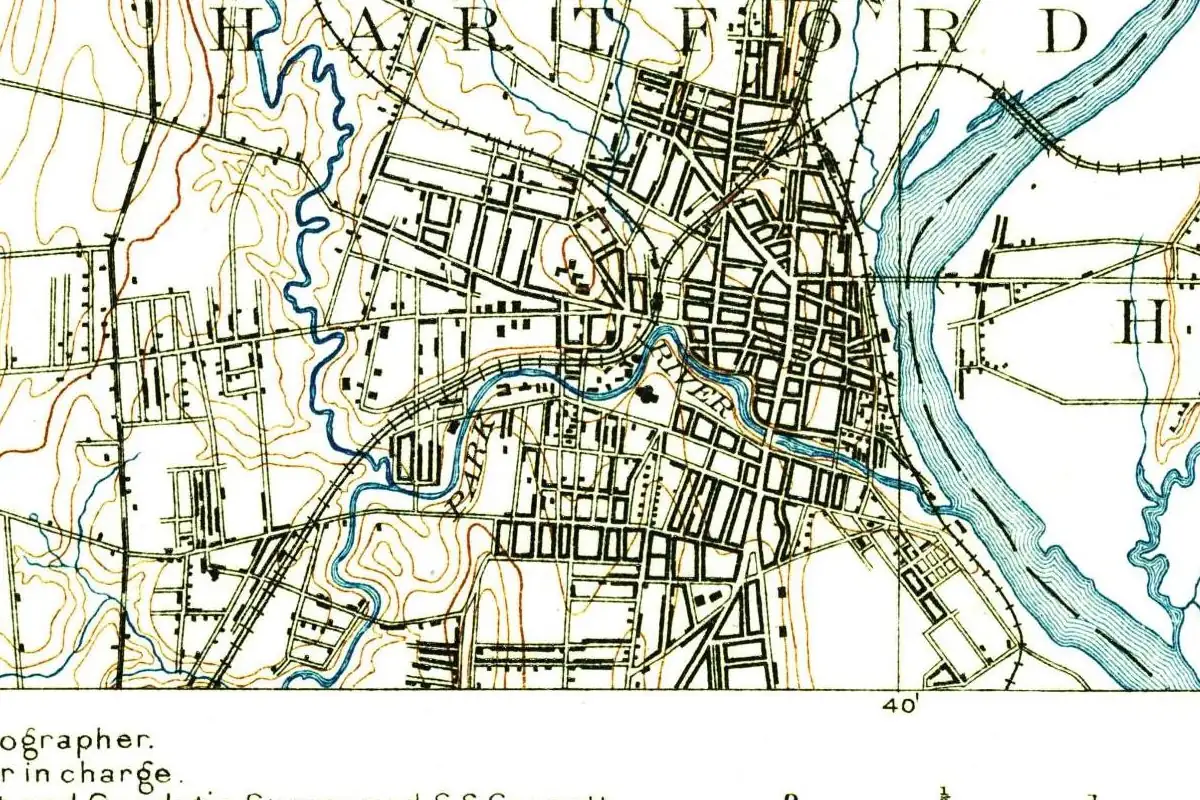 Hartford County, CT
The English town that gave Hartford, Connecticut, its name spells it Hertford, and an 1886 history says people there more often pronounce it Harford.
Documented"Borrowed from the township of Hertford" in England, an 1886 history says, probably because the Rev. Samuel Stone was born there. Source: Sherman W. Adams, "Settlement of the Town," in The Memorial History of Hartford County, vol. 1 (1886), pp. 222-223
 New London County, CT
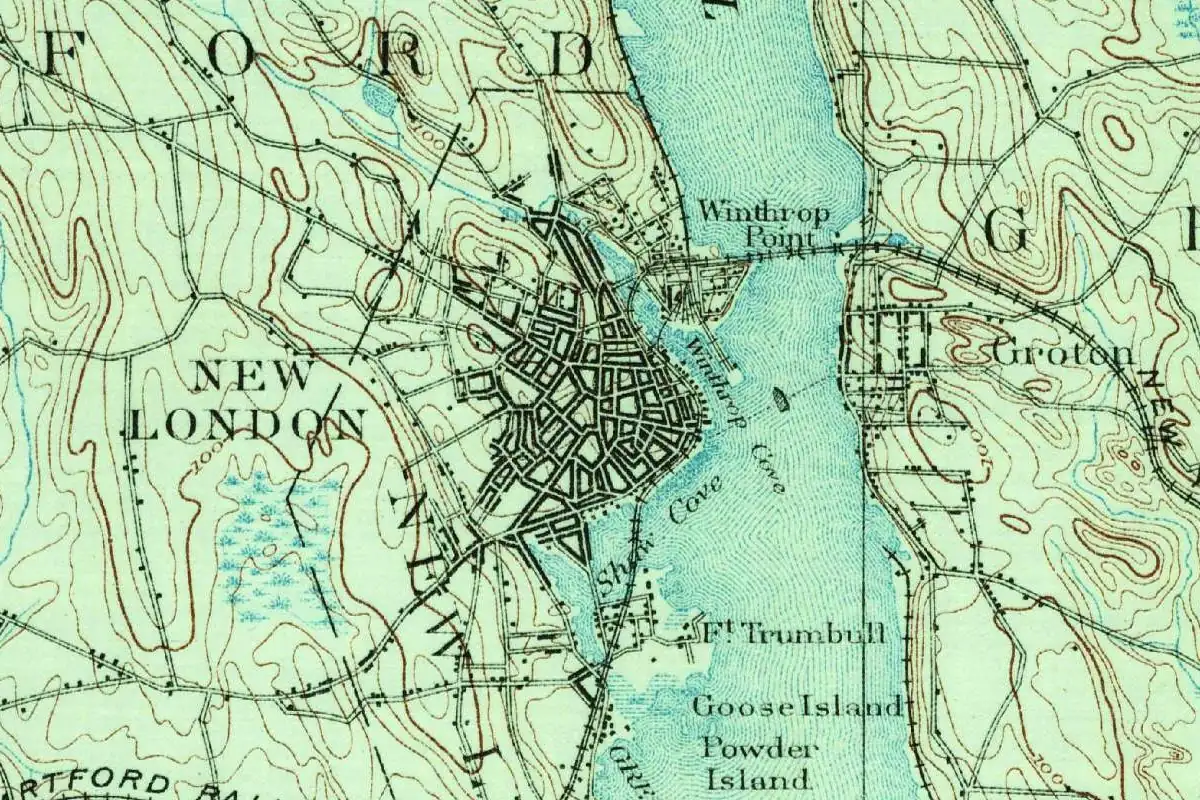
In 1649, Connecticut's General Court suggested the settlers at Pequot harbor call their town Fair Harbour. They wanted London, and in 1658 they got it.
DocumentedA 1658 act said settlers had named towns for English places, "as Boston, Hartford, Windsor, York," but none yet "in memory of the city of London." This one got it. Source: Benjamin Trumbull, A Complete History of Connecticut, vol. 1 (1818), pp. 169-170
 Essex County, NJ
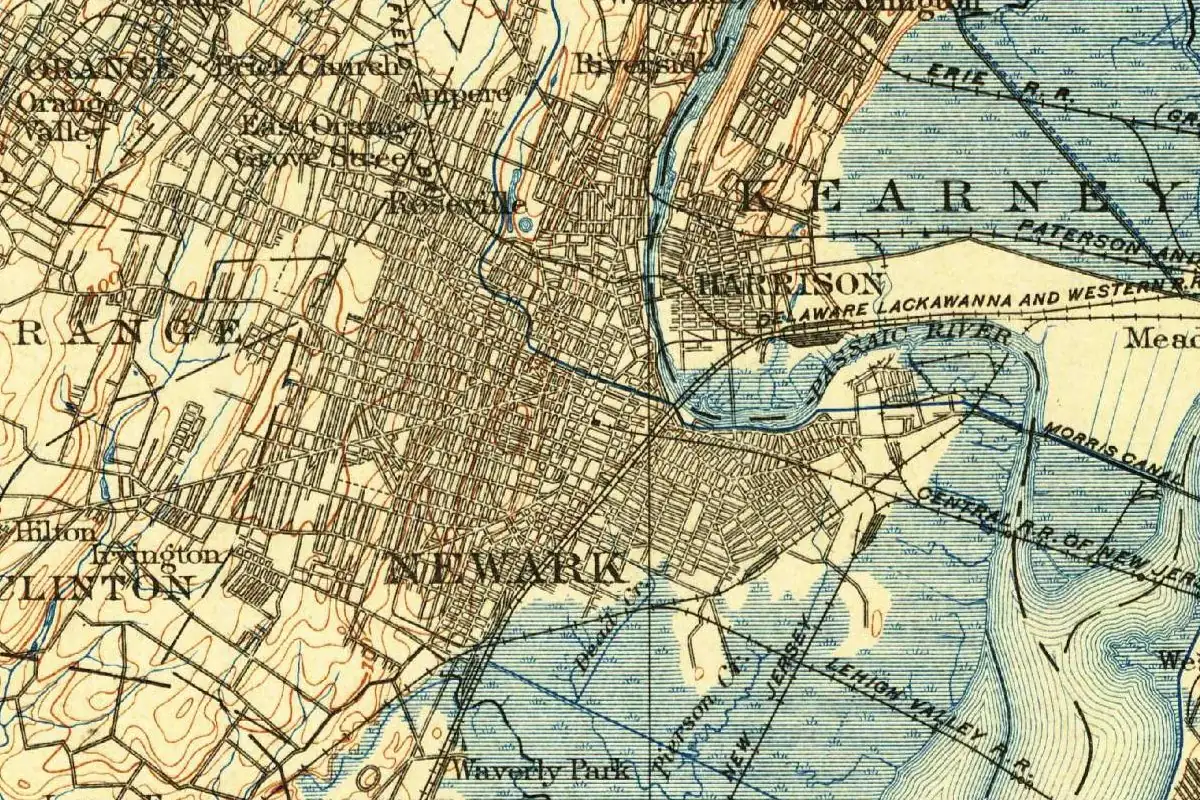
Newark, New Jersey, was nearly Milford: most founders came from Milford, Connecticut, but the name came from England, via their minister.
DocumentedSettlers first called it Milford, since most came from Milford, Connecticut. By June 1667 it was Newark. Its minister, Abraham Pierson, is believed to have been ordained at Newark-on-Trent, England. Source: Frank J. Urquhart, A History of the City of Newark, New Jersey, vol. 1 (1913)
 Craven County, NC
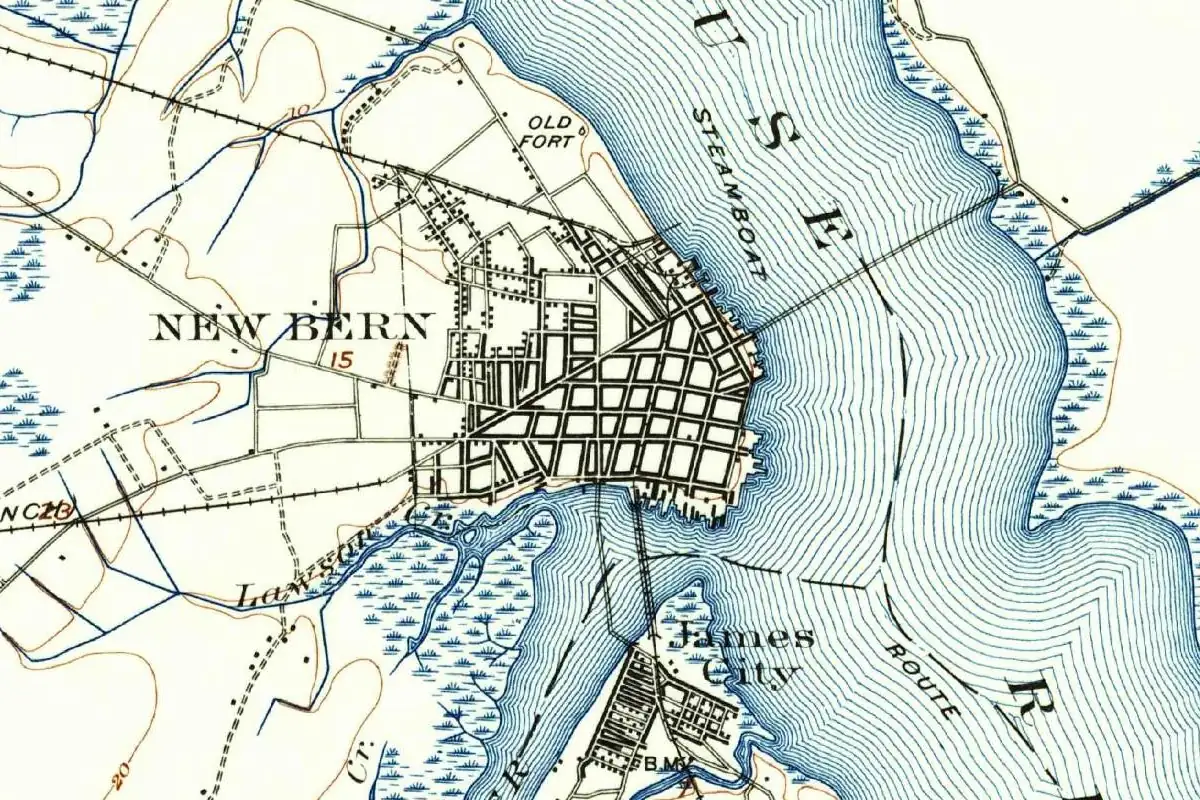
New Bern, North Carolina, wasn't simply a new Bern: its Swiss founder wrote that he joined the river's name, which he spelled Neuws, to the name of Bern.
DocumentedIts Swiss founder wrote that "we joined to the name of Neuws," his spelling of the Neuse River, "that of Berne, and so the city was christened Newbern." Source: Vincent H. Todd, ed., Christoph von Graffenried's Account of the Founding of New Bern (1920)
 Independent city, VA
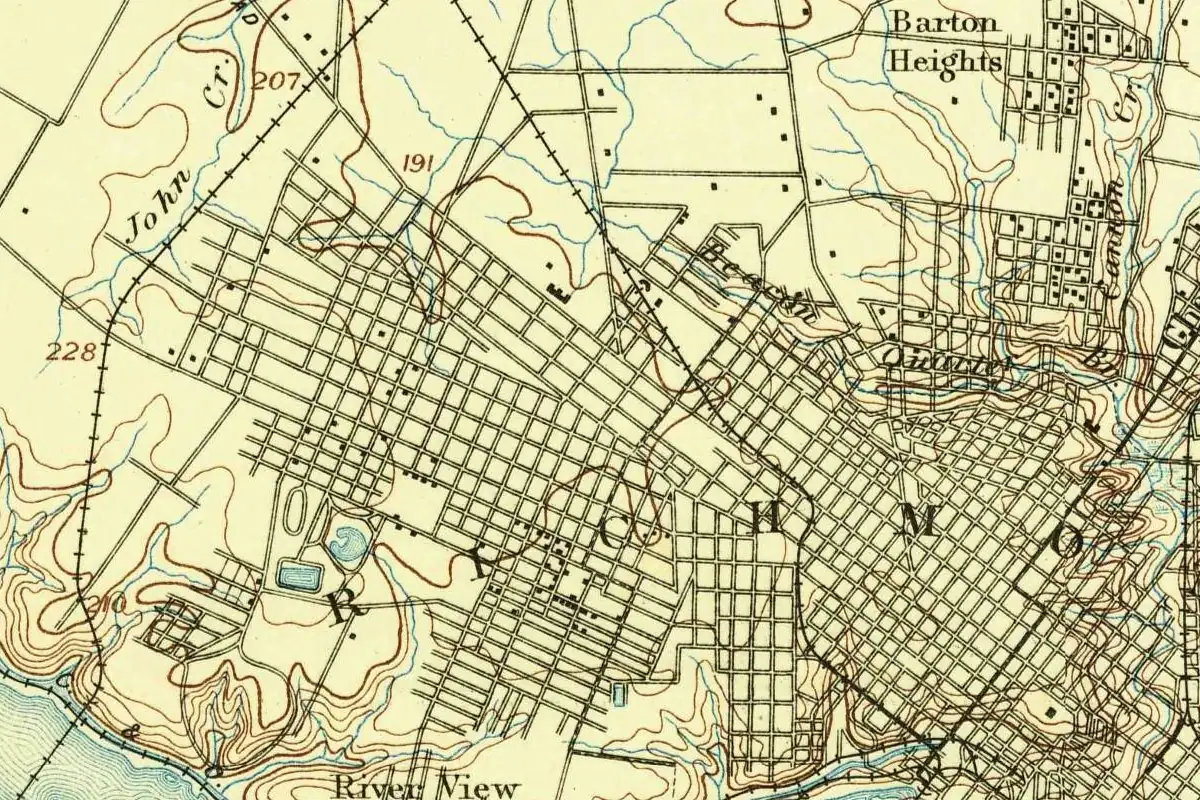
In September 1733, William Byrd wrote that he and his friends had laid the foundation of two cities in a single day, and one was to be called Richmond.
DocumentedWilliam Byrd planned it in 1733. The editor of his writings said in 1901 that the name came "from a fancied resemblance" to the site of Richmond near London. Source: John Spencer Bassett, ed., The Writings of "Colonel William Byrd, of Westover in Virginia, Esqr." (1901), p. 292
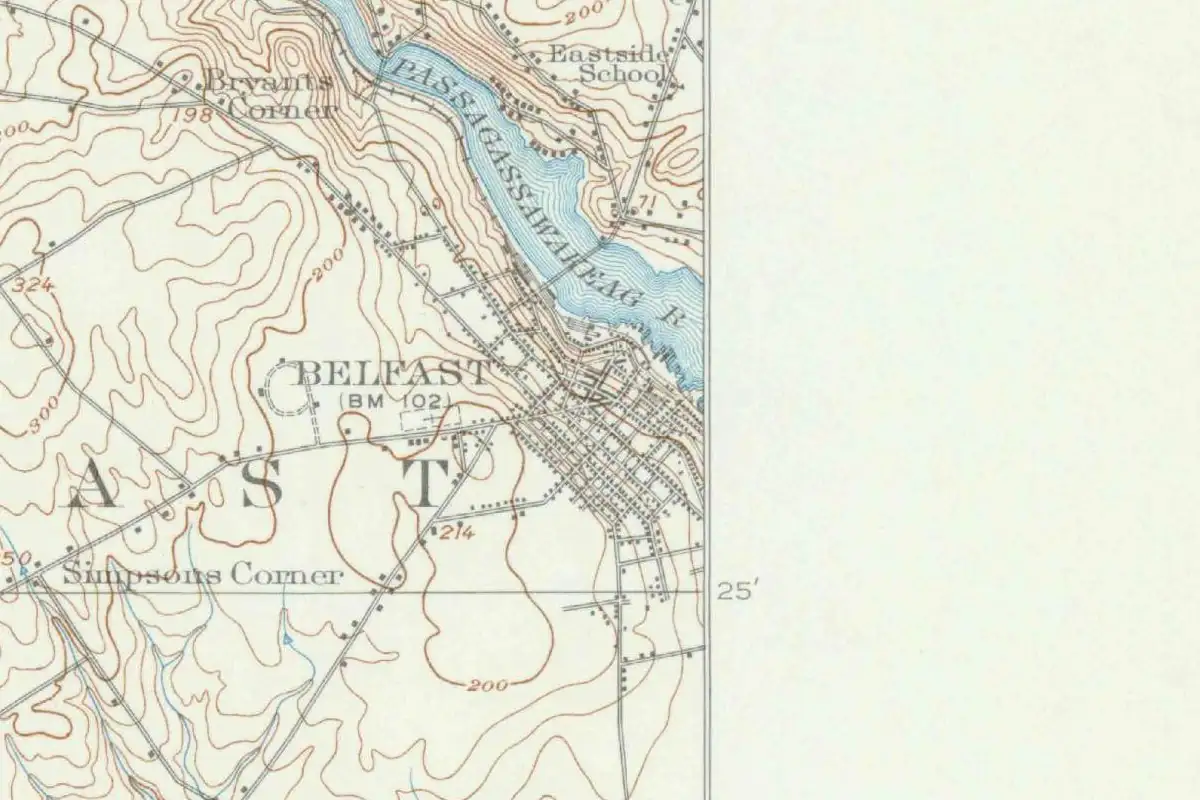 Waldo County, ME
Belfast, Maine, is named for Belfast, Ireland, where settler James Miller was born. An old local tradition says a penny toss beat out Londonderry.
Documented"It was suggested by James Miller," who came from Belfast, Ireland. The town's 1877 history counted six other Belfasts in the U.S. in 1874, from Arkansas to Virginia. Source: Joseph Williamson, History of the City of Belfast in the State of Maine (1877), p. 126
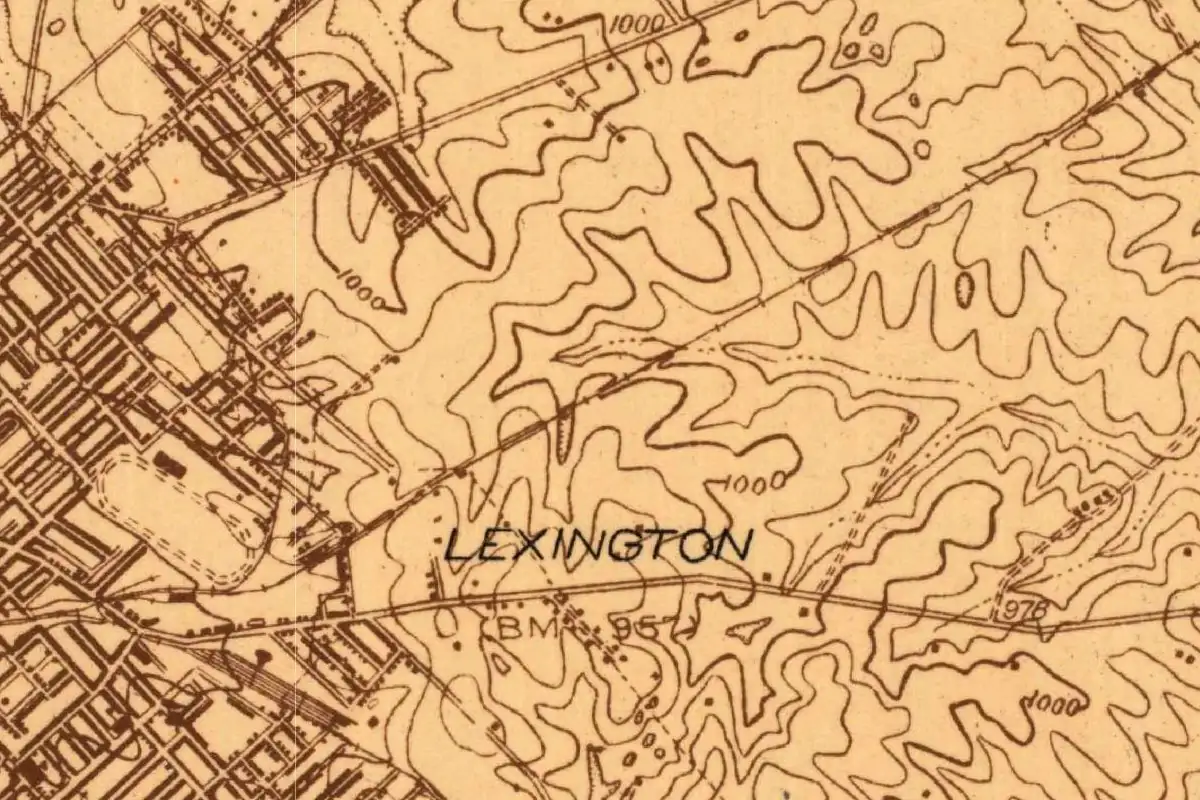 Fayette County, KY
In June 1775, hunters camped in Kentucky got word of the first battle of the Revolution and named their campsite Lexington, after the Massachusetts town.
DocumentedHunters camped here heard that the Revolution's first battle had been fought near Boston and, "in commemoration of the event," called their camp Lexington. Source: Lewis Collins and Richard H. Collins, History of Kentucky, vol. 2 (1874), pp. 178-179
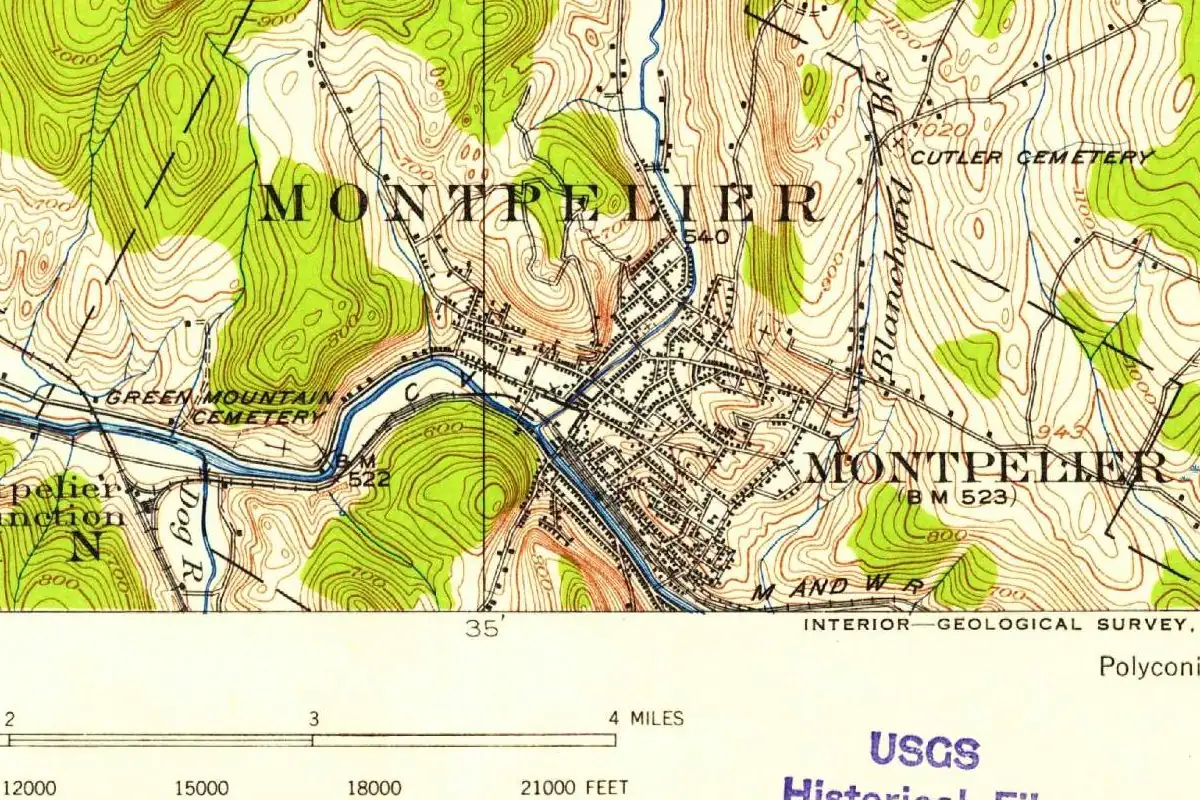 Washington County, VT
Col. Jacob Davis named Montpelier, Vermont, after a city in France because he was tired of new towns copying old ones and wanted a name nobody else had.
DocumentedCol. Jacob Davis disliked towns copying old ones and saw confusion coming from "so many places of the same name." So he picked a city in France. Source: D. P. Thompson, History of the Town of Montpelier (1860), pp. 9-10
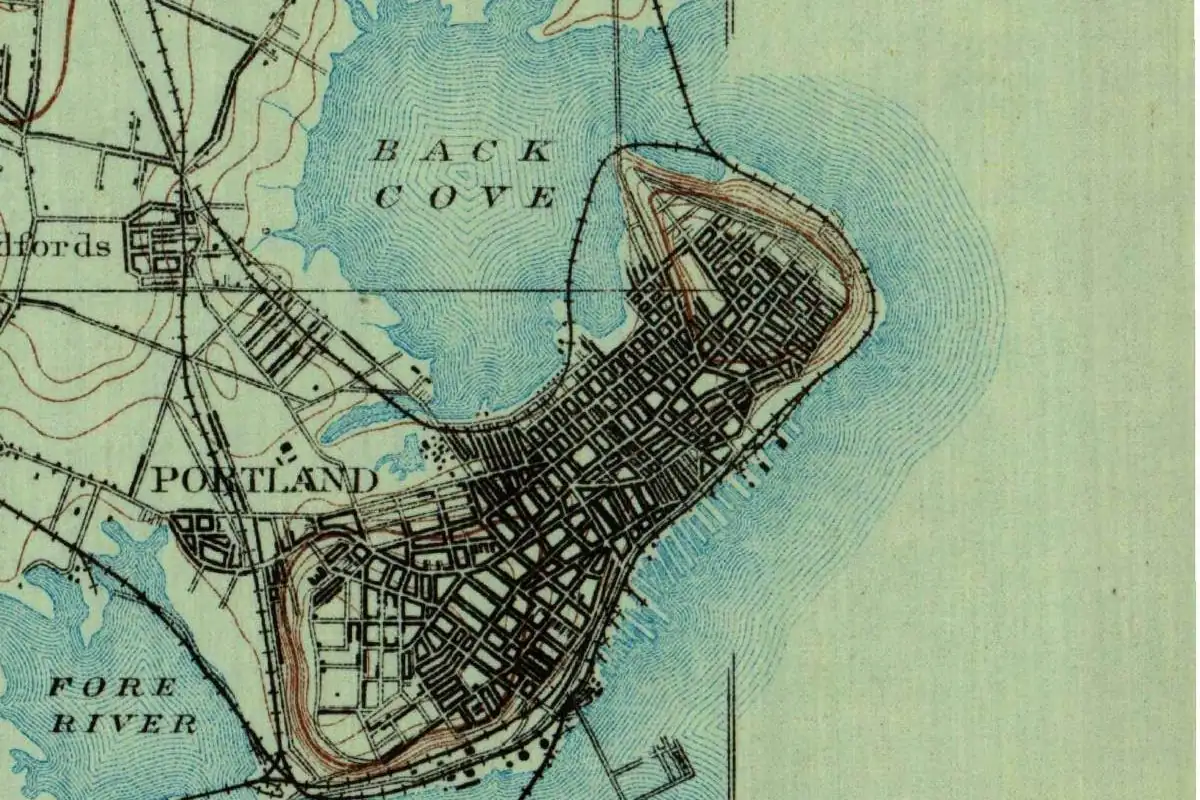 Cumberland County, ME
When Portland, Maine, split off from the town of Falmouth in 1786, it could just as easily have been called Casco or Falmouthport.
DocumentedIt beat Casco and Falmouthport in 1786. Portland was already the old English name of an island, a channel and a headland at the harbor mouth, "Portland head." Source: William Willis, The History of Portland, from 1632 to 1864, 2nd ed. (1865), pp. 580-581
 Hillsborough County, NH
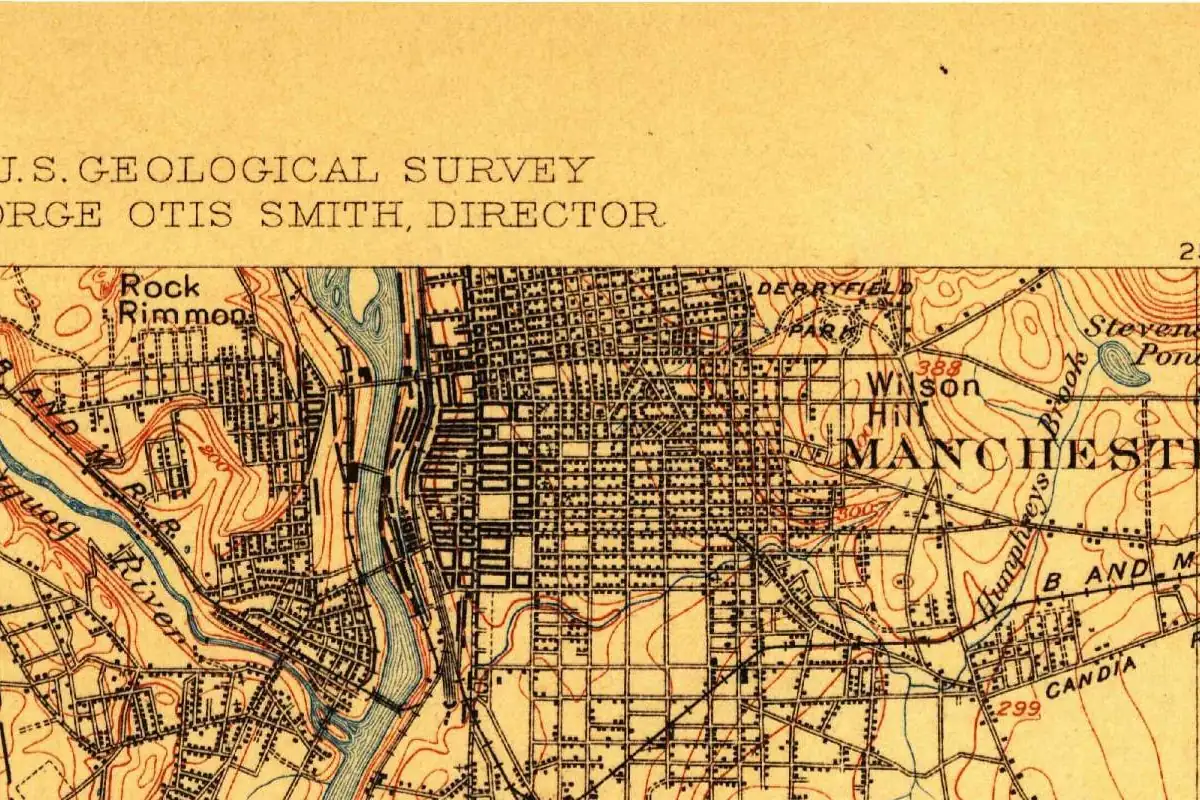
Manchester, New Hampshire, owes its name to a prediction: Judge Samuel Blodget liked to say Derryfield was "destined to become the Manchester of America."
DocumentedJudge Samuel Blodget liked to say the town was "destined to become the Manchester of America." In 1810 Derryfield took the name as a compliment to him. Source: C. E. Potter, The History of Manchester, Formerly Derryfield, in New-Hampshire (1856), p. 543
 Franklin County, OH
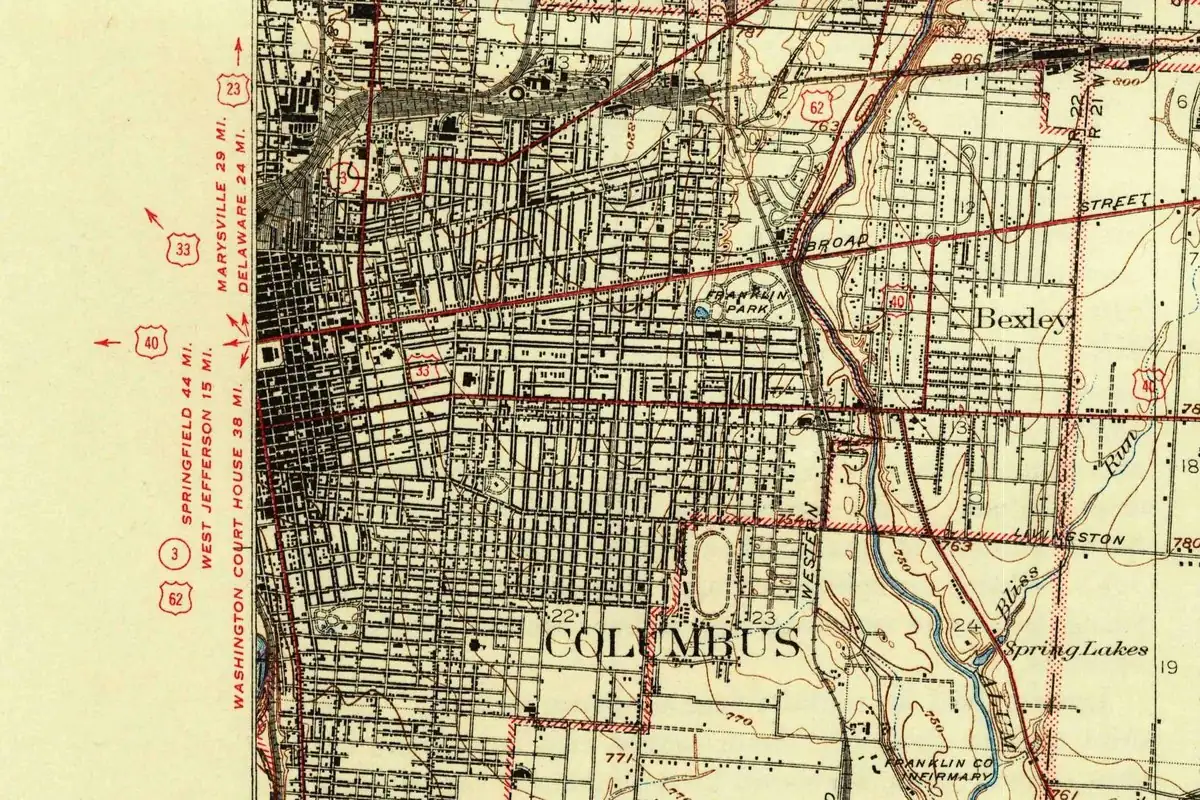
In 1812, Ohio lawmakers turned down the name Ohio City for their new capital and named it Columbus instead, after Christopher Columbus.
DocumentedNamed for Christopher Columbus. In 1905 a federal place-name book found the name on a North Carolina county "and 26 places in the country." Source: Henry Gannett, The Origin of Certain Place Names in the United States, 2nd ed. (USGS Bulletin 258, 1905)
 Shelby County, TN
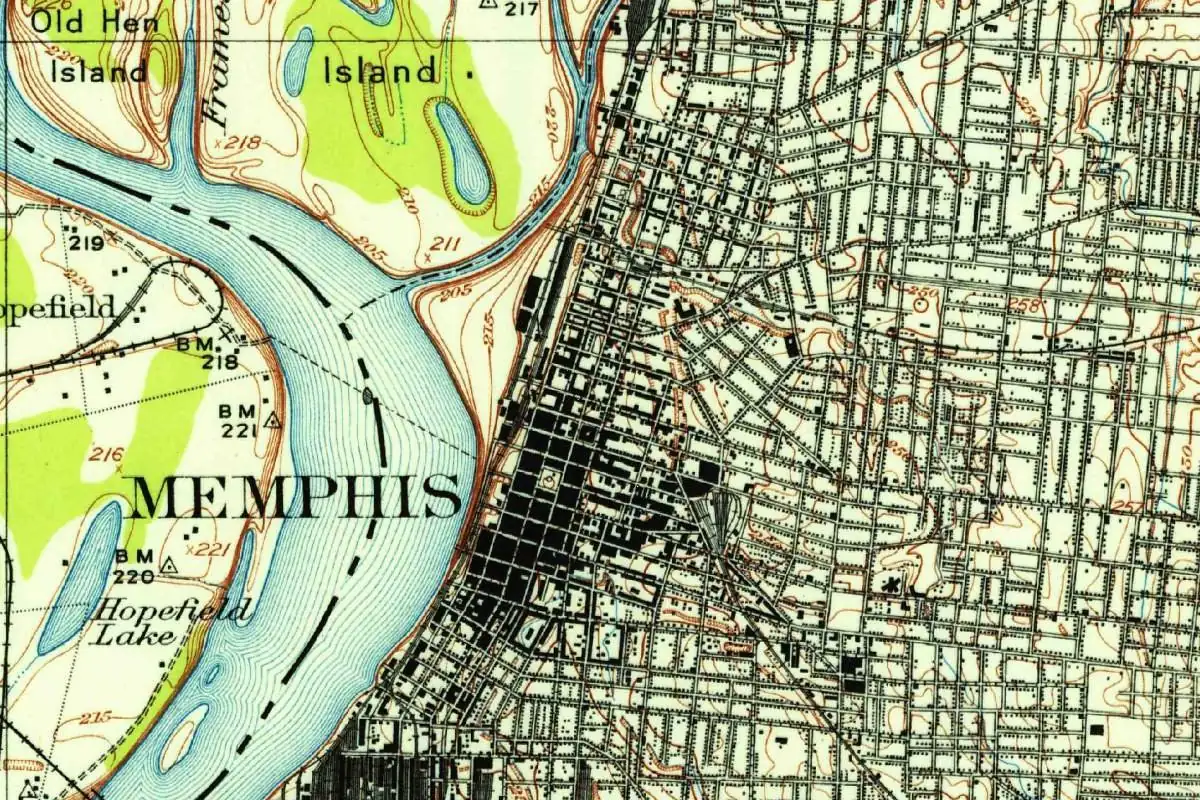
Memphis, Tennessee, borrowed its name from the ancient city on the Nile, and an 1820 notice about the new town called the Mississippi "the American Nile."
DisputedBorrowed from ancient Memphis, "because situated upon the river in a manner very similar to the city in Egypt," says a 1905 federal place-name book. Source: Henry Gannett, The Origin of Certain Place Names in the United States, 2nd ed. (USGS Bulletin 258, 1905), p. 205
 Dallas County, AL
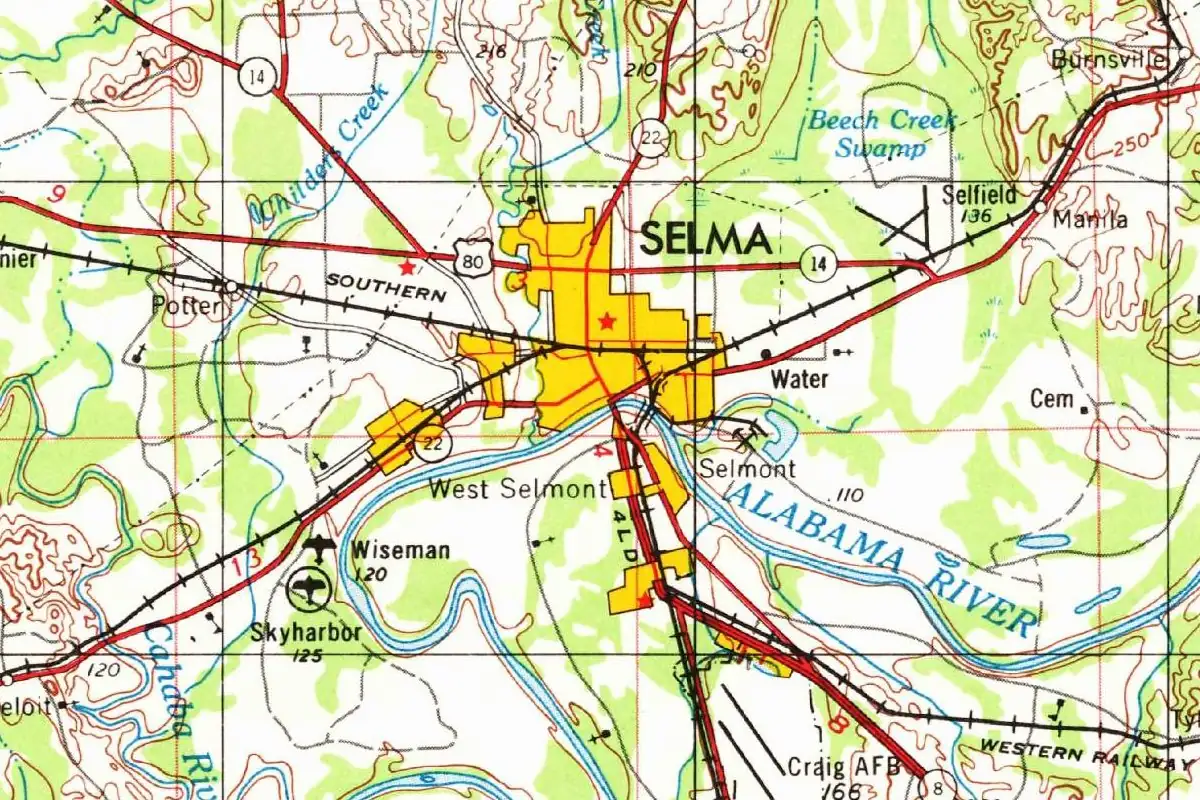
William Rufus King, who later became vice president of the United States, gave Selma, Alabama, its name, and he took it from a book of poetry.
DocumentedA 1905 federal book says it was "named from the 'Songs of Selma,' in Ossian," and that Selma, California, was "named from the city in Alabama." Source: Henry Gannett, The Origin of Certain Place Names in the United States, 2nd ed. (USGS Bulletin 258, 1905)
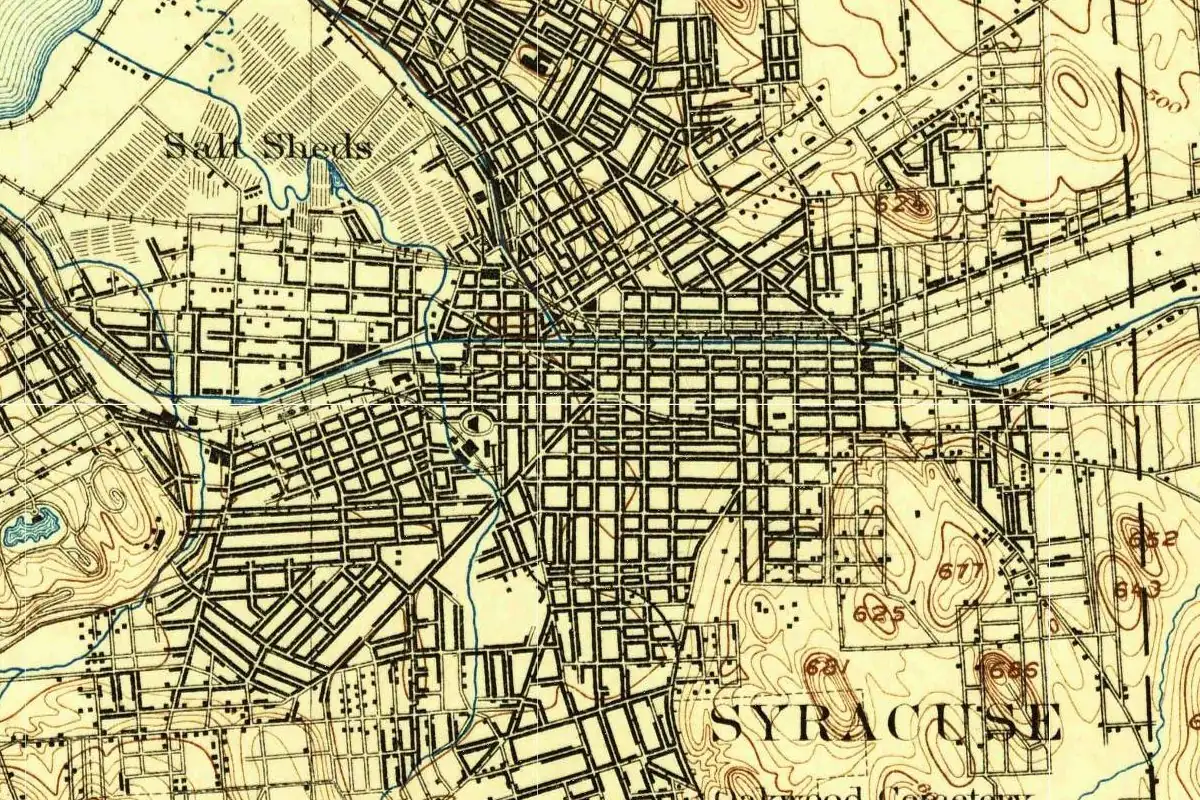 Onondaga County, NY
Syracuse, New York, went through five names in fourteen years before a young lawyer borrowed one from an ancient city in Sicily.
DocumentedCorinth had to go, since another New York post office had it. John Wilkinson took Syracuse from a poem on the ancient city, noticing both places had a "Salina" nearby. Source: Dwight H. Bruce, ed., Memorial History of Syracuse, N.Y. (1891), pp. 102-106, 559
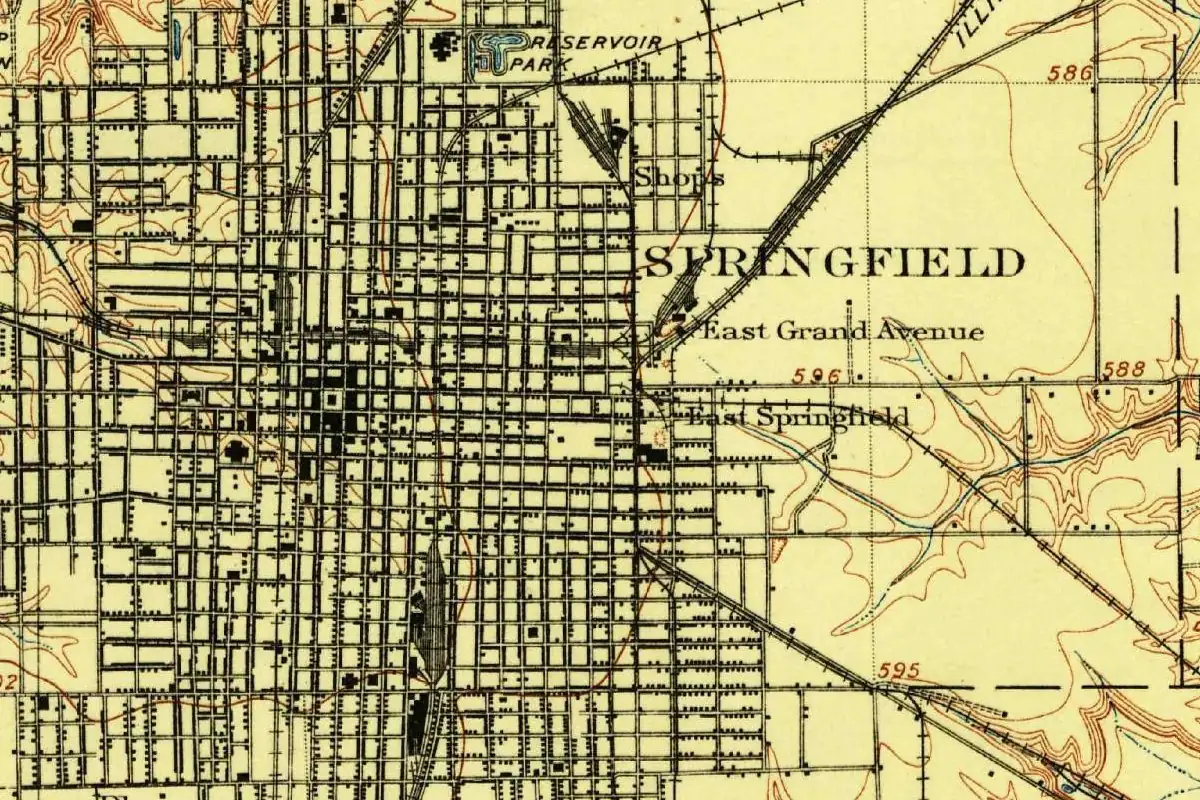 Sangamon County, IL
Springfield, Illinois, got its name from a county order in 1821, but for a while part of the town was platted as Calhoun, and many refused to use it.
DocumentedSpring Creek "doubtless suggested" the name, says a county history site drawing on historian Paul Angle. A commissioner's years in a Kentucky county with its own Springfield may have played a part. Source: Sangamon County Historical Society, "Springfield, origin of"
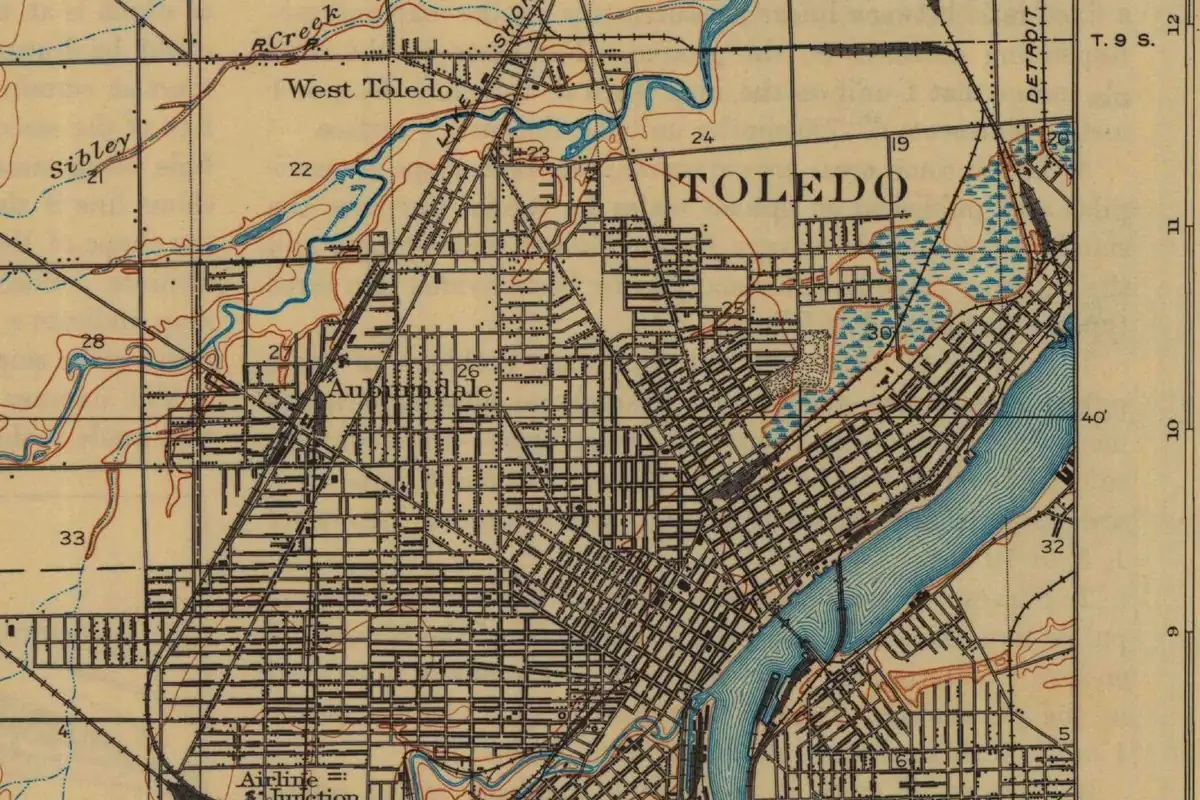 Lucas County, OH
Toledo, Ohio, is named for the old city in Spain, but at least four people have been credited with suggesting it, and the books don't agree on who.
DisputedNamed for the ancient city in Spain. Willard J. Daniels, one man credited with the idea, is said to have argued that "there was no place of that name on the western continent." Source: John M. Killits, ed., Toledo and Lucas County, Ohio, 1623-1923, vol. 1 (1923), pp. 273-274
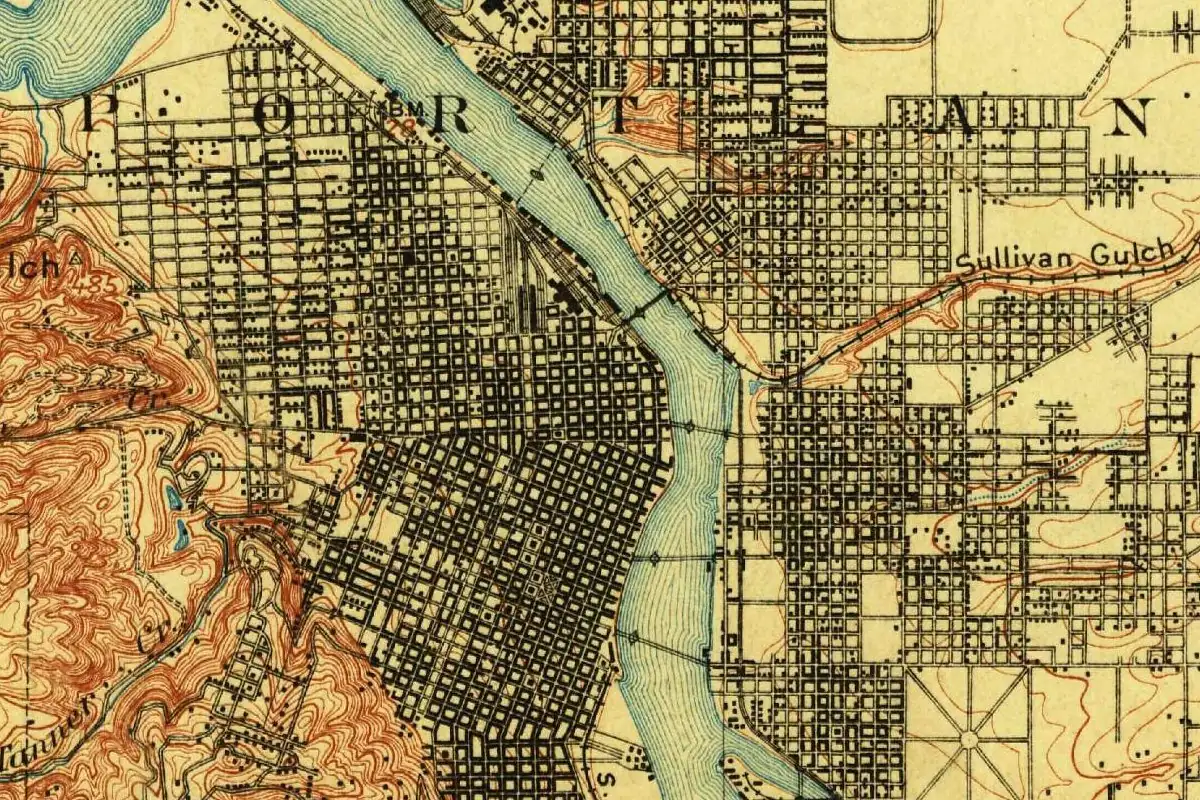 Multnomah County, OR
Portland, Oregon, came close to being called Boston: in 1845 its two owners couldn't agree on a name, so they tossed a copper cent, and Portland won.
DocumentedPettygrove, "of Maine," wanted Portland. Lovejoy, from Massachusetts, wanted Boston. They settled it "by tossing a penny," best of three, and Portland won. Source: H. W. Scott, ed., History of Portland, Oregon (1890), pp. 80-86
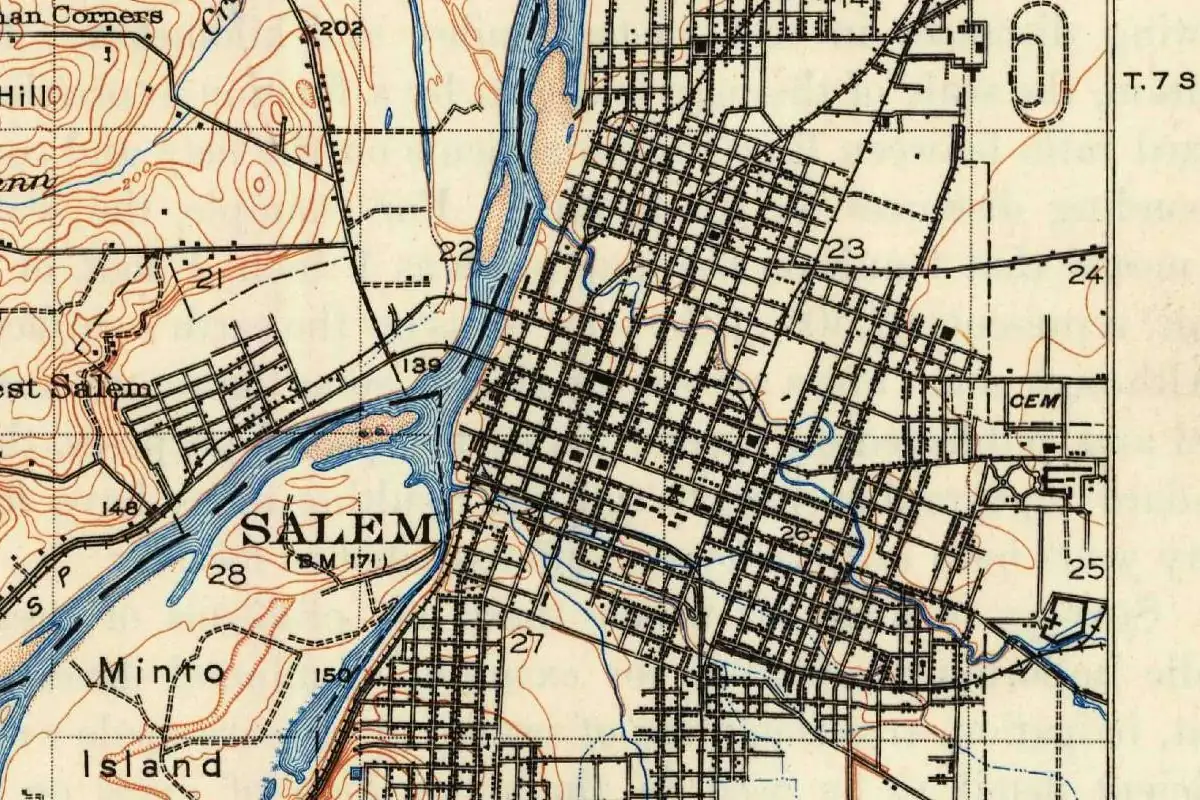 Marion County, OR
Salem, Oregon, sits on a spot the Native people called Chemeketa, and historians still argue over who gave the future state capital its new name.
DisputedAn 1888 history says David Leslie named it "after Salem, Mass., in preference to Chemeketa, the native name." Source: Hubert Howe Bancroft, History of Oregon, vol. 2 (1888), p. 716
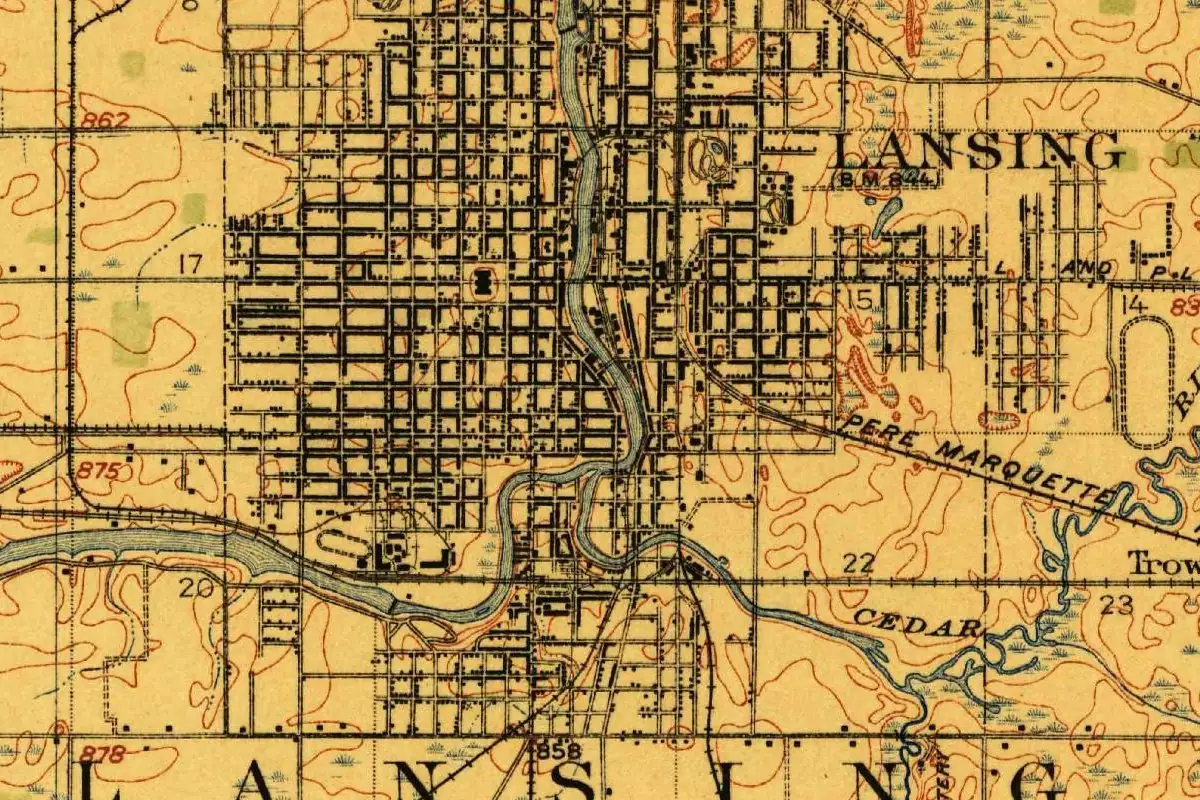 Ingham County, MI
For its first months as the capital, Lansing, Michigan, was officially the Town of Michigan. Its real name came from New York, by way of a paper town.
DocumentedJoseph North wanted his township named "after our old town of Lansing, in New York." The new state capital, first called the Town of Michigan, later took the township's name. Source: Samuel W. Durant, History of Ingham and Eaton Counties, Michigan (1880), pp. 129-130, 192
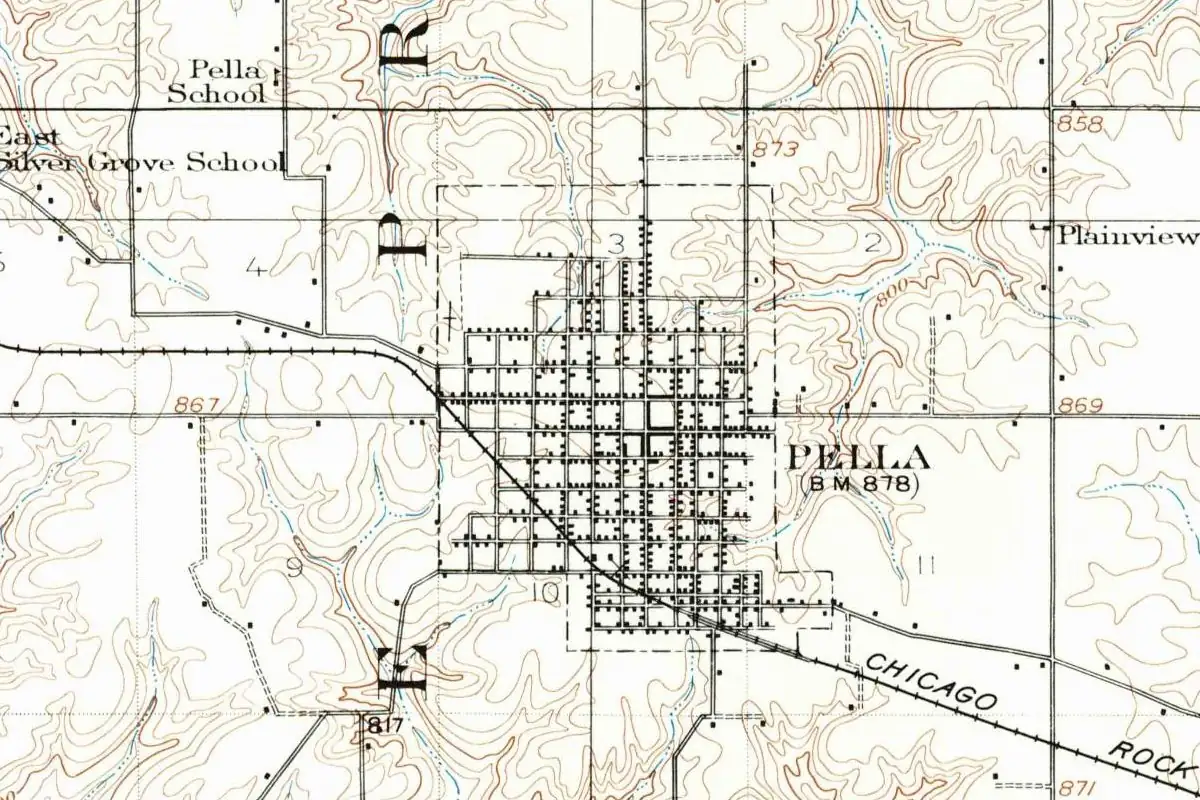 Marion County, IA
Pella, Iowa, is named for an ancient city of refuge. A Dutch minister who'd broken with his country's national church picked it in 1848 for his colony.
DocumentedNamed for "a small town in Palestine" whose name meant "a city of refuge." Its founder picked it because the town "offered an asylum" to people from his homeland. Source: John W. Wright and W. A. Young, eds., History of Marion County, Iowa, and Its People, vol. 1 (1915), p. 148
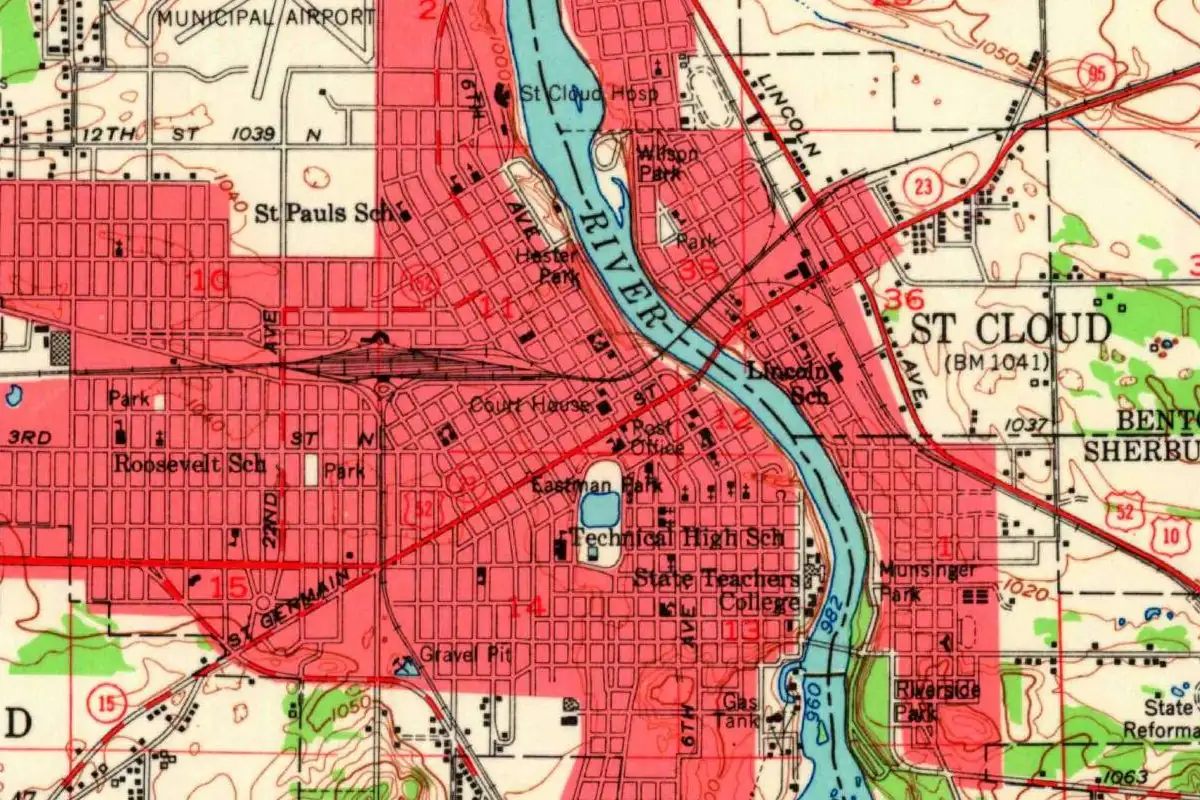 Stearns County, MN
St. Cloud, Minnesota, got its name because the man who platted it had been reading a life of Napoleon.
DocumentedJohn L. Wilson read in a life of Napoleon that the Empress Josephine spent much of her time at the palace at St. Cloud, near Paris. It "appealed so strongly to his fancy that he adopted it." Source: William Bell Mitchell, History of Stearns County, Minnesota, vol. 2 (1915), pp. 1436-1437
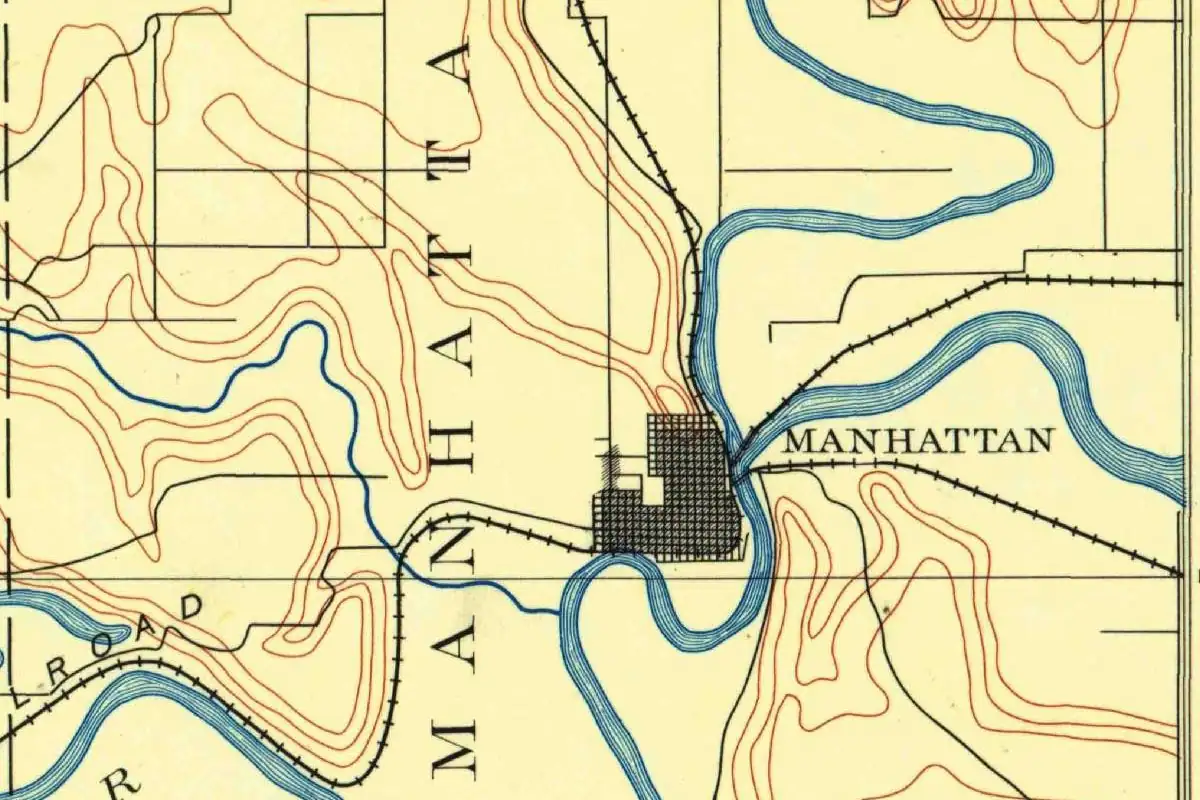 Riley County, KS
Manhattan, Kansas, got its name from Ohio settlers who hoped their town might bear "some comparison to New York." Before they arrived, it was Boston.
DocumentedAn Ohio colony picked Manhattan before it left Cincinnati, hoping for "a town that might bear some comparison to New York." The town they joined was already called Boston. Source: A. T. Andreas, History of the State of Kansas (1883), Riley County, p. 1306
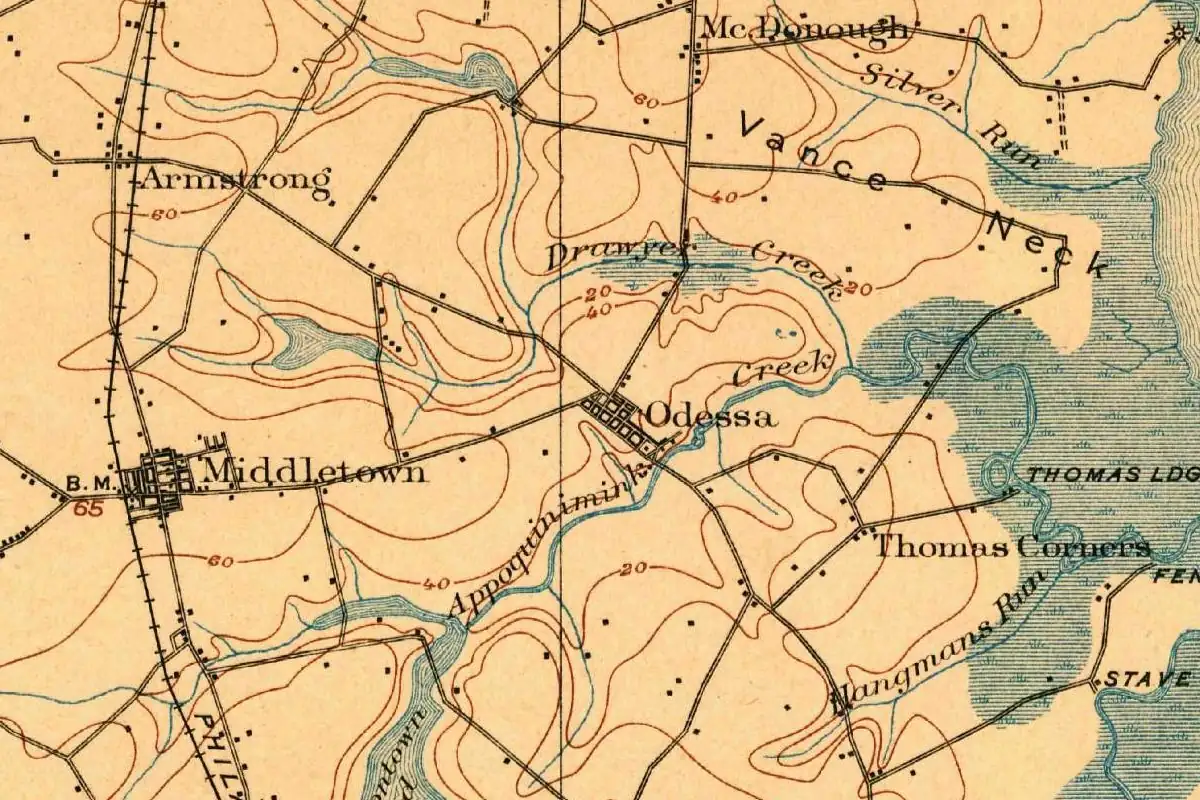 New Castle County, DE
Odessa, Delaware, was Cantwell's Bridge until 1855, when the busy grain-shipping village renamed itself after Odessa, the big grain port on the Black Sea.
DocumentedCantwell's Bridge, a grain-shipping village, changed its name in 1855, "after Odessa, Russia, a large grain port on the Black Sea." Source: J. Thomas Scharf, History of Delaware, 1609-1888, vol. 2 (1888), pp. 1005-1006
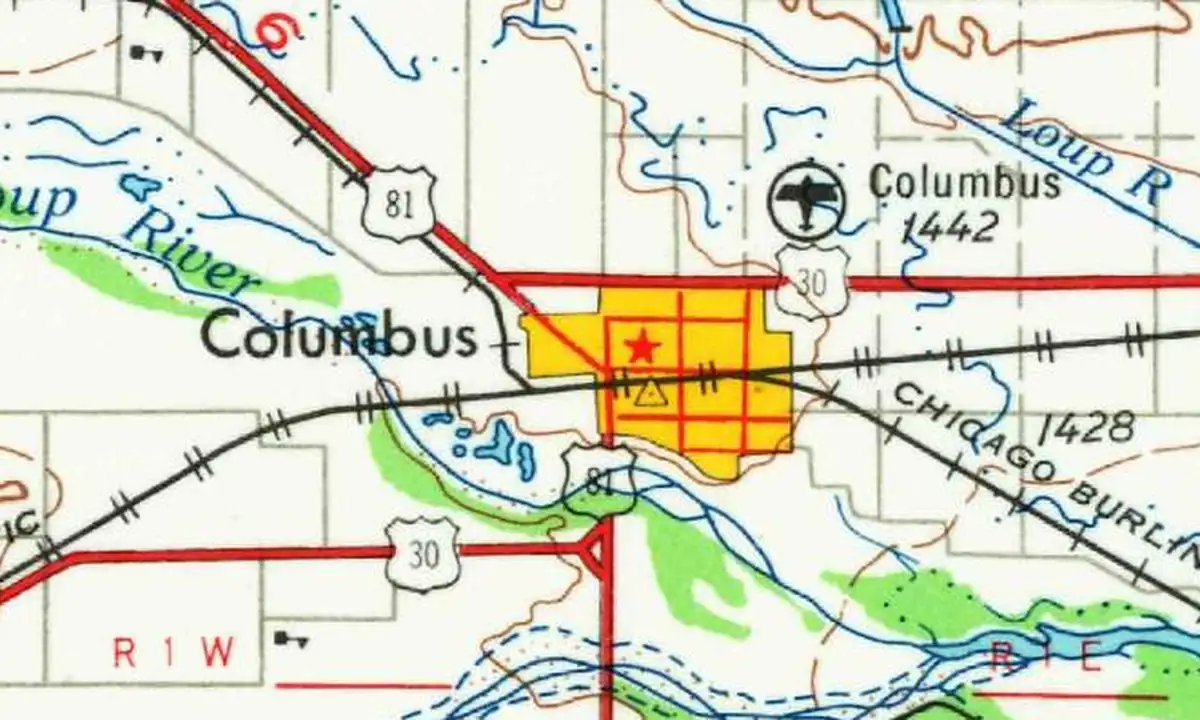 Platte County, NE
Columbus, Nebraska, is named for Columbus, Ohio. The men who laid out the town in 1856 had lived there, and they brought the name west with them.
DocumentedLaid out in the summer of 1856 by the Columbus Company, "a body of men who had lived in Columbus, Ohio," a 1925 study says. Source: Lilian Linder Fitzpatrick, Nebraska Place-Names (University of Nebraska, 1925)
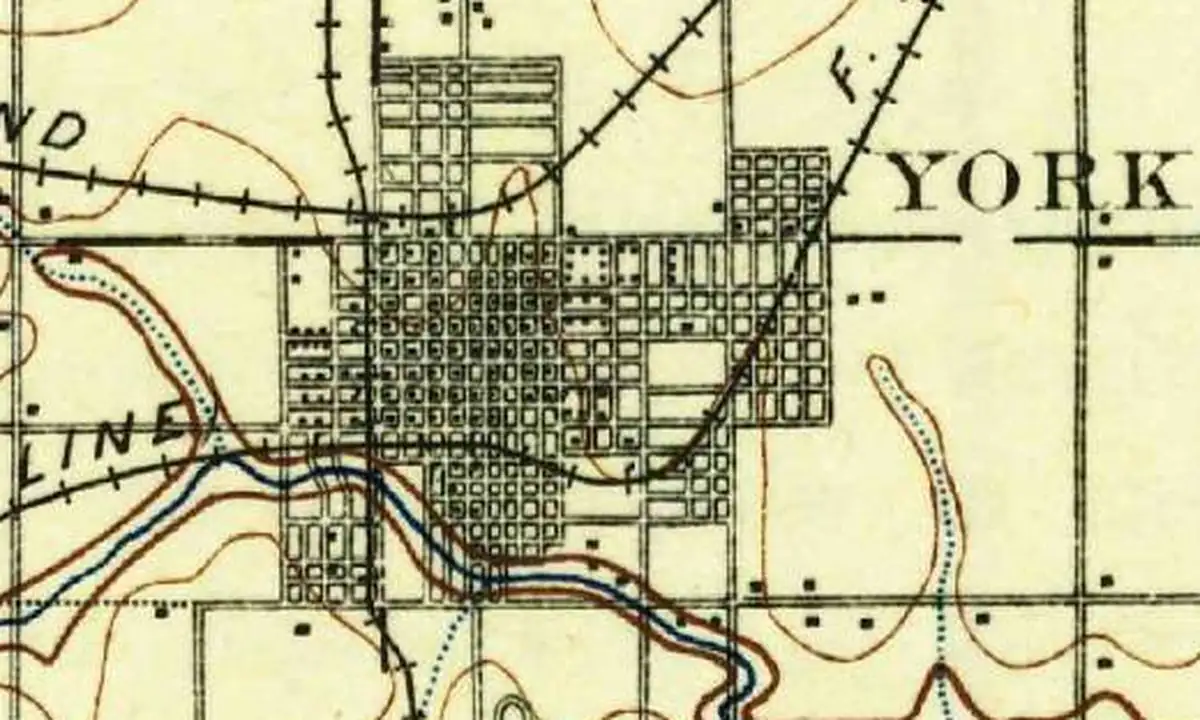 York County, NE
York, Nebraska, took its name from York County. Which York the county was named for is a puzzle: England and Pennsylvania both have backers.
DisputedPresumed to come from York County, a 1925 study says. For the county it gives two stories: York, England, or York County, Pennsylvania, where early settlers came from. Source: Lilian Linder Fitzpatrick, Nebraska Place-Names (University of Nebraska, 1925)
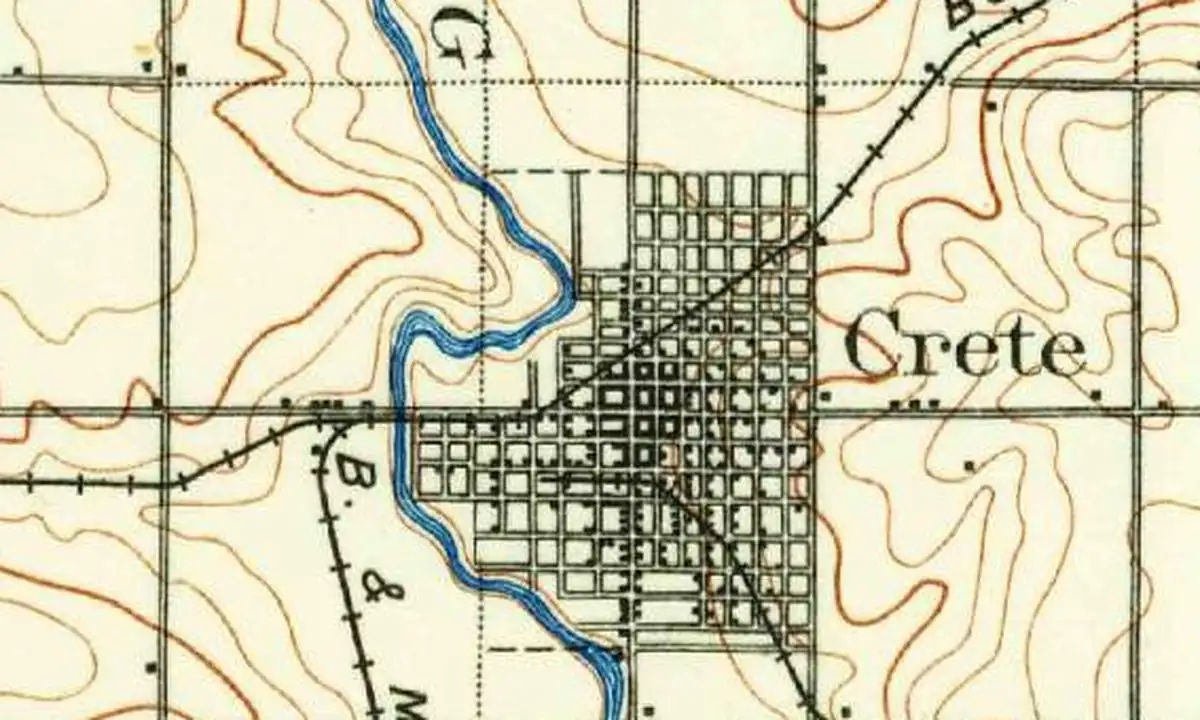 Saline County, NE
Crete, Nebraska, is named for Crete, Illinois. The Bickles brought the name for their post office, and it stuck when two rival town sites merged in 1871.
DocumentedJ. C. Bickle called his post office Crete "because he and his wife had come from Crete, Illinois." When two town sites merged, Mrs. Bickle chose the name again. Source: Lilian Linder Fitzpatrick, Nebraska Place-Names (University of Nebraska, 1925)
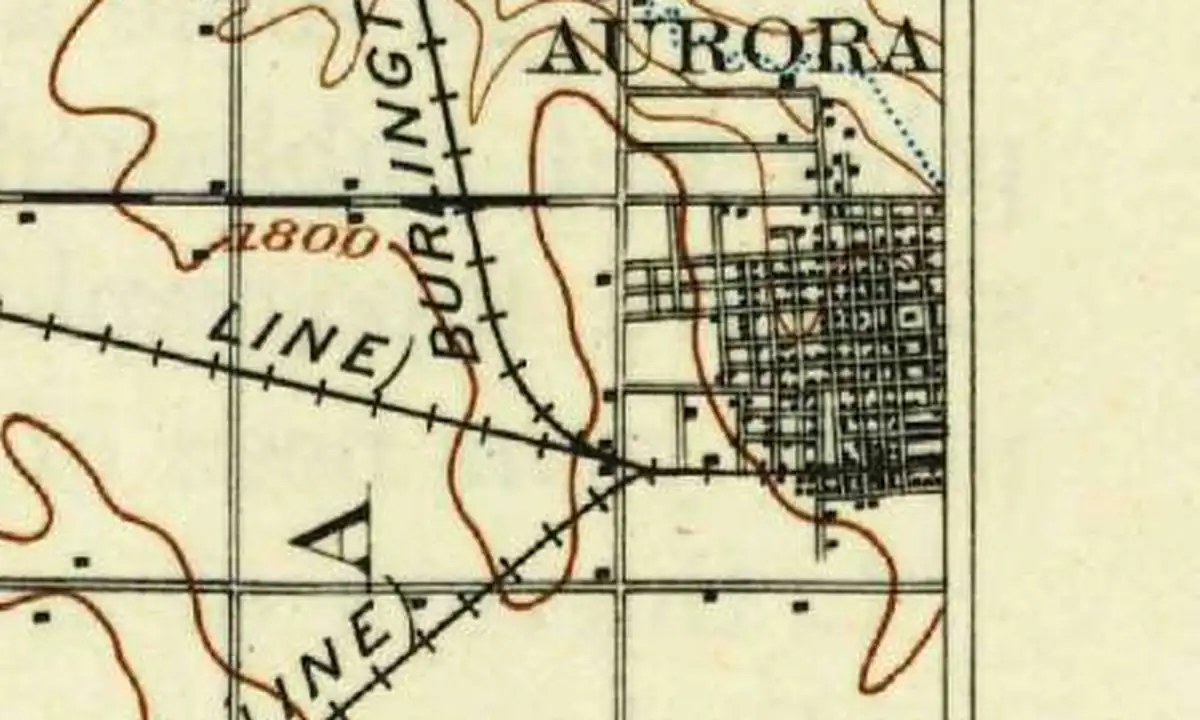 Hamilton County, NE
Aurora, Nebraska, is named for Aurora, Illinois. Settler David Stone suggested it to honor his wife, who came from there, and the town company voted it in.
DocumentedSuggested by settler David Stone "as a compliment to his wife who was a native of Aurora, Illinois," a 1925 study says. Source: Lilian Linder Fitzpatrick, Nebraska Place-Names (University of Nebraska, 1925)
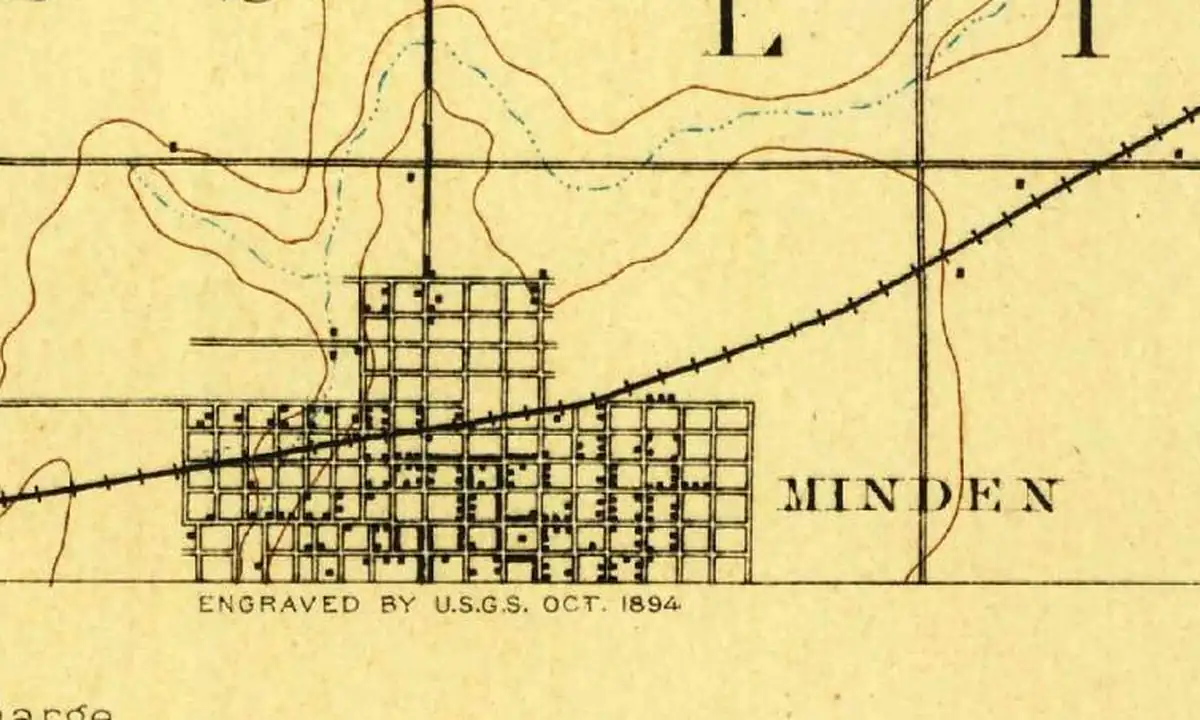 Kearney County, NE
Minden, Nebraska, is named for Minden, Germany. A 1925 study says the first postmaster, Fred Bredemier, named it after his old hometown.
Documented"Mr. Fred Bredemier, the first postmaster for Minden, named this town after his old home, Minden, Germany," a 1925 study says. Source: Lilian Linder Fitzpatrick, Nebraska Place-Names (University of Nebraska, 1925)
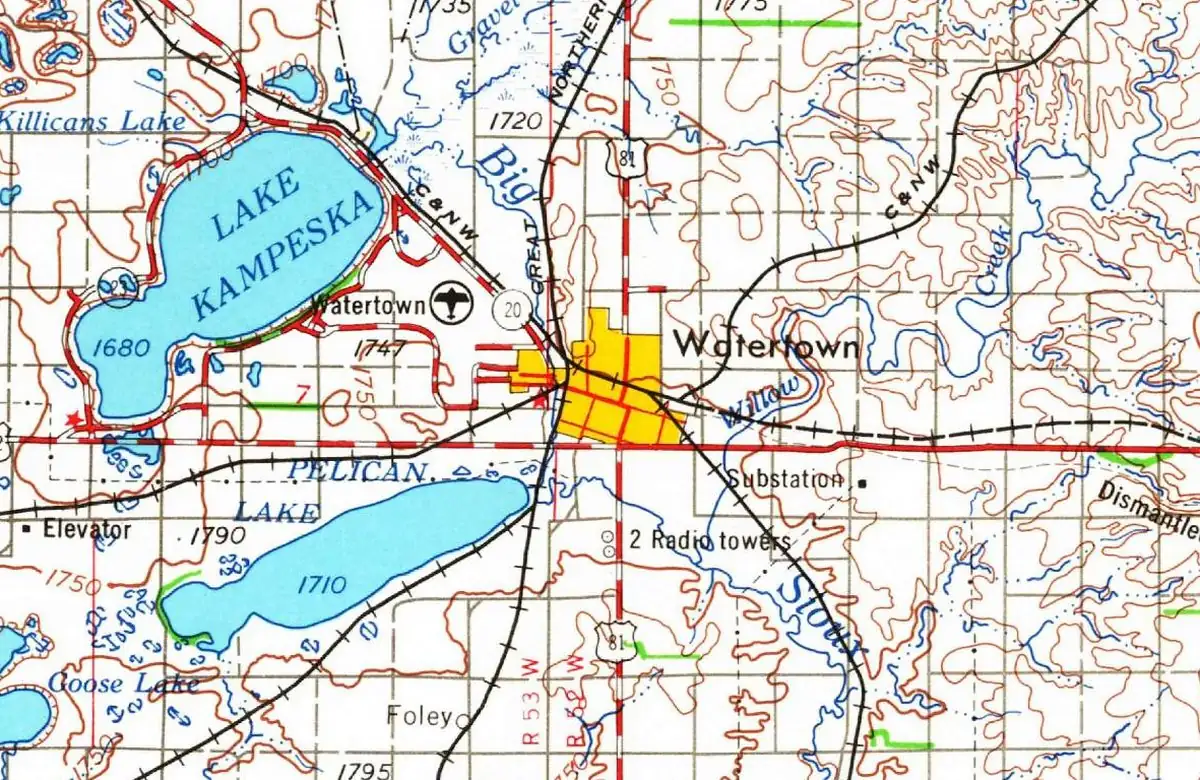 Codington County, SD
Watertown, South Dakota, is named for Watertown, New York, the hometown of John E. Kemp, the first settler, who suggested the name.
DocumentedNamed "at the suggestion of John E. Kemp, the first settler, who had emigrated from Watertown, New York," a 1908 railroad book says. Source: W. H. Stennett, A History of the Origin of the Place Names Connected with the Chicago & North Western (1908)
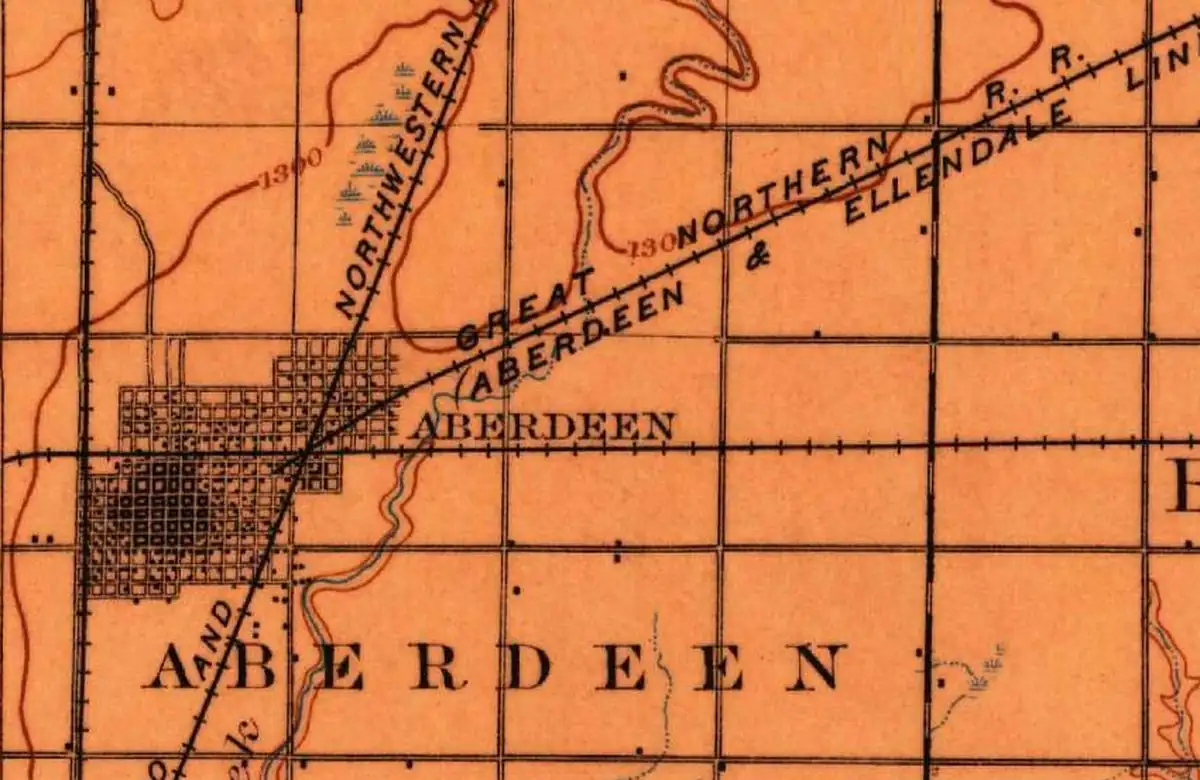 Brown County, SD
Aberdeen, South Dakota, is named for Aberdeen, Scotland, home region of Alexander Mitchell, the Milwaukee banker who ran the railroad that built the town.
DocumentedA 1908 railroad book says it "was named from the city of Aberdeen, Scotland, by Alexander Mitchell of Milwaukee," a railroad president. Source: W. H. Stennett, A History of the Origin of the Place Names Connected with the Chicago & North Western (1908)
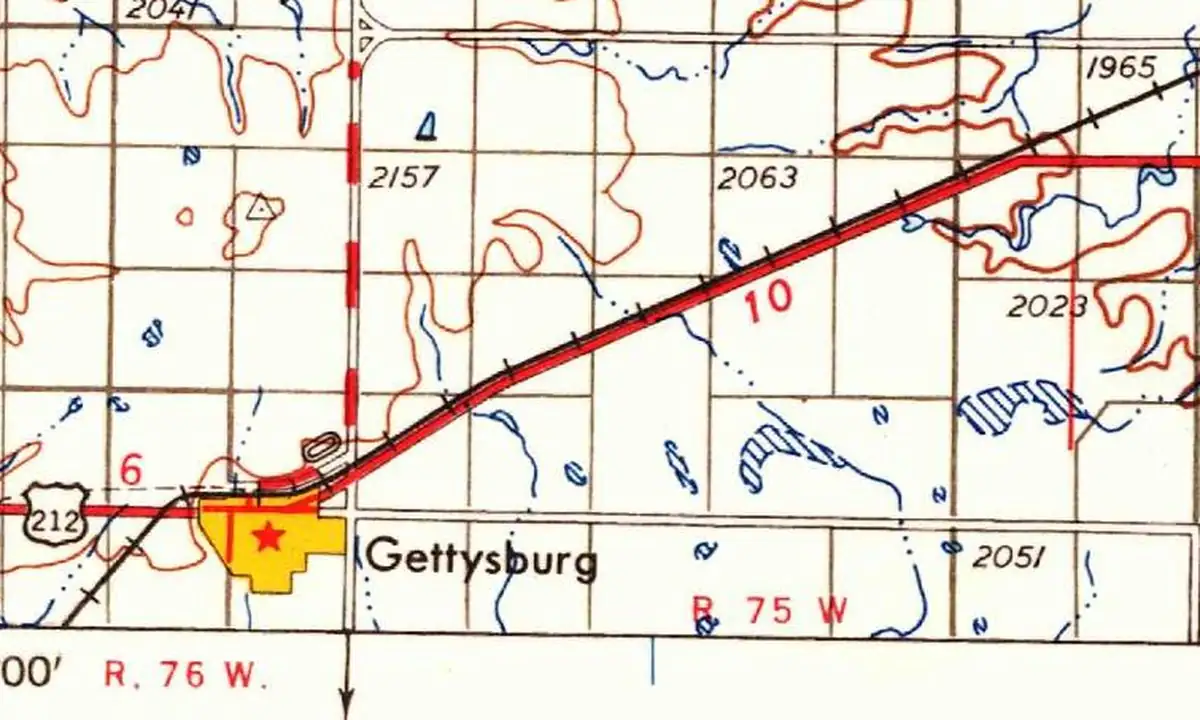 Potter County, SD
Gettysburg, South Dakota, is named after the Pennsylvania battlefield, because many of the Union veterans who settled here had fought there.
DocumentedNamed for the Pennsylvania battlefield, a 1908 railroad book says, "because many of the early settlers near here had been soldiers in the fight on that field." Source: W. H. Stennett, A History of the Origin of the Place Names Connected with the Chicago & North Western (1908)
Sources for this page
- Henry Gannett, The Origin of Certain Place Names in the United States, 2nd ed. (USGS Bulletin 258, 1905) (accessed Nov 1, 2026)
- H. W. Scott, ed., History of Portland, Oregon (1890), pp. 80-86 (accessed Nov 1, 2026)
- Benjamin Trumbull, A Complete History of Connecticut, vol. 1 (1818), pp. 169-170 (accessed Nov 1, 2026)
- D. P. Thompson, History of the Town of Montpelier (1860), pp. 9-10 (accessed Nov 1, 2026)
- John M. Killits, ed., Toledo and Lucas County, Ohio, 1623-1923, vol. 1 (1923), pp. 273-274 (accessed Nov 1, 2026)
- Joseph Williamson, History of the City of Belfast in the State of Maine (1877), p. 126 (accessed Nov 1, 2026)
- Lilian Linder Fitzpatrick, Nebraska Place-Names (University of Nebraska, 1925) (accessed Nov 1, 2026)
- W. H. Stennett, A History of the Origin of the Place Names Connected with the Chicago & North Western and Chicago, St. Paul, Minneapolis & Omaha Railways (1908) (accessed Nov 1, 2026)